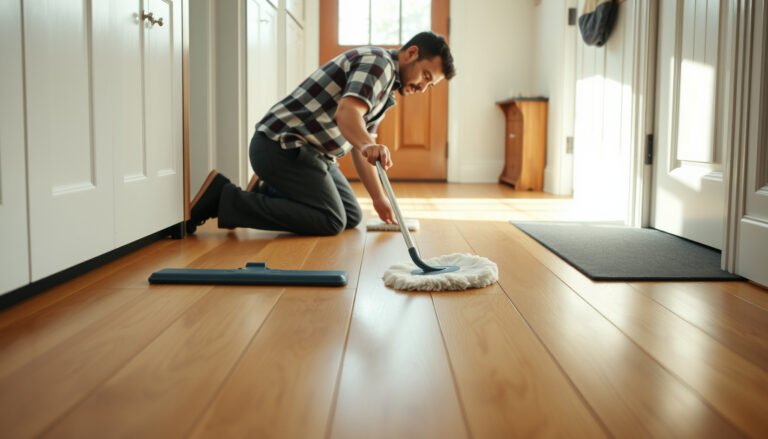
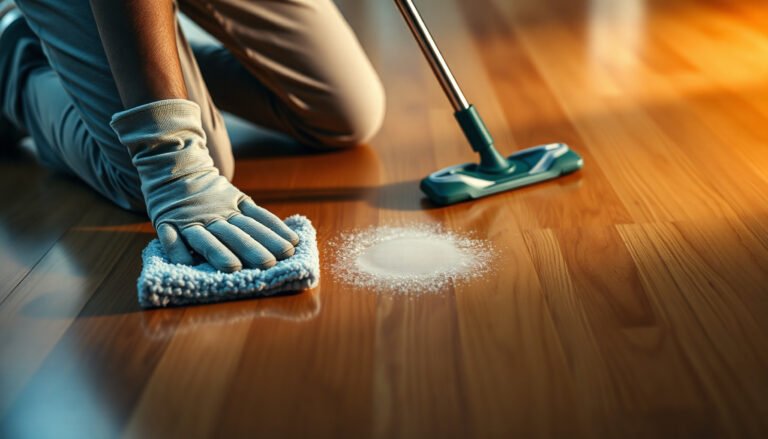
You step across your hardwood and see a dull, lingering dark mark where your pet had an accident and left it behind. You can clean the spot and reduce the odor safely by blotting up moisture, using a pH-neutral hardwood cleaner, and treating the stain with an enzyme product that targets urine residues. Plan for about an hour, and gather microfiber cloths, clean water, and the right cleaner before you start.




If your hardwood is covered in pet stains, blot thoroughly first and then use an enzyme cleaner made for urine/organic stains. After the stain lifts, clean with a wood-safe cleaner, dry completely, and re-protect the finish only if your flooring manufacturer recommends it—this removes both discoloration and the odor-causing residue that routine mopping often leaves behind.
If the pet stain is old, set-in, or you’re noticing a lingering smell, plan for more than one cleaning pass and—sometimes—professional refinishing. The right method also depends on whether your floor has a sealed finish or is unfinished, because sealed surfaces usually resist penetration while unfinished wood can absorb urine deeply into the grain.
Identify the stain + your hardwood finish first

Start by confirming whether the spot is fresh and whether your hardwood is sealed or unfinished. That two-part check tells you how much the pet urine (urine is an organic waste with components like urea that can break down into odor) may have penetrated and which cleaning steps are safe for your specific finish.
– Check whether the spot is fresh (wet-looking or the smell is active) or old (dry, raised discoloration, stubborn odor). Fresh stains are usually easier to lift; old stains often require deeper odor treatment and may not fully restore color.
– Identify your finish: most sealed hardwoods (with factory-applied polyurethane/UV-cured finishes) tolerate gentle, pH-neutral wood cleaners. Unfinished or lightly finished hardwood is much more absorbent and is harder to fully “clean out” without sanding because the stain can migrate below the surface.
– Look closely at the damage level: surface discoloration may clean up; dark, penetrated spots may require refinishing for a true match with surrounding boards.
Finish vs. stain depth: what changes your plan?
In my maintenance work for wood floors, the single biggest “don’t guess” moment is deciding whether water can safely sit on the surface. If you’re unsure, do a tiny test in a hidden area with your wood-safe cleaner—watch for color change or dulling before you treat the full spot. (If you can’t confirm the finish, treat the floor as absorbent and proceed more conservatively.)
To keep moisture-safe cleanup in perspective, hardwoods are sensitive to indoor climate. According to the National Wood Flooring Association (NWFA) recommended indoor environmental conditions (commonly published as target temperature and relative humidity guidelines), maintaining stable indoor relative humidity helps reduce cupping/gapping stress after any cleaning. In the same framework, many care guides also emphasize keeping the wood moisture content stable (often around single-digit percent ranges) to avoid movement.
How Different Cleaner Choices Target Pet Urine on Sealed Hardwood
| # | Cleaner/Method | Main What It Breaks Down | Finish-Safety Fit (Sealed) | Urine Odor Source Match |
|---|---|---|---|---|
| 1 | Enzyme cleaner for pet urine/organic stains | Urea/organic components | ★ ★ ★ ★ ★ | ★ ★ ★ ★ ★ |
| 2 | Oxygen-based cleaner (for organic soils) | Some organic residue | ★ ★ ★ | ★ ★ ★ |
| 3 | Neutral pH wood floor cleaner (detergent-only approach) | Surface soils | ★ ★ ★ ★ | ★ ★ |
| 4 | Vinegar solution (acidity/odor masking) | Limited urine component breakdown | ★ ★ | ★ ★ |
| 5 | Baking soda paste (absorption/abrasion risk) | Moisture/odor capture | ★ ★ | ★ ★ |
| 6 | Steam cleaning | Heat only (no urine enzyme action) | ★ | ★ |
| 7 | Chlorine bleach (oxidizer) | Oxidizes pigments/residue (finish risk) | ★ | ★ |
Step-by-step cleaning for hardwood pet stains
You’ll usually get the best results by blotting, using an enzyme cleaner with adequate dwell time, and then following up with a wood-safe cleaner and thorough drying. This sequence targets both the visible discoloration and the deeper urine chemistry that causes lingering odor.
– Blot (don’t scrub) any moisture first. Use paper towels or a clean microfiber cloth to pick up as much liquid as possible, then remove residue with a damp, well-wrung cloth (well-wrung means you can squeeze out water so it doesn’t drip).
– Clean the surface with a wood-safe cleaner recommended by your floor manufacturer. Wipe with the grain and keep the application light—avoid pooling around the stain, since excess water can seep at seams or edges even on sealed floors.
– Use an enzyme cleaner formulated for pet urine/organic stains. Apply exactly as the label instructs (the critical variable is dwell/working time). Let it sit long enough for the enzymes to break down odor-causing urine components, then wipe per the product directions.
A practical “quality check” at this stage is smell and appearance together. If the enzyme cleaner is working, the sharp ammonia-like odor typically fades after the required dwell time, even when the wood still looks slightly darker. That’s why it’s important to avoid switching to harsh detergents too early—enzyme cleaner chemistry does the heavy lifting, while the follow-up wood-safe cleaning simply tidies up residue.
Neutralize odor safely (so it doesn’t come back)
Treat odor at the source using enzyme chemistry, then complete the job with correct wipe-down and drying. If the urine has soaked past the finish edge or into seams, “pretty-looking” cleanup without odor neutralization often leads to return visits from the same spot.
– Treat odor at the source: for urine stains (organic residue), enzyme chemistry is usually more effective than standard detergents alone because enzymes are designed to break down specific organic components rather than just rinse them.
– After the enzyme has done its work, rinse/wipe lightly with a barely damp cloth if the label calls for it—then dry completely.
– Keep airflow moving during drying. Even with a sealed hardwood finish, trapped moisture can cause dull spots or uneven sheen as the finish cures unevenly over time.
Environmental stability also matters. According to the NWFA indoor environmental guidelines, keeping relative humidity within a recommended band reduces wood movement risk during drying and helps prevent new stress around the cleaned area. This is especially relevant after repeated cleaning passes, where the surrounding floor may experience small moisture swings.
Restore protection after the stain is gone
Once the area is fully dry, assess the finish and decide whether you need any protective top-up. Many stains lift on sealed floors, but some spot cleaning can slightly alter sheen—even when the color returns.
– Check the finish condition: some wood-safe cleaners can leave a different sheen if they include gloss modifiers or if the spot area has been wiped more aggressively than the rest of the floor.
– If your floor manufacturer recommends it, reapply a compatible spot treatment. Use a product that matches the finish system (for example, a finish-care product designed for polyurethane/UV-cured systems), not a random oil/wax that may not bond correctly.
– For widespread or deeply dark stains, plan for sanding/refinishing rather than trying to “bleach” your way out of penetration. Once urine (or its breakdown products) has moved into the finish/wood structure, surface cleaning may reduce odor but not fully equalize color.
If you suspect penetration, it’s worth documenting the area (photo under natural light, including a close-up of the grain direction). That makes it easier to compare before/after and to discuss options with a pro if the spot refuses to match.
What can go wrong (and how to avoid it)
Most failures happen when people introduce too much water, use the wrong chemistry, or remove the enzyme before it has time to work. Hardwood floors expand and contract with moisture, and finish systems can react unpredictably to strong oxidizers.
– Scrubbing hard or soaking: hardwood expands/shrinks with moisture and can develop gaps or a dull, uneven finish. Scrubbing also abrades finish, which can change sheen around the stain.
– Using the wrong chemicals: bleach/strong oxidizers can lighten wood or damage certain finishes. Always follow your flooring manufacturer’s care guidance.
– Skipping enzyme dwell time: if you wipe too quickly, odor-causing residue can remain and reappear later (the floor can “smell fine” for days, then return when temperature/humidity changes).
– Treating a non-urine stain the same way: if the source is from other pet messes (or unknown causes), enzyme products may not address the pigment or residue that creates discoloration.
Quick comparison: what works best and what to skip
Below is a practical decision guide for sealed hardwood, where the floor surface is the main protective layer:
| Approach | Pros | Cons / Risks |
|---|---|---|
| Enzyme cleaner (pet urine/organic) | Targets urine odor chemistry; reduces “odor return” risk | Requires correct dwell time and full drying |
| Wood-safe cleaner after enzyme | Removes residue without extra finish damage | Won’t fully solve odor if used alone |
| Vinegar/baking soda DIY | May help neutralize mild general odor | Can be risky for finishes; often doesn’t break down urine source |
| Steam cleaning | None for urine removal on hardwood | Adds moisture; can worsen penetration and finish damage |
Verdict / tip (best path, plus who should skip)
For most sealed hardwood floors, the most reliable path is: blot/remove residue → enzyme cleaner made for pet urine/organic stains (follow label dwell time) → wood-safe cleaning → dry thoroughly → re-check the finish and touch up only if your manufacturer recommends it. The downside is that deeply penetrated stains may not fully match after cleaning, especially if the color has migrated below the finish layer.

Skip the DIY approach (or get a pro opinion) if the spot is large, the floor is unfinished or poorly sealed, the stain repeatedly returns after enzyme treatment, or you’re unsure how your specific finish reacts to cleaners. Also consider escalation sooner if the discoloration continues to darken over several days—this can indicate ongoing residue migration rather than a simple surface mark.
Scan-and-save checklist (plus quick references)
| Step | What to do | Avoid |
|---|---|---|
| 1 | Blot/pick up residue immediately | Scrubbing while wet |
| 2 | Confirm finish (sealed vs unfinished) | Guessing and using heavy chemicals |
| 3 | Apply enzyme cleaner for pet urine/organic stains | Rubbing the area raw |
| 4 | Let it work, then wipe per label | Wiping too early |
| 5 | Clean with a wood-safe cleaner; wipe with grain | Excess water / soaking |
| 6 | Dry fully; check sheen | Leaving moisture trapped |
Frequently Asked Questions
How do I clean hardwood floors with pet urine stains without damaging the finish?
Start by blotting the area with clean paper towels and then use a hardwood-safe cleaner to remove residue, rather than soaking the wood. For urine, apply an enzymatic pet stain and odor remover to break down the compounds, letting it sit according to the label. After it dries fully, wipe gently with a slightly damp microfiber cloth and dry promptly to prevent water damage.
What’s the best way to remove pet stain discoloration from hardwood floors?
Begin with gentle cleaning: mix a small amount of pH-neutral floor cleaner with water and wipe the stained area lightly using a damp microfiber cloth. If the stain persists, use a targeted approach like a hydrogen peroxide-based wood spot treatment (only if your floor finish allows it) or a color-safe spot remover designed for hardwood. Always test any product in an inconspicuous area first, since some treatments can lighten or alter the finish.
Why do pet stains keep coming back on hardwood floors, and how do I stop it?
Pet urine and some organic stains can soak into pores and leave odor-causing residues even after surface cleaning, which leads to repeat “accidents” in the same spot. Enzymatic cleaners work best because they break down the underlying compounds rather than only masking smells. Re-treat the area until the odor is gone, and consider addressing any underlying subfloor issue if the stain remains strong.
How do I clean dried pet vomit or feces stains on hardwood flooring?
Carefully scrape up dried debris first using a plastic scraper, then clean with a hardwood-safe cleaner to lift remaining particles. For any lingering odor, use an enzymatic cleaner and let it dwell as directed, then wipe and dry thoroughly. Avoid steam mops or excessive moisture, since hardwood can warp or develop haze when water penetrates the finish.
Which cleaning products are safe for hardwood floors with pet stains?
Look for pH-neutral cleaners and enzymatic pet stain removers that are specifically labeled safe for hardwood or sealed wood floors. Avoid harsh chemicals like ammonia, bleach, or abrasive scrubbers, as they can damage the finish and sometimes spread discoloration. When in doubt, spot test on a hidden area and follow the product’s drying and dilution instructions closely.
📅 Last Updated: October 31, 2026 | Topic: How to clean hardwood floors covered in pet stains? | Content verified for accuracy and freshness.
References
- How to Remove Pet Stains and Odors Naturally | Humane World
- https://www.cdc.gov/infectioncontrol/guidelines/environmental/index.html
- https://www.epa.gov/coronavirus/cleaning-and-disinfecting-your-facility
- Enzyme
- enzymatic cleaner urine stain – Search Results – PubMed
- pet urine odor removal enzyme – Search Results – PubMed
- https://scholar.google.com/scholar?q=pet+urine+hardwood+floor+stain+removal+enzymatic+cleaner Google Scholar
- https://scholar.google.com/scholar?q=urease+dog+urine+odor+removal Google Scholar
- https://scholar.google.com/scholar?q=enzymatic+cleaners+pet+urine+stains+odor+removal+study Google Scholar