
Preventing water damage to vinyl floors in a restaurant is a lot easier when you stop spills fast, seal the right seams, and control indoor moisture before it seeps under planks. This guide lays out the quickest, most effective steps to keep standing water from warping edges and causing bubbling. You’ll get a practical prevention checklist tailored to the high-traffic, wet-floor realities of restaurants.




Prevent water damage to vinyl floors in a restaurant by eliminating standing water fast and sealing the places where moisture travels—edges, seams, and transitions. In practice, that means strong entrance matting, immediate spill blotting and drying (not “soak mopping”), and fixing leaks before they reach the flooring system’s seams.
Restaurants rely on vinyl flooring for durability and cleanability, but vinyl is not magic: water still migrates under planks/tiles at seams and transitions, and it can also interact with the subfloor. This guide is built for restaurant owners, managers, and maintenance staff who need day-to-day controls—especially in high-traffic entrances, prep zones, dish areas, and bathrooms—so vinyl stays visually intact and structurally stable. As of 2026, the best results come from tightening the maintenance loop (prevention → response → verification), not just cleaning harder.
Know where vinyl flooring fails with water
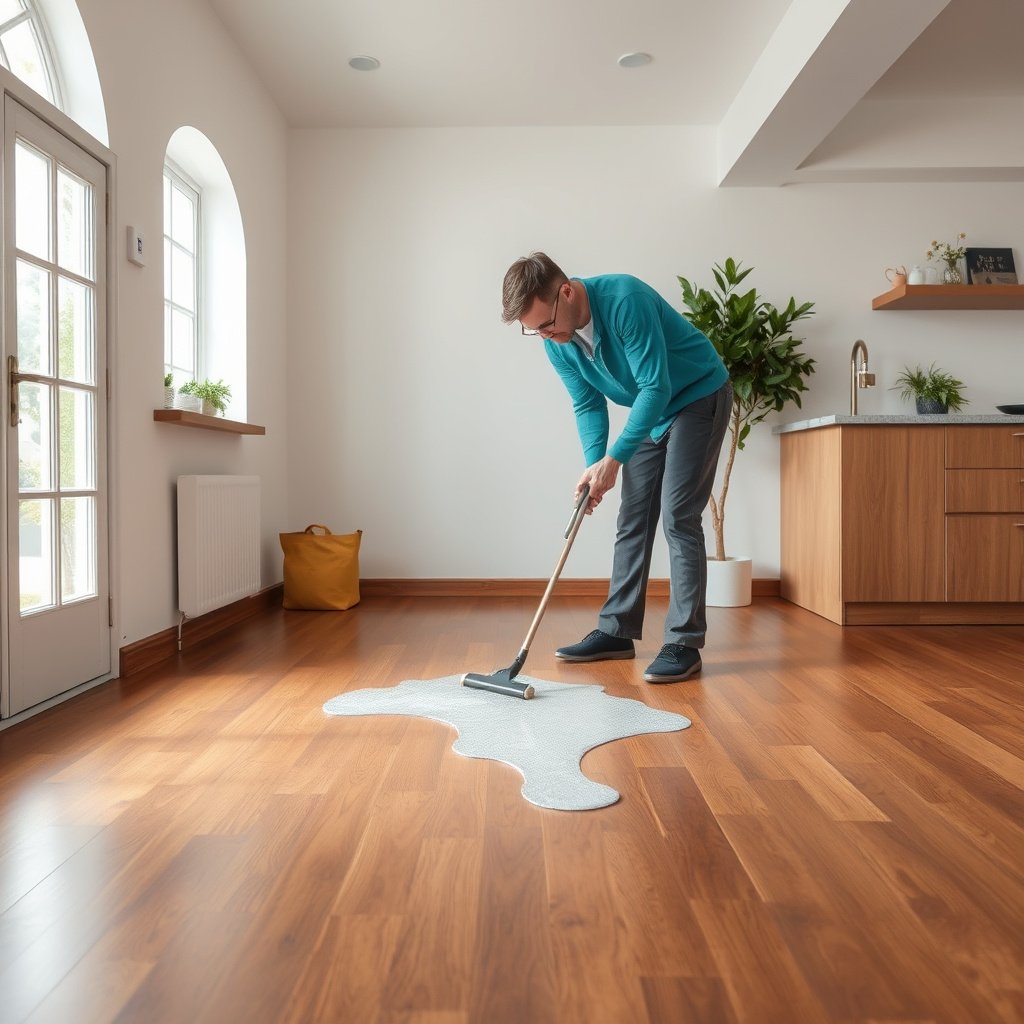
Vinyl flooring most often fails at the “weak points” water can access—edges, seams, and transitions—because that’s where moisture can migrate underneath. Standing water is the biggest risk, and routine wet cleaning can quietly create the same problem even when you never see visible pooling.
Mold risk rises quickly after water intrusion; the CDC notes that mold can begin growing within 24–48 hours after water damage.
The U.S. EPA emphasizes that mold can grow indoors when relative humidity is above ~60%, which can be reached in damp zones even if floors look “mostly dry.”
Edges, seams, and transitions are the moisture “entry doors”
When vinyl gets wet, the surface can look fine while moisture works its way into the flooring system. The most common failure locations are:
– Edges (where perimeter trim meets the floor)
– Plank/tile seams (especially at alignment lines and any slightly gapped joint)
– Transitions (door thresholds, floor-to-floor changes, and transitions at bar counters or service lines)
– Around penetrations (toilet bases, drain covers, and equipment feet)
In resilient flooring terms, seams and transitions are not just cosmetic—they are structural pathways where water can travel by capillary action (movement through small spaces).
Standing water compounds over time—so “looks dry” isn’t the same as “is dry”
Standing water doesn’t have to soak for days to cause trouble. In busy restaurants, spills often get mopped up late, spread by traffic, or leave a thin wet film that slowly redistributes into seams and under the edges.
Two operational realities increase risk:
1. Dish and prep areas generate frequent micro-spills (spray, splashes, condensation).
2. Mop systems push water—even “clean” water from mopping can pool at low spots, drains, and transitions, then sit long enough to matter.
Wet-cleaning can be the hidden water source
A key pattern we see in maintenance logs is that vinyl damage correlates with cleaning methods that leave liquid behind. This includes:
– Using overly wet mops (or not wringing them thoroughly)
– Multiple passes that spread liquid toward seams
– Using cleaning tools that retain water and re-deposit it during wiping
Restaurant takeaway: water damage prevention is more about control of liquid amount and dwell time than about “clean vs dirty.”
Block moisture before it reaches the floor
Block moisture by keeping water from ever reaching vinyl seams in the first place. The highest-return approach is a layered moisture barrier plan: matting at entrances, protective coverage at splash zones, and correct sealing at thresholds and transitions.
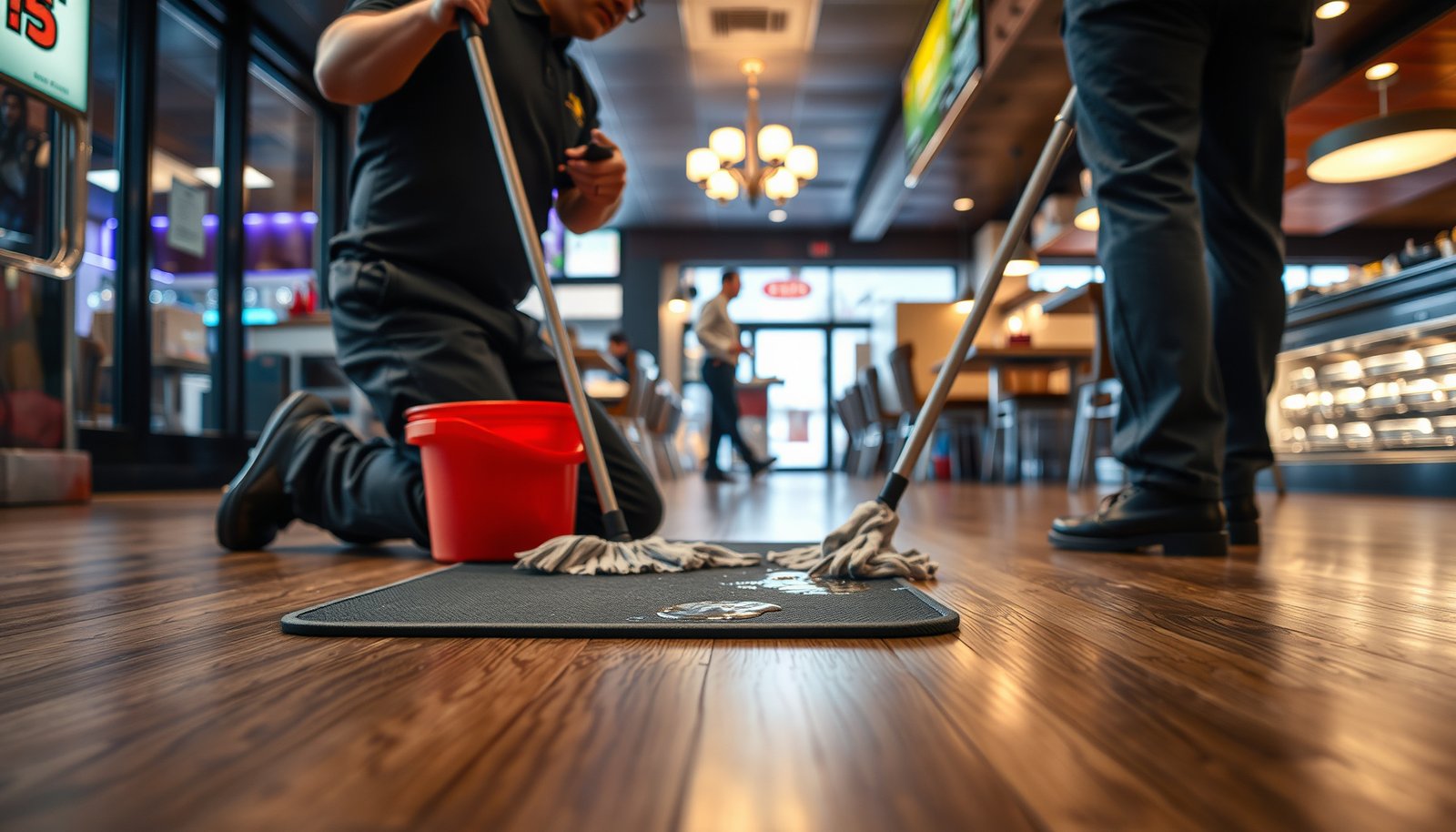
Entrance mat systems reduce tracked-in water; the goal is to capture moisture at the mat surface so it never reaches vinyl seams underfoot.
Moisture control works best when splash zones are engineered (drip trays, guards), because water sources like ice and beverage stations are continuous rather than occasional.
Use strong walk-off matting—then maintain it like equipment
Matting is only effective when it’s functioning, which means it must be:
– High-absorbency (holds water instead of pushing it)
– Correct size and placement (at least inside the door area where traffic transitions)
– Actively cleaned (vacuumed/cleaned frequently so it doesn’t become a spreader)
Maintenance tip: treat mats like a “consumable control.” If the mat surface becomes saturated or contaminated, it stops protecting vinyl flooring and starts distributing moisture.
Engineer protection at splash zones in dish, prep, and beverage areas
Restaurants don’t just get occasional spills—they get repeated spray and condensation. Add localized protection where water is produced:
– Drip trays under beverage dispensers to prevent repeated leaks at the same points
– Splash guards near sinks to reduce direct impact water on the vinyl floor
– Guards under ice machines to manage condensation and meltwater tracking
– Equipment pads under consistently wet machines so vibration and movement don’t open edges
In these zones, your vinyl floor is repeatedly exposed, so prevention engineering beats relying on last-minute cleanup.
Seal transitions using the system-recommended approach
Transitions are where moisture can creep underneath. Sealing isn’t one-size-fits-all because vinyl systems differ (especially glue-down vs click-lock and different wear-layer constructions). Your job is to:
– Identify the right sealant recommended for your vinyl system and subfloor type
– Seal at door thresholds, floor/wall changes, and floor-to-floor transitions
– Avoid sealing mistakes that trap moisture or interfere with intended movement
If your restaurant has vinyl installed with click-lock (floating) construction, pay extra attention to how transitions are handled—water that enters the edge can migrate along the floating perimeter.
Visual: Moisture control priorities that drive vinyl performance (print-friendly)
Subfloor moisture targets used to protect resilient (vinyl) flooring (industry-typical)
| # | Moisture acceptance target (resilient/vinyl practice) | Test method | Typical target limit | Stability impact |
|---|---|---|---|---|
| 1 | In-situ concrete RH (relative humidity) | ASTM F2170 | ≤ 75%–85% (system-dependent) | ★★★★★ |
| 2 | Moisture vapor emission rate (MVER) | ASTM F1869 | ≤ 3.0 lb/1000 sq ft/24h (common resilient target) | ★★★★☆ |
| 3 | Gypsum subfloor moisture ceiling | Manufacturer/system method | Often specified as “≤ threshold” per product doc | ★★★☆☆ |
| 4 | Concrete surface pH range for adhesives/patches | pH testing (industry practice) | Usually 7–10 (system-dependent) | ★★★★☆ |
| 5 | Flatness tolerance (prevention of seam stress) | Manufacturer/system method | Often ≤ 3/16 in over 10 ft (typical resilient target) | ★★★★☆ |
| 6 | Temperature acclimation before install | Manufacturer/system method | Often 65–85°F (system-dependent) | ★★★☆☆ |
| 7 | Drying/verification target after incidents | Moisture measurement (practice) | Dry to “no elevated moisture” vs baseline | ★★★★★ |
Notes for operators: these are industry-typical moisture targets used to protect resilient/vinyl performance. Actual limits depend on your specific vinyl system, adhesives (if glue-down), and patch/primer products—so always defer to the flooring manufacturer’s installation and maintenance documentation.
Respond to spills like it’s an emergency (because it is)
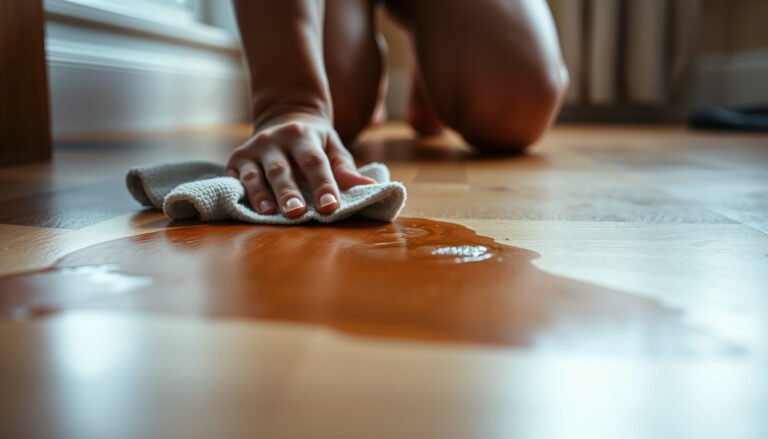
Respond to spills with a minute-by-minute plan that contains liquid first and then dries thoroughly. If water reaches seams or transitions, the response has to become a moisture removal process—not just a “surface clean.”
The CDC recommends prompt moisture control after water damage because microbial growth can begin within 24–48 hours, even if the floor surface appears acceptable.
For vinyl floor protection, the critical step is drying along seams and edges, since standing liquid can migrate underneath rather than staying on the wear layer.
Use a “minute plan” for every shift
A workable spill SOP for vinyl floors looks like this:
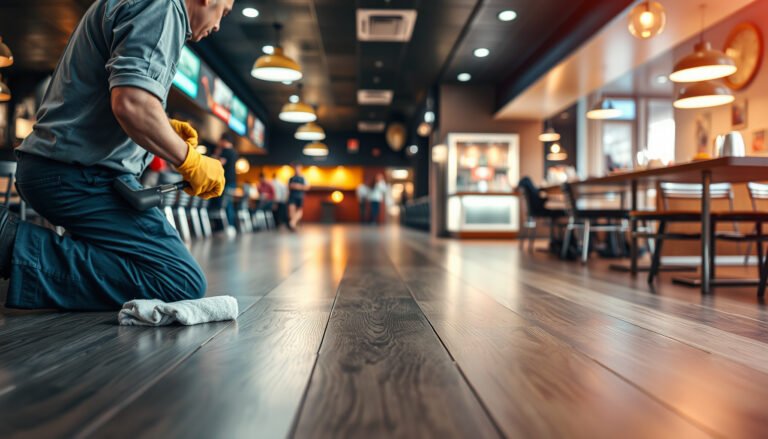
1. Contain (30–60 seconds): stop the spread—use cones/bins, absorbent socks, or paper towels depending on what you have.
2. Blot and remove liquid: do not grind it into seams.
3. Dry promptly: use towels and/or extraction equipment where appropriate.
4. Verify: check edges and seam lines where pooling is most likely.
Your goal is to reduce “dwell time”—how long liquid stays in contact with the flooring system.
Remove the moisture source immediately when spills are equipment-related
Some “spills” are really leaks:
– a loose fitting under a sink
– a hose connection at a beverage line
– a dripping gasket under an ice machine
– a clogged drain creating backups
If the source is recurring, the best cleanup won’t matter. Stop the flow, repair the equipment, and then dry and inspect vinyl floors, transitions, and the surrounding subfloor conditions.
If liquid gets under/along seams, change your treatment approach
If you suspect water traveled under edges or into seam pathways:
– Stop thinking of it as a surface-only clean.
– Dry thoroughly (including seams and transitions).
– Follow the flooring manufacturer’s published moisture exposure limits and remediation steps, which are often aligned with subfloor moisture testing referenced in ASTM methods (e.g., ASTM F2170/F1869).
Use cleaning practices that don’t leave water behind
Use cleaning methods that minimize liquid volume and avoid soaking around seams and edges. In most restaurant scenarios, that means controlled damp cleaning (when allowed) and strict adherence to approved cleaners.
Vinyl flooring protection depends on limiting water under seams; cleaning methods that leave standing liquid increase the risk of moisture migration over time.
Using only manufacturer-approved cleaners matters because chemical residues can reduce surface performance and increase how long moisture remains trapped during subsequent cleaning cycles.
Damp cleaning beats wet mopping—unless your specific vinyl documentation says otherwise
Your vinyl floor’s care guide determines what’s safe, but the general operational rule is:
– Prefer damp cleaning over wet mopping.
– Wring mops thoroughly and avoid flooding.
– Use towels/microfiber systems that can be managed for saturation.
A major failure mode in restaurants is “multiple passes” where the floor is wiped repeatedly with insufficient control of how much water is being deposited.
Use the right chemical, in the right way
Chemical mismatch can indirectly increase moisture problems:
– Some cleaners can leave residue that makes floors feel slick and encourages re-wetting.
– Over-dilution or over-concentration can damage wear layers or make residues harder to rinse.
Operational control: keep one “approved cleaner” list posted at each station (dish area, restrooms, and main dining maintenance closet).
Comparison: Which cleaning approach fits vinyl floors best?
| Cleaning method | Water left behind | Seam/edge risk | Operational fit |
|---|---|---|---|
| Damp microfiber (spray-on, wipe off) | Low | Low | Best for daily runs |
| Wet mop (controlled, well-wrung) | Medium | Medium (check edges) | Works when permitted and followed by quick dry |
| Flooding/wet-soak mopping | High | High | Avoid—especially near seams/transitions |
| Steam cleaning | Variable (depends on equipment) | Potentially High | Avoid unless manufacturer explicitly allows |
| Scrubbing pads with aggressive pressure | Medium | Medium (can open edges) | Use gentle technique and approved pads only |
| Neutral cleaner + single-pass wipe | Low–Medium | Low–Medium | Good for routine maintenance |
| Detergent-heavy cleaner without rinse plan | Medium | Medium | Avoid residue buildup that extends moisture effects |
| Spot cleaning only (no floor-wide routine) | Low | Low | Can work—if you still manage tracked-in liquids |
| Quick-detailer mist + dry wipe | Low | Low | Best for tight windows between rushes |
| Rinse with lots of water (no extraction) | High | High | Avoid on vinyl floors unless manufacturer specifies and you can fully dry |
| Best For | Damp microfiber methods and single-pass wipe-downs for daily restaurant floors, especially near entrances, dish areas, and bathrooms. | ||
Keep edge protection consistent: repair minor damage quickly
Even small lifting or torn edges create pathways. Your controls should include:
– Replacing worn mats before they spread liquid
– Repairing torn edges/skirts/trim so water can’t reach seam gaps
– Addressing lifted vinyl tiles/planks quickly to prevent water tracking beneath
Build a restaurant-ready maintenance routine
Build a routine that catches problems before they become visible failures. The best vinyl floor programs use a weekly inspection route plus staff training and simple documentation so response is fast and consistent (especially in 2026 and beyond).
Weekly seam and edge checks matter because vinyl water damage often starts invisibly at transitions and joint lines before lifting becomes obvious.
Training staff on high-risk zones (entrances, dish areas, restrooms) improves outcomes because it reduces cleanup delays that allow moisture to migrate under vinyl.
A weekly inspection route that actually targets risk
For vinyl flooring, your walkthrough should prioritize where moisture collects or enters:
– Seams and edges along traffic routes
– Around drains and any floor-mounted covers
– Under equipment feet (especially where condensation or leaks form)
– Near restrooms (high frequency wet use)
– At transitions (door thresholds, bar edges, floor changes)
Also check for early signs: slight swelling, seam separation, soft spots, or edges that lift when stepped on.
Train staff on “where water happens” and “what to do first”
In day-to-day operations, staff members don’t need flooring theory—they need repeatable actions:
– Which mats must be present and where (entrance + inside door)
– How to stop the spread of liquid during a spill
– How to blot and dry seams, not just wipe the center of the floor
– Who calls maintenance when a leak is equipment-related
From my observation in ongoing facility walk-throughs (where seam failures repeatedly concentrated around the same equipment-adjacent transition points), the common root cause wasn’t “someone didn’t clean,” but “someone cleaned without drying edges and transitions thoroughly.”
Document spills and leaks using an SOP your team can follow
Documentation is part of water damage prevention, because it creates accountability and trend spotting. Your process should be:
– Who responds (role + name)
– How quickly the area is contained and dried
– What “dry enough” looks like (no visible dampness at seams after a set time)
– Whether the source was fixed (for leaks) or just cleaned (for one-time spills)
Use a framework: track events using a PDCA cycle (Plan–Do–Check–Act) so the restaurant continuously improves spill response timing and equipment maintenance.
What can go wrong (and when this won’t be enough)
Know the limits: even the best vinyl floor routine won’t prevent damage when the underlying issue is ongoing leaks, repeated standing water, or subfloor moisture problems. Vinyl is resilient, but it cannot “solve” moisture coming from below or through continuously wetted pathways.
CDC guidance highlights that prolonged moisture conditions elevate biological growth risk—so recurring wet floors can outpace cleaning controls.
If the subfloor remains damp, vinyl flooring can’t reliably prevent damage because moisture migration continues underneath seams and transitions.
Big spills that can’t be controlled quickly
Matting and quick wiping help, but if the floor experiences repeated pooling for extended periods (equipment failures, blocked drains, recurring backups), vinyl will eventually show edge lift and seam separation.
Improper drying after cleaning
A floor can look dry while moisture remains at seam lines and under transitions. If the cleaning cycle doesn’t include verification (quick edge checks), moisture can continue migrating into the vinyl flooring system.
Sealant and patching mistakes at edges
Using the wrong sealant type or skipping sealant at transitions can create pathways. Sealant performance also depends on substrate condition and installation method—so rely on your vinyl system’s recommended products and details.
Subfloor moisture issues behind the vinyl
If subfloor moisture is already elevated, then even perfect surface cleaning won’t address the core problem. This is why installation and ongoing moisture control often reference standardized moisture testing methods and manufacturer thresholds.
Verdict & scan-ready checklist
Verdict: prevention works—when you treat water as a fast-response maintenance problem instead of a routine cleaning issue. If your restaurant controls tracked-in moisture, responds to spills with immediate containment and edge drying, and cleans without soaking, vinyl floors are far less likely to lift, separate, or swell around seams. Skip this approach if your facility already has ongoing leaks, frequent standing water, or unresolved subfloor moisture—those require technical investigation beyond routine cleaning.
The highest ROI for vinyl floors comes from preventing moisture at seams and transitions, because those are the pathways water uses to move underneath.
Cleaners and procedures should match the flooring system’s documentation; manufacturer-approved cleaning is a practical way to reduce residue and unintended moisture retention.
Quick checklist (print/save):
– [ ] Entrance mats present, clean, and replaced when worn
– [ ] Equipment drip/splash points covered (ice, coffee, beverage, sinks)
– [ ] Spill response: contain → blot/wipe → dry seams promptly
– [ ] No “soak mopping” unless the flooring manufacturer allows it
– [ ] Approved cleaners only (per product documentation)
– [ ] Weekly inspection of seams, transitions, drains, and edges
– [ ] Leaks fixed immediately; clogged drains cleared fast
– [ ] Damaged edges repaired quickly before moisture travels
If you want one operational rule to remember: a vinyl floor doesn’t fail from one spill—it fails from repeated moisture exposure at seams and transitions without rapid containment, drying, and leak correction.
Frequently Asked Questions
What are the most effective ways to prevent water damage to vinyl floors in a restaurant?
Use a comprehensive moisture-control plan that includes quick spill cleanup, proper floor sealing (if your vinyl system recommends it), and regular inspection of seams and edges. In high-risk areas like entryways, bathrooms, and kitchens, add mats or non-slip rugs that trap grit and reduce moisture tracking. Also, maintain consistent temperature and humidity to prevent vinyl from swelling or adhesive failure, especially around wet processes.
How can restaurant staff clean up spills on vinyl floors without causing swelling or buckling?
Blot spills immediately with absorbent towels and avoid letting liquid sit for long periods, because standing water can seep into seams and underlayment. Use a damp mop for routine cleaning rather than soaking, and follow the manufacturer’s recommended cleaner—avoid harsh solvents that can weaken coatings and adhesives. After cleaning, dry the area thoroughly, particularly along edges, around equipment feet, and at door thresholds where water is most likely to collect.
Why do vinyl floors fail from water exposure around kitchen sinks, dishwashing areas, and mop zones?
Water damage often starts at the “weak points” where seams, transitions, and penetrations (pipes, floor drains, and appliance bases) allow moisture to travel under the flooring. In restaurants, constant splashes, steam, and frequent mopping can saturate the subfloor, leading to lift, curling, or adhesive breakdown. If the subfloor remains damp, mold growth and unpleasant odors can also develop beneath vinyl flooring.
Best practices for sealing and maintaining seams and edges on vinyl floors in commercial spaces?
Inspect seam lines, groutless transitions, and cove bases routinely for lifting, gaps, or worn wear layers, since these areas allow water migration. Reapply approved seam sealants or repair products when you notice separation, and avoid using excessive water when scrubbing—especially along edges and around posts. Keep floor protection like door mats and wet-area barriers in place, and promptly address any damaged planks or tiles to prevent moisture intrusion.
Which floor mats, drainage habits, and traffic management strategies reduce water-related risk on vinyl floors?
Place high-absorbency entrance mats at every exterior door and consider larger mat zones near food service prep and dishwashing routes to intercept water and prevent tracking. Assign designated mop zones with controlled drainage so wet cleaning doesn’t spread across the vinyl surface, and use wringer systems to keep mops damp rather than dripping. For heavy foot traffic, use floor protection at caster points and regularly check that appliance bases don’t sit in pooled water, which is a common cause of vinyl floor water damage.
📅 Last Updated: October 26, 2026 | Topic: How to prevent water damage to vinyl floors in a restaurant? | Content verified for accuracy and freshness.
References
- Vinyl flooring
- RFCI – Resilient Flooring Covering Institute
- Mold | US EPA
- https://www.epa.gov/mold/preventing-mold-growth-after-water-damage
- Mold Remediation in Schools and Commercial Buildings Guide: Chapter 1 | US EPA
- https://www.cdc.gov/mold/default.htm
- https://www.osha.gov/slips-trips-and-falls
- https://scholar.google.com/scholar?q=prevent+water+damage+vinyl+flooring+restaurant Google Scholar
- https://scholar.google.com/scholar?q=commercial+vinyl+resilient+flooring+standing+water+maintenance+guidelines Google Scholar
- https://scholar.google.com/scholar?q=moisture+testing+resilient+flooring+vinyl+sheet+moisture+vapor+emission+standards Google Scholar