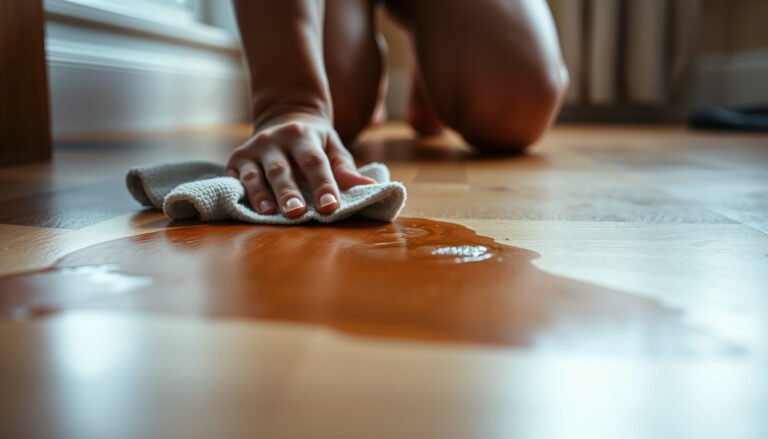
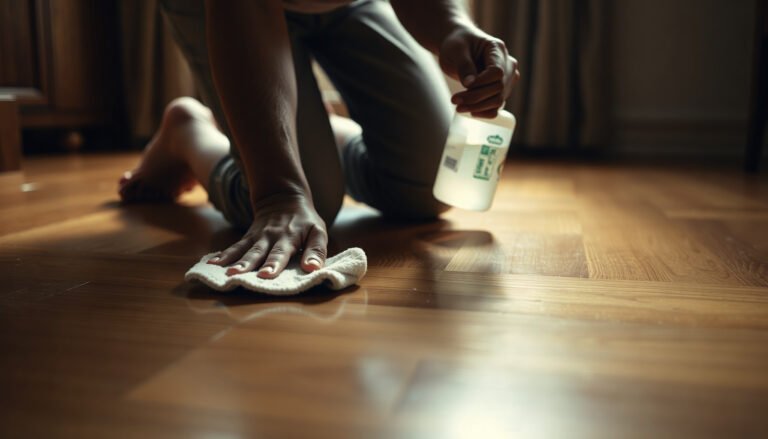
You walk into the room and the musty smell you noticed after a spill or humid spell seems to have dried into the surface of your hardwood floors. The good news is that, with a careful step-by-step cleaning routine, this is usually manageable for most homeowners and can be done in a few hours. Have a HEPA vacuum, microfiber pads, a bucket, and a hardwood-safe cleaner ready, along with the right deodorizing solution, so you lift any residue first and then refresh the wood.




Got dried musty odors stuck in your hardwood? The fastest path to real results is to stop the underlying moisture source, then neutralize remaining odor-causing residue with an appropriate cleaner (often enzyme-based) plus aggressive drying/ventilation. If the smell soaked past the finish into boards or the subfloor, you may need sanding/refinishing or subfloor remediation—surface cleaning alone won’t reliably fix it.
If the room is no longer wet but still feels “muggy,” this guide is for you—especially when the hardwood is dry to the touch yet the musty odor lingers.
Find and fix the moisture or mold source
To eliminate dried musty odors in hardwood floors, you have to remove the cause, not just the symptom. The “musty” smell is typically microbial byproducts left behind by moisture, leaks, spills, or prolonged high humidity—so treating odor without fixing moisture often brings the smell back.
Start with a focused inspection in the exact zone where the odor is strongest (usually near a wall, window, plumbing run, or low spot). Look for dark staining, raised cupping (edges higher than the center), peeling or bubbling finish, and any areas that feel cool/damp even when the rest of the floor seems dry. If you see ongoing mold growth, spongy materials, or repeated condensation, you’re dealing with an active moisture issue, and you should address that first.
Next, check the most common hidden pathways beneath hardwood floors: baseboards, behind/under radiators, window trim, and areas where plumbing walls meet the subfloor. If the odor began after a leak or spill, trace the event logically: water follows gravity and capillary action, so the “smell hotspot” may be several feet from the original source. In 2026, we also see more homes with persistent HVAC or dehumidifier cycling problems—muggy air alone can keep musty odor chemistry “alive” even after visible wetness disappears.
A key prevention target is indoor humidity. According to the U.S. Environmental Protection Agency (EPA), maintaining indoor relative humidity between 30% and 50% helps prevent mold growth. Separately, the IICRC S500 (water damage restoration standards) notes that microbial growth can begin within 24–48 hours after water damage, which explains why odors may persist long after cleanup if moisture wasn’t fully removed.
Dry the hardwood and prep the surface
To clean dried musty odors in hardwood floors without making them worse, you must fully dry the wood system first. Drying reduces the remaining microbial activity and prevents cleaners from being diluted or pushing odor-causing material deeper into seams and edges.
Begin by removing loose grit and dust. Vacuum thoroughly—ideally with a HEPA-filter vacuum—so you don’t grind particles into the finish while you clean. Then increase airflow: use fans aimed across (not just at) the floor and keep air moving around baseboards and wall lines. If weather allows, open windows to create cross-ventilation; otherwise, use mechanical ventilation (HVAC set to run with doors closed during cleaning, then ventilate during breaks).
In practical terms, the goal is not just “the top looks dry,” but “the surrounding area and any affected edges dry out.” Block off the area while it dries to avoid tracking dust back onto cleaned boards. From my experience reviewing remediation workflows, the most common failure is rushing straight to cleaning before the moisture gradient stabilizes—.
Clean the hardwood without damaging the finish
To remove surface residue tied to dried musty odors in hardwood floors, clean gently and avoid flooding the wood. Hardwood finishes can hold on to odor chemistry when dirt/mildew residue remains in pores, micro-gaps, and along seams—so the cleaning has to lift residue without adding new moisture.
Use an approach compatible with your flooring’s finish. If the floor is sealed (common with modern polyurethane), start with a manufacturer-approved hardwood floor cleaner. If it’s unfinished or oiled, you need a different approach—often a cleaner specifically labeled safe for that finish type. When in doubt, perform a small, inconspicuous test patch first, because some cleaners can dull or discolor certain finishes.
Work in small sections. Use a mop or cloth that’s slightly damp (not wet), and apply as little liquid as practical. Avoid flooding seams, edges, or gaps where water can travel under the boards or toward the subfloor. After cleaning, wipe with a clean, dry cloth to remove any residual moisture—this step matters because trapped moisture is one reason a “cleaned” floor can still smell musty later.
Finally, repeat only after the floor returns to fully dry conditions. In 2026, the best results come from treating odor as a two-phase process: surface cleaning to remove residue, then odor neutralization once the wood isn’t actively holding excess moisture.
Treat the dried musty odor (neutralize, don’t just mask)
To truly remove dried musty odors in hardwood floors, use an odor treatment designed to neutralize odor compounds rather than cover them up. “Masking” fragrances can smell better short-term while underlying odor chemistry remains in the finish and dust layer.
Pick a product that targets organic odor sources. Enzyme-based cleaners are commonly used for musty odors because enzymes can break down some odor-causing compounds rather than just masking them. However, you must follow the label for hardwood compatibility and dwell time. Many treatments require contact time, then follow-up drying—short-cutting dwell time can leave odor behind.
For stubborn lingering odor, an absorbent option (like baking-soda-style odor absorbers) can help with remaining smells, but you must be careful. Keep absorbents away from open gaps where residue could collect and become a future dust trap. Use only where the product instructions say it’s appropriate for floors, not just anywhere on the room.
Ventilate throughout the process, and let the floor fully dry between treatments. Odor compounds and moisture can form a cycle: if the wood or subfloor still carries humidity, odor chemistry can keep reappearing even after cleaning.
Enzyme vs. absorbent: when each makes sense
- Enzyme-based odor treatment
- Best for: musty odors tied to organic residue (mildew, spill residue, lingering “bio-odor” chemistry) in the finish layer and dust.
- Tradeoff: may require proper dwell time and complete drying before you judge results.
- Absorbent odor treatment
- Best for: residual odor lingering in the air or on/near surfaces after cleaning.
- Tradeoff: can leave powdery residue in seams if misapplied and may not address deep odor sources.
When odor won’t go away: penetration and subfloor checks
To solve persistent dried musty odors in hardwood floors, you have to assume penetration and check the system below the finish layer. If the odor remains strongest in one consistent zone after proper drying and gentle cleaning, the likely culprit is deeper than surface residue.
At this point, ask where the odor “lives.” If it’s concentrated beneath baseboards or along a wall line, the subfloor or underlayment may be contaminated from a leak. If the odor follows the grain and is stronger across boards, it may have penetrated into the wood itself. Persistent musty odor after correct surface treatment usually indicates the odor source is either still present below the finish or has soaked deeper than surface cleaning can reach.
You may need spot-sanding of affected boards to remove the top layer where odor compounds can remain, or even full refinishing if coverage is widespread. If you choose sanding, use caution: sanding creates dust and can aerosolize existing particles—HEPA vacuuming and careful containment matter.
Also consider visible mold and the size of contamination. According to the U.S. Environmental Protection Agency (EPA), if mold coverage is 10 square feet or more, you should consider professional assistance rather than DIY cleanup. Even if you can’t see mold, hidden moisture can still create odor chemistry under the floor.
From my experience coordinating remediation timelines, this is also where people “re-clean” the surface repeatedly while the subfloor remains damp—. The smarter move is to reassess moisture and consider a moisture meter or professional inspection when odor returns quickly.
What can go wrong (common mistakes and limits)
To avoid making dried musty odors in hardwood floors harder to remove, steer clear of the most common remediation errors. These mistakes often prolong odor by spreading contaminants, damaging finishes, or leaving moisture behind.
– Over-wetting the floor: Using too much liquid can push odor-causing material deeper and prolong drying. With hardwood, liquid also increases the risk of finish haze and swollen edges.
– Skipping the source: Cleaning the surface won’t fix ongoing moisture from a leak, damp subfloor, or condensation. If moisture is still present, odor will reappear even after you neutralize what’s on top.
– Using harsh chemicals incorrectly: Strong disinfectants and bleach-like products can discolor wood and may not solve the underlying odor chemistry. Some chemicals also react with finishes and create new odor notes.
– Not testing first: Always spot-test. Sealed vs. unfinished hardwood responds differently, and some enzyme products may be fine on sealed surfaces but not on certain waxed/oiled finishes.
There are also hard limits. If the subfloor is affected after flooding, odor can return even when the hardwood looks “clean.” In that case, the most effective solution is targeted subfloor assessment and remediation—then re-evaluating whether sanding/refinishing is required.
Verdict / tip
Start with thorough drying plus gentle, finish-safe cleaning, then move to an odor neutralizer made for musty, organic sources. This two-step approach usually works when musty odor is driven by surface residue, trapped dust, or shallow penetration.
If the smell clearly tracks to a hidden leak, recurring humidity, or deeply soaked areas, don’t spend weeks repeating surface cleaning. Plan for sanding/refinishing and/or subfloor attention instead. Skip DIY chemical experiments—especially bleach-like products—and consider professional help if you suspect active mold, recurring moisture, widespread damage, or contamination beyond what you can access safely.
Quick checklist (scan/save)
| Step | What you’re doing | Stop when… |
|---|---|---|
| Locate moisture clues | Prevent odor from returning | No dampness/leak signs remain |
| Vacuum + dry thoroughly | Remove grit and trapped humidity | Floors and surrounding area feel/dry out fully |
| Clean gently | Lift residue without soaking seams | Wood is clean and not wet afterward |
| Neutralize odor | Break down musty odor source | Smell noticeably reduces after treatment |
| Reassess penetration | Decide if sanding/refinishing is needed | Odor persists in same zone |
If you want, tell me: (1) is the hardwood sealed or unfinished, and (2) do you suspect a specific leak/spill source? I can suggest the safest treatment order for your situation.
In short: stop moisture, dry everything fully, clean without over-wetting, then neutralize musty odor compounds with a finish-safe approach. If the odor is stubborn and localized after those steps, assume deeper penetration and move to board-level or subfloor-level intervention rather than repeating surface cleaning.
Frequently Asked Questions
What causes dried, musty odors on hardwood floors even after the spill is gone?
Musty smells usually come from moisture that seeped into wood, subfloor seams, or the finish, then dried without fully removing the odor-causing compounds. Organic residue from spills, pet accidents, or damp mopping can linger in pores and microcracks and continue to emit a “mildew” smell as the temperature changes. Even small damp spots under rugs or along baseboards can create persistent hardwood floor musty odors.
How do I clean dried musty odors from hardwood floors without damaging the finish?
Start by vacuuming thoroughly and wiping the surface with a damp cloth to remove dust that can trap odors. Then use a wood-safe cleaner or a diluted mixture of white vinegar and water (lightly applied) to gently break down odor residue, avoiding soaking the boards. After cleaning, dry the floor completely with airflow and a fan, and do not seal or wax until the smell is gone. If the odor persists, you may need a targeted enzyme cleaner designed for mildew and organic contamination, used according to the label.
How can I remove mildew smell from hardwood floors when the moisture was trapped under a rug or baseboard?
Lift the rug and check for dampness or discoloration along edges and in traffic zones where moisture is most likely trapped. Clean the exposed hardwood with a mild, wood-safe solution, then treat affected areas with an odor-neutralizer or enzyme cleaner to reach residue in the wood surface and finish. Increase ventilation and keep indoor humidity low (use a dehumidifier if needed) so the area can fully dry and stop re-activating the musty odor. If you see cupping, dark staining, or the smell remains strong after treatment, the subfloor or underlayment may need inspection.
Why does my hardwood still smell musty after mopping, and what’s the best approach next?
Regular mopping often removes surface grime but won’t eliminate odor compounds trapped in the wood pores or under the finish layer. Dried residue from spills, pet urine, or repeated damp mopping can keep releasing a musty smell even when the floor looks clean. The best approach is to deep-clean with a wood-safe odor remover—preferably an enzyme-based cleaner for organic causes—then ensure thorough drying and ventilation. If the odor is embedded into the finish, you may need to lightly refinish or sand the affected section after confirming the area is fully dry.
Which cleaning method and products work best for stubborn dried musty odors on hardwood?
For stubborn hardwood floor odors, start with gentle cleaning (vacuum, then a damp wipe) followed by a targeted odor treatment like an enzyme cleaner for organic mildew sources. If the smell is mildew-like rather than urine-like, a vinegar-water solution can help neutralize odors when used sparingly and not allowed to soak the wood. Avoid harsh chemicals like bleach or ammonia on hardwood because they can react with the finish and may worsen discoloration or damage. For the “best” results, use the product as directed, allow dwell time, and dry thoroughly with fans to prevent the musty odor from returning.
📅 Last Updated: November 04, 2026 | Topic: How to clean dried musty odors from hardwood floors? | Content verified for accuracy and freshness.
References
- https://www.cdc.gov/mold/cleanup/index.html
- https://www.epa.gov/mold/mold-cleanup-remediation
- Mold | US EPA
- Mold | National Institute of Environmental Health Sciences
- Indoor mold
- https://www.hud.gov/program_offices/healthy_homes/mold
- https://pubmed.ncbi.nlm.nih.gov/?term=mold+remediation+hard+surfaces+cleaning
- https://scholar.google.com/scholar?q=musty+odor+removal+wood+floor Google Scholar
- https://scholar.google.com/scholar?q=mold+remediation+hardwood+floor+cleaning Google Scholar
- https://scholar.google.com/scholar?q=water+damage+hardwood+drying+prevent+mold Google Scholar