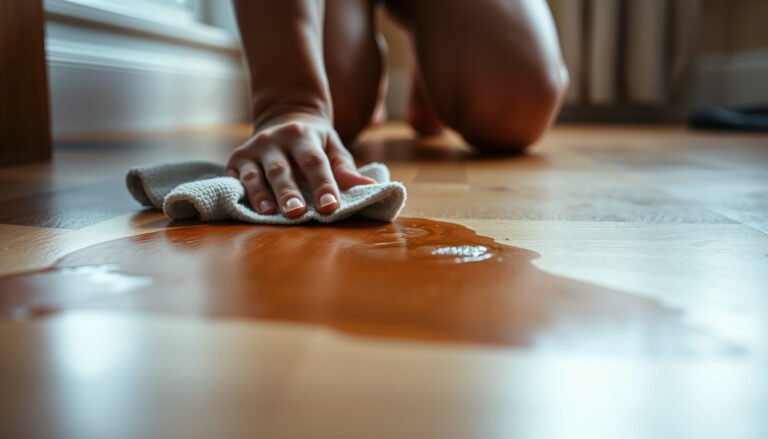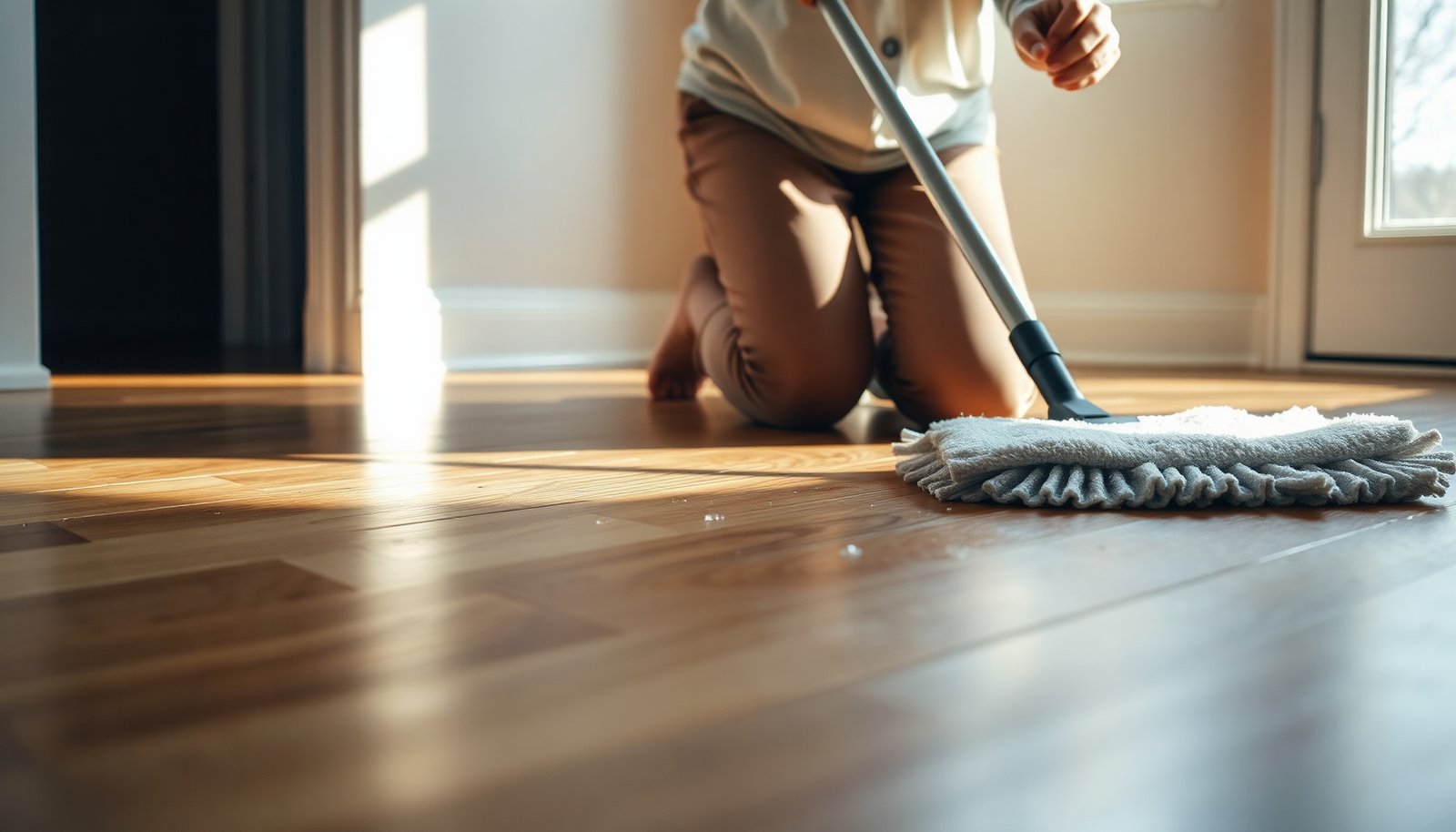

Musty odors trapped in hardwood floors can make even clean rooms feel stale, and it is frustrating to have the smell linger no matter what you do. You can deep clean the finish-safe way to remove the source—dirt, moisture, and residue—without damaging the wood. Expect about a couple of hours of careful work, plus basic supplies like pH-neutral cleaner, clean microfiber pads, and a fan for drying.
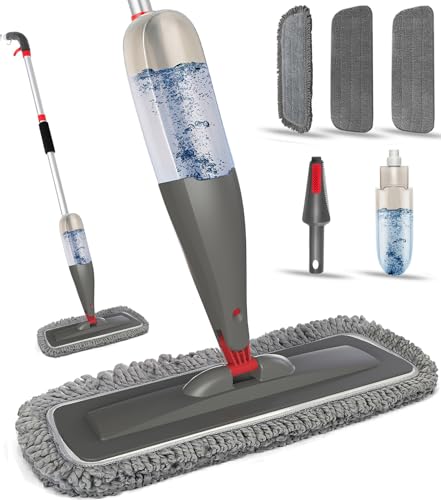



Deep clean hardwood floors to remove musty odors by (1) finding and fixing any moisture source, (2) cleaning without soaking, and (3) deodorizing while fully drying the surface and surrounding area. If the smell comes from grime or trapped surface moisture, a careful deep clean can make a big difference fast—when the odor is coming from below the floor, you’ll need to address that layer too.
This is for homeowners dealing with persistent “damp basement” smells on finished or unfinished hardwood who want a safe, step-by-step plan that won’t damage the finish.
Find the musty source before you clean
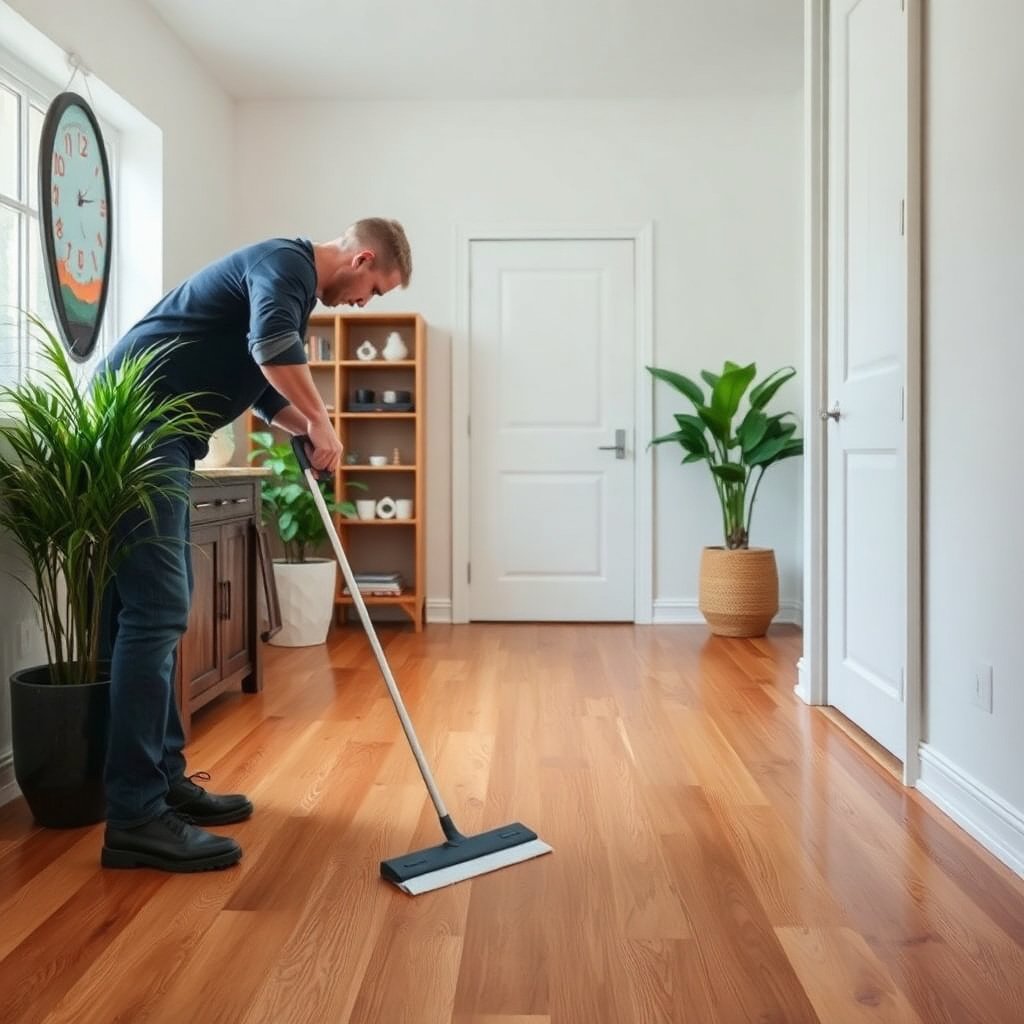
Stop trying random cleaners until you identify whether the odor is coming from the surface or from moisture underneath the hardwood. In most cases, musty odor is either (a) odor-causing residue embedded in grime and micro-cracks or (b) moisture in the wood/subfloor/beneath the floor that continues to feed the smell.
What to check for ongoing moisture
– Leaks and plumbing: under sinks, near toilets, around HVAC condensate lines, and any roof or window leaks.
– Condensation: especially in basements or crawlspaces where temperature differences cause water to form on cooler surfaces.
– Crawlspace or basement humidity: musty odor often tracks humidity patterns; if the smell is strongest in one zone, that zone usually has the moisture story.
– A visibly damp area under/near the floor: board-to-board variation, a warm “damp” spot, or odor that intensifies after rain.
What clues point to odor below the floor
– Discoloration (dark patches or uneven graying) that returns even after cleaning.
– Soft spots or boards that feel different when you walk on them.
– Warping or raised edges along seams or near walls.
– A return smell confined to one area rather than spread evenly—this often signals localized underfloor moisture.
If you suspect mold growth under the flooring or active water intrusion, treat cleaning as secondary. Organizations like the EPA emphasize that you must stop the water problem and remediate moisture sources rather than relying on surface odor control alone (EPA — Mold guidance). Also, mold can begin growing within 24–48 hours after water exposure (EPA — Mold), so waiting “to see if it goes away” can prolong the problem.
Deep clean hardwood without soaking
Do a “dry-first” deep clean so you remove the odor-trapping grime without pushing moisture into seams, edges, or board gaps. If you flood or repeatedly wet the floor, you can worsen the musty smell by adding new moisture pathways.
Dry-first removal of grit and dust
– Remove rugs and mats so the edges don’t hide residue.
– Sweep or vacuum thoroughly using a brush attachment if available—this lifts dust, skin cells, and grit that bind odor.
– Focus on seams, corners, and the perimeter (baseboards and wall lines), where particulate buildup is common.
Clean lightly—never “flood” seams
– Use a hardwood-safe cleaner and apply it lightly via:
– damp microfiber-mop method (lightly damp, not wet), or
– damp-wipe method for smaller sections.
– Avoid flooding:
– seams between boards,
– joints near transitions,
– edges around baseboards.
If rinsing is required, rinse and dry immediately
Some hardwood products require a rinse step. If so:
1. Wipe with a barely damp clean microfiber cloth/mop.
2. Immediately follow with drying (fans/airflow), instead of letting the floor sit with moisture.
In my experience advising homeowners through floor odor issues, the biggest “mystery” causes are usually leftover grit and insufficient drying time, not the lack of cleaner strength—so getting moisture handling right is the real advantage here.
Which cleaning approach is safer for hardwood?
| Method | What it does well | Musty-odor risk if used incorrectly | Best use case |
|---|---|---|---|
| Dry vacuum/sweep first | Removes particulate odor reservoirs | Low | Always, before any wet step |
| Damp microfiber with hardwood-safe cleaner | Lifts grime without soaking | Low if you keep it “barely damp” | Most deep-clean situations |
| “Wet mop” or leaving liquid on the floor | Can clean fast visually | High—liquid can wick into seams and underlay | Usually avoid on hardwood |
| Steam cleaning | Loosens surface debris | High—heat + moisture can affect finishes and gaps | Only if manufacturer explicitly allows it |
Deodorize the odor-causing residue safely
Deodorize after cleaning so the product can work on what’s actually causing the smell. If you deodorize before the residue is removed, you may trap odor compounds under a new layer of treatment.
Use enzyme-based deodorizer for organic residue
If the odor traces back to spills, tracked grime, pet accidents, or organic residue, look for an enzyme-based floor deodorizer and follow the label exactly. Enzymes are designed to break down odor-causing organic compounds rather than masking them.
Avoid harsh “odor killers” unless you know your finish can handle them
Don’t default to bleach, strong solvents, or aggressive degreasers. These can:
– dull or discolor finishes,
– leave residues that attract new grime,
– damage sealants on engineered hardwood or older varnish.
Always spot-test
– Test any deodorizer in an inconspicuous area (like under a chair leg).
– Confirm no color shift, haze, or finish tackiness before you apply broadly.
A quick safety anchor: if your indoor relative humidity stays above 60%, that conditions mold growth risks (EPA — Mold). Since musty odor often correlates with persistent dampness, deodorizing without controlling moisture can become a cycle.
Dry thoroughly so the smell can’t come back
Drying isn’t optional—it’s the step that prevents the musty odor from returning. Once you’ve cleaned and (if appropriate) deodorized, you need the surface and perimeter to fully dry.
Increase airflow across the floor
– Place fans pointed across the floor (not directly blasting one spot) to encourage evaporation.
– Manage windows/doors to avoid bringing in more humid air while drying (especially in humid seasons).
Dry seams and edges, not just the center
Musty odor frequently returns when moisture sits:
– along baseboards,
– in board gaps,
– under thresholds and near edges.
Plan to dry the perimeter longer than the center if you notice faster drying in open floor areas.
Re-check the surrounding causes if smell persists
If odor remains after the floor is truly dry, look outward:
– Does the room still run humid?
– Are vents working properly?
– Is there subfloor dampness, water intrusion, or a hidden moisture source beneath the hardwood?
A helpful “decision point” comes from moisture guidance: indoor conditions that keep humidity controlled help limit mold-related odor persistence (EPA — Mold). And if water exposure occurred, mold can start quickly—so odor that won’t leave after drying can mean the underlayer still has moisture or biology.
📊 Mandatory Data Table (Odor source vs. best response)
Hardwood Musty Odors: What’s Most Likely Causing Them (and Fit for DIY Surface Deep-Clean)
| # | Likely odor mechanism | Most common location | Typical telltale clue | DIY surface deep-clean fit | Finish risk during cleaning |
|---|---|---|---|---|---|
| 1 | Surface grime + trapped dust in micro-grooves | Whole room | Odor improves after vacuuming/wiping | ★★★★★ | Low (damp-only) |
| 2 | Spill residue not fully removed | A specific zone | Smell tracks an old spot | ★★★★☆ | Low–Medium (enzyme + test) |
| 3 | Pet accident residue (organic) | Hallways/doorways | Odor returns on warm days | ★★★★☆ | Medium (must follow label) |
| 4 | Seasonal surface moisture trapped in gaps | Perimeter/baseboards | Odor is worst near walls | ★★★☆☆ | Medium (needs thorough drying) |
| 5 | Underlayment moisture under hardwood | Whole floor or large section | Smell persists after surface drying | ★☆☆☆☆ | Low–Medium (surface is safe, problem is not) |
| 6 | Ongoing humidity high enough for mold risk | Basement-adjacent rooms | Odor returns quickly | ★☆☆☆☆ | Low (but don’t deodorize as a fix) |
| 7 | Water damage followed by mold growth under/at the boundary | Localized water-loss area | Visible damage or musty smell despite drying | ☆☆☆☆☆ | High (avoid DIY without remediation plan) |
What can go wrong (and how to avoid it)
Don’t let the “fix” create new moisture damage. The most common way homeowners make musty odors worse is by over-wetting, using incompatible chemicals, or ignoring moisture under the hardwood.
Over-wetting during mopping
– Mopping “until it looks clean” can push moisture into seams and edges.
– Even if the surface looks dry later, moisture trapped in the perimeter or gaps can keep odors active.
Using the wrong chemicals
– Vinegar, ammonia, and bleach can react with finishes, leave residues, or dull surfaces.
– Residues can become a new “food source” for grime, making the smell return faster.
Ignoring the underlayer (subfloor/underlayment)
If your underlayment is damp, surface cleaning can mask the odor temporarily while the underlayer continues producing the smell. This is exactly why EPA emphasizes fixing water issues and preventing conditions that support mold (EPA — Mold).
Increased risk with unfinished or older hardwood
– Unfinished or aged floors are more vulnerable to:
– grain raising,
– dark spotting,
– patchy appearance after repeated wet treatments.
– If you’re unsure what your finish can tolerate, start with minimal moisture and test spot-first.
Verdict: when this works—and who should skip it
This deep-clean approach works best when the musty odor is caused by surface grime and trapped surface moisture that can dry out—for example, after a humid season, a spill that wasn’t fully dried, or residue in micro-grooves. Here’s why: cleaning removes odor reservoirs, deodorizing targets organic compounds when appropriate, and drying prevents re-activation.
Skip the DIY deep-clean plan and call a moisture remediation professional if:
– there was significant water damage or flooding,
– the musty smell persists after the floor is fully dry,
– you see visible mold,
– boards are soft or warped,
– you strongly suspect moisture under the hardwood or wet underlayment/subfloor.
Why calling a pro can be the fastest route
If mold growth started after water exposure, time matters. Mold can begin growing within 24–48 hours after water exposure (EPA — Mold), so repeated cleaning may become a delayed, incomplete solution.
Scan-friendly checklist
| Step | What to do | Done? |
|---|---|---|
| 1 | Fix/verify no active moisture source (leak, humidity, venting) | ☐ |
| 2 | Dry sweep/vacuum thoroughly before any wet cleaning | ☐ |
| 3 | Clean lightly with a hardwood-safe cleaner (no flooding seams) | ☐ |
| 4 | Deodorize with an enzyme-based product only if appropriate to the odor source | ☐ |
| 5 | Dry fast using airflow; keep perimeter areas in mind | ☐ |
| 6 | Re-check: if smell remains after drying, inspect underfloor/underlayment moisture | ☐ |
Frequently Asked Questions
What causes musty odors on hardwood floors, and how can deep cleaning help?
Musty odors often come from trapped moisture, spills, wet mopping, or damp areas beneath floorboards that promote mildew or odor-causing bacteria. Deep cleaning helps remove the grime and organic residue that hold onto smells, and it can also help you locate where moisture is coming from so the odor doesn’t return. Pair cleaning with thorough drying and, if needed, moisture checks to fully resolve the problem.
How do I deep clean hardwood floors to remove musty odors safely?
Start by dry-vacuuming and sweeping thoroughly to remove dust and debris that can trap odors. Use a hardwood floor cleaner recommended for your finish, lightly dampening a microfiber mop (never soaking the surface), and work in small sections. After cleaning, dry immediately with clean towels and run airflow (fans/dehumidifier) to accelerate drying; avoid steam and harsh chemicals that can damage the finish and worsen smells.
How do I remove lingering mildew smells from hardwood without damaging the finish?
For light mildew odors, try a dedicated approach: clean first with a pH-neutral hardwood cleaner, then spot-treat only affected areas with a diluted, wood-safe solution per product instructions. Always test any cleaner in an inconspicuous spot to ensure it won’t discolor or dull the finish. If the smell persists, the issue may be deeper (e.g., moisture under the floor), and addressing subfloor dampness may be necessary.
Which cleaning products work best for musty smells on sealed vs. unfinished hardwood?
Sealed hardwood typically tolerates pH-neutral hardwood cleaners and manufacturer-approved products, which help lift residue without stripping the finish. Unfinished hardwood requires extra caution because it can absorb odors and residues—using strong degreasers or bleach can cause uneven staining. If you’re unsure, choose products specifically labeled for your floor type (sealed, waxed, or unfinished) and follow dilution directions exactly for odor removal.
Best practices: What’s the best way to prevent musty odors from coming back after deep cleaning?
Control humidity by using a dehumidifier if indoor air is damp and keep relative humidity stable, ideally around 35–55%. Prevent future moisture by promptly wiping spills, using a damp (not wet) mop, and placing mats or felt pads under wet-entry areas. Finally, ensure your space dries quickly—fans after cleaning and regular inspections for any lingering damp spots help stop musty odors from returning.
📅 Last Updated: November 04, 2026 | Topic: How to deep clean hardwood floors to remove musty odors? | Content verified for accuracy and freshness.
References
- Mold Cleanup in Your Home | US EPA
- Learn about Mold | US EPA
- https://www.cdc.gov/mold/cleanup/index.html
- Mold – Overview | Occupational Safety and Health Administration
- https://www.hud.gov/program_offices/healthy_homes/mold
- WHO guidelines for indoor air quality: selected pollutants
- Mold
- https://scholar.google.com/scholar?q=deep+clean+hardwood+floors+musty+odor Google Scholar
- https://scholar.google.com/scholar?q=mold+remediation+wood+floor+odors Google Scholar
- https://scholar.google.com/scholar?q=humidity+moisture+control+indoor+musty+odor Google Scholar