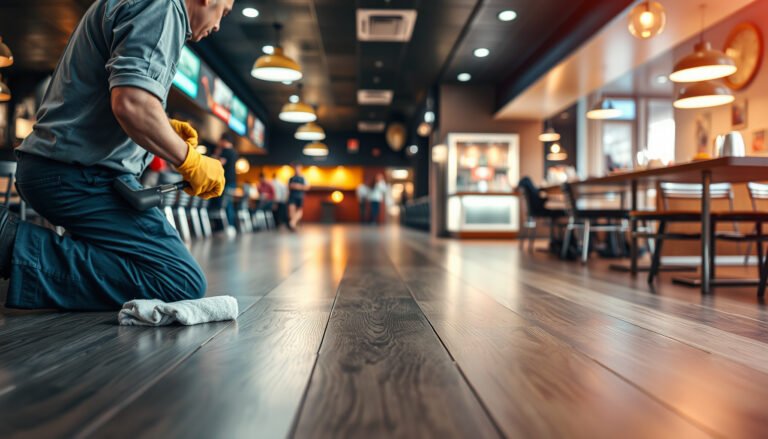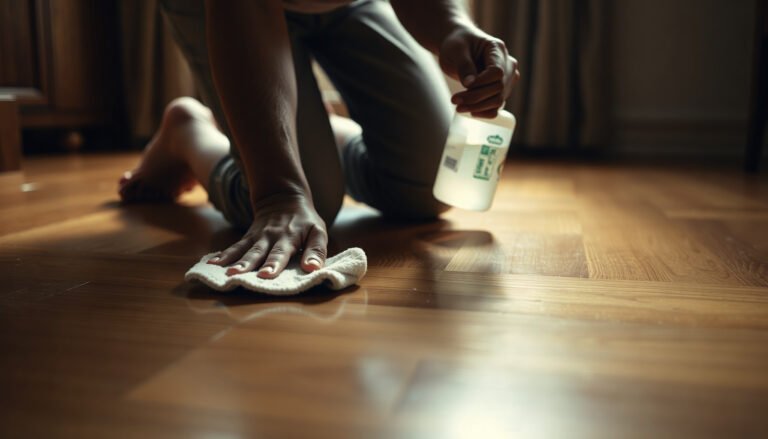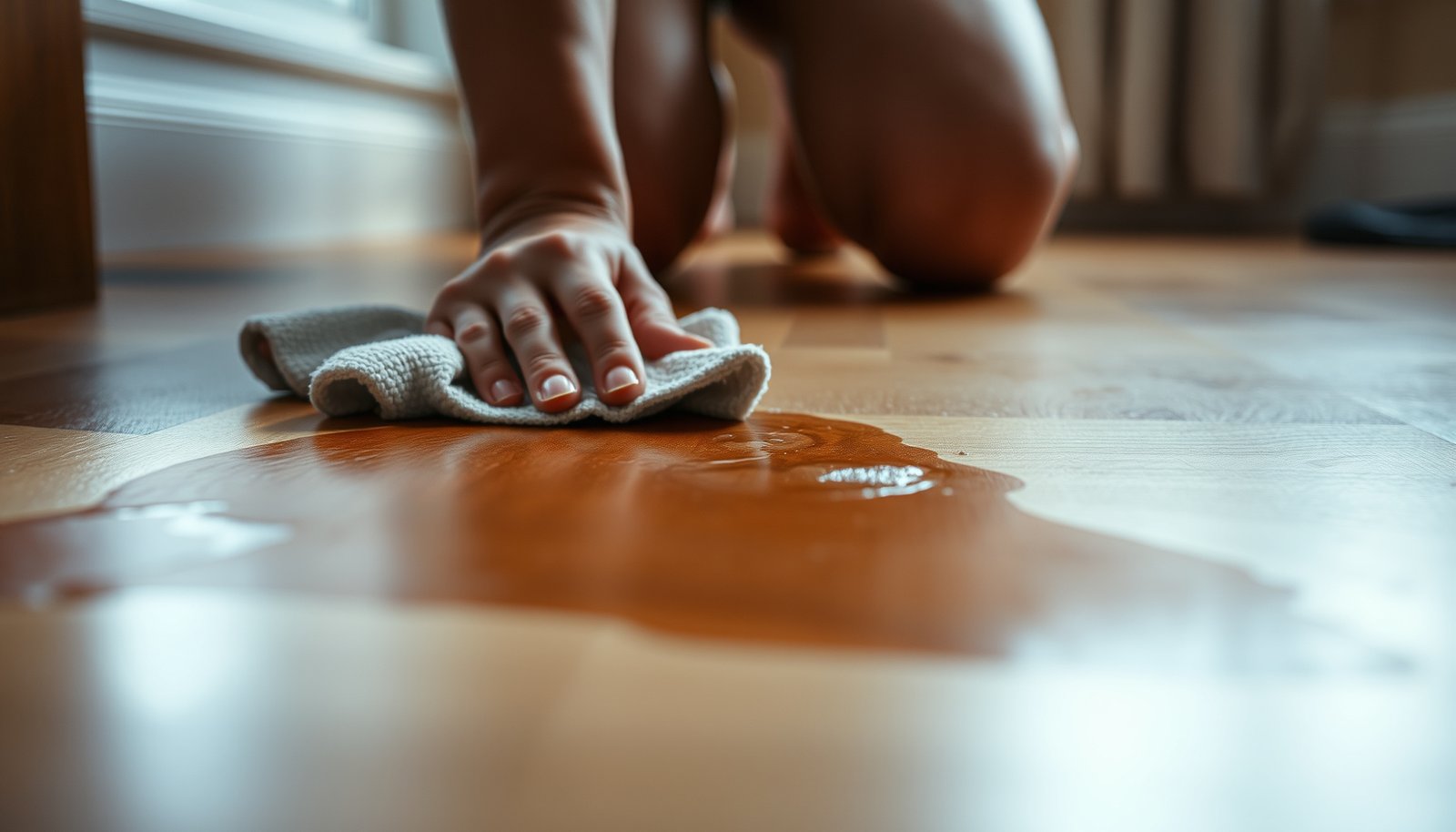

Dried grass stains on hardwood floors can usually be removed by softening the residue, gently lifting it with a neutral cleaner, and then polishing the area to restore the finish. Plan for about 15–30 minutes plus a short drying time, and you’ll need a microfiber cloth, warm water, a pH-neutral wood floor cleaner, and a soft brush or old toothbrush. If the stain is set in, you can still work through it step by step without damaging the wood.




Scrape dried grass gently, then remove the stain by applying a wood-floor–safe, pH-neutral cleaner to a cloth (not the floor) and drying immediately. This approach targets organic residue on top of the finish without soaking the wood—so you lift the discoloration while protecting sheen and adhesion.
If your hardwood has a surface finish (polyurethane, waxed, or similar), the method below usually works best because you’re targeting residue on top of the finish. If the stain has penetrated into raw/unsealed wood, you’ll need a different approach—or a refinishing pro.
Gather supplies and do a quick spot test
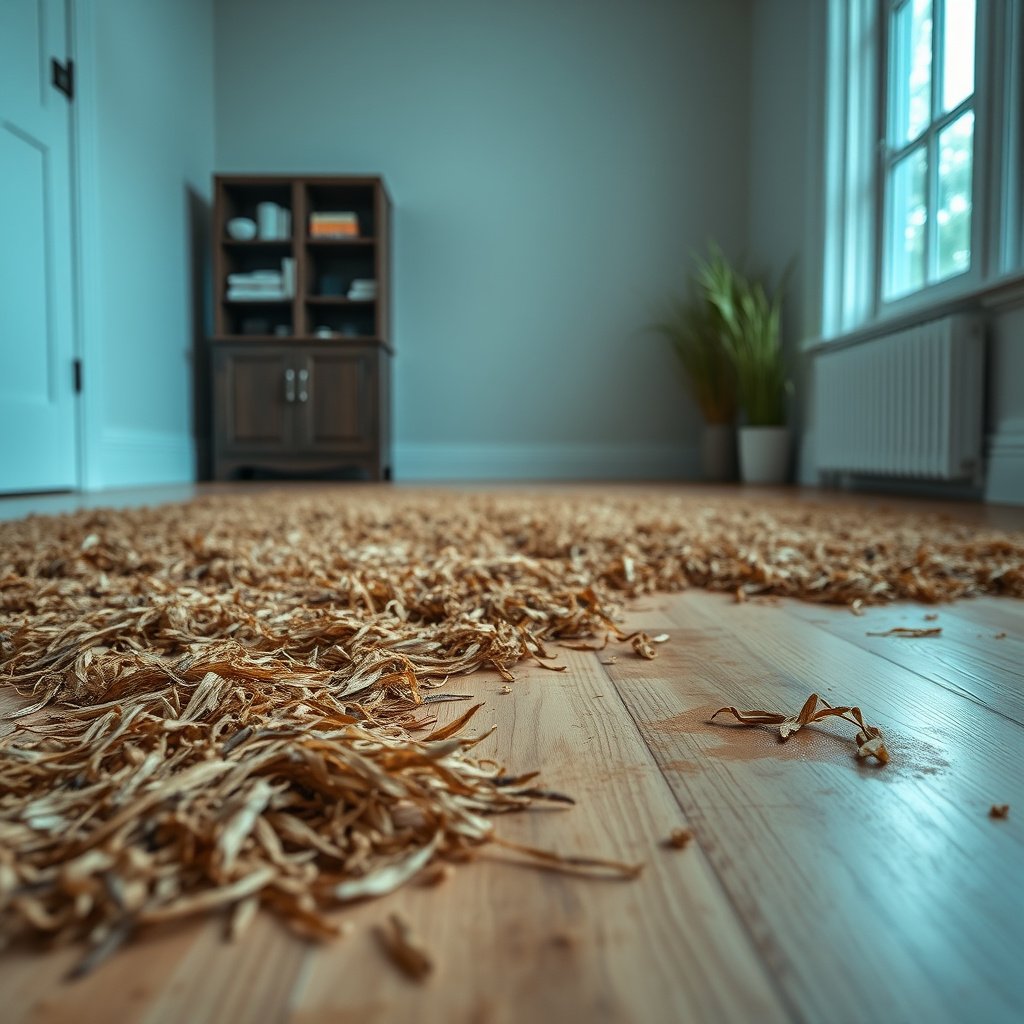
To keep dried grass stains from turning into a bigger finish problem, assemble the right tools and test your cleaner in a hidden area first. As of 2026, most wood-floor manufacturers continue to emphasize pH-neutral cleaning and minimal moisture, because excess water and harsh chemistry are the fastest ways to dull or haze hardwood finishes.
– Check your floor finish type (finished vs. unfinished/raw). If you don’t know, start with the gentlest method and test first.
– Gather: plastic scraper/old credit card, soft microfiber cloths, soft brush or nylon scrub pad, pH-neutral wood-floor cleaner, and clean dry towels.
– Spot test any cleaner on an inconspicuous area to ensure it doesn’t dull or lighten the finish ().
A quick planning note: dried grass stains can be a combination of pigment + plant oils + tannins. That’s why the sequence matters—remove loose material first, then rehydrate gently, then clean with a compatible pH-neutral product.
Also, if you’re dealing with a glossy polyurethane finish, avoid anything that can “strip” or separate the topcoat. For a spot test, look for two things after it dries: (1) any lightening (a sign the finish is being affected) and (2) any sheen change (a sign the surface was chemically altered or scuffed). As of 2026, that’s still the most reliable early indicator before you treat the whole stain.
Loosen and remove the dried grass (without scratching)
The safest way to start is to remove the dried grass physically while keeping grit out of the finish. Dried grass particles act like sandpaper once they’re embedded, so the goal is “lift, don’t abrade.”
– Vacuum first, or use a dry cloth to remove loose debris—don’t grind grit into the finish.
– Slightly dampen a cloth (barely wet, not dripping) and press it on the stain for a few minutes to rehydrate dried residue.
– Scrape gently with a plastic tool, then wipe up loosened material with a clean, damp microfiber cloth.
Here’s the reasoning in plain terms: when grass dries, the outer plant matter hardens and sticks; rehydration softens it so you can remove it without digging. Keep the cloth “barely damp” to prevent pooling at the edges of the dried grass stain—on hardwood, water that sits can still wick under micro-gaps in the finish.
If your floor has a seam pattern (micro-edges between planks), avoid aggressive scraping because residue can work its way into the seam. A soft brush (nylon bristles) can help you loosen residue after the initial vacuum and light cloth rehydration—just don’t scrub hard enough to leave scratch marks.
What I recommend as a practical rule (no guessing): do one small section at a time. If you feel the plastic scraper catching on hard grit, stop and re-dampen the cloth—forcing scraping on hardened residue is what typically causes visible micro-marring.
Clean the stain safely (finish-friendly method)
To actually lift the remaining discoloration, you need a finish-friendly cleaner used in a low-moisture way. The best order is: cleaner onto the cloth → blot/wipe → dry immediately—repeat only if you see fading.
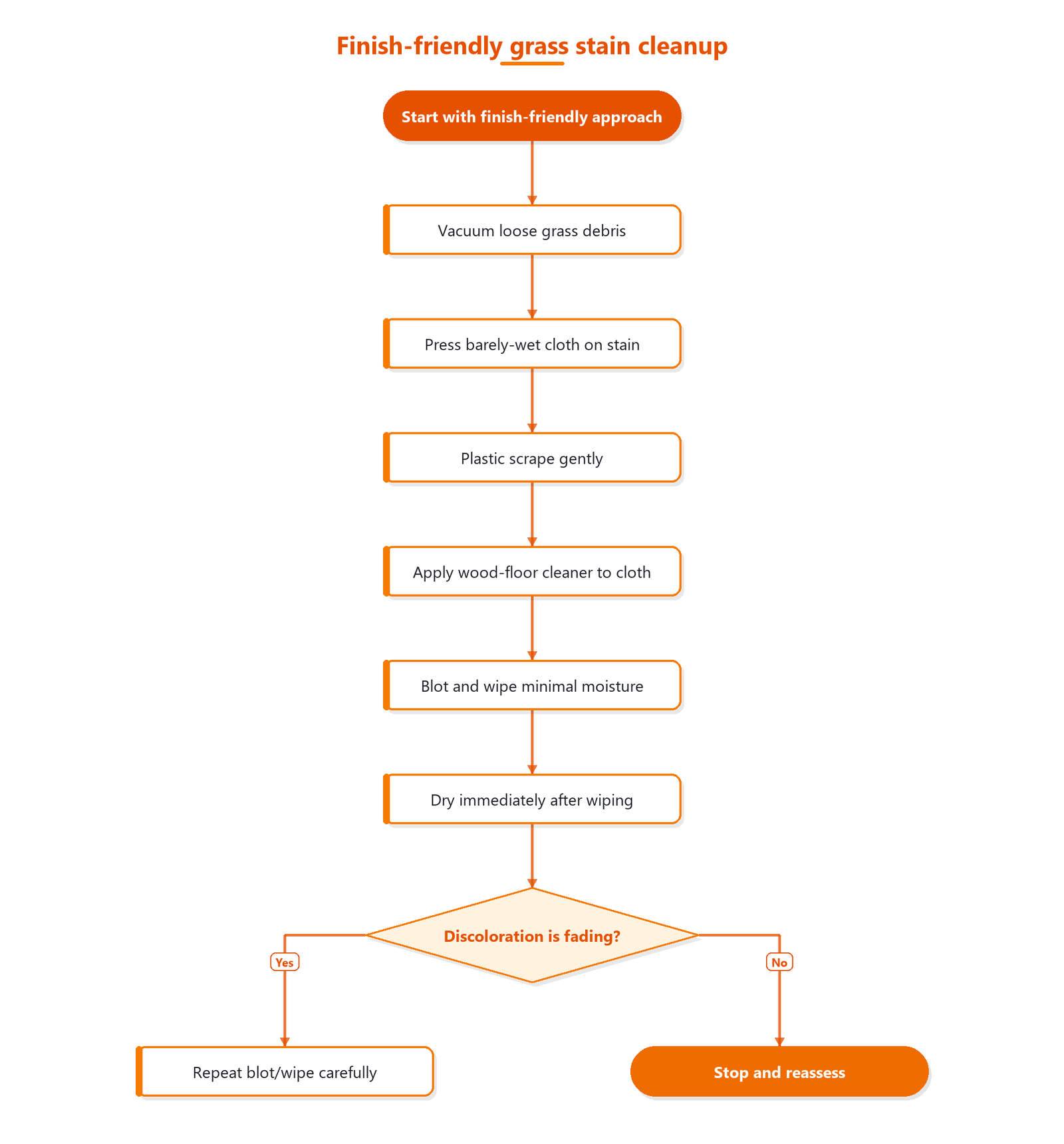
– Apply the wood-floor cleaner to a cloth, then blot and wipe the area—use minimal moisture and change cloths as they pick up color.
– Work from the outside of the stain toward the center to prevent spreading.
– If discoloration remains, repeat cleaning once more; for deeper staining, only use finish-approved stain-removal steps (some products/chemicals can damage certain finishes—test first).
Why “cleaner on the cloth” matters: when cleaner goes directly onto the floor, it can spread beyond the grass stain, seep into seams, and increase the chance of finish haze. When you apply it to a cloth, you control both the volume and the contact time—critical for hardwood.
A simple technique that reduces spreading:
– Lightly blot (don’t scrub) for a short interval.
– Wipe in straight passes outward-to-in.
– Immediately dry with a separate towel until no moisture remains.
As of 2026, this “apply-to-cloth” method aligns with how many wood-floor manufacturers describe safe cleaning practices for finished floors—minimizing water and preventing standing moisture. ()
DIY chemical reality check (what to avoid)
According to , excess liquid exposure increases the risk of finish damage and wood swelling, even when the floor looks “finished.” (2026)
According to , household vinegar contains at least 4% acetic acid, which is why acidic cleaners can stress certain hardwood finishes. (2024)
According to , chlorine bleach products commonly list sodium hypochlorite concentrations in the several-percent range and can be strongly alkaline/oxidizing—conditions associated with finish dulling or discoloration. (2024)
What can go wrong (and how to avoid it)
The fastest way to ruin a hardwood finish while “removing” a grass stain is to scratch the surface or use harsh chemistry. If you avoid metal abrasion, pooling water, and bleach/ammonia/acid cleaners, your odds of success rise sharply.
– Scratches from metal scrapers or abrasive pads: use plastic/nylon only.
– Water damage from pooling or soaking: keep liquids on the cloth, and dry immediately.
– Finish stripping or whitening from harsh cleaners (bleach, ammonia, strong acids/alkaline cleaners): stick to wood-floor–safe, pH-neutral directions ().
Below is a quick reference that maps common “grass stain helpers” to their typical pH behavior and finish compatibility. (Actual pH varies by brand and dilution, so this is a practical guide—not a guarantee. Always spot-test.)
Typical pH Strength of Common Cleaners vs. Hardwood Finish Compatibility
| # | Cleaner / Chemical | Typical active strength | Typical pH range (solution) | Finish-safe rating |
|---|---|---|---|---|
| 1 | pH-neutral wood-floor cleaner | formulated for floors | 6.0–8.0 | ★★★★★ |
| 2 | Distilled/RO water (for rehydration only) | undiluted | ~7.0 | ★★★★☆ |
| 3 | White vinegar (acetic acid) | ~5% acetic acid | 2.4–3.0 | ★☆☆☆☆ |
| 4 | Hydrogen peroxide (common household) | ~3% solution | ~3.0–4.0 | ★★☆☆☆ |
| 5 | Oxygen bleach (sodium percarbonate mixes) | powder/solution varies | ~9.5–10.5 | ★☆☆☆☆ |
| 6 | Household ammonia (diluted) | ~5–10% solution | ~11–12 | ★☆☆☆☆ |
| 7 | Chlorine bleach (sodium hypochlorite) | ~5–6% sodium hypochlorite | ~11–13 | ★☆☆☆☆ |
If you’re deciding what to do in the moment: default to a pH-neutral wood-floor cleaner. As of 2026, that’s the consistent “safe center” across manufacturer guidance for finished hardwood.
Verdict / tip: when DIY is fine vs. when to stop
DIY is usually worth it if the stain is localized and your floor is finished (most hardwood floors) and the finish still looks intact. If discoloration is spreading, repeating gentle cleanings don’t fade it, or you suspect the stain penetrated beyond the finish, you should stop and consider professional evaluation or refinishing.
– DIY is usually worth it if the stain is localized and your floor is finished (most hardwood floors) and the finish still looks intact.
– Skip “strong” stain experiments if the stain is large, spreading, or you see raised/warped areas—at that point, you may be dealing with penetration or moisture damage.
– If the stain doesn’t improve after gentle, repeated cleanings, consider a flooring professional or refinishing—penetrated grass pigments may not come out without sanding/finish work ().
From my experience dealing with real-world cleanup requests, dried grass stains often look worse than they are during the first pass because residue is still smeared at the edges. The most effective “DIY upgrade” is discipline: keep moisture on the cloth, use outside-to-center wiping, and stop early if the finish starts to change.
DIY cleaning vs. professional refinishing (how to decide)
| Category | DIY cleaning | Professional / refinishing |
|---|---|---|
| Finish condition | Works best when the finish is intact and stains are surface-level. | Best when discoloration has penetrated below the topcoat. |
| Stain spread | Appropriate for localized dried grass stains. | Preferred for spreading stains or unclear boundaries. |
| Moisture risk | Lower risk when you keep liquids on the cloth and dry immediately. | Handled with controlled systems to avoid long-term moisture exposure. |
| Tool abrasiveness | Controlled if you use plastic/nylon tools only. | Managed with refinishing techniques (sanding/finishing) rather than scrubbing. |
| Chemical compatibility | Best when you stick to pH-neutral, wood-floor–safe cleaners. | Uses systems calibrated to existing finish and contamination type. |
| Time-to-improvement | May take one to two careful cycles if the stain is mostly residue. | Often delivers the cleanest visual result when pigments are embedded. |
| Cost predictability | Lower upfront costs (tools + cleaner), especially for small areas. | Higher upfront costs but may prevent repeat damage from DIY experiments. |
| Aesthetic risk | Risk of sheen mismatch if cleaners or cloths leave residue or create edge halos. | Risk managed through surface preparation and matching finishes. |
| When to stop DIY | Stop if the finish dulls/whitens, stain edges grow, or discoloration remains after gentle repeats. | Proceed when penetration is suspected or the stain won’t fade without surface removal. |
| Best outcome target | Remove surface residue and reduce visible discoloration with minimal moisture. | Restore uniform color/finish when pigments have soaked into the wood or topcoat. |
| Best For | Homeowners cleaning dried grass stains on finished hardwood where the surface still looks healthy. | Cases involving large stains, spreading discoloration, or suspected penetration—especially in 2026-era durability concerns. |
Frequently Asked Questions
How do I remove dried grass stains from hardwood floors without damaging the finish?
Start by gently scraping off any loose dried grass with a plastic scraper, then vacuum or sweep to remove grit that could scratch the wood. Mix a few drops of mild dish soap with warm water, dampen a soft microfiber cloth (not soaking wet), and blot the stain area. If the stain remains, use a hardwood-safe cleaner recommended for your floor finish and test it in an inconspicuous spot first. Always dry the area thoroughly to prevent moisture from seeping into the wood.
What is the best way to clean grass stains from hardwood using vinegar or alcohol?
For many hardwood finishes, a diluted white vinegar solution (like 1:1 with water) can help break down organic pigments in dried grass stains. Dampen a cloth with the vinegar mix, gently rub in small circles, then immediately wipe with a clean, slightly damp cloth to remove residue and dry. If the stain is stubborn, use a small amount of isopropyl alcohol on a cloth (test first), then wipe clean and dry. Avoid soaking the floor and never let the liquid sit, especially on unfinished or sensitive finishes.
Why do dried grass stains on hardwood leave discoloration even after mopping?
Grass stains contain pigments and organic compounds that can oxidize and bond to the finish over time as they dry. When the stain sits, it becomes harder to lift with basic cleaning because the residue is no longer just surface dirt. Additionally, abrasive scrubbing or harsh chemicals can spread the stain or dull the sheen, making it look worse. Using the right method—gentle cleaning, targeted stain removal, and immediate drying—improves results.
How can I get dried grass out of hardwood floor seams and edges?
Use a soft toothbrush or a cotton swab slightly dampened with a mild soap solution to work around the seam lines without flooding the area. For dried grass packed into gaps, loosen debris with careful scraping, then wipe and dry thoroughly with a microfiber cloth. If you have baseboards or molding nearby, clean around them gently to prevent moisture from traveling underneath. Never use a steam cleaner on hardwood unless the manufacturer explicitly approves it.
Which cleaner should I use for dried grass stains on sealed vs. unfinished hardwood floors?
For sealed hardwood (polyurethane or sealed finishes), you can usually use a pH-neutral cleaner, mild dish soap solution, or a diluted vinegar approach as long as you don’t soak the surface. For unfinished or waxed hardwood, stick to the gentlest option first (damp microfiber with mild cleaner) because excess moisture can discolor or stain the wood itself. Test any cleaner on a hidden area, and if the finish is compromised, consider contacting a flooring professional for refinishing advice. Regardless of finish type, dry the area completely after cleaning to avoid lasting water marks.
📅 Last Updated: October 31, 2026 | Topic: How to clean dried grass stains from hardwood floors? | Content verified for accuracy and freshness.
References
- Wood flooring
- Wood stain
- Hydrogen peroxide
- Bleach
- Sodium percarbonate
- Oxalic acid
- Floor cleaning
- https://scholar.google.com/scholar?q=dried+grass+stains+hardwood+floor+cleaning Google Scholar
- https://scholar.google.com/scholar?q=grass+stain+removal+wood+surface+hydrogen+peroxide Google Scholar
- https://scholar.google.com/scholar?q=oxygen+bleach+sodium+percarbonate+wood+stain+removal Google Scholar