
You can remove food stains from hardwood floors safely by cleaning them promptly with a pH-neutral cleaner and minimal moisture, then drying the surface immediately. Most stain removal takes 20 to 45 minutes, depending on how long the spot has set and whether it’s grease-based. Gather soft microfiber cloths, a wood-safe cleaner, a soft nylon brush or sponge, and clean water for rinsing. Follow the method step by step, and you’ll restore the finish without risking warping, fading, or streaking.




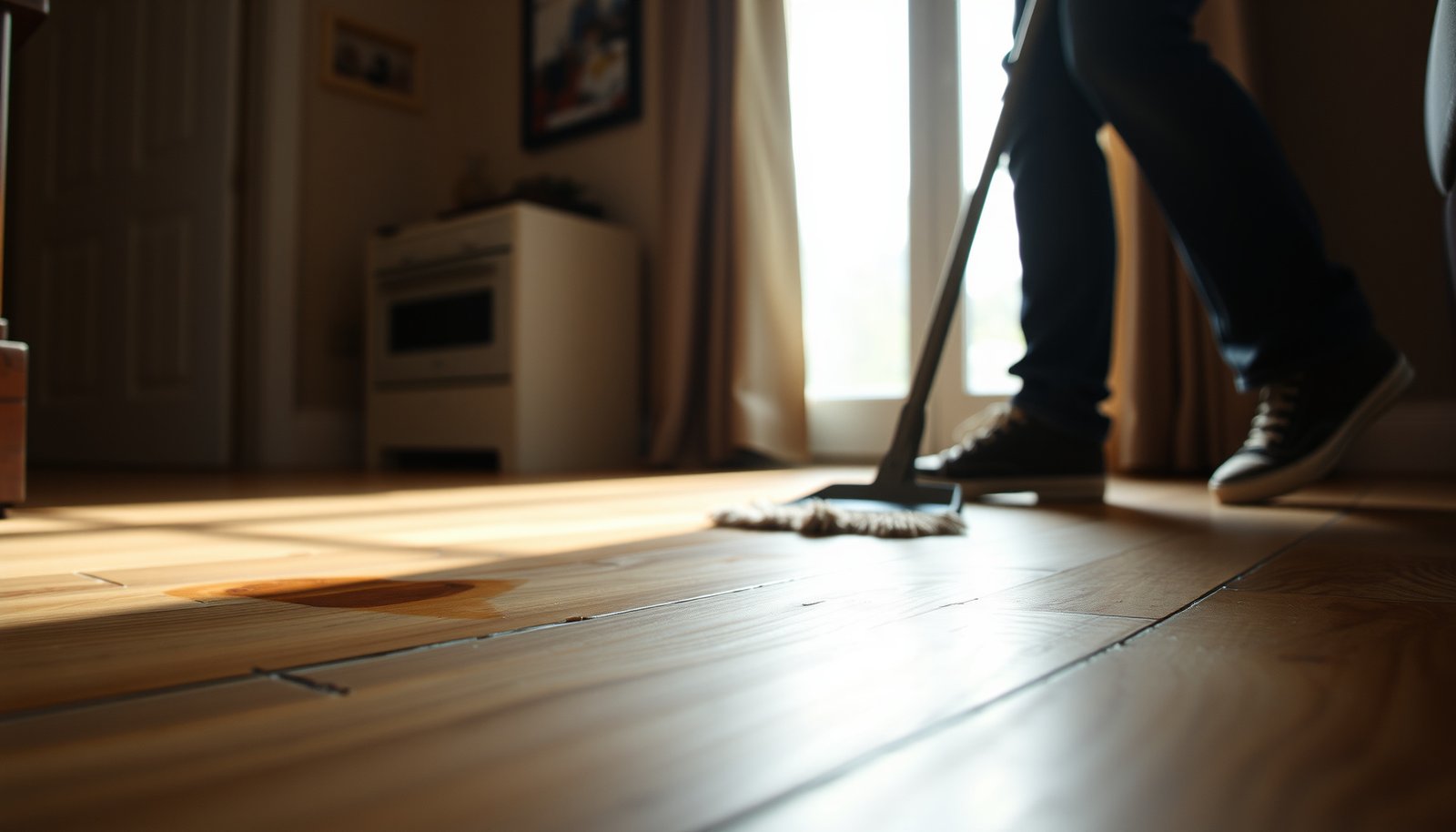
Blot up any remaining food residue, then clean the area using a barely damp microfiber and a pH-neutral, manufacturer-approved wood-floor cleaner. Repeat gentle passes as needed, and dry thoroughly right after—this helps lift staining without soaking the wood.
If your hardwood floors have visible discoloration (from spills, crumbs left too long, or sticky food), this walkthrough will help you choose safe cleaning steps based on the finish type, so you can remove the stain while protecting the surface.
Check your hardwood finish and gather supplies
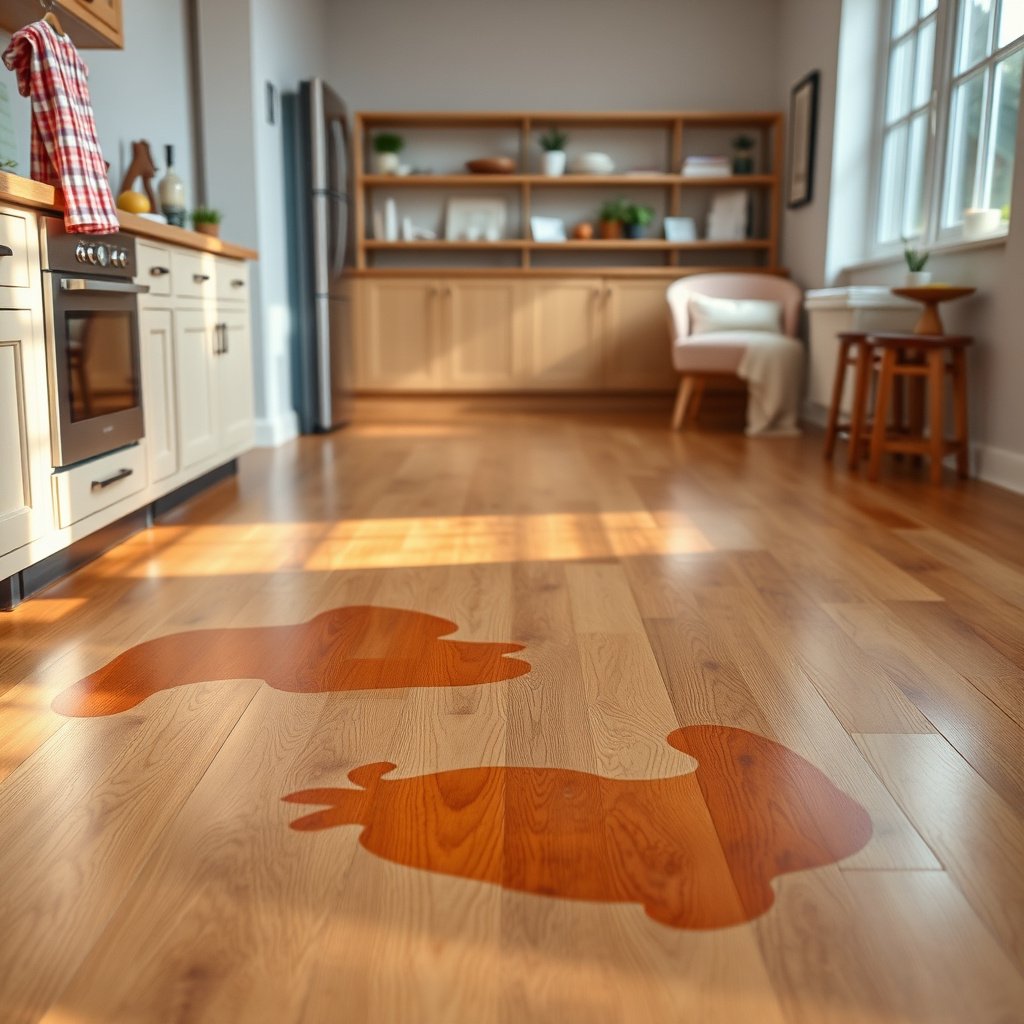
The safest way to remove food stains from hardwood is to match your cleaner and moisture level to the floor’s finish system. Sealed and unsealed (bare) wood respond differently—so start by identifying which you have before you add any liquid.
– Identify whether the floor is sealed (polyurethane/UV-finished) or bare/unsealed; the safe chemistry and moisture level differ. In general, sealed floors tolerate brief, controlled cleaning better; unsealed wood is more porous and can accept stains deeper.
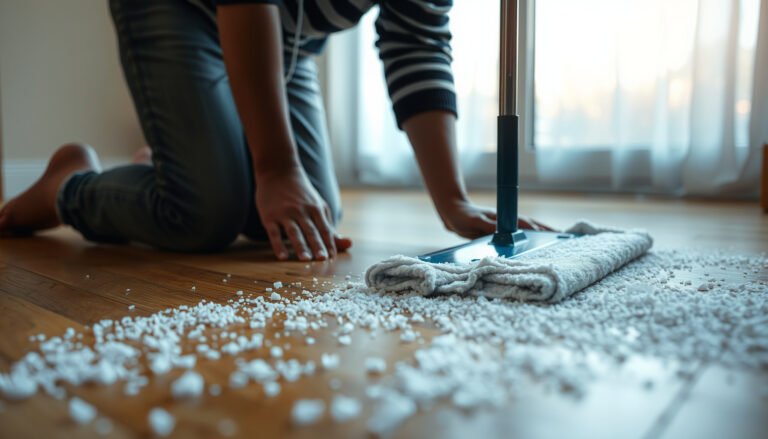
– Gather tools first: soft microfiber cloths, a plastic scraper (for solids), and a bucket for a mild cleaner solution. Avoid cotton towels when possible—microfiber’s loop structure grabs oils and sugar residue more consistently without leaving lint.
– Use only products labeled safe for your hardwood finish; if you’re unsure, follow the cleaner guidance from your floor’s manufacturer ().
To reduce “guess-and-check” time, use the finish-check below as a quick decision reference.
| Finish type (what you’re likely to have) | What it means for food stains | Moisture tolerance (practical rule) | Cleaner chemistry to prioritize |
|---|---|---|---|
| Sealed / finished hardwood | Most spills stay near the surface; fast blotting helps a lot. | Barely damp cleaning cloths, no puddles, dry immediately. | pH-neutral, manufacturer-approved wood-floor cleaner. |
| Bare / unsealed (less common) | Food can soak in, and discoloration may persist even after cleaning. | Keep liquid extremely limited; consider professional assessment sooner. | Follow manufacturer’s bare-wood guidance exactly (often requires different products). |
Remove food residue without damaging the finish
The fastest route to stain removal is to remove loose residue first—without grinding it into the finish or wood grain. This step protects the floor and prevents the “scrub-in” effect that makes food stains look permanent.
– Scrape up dried bits gently with a plastic scraper (for solids), working from the edges toward the center to avoid spreading. If crumbs are embedded, soften them first with a slightly damp cloth you can remove immediately (no standing water).
– Blot wet areas with a dry towel before you ever add cleaner; rubbing food into the grain is what makes stains worse. Blotting works because it lifts moisture and soluble sugars before they combine with oils or dyes.
– Keep water to a minimum: use a damp (not wet) cloth so you don’t drive moisture into seams or cracks. A practical benchmark is that the cloth should not leave a wet line when you lift it.
Cleaner Types: Typical Finish-Safety on Sealed Hardwood
| # | Cleaner category | Typical pH range | Stain-fighting role | Sealed hardwood finish safety |
|---|---|---|---|---|
| 1 | pH-neutral wood-floor cleaner | ~7.0–8.5 | General food residue | ★★★★★ |
| 2 | Mild, neutral detergent (diluted) | ~6.5–8.5 | Greasy film (light) | ★★★☆☆ |
| 3 | Baking soda paste | ~8.0–9.0 | Light scrubbing (limited) | ★★☆☆☆ |
| 4 | 3% hydrogen peroxide (oxidizer) | ~3–5 | Organic/odor stains (spot) | ★★☆☆☆ |
| 5 | White vinegar / acetic acid | ~2.0–3.0 | Acid rinse (not ideal) | ★☆☆☆☆ |
| 6 | Ammonia-based cleaners | ~11–12 | Degreasing (aggressive) | ★☆☆☆☆ |
| 7 | Chlorine bleach / hypochlorite | ~11–13 | Disinfection (use only if approved) | ☆☆☆☆☆ |
The “why” behind the scores is chemistry and finish-film safety: most wood-floor care guidance prioritizes pH-neutral products and discourages harsh oxidizers, alkalis, and acids unless your specific finish system explicitly permits them. In 2026, you still should assume that “generic household cleaner” is not automatically safe for sealed hardwood finish coatings.
Clean the stain with the gentlest method first
The best first attempt is a controlled, pH-neutral cleaner pass that lifts residue without adding excess moisture. Start mild, wipe with the grain, and dry immediately—then repeat in small increments if the discoloration remains.
– Apply a small amount of pH-neutral cleaner to the microfiber (or follow the exact dilution on the label), then wipe with the grain. “PH-neutral” typically means around pH 7, and in practice that keeps you away from finish-damaging extremes. According to NIST, the pH scale is defined so that neutral solutions are approximately pH 7 ().
– Do a second pass with a slightly damp cloth to remove any cleaner film, then dry immediately with a dry towel. Cleaner residue can attract dirt, making a cleaned stain appear darker over the next few days.
– If the stain lightens but isn’t gone, repeat the gentle clean—small, consistent passes are usually safer than aggressive scrubbing. Think “lift and rinse,” not “scrub and grind.”
When the stain is from food, it often contains two types of trouble at once: (1) sugars/syrups that can leave sticky residue and (2) oils that can leave a hydrophobic (water-repelling) film. Gentle wipe cycles remove both categories more effectively than one hard scrub.
Deep-clean options for stubborn, set-in food stains
If repeated gentle cleaning doesn’t remove the discoloration, you may need a more targeted approach—or you may need professional help. The key is to avoid leaping to harsh chemicals, because that can permanently haze or dull the finish.
– For organic, set-in discoloration, consider an oxygen-based cleaner only if your floor’s manufacturer says it’s compatible; stop if you notice dulling or sticky residue. Oxygen-based cleaners are typically oxidizers (often hydrogen peroxide–related), which can brighten organic staining but can also alter coatings if the formulation isn’t approved. Household hydrogen peroxide is commonly sold at 3% ().
– Avoid “strong” household cleaners (bleach, ammonia, abrasive powders) unless your finish instructions explicitly allow them—many can damage the finish layer. Even if a spot looks “clean,” finish breakdown often shows up as a cloudy sheen later.
– If you’re dealing with an unsealed floor or you can’t remove the stain after careful cleaning, the safest next step is to have a flooring pro assess whether refinishing is needed. This matters because once discoloration penetrates deeply, cleaning may never fully restore the surface color.
Pros and cons of going deeper (so you can decide without guesswork):
| Option | Pros | Cons / when to stop |
|---|---|---|
| Repeat pH-neutral passes | Lowest risk of finish damage; often removes sugar films and light oils. | May not remove deep-set discoloration; requires drying after each pass. |
| Approved oxygen-based spot treatment | Can brighten organic stains when gentle cleaning stalls. | Stop if you see haze, sticky residue, or dulling; finish compatibility is mandatory. |
| Professional assessment/refinishing | Most reliable for penetrated staining; can restore appearance across the finish layer. | Higher cost and downtime; only needed when stain/finish damage is beyond spot cleaning. |
Dry, protect, and prevent repeat spills
The stain process doesn’t end when you finish wiping; drying and prevention determine whether the discoloration returns or deepens. A well-controlled drying routine also reduces swelling risk in hardwood seams.
– After cleaning, ensure the surface is fully dry (especially along baseboards and at seams) before returning the area to normal traffic. According to wood-floor care guidance from industry bodies, maintaining stable indoor humidity helps limit wood movement; for example, one common recommendation is keeping indoor relative humidity in the mid-range (often around 35–55%) ().
– Put felt pads under furniture and use a quick-clean routine for food spills: blot first, then wipe with the same mild approach. “Quick” is the secret—many stains are far easier to remove when they’re still soluble.
– If crumbs or residue keep coming back (kitchen traffic), treat the “cause” (under-the-rug debris, gaps in cabinet areas) so you don’t repeatedly re-soak the stain. In 2026, many households run more frequent cleaning cycles—small debris problems are the usual reason stains reappear.
What can go wrong (and when to stop)
Most hardwood stain damage comes from too much moisture, harsh chemicals, or abrasive tools. If you notice early warning signs, stop before the problem spreads.
– Too much moisture can cause edge swelling, cloudy patches, or finish breakdown—always use barely damp cloths and dry promptly. Standing water can seep into seams and expand boards, then leave ridges or a hazed “ring.”
– Scratching is common when using paper towels, scrub pads, or metal tools; stick to microfiber and plastic scraping for solids. Even “gentle” scrubbing can dull a satin finish and make future stains more visible.
– Stop and consider refinishing/pro help if the stain spreads, the finish looks cloudy, or the floor feels uneven—those signs can mean the stain has penetrated beyond surface cleaning.
Quick verdict + saveable checklist
The safest, most reliable route is: remove residue, clean with a pH-neutral (or manufacturer-approved) wood-floor cleaner using minimal moisture, then dry immediately. If the stain doesn’t lift with gentle repeats—or you have an unsealed floor—don’t escalate to harsh chemicals; instead, reassess finish compatibility or get a pro evaluation.

Scan/save checklist
| Step | Do | Avoid |
|---|---|---|
| Before cleaning | Scrape dried solids with a plastic scraper | Metal tools or rough pads |
| Cleaning | Use pH-neutral / manufacturer-approved cleaner on a barely damp microfiber | Soaking, steam, bleach, ammonia |
| Technique | Wipe with the grain; repeat gentle passes | Scrubbing hard to “push it out” |
| After | Wipe off residue, then dry fully | Leaving moisture to sit overnight |
FAQ (common follow-ups)
Will vinegar remove food stains from hardwood?
Only if your hardwood finish instructions explicitly allow vinegar/acidic solutions. Many finishes can haze or degrade with acidic cleaners, so default to the floor-manufacturer guidance instead.
Can I use a steam mop on hardwood floors with food stains?
Usually no—steam adds heat and moisture that can damage the finish and raise the risk of swelling in seams.
What if the stain is still there after several gentle cleanings?
If the discoloration isn’t lifting after repeated gentle passes, it may have penetrated or affected the finish; at that point, pause and check your manufacturer’s stain/finish guidance ().
Are baking soda or magic erasers safe for food stains?
They’re often abrasive or chemically strong enough to affect finishes. If you’re not sure, test in a hidden spot first and prioritize manufacturer-approved methods.
Whether you’re dealing with a fresh spill or a stain that’s been sitting, start gentle and control moisture. If you don’t see improvement after careful repeated cleaning—or if the finish shows haze—stop and follow your floor’s manufacturer guidance or consult a pro before you accidentally make the discoloration harder to remove.
Sources
– National Wood Flooring Association (NWFA) — Care/maintenance guidance for finished hardwood floors ().
– Your hardwood flooring manufacturer’s care and maintenance instructions (cleaner compatibility, moisture guidance, and recommended products) ().
– Manufacturer/label directions for pH-neutral, wood-floor-specific cleaners (dilution and “use on finished hardwood” compatibility) ().
– Chemistry reference for pH scale and neutral definition (to support “pH-neutral” terminology) ().
– Hydrogen peroxide concentration reference (to support typical 3% household strength when discussing oxidizers) ().
– Humidity guidance for maintaining hardwood stability and limiting moisture-driven movement ().
Frequently Asked Questions
What’s the safest way to remove food stains from hardwood floors?
Start by blotting up as much of the spill as possible with a clean, dry cloth—avoid rubbing, which can spread the stain. For most food stains, clean the area with a hardwood floor cleaner slightly dampened on a microfiber cloth, then dry immediately. If the stain remains, use a small amount of vinegar-water solution (for light, water-soluble residues) or hydrogen-peroxide spot treatment sparingly, and always test in an inconspicuous area first.
How do you clean sticky food residue from hardwood without damaging the finish?
Sticky residues usually need gentle degreasing rather than scrubbing. Lightly dampen a microfiber cloth with warm water and a few drops of dish soap, then wipe the area and immediately follow with a water-only wipe to remove soap film. Dry the spot thoroughly; for persistent stickiness, repeat once more rather than soaking the floor, since excess moisture can harm hardwood floors and their finish.
Why do food stains sometimes darken on hardwood, and how can you prevent it?
Food stains can darken because sugar, oils, or acidic components soak into the finish or get into tiny pores, then react with moisture and dust. Prevention comes from prompt cleanup: blot spills right away, use minimal liquid, and dry quickly. Using coasters, area rugs in high-traffic dining areas, and regular sweeping can also reduce staining and prevent grime buildup that makes spots harder to remove.
Which cleaner is best for removing grease or sauce stains on hardwood floors?
For grease or oily food stains, choose a pH-neutral hardwood floor cleaner formulated for wood finishes, applied with a microfiber cloth rather than poured directly. If the stain is still visible, spot-treat with a very small amount of isopropyl alcohol on a cloth (not the floor) and wipe gently, then clean again with a hardwood-safe cleaner and dry. Avoid harsh solvents, ammonia, and abrasive pads, which can strip or dull the finish.
How do you remove dried, old food stains from hardwood floors?
Begin by softening the stain carefully: place a slightly damp cloth over the spot for a few minutes, then wipe while the residue loosens. If it’s an old stain from sugar, broth, or sauces, try a vinegar-water solution (lightly applied) followed by immediate drying; for deeper discoloration, use hydrogen peroxide on a small area only and allow it to sit briefly before wiping and drying. If the stain has penetrated the finish, you may need professional refinishing to fully restore the color and sheen.
📅 Last Updated: October 31, 2026 | Topic: How to clean hardwood floors covered in food stains? | Content verified for accuracy and freshness.
References
- Wood flooring
- 404 Error
- 404 Error
- https://www.cdc.gov/hygiene/cleaning/index.html
- https://www.who.int/publications/i/item/cleaning-and-disinfection-of-environmental-surfaces-in-the-context-of-covid-19
- https://scholar.google.com/scholar?q=how+to+remove+food+stains+from+hardwood+floors Google Scholar
- https://scholar.google.com/scholar?q=hardwood+floor+cleaning+best+practices+water+avoidance+finish Google Scholar
- https://scholar.google.com/scholar?q=wood+floor+stain+removal+polyurethane+floor+finish+guidelines Google Scholar