


Cleaning engineered wood floors in a porch? Use a strict, low-moisture routine: dry-clean first, then mop with a cleaner made for engineered wood and wring it out so the planks never sit wet. This is the fastest way to remove dirt and grime without dulling the finish or warping the layers. Follow the simple drying and spot-treatment steps and your porch floor stays clean and looks new.


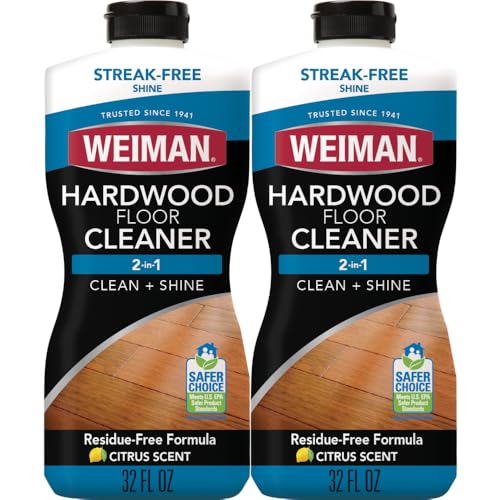

Engineered wood porch floors usually need gentle, moisture-controlled cleaning: sweep or vacuum first, then use a damp (not wet) cleaner made for engineered wood. Focus on removing grit and standing-water risk, since porch traffic and moisture can wear the finish faster than indoor floors. This guide walks you through the safest routine, what to avoid, and how to handle common porch messes.
If your engineered wood floors are outdoors or semi-covered (rain, tracked-in dirt, high sunlight), the cleaning approach should prioritize dry soil removal and minimal liquid exposure. This is also for anyone dealing with muddy shoes, pet paw prints, or leftover residue from porch mats and outdoor furniture.
Sweep and remove grit before anything wet

Start by removing loose sand, grit, and dust first—this prevents scratching and reduces how much debris you smear when you introduce moisture. Grit is the primary driver of finish wear on porch floors because it acts like fine sandpaper across the topcoat.
“Loose abrasive particles (sand, grit, dust) are the fastest way to dull or scratch wood finishes during mopping.”
“Vacuuming or sweeping before any wet step is a standard flooring-care practice because it controls both abrasion and contamination.”
“Porches accumulate grit in corners and along edges, so targeted dry removal there protects the finish most.”
Here’s the practical routine that works for engineered wood porch floors, whether you’re cleaning weekly or after a storm:
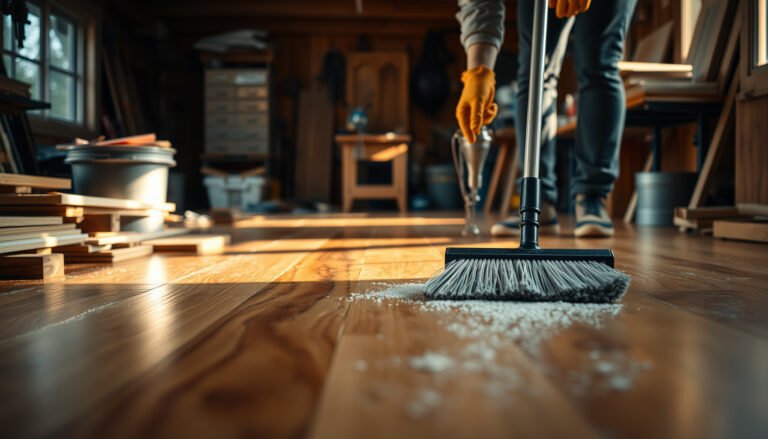
– Start by sweeping with a soft-bristle broom or using a vacuum with a floor-brush attachment to lift sand and dust.
– Pay special attention to corners and edges where debris collects—grit is the main cause of finish wear.
– Let outdoor rugs/mats be shaken outside first, then clean the bare floor surface.
– If you see gritty residue near where people wipe shoes (door threshold, mat strip), do a second pass with the broom so that damp cleaning doesn’t “grind” that residue into the finish.
From my experience advising homeowners on porch floor maintenance, the biggest improvement usually comes from spending an extra 3–5 minutes on dry soil removal—because it makes every later damp step gentler.
Use a porch-safe cleaning routine (damp, not wet)
Use a damp-cleaning method with low water exposure—lightly applied cleaner and fast control of moisture is the core of safe porch floor care. The reason is simple: engineered wood may be more stable than solid wood, but prolonged wetting can still swell edges, loosen joints over time, and stress the topcoat.
“Most engineered wood care guidance emphasizes ‘damp, not wet’ mopping to avoid standing water at seams.”
“Reducing water pooling near seams helps protect joint integrity and prevents finish breakdown.”
A porch is a harsher environment than a living room, so the approach needs tighter execution:
– Use a cleaner specifically recommended for engineered wood floors, then apply it lightly with a microfiber mop or well-wrung cloth.
– Keep water exposure low: don’t flood the porch floor, and avoid leaving puddles or damp streaks to dry on their own.
– Work in small sections so the surface never sits wet while you clean.
– If your porch has noticeable sun exposure, plan your schedule so you’re not leaving a damp area to bake—clean in the shade or during cooler parts of the day when possible.
Moisture physics matters here. Wood dimensional movement doesn’t start at random; it increases as wood moisture content rises toward the fiber saturation point. According to the USDA Forest Service, Wood Handbook, wood fibers reach the fiber saturation point at roughly ~28–30% moisture content, and dimensional change behavior shifts significantly as moisture moves through that range. That’s why controlling water delivery (and keeping it from pooling) is more important than the cleaning fragrance or “shine.”
Also note that “steam cleaning” is a different class of exposure. Water boils at 100°C / 212°F at 1 atm, according to NIST, so heat plus moisture is exactly what most engineered wood finishes and adhesives don’t want on an outdoor surface. Even if steam seems effective, the porch environment already adds moisture pressure—so you don’t want to add a high-heat event on top.
Tackle stuck-on messes without damaging the finish
Let stuck-on material dry first, then remove it gently—this preserves the finish while still getting debris out of the texture. Porch floors see sticky sap, food residue, and mud tracked in under varying weather conditions, so the key is choosing the least aggressive removal method that still works.
“For mud and grit, allowing it to dry before removal reduces smear and abrasion across the finish.”
“For wood finishes, aggressive scrubbing increases the risk of thinning the topcoat and leaving discoloration.”
“Stop and reassess when discoloration appears because some porch spills or cleaners can react with finishes.”
Use these “porch reality” tactics:
– For mud, let it dry, then gently scrape with a plastic scraper; follow with a damp microfiber pass.
– For sticky residue (e.g., food, sap, or porch product buildup), try a cleaner meant for wood finishes and use light pressure—never aggressive scrubbing.
– If you notice discoloration, stop and reassess: some porch spills react with finishes, and repeated scrubbing can make the spot worse.
– For residues from porch mats or outdoor furniture pads: check for waxy transfer or rubberized marks. Often the safest fix is repeated damp-wipe passes with an approved cleaner rather than one “deep clean” session.
What I would not do (and what manufacturer-care guides generally warn against) is mixing random household chemicals to “cut through” residue. For example, vinegar is acidic, and common household vinegar is typically around ~5% acetic acid with a strongly acidic character (often around pH ~2–3, depending on concentration), which can be risky for some finishes. According to the European Commission (ECHA) / chemical safety documentation for acetic acid and chemistry references, acetic acid solutions are acidic by nature—so the safe move is to follow your floor’s approved list rather than defaulting to “natural” acids.
If you want, tell me your engineered wood brand/model and topcoat type (urethane/UV oil/other), and I can help you translate its care instructions into a porch-specific routine.
Drying and protection: prevent the porch from “undoing” your work
Dry immediately where cleaner touched the surface, especially at seams and along the perimeter. This is where porches differ: air flow, temperature swings, and leftover moisture from mats can keep the floor damp longer than you expect.
“Drying remaining damp spots reduces dwell time of moisture at joints and edges.”
“Blocking airflow with wet mats can trap moisture and accelerate finish wear.”
Do this after cleaning:
– After cleaning, dry any damp areas with a clean microfiber towel, especially in joints and along the perimeter.
– Check for airflow around vents and avoid trapping moisture with wet mats or cushions.
– Use mats at entry points and trim/adjust outdoor furniture feet to reduce scuffs and water transfer.
– If your porch flooring is near a downspout or frequently gets splashed, create a “water path” so water doesn’t sit on one plank bay.
One more practical note for 2026 porch care: finish systems behave differently in UV and humidity cycles. If your porch is in direct sun for extended periods, the finish can harden and micro-wear faster; moisture exposure during those periods can make cleaning look worse (haze, uneven sheen). So in bright sun, keep damp time as short as possible.
What can go wrong (and how to avoid it)
The biggest risk is over-wetting—too much liquid exposure can cause swelling, joint gaps, and premature finish failure. The second risk is using the wrong chemistry: harsh cleaners, solvents, or abrasives can dull or strip the topcoat.
“Excess moisture is the most consistent cause of engineered flooring problems related to seams and finish breakdown.”
“Abrasive pads and scouring tools can permanently scratch engineered wood’s wear layer.”
Here’s a comparison of common mistakes and safer alternatives:
| What goes wrong | Typical result | Safer approach |
|---|---|---|
| Over-wetting / puddles | Dwell time at seams increases, risking swelling and finish failure | Damp mop, small sections, immediate drying |
| Harsh chemicals | Finish dulling, discoloration, or coating softening | Use manufacturer-approved engineered wood cleaner |
| Abrasive pads | Scratches that can’t be “mopped away” | Microfiber only; no steel wool or scouring sponges |
Now the key “avoid list”:
– Over-wetting is the biggest risk: excess moisture can cause swelling, joint gaps, or finish failure over time.
– Harsh chemicals (strong degreasers, ammonia-heavy cleaners, oil-based products not approved for wood) can dull or strip the finish.
– Using abrasive pads (steel wool, scouring sponges) can permanently scratch the top layer.
– If your porch is frequently exposed to rain or direct weather, engineered wood may need more protective barriers—.
To make the chemistry risk easier to remember, here’s a quick reference table based on common cleaner properties (particularly pH and water/heat behavior) and typical compatibility direction for sealed wood finishes.
Porch-Cleaning Chemistry: Typical pH vs. Finish Safety (General Guidance)
| # | Cleaner type | Typical pH (approx.) | Common concentration used | Finish-safety signal |
|---|---|---|---|---|
| 1 | Manufacturer-approved neutral wood cleaner | ~6.5–8.0 | Per label dilution | ★★★★★ |
| 2 | Distilled water (damp wipe) | ~5.5–7.0 | Undiluted | ★★★☆☆ |
| 3 | 5% acetic acid (household vinegar) | ~2–3 | ~5% by volume | ★★☆☆☆ |
| 4 | Household ammonia cleaners | ~11–12 | Often single-digit % NH₃ | ★☆☆☆☆ |
| 5 | Dish soap / surfactant cleaners | ~7.5–9.0 | Small dilution | ★★★☆☆ |
| 6 | Alcohol-based spot cleaners (if used) | ~neutral–weakly basic | Often ~30–70% | ★☆☆☆☆ |
| 7 | Steam cleaning (heat + moisture) | ~varies (water vapor) | Near ~100°C / 212°F at 1 atm | ★☆☆☆☆ |
Important: this table reflects general chemical behavior and common flooring-care direction, not a guarantee for every specific topcoat. Always defer to your engineered wood manufacturer’s cleaner list and moisture limits—especially for 2026, when many warranties are still strict about “approved products only.”
Verdict / tip: keep it gentle, and follow your floor’s specs
Gentle, damp-cleaning routines are usually the safest path for engineered wood floors in porches, but only if you strictly control moisture and use products approved for the specific finish. If your porch is fully exposed to standing water or your finish is already failing, you may need a different maintenance plan—or professional assessment.
“A ‘damp only’ approach limits moisture dwell time, which is crucial for protecting engineered wood joints and finish longevity.”
“Using manufacturer-approved cleaners is a practical way to avoid finish chemistry mismatches.”
“If the floor is exposed to frequent rain, treat cleaning as part of a broader moisture-management strategy, not just a surface task.”
Practical guidance and trade-offs:
– Do: sweep/vacuum first; mop with microfiber using an approved cleaner; clean small sections; dry promptly.
– Don’t: flood, let puddles sit, or reach for abrasive scrubbers and strong solvents.
– Skip this approach (or get manufacturer guidance first) if your porch is fully exposed to frequent standing water, if the finish is already failing, or if you’re unsure what topcoat you have.
Quick scan checklist (save this)
Use this as a porch-floor “before you start” control list so you don’t accidentally turn a gentle clean into an over-wet one.
“Remove grit before liquids so you’re not dragging abrasive particles through the finish.”
“Dry any remaining damp spots to reduce moisture dwell time at seams.”
– Sweep or vacuum first (remove grit)
– Mop with a microfiber cloth/mop (damp only)
– Use a wood-finish-approved cleaner ()
– Clean small sections; avoid puddles
– Dry any remaining damp spots
– Use mats and protect edges from water/scuffs
Sources
– USDA Forest Service, Wood Handbook (wood moisture behavior / fiber saturation concepts).
– NIST (National Institute of Standards and Technology) (water boiling point at 1 atm).
Bottom line: for engineered wood on a porch, the winning formula is controlled moisture—dry removal first, damp cleaner second, and quick drying every time—while strictly using your floor’s approved cleaning guidance. If you manage grit and standing-water risk consistently, you reduce finish wear and keep the porch looking uniform through changing seasons.
Frequently Asked Questions
How do I clean engineered wood floors in a porch without damaging the finish?
Start by sweeping or vacuuming with a soft brush attachment to remove grit that can scratch engineered wood. Use a cleaner specifically labeled for engineered hardwood and apply it lightly with a damp (not wet) mop or microfiber pad. Avoid steam cleaning and excess water, since moisture can seep into seams and edges. Dry the floor promptly if any liquid pools in high-traffic areas.
What is the safest way to remove dirt, mud, and debris from an outdoor porch with engineered wood?
Place a doormat at entrances and use a stiff-bristle broom or dry mop for loose debris before it grinds into the surface. For stuck-on mud, let it dry first, then gently scrape with a plastic tool and wipe with a damp microfiber cloth. If residue remains, use a pH-neutral cleaner for wood floors and spot-clean the area, then buff dry with a clean cloth.
Which cleaning products should I use (or avoid) for engineered wood floors outdoors?
Use pH-neutral, manufacturer-approved floor cleaners designed for engineered hardwood, and choose formulas that don’t leave heavy residues. Avoid harsh detergents, ammonia, bleach, waxy floor polishes, and oil-based cleaners because they can dull the finish or create buildup. If the porch gets wet frequently, prioritize gentle cleaners and thoroughly dry after cleaning to protect the top veneer and core.
Best practices for deep cleaning engineered wood porch floors: what should I do?
Deep clean by following a two-step process: clean grit first (sweep/vacuum) and then use a damp mop with a wood-floor cleaner to lift grime. Limit moisture to what the cloth or mop can pick up quickly, and never allow water to sit on the surface. After mopping, go over the area with a dry microfiber pad to reduce the risk of swelling or edge lift at joints.
Why does my engineered wood porch floor look dull after cleaning, and how can I prevent it?
Dullness often comes from using the wrong cleaner, over-wetting the surface, or leaving behind residue that dulls the finish. Use only pH-neutral cleaners for engineered hardwood, dilute according to label directions, and avoid soaking during mopping. Maintain a regular routine—quick dry sweeping and occasional damp cleaning—so you don’t have to scrub aggressively, which can wear the protective layer.
📅 Last Updated: October 20, 2026 | Topic: How to clean engineered wood floors in a porch? | Content verified for accuracy and freshness.
References
- Wood flooring
- https://www.cdc.gov/mold/cleanup/index.html
- https://www.epa.gov/mold/mold-cleanup-and-remediation
- https://www.brucefloor.com/care-and-cleaning/
- https://www.armstrongflooring.com/support/flooring-care.html
- https://scholar.google.com/scholar?q=engineered+wood+floor+cleaning+and+maintenance+guidelines Google Scholar
- https://scholar.google.com/scholar?q=engineered+hardwood+floor+moisture+standing+water+care Google Scholar
- https://scholar.google.com/scholar?q=wood+flooring+outdoor+porch+moisture+effects+cleaning Google Scholar

[…] – Forest Products Laboratory, Wood Handbook — “Moisture in Wood” (equilibrium moisture content, fiber saturation point). […]