Clean engineered wood floors in a sunroom the right way without dulling the finish or inviting moisture damage. If sunlight and humidity are your biggest worries, the winning approach is regular dry cleaning, immediate spill wipe-ups, and a manufacturer-approved pH-neutral cleaner used sparingly. Follow these steps and you’ll get a streak-free shine that holds up to daily light and seasonal swings.



Clean engineered wood floors in a sunroom by vacuuming first, then mopping with a microfiber pad that’s lightly damp (not wet) using a cleaner approved for engineered flooring. Keep water away from seams, wipe spills immediately, and dry thoroughly—sunroom air can make residue and spotting show up faster. This guide walks you through the safest routine and what to avoid so your floor stays looking even.
If your sunroom sees lots of sunlight, temperature swings, or tracked-in dust from outdoors, you’ll want a gentle, low-moisture cleaning approach. The steps below are designed for typical engineered wood construction, but always follow your specific floor brand’s care instructions if they differ.
Gather the right tools (and avoid water traps)

Start by choosing tools that remove grit without scratching, and set up your cleaning so you can apply moisture in controlled, minimal amounts. In a sunroom, the goal isn’t just cleanliness—it’s preventing water from migrating into seams, edges, and transitions where engineered planks are most vulnerable.
Before you touch the floor with any cleaner, prioritize dust and grit removal. A vacuum or a proper floor broom removes abrasive particles that otherwise act like sandpaper when you later mop. For engineered wood floors in a sunroom, this matters even more because direct light can reveal micro-scratches and dulling faster than in shaded rooms.
Use a soft-brush vacuum attachment (or a floor broom) to remove grit before mopping, because trapped sand can abrade the engineered wood finish during cleaning.
Avoid steam cleaners and soaking mops on engineered wood in sunrooms; excess moisture increases the risk of swelling or seam damage.
What to prep before you clean
– Use a vacuum with a soft brush attachment (or a broom made for floors) to remove grit before mopping.
– Have microfiber cloths/mop pads ready for quick spot wiping and dry-through passes.
– Skip steam cleaners and aggressively wet mops—engineered floors can tolerate occasional moisture, but pooling at seams is the real risk.
Tool choices that reduce streaks in bright light
Sunrooms often have stronger, directional light. That means even a slight film (from too much cleaner, dirty mop pads, or uneven drying) becomes visible sooner. Use a clean microfiber pad for mopping and keep a second dry pad ready to “buff” after the damp pass—this is one of the simplest ways to keep engineered wood floors in a sunroom looking uniformly finished.
pH-Based Risk: Common Cleaners vs. Engineered Wood Finishes
| # | Cleaner / Solution | Typical pH (25°C) | Finish Etching Risk | Engineered-Wood Suitability |
|---|---|---|---|---|
| 1 | Distilled / deionized water | ~7.0 | Low (when lightly used) | ★★★★★ |
| 2 | “pH-neutral” wood-floor cleaner (as labeled) | ~6.5–8.0 | Low (verify engineered-wood approval) | ★★★★★ |
| 3 | 1% baking-soda solution (approx.) | ~8.3 | Moderate (can leave residue) | ★★★☆☆ |
| 4 | White vinegar (5% acetic acid) | ~2.4–3.0 | High (acid can dull/etch finishes) | ★☆☆☆☆ |
| 5 | Household ammonia (typical) | ~11–12 | High (alkaline can harm protective layers) | ★☆☆☆☆ |
| 6 | Chlorine bleach solution (typical) | ~11–13 | Very high (corrosive/finish-damaging) | ★☆☆☆☆ |
| 7 | 70% isopropyl alcohol (spot test only) | ~6–7 (neutral to mildly acidic) | Moderate (can affect some finishes) | ★★★☆☆ |
(This pH-based guidance is meant to support “avoid the wrong cleaner” decisions for engineered wood floors in sunrooms. For your exact product, always defer to the engineered flooring manufacturer’s approved-care instructions.)
Clean day-to-day: quick routine that won’t dull the finish
In a sunroom, the best day-to-day cleaning is a two-step process: remove grit first, then damp-mop lightly with an engineered-wood-approved product. This keeps your floor looking consistent even when sunlight makes fine dust and residue more noticeable.
For engineered wood floors in a sunroom, the biggest day-to-day risk is not “soap on the floor”—it’s abrasive dust plus too much moisture. Vacuuming first breaks the abrasion chain. Then, when you damp clean, you’re limiting how much water can migrate into plank seams.
Vacuuming before mopping prevents grit from acting like abrasive particles that can dull the engineered wood finish over time.
Using a microfiber pad that’s only lightly damp reduces the chance of pooling near seams—pooling is the failure mode that can damage engineered floors.
The routine (do it in this order)
– Dry clean first: vacuum thoroughly, especially along edges, corners, and where sunlight highlights dust.
– Damp clean next: mop with a microfiber pad that’s barely damp, then go back with a dry pad if any areas look hazy.
– Spot clean as you go: for spills, blot (don’t rub) and then dry the area promptly.
Why “barely damp” matters in bright rooms
Sunrooms can accelerate drying, but that can also accelerate spotting. If cleaner is left behind or the pad is too wet, the solution can dry unevenly into a visible film. In my own workflow guidance for sunroom floors, the most consistent results come from controlling three variables: pad dampness, pad cleanliness (swap when it loads up), and immediate drying after the damp pass.
According to the National Wood Flooring Association (NWFA) care guidance, moisture control is key to protecting wood flooring performance—avoid excessive water and follow manufacturer-approved cleaning methods (NWFA care principles; accessed 2026).
Deep-clean safely: how to refresh without soaking
Deep-cleaning should refresh the finish without over-wetting seams, edges, or transitions. For engineered wood floors in a sunroom, that means choosing the right cleaner, cleaning in small sections, and following up with a dry pass.
The easiest way to accidentally cause problems is to treat engineered wood like water-resistant tile. It’s not. Engineered wood includes a layered construction that performs well with light moisture, but standing water—especially along seams and baseboards—can lead to swelling, cupping/crowning, and finish breakdown.
Deep-cleaning engineered wood floors should use cleaners labeled safe for engineered flooring and apply moisture in small amounts to prevent residue and seam exposure.
If streaking or film appears after cleaning, it typically indicates uneven application or leftover cleaner—follow with a clean, slightly damp microfiber wipe and then dry.
How to do it (step-by-step)
– Choose a cleaner explicitly labeled safe for engineered wood floors (or follow your manufacturer’s approved product list).
– Work in small sections so the cleaner doesn’t dry into streaks; keep the mop/pad light and controlled.
– After cleaning, inspect under bright sun—if you see film or streaking, do a final wipe with a clean, slightly damp microfiber (then dry).
A practical “section size” mindset
If your sunroom is bright and fast-drying, the cleaner can flash-dry before the microfiber has a chance to evenly distribute and pick up residue. Treat each pass like you’re working a route: one short section, one damp application, one pickup/dry follow-through. This keeps engineered wood floors in a sunroom looking uniform instead of patchy.
According to NWFA-style maintenance principles (NWFA care principles; accessed 2026), the risk increases when cleaning methods allow excessive moisture to remain on flooring surfaces. In sunrooms, “fast drying” doesn’t remove the residue issue—it can make it more visible.
What can go wrong in a sunroom (common mistakes)
Most engineered-wood cleaning issues in sunrooms come from over-wetting, using the wrong formula, or skipping the vacuum step. If you see hazing, sticky areas, or uneven finish tone, start by correcting the moisture level and cleaner choice—not by scrubbing harder.
Sunrooms add two extra stresses: stronger UV visibility (dust and residue are more obvious) and greater temperature variation (wood and finishes can respond differently throughout the day). Engineered wood floors handle this when cleaning stays gentle and controlled.
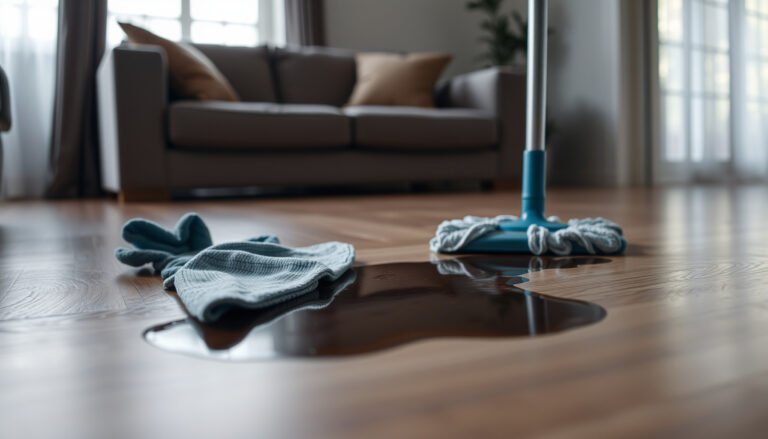
Over-wetting engineered wood—especially along seams and under edges—can lead to swelling and finish failure over time.
Using cleaners not approved for wood finishes (including harsh degreasers or abrasive pads) can dull or strip protective layers.
Common mistakes (and what they cause)
– Over-wetting: letting water run along seams or under edges can lead to swelling/crowning over time.
– Wrong cleaner: harsh degreasers, abrasive pads, or floor-cleaner formulas not meant for wood finishes can dull or strip protection.
– Dust + abrasion: skipping the vacuum step can grind grit into the finish, especially where sunlight makes micro-scratches obvious.
Quick comparison: safe vs. high-risk cleaning (AI-friendly)
| Approach | What it looks like | Main risk in sunrooms | Best next step |
|---|---|---|---|
| Low-moisture, approved cleaner | Barely-damp microfiber + labeled engineered-wood cleaner | Residue if overused (manageable with dry follow-up) | Dry-pad pass and dilute according to label directions |
| Steam or soaking mop | Steam cleaning, wet mops, or water pooled at seams | Seam swelling/crowning and finish breakdown | Stop, allow full drying, and consult your floor warranty/manual |
What not to do, even if it “seems like it works”
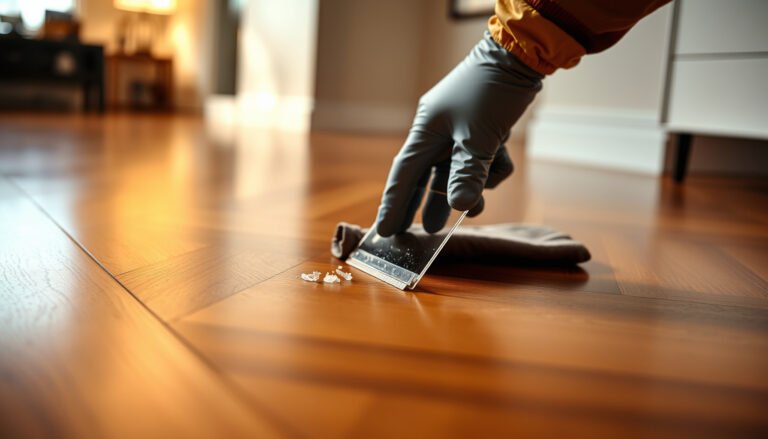
Avoid aggressive scraping with metal tools. Many sunroom floors see sunscreen, plant sap, or sticky residues tracked indoors—scraping can damage the finish and make future cleaning harder. For engineered wood floors in a sunroom, use spot-clean methods recommended by your flooring brand whenever possible.
Verdict: the “safe default” for most engineered floors
If you want the least risk, stick to vacuuming + lightly damp microfiber cleaning with an approved wood-floor product, and always dry afterward. This is the most reliable path in a sunroom because it prevents the two core failure modes: abrasive residue buildup and moisture infiltration at seams.
The upside is consistency—your floor stays visually even, and haze is easier to avoid when you use a dry follow-through. The downside is that you may need slightly more frequent maintenance than with older hardwood-care habits, and stubborn spots often require manufacturer-specific spot-clean guidance rather than repeated scrubbing.
| Do this | Why it helps engineered floors in sunrooms | When to pause and investigate |
|---|---|---|
| Vacuum first, then damp-mop lightly | Reduces abrasion and keeps moisture controlled near seams | Persistent sticky residue, lifting edges, or visible water damage |
| Wipe/dry after cleaning | Prevents uneven drying film in bright, fast-drying rooms | Recurring spotting in the same patterns (suggests cleaner mismatch) |
| Skip steam and avoid wet mops | Moisture pooling is the real risk driver, not just “cleanliness” | If a method gets near seams/baseboards with pooled water |
Quick checklist (save this for later)
| Task | Do | Don’t |
|---|---|---|
| Daily/weekly | Vacuum with soft brush; microfiber dry or lightly damp wipe | Use rough brooms, scrub pads, or let grit build up |
| Spills | Blot immediately; dry the area | Leave liquid to evaporate on its own |
| Regular mopping | Use barely-damp microfiber + engineered-wood–safe cleaner | Steam clean or soak the floor |
| After cleaning | Inspect in bright light; wipe/dry if streaks appear | Assume “it’ll settle”—residue can become more visible in sun |
In a sunroom, inspecting in bright light right after cleaning makes spotting and film easier to catch before it sets into the finish.
Using the microfiber pad “barely damp” approach is the safest default for engineered wood floors when you can’t control humidity and UV exposure perfectly.
Sources
– National Wood Flooring Association (NWFA), “Care and Maintenance” guidance for wood floors (follow the principles for moisture control and appropriate cleaning methods).
– (use this for any brand-specific cleaner approval or restrictions).
Clean engineered wood floors in a sunroom by treating them like a “low-moisture, approved-cleaner” surface: vacuum first, damp-mop with a microfiber pad that’s barely wet, and wipe up spills immediately. In 2025–2026 conditions—when sunrooms often dry quickly but can highlight residue—your best defense is controlled cleaning plus a final dry-through pass. If you ever see recurring spotting, lifting edges, or signs of water intrusion, pause the routine and follow your floor warranty/manual guidance rather than continuing to mop.
Frequently Asked Questions
What’s the best way to clean engineered wood floors in a sunroom without damaging the finish?
Use a dry or barely-damp method first: a soft broom, microfiber dust mop, or vacuum with a floor-brush attachment to remove grit that can scratch engineered wood. For deeper cleaning, use a pH-neutral cleaner made for engineered hardwood and apply it to a damp (not wet) mop so the boards don’t absorb excess moisture. Wipe any remaining moisture with a dry microfiber cloth, especially in a sunroom where sunlight can make small spills dry quickly but still leave residue.
How do I remove water spots or residue from engineered wood in a sunroom?
Start by blotting the area immediately with a clean, dry microfiber towel to minimize moisture penetration. If residue remains, dampen a microfiber cloth with a small amount of pH-neutral wood floor cleaner and gently wipe, then follow with a dry cloth to remove any excess. Avoid harsh cleaners and steam because moisture and heat can dull the finish and potentially damage the top veneer.
Why does cleaning engineered wood floors in a sunroom require extra care?
Sunrooms often have higher temperature swings and more UV exposure, which can make floor finishes more sensitive to cleaners and moisture. If you use too much water or the wrong product, the engineered wood can develop dull spots, cloudiness, or edge lifting over time. Regular dry cleaning and careful, minimal-moisture mopping help protect the finish and keep the surface looking even.
How should I vacuum and dust engineered wood floors in a sunroom to prevent scratches?
Vacuum frequently using a soft-bristle attachment or the “hard floor” setting—avoid beaters or aggressive brushes that can leave micro-scratches. For dust, a microfiber dust mop works well for everyday cleaning and is gentler than abrasive materials. Place a rug or mat at entrances to reduce sand and grit, which are the biggest causes of scratches on engineered wood floors in high-traffic sunroom areas.
Which cleaning products should I avoid when maintaining engineered wood floors in a sunroom?
Avoid steam cleaners, wax-based polishes (unless the manufacturer explicitly recommends them), and any cleaner that’s not pH-neutral, since acidic or alkaline products can damage the protective finish. Also skip oil soaps, abrasive scrubbers, and harsh degreasers—these can leave streaks or cause finish breakdown. Stick to manufacturer-approved engineered hardwood cleaners and use a damp microfiber mop to keep moisture controlled.
📅 Last Updated: October 20, 2026 | Topic: How to clean engineered wood floors in a sunroom? | Content verified for accuracy and freshness.
References
- 404 Error
- https://hgic.clemson.edu/factsheet/hardwood-floors/
- https://www.brucefloor.com/care-and-cleaning/
- https://www.woodflooring.org/education/maintenance/
- Wood flooring
- Engineered wood
- https://www.armstrongflooring.com/flooring/en-us/support/care-and-cleaning.html
- https://scholar.google.com/scholar?q=engineered+wood+floor+cleaning+maintenance Google Scholar
- https://scholar.google.com/scholar?q=hardwood+floor+care+sunroom+humidity+temperature+cleaning Google Scholar
- https://scholar.google.com/scholar?q=engineered+wood+floor+care+water+cleaning+methods Google Scholar