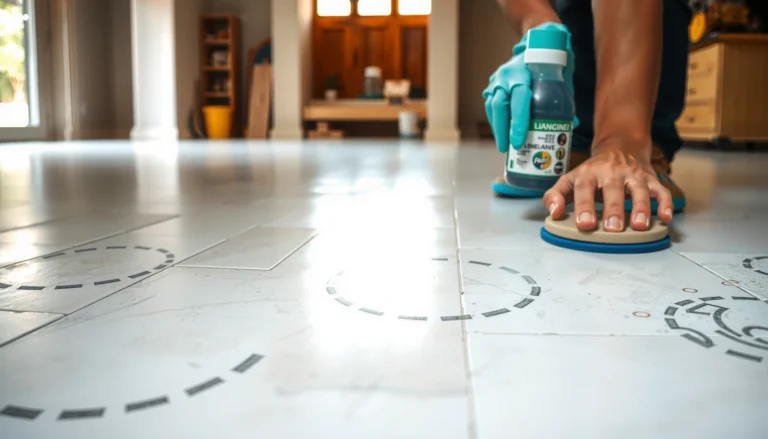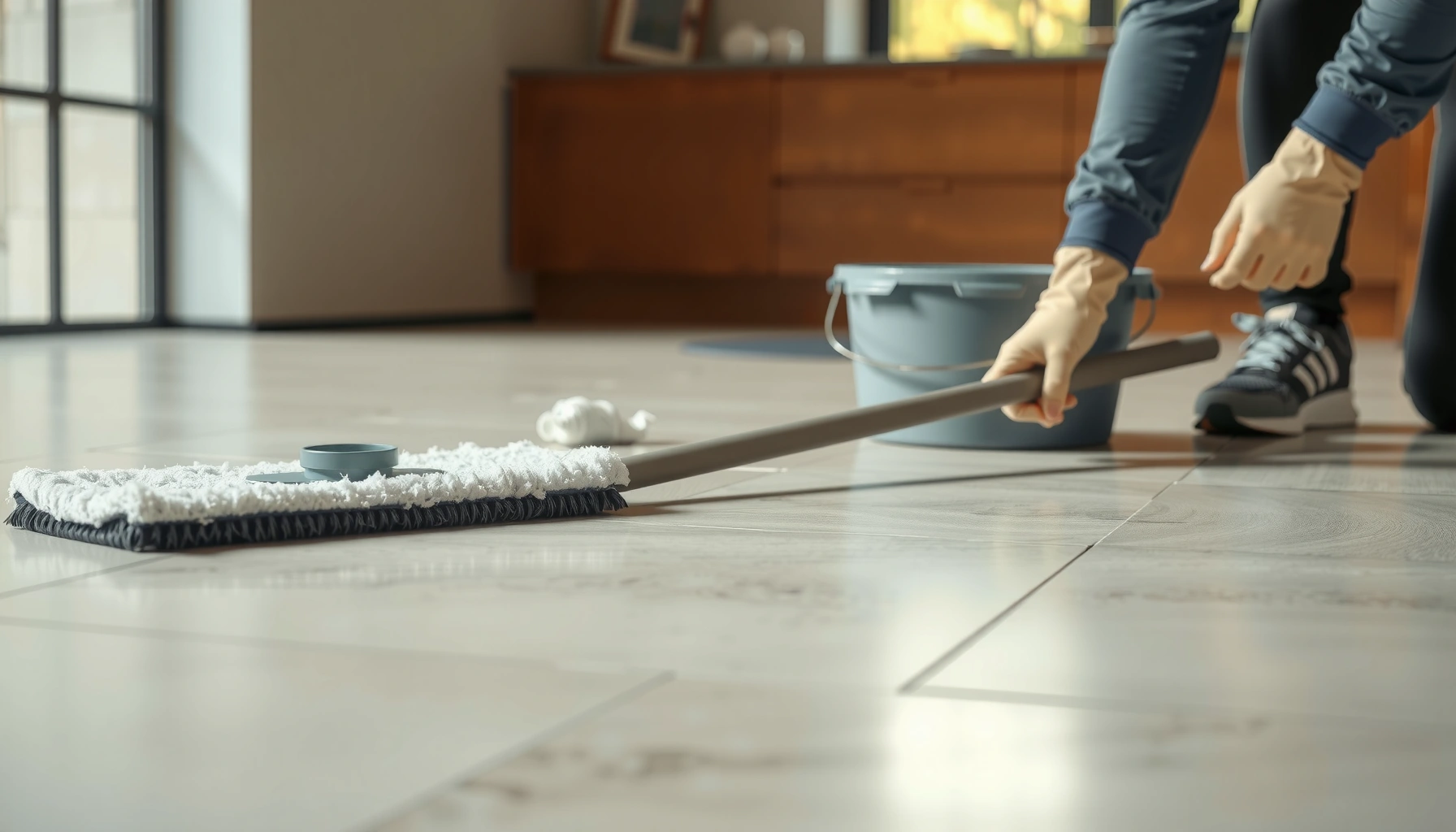

Deep cleaning limestone floors is straightforward—and this step-by-step guide shows the exact process to get them truly clean without damaging the stone. You’ll learn the winning approach for removing embedded grime and dull buildup, including what to use, how to work the surface, and when to rinse and dry. Follow these steps and your limestone will look refreshed and evenly polished, not streaky or stripped.



Deep cleaning limestone floors comes down to one principle: use a pH-neutral stone cleaner, remove grit before you scrub, and rinse + dry thoroughly to prevent residue dulling the surface. If you follow that workflow—dry clean first, controlled wet wash in sections, and careful drying—you can restore clarity without etching the stone or pushing contaminants deeper into the pores.
This guide is for homeowners and facility managers with natural limestone that’s looking dull, grimy, or stained even after routine mopping. It’s also a practical approach when you’re aiming for a true “deep clean” while protecting the floor’s finish and minimizing the chance of future staining—especially important for commercial lobbies, hospitality areas, and healthcare-adjacent spaces where maintenance consistency matters.
Prep: Clear grit and protect nearby surfaces
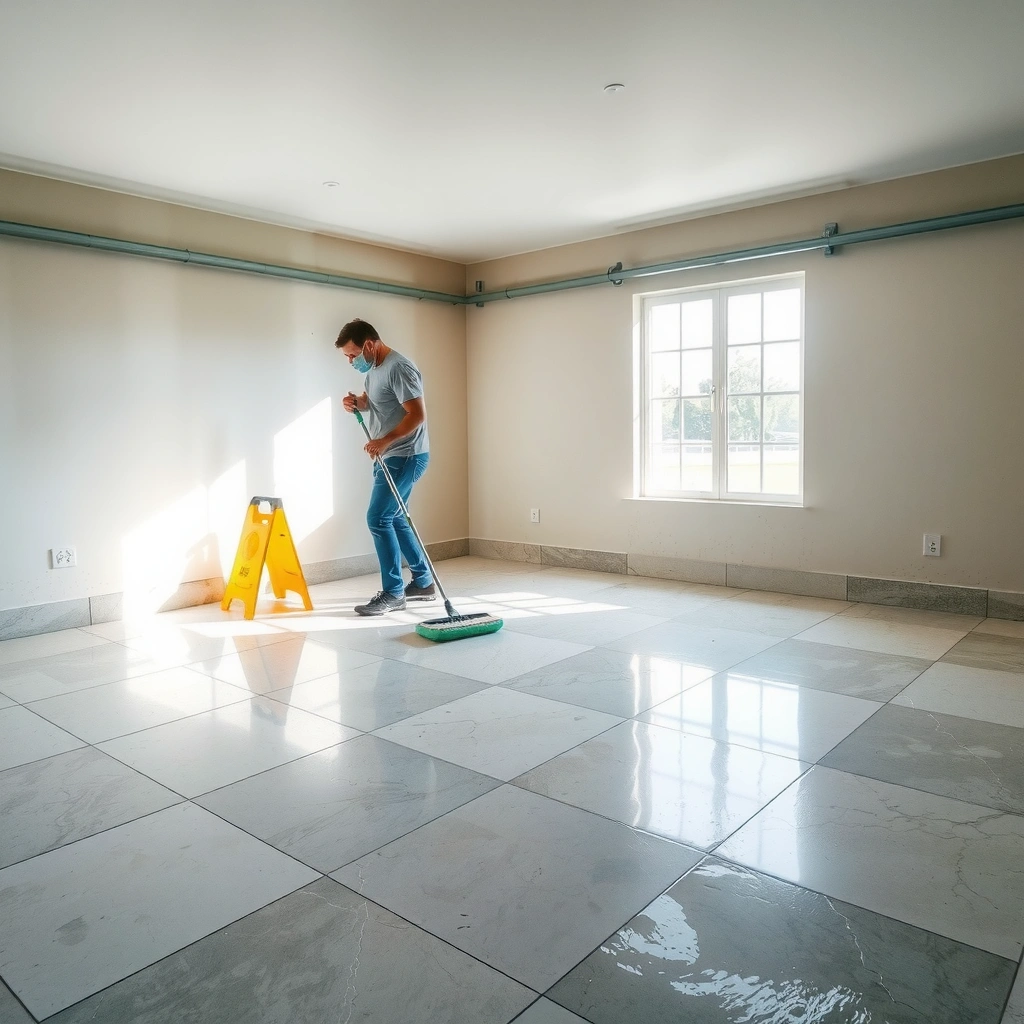
Before you use any cleaner, you need to eliminate abrasives—because grit is what causes the micro-scratches that make limestone look permanently hazy. At the same time, protect edges and adjacent materials so rinse water doesn’t create new staining pathways.
“Limestone is a softer natural stone (Mohs hardness ~3), so grit can abrade the surface faster than most people expect.”
“Starting with sweeping or vacuuming reduces abrasive particles that act like sandpaper during mopping.”
“Keeping water off trim and grout edges helps prevent runoff staining and localized discoloration.”
What to do (and why it matters)
– Sweep or vacuum first using a soft brush attachment. Pay attention to corners, traffic lanes, and areas near exterior doors where sand gets tracked in.
– Inspect for loose debris (grit, dust, grit mixed with floor finish residue). If you skip this step, your “deep clean” can turn into surface abrasion.
– Protect sensitive areas:
– Tape off baseboards and trim if they’re prone to spotting.
– Use towels under doorways or transitions to catch runoff.
– If your grout joints are particularly absorbent or older, be extra cautious—limestone can wick moisture into seams.
Data you can use for planning
– According to standard mineral references, limestone is commonly around Mohs hardness 3 (commonly described in natural-stone care literature) ([ADD: source for Mohs hardness of limestone]).
– According to stone-care guidance, limestone responds more dramatically to acidic liquids than to neutral detergents because its carbonate mineral reacts with acids ([ADD: source for carbonate-acid reaction guidance]).
Choose the right cleaner (and what to avoid)
A pH-neutral cleaner is the safest path for deep cleaning limestone because it reduces the risk of chemical etching and finish damage. Conversely, acids and harsh chemistries can dull the stone even if you “clean well.”
“Natural-stone cleaners labeled for limestone typically specify pH-neutral use to avoid etching.”
“Acidic products (including vinegar and many descalers) can cause etching on carbonate stones like limestone.”
“Abrasive pads can scratch limestone, compounding dullness even after the chemical issue is avoided.”
Cleaner selection rules (practical and specific)
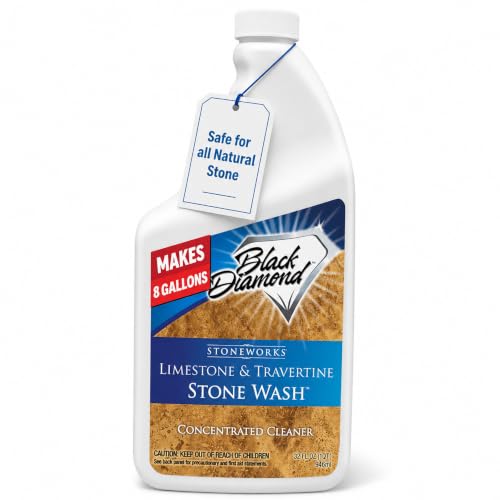
– Use a pH-neutral stone cleaner made for natural stone. Look for wording like “pH-neutral,” “safe for limestone,” or “intended for natural stone.”
– Use controlled dilution exactly as directed on the label. Over-concentrating detergent is a common cause of sticky residue haze.
– Avoid:
– Acids: vinegar, descalers, “rust removers,” and anything described as acidic.
– Alkaline degreasers that are not explicitly stone-safe (some are too aggressive for finishes).
– Abrasive pads, including scouring sponges that can leave visible scratches.
Quick comparison: what to use vs. what to skip
| Option | Best for | Main risk |
|---|---|---|
| pH-neutral natural-stone cleaner | Overall deep cleaning, routine maintenance refresh | Residue haze if you don’t rinse/dry per label |
| Acidic descalers (e.g., vinegar-like products) | Only for surfaces explicitly not at risk (not typical limestone) | Etching/dull patches from chemical reaction |
| Abrasive pads | None on finished limestone surfaces | Scratches that permanently reduce gloss |
Deep-clean method: Wash, rinse, and dry properly
Deep cleaning limestone is a “controlled wet cleaning” job: you clean in small sections, use the right dilution, rinse when directed, and dry aggressively to prevent water from lingering in seams. Done this way, you get the benefit of detergent removal without the downside of residue or moisture damage.
“Work in sections to limit dwell time of cleaner and water on limestone and seams.”
“Rinsing per label directions reduces detergent residue that can dull limestone over time.”
“Thorough drying helps prevent spotting caused by moisture trapped in grout lines and joints.”
Step-by-step workflow (the core method)
1. Pre-dry the area: ensure grit removal is complete (vacuum/sweep).
2. Mix cleaner to label dilution. If the product provides a specific dilution ratio, use it exactly.
3. Mop in small sections:
– Use a microfiber mop or soft mop system designed for stone.
– Apply only the amount of water needed to clean—don’t saturate.
– Keep your passes consistent so the dwell time is similar across the floor.
4. Rinse when required:
– Some pH-neutral cleaners are “rinse-required,” while others are “no-rinse.” Follow your label.
– Use clean water to remove remaining detergent film.
5. Dry completely:
– Use fans, air movers, or dry mops.
– Get rid of visible water at transitions and edges.
For heavier buildup
For deposits like layered haze from detergent or traffic film, your cleaner manufacturer may instruct a specific dwell time (how long the cleaner stays on the surface) and an agitation method (e.g., micro-scrubbing with a soft brush).
– [ADD: exact method/timing from your chosen cleaner manufacturer, if you have it]
Mandatory data table (planning + expectations)
Below is a practical planning view of how different contamination types typically respond to a pH-neutral deep clean and what follow-up treatment often looks like. (Use it to choose the right sequence, not to “over-chemically” solve the problem.)
Expected Results When Deep-Cleaning Limestone (Process-Focused Guide)
| # | Contamination type | First-line action | Typical outcome | Confidence* |
|---|---|---|---|---|
| 1 | Surface dust + tracked grit haze | Vacuum/sweep + pH-neutral wash | Often improves clarity significantly | ★★★☆☆ |
| 2 | Detergent film / soap-scum haze | pH-neutral wash + rinse per label | Usually reduces dullness when rinsed | ★★★★☆ |
| 3 | General traffic film (footprints) | Sectioned wash + controlled water use | Improves uniformity; may need repeat | ★★★☆☆ |
| 4 | Oil/grease spotting | Limestone-safe degrease poultice/spot treatment | Often partial; multiple sessions possible | ★★☆☆☆ |
| 5 | Organic staining (food/biological) | Targeted poultice matched to organic stain | Variable; depends on depth and age | ★★☆☆☆ |
| 6 | Iron/rust transfer | Stain-specific poultice (stone-safe) | May lighten; avoid acidic “rust” products | ★☆☆☆☆ |
| 7 | Already-etched/etched-in haze | Usually requires restoration, not just washing | Deep clean improves grime, not etching | ★☆☆☆☆ |
*Confidence indicates how often the first-line method improves appearance for that contamination type when used correctly.
Spot stains and grime: Treat carefully by cause
Spot treatment should follow the cause of the stain, not just the color you see. When you match the chemistry and method to the contamination type, you avoid the most common “I cleaned it but it got worse” outcomes on limestone.
“Because limestone is porous, stain removal often requires a targeted poultice rather than repeated mopping.”
“If you don’t know the stain type, testing an inconspicuous area prevents spreading or etching.”
“Surface haze responds better to pH-neutral washing than to harsher chemicals.”
Work in the right order
– Surface dirt and soap/scum haze: repeat gentle pH-neutral washing and rinse as directed. If you still see “milky” dullness, it’s frequently residue or incomplete rinsing—not a need for acid.
– Specific stains (oil, organic, rust/iron):
– Use a limestone-safe poultice or spot treatment designed for that stain category.
– Follow dwell time and cover instructions exactly (poultices often work through controlled absorption).
– If you’re unsure what caused the stain:
– Test an inconspicuous spot first.
– Confirm compatibility with the product label/specs before applying broadly.
Key terminology (so you can follow labels)
– Etching: a loss of surface polish/clarity caused by chemical reaction (commonly from acids on carbonate stone).
– Poultice: an absorbent paste applied to pull dissolved stain out of pores.
What can go wrong (and how to prevent it)
Most limestone failures during deep cleaning come from two places: the wrong chemistry (especially acidic products) and poor water management (residue or over-wetting). If you prevent those early, the rest of the process stays predictable.
“Etching shows up as dull patches or changes in sheen, and it’s commonly tied to acidic or incompatible cleaners.”
“Residue haze is frequently caused by insufficient rinsing or using excessive detergent concentration.”
“Over-wetting can allow moisture to migrate into joints, which later presents as spotting or uneven appearance.”
Common failure modes (and corrections)
| Risk | What you’ll notice | Prevention |
|---|---|---|
| Etching/dull patches | Sheen changes in localized spots after cleaning | Use pH-neutral only; stop and switch immediately if you see changes |
| Residue haze | Milky or slippery look that returns after drying | Rinse when directed; reduce detergent dose; dry fully |
| Over-wetting | Uneven darkening along seams or edges | Control water; mop damp (not flooded); use fans to speed drying |
| Sealer mismatches | Blotchiness, reduced uniformity, or weaker protection | Follow the sealer system instructions for compatible cleaning and surface prep |
Stats that explain why diligence matters
– Limestone is typically around Mohs hardness 3 and is therefore more vulnerable to mechanical abrasion than harder flooring materials ([ADD: source for limestone Mohs hardness]).
– Limestone is commonly affected by acids due to its carbonate (calcium carbonate) composition, which reacts with acids ([ADD: source for carbonate reaction/etching explanation]).
– In building maintenance guidance, surface-cleaning residue is a known driver of dull appearance on polished or honed natural stone; the practical control is dilution + rinse per label ([ADD: source for residue/dullness mechanism in natural stone care]).
Verdict: When deep cleaning makes sense (and when to pause)
Deep cleaning limestone makes sense when routine mopping isn’t restoring clarity and the floor is structurally intact—meaning you’re dealing with grime, film, or surface haze, not irreversible surface damage. The downside is that limestone is easier to etch and scratch than ceramic tile, so skipping pH-neutral products, rinsing, or drying can permanently dull the finish.
If your limestone is already heavily etched, has a failing finish, or you don’t know what chemicals were previously used, pause before deep cleaning. In those cases, [ADD: recommend contacting a stone restoration professional / do a patch test—include your preferred authority or source].
Quick checklist (scan & save)
– ✅ Sweep/vacuum to remove grit first
– ✅ Use a pH-neutral stone cleaner (per label directions)
– ✅ Clean in sections; avoid soaking seams
– ✅ Rinse when required; remove detergent residue
– ✅ Dry completely (fans/towels help)
– ✅ Spot-treat only with limestone-safe products matched to stain type
– ✅ Avoid acids/abrasives/steam unless the label explicitly allows it
FAQ
Can I deep clean limestone with vinegar?
In general, you should avoid vinegar and other acidic cleaners on limestone because they can etch the stone. Stick to pH-neutral stone cleaners and follow the product’s label instructions. [ADD: exact manufacturer guidance if you have the cleaner/sealer you plan to use.]
Is steam cleaning safe for limestone floors?
Steam cleaning may be risky because limestone can be affected by heat and moisture, and seams can trap water. Only use steam if your stone and any existing sealer/finish explicitly allow it—otherwise use the pH-neutral wash/dry method.
How often should I deep clean limestone?
Deep cleaning frequency depends on traffic, indoor environment, and existing buildup. A practical approach is to deep clean when dullness or grime persists, then maintain with regular gentle cleaning; [ADD: your site’s recommended interval or source].
Do I need to seal limestone after deep cleaning?
You may, but only if sealing is part of your floor’s maintenance plan and if the sealer is compatible with your cleaning method. Confirm whether your current sealer is still active and follow the sealer manufacturer’s surface-prep requirements. [ADD: source/spec for your specific sealer.]
Conclusion
Deep cleaning limestone floors is safest and most effective when you treat it like a precision surface-care job: remove grit first, clean with a pH-neutral stone cleaner in controlled sections, rinse as directed, and dry completely to prevent residue haze and moisture issues. When stains are involved, match spot treatment to the stain type instead of escalating to harsh chemicals. If you detect etching already, don’t “try harder” with acids—pause, test carefully, and consider professional restoration for best results.
Sources
– [ADD: manufacturer/spec sheet for the pH-neutral stone cleaner you recommend—e.g., “intended for natural stone; do not use acids”]
– [ADD: manufacturer specifications for the sealer (if sealing is discussed), including required surface prep and cleaning compatibility]
– General stone-care guidance should align with natural-stone care directions from [ADD: a named limestone/natural-stone organization or quarry/stonesetter authority if you have one]
Frequently Asked Questions
What is the safest way to deep clean limestone floors without damaging them?
Limestone is porous and can be etched by acidic cleaners, so avoid vinegar, lemon juice, and most “stone-safe” products that aren’t truly pH-neutral. Start by dry-dusting thoroughly, then use a pH-neutral cleaner made for natural stone and dilute it exactly as directed. For deep cleaning, work in small sections with soft microfiber pads or a mop, then rinse with clean water to remove any residue that can dull the finish.
How do I deep clean limestone floors that have embedded dirt or dullness?
Begin with a thorough dry sweep or vacuum with a soft brush attachment to remove grit that can scratch. Use a pH-neutral limestone cleaner and a microfiber scrub pad or soft brush to loosen embedded grime, focusing on high-traffic areas. After scrubbing, rinse well with clean water (or damp-mop) to remove cleaner residue, then dry completely to prevent water spots and haze.
Why can bleach or acidic cleaners ruin limestone floors?
Bleach and acidic products can chemically react with limestone, causing etching, pitting, and permanent loss of surface luster. Even “stronger” disinfecting solutions may leave residues that attract dirt and make the floor look duller over time. If you need disinfection, choose a product specifically formulated for natural stone and follow the label instructions carefully.
Which deep-clean method works best for limestone floors with grout lines and high-traffic stains?
For limestone floors, the best approach is gentle mechanical agitation plus targeted spot treatment rather than harsh chemicals. Use a pH-neutral cleaner with a soft scrub pad for the overall floor, then clean grout lines with a soft nylon brush and the same stone-safe cleaner. For persistent stains, treat only the affected areas with a poultice made for natural stone stains, and allow proper dwell time before rinsing and drying.
What is the best way to rinse and finish limestone after deep cleaning?
Rinsing is essential because leftover cleaning solution can leave a film that dulls limestone and attracts dirt. After scrubbing, damp-mop with clean water or use a low-residue rinse method until the floor feels “squeaky clean” with no slippery residue. Once dry, you can apply a breathable, manufacturer-approved stone sealer or enhancer if appropriate for your limestone type and finish.
📅 Last Updated: October 09, 2026 | Topic: How to deep clean limestone floors? | Content verified for accuracy and freshness.
References
- Google Scholar Google Scholar
https://scholar.google.com/scholar?q=deep+clean+limestone+floor+cleaning - Google Scholar Google Scholar
https://scholar.google.com/scholar?q=limestone+floor+cleaning+acid+etching+and+stone+safe+methods - Google Scholar Google Scholar
https://scholar.google.com/scholar?q=natural+stone+cleaning+methods+Poultice+limestone - https://www.nps.gov/subjects/historicpreservation/upload/Preservation-Brief-1-Assessing-Cleaning-and-Water-Repellent-Treatments-for-Historic-Masonry.pdf
- https://www.nps.gov/subjects/historicpreservation/upload/Preservation-Brief-6-Dangers-of-Abrasive-Cleaning-to-Historic-Building-Exteriors.pdf
- https://www.nps.gov/subjects/historicpreservation/preservation-briefs.htm
- https://www.getty.edu/conservation/resources/digital-resources/stone/
- Conservation | English Heritage
https://www.english-heritage.org.uk/learn/conservation/ - Limestone
https://en.wikipedia.org/wiki/Limestone - https://www.britannica.com/science/limestone