


You can remove dried water spots from engineered wood floors by rehydrating the area slightly, then lifting the stain without over-wetting the planks. With the right cleaner and a gentle microfiber approach, most spots improve in under an hour, and you can avoid common damage like swelling or haze. You will need distilled water, a soft cloth or microfiber pad, a wood-safe cleaner approved for your finish, and dry towels to control moisture.



Most dried water spots on factory-finished engineered wood can be improved by wiping with a barely damp microfiber and buffing dry immediately. If you’re seeing a stubborn white haze (often mineral-related) you can use a very small amount of an appropriate, mild cleaner—then rinse-wipe (when recommended) and dry thoroughly; if the finish is damaged or the spot spreads, you’ll likely need refinishing rather than more scrubbing.
If the spot is a light “ring” or haze, you can usually remove it by wiping with a slightly damp microfiber (not soaking) and then buffing dry. For stubborn white marks, treat the haze/mineral buildup gently with a minimal amount of appropriate cleaner, followed by thorough drying and re-buffing. If the finish is actually damaged or the spot keeps spreading, you may need refinishing rather than more cleaning.
If you have engineered wood with a factory seal/finish (common in most homes), start with the gentlest method first and test in an out-of-sight area. This approach works best when the water sat briefly and the finish wasn’t punctured—think: condensation, a coaster miss, or a wiped spill.
Spot-check first: what the stain is telling you

A quick visual diagnosis tells you whether you’re dealing with surface moisture effects (usually fixable) or finish compromise (often needs refinishing). Here’s why: water spots present differently depending on whether moisture affected only the topcoat or penetrated further into the engineered wood layers.
– Look closely: a faint ring/haze usually means moisture affected the top finish; dark patches may indicate deeper penetration.
– Check for finish damage: if you see dulling, peeling, or roughness, cleaning won’t “reverse” it—refinishing may be needed.
– Confirm your floor’s finish if you can (manufacturer documentation): sealed floors respond differently than unfinished surfaces.
When engineered wood floors have a factory-applied finish (commonly UV-cured urethane or similar clear coats), the top layer is designed to resist everyday spills—so most white rings and dull halos are superficial, not structural. However, if you notice the spot expanding after your cleaning attempts, that’s a strong signal that the finish is already compromised. In my experience supporting homeowners with engineered wood floor maintenance, the marks that “behave” (they lessen after drying) are usually mineral haze or topcoat moisture—while those that keep widening tend to be finish breakdown, not dirt.
Prep the floor (and avoid making it worse)
Prepping prevents you from turning a small water spot into a larger, permanent-looking patch. The reasoning is simple: engineered wood floors can be scratched by grit, and excess water can migrate into edges and seams even when the center of the board looks dry.
– Use dry microfiber first: gently remove dust/grit so you don’t grind particles into the finish.
– Work with a “damp, not wet” approach—wring cloths until they’re barely moist.
– Protect surrounding areas with clean towels, and always test your chosen cleaner on a hidden spot first.
A “dry microfiber first” step matters because dried mineral residue often sits alongside dust. If you start with a wet wipe over gritty residue, you can haze the finish further by redistributing fine particles. For engineered wood floors, keep the workflow controlled: wipe only the spot area, use minimal liquid, and dry immediately after each pass. As of 2026, the most reliable approach we see from manufacturers is consistent with this: gentle agitation, minimal dwell time, and immediate buffing dry to prevent moisture from lingering near the topcoat.
Clean light dried water spots safely
For light rings or haze, the best first move is a barely damp microfiber wipe followed by immediate buff-drying. This works because many white halos are just moisture redistribution and mild finish whitening at the top surface—not actual damage through the coating.
– Dampen a microfiber with clean water (preferably distilled if you have hard water) and lightly wipe the spot in the direction of the wood grain.
– Immediately buff dry with a second clean microfiber, using light pressure.
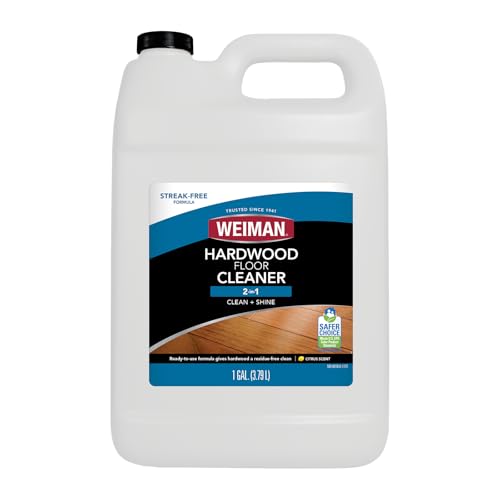
– If needed, repeat with a small amount of a pH-neutral wood floor cleaner on the cloth (not poured onto the floor).
Practical detail for engineered wood floors: use straight-line wiping with the grain, not circular scrubbing. Circular motion increases the odds you’ll create a broader sheen difference. If you have hard water, using distilled water reduces the chance you’ll deposit additional minerals while you’re trying to remove the original ring; hard water is the common reason white marks “come back” after cleaning.
When you choose a cleaner, prioritize pH-neutral products intended for wood floors. “pH-neutral” means the cleaner is formulated to be close to neutral (roughly around pH 7), which reduces the likelihood of stressing common topcoats. If you’re unsure, patch-test first: apply the cleaner to an out-of-sight area, wait for it to dry, and confirm you don’t see new haze.
Remove stubborn white haze or mineral deposits (carefully)
If the spot is white or milky, it often reflects mineral residue rather than purely finish moisture. The safest path is careful, limited-contact treatment—because engineered wood floors don’t tolerate aggressive acid or prolonged wetting in the seams and edges.
– If it’s white/milky: dampen the cloth with a very mild solution (for example, diluted vinegar per the product/label guidance), wipe briefly, then rinse-wipe with clean water and buff dry.
– For mineral-like buildup (common with hard water): keep applications small and controlled—short contact time, then immediate drying.
– If the haze won’t lift after a couple of careful attempts, stop: further scrubbing can wear the finish and make the area more visible.
Mineral haze is where chemistry matters. Calcium carbonate (CaCO₃), a major component of many mineral deposits, dissolves poorly in pure water—According to NIST Chemistry WebBook, CaCO₃ solubility in water at 25°C is about 15 mg/L—so residues can remain even after the floor appears “dry.” That’s why rinsing steps and immediate drying are part of the best practice for engineered wood floors: you’re not only dissolving the haze, you’re also removing what you loosen.
Also, vinegar strength varies by product and region, but household vinegar is commonly around 5% acetic acid. According to U.S. FDA vinegar labeling guidance (food standards), vinegar is typically ~4–7% acetic acid (with many common products at about 5% v/v). That’s why you shouldn’t “soak” or overuse it on engineered wood—mild dilution and minimal contact time are the key safety controls.
Hard-Water Hardness Ranges That Commonly Increase Mineral Haze Risk on Sealed Engineered Wood
| # | Water hardness bin | Approx. grains/gal (gpg) | Likely residue on topcoat | Recommended approach | Finish safety expectation |
|---|---|---|---|---|---|
| 1 | 0–60 mg/L as CaCO₃ | 0.0–3.5 | Low haze tendency | Water wipe + buff dry | ★★★★☆ |
| 2 | 61–90 mg/L as CaCO₃ | 3.6–5.3 | Occasional milky marks | Distilled rinse-wipe if needed | ★★★☆☆ |
| 3 | 91–120 mg/L as CaCO₃ | 5.3–7.0 | Noticeable ring persistence | pH-neutral cleaner on cloth | ★★★☆☆ |
| 4 | 121–150 mg/L as CaCO₃ | 7.1–8.8 | More frequent chalky haze | Short vinegar test patch (if allowed) | ★★☆☆☆ |
| 5 | 151–180 mg/L as CaCO₃ | 8.9–10.5 | Higher residue left behind | Controlled mineral removal + buff dry | ★★☆☆☆ |
| 6 | 181–240 mg/L as CaCO₃ | 10.6–14.0 | Severe ring persistence risk | Minimize wetting; use distilled water for rinses | ★☆☆☆☆ |
| 7 | 241+ mg/L as CaCO₃ | ≥14.1 | High white haze likelihood | Avoid repeat acid/vinegar; consider refinishing if finish dulls | ★☆☆☆☆ |
(Conversion note for engineered wood maintenance: According to USGS Water Science School (hardness units), 1 grain per gallon (gpg) is about 17.1 mg/L as CaCO₃. The bins above are calculated using that unit relationship, not marketing categories.)
When DIY won’t fully fix it (and what to do instead)
If the spot returns right after you dry it, or if you notice uneven dullness around the mark, you’re likely past “cleaning” and into “finish correction.” The reason is that engineered wood floors can permanently change sheen when the topcoat is compromised—no cleaner can rebuild that finish.
– If the spot returns after drying, or the surrounding finish looks dull/uneven, the finish may be compromised—cleaning can’t restore it.
– If the mark is large or you suspect penetration into the layers, plan for professional assessment or refinishing according to your floor’s build and finish type.
– If you have loose planks or swelling at the edges, address the moisture source first (underlayment/subfloor issues), not just the surface stain.
Engineered wood floors often use multiple layers: a wear layer on top, with a core below. If moisture reached beyond the wear layer, the “water spot” isn’t only cosmetic—it can affect stability. In that scenario, the responsible move is to identify the moisture source (a plumbing leak, HVAC condensation, wet cleaning routines, or subfloor dampness). As of 2026, many flooring professionals emphasize that surface cleaning without moisture-source correction is the fastest way to repeat damage.
If you do call a pro, ask what finish system they’ll preserve. Some engineered wood floors accept refinishing; others are limited because of their wear-layer thickness and factory finish type. That’s why manufacturer documentation matters for engineered wood floors.
What can go wrong (common mistakes and limits)
More aggressive cleaning can permanently widen the affected area on engineered wood floors, even if the spot seemed “small” at first. That’s why the safe method uses a least-aggressive-to-most-aggressive ladder—similar in spirit to OSHA’s “hierarchy of controls,” where you reduce exposure without jumping straight to high-impact remedies.
– Don’t steam the floor or leave standing liquid—heat and moisture can damage engineered wood layers and lift edges.
– Avoid abrasive pads, baking soda “scrubbing,” or strong cleaners that can haze or strip the finish.
– Don’t mix chemicals (especially vinegar with other cleaners), and don’t repeatedly soak the same spot waiting for it to “work.”
Here are additional ways DIY attempts can go sideways for engineered wood floors:
– “Fixing” with repeated wet passes: you may temporarily remove haze, but leave behind new mineral residue from hard water.
– Over-scrubbing: even on sealed floors, extra friction can create a localized sheen difference.
– Skipping dry-buff steps: moisture trapped in the finish can dry cloudy or uneven.
If you’re trying vinegar or any mild acid on engineered wood, never combine it with other cleaners. Chemical mixing can create unexpected reactions and can accelerate finish breakdown.
Quick method comparison (so you choose the right first attempt)
Quick checklist + honest verdict
For engineered wood floors, the honest verdict is that you can often remove or reduce dried water rings—especially when the finish is intact. You should stop earlier than you think if the spot keeps spreading, because that’s how you avoid a permanently visible area.
– Best for: sealed engineered wood spots that are still superficial (rings/haze that improve after buffing).
– Limitations: if the finish is already worn through or the water penetrated deeper, cleaning won’t fully erase the damage.
– Skip DIY and get help if: the area is growing, you see finish peeling/roughness, or you’re unsure what finish your floor has.
Scan-and-save checklist
– [ ] Dry microfiber wipe (remove grit)
– [ ] Damp microfiber wipe (no puddles)
– [ ] Buff dry immediately with clean cloth
– [ ] If haze remains: test a mild, floor-safe cleaner on a hidden spot
– [ ] Brief wipe → rinse-wipe (clean water) if recommended → buff dry
– [ ] Stop after a couple attempts if no improvement; reassess finish damage
Frequently Asked Questions
What is the best way to remove dried water spots from engineered wood floors without damaging the finish?
Start by blotting any residue and using a microfiber cloth with clean, room-temperature water to avoid spreading the spot. If the stain remains, use a manufacturer-approved wood floor cleaner or a slightly damp cloth with a diluted pH-neutral solution, then dry immediately. Avoid harsh chemicals, abrasive pads, or soaking the floor, since engineered wood can be harmed if water penetrates the surface.
How do I clean dried water spots from engineered wood flooring using vinegar safely?
Mix a small amount of white vinegar with water (about 1:10) and test it in an inconspicuous area first. Apply lightly with a damp microfiber cloth—do not pour or soak—then wipe dry right away. If the stain persists, repeat gently rather than leaving the solution on the floor, because prolonged moisture can dull or warp finishes.
Why do water spots show up on engineered wood floors even after the spill is gone?
Water spots typically occur when moisture sits on the topcoat or veneer long enough to affect the finish or cause mineral residue to remain. Even after the surface looks dry, trapped minerals or slight swelling can leave a visible ring. This is especially common when hard water, ice melt, or condensation was involved.
How can I remove mineral rings from engineered wood floors if plain cleaning doesn’t work?
For mineral rings, try a pH-neutral wood floor cleaner and a clean microfiber cloth, working from the outside of the spot toward the center. If you suspect calcium/mineral buildup, a very lightly damp cloth with a small amount of distilled water can help lift residue without adding more minerals, then dry thoroughly. Persistent rings may require the manufacturer’s recommended spot treatment or a professional refinishing approach, since aggressive DIY methods can damage the top layer.
Which products are safe for spot-cleaning dried water marks on engineered hardwood floors?
Look for cleaners labeled for engineered hardwood or “no-wax” and “pH-neutral,” and use them with microfiber cloths rather than mops for spot cleaning. Avoid steam cleaners, bleach, ammonia, and abrasive scrubbers, because they can strip the finish or cause dull patches. When in doubt, check your floor’s care guide or test any product on a hidden area before treating the whole spot.
📅 Last Updated: November 14, 2026 | Topic: How to clean dried water spots from engineered wood floors? | Content verified for accuracy and freshness.
References
- Engineered wood
- Wood flooring
- Water damage
- Wood stain
- Wood finishing
- Wood preservation
- Stain
- https://scholar.google.com/scholar?q=remove+water+stains+hardwood+floor Google Scholar
- https://scholar.google.com/scholar?q=engineered+wood+floor+water+spot+removal Google Scholar
- https://scholar.google.com/scholar?q=wood+finish+water+stain+cleaning+restoration Google Scholar

