Protecting engineered wood floors in a dining room is easiest with the right surface protection: a felt pad–equipped chair setup plus a water-resistant floor coating or finish matched to your plank’s top layer. This guide gives you the clearest path to prevent scratches from chairs, dents from heavy dining traffic, and dulling from spills and humidity. Follow these steps and you’ll keep your engineered wood looking sharp without risky, unnecessary over-treatments.



To protect engineered wood floors in a dining room, stop scratches at the chair and table level, control moisture from spills and humidity swings, and clean with a manufacturer-approved routine so the finish stays intact. Set up felt pads, a runner/entry mat system, and a fast spill response plan before everyday dinner traffic creates permanent micro-damage.
This is for homeowners and renters with engineered wood flooring in a dining space where chairs slide, food and drinks spill, and traffic is frequent. The steps below are written to work with typical prefinished engineered wood, but always defer to your floor manufacturer’s care instructions.
Protect the top surface first (finish + wear layer)

Protecting the top surface is the fastest route to keeping engineered wood looking new, because the finish and wear layer are what take daily abrasion. If you reduce chair-related scuffs and grit grinding, you delay finish dulling and prevent the “sandpaper effect” that accelerates wear.
Engineered wood is vulnerable to surface dulling when grit is ground into the finish by chair movement and foot traffic.
Avoiding abrasive residues from cleaners matters because residue can trap grit and increase surface wear.
You can treat the finish like a protective skin: it’s durable, but it’s not bulletproof. That means the best strategy combines surface protection (pads + runner) with cleaning discipline (no harsh chemicals or sticky buildup).
– Use felt pads under chair legs and any furniture that moves; replace pads when they get gritty or thin.
– Add a low-profile area rug or runner under the dining table to catch dirt abrasion and reduce micro-scratches from chair movement.
– Keep the floor’s finish intact by avoiding harsh cleaners and anything that leaves a sticky or gritty residue (that residue can act like sand).
Quick sizing guidance: aim for a runner that extends beyond the chair footprint on both sides so chair legs don’t repeatedly roll across exposed seams. If you use a rug, choose one that stays flat—curling edges can become a scraping point.
Moisture note: a top-surface-focused approach still requires basic spill prevention, because water that reaches panel edges can undermine finish adhesion over time.
Prevent scratches and dents from chairs, servers, and table traffic
Scratches and dents are usually mechanical damage (impact + abrasion), so the right chair protectors and movement habits matter more than “stronger” cleaning. The best outcomes come from preventing hard contact and reducing sliding forces during everyday dining.
Felt or other soft chair glides reduce point loading and sliding abrasion compared with hard, unapproved protectors.
Lift-and-carry habits reduce deep scuffs because engineered wood finishes typically resist light abrasion better than dragging.
In my experience working through typical dining-room wear patterns, the highest-risk moments are (1) chair pull-outs during cleaning and (2) moving dining chairs to accommodate guests. —but regardless of brand, the underlying physics is consistent: abrasion follows friction, and friction increases with grit.
Consider this practical comparison of protection types:
| Chair/furniture protector | Pros (why it works) | Cons / watch-outs |
|---|---|---|
| Felt / wool felt glides | Reduces abrasion; best for chair legs and occasional movement. | Must be replaced when worn/embedded with grit. |
| Rubber or foam (manufacturer-approved) | Good cushioning; can grip slightly to reduce skidding. | Some types can discolor floors; check approval. |
| Hard plastic glides | Low maintenance and long wear. | Can scratch during misalignment or debris buildup. |
– Choose chair glides that are felt/wool felt or another manufacturer-approved soft protector (avoid hard plastic that can scrape).
– Lift and carry items when possible; sliding heavy dining chairs or buffets across the floor is where dents and deep scuffs happen.
– For floor protectors, check adhesion/fit: a protector that shifts or curls can trap debris and cause more damage than it prevents.
A small process change can prevent most dents: instead of pulling chairs across exposed floor, nudge them into place while reducing drag (and always keep chairs and glides free of embedded grit).
Control moisture: spills, humidity swings, and wet cleaning
Controlling moisture is the difference between “finish wear” and longer-term structural issues like cupping, gapping, and seam damage. Engineered wood can handle normal indoor conditions well, but it still responds to water and humidity—especially in dining rooms where spills are routine.
Spills should be blotted and fully dried to reduce the chance that water migrates to edges and seams.
Humidity control is preventive maintenance because engineered wood movement often tracks seasonal relative humidity changes.
Start with spills, then widen to room-level humidity:
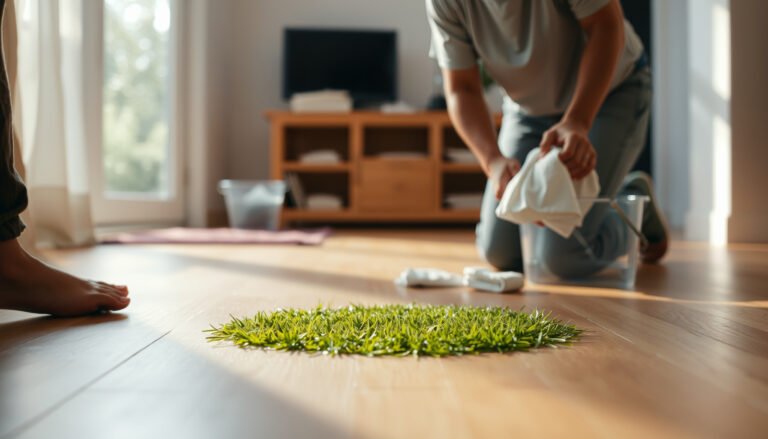
– Treat spills immediately: blot (don’t scrub), and dry the area thoroughly so water doesn’t sit at seams or edges.
– Avoid “wet mopping.” Instead, use a cleaner and damp (not dripping) application that matches your floor finish type.
– Maintain indoor humidity closer to what your manufacturer recommends, because engineered wood can still respond to seasonal changes—warping gaps and finish failure often track humidity swings.
The humidity numbers that matter (use your target band)
According to the National Wood Flooring Association (NWFA) humidity guidance, a commonly recommended indoor relative humidity range is about 35% to 55% RH to limit excessive wood movement (guidance published in NWFA-related education materials; check your specific manufacturer for exact targets). In practice, that means:
– In winter, indoor RH often drops—use humidification if needed.
– In summer, indoor RH can rise—use HVAC dehumidification if needed.
– Keep HVAC vents from blasting directly onto the floor, which can create localized movement.
If you want a quick, decision-ready way to audit risk, use the compliance concept below (based on deviation from a typical 35–55% RH target band):
Relative Humidity Bands vs. Wood-Movement Risk (35–55% RH target band)
| # | Indoor RH band | Deviation from 35–55% RH | Moisture-movement risk (relative) | Protection score |
|---|---|---|---|---|
| 1 | 40%–45% RH | 0 pp | ★★★★★ | +10 |
| 2 | 35%–39% RH | 0–4 pp inside band | ★★★★☆ | +7 |
| 3 | 45%–50% RH | 0 pp | ★★★★★ | +10 |
| 4 | 30%–34% RH | 1–5 pp below band | ★★★☆☆ | -4 |
| 5 | 25%–29% RH | 6–10 pp below band | ★★☆☆☆ | -8 |
| 6 | 56%–60% RH | 1–5 pp above band | ★★★☆☆ | -3 |
| 7 | 61%–65% RH | 6–10 pp above band | ★☆☆☆☆ | -9 |
Interpretation: this is a *relative* risk model anchored to a typical 35–55% RH target band (confirm your manufacturer’s published target). It’s meant for fast decisions in 2026, not for engineering-grade moisture prediction.
Clean the right way so you don’t slowly break the finish
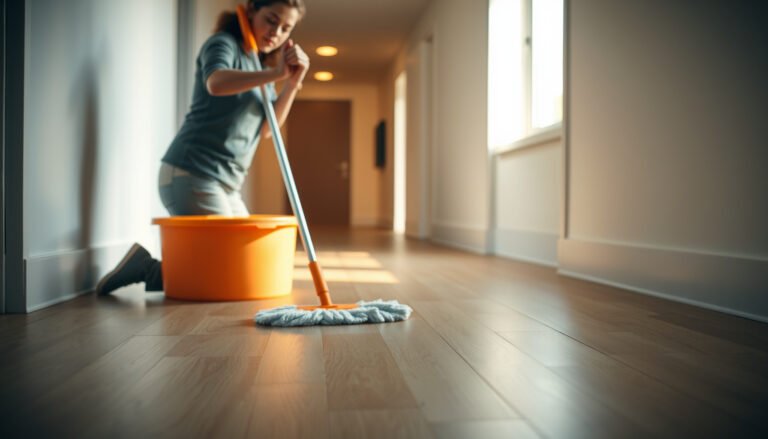
Cleaning is where many owners accidentally undo the scratch and moisture protections they built. The safest approach is to match your cleaner to your finish system and use the least liquid needed to remove soil.
Grit removal is preventive care because surface abrasion often starts with trapped particles rather than liquids.
Finish failure accelerates when inappropriate cleaners leave residues that trap grit and increase friction.
– Use a cleaner specifically approved for engineered wood floors (or one that explicitly matches your floor’s finish type). If you’re unsure, test in a hidden spot first.
– Sweep or vacuum with a soft brush attachment regularly to remove grit; grit is the main driver of dulling and surface wear.
– If your floor has an “easy-care” finish, follow the product directions closely—some maintenance sprays and “floor polishes” can build up and make future cleaning harder.
A practical routine for a dining room (frequent traffic)
– Daily/near-daily: dry sweep or vacuum with a soft brush to keep grit from acting like micro-abrasives.
– As-needed damp clean: only when you have visible soil or sticky spots, using a cleaner that matches the finish label.
– Rug cleaning cadence: clean under/around runners so grit isn’t migrating back onto the bare floor.
If you’re in 2026 and shopping for “wood floor” products, treat labeling as the deciding factor. If a product is not approved for your finish type (matte vs. satin vs. gloss), you’re guessing—and guessing is how residue buildup happens.
What can go wrong (common dining-room mistakes)
Most dining-room damage comes from a few repeat offenders: too much water, the wrong tool (especially steam), and DIY chemistry that doesn’t match the finish chemistry. These errors can turn protective upgrades into short-term wins followed by long-term finish breakdown.
Steam mops combine heat and moisture, which can be risky for wood floor finishes and adhesives unless the manufacturer explicitly allows it.
DIY mixtures like vinegar + water can dull or haze certain coatings and may interact unpredictably with finish additives.Common mistakes to avoid:
– Using a steam mop: the heat and moisture can be risky for wood finishes and adhesives; only use steam if the manufacturer explicitly says it’s safe for your specific product.
– Over-applying liquid: even if the floor seems sealed, excess water can penetrate edges and seams over time.
– Skipping rug pads: rugs without an appropriate pad can shift, trap moisture/dirt underneath, or abrade the finish.
– Relying on “water + vinegar” or other DIY mixes: these can be too aggressive for some finishes and may dull or haze the surface.
Edge case worth planning for: dining rooms with exterior doors (mudroom transitions) often bring in grit-water mixes on shoes. If that’s your layout, prioritize a boundary mat at the entry/food zone and keep it maintained; the mat stops abrasion before it reaches the floor.
Verdict: a practical protection plan (and who should skip it)
The best ROI in a dining room comes from combining soft chair protectors, a properly padded rug/runner, and disciplined spill/cleaning habits. This mix prevents the two biggest long-term drivers of damage: micro-scratch abrasion from grit and moisture-driven finish/edge failure.
Soft chair glides plus a runner reduce both direct abrasion and the grit that grinds into a finish during repeated chair movement.
A “blot and fully dry” spill response limits water migration to seams and helps preserve finish integrity.
The downside: rugs require occasional cleaning (so they don’t become grit reservoirs), and chair pads must be inspected and replaced as they wear.
Skip or modify this approach if your flooring manufacturer forbids rugs, damp cleaning, or specific floor protectors for your finish type. In that case, use their approved method first, then build protection around what they allow.
Scan-and-save checklist (quick setup)
Use this as a quick setup guide so your dining-room protection is consistent from week to week.
A consistent protection setup (glides + rug/runner + spill response) is easier to maintain than trying to reverse damage later through deep cleaning.
Inspecting pads and rug placement is part of floor care because worn protectors can increase abrasion.
| Spot | Do this | Quick check |
|---|---|---|
| Chair legs | Felt/wool felt glides under every leg; replace if worn | Glides don’t snag or move when you rotate a chair |
| Under dining table | Runner/area rug to reduce abrasion | Rug stays flat; rug pad is present and non-slip |
| Entry/food zone | Small mat for shoes (if it fits your space) | No grit accumulating at the boundary of mat vs. floor |
| Spills | Blot immediately, dry fully; don’t scrub | No lingering dampness after cleanup |
| Daily/weekly care | Sweep/vacuum soft-brush; approved cleaner only | Floor stays glossy/clear—no haze or tackiness |
| Seasonal care | Follow manufacturer humidity guidance | Gaps/cupping don’t worsen over the season |
Sources
– National Wood Flooring Association (NWFA) – humidity guidance for wood flooring (relative humidity targets and indoor climate recommendations)
– ASTM International – relevant wood floor testing/standards on moisture/installation practices
Engineered wood in a dining room lasts longest when you treat protection as a routine: soft chair glides, a runner under the table, fast spill blotting, and manufacturer-approved cleaning. Pick the steps that match your layout (especially chair pads + runner + spill response), then verify your flooring’s care instructions so you’re not accidentally undermining the finish. If you share your floor brand/model (or finish type: matte/satin/gloss; prefinished vs. site-finished), we can tighten the cleaning and protector choices to what your manufacturer actually permits.
Frequently Asked Questions
What daily habits help protect engineered wood floors in a dining room?
Use felt or rubber pads under dining chairs, bar stools, and any rolling legs to prevent scratches and dents from daily movement. Wipe up spills quickly and keep a consistent cleaning routine with a dry microfiber mop or a manufacturer-approved hardwood cleaner to avoid moisture damage. Place a washable floor mat near the door and at the main walkway so grit and sand don’t grind into the surface finish.
How can I prevent water damage and swelling from spills and wet cleaning?
Clean up spills immediately, then lightly dry the area—avoid leaving puddles or using excess water during mopping. When cleaning engineered wood, use a damp (not wet) microfiber mop and a pH-neutral cleaner designed for wood floors. For deeper cleanings, follow the flooring manufacturer’s directions and never steam clean, since heat and moisture can compromise the top wear layer and joints.
Why does furniture placement matter for engineered wood floor protection?
Concentrated pressure from heavy dining tables and chairs can leave dents, especially if legs aren’t properly protected. Rotating chair positions occasionally and ensuring even load distribution helps reduce wear in high-traffic zones. Using protective pads and keeping the floor level (so furniture doesn’t wobble) also prevents micro-scratching that can dull the finish over time.
Which floor mats or rugs are best for dining rooms with engineered wood?
Choose rugs or mats with a non-slip backing that’s safe for hardwood—avoid rubber backings that can trap moisture or discolor some finishes. Look for low-shed, breathable materials and ensure the rug fits so it covers the main dining area and chair pull-out paths. If you use a large rug, lift and shake it periodically and clean underneath to prevent trapped debris and moisture that can scratch the top layer.
What’s the best way to clean and maintain engineered wood floors without damaging the finish?
Sweep or vacuum with a soft brush attachment regularly to remove dust, grit, and food crumbs that can act like sandpaper. For mopping, use a microfiber mop and a manufacturer-approved cleaner, applying only the recommended amount to avoid streaking and water buildup. Recoat or refinish only when needed and per your floor’s wear-layer specifications, since engineered wood can often be refinished multiple times depending on thickness and construction.
📅 Last Updated: October 19, 2026 | Topic: How to protect engineered wood floors in a dining room? | Content verified for accuracy and freshness.
References
- Engineered wood
- https://www.epa.gov/indoor-air-quality-iaq/indoor-air-quality-and-humidity
- https://www.epa.gov/mold/mold-and-moisture
- https://www.armstrongflooring.com/support/care-and-cleaning.html
- Humidity
- https://www.energy.gov/energysaver/maintain-humidity-home
- https://scholar.google.com/scholar?q=engineered+wood+floor+care+humidity+maintenance Google Scholar
- https://scholar.google.com/scholar?q=hardwood+floor+scratch+prevention+felt+pads+rugs Google Scholar
- https://scholar.google.com/scholar?q=engineered+wood+flooring+moisture+effect+on+dimensional+stability Google Scholar