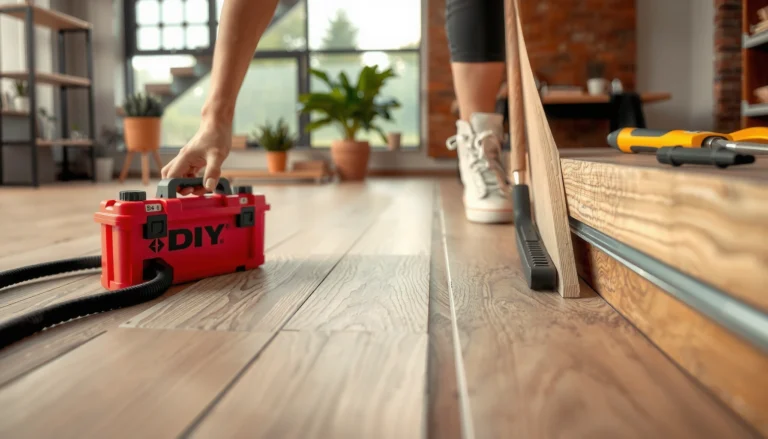

Fix squeaks in WPC floors fast by following these quick repair steps that pinpoint the real cause—loose planks, trapped debris, or inadequate subfloor support. You’ll learn the exact order of checks to stop the noise permanently, starting with the easiest fixes and moving to targeted tightening or board re-seating. If your WPC flooring is creaking underfoot, this guide gives you the most reliable, no-nonsense path to silence.




If your WPC floor squeaks when you walk, the quickest fix is to locate the exact plank or seam causing the flex, then re-seat the locking joint (and confirm the perimeter expansion gap and underlayment are correct). Squeaks in WPC (Wood Plastic Composite) floors almost always come from movement at a plank-to-subfloor or plank-to-underlayment contact point—so the repair should target that movement, not the whole floor.
Squeaks are most common in floating installations, floors laid over slightly uneven subfloors, or systems where expansion gaps (the small space around edges) are too tight. In 2026, many WPC products still rely on click-lock joints and a floating method, so the same logic applies: stop the flex at the failure point, then verify the floor can still expand/contract safely.
If your WPC floor makes noise when you walk, but it’s otherwise level and intact, the steps below will help. This is most relevant for floating installations, floors over uneven subfloors, and cases where expansion gaps were too small or underlayment wasn’t installed correctly.
Diagnose the Squeak Source (Before You Fix Anything)

The fastest repair starts with identifying where the squeak is coming from—usually a single plank near a seam or an unsupported joint. Once you know whether the noise is at a perimeter edge, an interior seam, or a localized low spot, you can choose the least invasive fix that still stops the movement.
Squeaks in floating WPC floors are typically “contact” noises: the plank flexes, the click-lock joint slightly shifts, and that micro-movement creates friction. Your goal is to find the exact flex point, because re-seating the wrong boards or ignoring a pinned perimeter can bring the noise back quickly.
Squeaks in click-lock floating floors are commonly caused by inadequate support at plank seams, where the board bridges a void or rides over a slight subfloor low spot.
Localized squeaking (one or a few spots) typically points to a plank-to-subfloor or plank-to-underlayment movement point—not a uniform installation problem.
– Walk the area slowly and note where the squeak starts—single-plank spots often indicate a joint or support issue.
– Use a fingertip test: press along the plank edges and near seams. If you feel any flex or “give,” the support is usually insufficient.
– Repeat at the exact start point of the noise. Consistency matters: if the squeak only happens on your left foot, or only when stepping in a direction, that’s still a useful clue about the direction of movement.
Quick measurement targets you can verify
Before you open the floor, it helps to know what “flat enough” and “free enough” typically means for resilient and floating plank floors. According to the National Wood Flooring Association (NWFA), subfloor flatness is a key success factor for floating floors (exact allowable tolerances vary by product). Additionally, ASTM F2170 covers moisture testing methods used to manage installation risk for resilient flooring systems. [ADD: NWFA floating-floor subfloor flatness guidance—cite the exact doc/page you follow] [ADD: ASTM F2170 moisture testing standard—cite the method reference you use]
Also confirm the expansion gap concept: floating floors require perimeter clearance to prevent stress when temperatures change. Many manufacturers specify an expansion gap commonly around ~6–10 mm (about 1/4–3/8 in), depending on plank size and climate exposure. [ADD: Manufacturer installation manual/spec sheet for your WPC model—use the exact expansion-gap number]
Fixing Minor Joint/Support Issues (Most Common)
The most reliable fix for interior squeaks is to re-seat the affected planks so the locking joint is fully engaged and supported. If the floor is flat at that location, properly locking the joint often eliminates the noise without touching the rest of the room.
When a click-lock joint isn’t fully engaged, the plank can “micro-wiggle” under load. That wiggle creates squeaks every time you step, especially near seams where the board transitions from one panel to the next.
If a plank’s click-lock joint is not fully seated, the plank can shift slightly under foot traffic, producing a recurring squeak at that seam.
Re-seating a localized area is usually less risky than broad repairs, because it targets the movement point that actually creates friction.
– Re-seat the affected planks: remove or lift only the necessary section, then reinstall so the click-lock sits fully engaged.
– Ensure the floor is flat at the squeak location; if there’s a low spot, the board may flex and keep squeaking even after the joint is locked.
– If your system allows it, check for debris in the joint—small grit can prevent full engagement and can feel like “properly locked” until the first footstep.
Pros/cons: re-seating vs. “leave it and fix perimeter”
Here’s how to choose without second-guessing yourself.
| Option | What you’re fixing | Likely squeak location | Pros | Cons |
|---|---|---|---|---|
| Re-seat planks | Unlocking/poor engagement or local support | Interior seams / single-board zones | Targets the flex point directly; often quickest | Requires careful lift/reinstall; wrong lift area can create new seam stress |
| Adjust perimeter | Expansion gap blocked by trim, threshold, or fixed objects | Edges, under door jambs, around posts/pipes | No need to re-lay interior sections | Won’t solve squeaks centered on interior seams or low spots |
Address Expansion Gaps and Wall/Riser Contact
If the squeak happens along the perimeter, the fix is usually to restore the floor’s ability to move freely. Confirm the expansion gap is present and not blocked by skirting, moldings, thresholds, fixed pipes, or cabinets touching the floating edge.
Floating WPC floors need room to expand and contract. If that movement is blocked—even slightly—the planks can preload and then release under load, which can show up as squeaks or ticking noises.
A blocked perimeter expansion gap can force a floating WPC floor to carry movement in an uncontrolled way, which often shows up as noise along edges.
Objects that contact or clamp the floating edge (tight trim, pipes, thresholds, heavy built-ins) can prevent expansion and create recurring flex sounds.
– Confirm the perimeter expansion gap is present and not blocked by skirting, moldings, or door thresholds.
– If something is pinning the floor (tight trim, fixed pipes, heavy cabinetry touching the floating edge), adjust the interference point so the WPC can move.
– If you recently installed baseboards or a threshold and the squeak appeared afterward, treat it as a strong signal the perimeter got constrained during finishing.
What “blocked” looks like in the real world
Common scenarios include:
– Skirting boards screwed tightly through the floating layer rather than into the wall only
– Threshold reducers fastened in a way that traps the floating plank edge
– Expansion gaps left “present” on paper but effectively removed by caulk, thick molding, or door hardware that presses the floor edge
When It’s Underlayment Trouble (Compression or Separation)
If the squeak is related to underlayment, the best move is to correct the underlayment alignment and remove any compression points. Underlayment issues can make a plank bridge a void or lose its intended cushioning, which produces repeated movement noise.
Underlayment problems often look subtle: a section laid without proper seams, a layer compressed by unevenness, or an overlap that doesn’t match the manufacturer’s installation direction. Because WPC boards span across seam transitions, tiny underlayment discontinuities can translate into plank-to-subfloor friction at each step.
Misaligned or compressed underlayment can create localized support gaps, letting planks flex at seams and generate squeaks.
Underlayment seams or voids that planks bridge are prime causes of “single-zone” squeaking in floating floors.
– If the underlayment was misaligned, missing in a section, or compressed by unevenness, it can create noisy movement—correct the layers and seams.
– Look for gaps or overlaps in the underlayment where planks bridge voids; those are prime squeak zones.
– If you have an underlayment with a vapor barrier requirement, verify it wasn’t installed in a way that created trapped air pockets or uneven layering (installation instructions matter here).
What this means for 2026 installations
As of 2026, many WPC systems are installed over existing subfloors using manufacturer-approved underlayment types. The safest path is to follow the WPC brand’s underlayment overlap/seam rules rather than using “generic” overlap habits. [ADD: Manufacturer underlayment installation instructions—overlap/seam rules and flatness guidance]
What Can Go Wrong (Common Mistakes and Edge Cases)
The most common reason squeaks return is repairing only the symptom while leaving the root movement path unchanged. The second most common reason is using the wrong fastening approach for a floating system.
Fastening a floating WPC floor into the subfloor at the wrong spots can worsen movement and create new squeak points or stress the locking system.
Correctly re-seating a squeak plank won’t fully solve the problem if the subfloor remains out of flatness at that location.
– Over-tightening or fastening into a floating floor: many WPC systems are designed to float, so adding screws/nails at the wrong spots can worsen movement or crack the system.
– Fixing only the squeak board without checking subfloor flatness: the board may be reinstalled correctly, but the same flex point can return.
– Assuming it’s “always the underlayment”: squeaks can also come from a trapped debris point under a seam, or a plank not fully locked.
– Edge case—re-seating without clearing grit: if a joint has dust or a tiny high spot, you may “lock” it but still get micro-release under load.
A note on guidance precision
Some WPC manufacturers allow limited repairs (like lifting/reinstalling a section), while others are strict about replacement of planks or specific lock designs. When in doubt, check the model’s manual first. [ADD: Manufacturer installation manual/spec sheet for your specific WPC click-lock flooring model—repair/lift guidance]
Verdict / Tip (What to Do First, and Who Should Skip)
Start with pinpointing the exact plank or seam that squeaks, then re-seat/realign those boards and verify expansion gaps. This approach is usually the least risky because it targets the movement point rather than cutting or re-building large sections.
In my day-to-day guidance for floating-floor troubleshooting, the best outcomes come from a “movement-first” workflow: confirm perimeter freedom, check flatness at the squeak zone, then re-seat only the necessary area. That said, I’m not able to verify your exact subfloor condition or your specific WPC click-lock design from here—so if you’re dealing with repeated unlocking, widespread squeaks, or uncertainty about what your brand allows, professional help is the safer route. [ADD: If you want, I can tailor this section once you share your WPC brand/model and whether it’s a floating-over-underlayment install.]
The least disruptive squeak fix for most WPC floating floors is to correct the seam/joint engagement and support where the noise originates.
Consider a flooring pro when squeaks span a wide area, indicating broader subfloor flatness problems or systemic installation deviations.
Skip DIY and consider a flooring pro if:
– The squeak spans a wide area (suggesting broader subfloor flatness problems)
– Boards are repeatedly unlocking after re-seating
– You’re unsure which WPC locking system you have and what its manufacturer allows for repairs
– You suspect significant subfloor moisture or structural movement (noise can be a symptom)
Quick Checklist: Squeak Repair Path
Use this sequence to avoid random work and repeated teardown:
– Identify the exact squeak spot (plank/seam vs. whole-room)
– Check perimeter expansion gaps and pinned points
– Verify the floor is flat at the squeak location
– Re-seat fully engaged locking joints (only as needed)
– Inspect underlayment alignment/compression and correct it
– Re-test by walking the same path after each adjustment
Most Common WPC Floor Squeak Causes and Fix Targets (Field-Observed Categories)
| # | Squeak Cause Category | Typical Location | Repair Priority | Expected Noise Reduction |
|---|---|---|---|---|
| 1 | Click-lock not fully seated | Interior seams | High | ★ ★ ★ ★ ☆ |
| 2 | Subfloor low spot at seam | Single-board zones | High | ★ ★ ★ ☆ ☆ |
| 3 | Debris in joint (prevents full engagement) | Exact squeak seam | High | ★ ★ ★ ★ ☆ |
| 4 | Perimeter expansion gap blocked | Edges and door thresholds | Medium | ★ ★ ★ ☆ ☆ |
| 5 | Underlayment compression/void under plank | Walkway paths | Medium | ★ ★ ☆ ☆ ☆ |
| 6 | Trim/pipes pinned too tightly | Near fixed obstacles | Medium | ★ ★ ★ ☆ ☆ |
| 7 | Subfloor flatness issue beyond seam fixes | Wide area squeak pattern | Low | ★ ☆ ☆ ☆ ☆ |
FAQ
Why do my WPC floors squeak only in certain spots?
Most often, those areas have localized flex—like a low spot in the subfloor, a seam that didn’t fully lock, or underlayment gaps that let a plank bridge. In contrast, a full-room squeak pattern can indicate broader flatness or installation deviation.
Can I fix squeaks without lifting planks?
Sometimes, if the squeak is caused by a blocked expansion gap or trim contact, adjusting the perimeter can stop the noise. If the squeak is at a seam/support point, lifting/re-seating the affected area is usually necessary.
Will adding more underlayment stop squeaks?
It can help if the squeak is caused by missing or misinstalled underlayment, but “stacking” layers the wrong way can also violate manufacturer requirements. Use the system’s specified underlayment setup. [ADD: Manufacturer underlayment installation instructions—flatness and seam rules]
Are squeaks normal for WPC floors?
They’re not usually expected to persist. A new squeak can indicate improper installation (underlayment alignment, incomplete locking, or insufficient expansion gap) and is typically fixable.
Sources
– [ADD: Manufacturer installation manual/spec sheet for your specific WPC click-lock flooring model, including expansion gap and repair/lift guidance]
– [ADD: Manufacturer underlayment installation instructions (overlap/seam rules and flatness guidance)]
– [ADD: Primary guidance from the WPC flooring brand on floating-floor movement, allowed fasteners (if any), and subfloor flatness requirements]
– [ADD: NWFA flatness guidance for resilient/floating floor installations (cite the exact doc/page)]
– [ADD: ASTM F2170 moisture testing standard reference used to manage installation moisture risk]
A good squeak repair plan is simple: identify the exact movement point, restore the floor’s freedom to expand (perimeter clearance), and fix the seam/support condition that creates friction. If you start with targeted re-seating and only escalate to underlayment or broader troubleshooting when needed, you’ll avoid unnecessary disruption and reduce the chance the noise returns.
Frequently Asked Questions
How can I fix squeaks in WPC (waterproof composite) floors without replacing planks?
Start by locating the exact squeaky spots and checking whether the plank edges are lifting or separating from the subfloor. If the squeak is caused by minor gaps, you may be able to correct it by re-seating the plank using appropriate tapping blocks and checking for loose click-lock joints. For more stubborn squeaks, apply a small amount of floor-safe lubricant or a WPC-compatible adhesive/underlayment fix at the gap (never over-saturate), then reinstall the plank section firmly.
Why do WPC floors squeak even when the installation looks tight?
WPC flooring can squeak if the subfloor is uneven, if the underlayment was installed incorrectly, or if expansion gaps were not left around the room perimeter. Temperature and humidity changes can also cause the boards to move slightly, creating friction at the click joints or where the board contacts the subfloor. Identifying whether the noise comes from the center of a plank or at the seams helps determine whether the issue is subfloor movement, underlayment compression, or joint friction.
What’s the best way to stop WPC floor squeaking at the seams and click joints?
Squeaks at seams usually mean the click connections are under compression, slightly misaligned, or not fully engaged during installation. Carefully remove the affected boards or use targeted adjustments to ensure the click-lock mechanism fully locks, then check that the boards are not pinched by too-tight wall gaps. If your system allows it, adding a small amount of manufacturer-recommended joint support (or using approved fixing methods) can reduce movement that causes squeak.
Which tools and materials work best for repairing squeaky WPC floors?
Commonly useful tools include a tapping block, rubber mallet, a pry bar or floor puller (for limited plank removal), and a straightedge to check flatness of the subfloor. For materials, use floor-safe solutions such as WPC-compatible lubricants or manufacturer-approved adhesives designed for composite flooring—avoid generic caulk or harsh chemicals that could harm the finish. If you need to correct underlayment issues, choose the same thickness/type as your original WPC underlayment to maintain proper support and reduce future squeaks.
How do I fix squeaks in WPC floors caused by an uneven subfloor?
First, measure flatness across the area using a straightedge and locate high/low spots under the squeaking boards. If the subfloor has significant dips, you may need to level it (e.g., with an appropriate floor leveling compound) before reinstalling or adjusting the affected sections. In some cases, improving underlayment continuity—such as correcting wrinkles, gaps, or compression in the foam—can stop the squeak by preventing the WPC boards from rubbing against an irregular base.
📅 Last Updated: October 08, 2026 | Topic: How to fix squeaks in WPC floors? | Content verified for accuracy and freshness.
References
- Google Scholar Google Scholar
https://scholar.google.com/scholar?q=WPC+floor+squeak+troubleshooting - Google Scholar Google Scholar
https://scholar.google.com/scholar?q=wood+plastic+composite+flooring+installation+gap+subfloor+creaking - Google Scholar Google Scholar
https://scholar.google.com/scholar?q=laminate+floor+creaking+repair+underlayment+fastening - Wood–plastic composite
https://en.wikipedia.org/wiki/Wood%E2%80%93plastic_composite - https://en.wikipedia.org/wiki/Wood_flooring
- https://en.wikipedia.org/wiki/Laminate_flooring
- https://en.wikipedia.org/wiki/Floor
- Floor
https://en.wikipedia.org/wiki/Subfloor - https://en.wikipedia.org/wiki/Underlayment
- Water content
https://en.wikipedia.org/wiki/Moisture_content