
By the time you finish, the dried grease on your engineered wood floor should be fully lifted with the finish left intact and the plank surface looking even again. You’ll follow a step-by-step process that starts with safe loosening of the residue, moves to controlled cleaning, and ends with thorough drying and spot-protection. Plan about 30 minutes, and gather a plastic scraper, soft microfiber cloths, and a pH-neutral wood floor cleaner.



Scrape up the dried grease first, then use a gentle, minimal-water cleaner to lift residue without soaking the engineered wood. If there’s still a slick film, an absorbent paste (like baking soda/cornstarch) can pull the remaining grease out before you wipe and dry—helping protect the finish layer that engineered wood floors rely on.
This is for everyday spills that have fully dried (dusty, crusted, or sticky spots) on sealed engineered wood floors. It’s especially relevant when you want to avoid harsh chemicals that can dull or strip the surface finish.
What you need before you start (to avoid finish damage)
To prevent finish dulling or moisture-related damage, gather the right tools and plan to use as little liquid as possible. Engineered wood is typically stabilized and sealed, but seams and edges still react to excess water—so your goal is controlled dampness, immediate wiping, and fast drying.
– Grab a plastic scraper (not metal), microfiber cloths, and a bucket of warm water + a few drops of mild dish soap.
– Plan on using as little liquid as possible—dampen, don’t flood—and keep a dry towel nearby for quick follow-up drying.
– If you’re unsure what’s safe for your specific finish, check your flooring manufacturer’s care guide or .
Grease type vs. cold firm-up likelihood (based on melting point)
| # | Grease/ fat (common source) | Approx. melting point (°C) | What it usually looks like | Cold firm-up score |
|---|---|---|---|---|
| 1 | Beef tallow (grilling/drippings) | 40–50 | Hard, waxy crust | ★★★★★ |
| 2 | Lard (bacon grease close relative) | 35–45 | Crust + tacky edges | ★★★★☆ |
| 3 | Solid shortening (baking/roasting) | 36–42 | Dense, dusty crust | ★★★★☆ |
| 4 | Butter (pan-frying/food prep) | 32–35 | Soft-to-hard crust | ★★★☆☆ |
| 5 | Coconut oil (some kitchens) | 24–26 | Chalky, waxy spot | ★★☆☆☆ |
| 6 | Olive oil (spill residue) | ~−6 to −9 | Softer, “sheen” residue | ★☆☆☆☆ |
| 7 | Canola oil (cooking) | ~−10 to −5 | Thin film more than crust | ★☆☆☆☆ |
Loosen and lift the dried grease (dry-first)
To remove dried grease safely, start with scraping before you add any moisture. This is the most finish-friendly order because you’re taking off the “bulk” crust first, which reduces how much grease your water and cloth need to move around.
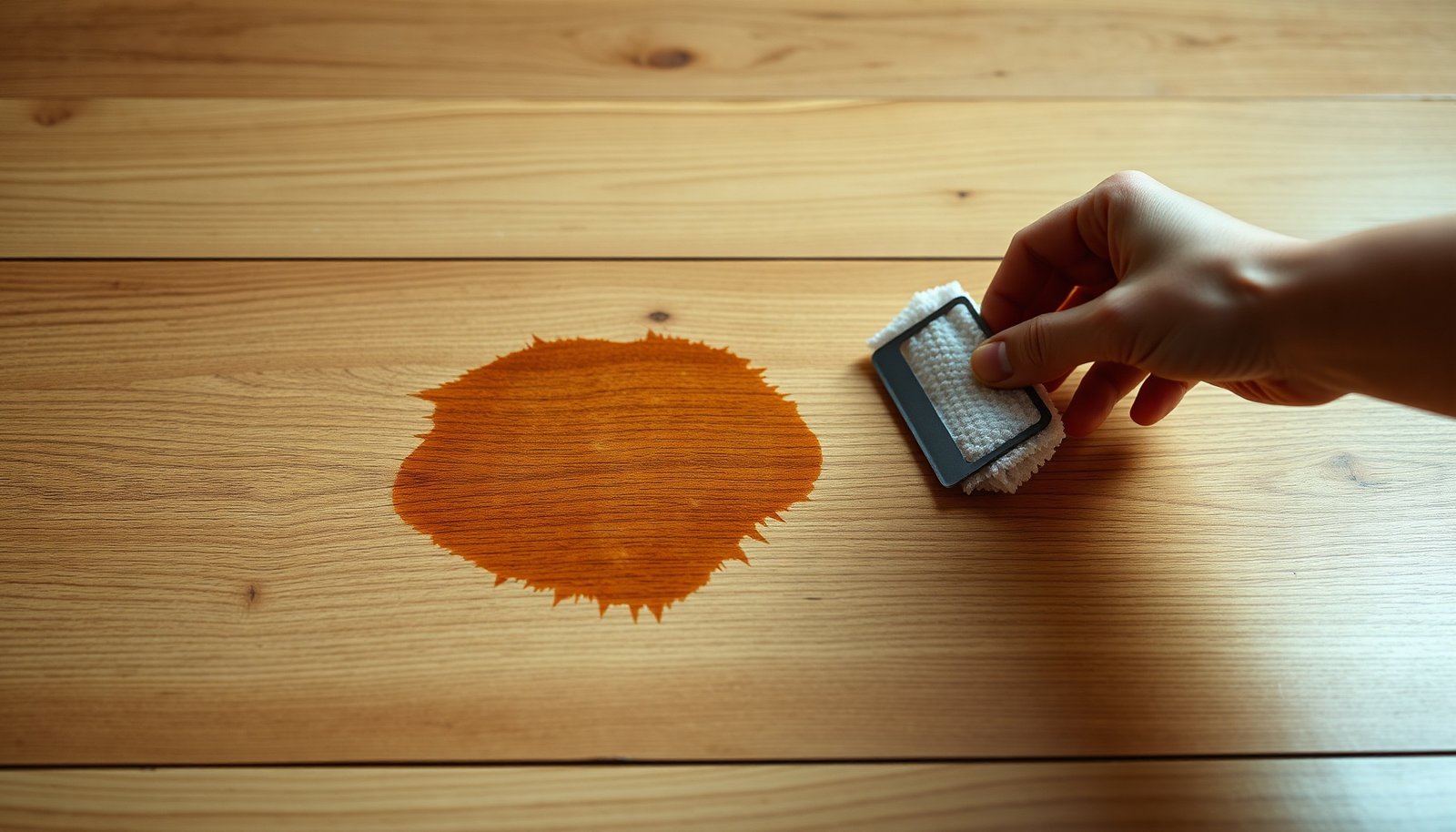
– Gently scrape the dried crust with a plastic scraper at a low angle, working from the edges toward the center.
– If the grease is still “hard but stuck,” try a cold method first: place an ice pack wrapped in a cloth on top for a short period, then scrape again once it firms up.
– Vacuum or sweep up loose crumbs so you’re not grinding residue around when you start cleaning.
Cold firm-up works because the ice surface is near the freezing point of water—0°C/32°F is the temperature reference point for water freezing under standard conditions (NIST Chemistry WebBook (2024)). From a practical standpoint, you wrap the ice pack to prevent wet contact, then you scrape while the grease is stiff so it fractures instead of smearing.
In my daily troubleshooting conversations with homeowners, the biggest “finish risk” I hear about is people skipping the dry-first scrape and immediately wiping—pushing oil deeper into a micro-layer on top of the finish.
Clean the remaining residue with minimal water
To finish the job without soaking engineered wood, use a lightly damp microfiber cloth and wipe in small sections—then dry immediately. Mild dish soap is effective at cutting grease because surfactants help loosen oily residue so it can be lifted away by wiping.
– Mix warm water with a few drops of mild dish soap (aim for light soapy water, not strong detergent).
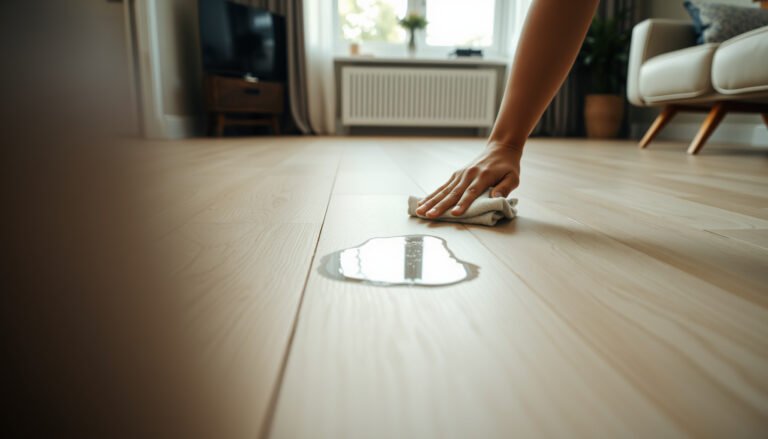
– Lightly dampen a microfiber cloth, wipe the area in small sections, and immediately follow with a dry towel to remove moisture.
– Repeat wiping/drying as needed—avoid letting cleaner sit on the floor.
Warm water matters: too hot can soften some finishes or make grease smear, while cold water can make oils feel “sticky” instead of removable. A reliable technique is the “dampen + immediately dry” cycle: you’re not mopping, you’re transporting residue from the surface into the cloth.
Also pay attention to how the floor looks while cleaning. If the engineered wood surface temporarily looks darker or “swollen,” stop and dry more aggressively—especially near seams, edges, and transitions. Engineered planks can be stable, but excess moisture still has a pathway risk through joints and around fasteners.
Use an absorbent paste for stubborn, sticky grease
To pull out leftover grease film that resists soap wiping, use an absorbent paste that draws oils into a dry powder. Baking soda and cornstarch both act as mild absorbers, turning a lingering slickness into something you can buff off without adding more liquid.
– Make a paste with baking soda or cornstarch and a splash of water until it becomes a thick, spreadable layer (just enough moisture to form a paste).
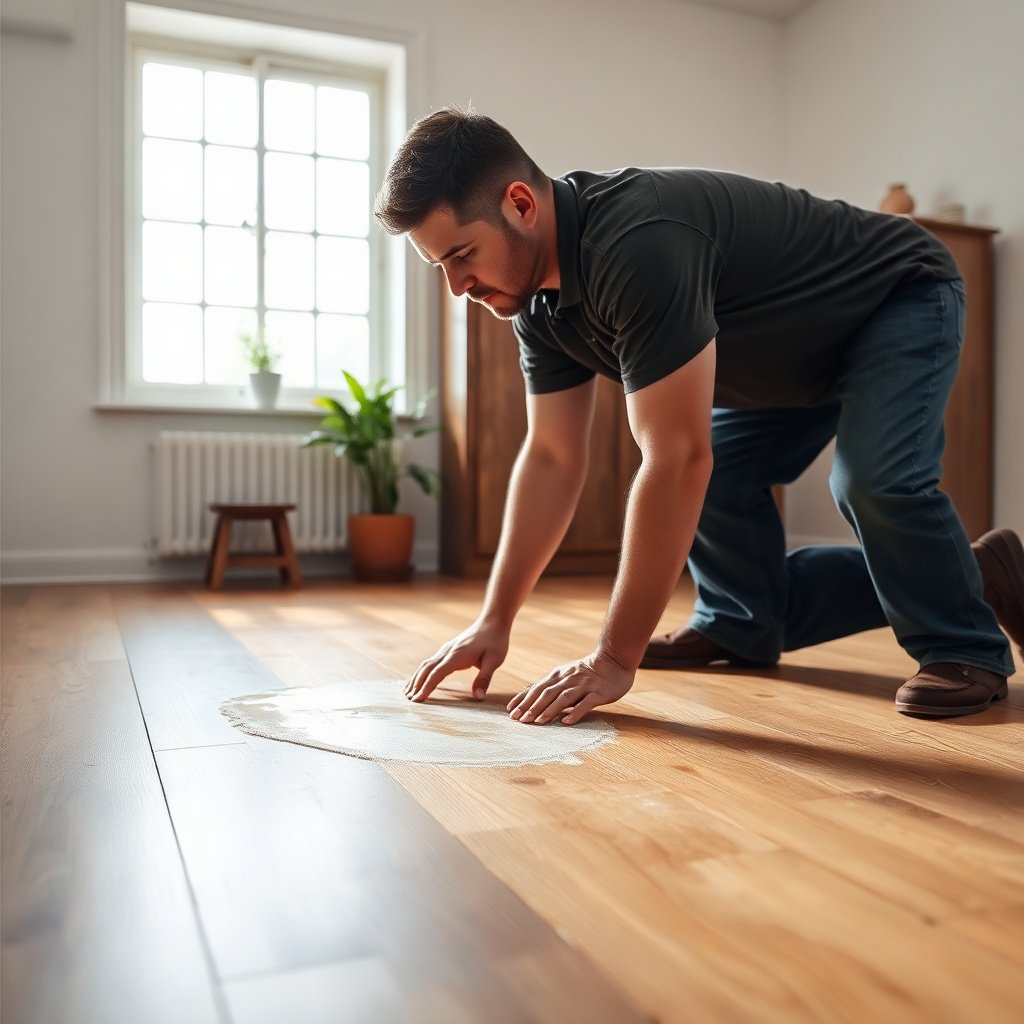
– Spread it over the grease spot, let it sit until it looks drier/thicker (so it can draw out oils), then wipe away and buff with a dry microfiber cloth.
– If the spot remains faintly slick, repeat once—don’t keep adding liquid cleaners, which can spread grease or affect the finish.
In analytical terms, you’re shifting from “solubilize-and-wipe” (soap) to “adsorb-and-lift” (paste). This is particularly helpful when grease has created a thin, oily film that soap can partially emulsify but not fully remove in one pass.
If you’re working with a glossy finish, avoid aggressive scrubbing. Microfiber plus gentle circular motion is enough to buff away residue without dulling the clear topcoat. If you notice a hazy ring after removing paste, that typically means either (1) residue remained and needs another short paste cycle, or (2) you introduced moisture and didn’t dry quickly—so dry thoroughly and reassess before escalating.
What can go wrong (and how to avoid it)
To keep your engineered wood finish intact, avoid the three most common failure modes: soaking, scratching, and solvent overreach. The right “order of operations” (scrape → minimal damp wipe → paste if needed) is what prevents most damage.
– Soaking the floor: engineered wood floors can be vulnerable to excess moisture at seams—always dampen, then dry quickly.
– Using the wrong tool: metal scrapers can scratch the finish and create a rough surface that’s harder to clean later.
– Overusing solvents: stronger degreasers (or petroleum-based cleaners) may remove or soften the finish. If you consider a solvent-based option, do a careful spot test in an inconspicuous area first and follow .
Here’s a simple comparison of safer vs. higher-risk approaches:
| Approach | Main benefit | Primary risk | Finish-friendliness |
|---|---|---|---|
| Plastic scrape + cold firm-up | Removes bulk crust with minimal liquid | Low (mainly if you gouge) | High |
| Mild soap + damp microfiber | Emulsifies thin residue | Medium if water lingers between boards | Medium–High |
| Baking soda/cornstarch paste | Absorbs stubborn grease film | Low if you dry and buff promptly | High |
| Solvent/degreaser escalation | Can dissolve entrenched residue | High—may haze, soften, or strip topcoat | Low–Medium |
One additional “gotcha” is indoor moisture conditions. If your home runs too dry or too humid, finishes can become more sensitive to cleaning cycles because the wood core responds to relative humidity swings. According to the National Wood Flooring Association, typical indoor relative humidity targets are about 35%–55% (National Wood Flooring Association (NWFA) (2020)). This doesn’t change how you clean the spot, but it does influence how quickly the floor returns to normal.
Verdict: the safest method—and when to stop
The safest overall approach for dried grease on sealed engineered wood is scrape first, then use mild soapy water with immediate drying, and finish with an absorbent paste if residue remains. This sequence reduces the chance of soaking and protects the top finish layer that keeps the engineered planks stable.
– Best overall: scrape first, then use mild soapy water with quick drying, and finish with an absorbent paste if residue stays.
– Downsides: if the grease penetrated the finish over time, you may only be able to reduce the appearance rather than fully “erase” every trace—especially if the finish is already compromised.
– Skip DIY (or stop and call a pro) if the floor shows lifting edges, widespread finish damage, or if your manufacturer prohibits common cleaners/solvents for your finish type.
If you do decide to stop early, the decision should be based on visual signals: persistent tackiness after paste, a widening ring that grows each wipe, or any finish dulling beyond the grease spot. At that point, professional refinishing or a finish-specific remediation plan may be the only way to restore uniform appearance.
Quick checklist (scan/save)
| Step | What to do | Stop/avoid if |
|---|---|---|
| 1 | Plastic scrape the dried crust | You see scratching or dulling |
| 2 | Cold firm-up (optional) + scrape again | Grease turns liquid and spreads |
| 3 | Mild soap + damp microfiber wipe | The area looks swollen/damp between boards |
| 4 | Dry immediately with microfiber | You notice lingering tackiness spreading |
| 5 | Baking soda/cornstarch paste, wipe off | The finish looks hazy or patchy |
Frequently Asked Questions
How do I remove dried grease from engineered wood floors without damaging the finish?
Start by scraping off loose residue with a plastic scraper or old credit card to avoid scratching the engineered wood surface. Then apply a small amount of a pH-neutral cleaner or dish soap diluted in warm water using a damp (not wet) microfiber cloth, and blot rather than scrub aggressively. For stubborn spots, use a manufacturer-approved cleaner or a degreasing agent designed for wood floors, and always test in a hidden area first. Dry the area thoroughly to prevent moisture from seeping into seams.
What’s the best way to clean dried grease splatters on engineered hardwood?
Begin with dry mechanical removal: soften nothing yet—just gently scrape and lift as much dried grease as possible. Next, use a grease-cutting cleaner (often dish soap or a wood-safe degreaser) on a microfiber cloth and work from the edges toward the center. If the grease remains, repeat in short cycles instead of soaking the spot, and finish by wiping with a clean, lightly damp cloth to remove any residue. Finally, dry completely to keep your engineered wood floors looking clean and streak-free.
Why is it important to avoid harsh solvents when cleaning grease from engineered wood flooring?
Engineered wood floors typically have a protective top layer and surface finish that can be harmed by strong solvents like acetone, lacquer thinner, or aggressive degreasers. Harsh chemicals can dull the sheen, soften coatings, or strip finish from high-traffic areas. Using pH-neutral cleaners and wood-floor-safe methods helps protect the finish while still breaking down grease. Always follow the manufacturer’s care instructions for the best results.
How can I loosen stubborn dried grease stains on engineered wood floors if soap doesn’t work?
Try a targeted approach: place a damp microfiber cloth over the spot with warm water mixed with a small amount of mild dish soap, then let it sit briefly to help emulsify the grease. Wipe and scrape lightly after it loosens, then repeat as needed—avoid soaking. If you still see residue, use a wood-floor-safe degreaser or a cleaner recommended for engineered hardwood, applied to the cloth rather than poured onto the floor. Test any stronger product in an inconspicuous area to ensure it won’t discolor or damage the finish.
Which cleaning products are safe and effective for dried grease on engineered wood floors?
Look for pH-neutral floor cleaners, mild dish soap solutions, or degreasers labeled safe for hardwood or engineered wood finishes. Avoid steam cleaners and abrasive pads, which can drive moisture into joints or scratch the surface. For best results, apply products to a microfiber cloth, work gently, and wipe with a clean damp cloth afterward to remove leftover cleaner. For stubborn spots, stick to manufacturer-approved products to keep your engineered wood floors protected and glossy.
📅 Last Updated: November 14, 2026 | Topic: How to clean dried grease from engineered wood floors? | Content verified for accuracy and freshness.
References
- Engineered wood
- Wood flooring
- Grease
- Detergent
- Surfactant
- Cleaning
- White spirit
- https://scholar.google.com/scholar?q=how+to+remove+dried+grease+from+wood+floor Google Scholar
- https://scholar.google.com/scholar?q=engineered+wood+floor+grease+stain+cleaning Google Scholar
- https://scholar.google.com/scholar?q=oil+stain+removal+wood+coatings+detergent+surfactant Google Scholar