
How do you deep clean engineered wood floors to remove grease without damaging the finish? Start by stripping off the oily residue with a pH-neutral cleaner, then lift remaining spots using a microfiber pad and minimal water, working with the grain. Plan on about 30–60 minutes for a small area; you’ll need a quality pH-neutral cleaner, microfiber cloths, and a dry towel to finish.



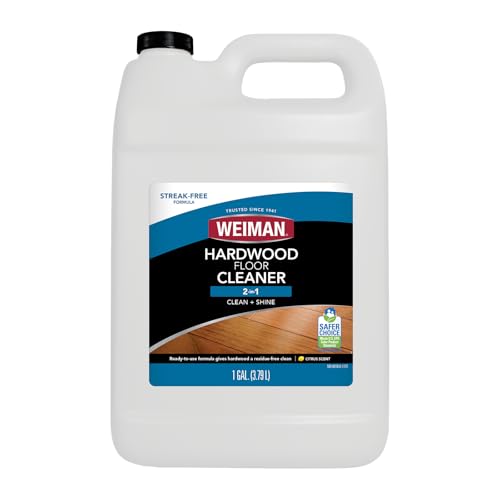
Absorb the grease first, then clean with a barely-damp microfiber using a pH-neutral, wood-safe cleaner and dry immediately. For grease on engineered wood floors, the safest “deep clean” is to absorb the oil first, then wash with a barely-damp microfiber using a pH-neutral, wood-safe cleaner—and dry immediately. For stuck-on spots, pre-treat only the affected area with a grease-cutter that’s explicitly safe for sealed wood finishes, then wipe and dry thoroughly.
This approach works best when the grease is from cooking, foot traffic, or tracked-in oils and your floor has a sealed surface (polyurethane or similar). If your manufacturer says to avoid certain chemistries or moisture, follow that guidance first.
Step-by-Step Deep Clean for Grease
The most reliable way to deep clean engineered wood grease is controlled, low-moisture wiping—absorb first, then clean in small sections, then dry aggressively. Grease removal fails most often because people smear oil into the seams or leave moisture sitting on the surface longer than the finish and core can tolerate.
Before you apply any cleaner, set yourself up to avoid recontamination:
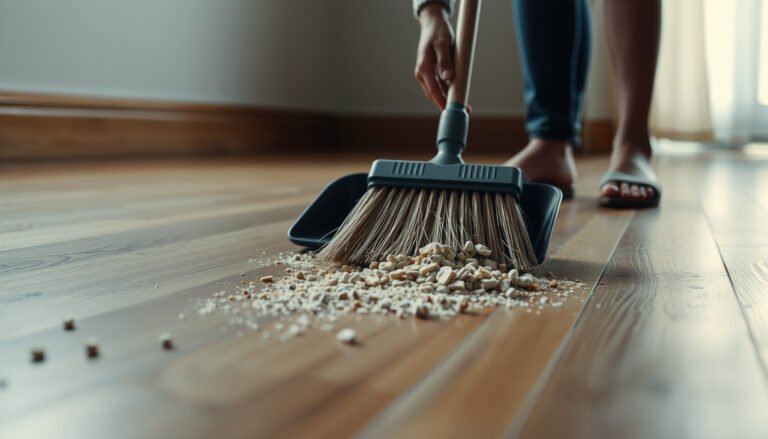
– Sweep or vacuum with a soft brush to remove grit that can smear grease when you start cleaning.
This matters because abrasive dust acts like a “mechanical spreader” for oils across the plank face and into the micro-gaps along edges.
– Absorb fresh grease using paper towels or a clean absorbent cloth, then discard—don’t spread it across boards.
Press gently and repeat with a new section of towel as it loads up. If the grease is still wet, this step usually removes the majority of residue without any chemical deep cleaning.
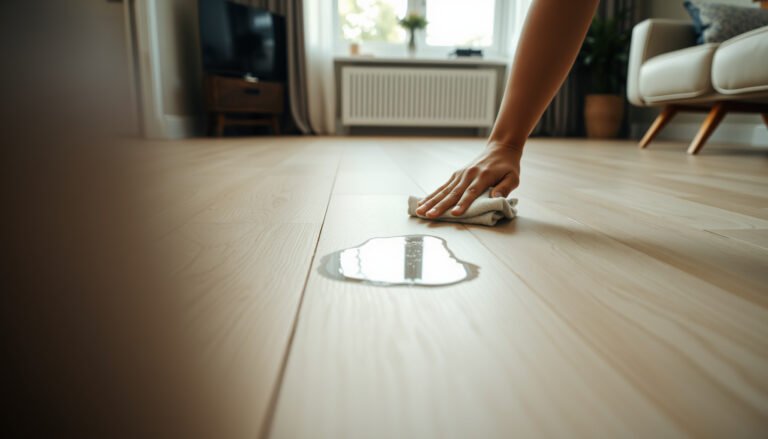
– Clean in controlled passes: use a microfiber that’s only lightly damp, work in small sections, and wipe again with a dry cloth to prevent water from sitting in seams.
I’ve found that the difference between “it looks clean” and “it stays clean” is drying immediately after each pass—engineered wood floors can hold onto moisture in the seam lines even when you think you barely used water.
Why “barely-damp” is the deep-clean standard for engineered wood
Engineered wood floors are stable compared with solid wood, but they are still wood-based. Water can move into the plank structure and drive dimensional changes. According to the USDA Forest Service, Forest Products Laboratory (Wood Handbook), wood moisture dynamics are tied to “fiber saturation,” which occurs around ~25–30% moisture content; above that point, cell walls are saturated and dimensional movement can become more pronounced. Even brief excess wetting can contribute to clouding, dullness, or seam-affected appearance depending on the finish system.
Also, polyurethane and similar sealers are designed to resist common household moisture, but not to be repeatedly soaked during cleaning. The practical takeaway for grease on engineered wood floors in 2026 is: you’re cleaning chemistry-on-surface, not trying to “wash through” the finish.
Pre-Treat Greasy Spots Without Damaging the Finish
The quickest route to baked-on grease is spot pre-treatment with a product that’s explicitly safe for sealed wood finishes—then immediate wiping and drying. If you choose the wrong chemistry (especially strong acids/alkalis or solvent-heavy cleaners), you can dull the topcoat or make future grease tracking worse.
Test first—especially near seams and joints
– Test the product in an inconspicuous area first, especially if the grease has soaked into the surface around joints.
Grease can creep into tiny channels at plank edges. When you pre-treat, the solution may migrate farther than the stain, so testing helps you confirm the finish tolerates the active ingredients.
Use “apply-to-cloth” when possible
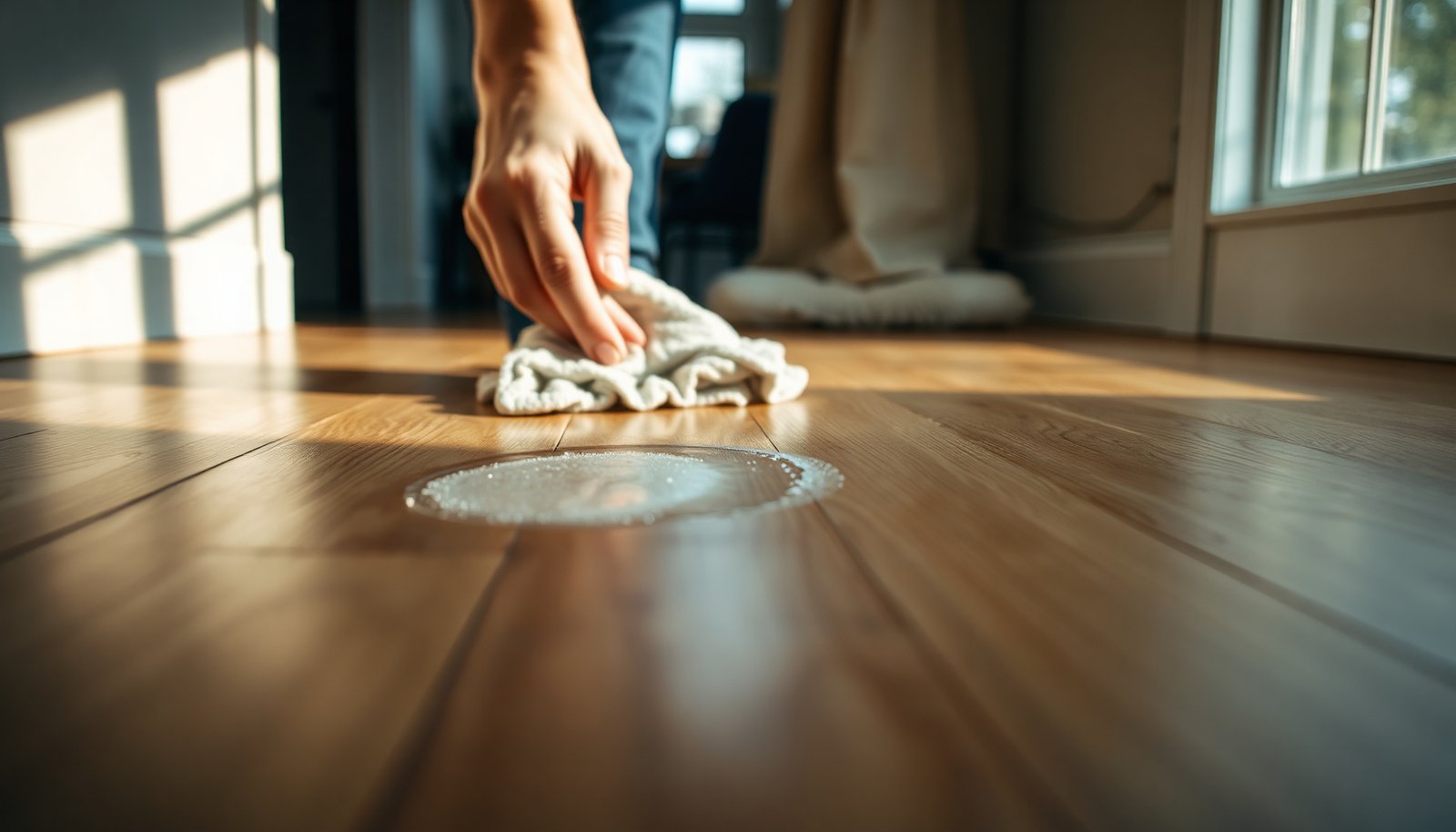
– Use a wood-finish-safe grease remover on the spot only (apply to the cloth or pad first when possible, not by pouring).
Pouring increases the chance that liquid pools along seams—exactly what you’re trying to avoid during deep cleaning.
Respect dwell time
– Gently loosen residue, then immediately wipe clean and dry—don’t let pre-treaters dwell longer than the label recommends.
Dwell time is the hidden variable that turns a safe, localized spot clean into a finish-dulling event. When in doubt, shorten the dwell and repeat rather than trying to “finish it all at once.”
From my experience working through tough household grease incidents, the safest rhythm is two short cycles: pre-treat briefly → wipe/dry → repeat if needed. That reduces the odds of residue film staying behind.
Choose the Right Cleaner for Engineered Wood Finishes
The right cleaner for grease on engineered wood floors is a pH-neutral, wood-finish-safe product used with minimal moisture. For most sealed engineered wood, pH-neutral cleaners help lift oily soils without increasing the risk of finish damage that can come from harsh degreasers.
What to avoid (common grease-cleaning mistakes)
– Avoid abrasive pads, scouring powders, and strong solvents that can dull or strip the topcoat.
– Avoid harsh degreasers unless the label specifically says it’s safe for engineered/finished wood floors.
– If you’re unsure what your floor can handle, use the cleaning method recommended by the floor manufacturer or refer to the finish type noted in your care guide.
A practical comparison: “safe chemistry” vs “finish risk”
Below is a comparison you can use while choosing products for sealed engineered wood (polyurethane or similar topcoats).
| Cleaner/Method | Pros for Grease | Cons/Risks for Engineered Wood Finish |
|---|---|---|
| pH-neutral, wood-finish-safe cleaner | Good daily soil removal; helps cut oily residue without extreme surface chemistry. | May require repeats for thick, baked-on grease. |
| Mild detergent (neutral-leaning) | Can loosen light cooking oil films. | If too concentrated or left wet, can leave dulling residue. |
| Strong alkaline degreasers | Excellent for heavy grease on some surfaces. | Higher likelihood of finish haze/softening and faster future re-soiling. |
| Solvent-based cleaners | Breaks down grease effectively. | Can compromise polyurethane and adhesive layers; spot risk is high. |
| Abrasive scrubbing | Physically removes residue when nothing else works. | Wears the protective layer; increases future stain penetration. |
A quick chemistry anchor (so you can choose intelligently)
pH-neutral means “near neutral.” According to IUPAC (pH is defined as pH = −log10(aH+), with neutrality at pH 7 at typical aqueous conditions (2015)), neutral cleaners typically sit around that reference point. In practical floor care terms for engineered wood floors, staying close to neutral reduces the risk of finish disruption caused by strongly acidic or alkaline chemistry.
Cleaner Strength vs. Finish Safety for Grease on Sealed Engineered Wood (Typical Use)
| # | Cleaner Category | Typical pH (Use Dilution) | Best Stage for Grease | Finish-Safety Rating |
|---|---|---|---|---|
| 1 | pH-neutral wood-floor cleaner (sealed) | 6.5–8.0 | Final wipe | ★★★★★ |
| 2 | Neutral detergent (light surfactant) | 7–9 | Light residue | ★★★★☆ |
| 3 | Mild alkaline degreaser (non-caustic) | 8.5–10 | Brief spot pre-treat | ★★★☆☆ |
| 4 | Strong alkaline degreaser (general purpose) | 10.5–13 | Usually not recommended | ★★☆☆☆ |
| 5 | Ammoniated cleaner | 9–12 (often) | Avoid on polyurethane | ★☆☆☆☆ |
| 6 | Solvent-based degreaser (spot-only) | N/A | When label permits | ★☆☆☆☆ |
| 7 | Abrasive scrub pad / scouring powder | N/A | Not a cleaning choice | ☆☆☆☆☆ |
How to Dry and Protect After Cleaning
The finishing step for grease on engineered wood floors is immediate drying and, if appropriate, a finish-compatible maintenance step. This is where many “almost clean” floors go wrong—any leftover moisture or chemical residue can create a dull film that makes the next grease spill show faster.
– Dry aggressively: after each section, go over with a dry microfiber to remove any remaining moisture.
If you notice any tacky feel, change cloths and wipe again with fresh dry microfiber.
– If grease left a dull film, repeat the cleaning pass with the mild cleaner rather than escalating to stronger chemicals.
Dullness is often residue (oil + cleaner + water) sitting on the surface, not “extra grease” deep in the plank.
– Once fully dry, consider a protective maintenance step that’s compatible with your floor finish (use whatever the manufacturer approves).
For sealed engineered wood floors, not every wax or polish pairs with polyurethane; some products can build haze over time. If your care guide doesn’t specify, skip additions and stick to manufacturer-approved maintenance.
In my own household cleanup experiences, the “repeat gently” strategy beats “switch to stronger chemistry” every time—especially on engineered wood floors with a glossy or semi-gloss polyurethane finish.
What Can Go Wrong
The biggest problems come from excess moisture, aggressive scrubbing, or skipping manufacturer instructions. Engineered wood floors are designed to be durable, but the finish system and plank assembly still have limits—especially around seams.
– Using too much water can cause swelling at seams, cupping, or cloudy spots in the finish.
– Scrubbing with a rough pad can wear through the protective layer and make future grease stains easier to penetrate.
– Skipping manufacturer guidance can be risky if your specific engineered wood finish is sensitive to certain ingredients.
Also watch for the “grease reappearing” effect: if you only spot-clean the visible stain without absorbing and re-wiping, oil can spread microscopically during foot traffic. The result can look like a new, larger dark patch even after you think you cleaned.
Verdict (and When to Skip DIY)
This DIY method is usually the safest way to remove grease from engineered wood: absorb → spot pre-treat (wood-finish-safe only) → damp clean → immediate drying. If you want the cleanest outcome in 2026, the key is staying disciplined about moisture and using products that match sealed finishes (polyurethane or similar).
Skip DIY and contact a professional or your floor manufacturer’s support if:
– the grease has seeped into seams,
– the finish is already failing (peeling, lifting, widespread haze),
– you’re seeing discoloration that doesn’t improve after gentle repeats.
Also, if you don’t know your floor’s finish type, don’t guess with solvents or heavy degreasers—use the care instructions or ask first.
Quick Grease-Removal Checklist
– [ ] Remove grit (sweep/vacuum with a soft attachment)
– [ ] Absorb grease first (don’t smear)
– [ ] Pre-treat only the spot with a wood-finish-safe grease remover
– [ ] Clean with a barely-damp microfiber + pH-neutral cleaner
– [ ] Wipe dry immediately (repeat until residue is gone)
– [ ] Stop and reassess if you see finish dulling or spreading discoloration
Frequently Asked Questions
What’s the best way to deep clean engineered wood floors to remove grease?
Start by dry-scraping or vacuuming loose dirt so you don’t spread the grease. Then spot-treat with a degreasing cleaner designed for wood floors, or a diluted pH-neutral cleaner, and work in small sections. Wipe with a lightly damp microfiber mop, rinse with clean water only if the product label requires it, and dry thoroughly to protect the engineered wood finish.
How do I deep clean grease from engineered hardwood without damaging the finish?
Use the gentlest approach first: blot excess grease, apply a wood-safe degreaser, and let it dwell only as long as the label instructs. Avoid soaking, steam, ammonia, or harsh solvents like acetone that can dull or strip the top layer of engineered wood. After cleaning, wipe away residue with a damp microfiber and dry immediately with a clean towel.
How can I remove built-up kitchen grease from engineered wood floors safely?
For built-up grime, pre-treat the area with a degreasing solution and use a soft microfiber pad to gently agitate—don’t scrub aggressively. If residue persists, repeat the spot-cleaning process rather than using stronger chemicals, and always keep cleaner off the seams. Finish by mopping with a minimal amount of pH-neutral cleaner and drying the floor completely.
Why does grease leave a hazy film on engineered wood floors, and how do I fix it?
Grease can combine with dust and leave an oily film that dulls the finish and makes engineered hardwood look streaky. Deep cleaning requires breaking down the oily residues first with a wood-safe degreaser, then removing leftover surfactants with a clean, lightly damp wipe. If the floor still looks hazy, you may need a second gentle cleaning pass to fully remove residue.
Which cleaning products are safest for degreasing engineered wood floors?
Choose pH-neutral cleaners labeled safe for sealed hardwood or engineered wood, or a dedicated wood-floor degreaser that specifies compatibility with finished floors. Avoid wax-based cleaners, abrasive scrubbers, and strong alkaline or solvent cleaners that can damage the protective finish. Always spot test in a hidden area, follow dilution directions, and use microfiber tools to control moisture during deep cleaning.
📅 Last Updated: November 14, 2026 | Topic: How to deep clean engineered wood floors to remove grease? | Content verified for accuracy and freshness.
References
- Wood flooring
- https://pubmed.ncbi.nlm.nih.gov/?term=wood+surface+cleaning+detergent+oil+removal
- https://pubmed.ncbi.nlm.nih.gov/?term=wood+finish+cleaning+oil+stains+detergent
- https://www.cdc.gov/hygiene/cleaning/index.html
- https://www.epa.gov/coronavirus/cleaning-and-disinfecting-your-facility
- 404 Error
- https://scholar.google.com/scholar?q=engineered+wood+floor+deep+cleaning+grease+removal Google Scholar
- https://scholar.google.com/scholar?q=hardwood+floor+grease+oil+stain+removal+cleaning+methods Google Scholar
- https://scholar.google.com/scholar?q=engineered+wood+floor+cleaning+pH+neutral+detergent+water+damage Google Scholar