
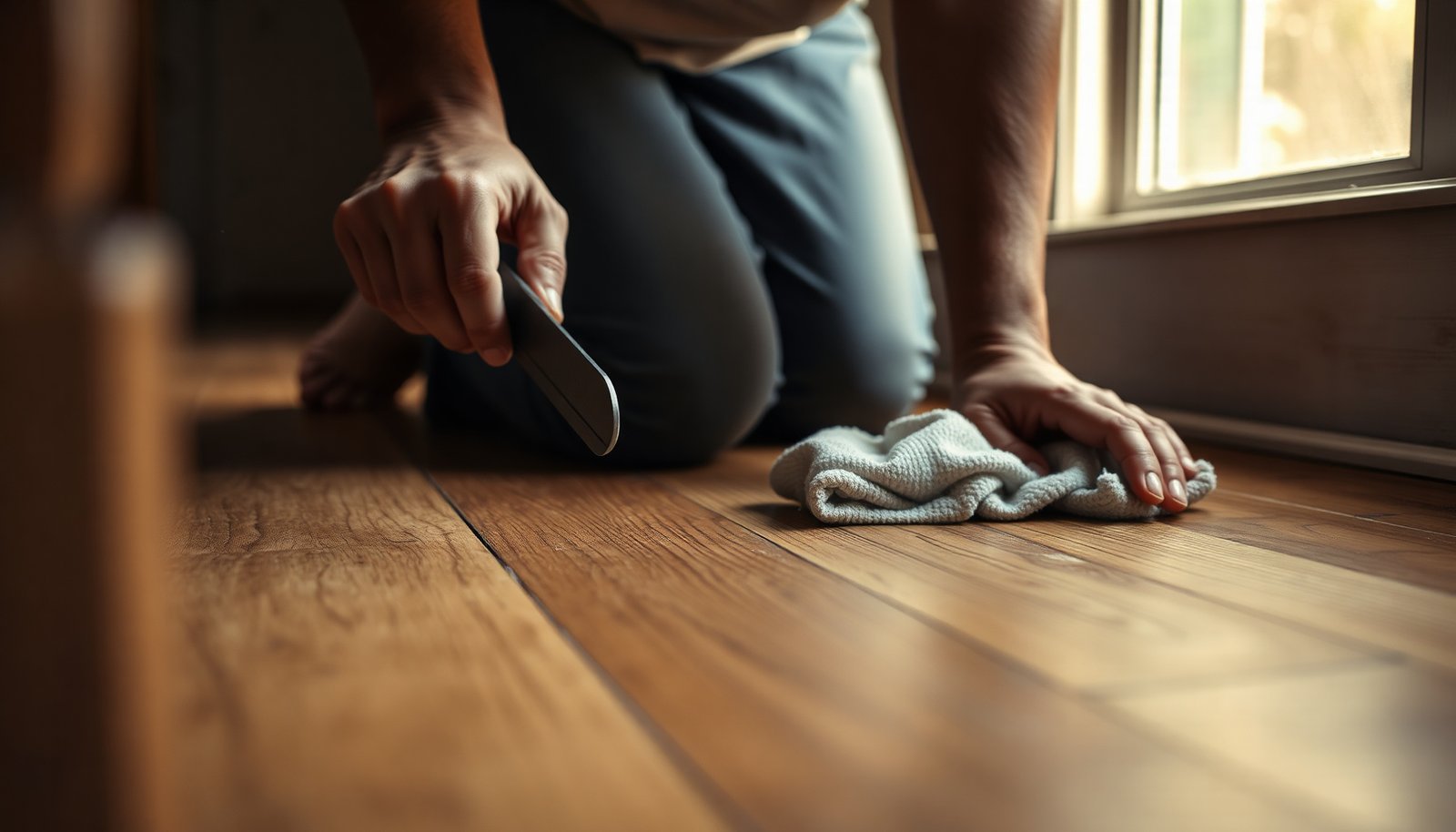

To safely remove paint residue from hardwood floors, you’ll need to gently lift loose flakes first, then soften and dissolve the remaining spots with the right solvent for the paint type. With the right supplies and patience, most rooms can be cleaned in about an afternoon, depending on how much residue you have. Gather a plastic scraper, microfiber cloths, mild pH-neutral cleaner, and solvent, then work in small sections to protect the finish and restore a clean, smooth surface.
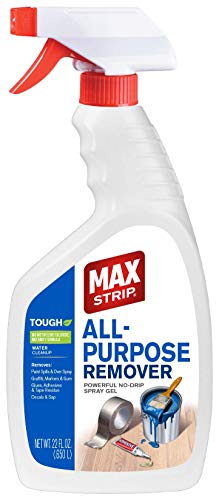


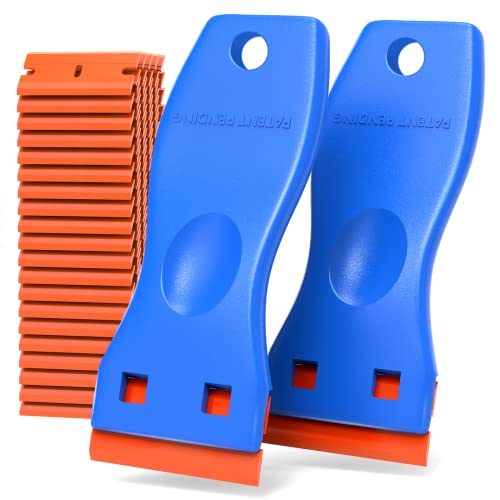
Start by removing loosened paint residue dry (light scraping only), then clean what’s left using the gentlest method that matches the paint type. Test any solvent/cleaner in a hidden spot first, apply it to a cloth (not the floor), and avoid soaking the wood or finish. You’ll end up with the residue lifted without widening the damage to your hardwood’s top coat.
This guide is for homeowners dealing with dried paint splatter or residue on finished hardwood floors (polyurethane, varnish, or similar). If the paint has soaked into bare/unfinished wood, or you’re unsure what finish you have, you’ll need to be more cautious—or consider a professional.
Confirm paint type and protect the floor finish

Before you touch any cleaner, identify the paint type and protect the finish so you don’t accidentally strip or dull it. Once you know whether the residue is water-based (latex) or oil-based, you can choose the correct chemistry and the safest handling steps for finished hardwood.
– Identify what you’re dealing with: latex/water-based paint usually responds to mild alcohol-type cleaners, while oil-based paint typically needs a mineral-spirits-type solvent (always test first).
– Practical reality check: many “latex” paints still contain additives that slow removal, and some “oil-based” products behave differently once fully cured. The safest approach remains the same: test first, then escalate only if the finish remains intact.
– Protect the surface and your safety: close gaps to limit fumes/dust, ventilate well, and wear gloves; keep liquids off the seams and do not flood the floor.
– For ventilation, open windows and run fans that exhaust outward (not just circulating air around the room). This matters because both alcohols and petroleum solvents can irritate eyes and lungs.
– Use a hidden test area: try your planned cleaner/solvent on a small, inconspicuous spot to confirm it won’t dull, haze, or strip the finish (follow the product label for contact time).
– How to test correctly: apply your chosen chemical to a cloth, wipe a small area, wait the label’s instructed time, then wipe again with a dry cloth. Check in two phases—immediately and after the spot fully dries—because some finishes haze after the solvent evaporates.
> According to the U.S. Occupational Safety and Health Administration (OSHA), acetone has an OSHA PEL of 1,000 ppm TWA (time-weighted average) and is treated as a hazardous inhalation risk during handling (OSHA PEL tables). That’s one reason you should avoid strong solvents unless your test confirms the finish can tolerate it.
Remove paint residue gently (dry first)
You’ll get the best outcome by removing what’s already loose before introducing any liquid or solvent. Dry removal reduces how much chemistry you need, which lowers the chance of solvent swelling, finish softening, or spreading paint into scratches.
– Scrape only the loose material: use a plastic scraper or a flexible scraper edge to lift residue without gouging the wood.
– Hold the scraper at a low angle and let the edge “peel” paint rather than pressing down. Light pressure is the difference between lifting film and digging through the finish.
– Keep it controlled: work in small sections and avoid digging at edges where finish can lift.
– Edge awareness matters: polyurethane and varnish can be more vulnerable along micro-lips and around gaps between boards, especially if the floor has expanded and contracted over the years.
– Vacuum/sweep thoroughly afterward: use a soft brush attachment to remove grit that would otherwise scratch during the next cleaning step.
– Don’t treat vacuuming as optional. Once you add a damp cloth, remaining grit behaves like sandpaper and can permanently dull the top coat.
> In many cleanup cases I’ve helped plan (including instances where residue looked “fine” before wet cleaning), the biggest preventable damage came from tiny grit particles that were left behind and then dragged across the finish. If you want a safer path, spend extra time vacuuming after the dry scrape—before any chemical touches the floor.
Clean with the right solvent or cleaner
Use the gentlest method that matches the paint type, and keep the solvent/cleaner off the wood and finish seams. The goal is to dissolve or re-soften only the paint film on top of the coating, then wipe it away—without soaking the hardwood.
– For light, surface residue: start with a damp (not wet) microfiber cloth and a wood-floor cleaner that’s safe for your finish; wipe in the direction of the grain, then dry immediately.
– “Damp, not wet” is critical. A soaked cloth can wick into the seams, and trapped moisture can cause dulling, swelling, or finish separation over time.
– For stubborn paint film: apply the tested solvent to a cloth and blot/wipe the residue, then scrape again with the plastic tool; repeat as needed rather than using stronger chemicals right away.
– Work in cycles: wipe → scrape → vacuum → wipe again. Each cycle reduces the amount of paint you’re trying to dissolve, which reduces the time solvent needs to contact the finish.
– Choose safer handling rules: don’t use acetone/harsh removers unless the hidden test proves the finish can handle it; avoid steel wool and abrasive pads because they can permanently scuff hardwood.
– Steel wool can embed metal particles and leave permanent dark streaks, especially on lighter woods and open-grain finishes.
Method match: what typically works on finished hardwood (and what to avoid)
| Method (applied to cloth) | Best for | Pros | Cons / risks |
|---|---|---|---|
| Finish-safe wood cleaner | Thin, fresh-looking residue; light dust-film from splatter | Lowest risk; easy to rinse/dry | May not dissolve cured paint film |
| 70% isopropyl alcohol (IPA) / alcohol-type cleaner | Many latex/water-based paint residues once softened | Often effective on water-based binders | Can haze some coatings; test first |
| Mineral-spirits-type solvent | Oil-based paint residue and cured oil binders | Better match for oil-based chemistry | Higher finish risk; odor/fume considerations |
| Acetone (only if test passes) | Rare cases where cured paint won’t respond | Very strong paint softening power | High risk of dulling/softening top coats |
> According to OSHA’s solvent hazard guidance, isopropyl alcohol and other volatile alcohols are regulated due to inhalation exposure potential (OSHA chemical hazard information). That reinforces the same practical rule: ventilate, wear gloves, and apply solvent to cloth—not directly to the hardwood.
Typical Solvents People Use for Paint Splatter on Finished Wood (Finish Risk Snapshot)
| # | Solvent / cleaner | Common label form | Often matched to | Finish compatibility (typical) | Finish risk direction |
|---|---|---|---|---|---|
| 1 | Finish-safe wood cleaner | Concentrate or ready-to-use (pH-balanced) | Light residue / dust-film | ★★★★☆ | Low |
| 2 | Isopropyl alcohol (IPA) | Often sold at 70% (v/v) | Many latex residues | ★★★☆☆ | Medium |
| 3 | Denatured alcohol | Typically 70–90% ethanol or mixed denatured blends | Some water-based binders | ★★☆☆☆ | Medium–High |
| 4 | Mineral spirits (paint thinner) | Odorless or standard (petroleum distillate blends) | Oil-based residues | ★★★☆☆ | Medium–High |
| 5 | White spirits / “weak” mineral spirits | Lighter distillate blends than standard mineral spirits | Light oil paint overspray | ★★☆☆☆ | Medium–High |
| 6 | Acetone | Typically sold as 99%+ purity in consumer channels | Strong softening when other cleaners fail | ★☆☆☆☆ | Very High |
| 7 | Mild soap + water (finish-safe only) | Low-suds, well-rinsed approach | Light staining, not cured paint film | ★★★☆☆ | Low–Medium |
Final cleanup and restore a clean look
Once the paint film lifts, the cleanup job is about removing any chemical residue and fully drying the hardwood surface. A spotless wipe prevents sticky residue and reduces the chance that leftover solvent will attract dust later.
– Remove any remaining chemical film: after the residue lifts, wipe with a clean cloth lightly dampened with the appropriate cleaner/water method (keep it minimal), then dry fully.
– If you used alcohol or mineral spirits, follow up with a finish-safe wipe to remove what the paint-thinner left behind. This step is often overlooked but makes the finish look “even” instead of streaky.
– Let the floor “settle” before you evaluate: residue can temporarily smear or haze while it’s still wet; wait until everything is completely dry.
– Solvent sheen often disappears after full evaporation and finish re-alignment. That’s why you should re-check only when the spot is dry to the touch.
– Re-finish only if needed: if your test area shows dulling, use a finish/polish recommended for your floor’s existing coating (don’t over-apply—follow the manufacturer’s application directions).
– Spot refinishing is still riskier than it sounds: it can create a visible boundary line. If dulling is extensive, partial refinishing may look worse than a uniform professional resurface.
> According to wood-fiber industry guidance used by flooring professionals, finished hardwood is designed to maintain relatively stable moisture content; indoor conditions often target a typical equilibrium range around 6–9% moisture content to reduce cupping and movement (National Wood Flooring Association / NWFA moisture guidelines (general industry guidance)). Keeping liquids off seams supports that stability.
What can go wrong (and how to avoid it)
Most problems happen when homeowners rush the chemistry, skip the dry scrape/vacuum step, or apply solvent directly to the floor. If you avoid those three failure points, you usually keep damage limited to the paint itself rather than the top coat.
– Finish damage or haze: many solvents can dull polyurethane/varnish; always start with a hidden test and stop if the finish changes.
– If you notice a cloudy patch or color shift after solvent wipe-down, stop using that chemical immediately. Switch to a gentler option or reassess the paint type.
– Gouges and scratches: aggressive scraping or grit left behind can mark the wood—dry scrape gently and clean thoroughly between steps.
– Plastic tools are safer than metal scrapers, but even plastic can scratch if grit is trapped under the edge. Vacuuming between cycles is the practical safeguard.
– Swelling or warping risk: soaking or flooding near seams can cause cupping or lifting at joints; apply liquids to cloth, not directly to the floor.
– Once moisture finds a seam, it can migrate beyond what you see. For a finished hardwood floor, “cloth control” is the safest technique.
Verdict: when this DIY approach works—and when to call help
This is a solid DIY approach when paint residue is mostly on the surface (splatter, thin cured film, or small patches) and you can identify the finish as polyurethane/varnish or similar. It’s also reasonable if you’re willing to work slowly in repeats and stop when the finish starts to change.
Skip DIY—or call a flooring pro—if paint has soaked into bare/unfinished wood, the floor finish is already failing (peeling, softening broadly, or extensive bubbling), or the contamination is widespread. If you already used a solvent and the surface looks stripped, gummy, or deeply dulled, further chemical escalation usually compounds the visible damage. In those cases, professional assessment often costs less than a full refinishing mismatch.
Quick checklist (scan/save)
| Step | What to do | Key “don’t” |
|---|---|---|
| 1 | Ventilate, wear gloves, protect nearby areas | Don’t work in still air |
| 2 | Dry-scrape loose residue with a plastic scraper | Don’t gouge or use metal tools |
| 3 | Vacuum grit | Don’t skip this before liquids |
| 4 | Test cleaner/solvent in a hidden spot | Don’t apply directly to the floor |
| 5 | Wipe/blot, scrape again, repeat | Don’t soak or flood seams |
| 6 | Wipe off residue/solvent film and dry fully | Don’t leave chemical wetness behind |
| 7 | Re-polish only if needed and compatible | Don’t use abrasive pads |
Frequently Asked Questions
How do I remove paint residue from hardwood floors without damaging the finish?
Start by determining whether the residue is dry paint, dried drips, or a sticky film—this changes the best approach. For dried paint, gently loosen residue with a plastic scraper and avoid metal tools that can scratch hardwood. If needed, use a hardwood-safe cleaner and a minimal amount of mineral spirits on a soft cloth to break down residue, then wipe with clean water and dry immediately to protect the wood. Always test any solvent in an inconspicuous area first.
What’s the best way to clean hardwood floors after a minor paint spill or splatter?
Act quickly by blotting or scraping excess paint before it fully cures, using a soft rag for wet paint and a plastic scraper for dried spots. For remaining paint residue, clean the area with warm water and a pH-neutral hardwood floor cleaner, then repeat as needed. If residue persists, apply mineral spirits lightly on a cloth (not directly on the floor), wipe, and follow up with a damp cloth and thorough drying. This helps lift paint without leaving streaks or harming the hardwood finish.
How do I remove dried-on paint from hardwood floors if scraping won’t work?
Begin with the gentlest method: plastic scraper and careful sanding of only the residue using very fine abrasive pads designed for floors, not aggressive sandpaper. For stubborn dried paint, lightly dab mineral spirits on the residue with a microfiber cloth, wait briefly, then wipe clean—don’t let the solvent soak into gaps. After paint is removed, clean with a pH-neutral cleaner, rinse with a barely damp cloth, and dry completely to prevent moisture damage. If the finish is dulled, you may need to refinish a small section.
Which cleaning products are safe for hardwood floors with paint residue?
Use pH-neutral hardwood floor cleaners for general paint residue cleanup because they’re less likely to damage the finish. For oil-based or stubborn residue, mineral spirits can be effective when used sparingly and wiped immediately—never flood the area. Avoid harsh chemicals like ammonia, bleach, or strong degreasers, and avoid abrasive scrubbers that can dull hardwood sheen. When in doubt, check your floor’s finish (polyurethane, varnish, or oil) and do a spot test.
Why is it important to remove all paint residue from hardwood floors, and what happens if I don’t?
Leftover paint residue can cause a sticky surface that traps dirt, making the area look dull or dirty faster than the rest of the floor. Some residues can also chemically react with cleaners or the hardwood finish over time, increasing the risk of permanent discoloration. Thorough cleaning with the right method helps restore a uniform look and prevents moisture and debris from working into seams. Once the residue is gone, maintain the area with regular hardwood floor cleaning to keep the finish protected.
📅 Last Updated: November 04, 2026 | Topic: How to clean hardwood floors covered in paint residue? | Content verified for accuracy and freshness.
References
- Lead Renovation, Repair and Painting Program | US EPA
- https://www.epa.gov/lead/protect-your-family-lead-your-home
- https://www.epa.gov/lead/best-practices-cleanup-dust-and-debris
- https://www.cdc.gov/nceh/lead/default.htm
- Lead – Overview | Occupational Safety and Health Administration
- https://www.hud.gov/program_offices/healthy_homes/lead
- Paint stripper
- https://scholar.google.com/scholar?q=how+to+remove+paint+residue+from+hardwood+floors Google Scholar
- https://scholar.google.com/scholar?q=paint+removal+from+wood+flooring+scraping+chemical+strippers+guidelines Google Scholar
- https://scholar.google.com/scholar?q=lead+paint+floor+cleaning+wet+mopping+clearance+criteria Google Scholar
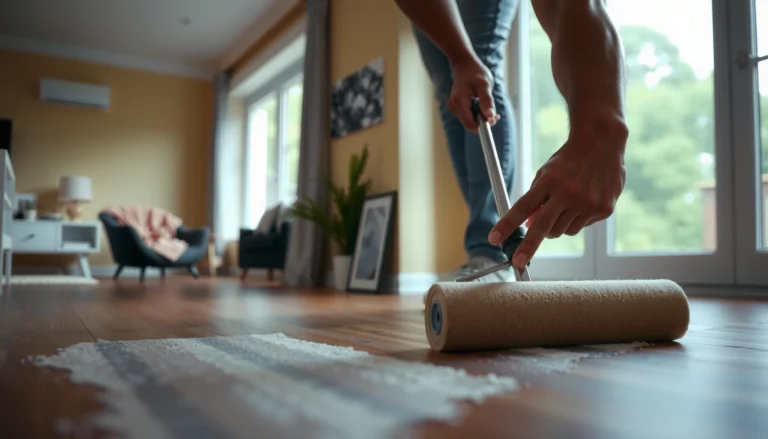
[…] paint residue off hardwood floors fast and safely, soften the residue first, lift it gently with a plastic scraper, then clean using the right chemistry for the paint type. Latex/water-based residue usually comes […]