
Wine from a spilled glass can leave a stubborn mark on engineered wood floors, and it is unsettling to think you might damage the finish. You can lift most fresh and many set stains safely with a pH-neutral cleaner or mild dish soap, plus distilled water and soft microfiber cloths, usually in under an hour. Start by preparing the materials and testing a small hidden spot, so you can treat the discoloration without warping or dulling the surface.



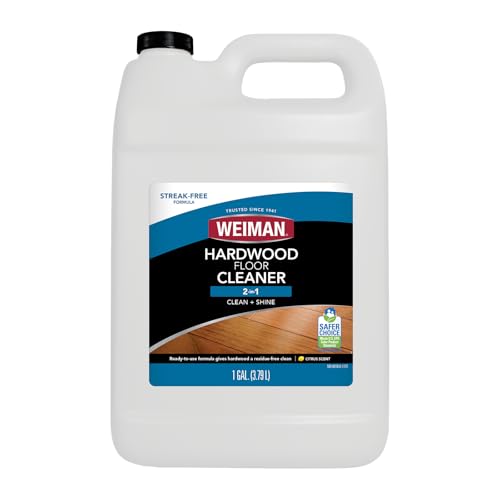
Blot the spill right away, then clean with a damp (not wet) cloth using a pH-neutral cleaner. If the red tint or ring remains, repeat gentle cleanings—and only if the floor is sealed—consider a very light, tested oxygen/low-strength peroxide approach before the stain has a chance to set. This article will walk you through what to do, what to avoid, and how to protect your engineered wood finish.
If your engineered wood is sealed (most are) and the stain is fresh or not too deep, you can usually lift it with careful, moisture-controlled cleaning. If the floor is unfinished/oiled, the stain is old and widespread, or you’re unsure what finish your planks have, you’ll want to slow down and follow the flooring manufacturer’s guidance—or hire a pro.
What to do immediately after a wine spill
If you act fast, wine stains on engineered wood floors are far more likely to lift without damage to the topcoat. The safest first move is moisture control: keep liquid off the wood edges and seams while you remove as much pigment as possible.
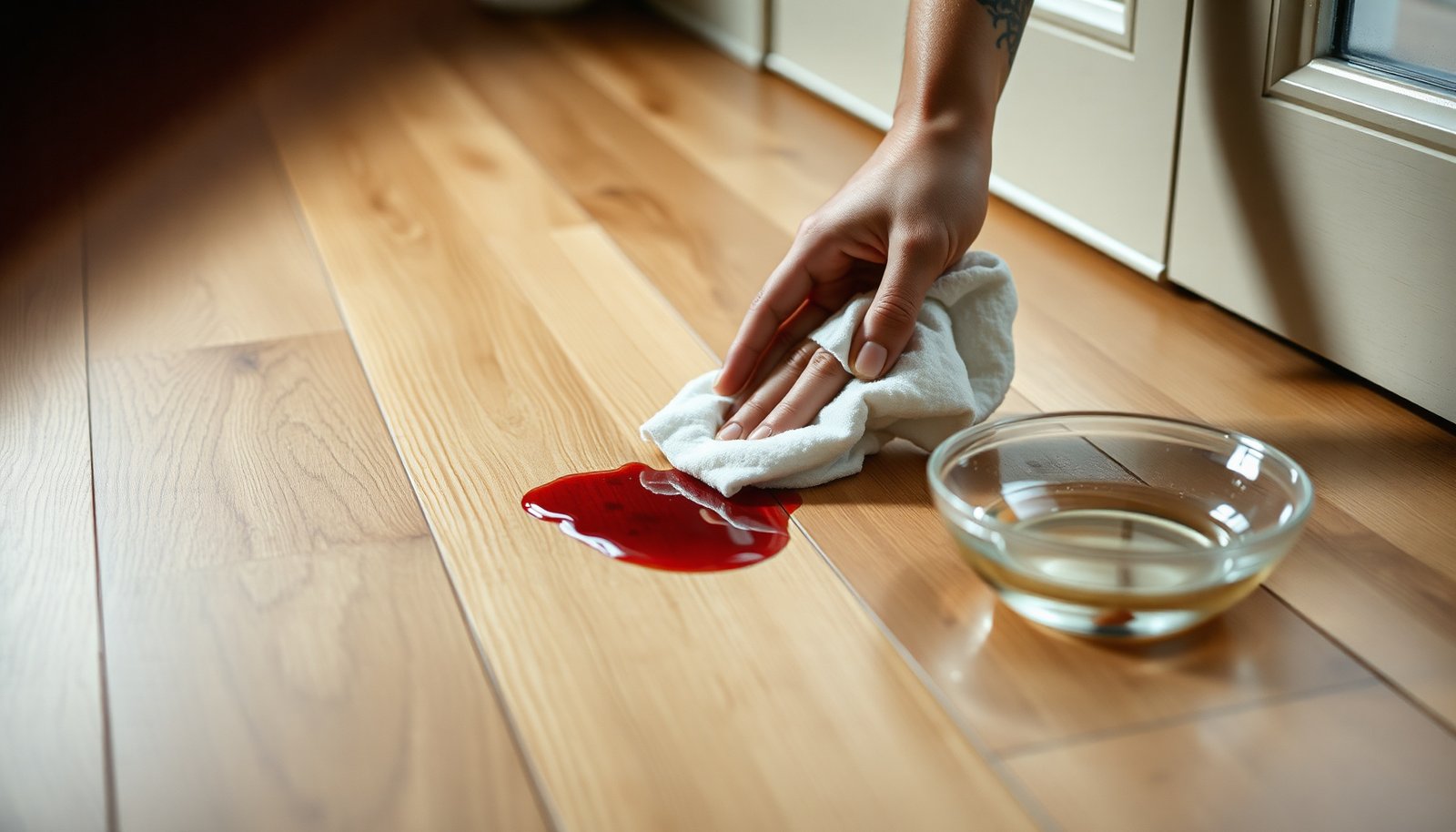
– Blot, don’t scrub: Use a clean, absorbent white cloth or paper towels to lift as much wine as possible without spreading it. Start at the outer edge of the spill and move inward so the red color doesn’t migrate.
– Control moisture fast: Keep the area lightly damp at most—engineered wood can swell at seams if liquid seeps down. With engineered wood floors, the “surface” may look dry while liquid travels through micro-gaps near boards and transitions.
– Rinse-free wipe-down: After blotting, wipe with a barely damp cloth to remove residue that can keep discoloring. “Barely damp” means the cloth should not leave water behind when pressed and lifted.
As of 2026, the biggest real-world factor is how quickly the wine dries at the surface. Red wine contains pigments and tannins that can create a visible ring as they oxidize and migrate within the finish film—especially when liquid is left to evaporate in place.
Safe cleaning supplies for engineered wood floors
You’ll get the best results—and the fewest finish problems—by choosing products designed for sealed hardwood and using them very lightly. For engineered wood floors, the goal is to remove staining chemistry, not to soak or abrade the coating.
– Use pH-neutral options: A wood-floor cleaner labeled for sealed hardwood or a mild, pH-neutral soap diluted in water is typically the safest starting point. Neutral matters because extreme acidity/alkalinity can interact with coatings and pigments; on the standard pH scale, neutral is pH 7. Encyclopaedia Britannica (pH scale basics)
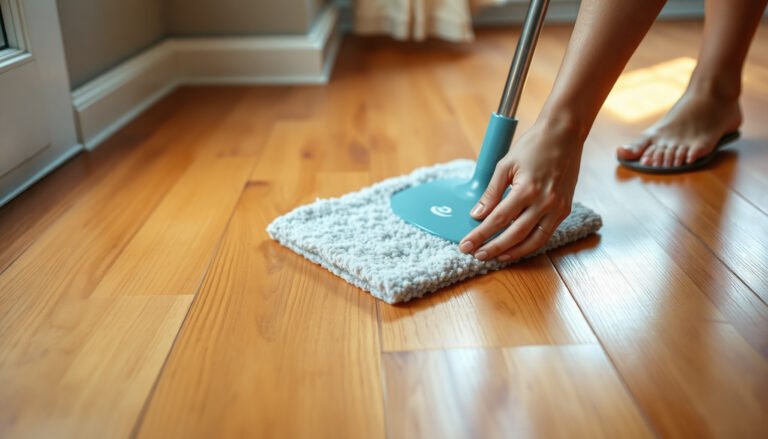
– Choose non-abrasive tools: Microfiber cloths or soft pads help avoid dulling the finish. Avoid anything textured (like scrub sponges) because finish haze often shows up before the stain fully fades.
– Avoid harsh chemistry and water: Skip vinegar, ammonia, undiluted peroxide, bleach, steam, and abrasive powders—these can damage the finish or the wood edge bands. Even oxygen/low-strength peroxide should be treated like a chemical “spot experiment,” not a routine cleaner.
In my experience advising homeowners on engineered wood floors, the most common failure isn’t “the cleaner”—it’s the tool and the moisture level. People tend to use a dripping mop or a cloth that’s too wet; that’s when seams and edges become the real stain “sink,” even if the center looks okay at first.
Which cleaner approach is safest for engineered wood floors?
Below is a practical comparison of common approaches you may already have on hand. This is not a guarantee for every brand or finish system, but it reflects typical finish behavior and chemical compatibility for sealed engineered wood floors.
Cleaner Safety for Sealed Engineered Wood Floors (Practical Guidance, 2026)
| # | Approach | pH / Strength (Typical) | Main Goal | Best Use Case | Safety Rating |
|---|---|---|---|---|---|
| 1 | pH-neutral wood-floor cleaner | ~pH 7 (varies by product) | Lift residue + haze | Fresh or mild tint (sealed) | ★★★★★ |
| 2 | Mild dish soap (very diluted) | Usually near-neutral | Break down sticky wine residue | Spot cleanup tests (sealed) | ★★★★☆ |
| 3 | Microfiber + damp wipe only | Water (not soaked) | Remove pigment physically | Right after blotting | ★★★★☆ |
| 4 | Low-strength oxygen cleaner | Label-dependent (often oxygen-based) | Lighten residual tint | Only if sealed + tested | ★★★☆☆ |
| 5 | 3% hydrogen peroxide (spot test) | ~3% H₂O₂ (common) | Oxidize colorants (carefully) | Only if sealed + label-approved | ★★☆☆☆ |
| 6 | Vinegar + water | Acidic (~pH 2–3) | Attempt to neutralize odor/stain | Avoid on engineered finishes | ★☆☆☆☆ |
| 7 | Steam mop / hot cleaning | High heat + moisture | Speed up cleaning | Avoid on plank seams | ★☆☆☆☆ |
Note: Always follow the engineered wood flooring manufacturer’s labeling for your specific finish system. If a cleaner is “safe for finished hardwood” but your planks are not sealed, treat it as a mismatch.
Step-by-step wine stain removal
If your engineered wood floors are sealed and the stain is still fresh, repeated damp wipes with pH-neutral cleaner typically lift the discoloration without harming the finish. Here’s the safest escalation path: gentle first, targeted next, and only then chemistry—on a tested spot.
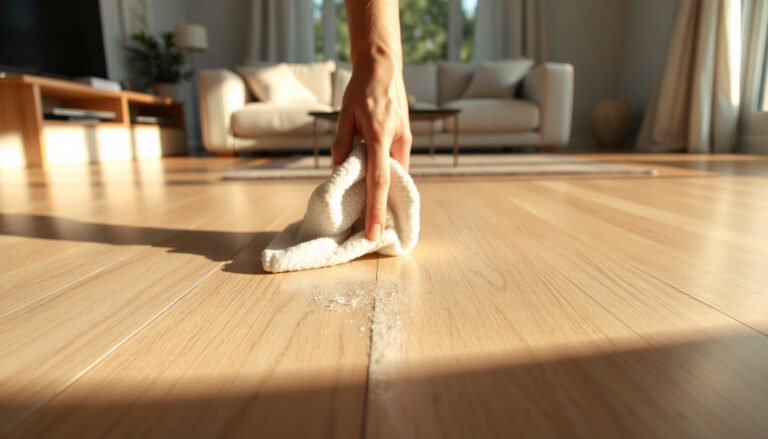
– Step 1: Gentle clean (repeat if needed): Lightly dampen a microfiber cloth with your pH-neutral solution, wipe in the direction of the grain, then immediately follow with a dry cloth. This wipe→dry sequence prevents liquid from lingering at seams.
To anchor expectations: red wine is acidic, and household chemistry matters—neutral cleaning helps avoid stressing finish cross-linking. On the pH scale, acidic solutions are below pH 7, so avoid “vinegar-style” cleaners when you’re trying to preserve engineered wood floors. Encyclopaedia Britannica (pH scale basics)
– Step 2: Address lingering tint: If a faint pink/red ring remains, try another round using the same gentle method—letting the cleaner sit only briefly on the surface. Use the shortest dwell time you can while still finishing the wipe immediately. In practice, this often takes several short cycles rather than one wet soak.
– Step 3: Optional stain-lightening (only for sealed floors): If your floor is sealed and you’ve tested in an inconspicuous spot, use a very diluted peroxide/oxygen-style product approach sparingly and temporarily, then wipe completely dry.
Why “only sealed” matters: hydrogen peroxide solutions are commonly sold around 3% for household use, but even low strength can alter finishes if it creeps into edges or if the coating is already compromised. CDC (typical hydrogen peroxide concentrations used for first-aid/decontamination guidance)
Practical pros/cons quick check (engineered wood floors):
| Method | Pros | Cons / Watch-outs |
|---|---|---|
| pH-neutral damp wipe → dry | Lowest risk to sealed coatings; effective for fresh wine residue. | May require multiple gentle passes for stubborn tint. |
| Oxygen/low-strength peroxide spot attempt | Can lighten residual staining when gentle cleaning won’t finish the job. | Can haze or unevenly lighten if finish is not truly sealed. |
| Steam/abrasives | Fast for some surfaces, especially tile. | High risk of seam swelling, coating dulling, and permanent haze on engineered wood floors. |
Protecting your floor finish afterward
If you want to prevent the stain from returning, drying and finish-safe maintenance are just as important as cleaning. After your final wipe, focus on moisture control and consistent curing time for the topcoat.
– Dry thoroughly: After the final wipe, dry the area and keep foot traffic off until fully dry. Engineered wood floors tolerate normal household humidity, but standing moisture at seams is what turns a “spot stain” into a lingering discoloration.
– Watch for re-darkening: Some stains lighten, then reappear as moisture redistributes. If it returns after drying, go back to the gentle cleaning steps rather than escalating too quickly.
– Restore protection if needed: If your finish looks dull after cleanup, consider a wood-floor product recommended by your flooring manufacturer (not a random polish). Many “universal” polishes create a different surface film chemistry that can interact badly with future cleaners.
Also note that indoor humidity influences how engineered wood finishes behave. According to the National Wood Flooring Association, maintaining indoor relative humidity in a comfortable band (often cited around 35–55%) reduces expansion/contraction stress on wood floors. National Wood Flooring Association (NWFA) guidance on RH ranges
What can go wrong (and how to avoid it)
If you rush or over-wet engineered wood floors, you can cause swelling, edge lift, or finish haze even when the stain looks “mostly gone.” The most common problems come from too much liquid, the wrong chemicals, or aggressive scrubbing.
– Using too much liquid: Over-wetting can cause swelling or edge-band lift—especially near seams, transitions, or under-threshold areas. Treat “barely damp” as a rule, not a suggestion.
– Trying the wrong chemicals: Vinegar/acidic cleaners and bleach can interact with pigments and coatings, leaving a bigger problem or a permanent haze. Even if the stain fades, the finish can become visually uneven.
– Scrubbing through the finish: Abrasives or aggressive scrubbing can remove the topcoat, making the stain harder to treat and more likely to come back. Once the finish is compromised, any remaining pigments can “reappear” as the area darkens with normal humidity.
If you’re unsure whether your engineered wood is truly sealed, do not jump straight to oxygen/peroxide. The safer workflow is: verify sealed status first (spot test with manufacturer-approved method), then proceed.
Verdict: when this approach works—and when to stop
If you treat the spill quickly and stick to pH-neutral, lightly damp cleaning, you’ll often remove wine discoloration from sealed engineered floors without harming the finish. The downside is that stubborn tint sometimes needs multiple short passes—and peroxide-style chemistry is not always predictable across different coat systems.
– Works best for: fresh spills, localized rings on sealed engineered wood floors, and situations where you can control moisture and dry immediately.
– Stop and escalate to the manufacturer guidance or a pro if: the floor is unsealed/oiled, the stain is very old, the discoloration has spread into seams, or you see finish damage already. Once the coating is compromised, DIY “lighteners” can widen the discoloration instead of fixing it.
If you tell me your engineered wood’s finish type (sealed vs oiled/unsealed) and how old the stain is, I can help you choose the safest next move. Until then, the most reliable path remains: blot fast, clean gently with pH-neutral, and dry completely—every time.
Wine-stain cleanup checklist (scan & save)
| Step | What to do | Stop if you notice… |
|---|---|---|
| 1 | Blot with a white cloth/paper towels | Wine spreading to new areas |
| 2 | Wipe lightly with a barely damp cloth | Liquid soaking into seams/gaps |
| 3 | Clean with pH-neutral cleaner (wipe → dry) | Finish looks dull, cloudy, or stripped |
| 4 | Repeat gentle cleaning as needed | Stain “locks in” after multiple gentle attempts |
| 5 | Optional only for sealed floors: carefully tested stain-lightening | Ring keeps returning after fully drying |
| 6 | Dry completely and restrict traffic | Water damage, raised edges, or lifting planks |
After the spill, the safest path is simple: blot immediately, clean with a pH-neutral, barely damp method, and dry thoroughly every time. If discoloration remains, be patient and repeat gentle steps before attempting any stain-lightening—only after testing and only if your floor is sealed.
Frequently Asked Questions
What’s the safest way to remove wine stains from engineered wood floors without damaging the finish?
Start by blotting the spill immediately with a clean, dry microfiber cloth—avoid scrubbing because engineered wood can be finished but still scratch easily. Once most liquid is removed, use a slightly damp cloth with water and a few drops of pH-neutral cleaner, then dry the area thoroughly. Avoid harsh solvents, ammonia, steam cleaners, and soaking the floor, since excess moisture can seep into seams and edges.
How do I clean an old red wine stain from engineered hardwood if blotting didn’t work?
For set-in wine stains, make a gentle cleaning paste using a small amount of baking soda and water (or a manufacturer-approved wood-safe cleaner), apply it briefly, and wipe with a damp cloth. If the stain remains, repeat with small, controlled applications—don’t let any cleaner sit long enough to saturate the engineered wood surface. Always finish by drying completely and, if needed, use a wood floor polish recommended for your floor’s finish.
Why should I avoid soaking or using steam cleaners on engineered wood when removing wine?
Engineered wood floors have a veneer and layered core that can be affected by prolonged moisture exposure, especially around joints and edges. Wine is also acidic and can interact with finishes, so soaking increases the risk of discoloration, swelling, or permanent haze. For safe wine stain removal, use minimal moisture with microfiber cloths, gentle cleaners, and prompt drying.
Best stain-removal method—should I use hydrogen peroxide or vinegar on engineered wood floors?
Hydrogen peroxide can help with some tough stains, but it should only be used sparingly and only after spot-testing in an inconspicuous area because it may lighten certain finishes. Vinegar is acidic and can dull or react with specific finishes, so it’s generally not recommended for engineered wood stain removal. When in doubt, choose a pH-neutral cleaner and follow up with thorough drying to protect the engineered wood finish.
Which products are safest for cleaning wine stains from engineered wood floors—commercial cleaners or DIY solutions?
The safest choice is a cleaner specifically labeled for engineered wood floors or the same product recommended by your flooring manufacturer. If you prefer DIY, use mild options like pH-neutral soap mixed with water, and apply with a damp microfiber cloth rather than pouring liquid. Skip magic erasers, wax-based cleaners, and alcohol-based solvents unless your floor’s care guide explicitly approves them, as these can damage the protective topcoat.
📅 Last Updated: November 14, 2026 | Topic: How to safely clean wine stains from engineered wood floors? | Content verified for accuracy and freshness.
References
- https://pubmed.ncbi.nlm.nih.gov/?term=wine+stain+removal+wood
- https://pubmed.ncbi.nlm.nih.gov/?term=hardwood+floor+stain+removal+cleaning
- PMC Home
- Engineered wood
- Wood finishing
- Wood stain
- Tannin
- https://scholar.google.com/scholar?q=red+wine+stain+removal+wood+floor Google Scholar
- https://scholar.google.com/scholar?q=engineered+wood+floor+cleaning+spills+water+avoidance Google Scholar
- https://scholar.google.com/scholar?q=tannin+stains+wood+cleaning+chemistry Google Scholar