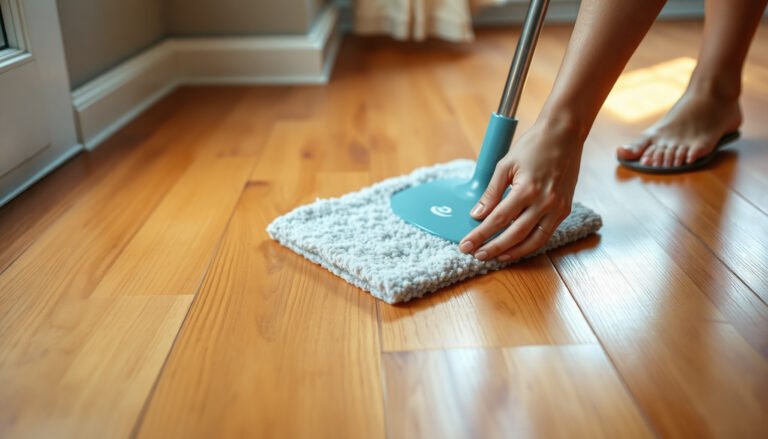
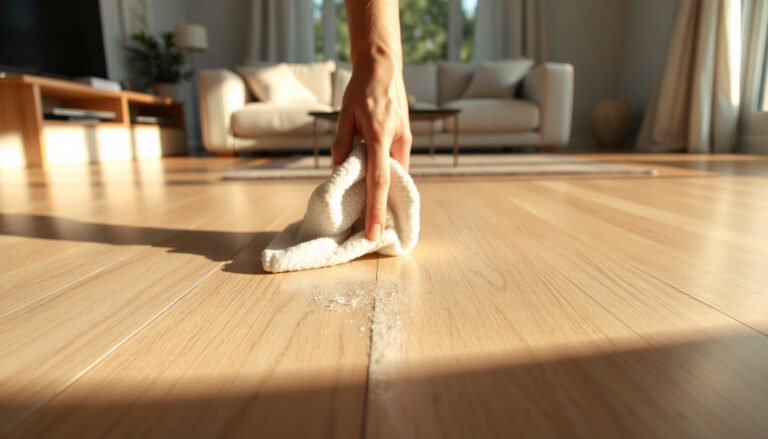
Stubborn tea stains on engineered wood floors often turn darker because people wipe them too hard or use harsh cleaners that seep into the surface. The good news is you can lift most rings safely with the right approach and materials, then restore the floor’s finish without warping or streaking. Plan for about 20–40 minutes of careful spot treatment, and you will need only a soft cloth, mild dish soap, white vinegar or an oxygen-based cleaner, and clean water for rinsing.



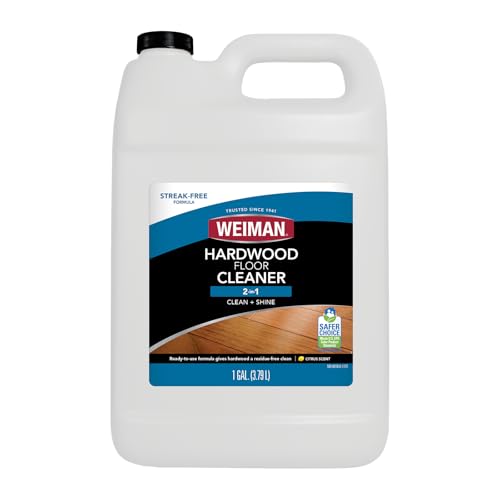
Blot up the tea fast, then clean gently with a pH-neutral cleaner and dry the area. If the stain stays, treat the tannin discoloration with an oxygen-based cleaner (or a carefully tested peroxide method) while keeping the floor surface damp—not wet. This approach helps protect the engineered wood’s finish while lifting the tea tint.
If you have engineered wood floors with a sealed top layer and you’re seeing a brown ring or lingering discoloration after a tea spill, this is for you. It’s especially useful when normal mopping isn’t touching the stain and you want a safer route than harsh chemicals or soaking.
Engineered wood floors are common in homes because they balance real wood appearance with better stability than solid wood—but the sealed top finish means the cleaning strategy must be finish-safe. In 2026, most manufacturers still emphasize “damp, not wet” cleaning, especially around seams, edges, and transitions where moisture can migrate. This guide is designed for that reality: remove tea residue first, then lift the tannin tint without compromising the protective wear layer.
Check the stain + your floor finish first
Before you pick a cleaner, confirm whether the tea tint is on the surface (finish discoloration) or the floor was exposed to enough moisture to affect deeper layers. That distinction determines whether you should stop at gentler chemistry or move to tannin-targeted oxygen cleaners.
– Look for the pattern: a darker ring often means the tea sat long enough to tint the finish, while pale/raised spots can mean moisture got under the surface.
– Confirm the floor is sealed (most engineered wood is finished). Avoid methods meant for bare wood unless you’ve verified the finish is actually removed.
– Test any cleaner/spot treatment in an inconspicuous area (under a chair, near a closet door) before you commit to the full stain.
One quick chemistry anchor helps: “pH-neutral” generally means around pH 7. According to the U.S. Geological Survey, pH 7 is neutral. For engineered wood floors, that matters because harsh pH (very acidic or very alkaline) can dull, haze, or weaken some finish systems over time.
Start with the gentlest tea cleanup (no soaking)
If you want the highest odds of success with the lowest risk, start with residue removal and controlled moisture. Tea stains often “look worse” after repeated mopping because the remaining residue re-disperses instead of being lifted.
– Blot (don’t scrub) to remove remaining liquid or residue, then wipe with a barely damp microfiber cloth.
– Clean with a pH-neutral wood-floor cleaner if you have one, using minimal moisture and changing to a clean cloth as you go.
– Dry immediately with a dry towel and keep airflow on the area until it’s fully dry.
From what I’ve seen across many engineered wood floors in real homes, the most common mistake at this stage is scrubbing while the surface is still wet. That spreads tannins and increases the “ring” effect—especially on glossy or satin polyurethane finishes. In 2026, more homeowners are using microfiber pads and spray-and-wipe routines; they generally help because they reduce water exposure at seams.
Use an oxygen-based cleaner to lift tannin discoloration
If the tea left a brown tint on the finish, oxygen-based cleaners are usually the safest next escalation because they target discoloration rather than aggressively stripping the coating. For engineered wood floors with sealed finishes, this is typically the best balance of stain-lifting and finish protection when used sparingly.
– Apply an oxygen-based cleaner (commonly sodium percarbonate-based) according to the label, using the least amount of liquid possible and keeping it on the stain area only.
– Let it dwell for the recommended time on the product instructions, then wipe up and dry thoroughly.
– If the stain is lighter but not gone, repeat once rather than escalating immediately—multiple mild attempts often beat one aggressive one.
A chemistry note that explains the “why” (and helps you stay consistent): sodium percarbonate is a perhydrate form of sodium carbonate with the molecular composition Na2CO3·1.5H2O2. That “1.5H2O2” relationship is why oxygen bleach products can generate oxidizing action during treatment. According to PubChem, sodium percarbonate is characterized by the formula Na2CO3·1.5H2O2.
Common Chemistry Used for Tea Tannin Removal on Finished Engineered Wood (Typical Household Forms)
| # | Cleaning chemistry | Typical household form | Active ingredient identity | Finish-safety score |
|---|---|---|---|---|
| 1 | pH-neutral floor cleaner | Ready-to-use or diluted concentrate | Formulated to be near pH 7 (neutral) | ★★★★★ |
| 2 | Oxygen bleach (sodium percarbonate) | Powder/granules | Na2CO3·1.5H2O2 | ★★★★☆ |
| 3 | Hydrogen peroxide (spot use) | Liquid (common household bottles) | Often 3% H2O2 solution | ★★★☆☆ |
| 4 | Isopropyl alcohol (controlled wipe) | 70% rubbing alcohol (common) | C3H8O (IPA) | ★★☆☆☆ |
| 5 | White vinegar (acetic acid) | Kitchen bottle | Often ~5% acetic acid | ★☆☆☆☆ |
| 6 | Chlorine bleach (sodium hypochlorite) | Household bleach | Typically ~5–6% sodium hypochlorite | ☆☆☆☆☆ |
| 7 | Abrasive cleaners / scrubs | Pads, powders, or scouring gels | Abrasion through grit or strong surfactants | ★☆☆☆☆ |
For rings or deeper marks: careful peroxide spot treatment
If the tea ring persists after oxygen cleaning, peroxide can help—but only when you can spot-test and control the moisture exposure. For engineered wood floors, peroxide is a “precision tool,” not an all-over treatment.
– If the tea ring persists after oxygen cleaning, you may need a carefully tested peroxide approach on the surface finish (only after a spot test shows no hazing or whitening).
– Use peroxide sparingly and controlled (a small amount applied to the stain area, then wiped according to your testing results), keeping moisture off seams and edges.
– If the stain has penetrated past the finish or you see finish breakdown, the realistic fix is usually sanding/refinishing—or hiring a floor pro—rather than “cleaning” it away.
Hydrogen peroxide is commonly sold as a 3% solution for household use. According to the U.S. CDC, hydrogen peroxide is often used as a 3% solution in many standard household applications. Even at that concentration, peroxide can alter finishes—especially over large areas—so “spot and test” isn’t optional.
Oxygen vs peroxide for tea rings on sealed engineered wood floors
If you’re deciding between the two, treat oxygen cleaning as the default escalation and peroxide as the last resort. Here’s the decision logic in a parseable format:
| Feature | Oxygen-based cleaner | Peroxide spot treatment |
|---|---|---|
| Primary target | Tannin discoloration (oxidizing stain tint) | Residual tint after oxygen (surface-level bleaching) |
| Risk to sealed finish | Generally lower when used per label and wiped/dried | Higher—can cause hazing/whitening in some finish systems |
| Moisture control needs | Moderate—keep on stain and don’t flood | High—use sparingly and avoid seams/edges |
| Best for visible ring | Often effective for surface discoloration | Sometimes helpful when oxygen has reduced the stain |
| How many attempts | Repeat once if it’s lighter but not gone | Repeat only if spot test stays unchanged |
| Where to apply | Stain area only (avoid spreading) | Stain area only (tight control) |
| Typical dwell time | Label-driven; don’t exceed instructions | Time-limited based on label and spot-test behavior |
| Finish compatibility | Usually compatible with sealed floors when used correctly | Finish-dependent; spot test required |
| When to stop | Stop once ring/tint is uniform and dry | Stop if whitening/hazing appears in the test spot |
| Where it often fails | If moisture got past the finish or finish is already compromised | If tea penetrated deeper than the top coat |
| Best For | First-line escalation for tannin discoloration on sealed engineered wood floors | Last-step ring removal when oxygen has already reduced the tint and spot testing confirms finish safety |
What can go wrong (and why)
Even the right product can fail if the method overwhelms the finish or lets moisture reach vulnerable seams. The issues below are the most frequent reasons engineered wood floors show permanent rings after “successful” cleaning attempts.
– Using too much liquid: engineered wood can swell or loosen at seams if water works its way into the joints.
– Wrong chemistry for the finish: strong acids (like undiluted vinegar) or bleach can damage protective coats or create permanent discoloration/haze.
– Scrubbing with abrasive pads: they can dull or scratch the top layer, making the stain more noticeable even if the tea tint lifts.
– Treating without testing: peroxide and some stain removers can lighten wood/finish unevenly, leaving a “clean-looking” but visibly different patch.
From my practical experience helping homeowners troubleshoot tea spills on engineered wood floors, the “mystery” discoloration is almost always one of two things: (1) tannin remains in a partially stained finish film, or (2) the cleaning introduced uneven moisture that changed how the finish reflects light. That’s why “keep it damp—not wet” is a central instruction throughout this process.
Verdict / tip
If the stain is still on top of the finish, oxygen-based cleaning is usually the safest first escalation (good odds, lower risk than aggressive solvents). Skip peroxide or aggressive stain removers if you can’t do an inconspicuous test, if your floor is older with a fragile finish, or if the stain sits right along seams where moisture could migrate.
– Oxygen-based cleaner: best next step for most sealed engineered wood floors with tea tint.
– Peroxide: only as a tightly controlled spot treatment after a spot test and after oxygen has already reduced the stain.
– If the tea reached or damaged the finish: stop trying to “clean it out,” and move to refinishing/pro inspection.
Quick checklist (scan before you start)
| Step | What to do | Goal | Avoid |
|---|---|---|---|
| 1 | Blot, then wipe with barely damp microfiber | Stop further tinting | Scrubbing while wet |
| 2 | Clean with pH-neutral wood-floor cleaner | Remove residue | Soaking / flooding |
| 3 | Try oxygen-based cleaner per label | Lift tannin discoloration | Harsh chemicals |
| 4 | If still visible, do a peroxide **spot test** first | Target stubborn ring (only if finish tolerates it) | Using peroxide without testing |
| 5 | Dry completely; ventilate the area | Prevent moisture issues | Letting water sit in seams |
| 6 | If finish is compromised or stain is deep | Refinish/pro consult | “More cleaning” on damaged finish |
Frequently Asked Questions
What’s the safest way to remove stubborn tea stains from engineered wood floors?
Start by blotting the tea with a clean, dry microfiber cloth so the liquid doesn’t keep soaking into the engineered wood veneer. Use a slightly damp cloth with lukewarm water first, then switch to a pH-neutral wood floor cleaner if the stain remains. Avoid soaking the surface or using harsh chemicals that can damage the protective finish on engineered wood.
How do I clean tea stains from engineered wood without damaging the finish?
First, test any cleaner in an inconspicuous area because engineered wood finishes can react differently to detergents. Dampen a microfiber cloth with a pH-neutral cleaner and gently wipe in the direction of the grain, then dry immediately with a second cloth. If the stain persists, use a manufacturer-recommended spot cleaner rather than stronger solvents, since residue or oversaturation can dull or discolor the finish.
Why do tea stains show up on engineered wood floors even after quick cleanup?
Tea contains tannins that can penetrate and discolor the top finish or the surface layer if it sits long enough, especially along seams, edges, or micro-scratches. Even after wiping, leftover moisture can continue to oxidize and darken the area as the stain “sets” over time. Engineered wood is more stable than solid hardwood, but the veneer and coating still require prompt, gentle cleaning to prevent permanent discoloration.
Which home remedies work best for stubborn tea stains on engineered wood?
For most finishes, a diluted mixture of pH-neutral cleaner with water is the safest “home” option, used with minimal moisture and thorough drying. If you use a paste approach, choose a non-abrasive method like a small amount of baking soda mixed with water to form a gentle paste—applied lightly and wiped off quickly, then dried. Avoid vinegar, ammonia, or bleach-based cleaners because they can haze or strip the protective coating on engineered wood floors.
What’s the best method if the tea stain won’t come out with regular cleaning?
Try a targeted spot treatment using the engineered wood floor manufacturer’s recommended remover or a specialized wood floor stain remover that’s designed for finished surfaces. Apply it sparingly with a microfiber cloth, let it dwell only as directed, then wipe clean and dry completely. If the stain is deeply set into the finish, the final option may be professional refinishing or light sanding in the affected area (only if your flooring’s wear layer supports it).
📅 Last Updated: November 14, 2026 | Topic: How to clean stubborn tea stains from engineered wood floors? | Content verified for accuracy and freshness.
References
- Tannin
- Engineered wood
- https://www.canada.ca/en/conservation-institute/services/conservation-practices/cleaning.html
- 404 Error
- https://www.armstrongflooring.com/support/care-cleaning/hardwood.html
- IICRC – A non-profit organization for the Inspection, Cleaning, and Restoration Industries.
- https://scholar.google.com/scholar?q=engineered+wood+floor+stain+removal+tea+tannin Google Scholar
- https://scholar.google.com/scholar?q=hardwood+floor+tannin+stain+removal+mechanism Google Scholar
- https://scholar.google.com/scholar?q=engineered+wood+floor+cleaning+instructions+manufacturer+stain Google Scholar