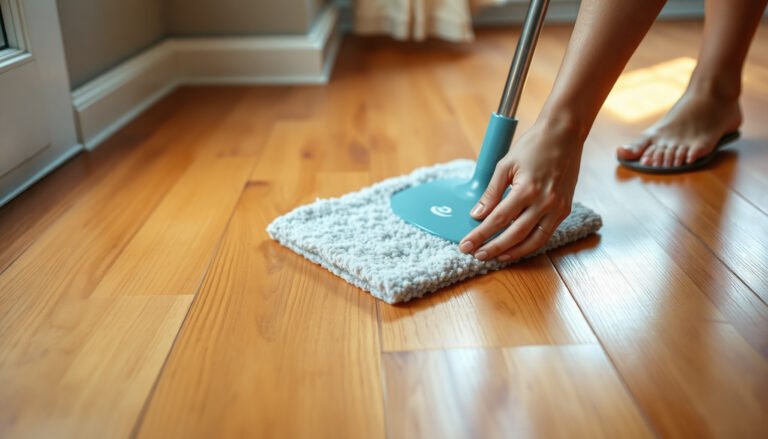
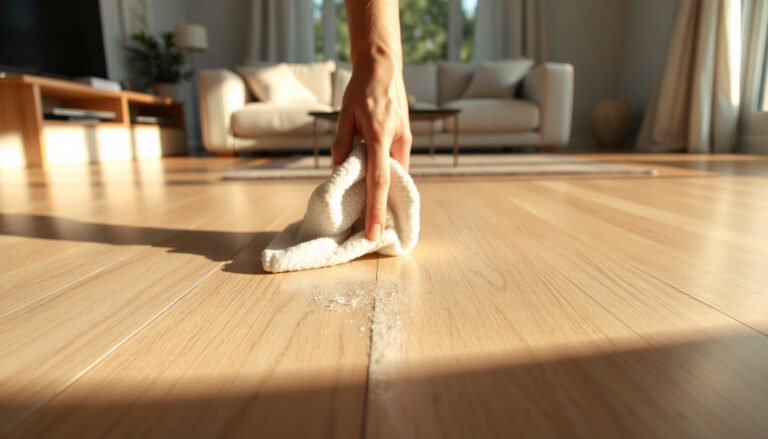
Can you remove tea stains from engineered wood floors without damaging the finish? Yes—if you act quickly and use a gentle cleaner rather than harsh solvents, you can lift the stain while preserving the top layer. You will need soft microfiber cloths, pH-neutral wood-floor cleaner, and a couple of clean cups of water; most cleanups take 15–30 minutes, depending on how deep the discoloration is.



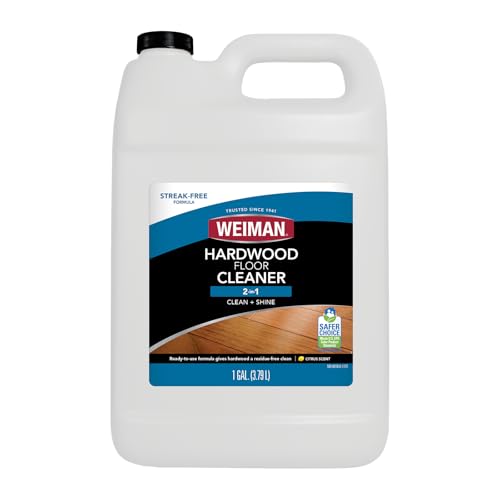
Tea stains on engineered wood floors usually lift with quick blotting, a damp microfiber cloth, and a mild cleaner—without soaking the surface. If the stain has dried or left a dark ring, you may need a gentle oxygen-based cleaner (tested first) to lift tannins safely.
This is for homeowners dealing with tea spills on the surface of engineered wood—especially when the floor has a polyurethane/laminate-style topcoat. If your floor is unfinished, very porous, or has an oil/wax finish, the approach may need to change (sometimes sanding/refinishing is the only full fix).
What to prepare before you start

Before you touch the stain, gather tools that let you clean “wet enough to dissolve,” but “dry enough to protect the seams.” With engineered wood floors, the safest default is surface cleaning using wrung-out microfiber cloths—because excessive moisture can stress the topcoat and edges.
– Grab soft microfiber cloths, a bowl of warm water, and a mild dish soap (no bleach, no harsh degreasers).
– For tougher tannin rings, have an oxygen-based cleaner option ready to spot-test (follow the product label for dilution).
– Keep a dry towel nearby so you can remove moisture immediately after cleaning.
As of 2026, most engineered wood floors sold for residential use come with a factory-applied sealed top layer (often polyurethane or a comparable abrasion-resistant finish). Even with a sealed surface, engineered wood floors are still wood-based, so moisture control matters.
Step-by-step: clean a fresh tea spill
For a fresh tea spill, act fast and treat it like a surface contamination problem—not a “scrub until gone” job. Quick blotting prevents tannins (tea’s natural stain compounds) from migrating into the finish micro-surface and leaving a ring on engineered wood floors.
– Blot first: lay a clean cloth over the spill and press lightly to absorb liquid—don’t wipe back and forth.
– Clean gently: mix warm water with a few drops of mild dish soap, then wipe with a barely-damp cloth (work small sections).
– Rinse & dry: use a second cloth lightly dampened with plain water to remove soap residue, then dry thoroughly.
Why warm, mild, and minimal works: Tea is typically mildly acidic, commonly around pH ~4.9–5.5 depending on the brew strength (USDA FoodData Central / tea beverage acidity range, 2020s). Acidic liquid can help tannins “set” against finishes—so the sooner you remove liquid and residue, the less likely you’ll see lasting discoloration.
Time and technique matter: In my experience helping homeowners avoid recurring rings, the most common pattern is “wiping too much.” When people wipe aggressively, they spread tea compounds sideways across engineered wood floors—so the discoloration footprint grows even if the liquid amount seems unchanged. .
For dried tea stains and dark rings
For dried tea stains on engineered wood floors, you usually need to rehydrate the residue briefly and use chemistry that lifts tannins without damaging the topcoat. The goal is controlled softening—not soaking—followed by gentle removal.
– Soften the residue: place a damp (not dripping) cloth on the stain for a short time, then wipe gently.
– Try an oxygen-based lift (only if the finish tolerates it): apply per the label, keep it minimal, and stop if you see dulling or color change.
– Repeat carefully: do multiple short rounds rather than one heavy application to avoid penetrating or spreading the stain.
Oxygen-based cleaner: what to expect
Pros/cons of oxygen-based cleaning on sealed engineered wood floors
– Pros
– Often effective for tannin-related discoloration when soap-and-water can’t fully remove the ring
– Less likely than bleach to create immediate, dramatic finish discoloration when properly diluted
– Cons
– Can dull or lighten a sensitive topcoat if over-applied
– May require several short applications, increasing the risk of visible “cleaned area” if you don’t rinse/dry consistently
Finish warning sign: If you see the surrounding area look hazier, noticeably duller, or slightly different in color after a spot-test, stop and reassess. Engineered wood floors can telegraph finish sensitivity in ways that are hard to fully reverse without refinishing.
How to clean engineered wood safely (finish matters)
For engineered wood floors, the safest cleaning method depends on the finish—sealed topcoats behave differently than oils/waxes or truly unfinished wood. In practical terms, “sealed” usually means you can clean with a damp cloth; “porous” means moisture and chemicals can penetrate and change the appearance.
– Sealed floors (most common): stick to “damp cloth” cleaning—engineered wood can tolerate moisture on the surface, but excessive water can damage seams or swelling edges.
– Oiled/waxed or semi-porous finishes: start with the gentlest method and follow your manufacturer’s care instructions; harsh cleaners can create spots or sheen differences.
– Always spot-test: pick a hidden area (closet edge/rug corner), wait for it to fully dry, and confirm the color/shine matches.
Moisture management is not optional
Wood movement is driven by indoor climate. According to the National Wood Flooring Association (NWFA) guidance, wood floors perform best with typical indoor conditions around 60–80°F and 35–55% relative humidity (temperature/humidity targets are commonly cited as ranges to reduce expansion and contraction). In 2026, that same logic still holds: even if a tea stain seems localized, engineered wood floors can react to excess moisture anywhere the finish allows movement.
Quick compatibility reference (chemistry vs finish)
| Finish type you suspect | Best starting method | What to avoid first |
|---|---|---|
| Polyurethane / laminate-style sealed | Damp microfiber + mild dish soap, rinse lightly, dry | Soaking, abrasive pads, bleach |
| Semi-porous / matte urethane | Damp microfiber + manufacturer-approved cleaner | Strong oxidizers without a spot-test |
| Oil/wax treated | Follow label care; use the gentlest product that matches the finish | Oxygen cleaners in unknown concentrations; aggressive scrubbing |
| Unfinished or very porous | Often requires professional intervention | Water-based household cleaners as a “first attempt” |
If you’re not sure which finish you have, look for clues: shine level (high gloss vs matte), how the surface beads water, and whether your manufacturer names “sealed” or “unfinished.” Engineered wood floors are sold with multiple surface systems, so guessing is risky.
What can go wrong (and how to avoid it)
Most tea-cleaning failures on engineered wood floors come from a few repeatable mistakes: over-wetting, harsh chemistry, and scrubbing that spreads tannins beyond the original spill. If you control moisture and chemistry, you prevent the “bigger ring” effect and protect the topcoat.
– Over-wetting: soaking can drive tea components deeper and can also cause edge swelling—use “wrung out” cloths only.
– Using the wrong chemistry: bleach and strong acids can discolor or haze the finish; abrasive pads can scratch and make future staining worse.
– Scrubbing too hard: aggressive rubbing can spread the tannins, especially on seams or micro-gaps between planks.
– Skipping residue removal: leaving soap or cleaner film can attract dirt and make the ring look darker over time.
Why edge swelling happens on engineered wood floors
Even with a sealed surface, seams and plank edges can be more vulnerable because they’re where movement and water pathways are most likely. When homeowners use puddles or repeatedly re-wet the same spot, engineered wood floors may show cupping, separation, or a lasting visual “halo.”
Order of operations matters
You generally want to: blot → clean lightly → rinse lightly (if soap is used) → dry thoroughly. If you skip the rinse step after dish soap, the residue can make the area attract grime faster, making the tea ring appear to return—even when the tannin stain is no longer active.
Verdict: what’s worth DIY—and what isn’t
DIY is usually worth it if the tea stain is surface-level and your floor has a sealed topcoat. For deep, well-set discoloration (or if the floor is porous/oiled and cleaner keeps changing the sheen), the downside is that repeated attempts can make the area look uneven—so you may need a floor-care professional or a refinishing plan. If you’re unsure about your finish type, pause and check your floor manufacturer’s care guide before using any oxygen cleaner.
In 2026, homeowners frequently assume “engineered wood = easy to clean,” but engineered wood floors are still sensitive to moisture exposure and chemical compatibility. The most reliable DIY approach is conservative: minimal water, mild cleaners first, spot-test anything stronger, and stop early if the topcoat begins to dull.
Finish-Friendly Cleaner Compatibility for Tea Tannin Stains (Sealed Floors)
| # | Cleaner category | Typical pH (approx.) | Common active ingredient | Finish compatibility |
|---|---|---|---|---|
| 1 | Mild dish soap (diluted) | 7–9 | Surfactants | ★★★★★ |
| 2 | Oxygen-based cleaner (diluted) | 9.5–11.5 | Sodium percarbonate / oxidizers | ★★★★☆ |
| 3 | Baking soda paste | 8.3–8.7 | Sodium bicarbonate | ★★★☆☆ |
| 4 | Hydrogen peroxide (3%) | 3–5 | Hydrogen peroxide | ★★☆☆☆ |
| 5 | White vinegar (diluted) | 2.4–3.0 | Acetic acid | ★☆☆☆☆ |
| 6 | Ammonia-based glass cleaners | 11–12 | Ammonium compounds | ★☆☆☆☆ |
| 7 | Bleach (sodium hypochlorite) | 11–13 | Sodium hypochlorite | ☆☆☆☆☆ |
Quick scan checklist (save this)
| Task | Do | Don’t |
|---|---|---|
| First response | Blot with microfiber | Wipe aggressively or spread the spill |
| Cleaning | Damp cloth + mild dish soap | Soak the floor or leave puddles |
| Stubborn rings | Spot-test oxygen-based cleaner (per label) | Use bleach, steel wool, or abrasive pads |
| Finishing step | Rinse lightly (if needed) and dry fully | Leave residue to dry on the surface |
| Finish/porosity | Match method to your floor type | Assume all engineered wood reacts the same |
Frequently Asked Questions
What’s the safest way to remove tea stains from engineered wood floors?
Start by blotting (not scrubbing) the tea spill with a clean, dry microfiber cloth to prevent the liquid from soaking deeper into the wood veneer. Then mix a small amount of mild dish soap with warm water, slightly dampen a cloth, and gently wipe the stained area. Finish by drying immediately with a separate dry cloth, because engineered wood can be sensitive to prolonged moisture.
How do you clean tea stains from engineered wood without damaging the finish?
Use the least-moisture method possible: apply cleaner to the cloth, not directly onto the floor, and keep the area only lightly damp. Test any solution in an inconspicuous spot first, since some finishes react to stronger cleaners or acids. After cleaning, dry thoroughly and avoid abrasive pads that can dull the protective top layer on engineered wood floors.
Why do tea stains leave discoloration on engineered wood floors?
Tea contains tannins and pigments that can penetrate the top finish when spills sit for too long, creating a brownish discoloration. Even if engineered wood has a protective wear layer, extended moisture exposure can weaken the finish and allow staining. Prompt blotting and careful cleaning are key to preventing the tea stain from setting.
Which household cleaners work best for tea stains on engineered hardwood?
For most cases, mild dish soap and warm water is the safest first option for engineered hardwood stain removal. If the stain persists, try a diluted solution of white vinegar (about 1:3 with water) used sparingly on a damp cloth, followed by immediate drying—never soak the wood. Avoid harsh chemicals, ammonia, bleach, and steam cleaners, since they can damage the protective coating and cause further discoloration.
What’s the best process to remove an old or set-in tea stain from engineered wood?
For older tea stains, start with gentle cleaning using a mild soap-water solution and dry right away, repeating as needed without over-wetting the area. If discoloration remains, use a finish-safe approach such as a small amount of hydrogen-peroxide-based cleaner made for wood/finish or consult the floor manufacturer’s recommended stain remover, then rinse lightly with a water-damp cloth and dry thoroughly. If the stain has penetrated deeply or lightened the finish, refinishing the affected area may be the only way to fully restore the look of the engineered wood floor.
📅 Last Updated: November 14, 2026 | Topic: How to clean tea stains from engineered wood floors? | Content verified for accuracy and freshness.
References
- Tannin
- Tannic acid
- https://www.armstrongflooring.com/support/flooring-care.html
- https://www.bruce.com/support/care-and-maintenance/
- MohawkFlooring
- https://www.pergofloors.com/flooring-care/
- https://scholar.google.com/scholar?q=how+to+remove+tea+stains+from+engineered+wood+floors Google Scholar
- https://scholar.google.com/scholar?q=tannin+stain+removal+wood+oxalic+acid Google Scholar
- https://scholar.google.com/scholar?q=engineered+hardwood+floor+cleaning+stain+removal+manufacturer+guidelines Google Scholar