Hardwood floors can be made safer in a commercial office—faster and more reliably than you’d think. This guide answers exactly how to reduce slips, dents, and trip hazards using the right screening, flooring finish, and maintenance schedule for high-traffic workplaces. If you want a clear path to safer hardwood under real office conditions, start here.




To make hardwood floors safer in a commercial office, focus first on slip and trip risk: control moisture/track-in and eliminate raised edges or loose transitions. Then choose a compatible, lower-sheen finish and keep maintenance consistent so the surface doesn’t get slick or worn in high-traffic spots. Below, you’ll find practical steps to improve traction, reduce hazards, and maintain safety over time.
This applies if your office has hardwood in break rooms, hallways, lobbies, or conference areas—and you’re seeing issues like skidding, scuffs that build slick residue, uneven boards, nail pops, worn finishes, or cable/trip obstructions.
Reduce slip and trip hazards where people walk
The fastest safety wins come from removing trip points and stopping tracked-in moisture before it reaches the hardwood surface. In busy offices, “slick” is often created by water plus floor residue; “trip” is often created by height differences, loose transitions, or protruding fasteners.
Walk-off mats work best when they are placed at every exterior entry and kept clean—otherwise they become a wet, contaminant-holding zone.
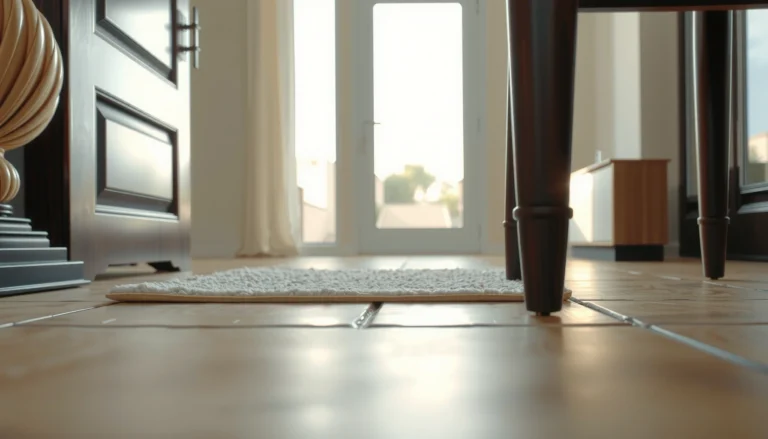
Most trip incidents on hardwood floors start with small vertical changes caused by loose thresholds, cupped boards, or raised fasteners.
Cable management that keeps cords out of main travel lanes reduces both slip risk (wet residue) and trip risk (obstructions).
– Use high-coverage entry walk-off mats at every outside door, then keep them clean so they don’t become a wet/slippery “storage” area.
– Fix trip points fast: raised nail heads, cupped boards, damaged corners, loose transitions, or thresholds that don’t sit flush.
– Keep cables managed (overhead where possible, or use compliant cable ramps/covers) so nothing crosses main walking lines.
What “safe walking” looks like on hardwood
In a commercial office, people don’t just slip—they also change stride when they see (or feel) a height change. Even when the floor looks flat, hardwood can develop localized ridges from normal expansion, subfloor movement, or incomplete installation repairs. From an accessibility and trip-hazard perspective, the ADA Standards for Accessible Design (2010) are often referenced by facility teams because they set dimension targets for level changes on walking surfaces. For example, the ADA allows only limited changes in level before an edge treatment is required. The point for hardwood safety: if your floor is already at the “borderline” of those limits, routine moisture exposure and finish wear can make the same area riskier.
ADA dimension anchors you can use when assessing trip risk
When you inspect transitions and board edges, use measurements as your filter—not just “looks like.” These numbers help you decide whether an observed difference is likely to become a persistent hazard as finish texture and wear change over time.
ADA 2010 Trip/Slip Dimension Targets Commonly Relevant to Hardwood Edges
| # | ADA walking-surface target | Maximum allowable | Why it matters on hardwood | Trip-risk relevance |
|---|---|---|---|---|
| 1 | Change in level on accessible routes | ≤ 1/4 in (6.4 mm) | Edges from worn finish, cupping, or loose fasteners cross the “noticeable” threshold. | ★★★★★ |
| 2 | Threshold height at doorways (accessible entrances) | ≤ 1/2 in (13 mm) | Uneven transitions around door hardware create consistent heel-catching points. | ★★★★☆ |
| 3 | Maximum running slope on accessible routes | 1:20 (5%) | Small “valleys” from subfloor issues concentrate water and increase sliding behavior. | ★★★★☆ |
| 4 | Maximum cross slope on accessible routes | 1:48 (~2.1%) | Uneven board planes can move moisture laterally toward seams and edges. | ★★★☆☆ |
| 5 | Maximum ramp slope (accessible ramps) | 1:12 (8.33%) | If your hardwood transitions to ramps/level changes, worn finishes can reduce grip on the incline. | ★★★☆☆ |
| 6 | Maximum ramp rise between landings | 30 in (762 mm) | Long runs often accumulate wear; safety maintenance needs to follow the “recovery” landing points. | ★★★☆☆ |
| 7 | Minimum ramp landing length (direction of travel) | 60 in (1525 mm) | Landings are where braking/re-positioning happens—so traction and residue control matter most. | ★★★☆☆ |
These ADA dimensional targets are from the ADA Standards for Accessible Design (2010). (ADA Standards for Accessible Design, 2010)
Pick safer finishes and manage traction (without ruining the floor)
You improve hardwood safety by matching your finish system to real-world traction needs—especially when floors get damp from mopping, spills, or tracked-in rain. If your current topcoat is glossy and slick when wet, lowering sheen and selecting a traction-oriented, compatible finish often reduces skidding without “sandblasting” the floor.
A high-sheen hardwood finish can highlight wear and residue buildup, which often lowers slip resistance when the surface is damp.
Traction improvements are most effective when the new coating is compatible with the existing finish system.
“Anti-slip” additives that change surface chemistry can reduce adhesion and complicate future refinishing.
– If your finish is glossy and getting slick when damp, consider a lower-sheen or traction-oriented finish that’s compatible with hardwood and the existing coating system.
– Avoid “quick fixes” that change the surface chemistry (some polishes/waxes can build up and reduce traction over time).
– Where the office has wet seasons or frequent spills, talk to your flooring finisher about slip-resistance testing options using recognized methods (e.g., ASTM static coefficient testing) and what level is realistic for your specific wear pattern.
Compare finish approaches that offices actually consider
Different traction strategies change how the surface feels, how it cleans, and how it wears. The safest path is usually “finish system + maintenance plan,” not finish alone.
| Option | What it improves | Main watch-outs |
|---|---|---|
| Lower-sheen, compatible topcoat | Reduces the “wet-gloss” effect and helps keep traction consistent as the floor wears. | Must be compatible with your existing coating system to avoid peeling or uneven texture. |
| Slip-resistant additive (professional-applied) | Can maintain grip in damp conditions when paired with correct cleaning. | Can change feel/appearance and may require different maintenance frequency. |
| Surface polish/wax “quick fixes” | May temporarily change how the floor reflects light. | Can build slick residue over time and trap soil that reduces traction. |
Slip-resistance testing: when it’s worth the paperwork
When incidents or near-misses keep recurring, you want measurement—not guesswork. Many facilities bring in a flooring finisher or testing vendor to evaluate slip resistance using recognized standards. For example, static coefficient of friction test methods are commonly referenced for assessing how flooring behaves under specific conditions. If you test, ask for the method used (such as ASTM static coefficient approaches) and the testing condition (dry vs. wet/contaminated), because “traction” in real offices often depends on residue type, not just water.
Control moisture, spills, and daily cleaning behavior
Moisture control is usually the “multiplier” that determines whether even a good finish stays safe. If the floor stays wet after cleaning—or if cleaners leave residue—the surface can become slick in exactly the areas where people hurry (lobby paths, coffee stations, and hall corners).Standing moisture is a primary driver of slick residue on finished wood, especially around seams, edges, and transitions.
Cleaning chemicals that are too concentrated or applied too liberally can create a film that reduces traction.
A simple “mat check” routine prevents walk-off areas from becoming contaminant reservoirs.
– Establish a spill response plan: blot quickly, use appropriate cleaners for hardwood, and avoid soaking—standing moisture is a major driver of slick residue and long-term damage.
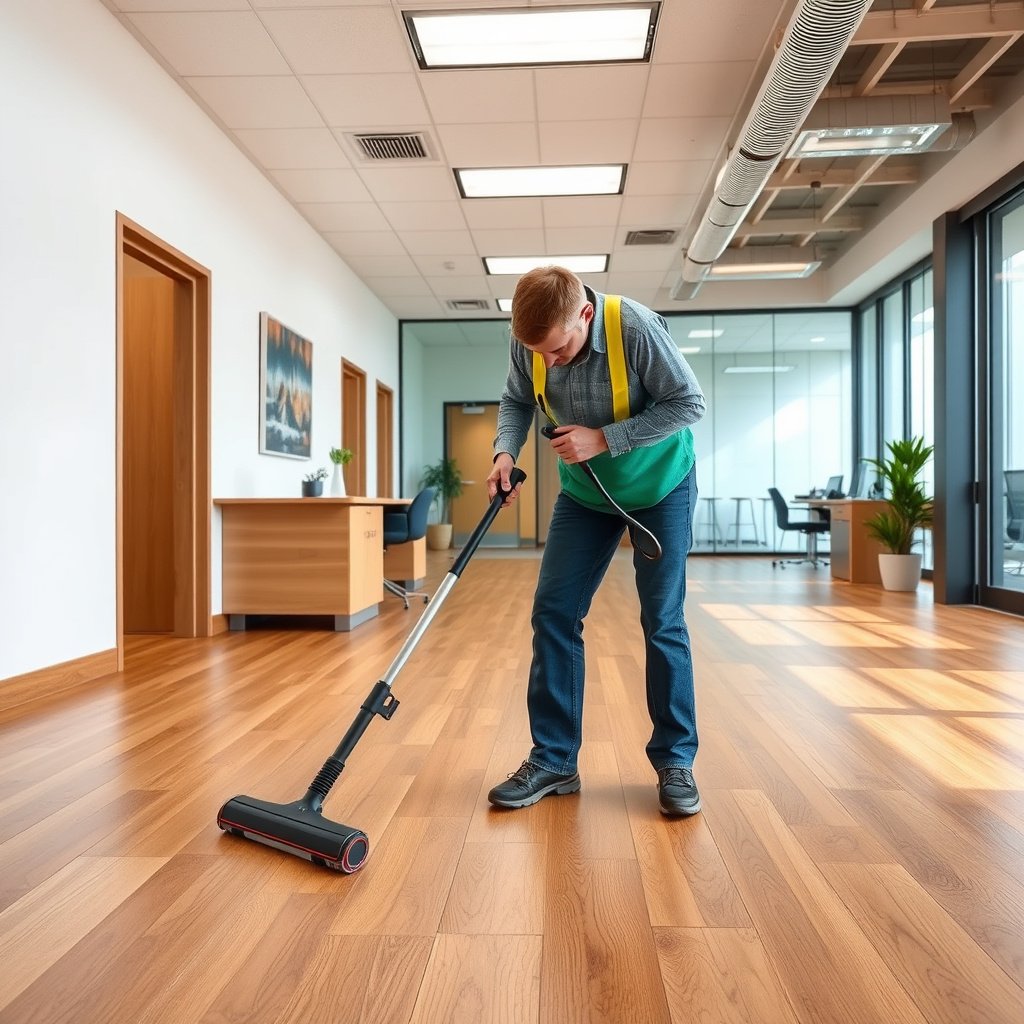
– Train cleaning staff to follow the flooring manufacturer’s dilution and application guidance (too much liquid or the wrong product can make floors hazardous).
– Prevent tracking: add floor mats at reception, coffee/snack areas, and near exterior doors; pair them with a simple “check mats daily” routine.
The spill plan should match real office timing
Most office spills aren’t “caught” immediately—they’re noticed when someone feels it underfoot or when the stain spreads. That’s why response should be procedural: who has the kit, what they do in the first 60–180 seconds, and what gets reported for follow-up. In my own experience reviewing facility workflows, the biggest improvement comes from standardizing the first response actions (blotting, using a hardwood-appropriate cleaner, and keeping liquid from spreading under furniture)—because delayed soaking is what turns spills into ongoing residue.
Cleaning behavior that makes traction drop
Residue isn’t always visible. It can come from “over-cleaning,” double-mopping, or using the wrong product type for the finish system (for example, products that are designed to leave a protective film rather than clean). Even when a cleaner is “safe for wood,” the application method matters: more liquid doesn’t equal cleaner—it can equal slicker. Build a training checklist around dilution ratios, dwell time (if any), and how to dry. If your team uses mops, define how they’re wrung/damp, not dripping, and how frequently pads are changed.
Prevent wear patterns that create unsafe surfaces
You reduce future slipping and tripping by preventing localized wear “lanes” and fixing early damage that changes traction and height. In commercial offices, traffic concentrates—right where people walk fast—so worn finish and board movement show up first in those predictable paths.
Polished “traffic lanes” form when the same route gets repeated cleaning and footfall, increasing the chance of slick residue.
Early repair of gapping, splinters, and worn edges prevents both trip points and traction changes.
Maintenance scheduling prevents the office from improvising unsafe detours during repairs or refinishing.
– Rotate traffic flow when possible (e.g., mark temporary walk paths during renovations or furniture moves) to reduce “polished lanes” that become slick.
– Repair damaged boards early—gaps, splinters, and worn edges can become trip hazards and also change how traction behaves.
– Plan maintenance around office schedules so repairs (screening/refinishing) don’t leave you with uneven texture or long downtime that forces unsafe detours.
Why wear patterns become “safety problems”
Hardwood floors behave like a system: boards, subfloor stability, topcoat chemistry, and maintenance all interact. In high-traffic zones, finish wear can expose texture differences that feel fine when dry but become slippery when damp. Meanwhile, the floor’s micro-elevations—caused by minor board movement or edge wear—create heel-catching points. Those same points are also where residue collects, because they interrupt flow during cleaning and where footprints concentrate.
As of 2026, offices are still refining “low-residue” maintenance practices, but the consistent theme is the same: treat wear as a leading indicator. When you track skidding incidents and scuff buildup, you’ll often find they correlate with a specific route, doorway, or seam.
A pros/cons reality check for traction-by-maintenance
Sometimes facilities try to solve safety with more aggressive polishing or heavier cleaning. That can reduce residue temporarily and then worsen it later by redistributing film.
– Best case: Correct cleaning, correct product, and correct finish keep traction stable as the office ages.
– Worst case: Film build-up or uneven sheen creates “dry-grippy / wet-slick” behavior that makes incidents more likely.
What can go wrong (and when this advice won’t fit)
Surface-focused improvements can fail when underlying conditions—like moisture intrusion, installation issues, or subfloor movement—are the real cause. In those cases, changing finish or cleaning alone may not eliminate the hazard; it may only postpone the next problem.
If subfloor movement is causing cupping or gapping, refinishing can’t fully solve the safety risk created by height differences.
Some anti-slip products reduce traction immediately but create long-term residue that shifts the floor from “safe-dry” to “unsafe-wet.”
A mat that doesn’t lie flat can become a trip hazard even if it improves traction elsewhere.
– Adding an incompatible anti-slip coating or specialty additive can interfere with adhesion, make future refinishing harder, or create a surface texture that feels uneven—leading to other trip risks.
– Over-matting (or using the wrong mat type) can create new edges/trip points; mats must lie flat and be maintained.
– If there’s structural movement (subfloor issues) behind cupping or gapping, surface-focused changes won’t fully solve safety—those underlying problems must be corrected.
– Some “extra grip” solutions can increase debris buildup; if you don’t match cleaning frequency to the new surface, traction can still decline.
When to escalate to a flooring professional
You should request a floor system assessment (installation + subfloor + finish compatibility) when you see:
– recurring board movement in the same areas,
– nail pops after repairs,
– cupping that aligns with HVAC humidity cycles,
– finish delamination or persistent uneven sheen after cleaning.
These issues suggest the hazard is structural or systemic, not only surface-related. Safety improvements then require correcting the root cause first, followed by a compatible finish and a maintenance plan designed around the new surface condition.
Verdict / tip: start with hazard removal, then traction—skip shortcuts
Start by removing obvious trip hazards (transitions, raised fasteners, damaged edges) and reducing tracked-in moisture (mats + spill response). After that, improve traction through a finish/cleaning approach that’s specifically compatible with your hardwood system.
Trip hazards and moisture-driven slickness often explain most “hardwood incidents” in offices—fixing them first gives the biggest immediate safety gain.
Traction upgrades work best when they are compatible with the existing finish and supported by cleaning practices that prevent residue buildup.
Downsides to know: refinishing for safety can take scheduling time, and some traction solutions may slightly change appearance (sheen/color) or maintenance needs. If your floor has major subfloor problems, widespread warping, or widespread damage, skip “surface-only” fixes and get a flooring professional to assess the system first.
Quick safety checklist (scan before your next workday)
| Area to check | What “safe” looks like | Action if not |
|---|---|---|
| Entry mats | Mats lie flat, are clean, and cover the landing zone | Replace/repair and add coverage; add daily wipe/clean routine |
| Walking lines | No raised edges, splinters, or loose transitions | Schedule repairs ASAP; block off area if needed |
| Moisture control | Floors aren’t left wet after cleaning/spills | Adjust procedures; use blotting + proper hardwood cleaners |
| Finish condition | No heavy buildup residue; consistent sheen/texture | Re-train cleaning; consider manufacturer-approved refinishing options |
| Cables & clutter | Nothing crosses main routes | Use ramps/covers; reroute where possible |
Sources
– ADA Standards for Accessible Design (2010), for general requirements affecting accessible walking surfaces and trip hazards.
– U.S. OSHA materials on walking-working surfaces and slip/trip hazards (general hazard prevention).
– ASTM standards commonly used for slip resistance testing (e.g., static coefficient testing approaches).
– Hardwood floor manufacturer care/maintenance and finish-compatibility documentation for your specific product line.
If you want a practical path to safer hardwood in a commercial office, start with what people experience first: stable walking surfaces, clean entry control, and fast repair of edges and transitions. Then lock in traction by selecting a compatible finish system and maintaining it with consistent, residue-aware cleaning—so the floor stays safe as it wears into 2026 and beyond.
Frequently Asked Questions
What are the most effective ways to reduce slip-and-fall risks on hardwood floors in a commercial office?
Start by ensuring floors are properly sealed with a commercial-grade finish that provides consistent traction, especially in high-traffic entryways. Use anti-slip mats at doors and around common spill zones, and consider slip-resistant floor coatings or area rugs with non-slip backing. Train staff to clean up spills immediately and use approved cleaning products that won’t leave residue or reduce traction.
How can I make hardwood floors safer during daily maintenance and cleaning in an office?
Use a detailed cleaning procedure that includes damp mopping (not soaking), correct dilution ratios for cleaners, and avoiding waxes or oil-based products that can make wood floors slick. Schedule routine inspection of finish wear so you can recoat high-use areas before they become uneven or glossy. If you use floor buffers, choose the correct pad and settings to prevent scuffed, uneven, or polished surfaces that increase slipping risk.
Why do worn finishes and damaged boards make hardwood floors less safe in commercial spaces?
When the protective finish wears down, hardwood can become slick, uneven, or more susceptible to moisture absorption, which can lead to warping or cupping. Raised edges from damaged boards and deteriorating seal coats create trip hazards and unpredictable traction. Regularly inspect for gaps, splinters, loose boards, and finish thinning—addressing these issues early is key to maintaining safe hardwood floor performance.
Which safety upgrades should an office consider to improve traction and reduce trip hazards?
Prioritize slip-resistant solutions like anti-slip coatings, transitional strips at doorways, and carpet-to-hardwood transition reducers that eliminate edge lift. Improve visibility with high-contrast striping in pathways, especially near thresholds, ramps, and stair landings. For ongoing safety, keep furniture legs protected with felt or rubber glides to prevent gouges and floor damage that can create tripping points.
What is the best way to handle floor refinishing so hardwood floors stay safer after recoat or sanding?
Choose a finish designed for commercial traffic and confirm its traction characteristics, since some clear coats can increase shininess and reduce grip. Before refinishing, repair any damaged boards, fill gaps, and ensure the surface is level so you don’t lock in unevenness that can cause trips. After installation or refinishing, allow proper cure time, then review walking test results and adjust cleaning methods to avoid residue buildup.
📅 Last Updated: October 17, 2026 | Topic: How to make hardwood floors safer in a commercial office? | Content verified for accuracy and freshness.
References
- Final Rule to Update General Industry Walking-Working Surfaces and Fall Protection Standards | Oc…
- https://www.osha.gov/slips-trips-and-falls
- 1910.22 – General requirements. | Occupational Safety and Health Administration
- https://www.cdc.gov/niosh/docs/2015-102/default.html
- Slips and trips – HSE
- workplace slip trip falls prevention floor maintenance – Search Results – PubMed
- https://scholar.google.com/scholar?q=hardwood+floor+slip+resistance+commercial+office Google Scholar
- https://scholar.google.com/scholar?q=slips+trips+falls+floor+maintenance+refinishing+office Google Scholar
- https://scholar.google.com/scholar?q=coefficient+of+friction+floor+finish+cleaning Google Scholar