


Tea stains on engineered wood floors can usually be removed safely by blotting immediately and using a mild cleaner formulated for wood, not harsh solvents. With the right supplies and a careful, low-moisture approach, most marks lighten within a few attempts and you can protect the finish from warping or dulling. You will need soft white cloths, a pH-neutral floor cleaner (or a manufacturer-approved cleaner), and clean water for rinsing.




Blot up the tea, then clean the spot with a lightly damp, pH-neutral cleaner—not soaking—so you don’t drive tannins deeper into the finish. For the leftover dark ring, you may need a careful spot treatment (with patch testing) before you fully dry and protect the area again. This guide walks you through the safest order of operations for engineered wood.
If the stain is fresh, act quickly; engineered wood can take longer to recover if moisture sits. This is also for common tea spills, cup rings, and damp footprints that show up as brown/gray discoloration on the surface finish.
Act fast: remove moisture without spreading it

Start by removing liquid immediately—your goal is to stop tea pigments and tannins from migrating across the finish. Acting early is especially important on engineered wood because the visible top layer is finished (often with polyurethane or an oil/wax coating), and excess moisture can still penetrate at edges, seams, or through micro-scratches.
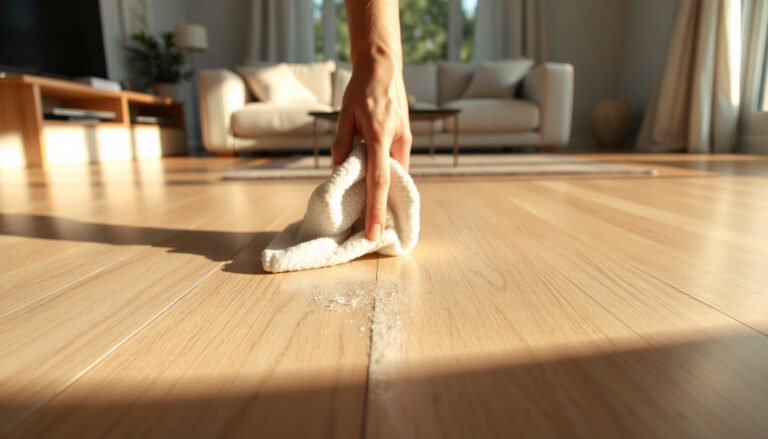
– Blot (don’t wipe) using a clean, dry microfiber or paper towel to pull up liquid. Press gently and lift the towel straight up so you don’t smear.
– If it’s still wet, stop adding moisture—tea stains spread when you rub. Even “gentle” wiping moves the liquid and enlarges the ring.
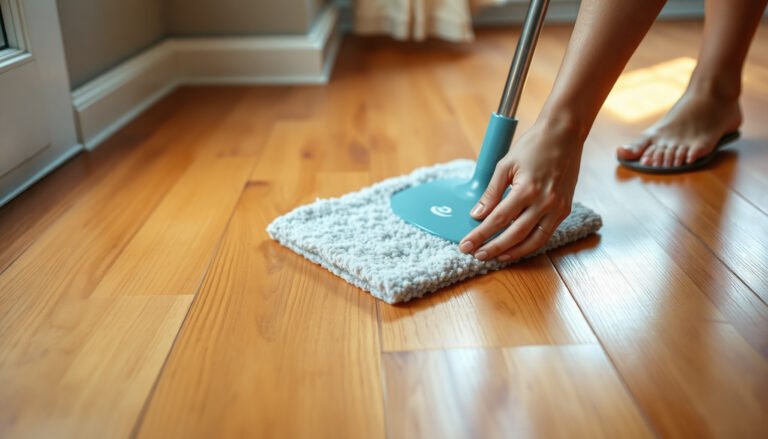
– Use a barely damp cloth only after most liquid is gone. In practice, “barely damp” means you should be able to run the cloth over the floor without leaving puddles or shiny wet patches.
Why this works: tea is rich in tannins (water-soluble polyphenols) that can discolor coatings when they oxidize and concentrate as moisture evaporates. The ring is often the “map” of where liquid traveled and dried.
Use the right cleaner for engineered wood (and skip the rest)
Use pH-neutral cleaning products because they’re less likely to react with or dull common floor finishes. For safety, treat engineered wood like a coated surface: the less chemistry you apply, and the lighter the moisture, the lower the chance of haze, color shift, or finish softening.
– Stick to manufacturer-recommended floor cleaner or a mild, pH-neutral soap solution.
– Avoid steam cleaners, harsh degreasers, abrasive pads, bleach, and ammonia-based products.
– If you’re unsure what finish you have (polyurethane vs. oil/wax), start with the mildest option and patch-test first.
Here’s a quick way to decide what’s typically safer to use on finishes that are easily dulled by solvent or reactive chemistry:
| Method | Best for | Main risk on engineered wood |
|---|---|---|
| Plain water on a damp cloth | Rinsing after the initial clean | Too much moisture can still spread discoloration at edges |
| pH-neutral detergent solution | Lifting tea residue without aggressive chemistry | Over-wetting or repeated passes can leave a faint ring |
| Steam cleaning | Usually not recommended for engineered floors | Heat + moisture can damage the finish and risk swelling at seams |
| Bleach / ammonia cleaners | Not for tea stain cleanup on finished wood | Can permanently change sheen/color and harm coating chemistry |
| Abrasive pads | Never the right move for tea rings | Scratches create a new surface that holds staining and looks hazy |
Chemistry anchor (why pH-neutral matters): pH is defined as NIST as “pH = -log10(a(H+))”, so small pH differences can shift hydrogen-ion activity quickly. NIST also notes that each 1-unit change in pH equals a tenfold change in hydrogen-ion concentration, which is exactly why harsh acids/alkalis can dull coatings. And NIST reports that pure water at 25°C is neutral at pH 7.0—so “pH-neutral” is a practical target when you want minimal interaction with finishes.
Step-by-step: lift the tea stain without damaging the finish
Lift the stain using minimal moisture and gentle, grain-direction wiping. This sequence keeps tannins from being spread and concentrates your cleaning on what’s sitting on the surface finish.
– Mix a few drops of pH-neutral dish soap into warm water, then wring the cloth so it’s damp, not wet. Warm water helps dissolve tea residue, but “damp not wet” prevents wicking into seams.
– Gently wipe the stained area in the direction of the wood grain; re-wet the cloth as needed. Work the smallest area that still covers the discoloration (including the ring’s edge).
– Rinse by wiping with a second cloth dampened with plain water, then dry immediately with a towel. The rinse step matters because soap residue can create a hazy finish and attract more dirt.
Common engineered-wood behavior you’ll notice:
After the first cleaning pass, the center may improve while the ring stays slightly darker or turns gray-brown. That’s usually the “dried boundary” where tea concentrated during evaporation. Your job now is to avoid re-wetting the entire area repeatedly.
Stubborn tea rings: what to try next
If a dark ring remains, switch to careful spot treatment rather than repeating the whole-area damp clean. Engineered wood often shows rings because tannins and dye sit at the boundary where moisture evaporated, and re-wetting can just redraw the same pattern.
– If the dark ring remains after cleaning, try a targeted spot approach rather than re-wetting the whole area.
– Patch-test a mild brightening step on a hidden spot first; tea tannins often require more than just soap to remove. Choose the mildest chemistry you can and keep contact short.
– If the floor still won’t clear, consider stopping and consulting the flooring manufacturer or a pro—aggressive chemical attempts can dull or haze the finish.
Patch testing (do it even if it “should be fine”): pick a low-visibility area (behind a chair leg or in a closet) and apply your intended method. Wait for it to fully dry, then check sheen and tone in normal room lighting. Oil/wax finishes can darken or lighten differently than polyurethane, so what looks “worked” while wet may differ after dry-down.
Drying and protection after stain removal
Dry thoroughly: engineered wood looks best when moisture is removed quickly and consistently. After you finish cleaning, don’t rush to walk on it—your goal is full dry-through before protection.– Dry thoroughly: use dry towels and let air circulate; avoid walking on it until fully dry.
– Once dry, check for lingering dullness; you may need to follow the manufacturer’s recommended after-care product.
– Keep the area free from future spills for a day or two while the finish stabilizes.
What “fully dry” looks like: no cool dampness underfoot, no faint darkening when you hold a light at a shallow angle, and no sticky feel if your cloth touched the spot. If the surface still looks slightly darker, don’t immediately add more water—focus on drying and cure time first.
What can go wrong (and how to avoid it)
Avoid three failure modes—soaking, friction, and reactive chemistry—because they’re what turn a manageable tea spill into a longer-lasting finish problem. Engineered wood is durable in normal use, but its coating system (especially polyurethane or oil/wax) can be sensitive to water duration and chemical strength.
– Soaking the stain: over-wetting can push moisture under the finish and worsen discoloration.
– Rubbing instead of blotting: friction can spread tea compounds and enlarge the ring.
– Using the wrong chemistry: bleach/ammonia/strong solvents can permanently alter the sheen or color of engineered wood finishes.
Finish mismatch is common: people see “wood” and assume they can use the same cleaners used for bare timber. On engineered wood floors, the finish is part of the system—treat it as coating, not bare substrate.
Verdict / tip: safest path, plus when to stop
The safest strategy is: blot → damp pH-neutral clean → rinse/wipe → dry completely, and only then attempt careful spot treatments if the ring remains. The downside: deeper discoloration sometimes can’t be fully removed without refinishing, and spot brightening can change the finish tone even when it “works.” Skip DIY chemical brighteners if you have a delicate oil/wax finish, if the stain has penetrated beyond the top surface, or if you can’t patch-test safely.
One practical way to choose your “next chemistry” is to start from pH neutrality and move only if needed. As a reminder of why that matters, NIST explains pH is logarithmic, so moving toward harsh pH levels increases the chance of finish interaction quickly.
Typical pH of Common Liquids vs. Finish Safety (for Tea-Ring Cleanup)
| # | Solution | Typical pH (25°C) | Why it matters | Finish safety |
|---|---|---|---|---|
| 1 | Plain water (damp wipe) | ~7.0 | Neutral chemistry; minimizes finish interaction | ★★★★☆ |
| 2 | pH-neutral floor soap (diluted) | ~6.0–8.0 | Targets residue without aggressive acidity/alkalinity | ★★★★★ |
| 3 | Mild detergent (neutral-leaning) | ~7.0–9.0 | Often acceptable when used damp-to-lightly-damp | ★★★★☆ |
| 4 | Baking soda solution | ~8.1–8.5 | Alkalinity can dull some finishes if overused | ★★★☆☆ |
| 5 | White vinegar (5% acetic acid) | ~2.4–3.0 | Acidity can change coating sheen and tone | ★☆☆☆☆ |
| 6 | Household bleach (sodium hypochlorite) | ~11–12 | Strong oxidizers can permanently alter finish appearance | ★☆☆☆☆ |
| 7 | Household ammonia cleaners | ~11–12 | High alkalinity and chemical reactivity can haze coatings | ★☆☆☆☆ |
Scan/save checklist: tea stain removal on engineered wood
Use this order when you want the highest chance of full recovery without damaging the finish—especially as of 2026, when many manufacturers emphasize moisture control and finish compatibility. Save it and follow it even when you feel tempted to “just do another pass.”
| Step | What to do | Stop if… |
|---|---|---|
| 1 | Blot up liquid (no rubbing) | The stain keeps spreading |
| 2 | Clean with pH-neutral cleaner (damp cloth) | You notice finish dulling or streaks |
| 3 | Wipe with plain water (damp cloth) | The ring darkens after wiping |
| 4 | Dry fully (towels + airflow) | Moisture seems to “sink in” or linger |
| 5 | Only then consider careful spot treatment | You can’t patch-test or the sheen changes |
– Keep everything damp-to-lightly-damp—never wet.
– Work in small sections and clean the grain direction.
– Patch-test any “extra” treatment before applying broadly.
Tea stains on engineered wood usually come out best when you blot immediately, clean gently with a pH-neutral approach, rinse lightly, and dry completely. If the ring remains, don’t keep re-wetting—use careful, patch-tested spot steps or get manufacturer/professional help when discoloration won’t lift. If you tell me whether your floor is glossy/polyurethane or oil/wax (and whether the spill is fresh or old), we can narrow the safest next move.
Frequently Asked Questions
What’s the fastest way to remove tea stains from engineered wood floors?
Blot the tea immediately with a clean, dry microfiber cloth, then use a slightly damp cloth with plain water to lift remaining residue. For the stain, apply a small amount of wood-safe cleaner recommended for engineered hardwood, wiping gently with the grain. Avoid soaking—engineered wood can still be damaged if liquid penetrates the top layer.
How do I get dried tea stains off engineered wood without damaging the finish?
Start by softening any dried residue with a barely damp cloth, then gently lift with a plastic scraper or the edge of a credit card—no metal tools. If the stain remains, use a wood floor cleaner that’s safe for finished floors and test it in an inconspicuous area first. Keep scrubbing light and controlled, since aggressive rubbing can dull the protective coating.
Why do tea stains leave marks on engineered wood floors even after cleaning?
Tea contains tannins and pigments that can penetrate the surface finish or settle into micro-scratches over time. If moisture sits for too long, it can cause discoloration that spreads beyond the initial spill spot. Even when the floor looks “clean,” lingering tannins may remain in the finish layer and reappear with additional humidity.
Which household solutions are safe for removing tea stains from engineered hardwood?
For most engineered wood floors, the safest options are gentle, wood-floor-specific cleaners or a solution of mild dish soap with water used sparingly. You can also try a hydrogen-peroxide-based product only if the manufacturer allows it, and always spot-test first because some finishes may lighten or cloud. Avoid vinegar, ammonia, and harsh solvents unless your floor’s care guide explicitly recommends them.
What’s the best method to prevent tea stains from reoccurring on engineered wood?
The best prevention is fast cleanup: blot spills right away, then wipe with a barely damp cloth and dry thoroughly. Use protective mats under cups and avoid placing hot drinks directly on the floor. Periodically maintain the floor with a manufacturer-approved polish or refresher to preserve the protective finish that helps resist tea stains.
📅 Last Updated: November 14, 2026 | Topic: How to get tea stains off engineered wood floors? | Content verified for accuracy and freshness.
References
- Checking your browser – reCAPTCHA
- Checking your browser – reCAPTCHA
- Engineered wood
- Tannin
- Wood stain
- Oxalic acid
- Tea
- https://scholar.google.com/scholar?q=how+to+remove+tea+stains+from+engineered+wood+floors Google Scholar
- https://scholar.google.com/scholar?q=tannin+stains+wood+surface+cleaning+removal Google Scholar
- https://scholar.google.com/scholar?q=hardwood+floor+stain+removal+tea+tannins Google Scholar
[…] sheen and haze can become the bigger visual problem. Oil/wax finishes can sometimes accept gentle spot treatment differently, but they can also darken if the top layer swells […]