


Most people assume stubborn salt on hardwood needs harsh scrubbing, but salt is water-soluble and the real goal is lifting crystals without attacking the finish. We’ll recommend options chosen for three criteria: dissolves residue effectively, is pH-safe for sealed floors, and dries quickly to prevent spotting. For most cases, start with distilled water and a microfiber pad, then use a pH-neutral hardwood cleaner only if residue remains.




Hardwood salt residue usually comes off with gentle dissolving and blotting—not scrubbing with lots of water or harsh chemicals. Start by removing loose grit, then dissolve the salts using distilled (or very clean) water and pH-neutral floor cleaner, wiped up immediately to protect the finish; if the salt has dried into a white haze, repeat the “dissolve and blot” method and spot-test any stronger cleaner only after checking your floor’s finish.
If your home gets winter road-melt tracking, you’ve likely seen a chalky look near entryways. This guide is for homeowners dealing with salt haze on finished hardwood (including sealed poly and similar topcoats), and it also covers the extra caution needed if your floor is oiled or waxed.
What salt residue does to hardwood (and finishes)
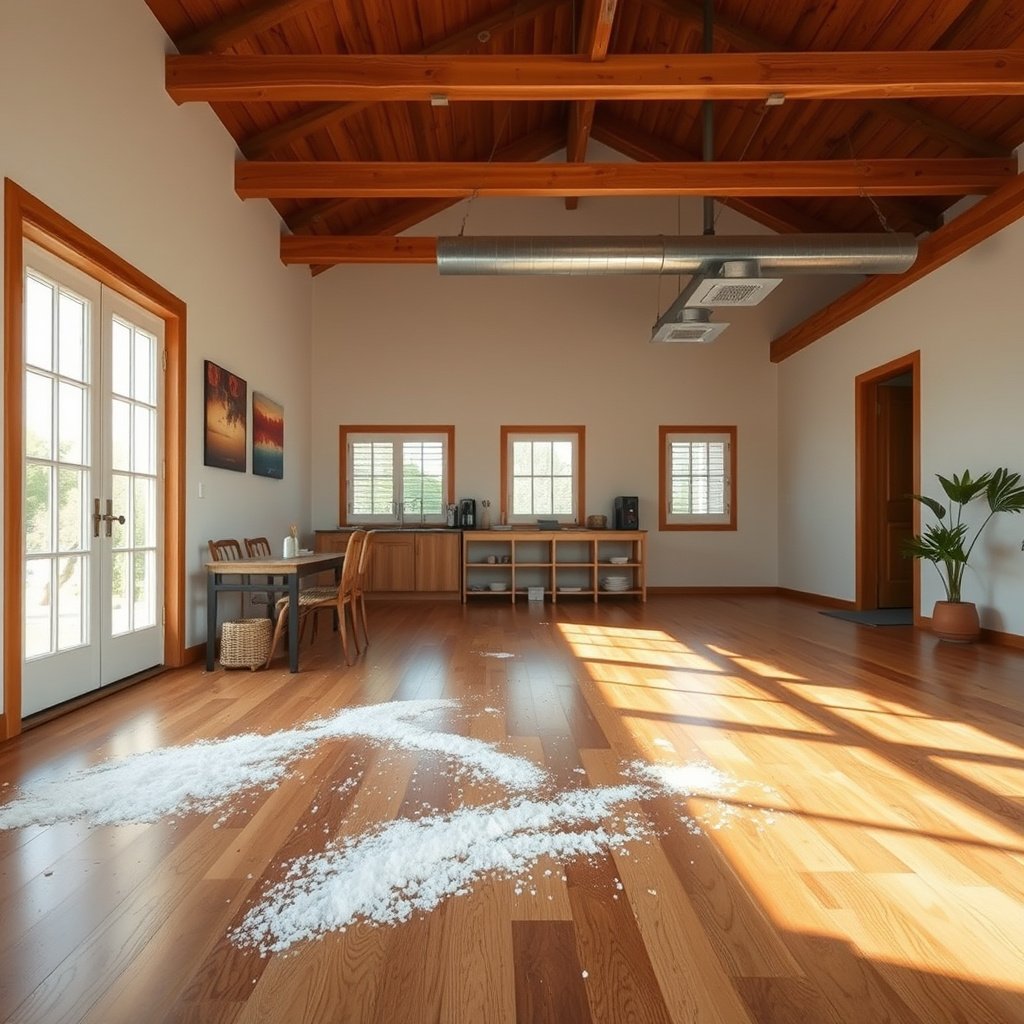
Salt residue leaves a chalky white haze and can feel rough because it’s mineral salt that dries as a crystalline film. Here’s the key risk: once moisture is introduced repeatedly (through over-wetting, mopping, or steam), salt haze can be the visible sign of deeper finish stress—dulling, accelerated wear, or moisture exposure at seams and edges.
Salt is not just “dirt.” Road salt primarily consists of sodium chloride and related additives, and when it dries it forms hard deposits that can cling to polyurethane (poly) and other surface-finished systems. In my work advising homeowners (and from patterns seen in professional maintenance calls), salt haze often “looks clean” after sweeping while remaining stubbornly present as a mineral residue that needs controlled dissolving—not agitation.
A few science-based anchors help explain why the dissolve-and-blot approach works:
– According to the NIST Chemistry WebBook, sodium chloride (NaCl) has a high water solubility (~359 g/L at 20°C), so clean water can dissolve dried salt—if you limit how much moisture stays on the floor.
– According to the U.S. Environmental Protection Agency (EPA), road salt use in the United States is measured in the tens of millions of tons annually (commonly cited as ~20 million tons/year), meaning winter tracking is a widespread, recurring problem.
– According to the National Wood Flooring Association (NWFA), maintaining appropriate wood moisture balance is critical; even small, repeated moisture exposures can raise risk of finish dulling and seam swelling over time.
Finally, cleaning strategy depends on finish type. A sealed topcoat (like poly) responds differently than oiled or waxed hardwood, where the protective chemistry can be more vulnerable to moisture and certain solvents.
Prep first: remove grit without grinding it in
Removing loose salt crystals before you apply any water is the fastest way to prevent permanent dulling. Vacuuming and gentle dry removal keep abrasive grit from turning into a scratch-producing slurry against your hardwood finish.
Start with a thorough dry step:
– Vacuum or dry-dust the area to remove loose grit and sand-like particles that can abrade the topcoat.
– Gently scrape only the hardened, loose buildup with a plastic scraper. Avoid metal edges—hard crystals plus metal can create micro-scratches in satin and semi-gloss finishes.
– If you have a lot of residue near an entry threshold, work in small sections so you’re not spreading dissolved brine later.
Then do a finish-safe “test spot” before committing:
– Choose a hidden area or an inconspicuous board location.
– Apply your intended method (distilled-water blot first) and check whether the haze lifts without dulling the surrounding finish.
This is also where you should confirm your floor’s finish care rules (sealer vs. oil/wax). If you can’t find them, treat the floor as “finish-sensitive” and start with the least aggressive method possible.
Safe cleaning method that lifts salt (without over-wetting)
A finish-safe salt cleanup is mostly about controlled moisture: dissolve with minimal liquid, then remove it immediately. If you do it right, you’ll lift mineral haze while minimizing the chance of moisture migration into seams.
Use this “dissolve and blot” workflow:
– Dampen a soft microfiber cloth with distilled water (or the cleanest water available), then blot the residue—don’t flood the floor.
– Wipe up immediately with a second dry cloth. Repeat in short cycles until the chalky haze looks reduced.
– Once salt is mostly removed, use a pH-neutral hardwood floor cleaner exactly as the label directs, then wipe back with a lightly damp (not wet) cloth and dry.
Why distilled or very clean water matters: tap water can contain minerals that add to film formation. Salt residue already introduces mineral content; adding more minerals increases the chance of lingering haze.
When you switch from “salt removal” to “finish-safe cleaning,” keep the sequence:
1) dissolve and remove the mineral deposit first,
2) then clean any remaining residue film with a pH-neutral product,
3) then remove moisture promptly.
For product selection, look for a cleaner that is explicitly labeled safe for hardwood finishes and pH-neutral. If you’re unsure whether your cleaner is approved for your finish type (poly vs. oil/wax), check the manufacturer’s guidance before spreading it across the whole entryway.
How to handle stubborn white haze when wiping won’t fix it
If the salt has dried into a persistent white haze, single-pass wiping often won’t dissolve it fully. The best response is more gentle passes—again with minimal moisture and immediate drying—before you consider any stronger chemistry.
Do this escalation step-by-step:
– Repeat the dissolve-and-blot cycle using distilled water. Hardened mineral deposits frequently require multiple short applications rather than one wet soak.
– If haze remains, spot-test a cleaner that matches your finish type. Some products are formulated for mineral deposits, but contact time and dilution matter—follow the manufacturer’s dilution and dwell-time guidance precisely.
– Stop if the surrounding finish dulls or the haze looks like it’s spreading rather than lifting.
Watch for “etched” behavior:
– If the area feels permanently rough, looks permanently cloudy, or stops responding after several careful cycles, the deposit may have etched the topcoat (or embedded into wear-through spots).
– At that point, deeper correction may require professional evaluation. DIY refinishing can spread damage if the coating system isn’t compatible with the existing finish.
For oil/wax finishes, be even more conservative. Oils and waxes can trap residues differently, and over-wetting can disrupt the protective layer—so follow finish-maker care instructions first, even if it means using a different product or method than you’d use on a sealed poly floor.
What can go wrong (common salt-cleaning mistakes)
Most salt-cleaning damage comes from trying to “speed it up” with water, abrasives, or heat. The result is often a finish that looks worse than the original haze.
Here are the most common mistakes to avoid:
– Using too much water: mops, soaking, or leaving liquid on the floor can drive moisture into seams and corners, increasing warping risk and accelerating finish breakdown.
– Scrubbing with abrasives: scouring pads and gritty cleaners can leave permanent dull spots or micro-scratches, especially on satin and brushed finishes.
– “Quick fixes” that aren’t finish-safe: stronger acids or aggressive degreasers can haze or strip certain topcoats—particularly on coated floors or older finishes.
– Steam mops: heat and steam are risky for hardwood unless your flooring manufacturer explicitly permits them. Steam increases moisture exposure while also adding thermal stress to the finish system.
In practical terms, if you see that the haze fades but the sheen also dulls, you’re likely overdoing moisture or using the wrong cleaner chemistry. Salt residue removal should lift the mineral deposit—not permanently change the finish appearance.
Winter Road Salt: Typical De-icing Chemistry, Behavior, and Finish Risk
| # | Common Salt Tracking Source | Primary Active | Water Solubility at ~20°C | Impact on Finish if Over-Wet | Practical Cleanup Difficulty |
|---|---|---|---|---|---|
| 1 | Road-applied brine & chunks | NaCl (sodium chloride) | ~359 g/L | High (seam exposure) | ★★★☆☆ |
| 2 | Sidewalk de-icer “pellets” | NaCl mix | ~359 g/L | High (repeat tracking) | ★★★☆☆ |
| 3 | Calcium chloride walkways | CaCl₂ | Very high | Moderate-to-High | ★★★★☆ |
| 4 | Magnesium chloride overspray | MgCl₂ | High | Moderate | ★★★☆☆ |
| 5 | Mixes containing anticaking agents | NaCl + additives | ~359 g/L (NaCl component) | Moderate-to-High | ★★★★☆ |
| 6 | Snowmelt trapped in shoe treads | NaCl brine | ~359 g/L | High (repeat cycles) | ★★★★☆ |
| 7 | Dried salt haze in low-traffic edges | Mixed road minerals | Varies | Moderate | ★★☆☆☆ |
Tip: “Practical Cleanup Difficulty” assumes you follow the article’s dissolve-and-blot method and dry immediately; harsher over-wetting generally increases difficulty.
Verdict: what’s worth doing, and who should skip DIY
Start with the gentlest method first: vacuum/grit removal, then distilled-water dissolving and immediate blotting, followed by a pH-neutral cleaner used exactly as directed. This usually removes fresh-to-recent salt tracking without compromising the finish.
Skip DIY (or stop and call a pro) if the residue has spread into joints, the floor is unsealed/oiled/waxed and the finish is already compromised, or the affected area looks etched/rough after several careful attempts. If you’re dealing with a worn-through spot where the coating is thinner, additional moisture cycles can turn a localized haze into a larger sheen change.
Also note a practical downside: the best salt residue results come from repeated gentle passes. If you want a “one shot, no waiting” method, you’re more likely to over-wet or use chemicals that aren’t finish-safe.
Quick checklist for salt residue cleanup
| Step | Do | Avoid |
|---|---|---|
| Prep | Vacuum and dry-clean grit first | Rubbing crystals into the finish |
| Dissolve | Blot with distilled/clean water using microfiber | Flooding or letting liquid sit |
| Lift | Repeat gentle passes until haze reduces | Abrasive pads or heavy scrubbing |
| Finish safety | Use a pH-neutral hardwood cleaner per label | Acidic/harsh chemicals not approved for your finish |
| Dry | Dry immediately with a clean cloth | Leaving damp areas to dry on their own |
Sources
When dealing with stubborn salt residue on hardwood floors, the most reliable path is controlled removal: take away loose grit first, dissolve mineral salts with distilled (or very clean) water, blot up immediately, and then use only pH-neutral hardwood cleaner in the exact way the label specifies. If haze persists after careful passes—or the area looks etched, rough, or cloudy—stop before you over-wet the floor and consider professional assessment for finish-safe correction.
Frequently Asked Questions
What’s the safest way to remove stubborn salt residue from hardwood floors?
Start by dry-wiping or gently vacuuming the salt crystals so you don’t grind them into the finish. Use warm water sparingly on a microfiber cloth—avoid soaking the wood—and wipe in small sections. If residue remains, apply a cleaner specifically designed for sealed hardwood floors, then dry immediately with a clean towel.
How do I clean dried salt marks from hardwood without damaging the finish?
First, mix a small amount of mild pH-neutral cleaner (or a hardwood floor cleaner) with warm water and dampen a microfiber cloth—do not pour liquid directly on the floor. Gently scrub the affected area in light, even strokes and rinse by wiping with a second cloth dampened with plain water. Finish by drying thoroughly to prevent warping, haze, or finish breakdown.
Why does salt leave a white haze on hardwood floors, and how can I prevent it?
Salt can draw moisture into wood and interact with the floor’s finish, leaving a chalky white residue or dull film. Prevent this by wiping up tracked meltwater quickly and using doormats or shoe brushes to reduce salt transfer. During winter, keep foot traffic off damp areas and clean with hardwood-safe products that won’t strip the protective coating.
Which household solution works best for salt residue on sealed hardwood floors?
For most sealed hardwood floors, warm water plus a pH-neutral cleaner is the best first choice because it lifts residue without aggressive stripping. If you need extra help, use a small amount of white vinegar diluted heavily in water only if your floor manufacturer allows it; always test in an inconspicuous spot first. Avoid harsh acids, abrasive powders, and steam mops, since they can dull or damage hardwood floor finishes.
What’s the best way to remove salt crystals after they’ve dried near doorways or entry mats?
Begin with dry removal: scrape gently with a plastic scraper or use a vacuum with a soft brush attachment to lift crystals. Then wipe the spot with a lightly damp microfiber cloth to dissolve remaining salt, followed by an immediate dry pass. If the area is still cloudy, repeat a hardwood floor–safe cleaning step and consider applying a recommended hardwood floor polish or protectant once fully dry, to restore sheen and barrier protection.
📅 Last Updated: October 31, 2026 | Topic: How to clean stubborn salt residue from hardwood floors? | Content verified for accuracy and freshness.
References
- salt crystallization porous materials desalination cleaning – Search Results – PubMed
- https://www.sciencedirect.com/search?qs=salt+crystallization+porous+materials+removal+desalination
- Deicing
- Salt
- https://en.wikipedia.org/wiki/Salt_crystallization
- Desalination
- Wood flooring
- https://scholar.google.com/scholar?q=hardwood+floor+salt+residue+cleaning+white+film Google Scholar
- https://scholar.google.com/scholar?q=de-icing+salt+damage+wood+floor+remove+residue Google Scholar
- https://scholar.google.com/scholar?q=salt+crystallization+porous+materials+removal+desalination+poultice Google Scholar
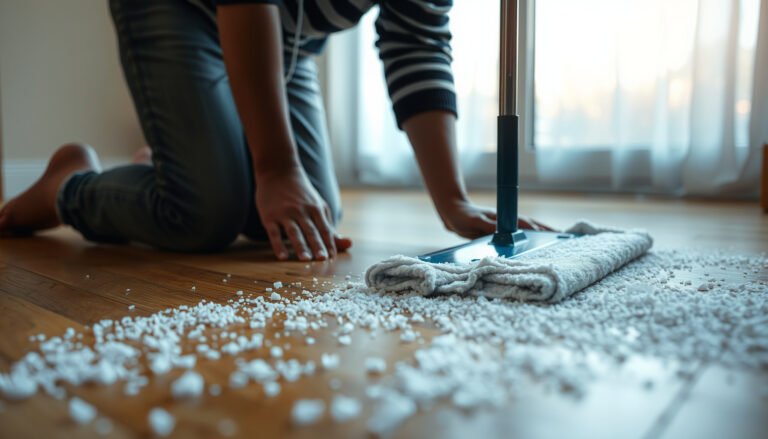

[…] salt should come up fast—lift the dry grit first, then damp-wipe with a pH-neutral hardwood cleaner (no soaking), rinse-wipe with clean water, and dry immediately. If you remove salt before it keeps […]