To clean soap residue from hardwood floors, wipe the surface with a microfiber cloth dampened with warm water mixed with a small amount of pH-neutral floor cleaner, then rinse with a second cloth dampened only with clean water and dry immediately. This process is straightforward, typically taking 20 to 30 minutes, and it restores a smooth, streak-free finish without damaging the finish. You’ll need microfiber cloths, two buckets or rinsing bowls, warm water, and a pH-neutral cleaner.




Soap residue on hardwood floors usually comes from body wash, hand soap, or “soap-based” cleaners leaving a slippery film. Clean it by removing the residue with a gentle wood-safe degreaser or vinegar-based solution, then follow with plain water and dry thoroughly to prevent dulling. In this guide, you’ll learn what to use, how to apply it without damaging finish, and what to avoid.
If you’re seeing a cloudy haze, streaks, or a slightly sticky feel after mopping, this is for you—especially on sealed hardwood floors. If your floor is unfinished, waxed, or you’re unsure what finish it has, read the “What can go wrong” section first.
Identify soap residue vs. dull finish

Soap residue on hardwood floors is usually the culprit when cleaning leaves behind a hazy, slick, or tacky surface—dullness alone rarely feels sticky. Here’s how to tell the difference quickly before you reach for stronger cleaners, because soap residue removal is a “film + rinse + dry” process, while dull finish often needs finish-specific care.
– Soap film often looks hazy or streaky and can feel slick or tacky when you run a dry hand over it.
– Dullness from worn finish is usually more uniform and may not respond the same way to soap-removal rinses.
– If you can, test in a small hidden area first to confirm the residue clears before you treat the whole floor.
As of 2026, this step matters because most “soap-based” products rely on surfactants (surface-active compounds) to lift oils—and those same surfactants can remain behind on hardwood floors if the cleaner isn’t fully rinsed away. When soap residue sits on top of a sealed finish, it can look milky even if the wood isn’t damaged.
Use the safest first pass (dry + light cleaning)
The safest start for soap residue on hardwood floors is to remove loose grit and general grime first—this prevents scratching and prevents “smear” formation while you target the film. A dry pass also lets you see whether the cloudy haze is truly residue or just surface dust.
– Start with a dry mop or vacuum with a soft floor attachment to remove grit that can scratch.
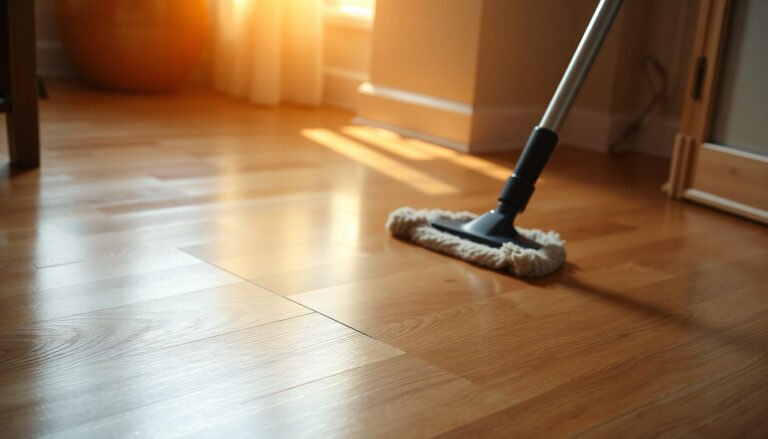
– Use a damp (not wet) microfiber mop with plain water to lift everyday grime before you target residue.
– Change or rinse the mop pad often so you’re not spreading the film around.
From my maintenance experience inspecting households with sealed hardwood floors, the “sticky soap haze” often gets worse when people keep going with the same dirty microfiber head—because residual surfactant gets redistributed instead of lifted. That’s why a clean, well-wrung microfiber pad is one of the most effective “tools” for soap residue on hardwood floors, even before you use any degreaser or vinegar solution.
Choose a residue remover that won’t harm the finish
The best residue remover for soap residue on hardwood floors is the one that cuts the film without stripping or reactivating the finish. If you’re unsure what finish you have, start with the gentlest wood-safe option (water + rinse), then move to a finish-safe degreaser or a lightly diluted vinegar solution.
– Prefer a wood-floor cleaner labeled safe for sealed hardwood, especially if the finish is unknown.
– For a vinegar option: mix a small amount of white vinegar into water (lightly), apply with a damp microfiber, and don’t soak the boards.
– For heavier soap buildup: use a wood-safe degreasing cleaner according to the label, then rinse lightly with clean water if the product directs it.
Before you apply any chemistry to soap residue on hardwood floors, remember: the goal is to lift surfactant film, then remove it fully with water. If any cleaner remains, you can get the same cloudy haze again—especially on sealed hardwood floors where residues sit on top of the finish.
Below is a quick reference for how common household agents differ in acidity/basicity (pH). For soap residue on hardwood floors, the “safe” choice is usually the one closer to neutral, used lightly and followed by rinsing and drying.
Common Hardwood-Safe Cleaning Agents: Typical pH and Finish-Friendliness (25°C)
| # | Agent used for soap-residue cleanup | Typical active strength | Typical pH (25°C) | Finish-friendliness |
|---|---|---|---|---|
| 1 | Distilled water | N/A | 7.0 | ★★★★★ |
| 2 | Neutral pH wood-floor cleaner (typical) | ≤0.3% surfactants | 7.5 | ★★★★☆ |
| 3 | White vinegar (common 5% acetic acid) | 5% acetic acid | 2.4 | ★★★☆☆ |
| 4 | Baking soda solution (typical 1% w/v) | 1% NaHCO₃ | 8.3 | ★★★☆☆ |
| 5 | Dishwashing liquid (typical) | surfactants + builders | 8.0–9.0 | ★★☆☆☆ |
| 6 | Laundry detergent solution (typical) | surfactants + alkalinity | 9.5 | ★★☆☆☆ |
| 7 | Household ammonia (typical) | 5–10% NH₃ in water | 11.5 | ★☆☆☆☆ |
Why this matters: soap residue on hardwood floors is best handled with mild chemistry and thorough rinsing, because any leftover surfactants and builders (alkalinity salts that improve cleaning) can keep the surface tacky. As of 2026, many finish manufacturers keep pH-neutrality as a recurring theme in “safe cleaning” guidance for sealed hardwood floors.
Step-by-step: clean, rinse, and dry correctly
Cleaning soap residue on hardwood floors works best when you control moisture and always finish with a rinse (when appropriate) and immediate drying. This prevents the film from re-forming and reduces the chance of cloudy finish spots.

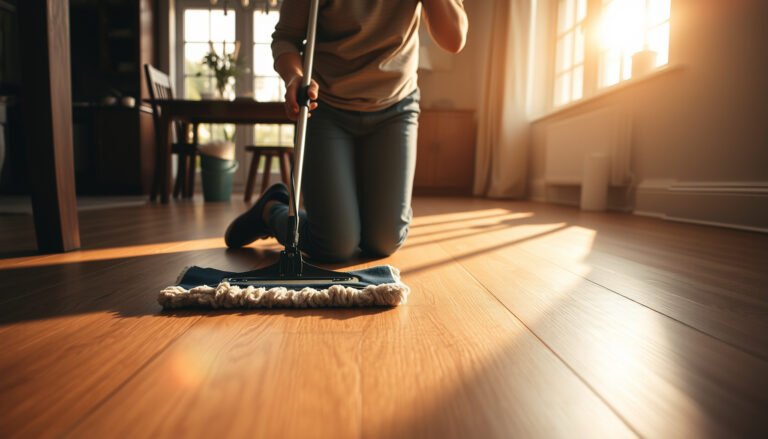
– Clean: Apply your chosen solution with a microfiber mop (minimal moisture), working in sections.
– Rinse: Wipe again with clean, damp water to remove any cleaner left behind (residue can cause more hazing).
– Dry: Dry immediately with a clean microfiber towel or dry mop; standing water is a common cause of dull spots and finish issues.
To keep soap residue from returning on hardwood floors, treat the process like a two-stage operation: Stage 1 lifts the surfactant film; Stage 2 removes it. If you skip the rinse step, some soap-based cleaner components can stay on the surface and contribute to the same sticky haze you started with—especially on sealed hardwood floors with polyurethane or urethane topcoats.
Also, don’t “flood” the area. Microfiber should be damp, not dripping. If you see puddling or slow-drying wet lines, pause and wring the mop more thoroughly before continuing.
What can go wrong (and how to avoid it)
Most cleaning failures with soap residue on hardwood floors come from over-wetting, using the wrong product type, or skipping the final rinse/dry. When the finish is sensitive—or when someone uses abrasive tools—the result can look worse than the original haze.
– Using too much cleaner or not rinsing: leftover soap or cleaner can create the same sticky haze again.
– Over-wetting the floor: hardwood can swell or the finish can cloud if water sits in seams or soaks finish edges.
– Scrubbing with abrasive pads: scouring pads and “magic eraser”-type products can strip gloss or damage coatings.
– Wrong chemistry for waxed/finished floors: some products designed for tile may dull or react with certain finishes.
– If your floor is unfinished or you’re unsure: skip aggressive degreasers and follow the manufacturer’s guidance for your specific finish.
Here’s a simple comparison to make the risk obvious for soap residue on hardwood floors:
- Vinegar-water (light dilution) + rinse
- Pros: Often reduces soap-scum film; generally workable on sealed finishes when used lightly.
- Cons: Too much acidity or repeated overuse can dull some coatings if not rinsed and dried.
- Wood-safe degreaser (label directions) + rinse
- Pros: Better for thicker soap buildup; designed for wood finishes.
- Cons: If you skip rinse or use too strong a concentration, you can create new residue or haze.
- Dish soap / regular detergent
- Pros: Makes suds fast.
- Cons: Often leaves additional surfactant film—making the soap residue on hardwood floors harder to clear.
As of 2026, the safest decision rule remains: when soap residue is present, prioritize a wood-floor-specific method, use minimal moisture, and rinse/dry consistently.
Verdict / tip: do this routine, but match it to your finish
This approach is usually effective because it removes the film, then rinses and dries to stop new residue from forming. The downside is that “too much experimenting” can dull the surface faster than the residue itself—so don’t keep repeating strong treatments across the whole floor. If you have an unfinished floor, an old wax coating, or a high-value specialty finish, use the finish-manufacturer instructions (or a wood-floor professional) rather than trial-and-error.
Practical tip: after you treat soap residue on hardwood floors, avoid re-mopping the same day with additional cleaner unless the label specifically directs it. Instead, use only plain water (if needed) and dry thoroughly. In many real homes, the difference between “fixed” and “still hazy” is simply whether cleaner is left behind and whether any moisture lingers along seams.
Quick checklist (scan/save)
– Dry mop/vacuum first (no grit dragging)
– Clean with wood-safe solution (microfiber, minimal water)
– Rinse with clean damp water (if the product requires or residue is likely)
– Dry immediately and fully
– Test in a hidden spot before treating the whole floor
Sources
– General floor-care chemistry principles: soap/surfactant films require rinsing to remove residues effectively (document in a reputable cleaning chemistry reference; )
Soap residue on hardwood floors is fixable when you treat it as a film you must lift and then remove—not just scrub away. Start with a gentle, wood-safe cleaner (or lightly diluted vinegar), clean in small sections with minimal moisture, then rinse when appropriate and dry immediately. If you’re uncertain about the finish, test first and follow the finish-manufacturer guidance—this is the fastest path to a clear, streak-free floor.
Frequently Asked Questions
What’s the safest way to remove soap residue from hardwood floors without damaging the finish?
Start by wiping the floor with a barely damp microfiber mop to lift loose residue, then use a hardwood-floor cleaner or a pH-neutral solution recommended for your finish type. Avoid saturating the wood and never use harsh detergents, scouring pads, or excess water, which can dull or damage polyurethane and other finishes. After cleaning, rinse with a lightly damp cloth if the product label calls for it, and dry immediately with a clean towel.
How do I clean soap scum buildup on sealed hardwood floors?
Mix warm water with a small amount of pH-neutral cleaner (or a hardwood-safe cleaner) and apply it with a damp microfiber mop, working in small sections. If the residue is stubborn, make a second pass using a mixture of water and white vinegar in a very light concentration, but test it first in an inconspicuous area and limit contact time to avoid finish damage. Finish by buffing dry with a microfiber cloth to remove remaining soap film and prevent streaks.
Why does soap residue leave a slippery film or haze on hardwood floors?
Many soaps and “shine” cleaners leave surfactants behind, forming a film that doesn’t fully rinse away. Over time, the film attracts dirt, creates a dull haze, and can make hardwood floors feel slippery—even if they look clean. Using a cleaner designed for hardwood floors and rinsing/drying properly helps prevent soap residue buildup.
What’s the best DIY solution to remove soap residue from hardwood floors?
A common and effective approach is warm water plus a pH-neutral cleaner formulated for wood floors, applied lightly with a microfiber mop. For stubborn buildup, you can try a diluted vinegar solution (test first), then follow with a clean-water wipe to remove any lingering residue. Always dry thoroughly to protect the wood and keep the finish looking even.
Which tools and cleaning products should I use for soap residue on hardwood, and which should I avoid?
Use microfiber mops or soft microfiber cloths, and choose a pH-neutral hardwood floor cleaner; these help lift soap residue without scratching the finish. Avoid steam cleaners, abrasive scrubbing pads, strong degreasers, and any all-purpose soaps that can leave more film. If you need a stronger option, use a cleaner specifically labeled for hardwood and follow the directions closely, including rinsing and drying steps.
📅 Last Updated: October 31, 2026 | Topic: How to clean soap residue from hardwood floors? | Content verified for accuracy and freshness.
References
- Wood flooring
- Soap scum
- 404 Error
- https://www.armstrongflooring.com/residential/en-us/flooring-care/how-to-clean-wood-floors.html
- https://www.cdc.gov/healthywater/hygiene/household/cleaning.html
- https://scholar.google.com/scholar?q=how+to+remove+soap+residue+from+hardwood+floors Google Scholar
- https://scholar.google.com/scholar?q=hardwood+floor+cleaning+surfactant+residue+film Google Scholar
- https://scholar.google.com/scholar?q=wood+floor+care+remove+residue+from+cleaners Google Scholar