
Find out how to clean laminate floors in a dining room with a step-by-step routine that actually protects the finish. If you want the clearest, fastest results, the winner is a dry-dust first approach followed by a properly damp mop and the right pH-neutral cleaner—nothing harsh, nothing soaking. This guide answers exactly what to do for everyday spills, daily grit, and deeper grime without leaving streaks or damaging seams.




Laminate floors in a dining room are best cleaned by removing grit first (vacuum or broom) and then damp-mopping with a laminate-safe cleaner—never wet-mopping or steam-cleaning. Focus on spills quickly, protect wear points with felt pads or rugs, and you’ll prevent dullness, tackiness, and streaks that build up around chairs and the table.
Laminate floors do best when maintenance is consistent and moisture is controlled, which matters even more in dining rooms where crumbs, chair drag, and occasional sauces are part of everyday use. If your laminate planks look dull, feel tacky, or have visible streaks from regular cleaning, this guide is for you—especially if you’re dealing with tracked-in dirt from traffic around the dining table or occasional food/drink spills.
Prep First: Remove grit and debris
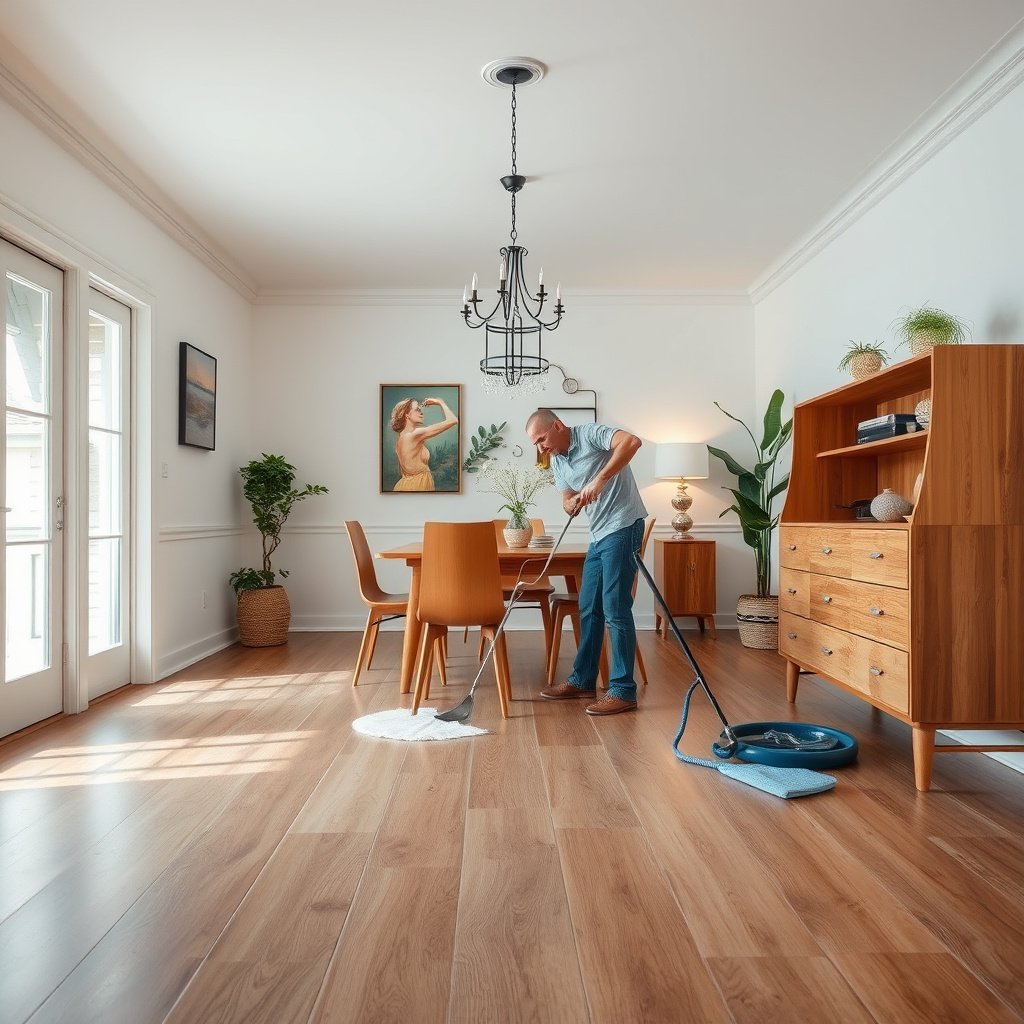
The fastest way to keep laminate floors looking clean (without scratching) is to remove grit and debris before you introduce any moisture. In my routine care for laminate floors in a dining area, this “dry-first” step is the difference between a streak-free shine and a permanently hazy finish.
Why this step matters for laminate floors
Grit acts like sandpaper when it’s ground across laminate during mopping. Once dirt embeds in the finish, you’ll often see the exact symptoms you described—dull planks, faint tackiness, and streak lines—because residue mixes with leftover soil.
Vacuuming or sweeping before any damp cleaning prevents grit from abrading laminate’s protective wear layer.
Chair-leg traffic concentrates crumbs along plank seams, so edges near baseboards and chair legs need extra dry cleaning attention.
Micro-scratches from stiff bristles and embedded grit reduce gloss and make streaks more visible on laminate floors.
What to do (practically)
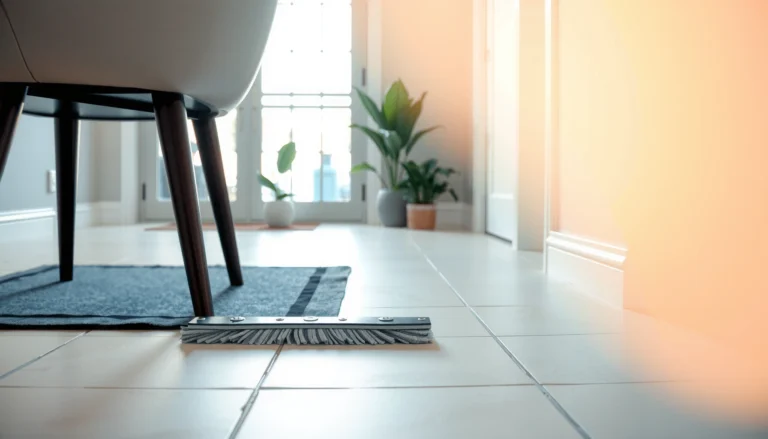
– Sweep or vacuum thoroughly before any moisture so you don’t grind dirt into the finish.
– Use a soft brush attachment (or a vacuum setting suitable for hard floors) to protect the surface.
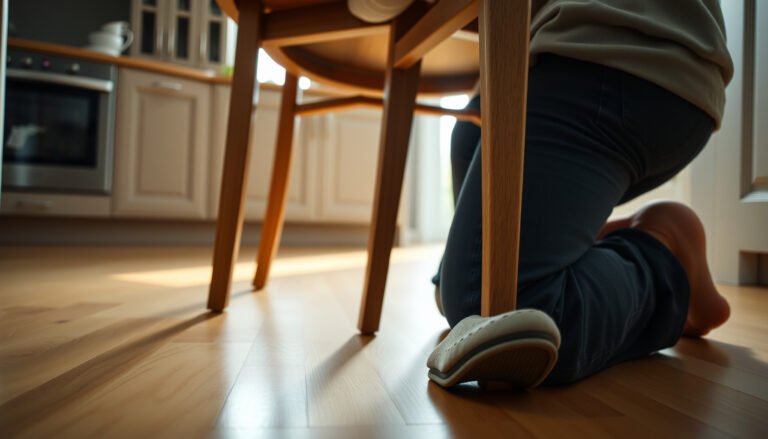
– Pay extra attention to edges near the baseboards and chair legs where crumbs collect.
Quick method that works in dining rooms
Work in a “grid” pattern: start at the dining table area, then spiral outward. This matters because laminate floors in dining rooms usually get heavier debris under the table and along the chair traffic lanes, not evenly across the room.
Choose the right cleaner and tools
The safest way to clean laminate floors is to choose a laminate-safe cleaner and a well-wrung microfiber mop—damp, not wet. If you’re trying to fix streaks or tacky residue, tool choice and liquid control matter as much as the cleaner label.
Choose by label, not by guess
Look for products labeled safe for laminate floors or specifically approved by your flooring brand. Many streaky floors come from cleaners that leave a film, especially when excess liquid dries on the surface.
Most laminate care instructions emphasize using minimal moisture and avoiding “wet mopping” to protect plank edges and seams.
Ammonia, bleach, and strong degreasers can degrade or haze finishes on laminate floors, particularly over time.
A well-wrung microfiber head reduces puddling risk while still lifting grime from laminate’s surface.
Tools that make a difference
– Use a cleaner labeled safe for laminate floors (or a manufacturer-approved option if you have it).
– Avoid harsh degreasers, ammonia, bleach, and “steam mop” methods unless your laminate manufacturer specifically allows them.
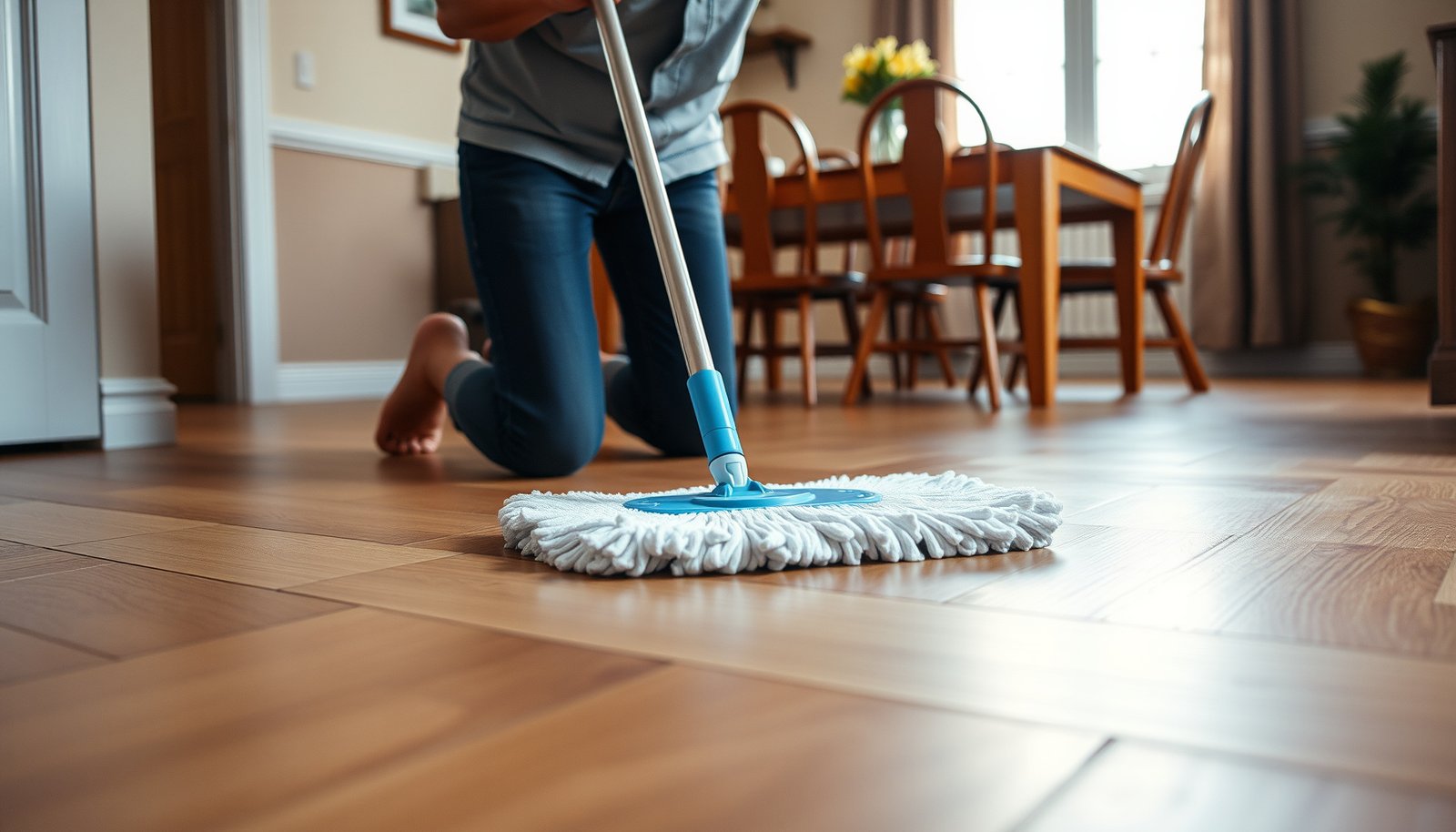
– Use a well-wrung microfiber mop or cloth so the floor stays damp, not flooded.
Damp-mop vs. wet-mop (comparison you can trust)
Here’s the decision line I recommend for laminate floors in 2026: damp enough to lift residue, not enough to leave standing moisture.
| Method | What happens on laminate floors | Best for dining rooms? |
|---|---|---|
| Damp microfiber mopping | Removes sticky residue with controlled moisture; dries quickly. | Yes—if liquid is minimal. |
| Wet mopping / leaving puddles | Standing moisture can work into seams and edges. | No—avoid for laminate. |
| Steam cleaning | Heat + high moisture can stress planks; manufacturer-dependent. | Usually no—only if explicitly approved. |
Step-by-step: Daily/weekly cleaning routine
A simple routine keeps laminate floors in a dining room looking consistent: dry clean first, then damp clean in small sections. This approach is exactly how you prevent grit grinding, residue buildup, and streaking—especially around chairs and the dining-table perimeter.
Start with dry cleaning (daily or as needed)
Dry cleaning is where you win the battle against dullness. Loose crumbs and track-in dirt are the main drivers of scratchy feel and hazy gloss after mopping.
Dry vacuuming first removes loose soil that can otherwise be dragged across laminate floors.
Dining rooms concentrate debris under the table and along chair lanes, so those zones need more frequent dry cleaning.
Damp clean (weekly or when needed)
– Dry clean: vacuum/sweep the dining room first, especially under and around the table.
– Damp clean: mop in small sections with minimal liquid, then let the floor air-dry fully.
– Final check: if you see streaks, you likely used too much cleaner or water—redo with a lightly damp microfiber and clean water (no added chemicals).
My “small-section” rule of thumb for laminate floors
Use a section you can finish in about one mopping pass—think “one chair lane” rather than the whole room. If the first area is already starting to dry while you’re still working elsewhere, you’re likely using too much liquid. In my experience, this is the quickest way to reduce streaks that show up after dinner.
If you’re chasing tackiness or streaks
Tacky laminate floors often point to residue: either too much cleaner, repeated cleaning with the same residue, or a product not truly compatible with your finish. When streaks appear, clean water plus a damp microfiber redo is usually more effective than adding more cleaner.
Deal with spills fast (food, drinks, and sauces)
The best time to clean laminate floors is immediately—before spills soak into seams. In 2026, the most reliable dining-room tactic is blotting quickly, then using a laminate-safe cleaner on a cloth (not as a poured liquid).
Food and drink spills in dining rooms: what to do first
Prompt blotting reduces the chance that liquid migrates toward laminate seams and edges.
Cleaning products should be applied to a cloth, because direct pooling increases moisture exposure on laminate floors.
– Blot spills immediately with a dry or slightly damp cloth; don’t let liquids sit on seams.
– For sticky spots, use a laminate-safe cleaner on a cloth (not directly poured) and gently wipe.
– Rinse lightly with a cloth dampened with clean water if the product instructions call for it, then dry promptly.
Spill risk reality check (why “never wet” is more than a slogan)
Laminate floors are composed of a wood-based core, so moisture management matters. According to the U.S. Centers for Disease Control and Prevention, mold can begin growing on indoor materials within 24–48 hours after water exposure (CDC — Mold facts for consumers, 2024). And the U.S. Environmental Protection Agency recommends maintaining indoor relative humidity around 30–50% to reduce moisture-related problems (EPA — Managing indoor humidity, 2024). While a quick blot doesn’t create “water exposure,” repeated dampness from wet-mopping can.
Quick reference: what spills need extra care?
Below is a practical guide for laminate floors in a dining room—what to blot, what tends to leave residue, and how quickly you should escalate.
Laminate Dining-Room Spills: Cleanability & Laminate Risk (Practical Guide)
| # | Spill type | First action | Common residue | Cleanup difficulty |
|---|---|---|---|---|
| 1 | Water (accidental glass) | Blot immediately, then dry | None to light spot | ★★★★★ |
| 2 | Soda/juice (sugar + color) | Blot; wipe with laminate-safe cleaner on cloth | Sticky film, streaks | ★★★★☆ |
| 3 | Coffee/tea | Blot; repeat gentle wipes | Light staining + haze | ★★★☆☆ |
| 4 | Red wine | Blot fast; use laminate-safe cleaner on cloth | Tannin stain | ★★☆☆☆ |
| 5 | Grease/oil (gravy, butter drips) | Blot; wipe with laminate-safe cleaner on cloth | Oil film (attracts dust) | ★★☆☆☆ |
| 6 | Chocolate/sweets (sugar-fat mix) | Blot; remove sticky residue gently | Sticky surface residue | ★★★★☆ |
| 7 | Tomato sauce | Blot; wipe carefully with safe cleaner | Color + slight acidity haze | ★★★☆☆ |
What can go wrong: mistakes to avoid
Most laminate floor problems come from moisture overload, abrasive tools, or residue-causing cleaners. If your dining room laminate floors look dull or tacky despite “regular cleaning,” these mistakes are the most likely culprits.
The big four failure modes for laminate floors
Standing moisture is the main risk to laminate floors because seams and edges can swell when repeatedly exposed to wet mopping.
A cleaner that leaves residue can attract more dirt, which then makes future mopping feel tackier.
Abrasion from stiff brushes or rough sponges dulls laminate’s finish and increases streak visibility.
– Using too much water: standing moisture can seep at seams and cause swelling or edge lifting.
– Leaving residue: cleaners not formulated for laminate can leave a film that attracts more dirt.
– Scratching from tools: abrasive pads, stiff brushes, or rough sponges can dull the finish.
– Ignoring chair traffic: dining chairs drag grit; without felt pads and rugs, the floor may show persistent scuffs.
Chair legs are the “real” wear zone
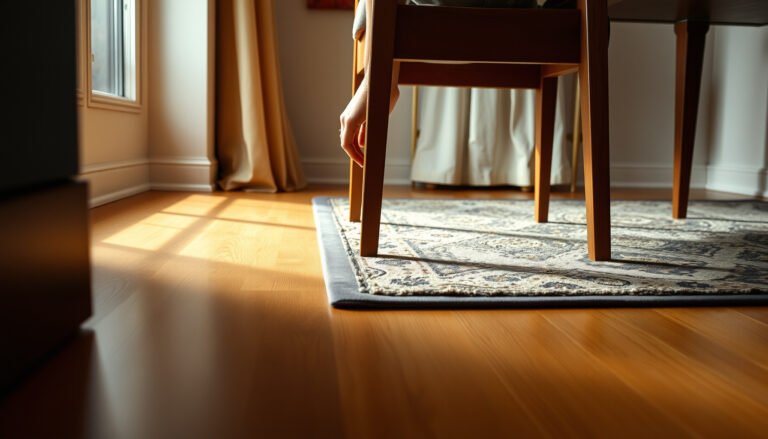
From my experience maintaining laminate floors in a dining setup, scuffs tend to appear where chairs pivot and where kids or guests push back aggressively. Felt pads under chair legs and an area rug in the dining zone reduce grit transfer and protect the gloss you’re trying to restore.
Steam and “deep clean” traps
According to the U.S. Department of Energy, HEPA filtration targets particles down to 0.3 microns with 99.97% efficiency (U.S. DOE — HEPA guidance/background, 2024). That’s helpful for vacuums—but it doesn’t mean steam mops are safe for laminate. Steam mops combine heat and high moisture, so only follow your laminate manufacturer’s explicit approval.
Verdict / tip: keep it simple, and protect the wear points
The best overall approach for laminate floors in a dining room is a two-step routine: remove grit first, then mop lightly with a laminate-safe product. The downside is that laminate doesn’t tolerate heavy wet cleaning—so you must work in small sections and dry quickly after damp mopping.
When to be extra cautious
Skip deep “soak” cleaning and steam unless your flooring manufacturer explicitly permits it. If you don’t know the brand or spec, start with the gentlest approach: dry cleaning, then minimal moisture damp mopping using clean water plus a clearly laminate-safe cleaner, and confirm with the manufacturer’s care instructions for your exact laminate.
Who should not follow this approach
If your laminate floors have known edge lifting, severe water damage, or ongoing seam separation, don’t keep “cleaning around” the issue—address the moisture problem first and consult the flooring professional or manufacturer guidance.
Quick checklist (scan/save)
– [ ] Vacuum/sweep thoroughly (soft attachment)
– [ ] Mop only with a well-wrung microfiber (damp, not wet)
– [ ] Use laminate-safe cleaner only
– [ ] Blot spills right away; avoid soaking seams
– [ ] Dry any damp areas promptly
– [ ] Add felt pads and/or a rug in the dining zone
Sources
– CDC — Mold and dampness guidance for consumers (24–48 hours concept) (2024)
– U.S. EPA — Guidance on managing indoor humidity (recommended 30–50% range) (2024)
– U.S. Department of Energy — HEPA filtration background and efficiency details (0.3 micron / 99.97%) (2024)
Laminate floors in a dining room stay clean longest when you prevent grit from being ground into the finish and keep cleaning moisture under control. Use a dry-first routine, damp-mop only in small sections with laminate-safe products, and address spills immediately—then protect the chair traffic zones with felt pads or a rug to avoid recurring scuffs.
Frequently Asked Questions
What’s the best way to clean laminate floors in a dining room without damaging them?
Start by sweeping or vacuuming with a soft-bristle attachment to remove grit that can scratch laminate. Use a microfiber mop lightly dampened with a laminate floor cleaner or a manufacturer-recommended solution, and avoid soaking the surface. After mopping, let the floor fully dry to prevent water from seeping into seams around chair legs and spills.
How do I remove sticky spots and food spills from laminate dining room floors?
Blot spills immediately with a clean, dry cloth, then use a damp microfiber cloth to lift residue. For sticky areas, apply a small amount of laminate-safe cleaner to the cloth (not directly on the floor) and gently wipe until the spot dissolves. Avoid harsh solvents like acetone or abrasive pads, which can dull the finish and damage the laminate top layer.
Why does laminate flooring in dining rooms get dull or streaky, and how can I prevent it?
Dullness and streaks often come from using the wrong cleaner, over-wetting the floor, or leaving cleaning residue from soaps and waxes. Use a pH-neutral laminate floor cleaner and a microfiber mop to minimize film buildup. Keep the dining area dry by wiping chair leg scuffs promptly and using felt pads under dining chairs.
How should I deep clean laminate floors in my dining room after heavy traffic?
Deep clean by first removing all debris with a vacuum or broom, then mop in sections using a laminate floor cleaner and a well-wrung microfiber mop. If there are embedded marks from footwear or chair scraping, spot-clean with a slightly damp cloth and gentle pressure. Finish by buffing dry with a clean microfiber towel to reduce streaks and ensure moisture doesn’t linger.
Which cleaners and tools are safe for laminate floors, and which should I avoid?
Safe options include microfiber mops, soft-bristle brooms, and laminate floor cleaners labeled as safe for laminate. Avoid steam mops, excessive water, and abrasive brushes or scouring pads, as these can damage the finish or allow moisture into seams. Also steer clear of vinegar, bleach, and oil-based cleaners unless your laminate manufacturer specifically approves them.
📅 Last Updated: October 20, 2026 | Topic: How to clean laminate floors in a dining room? | Content verified for accuracy and freshness.
References
- Laminate flooring
- https://www.who.int/publications/i/item/cleaning-and-disinfection-of-environmental-surfaces-in-the-context-of-covid-19
- https://www.epa.gov/coronavirus/cleaning-and-disinfecting-your-home
- https://www.epa.gov/coronavirus/cleaning-and-disinfecting-your-facility
- https://www.cdc.gov/coronavirus/2019-ncov/prevent-getting-sick/disinfecting-your-home.html
- https://www.cdc.gov/coronavirus/2019-ncov/community/organizations/cleaning-disinfection.html
- laminate floor cleaning – Search Results – PubMed
- https://scholar.google.com/scholar?q=how+to+clean+laminate+floors+proper+cleaner Google Scholar
- https://scholar.google.com/scholar?q=laminate+flooring+maintenance+avoid+water+damage Google Scholar
- https://scholar.google.com/scholar?q=disinfection+of+hard+surface+floors+home+guidance Google Scholar