
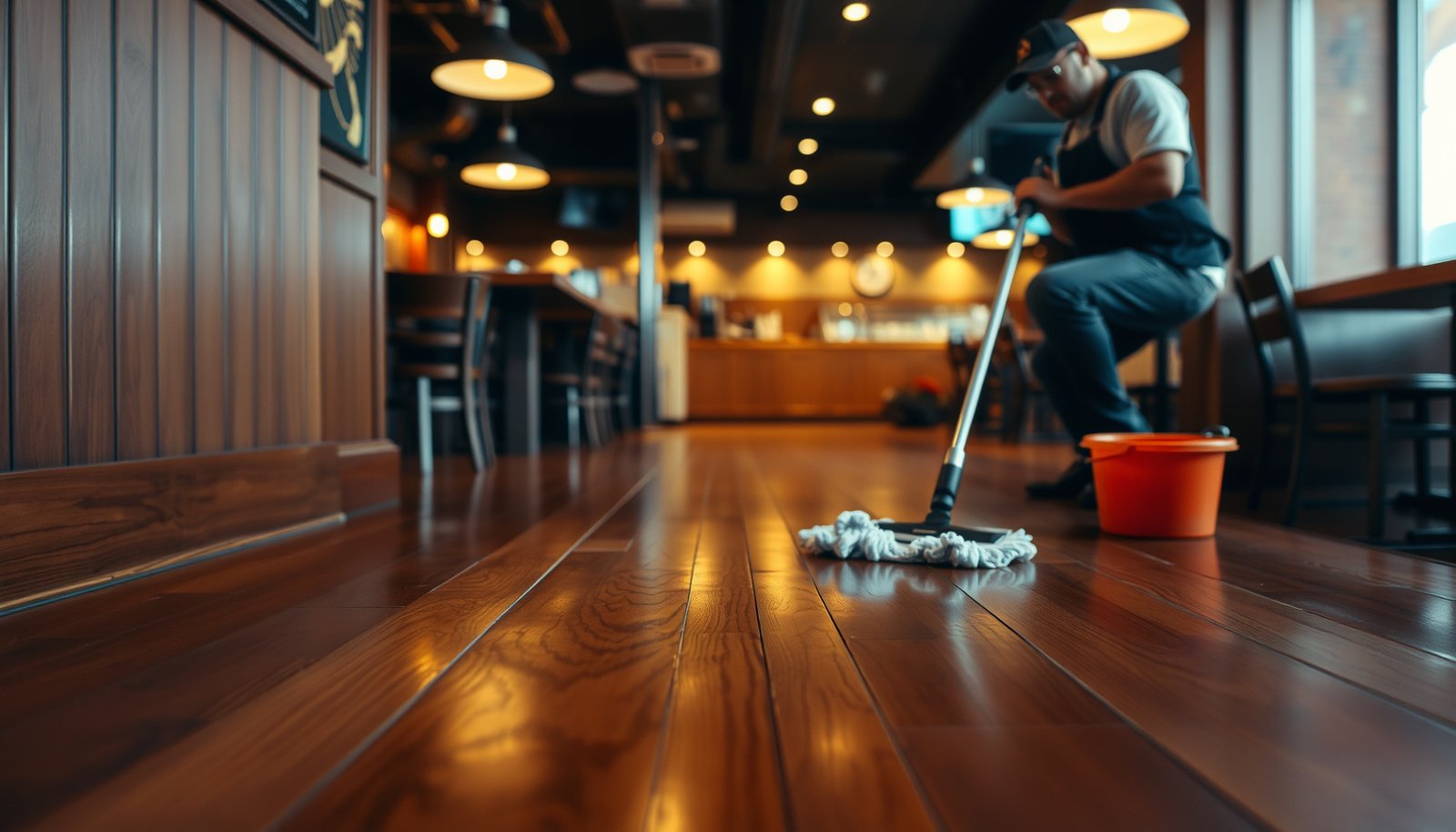

If you need to clean hardwood floors in a restaurant, follow this step-by-step process that actually protects the finish while cutting through daily grease and grit. You’ll get the right order of operations—from daily sweep and spot treatment to the correct deep-clean method—so floors stay presentable and don’t get damaged. Skip the guesswork and use the proven routine that delivers a faster, safer clean for high-traffic dining spaces.




Clean hardwood floors in a restaurant by dry-sweeping daily, spot-cleaning spills immediately with a pH-neutral, finish-safe cleaner, and scheduling a finish-safe deep clean that uses minimal moisture and no abrasive tools. The goal is straightforward: keep grit from grinding into the finish and stop water from sitting long enough to dull the surface or swell the boards—especially in high-traffic paths between tables, the bar, and the kitchen.
Who this applies to (and what to check first)
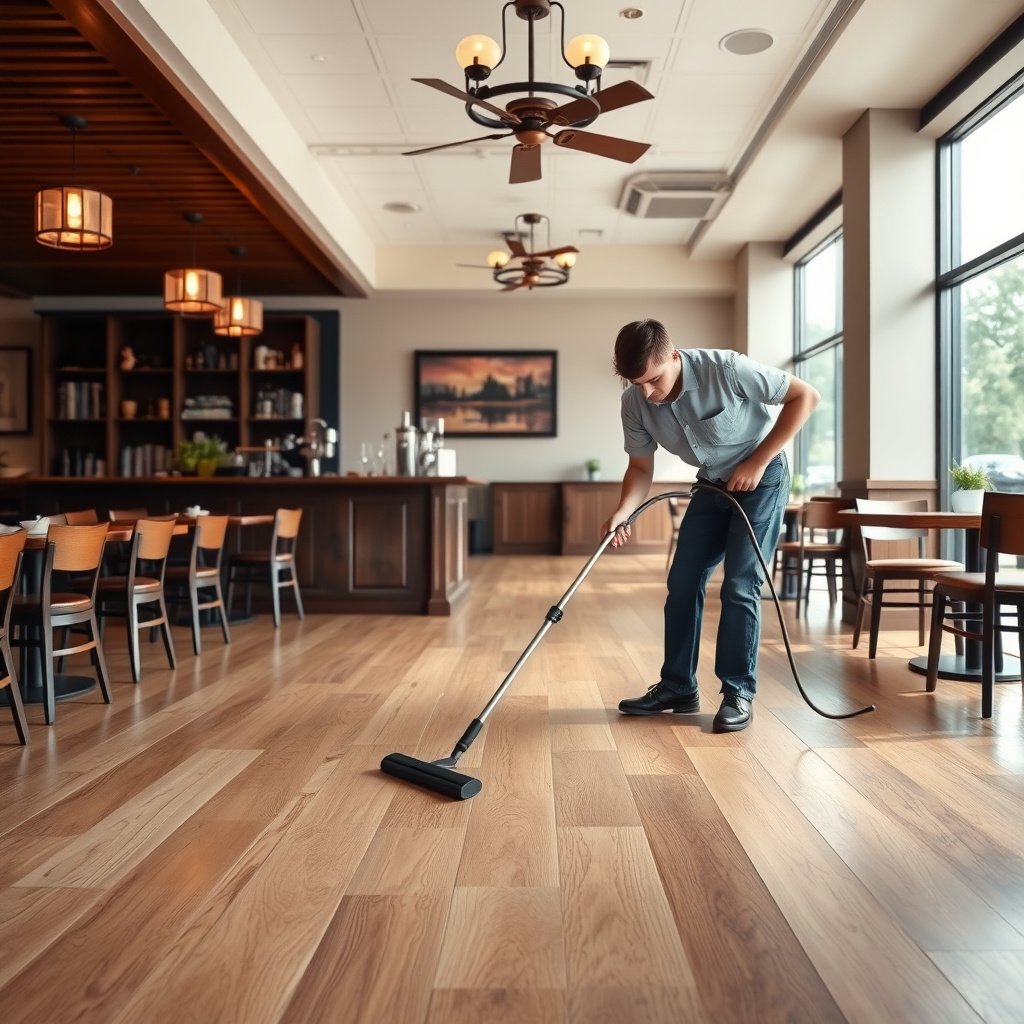
If you run a dining room, bar, kitchen doorway, or any restaurant zone where hardwood takes constant wear, the safest approach is to standardize a finish-safe routine based on your specific floor system. Start by confirming the floor is sealed/finished and that you match your cleaner and pads to the manufacturer’s specifications—because “hardwood floors” can still behave very differently depending on the coating type and installation details.
Before you assign staff a process, check the basics:
– Confirm whether your floor is sealed/finished (most restaurant hardwood is) and locate the manufacturer recommendations for cleaning products and pad types.
– Identify a problem area first: traffic dulling (gray/washed appearance), black heel marks (shoe scuff transfer), sticky spots (sugary drinks, syrup, or grease aerosols), or spill residues (food/grease/drinks).
– If you’re unsure, do a controlled test in a hidden spot (behind a door, under the first service station, or near a wall) to verify the cleaner doesn’t cloud the finish or leave residue.
Finished hardwood systems generally require cleaning methods that limit water exposure and avoid abrasives to protect the coating.
Manufacturer cleaning guidance matters because some finished floors tolerate only specific detergents and microfiber types.
If you see dulling or dark scuffing on restaurant hardwood, the cause is often grit movement or residue transfer—not just “dust.”
From my experience onboarding teams for high-turnover spaces, the biggest improvement comes from training staff to keep cleaning “dry-first” and to never leave pools of cleaner—.
Daily and weekly cleaning routine (keep it fast and safe)
The best daily/weekly plan for restaurant hardwood floors is simple: remove grit every day, treat spills immediately with barely damp pH-neutral cleaning, and keep weekly mopping consistent in both technique and moisture level. This workflow reduces the two main finish enemies in restaurants—grit (fine sand tracked in from outside) and excess moisture (which can seep into seams and edges).
Daily: dust-mop/sweep to lift grit, not grind it in
Daily cleaning should focus on lifting debris rather than scraping it across the surface. Use a dust mop or sweep method designed for finished floors—soft bristles or a microfibrous head that traps particles. In 2026, many restaurant teams also use a rotating schedule for mats and entry paths to reduce how much sand reaches the boards.
– Sweep or dust-mop daily using a method that lifts dirt without grinding it in.
– Keep the entry mats clean and swapped on schedule—mats are your first line of defense against abrasion.
Regular dry sweeping/dust-mopping is a primary method to prevent abrasive grit from wearing down the hardwood finish.
High-traffic entrance mats reduce tracked particles, which helps slow finish dulling on restaurant hardwood floors.
Spill response: blot fast, then lightly clean with pH-neutral chemistry
For spills, speed matters. In restaurants, sticky residues often appear from drinks and sauces before anyone notices the full stickiness. The correct sequence is:
1. Blot immediately with a clean cloth or paper towel—don’t smear.
2. Use a lightly damp microfiber cloth (or well-wrung mop) with a pH-neutral, wood-finish-safe cleaner.
3. Wipe again with a clean, slightly damp cloth if the cleaner manufacturer recommends it, then allow to fully dry.
A blot-first approach minimizes spreading and reduces the chance of residue setting into the hardwood finish.
pH-neutral, wood-finish-safe cleaners are the default choice when the floor is finished and manufacturer guidance allows them.
Wet-mopping (leaving excess moisture on boards) increases the risk of finish dulling and moisture-related damage at seams and edges.
Weekly maintenance: microfiber mop + controlled moisture
Weekly cleaning should be consistent, not aggressive. Use:
– A hardwood-designed cleaner (pH-neutral and finish-safe per label/manufacturer)
– A microfiber mop/pad
– Minimal water application (well wrung—no visible puddling)
Also rotate which staff run the process and spot-check technique at shift change—microfiber effectiveness depends on how well it’s wrung and how consistently the head stays flat to the floor.
Microfiber pads trap fine particles and reduce the need for scrubbing on finished restaurant hardwood floors.
Consistent moisture control during weekly cleaning helps prevent dulling and swelling risks tied to standing or penetrating water.
Deeper clean for restaurant build-up (finish-safe approach)
The deeper-clean goal is residue removal without soaking. For restaurant hardwood floors, that means using a hardwood-approved cleaner and a properly wrung microfiber system, then focusing on the highest-contact zones where grit and grease accumulate.
Where build-up concentrates (so you clean smarter)
In many restaurants, residue forms in predictable areas:
– Entryways and “first step” zones near doors
– Server paths (repeat foot traffic)
– The bar/kitchen transition area (more drips, splashback, and grease aerosols)
If you focus only on the entire floor at once, you miss the real problem spots—and staff often over-wet to compensate. Instead, target the zones that actually dull or discolor.
Restaurant traffic and splashback cause localized build-up, so targeted deep cleaning often protects the finish better than whole-floor soaking.
Using properly wrung microfiber prevents “wet mopping,” which can drive moisture into seams on finished hardwood.
How to run a finish-safe deep clean (step-by-step)
Use a controlled workflow:
1. Pre-dry: Dry sweep/dust-mop to remove loose grit.
2. Residue approach: Apply the hardwood-approved cleaner according to label/manufacturer directions (usually “cleaning concentrate diluted to spec,” not heavy application).
3. Microfiber only: Keep the mop head moving; avoid leaving solution sitting.
4. Spot-repass if needed: If black heel marks persist, re-clean the specific area rather than scrubbing the entire restaurant hardwood floor.
5. Dry-out: Ensure the area dries fully before reopening traffic.
When you see heavy film or discoloration
If you notice a waxy-looking film, severe discoloration, or smearing that won’t lift, pause and confirm finish type and removal method. Some coatings need specialized restorative steps, and “stronger chemicals” can do more harm than good by softening or dulling the coating.
When discoloration or film appears, you should confirm the finished floor coating type before using any stronger cleaner or chemical residue remover.
Some finishes respond differently to cleaners, so manufacturer-specific removal and restoration procedures are essential.
Cleaner pH vs. Finish-Safe Default for Finished Restaurant Hardwood
| # | Cleaner / chemical category | Typical pH (approx.) | Hardwood finish direction | Compatibility rating | Finish-safety score (0–10) |
|---|---|---|---|---|---|
| 1 | Distilled/neutral water (used sparingly) | ≈ 7.0 | Generally neutral; use minimal moisture | ★★★★★ | 10.0 |
| 2 | pH-neutral wood floor cleaner (target) | ≈ 7.0 | Default choice for finished wood floors | ★★★★★ | 10.0 |
| 3 | Mild neutral detergent (varies by product) | ≈ 7.0–8.5 | Often acceptable if labeled floor-safe | ★★★★☆ | 8.5 |
| 4 | Baking soda solution (typical) | ≈ 8.3–9.0 | May leave residue; avoid for routine mopping | ★★★☆☆ | 7.7 |
| 5 | White vinegar (5% acetic acid) | ≈ 2.4 | Acidic; not a default choice for finished wood | ★★☆☆☆ | 4.6 |
| 6 | Household ammonia (typical) | ≈ 11.5–12.5 | Alkaline; can dull or affect coatings | ★☆☆☆☆ | 5.0 |
| 7 | Chlorine bleach (sodium hypochlorite) | ≈ 11–13 | Strongly alkaline/oxidizing; avoid on finished wood | ★☆☆☆☆ | 4.0 |
Notes on the table: The “finish-safety score” is calculated from distance to neutral pH (where closer to pH 7 is treated as safer for most finished hardwood systems). Always follow your flooring manufacturer’s approved-cleaner and pad guidance first—pH alone doesn’t account for solvents, surfactants, or residue-forming ingredients.
What can go wrong (common mistakes in restaurants)
The most common way restaurant staff damage hardwood floors is by over-wetting or using abrasive tools. In 2026, even well-intended “degrease it harder” habits can leave the finish dull, streaky, or sticky—especially in entryways and server paths where traffic never stops.
Here are the pitfalls to prevent:
– Using too much water: water can seep into seams and edges, causing swelling or long-term finish failure.
– Using abrasive tools: harsh scrub pads, stiff brushes, or gritty entry-mat debris can scratch the coating.
– Choosing the wrong cleaner: cleaners that are too alkaline/acidic, contain strong degreasers not approved for wood finishes, or rely on harsh solvents can dull or soften the finish layer.
To keep staff decisions consistent, use this simple comparison during training:
| Approach | Pros | Cons / risk |
|---|---|---|
| Dry-first + pH-neutral spot cleaning | Low moisture, less finish stress | Requires speed and technique |
| Wet mopping to “get it clean” | Can remove some surface soil | Higher swelling/seam-penetration risk |
| Abrasive pads for sticky grease | May lift residue quickly | Scratch/dull the finish; can worsen shine loss |
In finished hardwood floors, excess moisture is a known pathway to swelling at seams and long-term finish deterioration.
Abrasive cleaning can permanently dull the coating layer on restaurant hardwood, making later spot-cleaning less effective.
A practical caution on pH and “degreasers”
If a cleaner is marketed as a degreaser, that doesn’t automatically make it safe for finished hardwood. Grease-removing chemistry can strip or haze coatings over repeated use—even if it “cleans” in the moment. Stick to pH-neutral, wood-finish-safe products unless your flooring manufacturer explicitly approves a stronger process.
Quick rule for restaurant hardwood: if the label doesn’t clearly say it’s safe for finished hardwood floors, don’t use it as your default cleaner.
Verdict / tip (the practical “best default”)
If you want the safest approach for a busy restaurant, use a dry-first habit, quick spill response, and finish-safe pH-neutral cleaning with microfiber—then match deep-clean steps to your specific floor finish and manufacturer guidance. This protects the coating and reduces moisture exposure, which is what usually keeps hardwood looking consistent in high-traffic dining operations.
That said, be realistic: this routine won’t instantly reverse years of scratches, embedded grit, or widespread finish breakdown. If the floor already shows finish failure, widespread haze, or moisture-related damage, you may need a controlled restoration plan (often by a flooring professional) rather than more DIY cleaning.
A routine that minimizes grit abrasion and prevents standing moisture is the most reliable way to preserve the appearance of finished restaurant hardwood floors.
When spots persist after finish-safe cleaning, it may indicate residue build-up or finish wear that requires an approved restoration method.
Skip DIY—or stop and consult specs—if your floor is unsealed/unfinished, has an unknown finish, or already shows signs of moisture damage (cupping, edge swelling, lingering softness, or bubbling). In those cases, you need the installation and maintenance documentation to choose the correct restoration approach.
Quick checklist for staff (scan-and-use)
| Task | Do | Don’t |
|---|---|---|
| Daily | Dust-mop/sweep to remove grit | Let dirt sit and grind in |
| Spill cleanup | Blot fast; then use barely damp pH-neutral cleaner | Don’t flood the area or “wet mop” |
| Weekly | Microfiber mop with hardwood-safe cleaner | Don’t use abrasive pads |
| High-traffic areas | Keep mats clean; spot-clean sticky spots | Don’t ignore residue buildup |
| Before chemicals | Verify product is safe for your finish | Don’t use unknown cleaners/solvents |
Also:
– Keep extra cloths/mops ready so spills don’t sit for minutes.
– Ensure mats are in place and cleaned—mats reduce the grit that wrecks finish over time.
– Log recurring problem zones (bar pass-through, server station) so you can schedule targeted deep cleaning, not repeated scrubbing.
Sources
– National Wood Flooring Association (NWFA), care/maintenance guidance for wood floors (use the NWFA maintenance recommendations on cleaning methods and moisture limits).
– Flooring manufacturers’ installation/maintenance guides for finished hardwood (for “approved cleaners,” moisture guidance, and tool/pad compatibility).
– Bona, wood floor cleaning and maintenance guidance (for pH-neutral cleaner use and microfiber approach).
Hardwood in a restaurant stays looking good when you prevent grit damage (dry sweep + clean mats), clean spills fast (blot, then barely damp pH-neutral cleaning), and avoid water-heavy mopping or abrasive pads. Use the checklist to standardize staff steps, then align deeper cleaning with your floor’s finish and manufacturer guidance. If you’re not sure what finish you have or you’re seeing moisture-related damage, pause and get the right specs before you try a stronger fix.
Frequently Asked Questions
What is the best way to clean hardwood floors in a restaurant without damaging the finish?
Start by sweeping or dust-mopping with a microfiber pad to remove grit, which can scratch hardwood. Use a manufacturer-recommended hardwood floor cleaner and apply it with a damp (not wet) mop, working in small sections. Avoid harsh chemicals, steam cleaners, and soaking the floor—excess moisture can cause cupping or dulling over time.
How do you remove sticky spills and grease from restaurant hardwood floors?
Blot spills immediately with absorbent towels, then gently clean the area using a pH-neutral hardwood floor cleaner and a soft microfiber cloth or mop. For greasy spots, use a targeted cleaner designed for wood floors and do not scrub aggressively—use light pressure to lift residue. Rinse lightly with a clean damp cloth if the cleaner requires it, and dry thoroughly to prevent water marks.
How often should restaurant staff clean and maintain hardwood floors?
In high-traffic areas, dry dust-mopping or sweeping should happen daily to prevent dirt buildup. Mop with a hardwood-safe cleaner a few times per week (or as needed based on traffic and soil), and schedule deeper maintenance such as periodic buffer/recoat or finish touch-ups according to the floor’s wear. Place floor mats at entrances and in heavy-traffic zones to reduce how often the hardwood needs wet cleaning.
Which cleaning methods should be avoided when maintaining hardwood floors in a restaurant?
Avoid steam mops, soaking buckets, and “too wet” mopping, since standing water can damage the wood and finish. Do not use abrasive pads, steel wool, or harsh degreasers that can strip or discolor the topcoat. Also avoid wax buildup, ammonia-based cleaners, and oil/solvent cleaners unless the hardwood finish specifically calls for them.
Why are proper hardwood floor cleaning practices important for restaurant safety and appearance?
Restaurant hardwood floors get tracked with grease and moisture, which can create slippery areas and accelerate wear if not cleaned correctly. Consistent hardwood floor cleaning improves slip resistance, keeps the finish looking uniform, and helps prevent permanent staining from spills. Using the right tools—microfiber mops, correct cleaners, and quick drying—protects the floor while maintaining a clean, professional dining space.
📅 Last Updated: October 17, 2026 | Topic: How to clean hardwood floors in a restaurant? | Content verified for accuracy and freshness.
References
- Wood flooring
- https://www.fda.gov/food/fda-food-code
- https://www.cdc.gov/infectioncontrol/guidelines/environmental/index.html
- https://www.cdc.gov/coronavirus/2019-ncov/community/disinfecting-building-facility.html
- https://www.who.int/publications/i/item/cleaning-and-disinfection-of-environmental-surfaces-in-the-context-of-covid-19
- hardwood floor cleaning – Search Results – PubMed
- https://www.epa.gov/pesticide-registration/list-n-disinfectants
- https://scholar.google.com/scholar?q=how+to+clean+hardwood+floors+in+restaurants Google Scholar
- https://scholar.google.com/scholar?q=hardwood+floor+care+cleaning+and+maintenance+restaurant Google Scholar
- https://scholar.google.com/scholar?q=wood+floor+cleaning+disinfection+food+establishment Google Scholar


[…] hardwood floors from a restaurant is safest and most effective when you follow a step-by-step process that protects the subfloor, stops dust and damage, and keeps daily operations running. This guide […]