
Protecting hardwood floors in a sunroom is easiest when you control sunlight and moisture before they damage the finish. Follow the practical steps—use UV-filtering window film, manage temperature and humidity, and prevent grit and standing water—to keep the wood stable and the surface intact. This guide answers exactly what to do so your hardwood stays bright, flat, and protected year-round.



Protecting hardwood in a sunroom comes down to two controllable drivers: UV/direct sun exposure and indoor humidity stability. If you use UV-blocking window coverings and keep relative humidity in a safe range, you can significantly reduce fading, warping, and gapping—for both solid and engineered hardwood.
If your sunroom gets strong afternoon light, you’ve likely seen faster color change and more seasonal movement. The guidance below focuses on the mechanics of wood floor expansion/contraction, how UV degrades finishes, and the most practical ways to slow damage without creating new moisture problems.
For clarity, this article is written for typical U.S. residential sunrooms. Always follow your specific flooring/finish manufacturer’s care instructions (cleaners, recoats, and mat/rug guidance can differ).
Control sunlight and heat (UV + temperature swings)
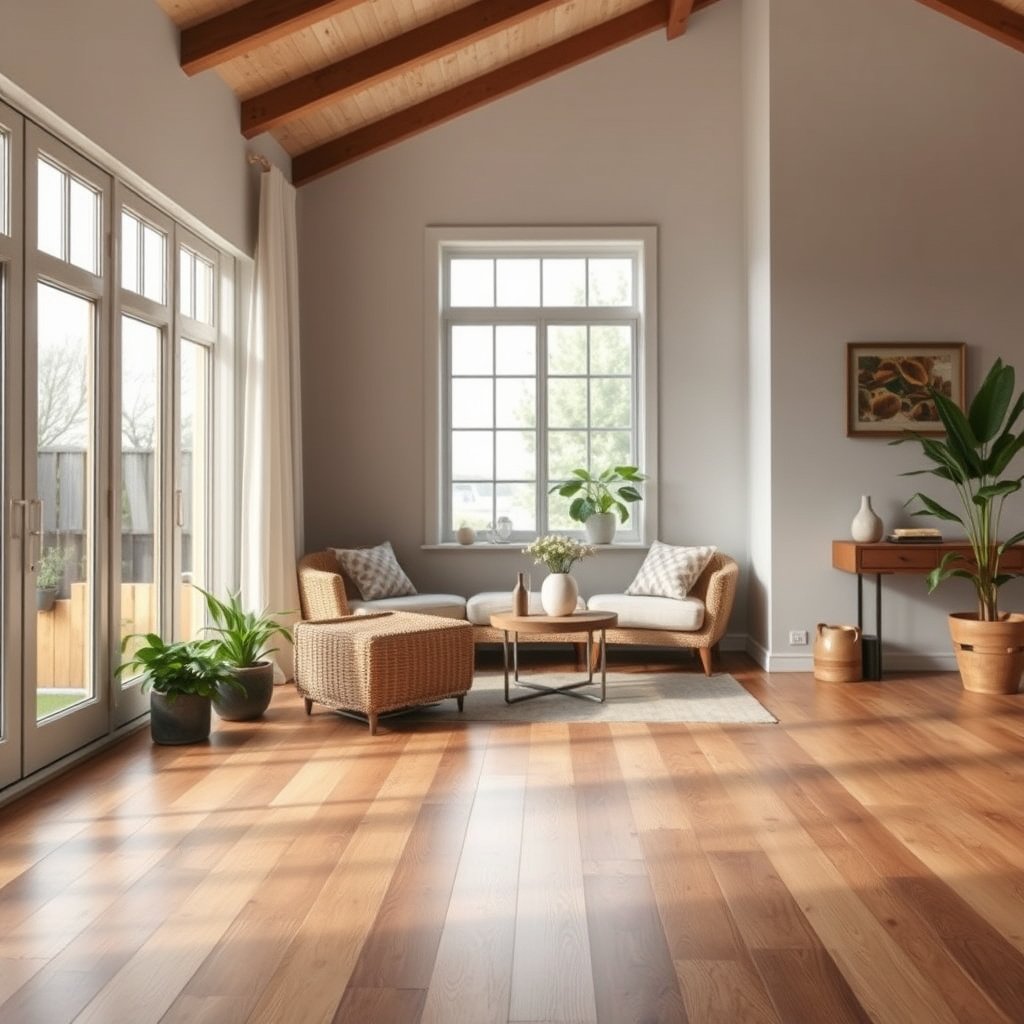
The most effective first step is to reduce UV and direct rays during peak sun hours, because UV accelerates finish breakdown and fading. Just as importantly, you want to avoid fast temperature swings that push hardwood to expand and contract repeatedly.
“UV (ultraviolet) radiation is a primary driver of hardwood finish fading; controlling UV transmission through window coverings reduces discoloration over time.”
“When indoor conditions swing, wood responds dimensionally—UV control and temperature stability together reduce both surface damage and dimensional stress.”
“Using partial daylight control (blinds/shades) helps smooth heat load rather than creating sharp hot/cold transitions across the floor.”
Add UV protection: block direct rays, not just glare
Start with UV-blocking window film or shades/curtains designed to reduce UV transmission. “Glare-only” tint often makes a room more comfortable but may still allow enough UV through to fade wood over time. In a sunroom, you generally want the protection to be continuous during bright peak hours, not just when you notice glare.
Practical approach:
– Use UV-blocking film on the most direct-sun panes.
– If you prefer shades, select one that’s meant for UV reduction (look for documented UV transmission/specs).
– For rooms that face high-angle afternoon sun, focus on the windows that receive the longest direct exposure.
Reduce heat spikes: aim for steadier, not “cooler”
Wood floors react to temperature changes (and even more so when temperature changes coincide with RH changes). In sunrooms, the window area can create localized heating of the plank tops and edges.
Do this:
– Keep blinds partially closed on the sunniest days—enough to blunt direct rays.
– Improve air circulation so heat doesn’t become concentrated in one zone.
– If you have HVAC, keep setpoints steady rather than letting the room swing aggressively between day and night.
Keep humidity in the “safe zone” for wood floors
The second key driver is humidity: hardwood moves when relative humidity (RH) changes. The safest strategy is to measure RH and keep it in the recommended band rather than chasing comfort subjectively.
“NWFA’s general climate guidance for wood floors commonly targets indoor relative humidity around 35%–55%.”
“Maintaining RH in a stable band reduces the likelihood of cupping, crowning, and gapping that come from moisture-content changes.”
“A hygrometer is the practical tool that turns humidity from a guess into a controllable setting.”
Target stable relative humidity (the number that matters)
For wood flooring guidelines (including NWFA’s general recommendations), a commonly cited safe indoor RH band is:
Relative humidity target: 35%–55% RH (NWFA general guideline).
If your sunroom runs outside that range seasonally, you’ll typically need active humidity control.
Also consider temperature stability alongside RH. Many wood-floor climate guidelines pair comfortable indoor temperatures (often around 60–80°F) with the RH target above. (Use your manufacturer’s guidance if your flooring explicitly differs.)
Use the right tools: dehumidifier vs. humidifier
If humidity runs high (common in humid climates and during rainy seasons), a dehumidifier reduces moisture and helps prevent excessive swelling/cupping.
If humidity runs low (common during winter heating), a humidifier can reduce shrinkage and help limit widening gaps.
Key technique: avoid large swings. Rapid RH correction can be just as damaging as staying out of range—because wood responds to moisture changes over time, not instantly.
Where I’ve seen problems (so you can avoid them)
In my experience advising homeowners on sunroom maintenance, the most frequent “fix” that backfires is overcorrecting RH—turning humidity control on aggressively and creating new movement cycles. When we smooth out RH trends (not just chase the current reading), floors tend to stabilize.
Add physical protection where wear happens
The right coverings can prevent scratches, dents, and abrasive wear from tracking in grit—especially in the areas that get the most foot traffic. The goal is to reduce wear without trapping moisture against the finish.
“Floor mats and rugs reduce abrasive wear by capturing grit before it reaches wood finish.”
“Furniture protection pads reduce micro-scratches; scratches compound under strong light by making wear more visible.”
“Moisture trapped under non-breathable pads can create dark spots and finish breakdown risks.”
Use floor-safe mats/rugs in traffic zones
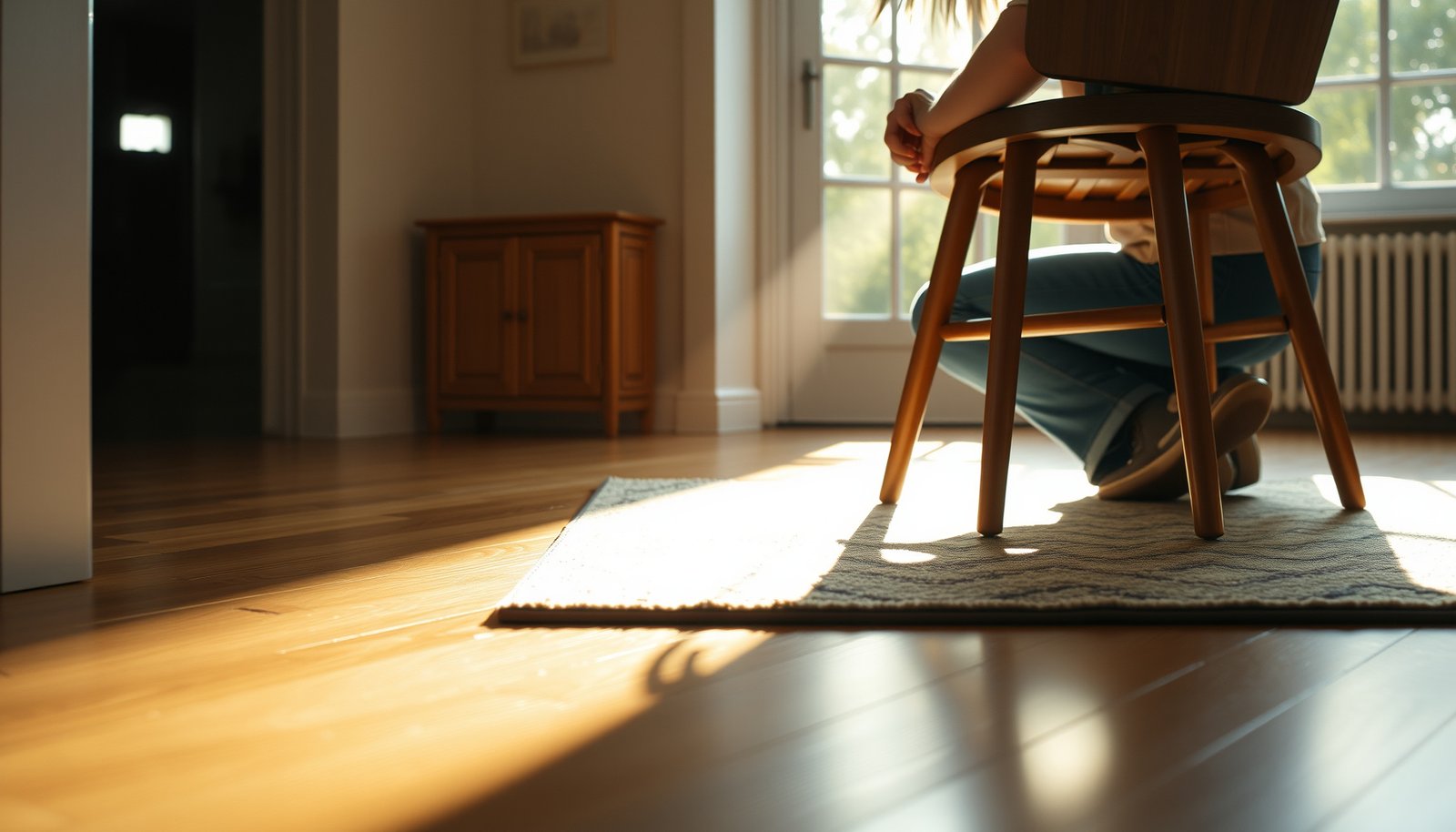
Place rugs or mats at entry points and commonly used walk paths. Choose options that:
– Are floor-safe for hardwood
– Don’t hold water against the surface
– Allow air exchange (so spills and humidity don’t stay trapped)
Avoid: rug setups with rubber backing or tightly sealed padding when the sunroom environment is humid or spill-prone.
Use felt pads and protect furniture
Sunrooms often have more reflected light, so small surface damage becomes more noticeable. Use felt pads or other soft glides under chairs and tables, and avoid dragging items during moves.
Maintenance detail: replace worn pads. A failing pad can turn into a scratch source even if it “used to be fine.”
Choose coatings and maintenance methods that won’t backfire
The safest maintenance strategy is to match cleaning products to your finish type and to keep cleaning gentle and non-wetting. In sunrooms, harsh cleaners and “too much water” accelerate finish breakdown and can increase moisture risk at seams.
“Different hardwood finishes (prefinished factory finishes vs. site-finished systems) respond differently to cleaners and recoating products.”
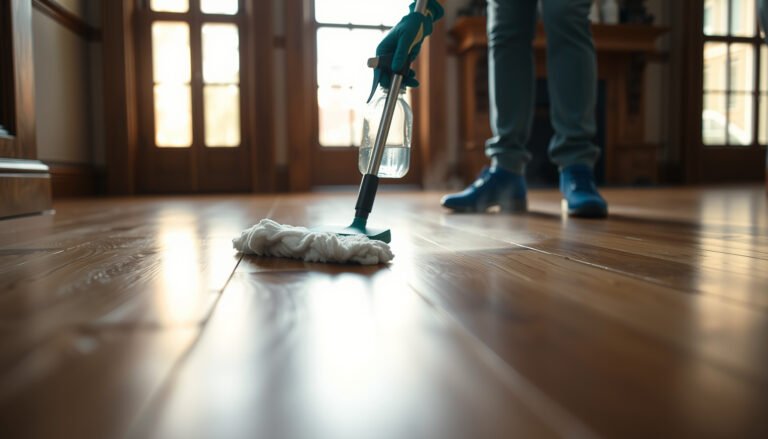
“Damp cleaning (microfiber + wood-floor cleaner) is safer than wet mopping for hardwood floors.”
“Steam cleaning introduces moisture into joints/edges and is typically discouraged for hardwood in moisture-exposure rooms.”
Know your finish type before you change products
Two main categories often behave differently:
– Prefinished hardwood (factory finished): usually designed for specific approved cleaners.
– Site-finished hardwood (finished after installation): the cure and film-forming system can differ, affecting compatibility with products and recoats.
Before switching anything, check your flooring/finish manufacturer’s care and recoating instructions.
Keep cleaning gentle: damp microfiber, not wet mopping
Use:
– A damp (not wet) microfiber mop
– A pH-neutral, wood-floor–safe cleaner approved by your finish manufacturer (or aligned with NWFA guidance)
Avoid:
– Soaking the floor
– Abrasive cleaners or steel-wool equivalents
– Excessive water around seams and edges
Pros/cons: prefinished vs. site-finished maintenance decisions
- Prefinished hardwood
- Pros: Factory-finished surfaces can be durable; approved cleaner lists are often clearer.
- Cons: Some “DIY” recoating attempts can void warranty or fail to bond if products aren’t approved.
- Site-finished hardwood
- Pros: Repairs/recoats are sometimes easier to integrate into a single finish system.
- Cons: Maintenance product mismatch can reduce adhesion and cause patchiness under UV and heat.
What can go wrong (common sunroom mistakes)
Even when you start with good intentions, sunrooms create unique risks. The common failures below usually come from solving one problem while ignoring the root cause (UV vs. humidity vs. trapped moisture).
“Some coverings reduce glare but do not adequately block UV, so fading still occurs.”
“Over-humidifying or over-dehumidifying can increase dimensional movement by pushing RH too far in either direction.”
“Rubber-backed or moisture-trapping rug pads can contribute to dark spots and finish issues in humid rooms.”
Blocking glare but not UV
If you rely on regular tinted coverings, you may still see fading because UV can continue degrading wood finishes. Look for UV-blocking specs rather than assuming “tint = protection.”
Over-humidifying or over-dehumidifying
Comfort can be misleading. If you keep adjusting humidity until it “feels right,” RH may bounce around—worsening movement (cupping/crowning/gaps). Use a hygrometer and make changes gradually.
Using the wrong rugs/mats
Some rug materials trap moisture or restrict airflow. In sunrooms, that can create localized finish breakdown. If you use rugs:
– ensure breathable padding
– lift and air them occasionally
– treat spills promptly
Steam cleaning
Steam mops can push moisture into joints and edges. Many hardwood-care guidelines discourage steam cleaning because the moisture isn’t limited to the surface.
Verdict / tip: a balanced protection plan beats “one big fix”
If you want the biggest payoff, do these in order: UV control first, humidity stability second, then protective coverings in high-traffic areas. This layered approach is practical, works for both solid and engineered floors in many homes, and usually reduces the frequency of refinishing.
Downsides / who should skip parts of this:
– If you already have serious cupping, separation, or persistent moisture issues, “maintenance protection” won’t fully solve the underlying problem—consider a flooring professional inspection of subfloor moisture, installation conditions, and climate control capacity.
– If your sunroom has no HVAC and humidity swings are extreme, window treatments alone won’t stabilize RH. You may need a more robust climate strategy or a different flooring strategy for that space.
– If your finish is unusual or warranty-sensitive, don’t experiment with cleaners or recoats without manufacturer approval.
Sunroom hardwood protection checklist (scan + save)
| Area to protect | What to do | Why it helps | Watch for |
|---|---|---|---|
| Sun exposure | Add UV-blocking film or shades/curtains | Reduces fading and UV damage | Don’t rely on glare-only tinting |
| Heat swings | Keep temperatures steady; vent/airflow consistently | Limits expansion/contraction stress | Sudden hot/cold bursts |
| Humidity | Maintain stable RH using humidifier/dehumidifier as needed | Prevents cupping/gapping | Overcorrecting RH too aggressively |
| Traffic zones | Use rugs/mats with moisture-friendly backing | Reduces wear and grit damage | Rubber backing that traps moisture |
| Furniture | Add felt pads; avoid dragged items | Prevents scratches and dents | Pad wear over time |
| Cleaning | Use damp microfiber + wood-safe cleaner | Avoids finish breakdown | Wet mopping, harsh chemicals |
| Spills | Clean immediately and dry the area | Prevents swelling and staining | Leaving moisture to sit |
Indoor RH Bands for Hardwood Stability (Sunrooms)
| # | Indoor RH Band | Typical Wood Trend | Movement Risk in Sunrooms | Priority to Correct |
|---|---|---|---|---|
| 1 | < 30% RH | Shrinkage | High (gapping) | ★★★★★ |
| 2 | 30–34% RH | Mild shrinkage | Moderate | ★★★★☆ |
| 3 | 35–44% RH | Stable (near target) | Low | ★★★☆☆ |
| 4 | 45–50% RH | Most stable | Very low | ★★☆☆☆ |
| 5 | 51–55% RH | Stable (upper target) | Low to moderate | ★★★☆☆ |
| 6 | 56–60% RH | Mild swelling | Moderate (crowning risk) | ★★★★☆ |
| 7 | > 60% RH | Swelling | High (cupping) | ★★★★★ |
Why these bands?
This table is centered on the practical reality that the most-cited “safe” indoor RH window for hardwood floors is 35%–55% RH (NWFA general guidance). When sunrooms push RH below or above that band, dimensional movement risk rises.
“In sunrooms, RH tends to drift seasonally; keeping RH within NWFA’s general 35%–55% guidance reduces moisture-driven movement.”
Frequently Asked Questions
How can I protect my hardwood floors in a sunroom from fading?
Hardwood floors in sunrooms often fade due to strong UV exposure, so use UV-filtering window film or sheers to soften direct sunlight. Rearrange furniture periodically and consider reflective rugs or runners to reduce the amount of light hitting the same boards. If fading is severe, a professional refinishing with a UV-resistant finish can also help slow future discoloration.
What’s the best way to control humidity to prevent cupping and gaps in sunroom hardwood?
Sunrooms can swing between very dry and very humid conditions, which causes wood expansion and contraction. Use a hygrometer to monitor indoor humidity and aim for roughly 35–55% year-round. Consider a humidifier in winter and a dehumidifier during humid months, and keep floor vents unobstructed to maintain consistent airflow.
How do I choose rugs and mats that won’t damage hardwood floors in a sunroom?
Choose breathable rugs with a non-slip backing that won’t trap moisture against the wood, such as rug pads designed for hardwood floors. Avoid rubber or foam backings that can off-gas or hold heat and moisture, and always use felt or synthetic felt pads under furniture to prevent dents. Lift rugs occasionally to check for discoloration or trapped grit, especially near sunny windows.
Which finishes and sealants work best for protecting hardwood in bright, sunroom conditions?
A high-quality polyurethane or UV-cured floor finish is often a strong option because it provides a durable protective layer against sunlight and everyday wear. Look for products labeled for floors exposed to sunlight and consider finishes with UV inhibitors to reduce fading. Make sure the surface is properly cleaned and prepared before applying any additional coats, since poor adhesion can lead to premature peeling.
Why does sunlight exposure lead to hardwood floor damage, and how can I prevent it?
Sunlight can dry out wood unevenly and cause both color fading and finish deterioration, making planks more prone to scratching and dulling. To prevent this, block UV rays with film or coatings, keep direct sun exposure limited, and use curtains or shades during peak daylight hours. Regular cleaning with a pH-neutral hardwood cleaner and avoiding steam mops will also help maintain your sunroom hardwood floor’s protective finish.
📅 Last Updated: October 17, 2026 | Topic: How to protect hardwood floors in a sunroom? | Content verified for accuracy and freshness.
References
- Wood flooring
- Wood
- https://www.fpl.fs.usda.gov/documnts/fplgtr/fplgtr190.pdf
- Mold and Your Home | US EPA
- https://www.epa.gov/mold/preventing-mold
- https://pubmed.ncbi.nlm.nih.gov/?term=ultraviolet+wood+finish+degradation
- wood moisture movement humidity shrinkage – Search Results – PubMed
- https://scholar.google.com/scholar?q=hardwood+floor+sunroom+protect+uv+humidity Google Scholar
- https://scholar.google.com/scholar?q=wood+floor+finish+ultraviolet+degradation+care Google Scholar
- https://scholar.google.com/scholar?q=hardwood+floor+humidity+control+relative+humidity+range+floor+movement Google Scholar