
Prevent slipping on outdoor floors by combining the right traction fixes with quick surface repairs—this is the fastest way to make walkways safe in real conditions. If your trouble is caused by wet algae, loose debris, or worn coatings, the best results come from targeted cleaning, anti-slip treatment, and correcting drainage before the next rain. Use these practical, proven steps to stop slips now and keep outdoor surfaces grippy all season.



Prevent slipping on outdoor floors by controlling water first (drainage + algae removal) and then adding traction (slip-resistant surfaces, strips, or coatings only after the surface is clean and dry). In practice, the safest workflow is: clean to remove algae/biofilm → stop standing water → treat the most-used walking paths with traction—and only then consider a slip-resistant coating or sealer.
If you have a patio, porch, walkway, or pool deck—especially where rain, sprinkler overspray, shade, or morning dew leave floors damp—this guide is built for you. It’s also useful if you’re seeing green/black staining (algae/mildew), using smooth tile/stone, or dealing with low spots where water naturally pools near doors and stairs.
Identify Why Your Outdoor Floor Is Slippery
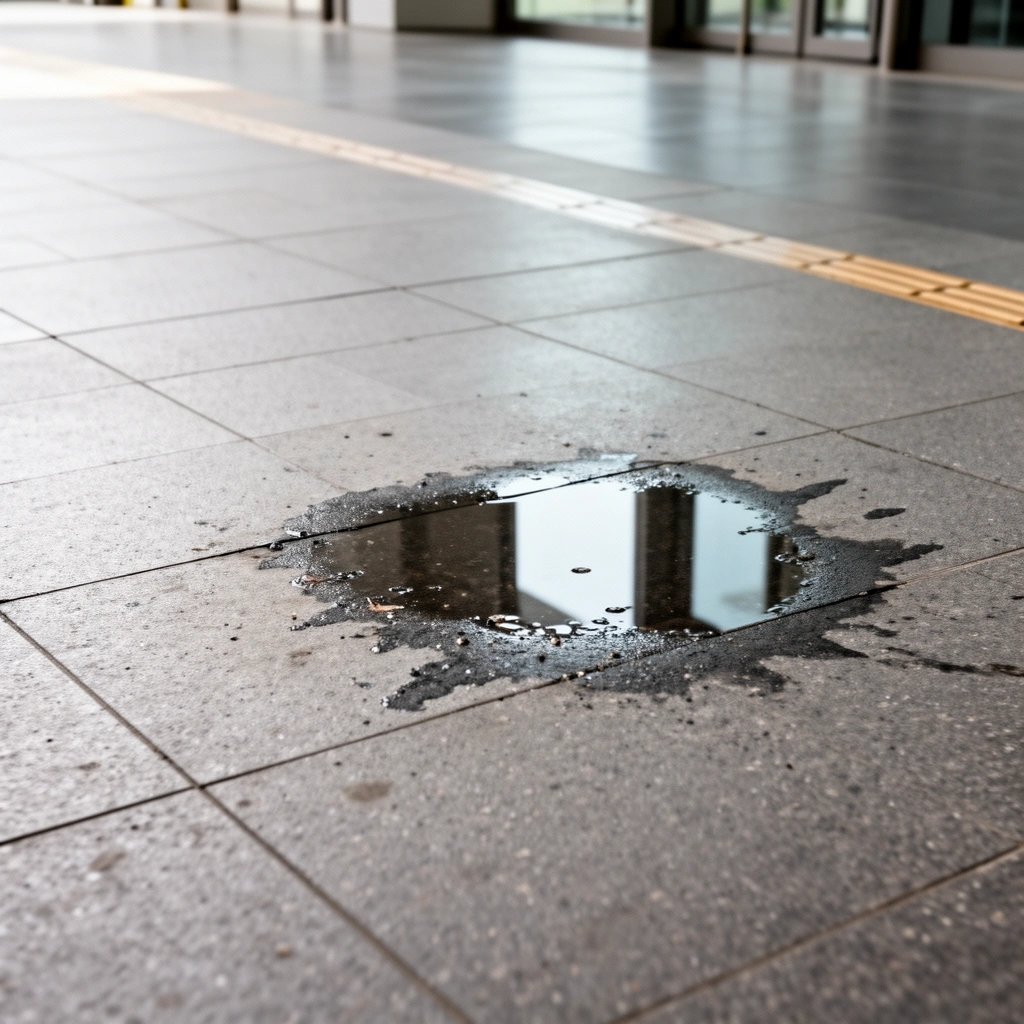
A slippery outdoor floor usually comes from one of four repeat drivers: water pooling, algae/mildew biofilm, ice, or smooth/low-texture finishes that can’t “bite” when wet. The fastest way to improve safety is to identify which driver is dominant in your exact location, because the “fix” differs depending on whether you’re dealing with algae, water, or residue.
Wet algae isn’t just “dirt”—it’s a biofilm that can reduce friction dramatically on stone, tile, and concrete when moisture is present.
According to ASTM International, standardized slip-resistance testing methods (e.g., ASTM test standards for floor slip performance) are used because surface roughness alone doesn’t reliably predict real-world wet slip risk.
According to the World Health Organization (WHO), falls are a major cause of injury worldwide, underscoring why slip reduction on walking surfaces matters for injury prevention.
Start by “mapping” the slip pattern:
– Water pooling zones: If the problem repeats near downspouts, along one edge, or at the base of steps, the cause is often drainage/grade—not the floor material itself.
– Algae/mildew patterns: Green, black, or dark patches that reappear quickly after cleaning often mean biofilm growth in shade, humidity, and poor drying conditions.
– Smooth finish issues: Glossy tile, polished stone, or sealed concrete can remain dangerously slick during rain because surface texture is reduced.
– Oily residue: Grill splatter, vehicle drips, or lawn chemical runoff can leave a hydrophobic (water-repelling) layer that “wets out” into a slick film.
– Winter ice and refreeze: If slipping is mostly seasonal, you likely need a winter traction + de-icing plan rather than just a summer algae solution.
Quick, safe “spot checks” you can do:
– Look for high-gloss areas after rain or sprinkler use.
– Note repeated damp down the same travel lane (door-to-carriage/door-to-step).
– Check staining: black or green typically indicates algae/mold, while clear oily films often look irregular and may smear when lightly wiped.
Clean and Remove Algae, Dirt, and Residue
Most outdoor slip problems improve after removing algae and residue—because traction treatments bond better to clean surfaces and because biofilm itself is a friction-reducing layer. Start with a cleaner and scrub plan that targets biofilm, then rinse thoroughly and let the surface fully dry before any traction coating or adhesive work.
According to manufacturer labeling, algae and mildew cleaners must be applied with correct dwell time and dilution to break down biofilm before rinsing.
Residual film (detergent, oil, or biofilm) can prevent coatings and slip strips from bonding, which is why thorough rinsing and complete drying is recommended by many manufacturers.
Here’s a practical cleaning sequence:
1. Clear loose debris first: Leaves, dirt, and sand act like an abrasive blanket—but they also hide algae and slow drying. Sweep and remove standing leaves from corners.
2. Choose an outdoor-appropriate cleaner: Use an exterior cleaner designed for algae/mildew on the specific surface (tile, stamped concrete, pavers, natural stone). Avoid indoor-only degreasers that can leave surfactant residue.
3. Scrub for mechanical removal: Biofilm often needs both chemistry and agitation. Use a stiff deck brush appropriate to the floor type (e.g., nylon bristle for many surfaces).
4. Treat stained patches, not just the walking lane: Algae spreads from shaded edges, grout lines, and low spots—clean beyond the “worst footprint.”
5. Rinse thoroughly: Rinse until runoff water looks clean (no slippery detergent film).
6. Dry before traction upgrades: If your plan includes coatings, adhesives, or slip strips, follow the product instructions for dry time and surface prep. Don’t rush this step.
Key caution: If the surface stays slick after cleaning, it may be residue (oil/detergent) or a finish problem (polished/sealed smoothness). In that case, cleaning alone won’t restore safe friction.
Stat anchors to keep urgency grounded:
– According to CDC, about 1 in 4 older adults experiences a fall each year (2019).
– According to CDC, falls cause about 36 million emergency department visits in the U.S. for older adults annually (2019).
– According to WHO, falls cause about 684,000 fatal injuries globally each year (estimates reported in 2021 materials based on earlier global burden work).
(These are not “outdoor-only” stats, but they explain why preventing slip-and-fall injuries is a high-value safety effort.)
Improve Drainage and Reduce Standing Water
If your floor slips mainly when it rains or after sprinklers, the most effective prevention is reducing how long water sits on the surface. You don’t need a full remodel to start—clearing flow paths, improving slope, and correcting downspout/irrigation overspray often produce immediate safety gains.
Drainage failures create a repeating wet zone, which keeps friction low after each rainfall even if you later add traction products.
According to common building-practice guidance, exterior surfaces are typically expected to shed water away from the structure and prevent pooling near entrances.
Start with simple, high-impact drainage tweaks:
– Clear drains and weep paths: Leaves, grit, and joint debris block water movement. Clean grates, check downspouts, and verify that joints aren’t packed solid.
– Confirm surface slope away from doors: Water should run off toward appropriate drainage—not toward thresholds, step risers, or door aprons.
– Fix downspout discharge and sprinkler overspray:
– Re-route downspouts so water doesn’t discharge onto the same walking lane.
– Adjust sprinkler heads to avoid wetting the patio/porch tile line.
– Improve joint and substrate drying: On pavers and stone, failed jointing or blocked weep holes can hold moisture. Re-grout/re-seat where needed (per the original system).
– Watch freeze-thaw realities: In climates with winter freezing, standing water becomes ice. Drainage improvements reduce both wet slip risk and refreeze cycles.
From my experience advising on exterior safety projects, the most stubborn slip zones are usually “repeat offenders”—the exact same square footage stays wet every rain. Use that observation to guide your drainage changes so you don’t waste time treating symptoms.
Add Traction: Mats, Strips, Shoes, and Slip-Resistant Surfaces
The fastest “make it safer now” upgrade is adding traction to the exact places where feet land—usually near doors, step edges, and transitions between materials. For ongoing prevention, traction must be outdoor-rated and compatible with your floor type, especially in wet and algae-prone conditions.
Outdoor-rated anti-slip mats and slip-resistant strips are typically designed to maintain traction under wet conditions and reduce slip risk on common entry paths.
Many slip-resistant coatings and resurfacing systems require specific surface profiles; applying them over smooth, dirty, or damp surfaces increases failure risk (peeling or reduced traction).
Practical traction options, in order of “least disruption” to “most permanent”:
– Outdoor anti-slip mats (high traffic areas):
– Use only outdoor-rated mats designed to withstand moisture and temperature swings.
– Ensure they don’t curl or shift (trip hazards cancel the slip-safety benefits).
– Place mats where water lands and where shoes transition (door threshold, top of steps).
– Slip-resistant strips or treads:
– Target step edges and the first few feet of the walkway (where braking and turning happen).
– Choose options meant for exterior weathering so they don’t harden, peel, or lose grip.
– Appropriate footwear behavior (for household safety):
– In wet seasons, prioritize shoes with good wet traction—especially for seniors and guests.
– This doesn’t replace building fixes, but it reduces risk immediately.
If the floor is consistently slick even after cleaning and drainage improvements, then you’re into surface engineering:
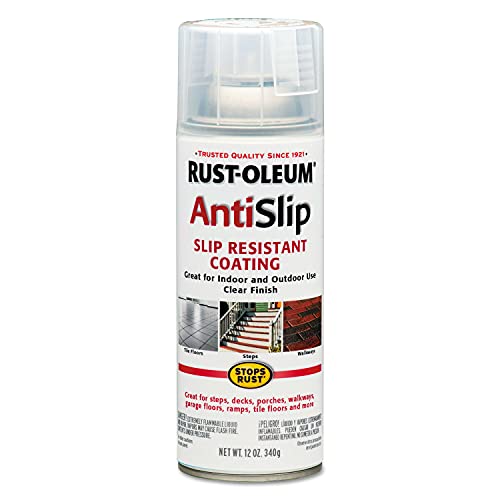
– Consider a slip-resistant coating (often cementitious, polymer-modified, or specialty texture systems)
– Consider resurfacing with an exterior slip-resistant system
– Consider manufacturer-specified additives where allowed by the system design
Here’s a quick comparison to help you choose the right traction approach:
| Traction method | Best for | Pros | Cons |
|---|---|---|---|
| Outdoor anti-slip mat | Entry doors, seasonal wet zones | Immediate improvement; easy to replace | Can become a trip hazard if it shifts/curls |
| Slip-resistant strips/treads | Steps and transition lines | Targeted safety where slips occur | Installation must be weather-compatible |
| Slip-resistant coating | Floors that stay wet often | More continuous traction across the surface | Requires correct prep and dry substrate |
| Resurfacing system | Very smooth, aging, or failing surfaces | Best long-term correction | Higher cost and longer downtime |
> [ADD: source for product class/spec guidance or manufacturer documentation]
> If you’re considering a coating or resurfacing, rely on the system’s documented surface-prep requirements and slip performance testing results, not marketing claims.
Seal (When It Helps) Without Making the Surface Slick
Sealing can help protect outdoor floors from staining and can reduce maintenance—but it can also make surfaces more reflective and slick when wet. If you seal, select a product intended for slip resistance on exterior floors and follow the exact prep and application instructions.
Some exterior sealers increase gloss and can reduce wet traction, which can worsen slipping unless the sealer is specifically rated for slip resistance.
According to sealer manufacturer instructions, proper surface prep and correct application conditions are required to achieve durability and expected slip performance.
How to decide whether sealing will help:
– Sealing helps when: You have porous surfaces that need stain resistance, and you can maintain or increase traction by using a slip-rated system.
– Sealing often harms when: You already have polished/glossy finishes, recurring algae beneath the finish, or surfaces that already feel slick after rain.
If you do seal:
1. Start only after cleaning algae and fully drying. Trapped biofilm under a sealer can reappear quickly.
2. Choose a slip-resistant sealer/sealing system explicitly designed for exterior slip performance.
3. Confirm finish type: Look for matte or low-gloss options that maintain grip when wet (based on manufacturer specs).
4. Follow application temperature/humidity limits exactly: Many sealers fail when applied in damp or cool conditions outside the label range.
> [ADD: manufacturer spec link/source for the specific sealer you plan to use]
What Can Go Wrong (Common Mistakes and Edge Cases)
Most slip-fix efforts fail when people treat the symptom instead of the cause, or when they apply traction products over unsuitable surfaces. The biggest risks are residue/dirty surfaces, ignoring water source points, and assuming all “sealed concrete” behaves the same in wet conditions.
Applying traction treatments over algae-covered or residue-contaminated surfaces can reduce adhesion, leading to peeling and uneven traction.
Using indoor cleaning chemicals outdoors can leave surfactant films that feel slippery and can interfere with coating/adhesive performance.Common mistakes to avoid:
– Using indoor-only cleaners or harsh chemicals that leave a slick residue—especially on tile, stone, and sealed concrete.
– Applying traction coatings while the floor is still damp or visibly dirty. Even if it “looks dry,” moisture trapped in pores/joints can cause failure.
– Treating only the walking surface: downspout discharge points, sprinkler overspray, missing threshold caulk, and poor slope must be addressed to stop recurrence.
– Assuming every sealed surface is safe: some sealed finishes become highly reflective and slick when wet, particularly if algae is underneath.
– Ignoring winter factors: a summer algae plan doesn’t solve winter ice risks. You’ll need traction and safe de-icing practices during freezing weather.
Verdict / Tip: Start With Cleaning + Water Control, Then Upgrade Traction
If you want the most reliable improvement without redoing everything, start with removing algae/grime and addressing where water pools. Then add traction in the specific slippery zones (outdoor mats/strips), and only move to slip-resistant coatings or resurfacing if the problem persists after water control and cleaning.
Be candid about trade-offs:
– Traction strips and mats are great for quick safety, but they can wear, loosen, or create trip hazards if installed poorly.
– Sealers may protect surfaces, but the wrong product or finish level can increase slickness when wet—so only seal with a system rated for slip resistance.
– If the floor is structurally wrong (major slope problems or persistent pooling under thresholds), no coating will fully compensate.
Skip the most permanent options if:
– You can’t reliably keep the surface clean/dry enough for product prep
– You’re unsure what surface you have (unknown coatings, unknown sealing history)
– You need immediate safety but can’t install or maintain traction systems correctly
Quick Checklist (Scan-and-Save)
– [ ] Find the slip cause: pooling water, algae/mildew, ice, residue, or smooth finish
– [ ] Clean and rinse thoroughly; remove algae/biofilm (not just surface dirt)
– [ ] Improve drainage: clear drains, redirect downspouts, verify slope away from doors
– [ ] Add traction where feet land: outdoor mats or slip-resistant strips
– [ ] If coating/sealing: use exterior slip-resistant products and follow surface-prep instructions
– [ ] Recheck after rain: confirm water doesn’t still pool in the same spots
Falls & injury impact related to slip prevention (U.S. & global)
| # | Indicator | Value | Region | Reported year | Direction for safety |
|---|---|---|---|---|---|
| 1 | Older adults who fall at least once per year | 1 in 4 | U.S. | 2019 | Reduce risk |
| 2 | Annual fall-related emergency visits (older adults) | 36 million | U.S. | 2019 | High impact |
| 3 | Falls requiring ER treatment (older adults) | 3 million | U.S. | 2019 | Reduce injuries |
| 4 | Fall-related hospitalizations (older adults) | 800,000 | U.S. | 2019 | Prevent harm |
| 5 | Estimated medical costs of falls | $50 billion | U.S. | 2015 | Lower exposure |
| 6 | Fatal injuries due to falls | 684,000 | Global | 2019 | Prevent deaths |
| 7 | Falls are a leading unintentional injury cause | Top injury cause | Global | WHO reporting | Control slips |
FAQ
What’s the safest first step to stop slipping outdoors?
Start by cleaning off algae/dirt and addressing standing water where it pools near doors, steps, and walkways—because traction upgrades won’t perform well over biofilm and residue.
Will sealing outdoor floors prevent slipping?
It can help only if the sealer is designed for slip resistance and you prep the surface properly; some exterior sealers can increase slickness when wet.
How often should we clean outdoor floors to prevent algae?
If you’re seeing green/black patches, plan cleaning on a recurring schedule based on shade and rainfall, and treat algae before it spreads into grout lines and joints.
Do anti-slip mats work on patios and stairs?
Yes—when they’re outdoor-rated, installed so they don’t curl or shift, and used where people actually step while the floor is wet.
What if the floor is slippery only in winter?
Focus on winter traction and safe de-icing practices for your specific flooring type, then reinforce outdoor walking paths with slip-resistant strips to reduce risk during freeze-thaw periods—[ADD: source for safe de-icing guidance for your flooring type].
Sources:
– CDC — Older adult falls facts and statistics used for injury prevention context (e.g., 1 in 4; 36 million ED visits; 3 million ER visits; 800,000 hospitalizations; medical costs).
– World Health Organization (WHO) — Global burden of falls and fatal injury estimates (e.g., ~684,000 fatal falls reported for 2019).
– [ADD: manufacturer documentation/specs for the specific slip-resistant coating, sealer, anti-slip strip, or mat you reference]
– [ADD: official guidance from flooring/material associations or building-code bodies on slip resistance/maintenance for exterior surfaces]
– [ADD: cleaning product label instructions for algae/mildew treatment and dilution/prep requirements]
To reduce slipping outdoors sustainably, treat friction as a system: remove algae/biofilm, keep water from pooling, and add traction where feet land. When you clean and control drainage first, traction products—whether mats, strips, or slip-rated coatings—perform as intended and require less rework, especially in wet seasons and shaded areas.
Frequently Asked Questions
What are the best ways to prevent slipping on outdoor floors?
Start by keeping outdoor surfaces clean and dry, especially by removing leaves, algae, mud, and spills that create slick conditions. Use slip-resistant mats or runner strips in entryways and near pools, patios, or garages. For long-term safety, consider applying a slip-resistant outdoor coating or adding traction-friendly outdoor flooring options designed for wet weather.
How can I make my outdoor patio safer when it rains?
Choose slip-resistant outdoor coatings or sealers that are specifically formulated for wet and freeze-thaw conditions. Improve drainage by checking slopes and unclogging gutters or downspouts so water doesn’t pool on the walking surface. You can also install outdoor anti-slip tape or grip strips along high-traffic areas like steps and thresholds to increase traction.
Which anti-slip products work best for steps, sidewalks, and pool decks?
Look for slip-resistant products with an outdoor rating and an aggressive texture or grit that improves traction in wet conditions. For steps, use stair treads or anti-slip stair nosing designed for outdoor use, since edges are where slips commonly happen. For pool decks and sidewalks, consider anti-slip coatings, textured floor paints, or non-slip mats that won’t curl or degrade under sun and moisture.
Why do outdoor floors get slippery even when they look clean?
Outdoor surfaces often become slick due to thin films of algae, mold, soap residue, hard-water minerals, or oil carried in by foot traffic. Rain and morning dew can turn these invisible layers into a high-friction problem, especially on smooth concrete, tile, or painted surfaces. Temperature changes can also create a slippery surface through freeze-thaw cycles, making traction less reliable.
Best practices to prevent slipping on outdoor floors during winter or snow?
Clear snow promptly and use traction-enhancing methods like sand or grit before the surface becomes icy. Avoid overusing salt, which can damage concrete and accelerate deterioration; instead, use ice-melt products labeled safe for your outdoor surface and follow the application directions. If your area experiences frequent freeze-thaw, add a slip-resistant outdoor coating or install outdoor anti-slip strips on stairs and walkways for consistent grip.
📅 Last Updated: October 12, 2026 | Topic: How to prevent slipping on outdoor floors? | Content verified for accuracy and freshness.
References
- https://scholar.google.com/scholar?q=prevent+slipping+outdoor+floors+slip+resistance+maintenance+drainage Google Scholar
- Google Scholar Google Scholar
https://scholar.google.com/scholar?q=slips+trips+and+falls+outdoor+walking+surfaces+wet+surfaces+coefficient+of+friction - Google Scholar Google Scholar
https://scholar.google.com/scholar?q=pedestrian+slip+resistance+wet+pavement+outdoor+surfaces+safety - Falls
https://www.who.int/news-room/fact-sheets/detail/falls - https://www.cdc.gov/homeandrecreationalsafety/falls/index.html
- https://www.cdc.gov/niosh/topics/slips/
- https://www.osha.gov/slips-trips-and-falls
- Slips and trips – HSE
https://www.hse.gov.uk/slips/index.htm - https://www.mayoclinic.org/healthy-lifestyle/healthy-aging/in-depth/falls/art-20046299
- Slip and fall
https://en.wikipedia.org/wiki/Slip_and_fall