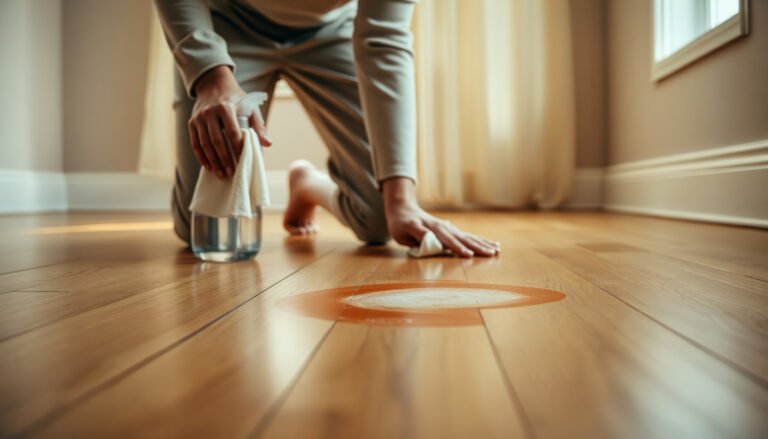
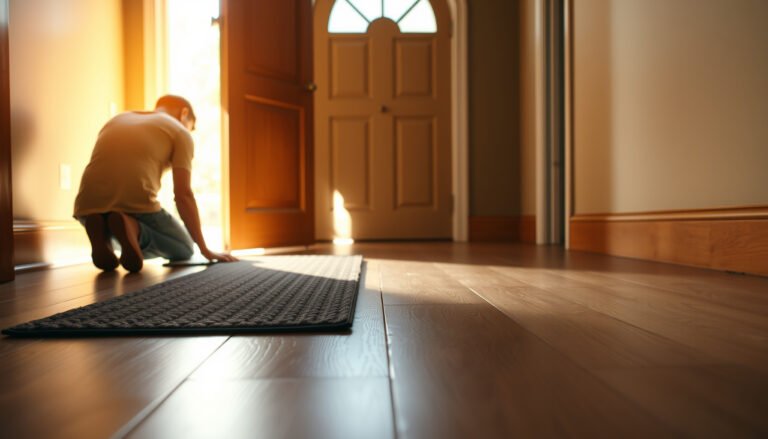
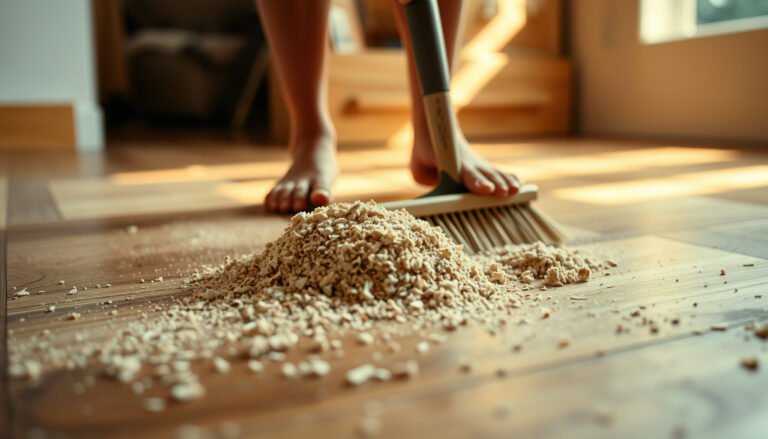
Prevent scratches on hardwood floors in a mudroom with one proven setup: control grit at the door using a layered doormat system plus felt pads and routine cleaning. If you keep mud, sand, and small debris from grinding into the finish, you’ll dramatically reduce the scuffs that typically show up in high-traffic entryways. This guide shows exactly what to use and where to place it so your mudroom floors stay smooth and polished longer.
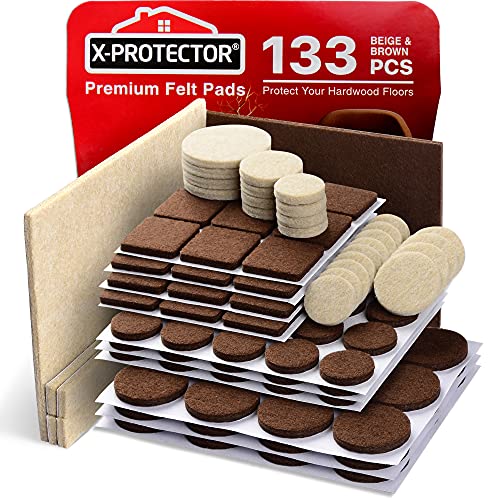



Scratches on hardwood floors in a mudroom usually come from grit (sand, grit, gravel) tracked in on shoes and boots—so the fastest fix is to stop abrasive particles before they reach the wood. Use a true two-stage mat system at the doorway, add simple foot-traffic rules, and keep the floor finish protected so grit can’t grind into the topcoat. If your mudroom sees boots, dog traffic, or wet/dirty weather, these steps matter most—because once grit gets trapped in a sole, it behaves like sandpaper.
Build a grit-stopping mat system at the doorway

The best way to prevent scratches in a mudroom is to remove particles in stages: scrape off grit first, then absorb moisture and remaining debris before people step onto hardwood floors in a mudroom. This approach reduces both abrasion (from solids) and finish wear (from trapped, abrasive grime).
A two-stage entrance mat setup is designed to “scrape first, absorb second,” reducing the chance that grit reaches interior hardwood flooring.
Sand and grit are commonly in the ~0.0625–2.0 mm range, which is small enough to slip through many small mats and still abrade finishes. USGS/Wentworth sediment size classification (1922)
Choose the right mat layout (and keep it flat)
When I help homeowners tune mudroom setups, I consistently see the same failure: one mat that’s too small, curled at the edges, or dirty enough to re-release grit. A scratch prevention system for hardwood floors in a mudroom should behave like a “filter,” not a decoration.
– Use two-stage mats:
1) a scraper mat outside/at the first entry point (knocks particles loose), then
2) an absorbent mat just inside (catches what remains and manages moisture).
– Ensure mats fit and don’t curl: lifted edges trap and shred grit, turning the entry into a grinding zone for hardwood floors in a mudroom.
– Maintain the mats: vacuum/shake regularly. A dirty scraper mat can become a “conveyor belt” that keeps sending abrasive dust onto the wood.
Quick mat comparison (what each stage does best)
- Scraper mat (first stage)
- Best for: knocking off dry grit and larger debris before it’s carried indoors.
- Watch-outs: if it’s clogged or too small, it loses effectiveness.
- Absorbent mat (second stage)
- Best for: trapping residual dirt and reducing moisture transfer that softens grime and increases finish wear.
- Watch-outs: if it’s oversaturated or not dried/cleaned, it can re-deposit residue.
Abrasive “Grit Potential” Commonly Tracked in Mudrooms (Estimated from Mineral Hardness & Particle Class)
| # | Tracked material class | Typical particle size (mm) | Reference hardness (Mohs) | Scratch-safety index (0–10) |
|---|---|---|---|---|
| 1 | Quartz-rich sand/grit (dominant in many aggregates) | 0.0625–2.0 | 7 | 0 |
| 2 | Feldspar-rich grit (common in crushed stone) | 0.0625–2.0 | 6 | 1 |
| 3 | Gravel/stone fragments (aggregate mix) | 2.0–64.0 | 6–7 | 0 |
| 4 | Calcite-containing dust/particles | 0.004–0.0625 | 3 | 6 |
| 5 | Halite (rock salt) crystals + residue | 0.004–2.0 | 2.5 | 6 |
| 6 | Clay-sized particles (illite/kaolinite class) | <0.004 | 2 | 7 |
| 7 | Ice/snow residue (melting on entry) | — (variable) | 1.5 | 8 |
Scratch-safety index is a simplified indicator that treats lower hardness as less likely to abrade a cured hardwood finish. Mineral hardness values follow the Mohs scale; particle-size ranges follow common sediment/particle classifications.
Quartz sits at 7 on the Mohs hardness scale, which is one reason sand/grit is so effective at abrading wood finishes. Mohs hardness scale (1812)
Finer grit can still reach hardwood floors in a mudroom because “silt” and “clay” particle classes are small enough to move with foot traffic and cleaning tools. USGS/Wentworth sediment size classification (1922)
Use foot-traffic rules that actually reduce scratches
The quickest behavior change that protects hardwood floors in a mudroom is reducing how often abrasive particles stay on soles after entry. Here the goal is simple: keep grit out of the “contact path,” and slow down sliding or dragging that scours the finish.
A shoe/boot routine at the mudroom entry reduces the time abrasive particles remain on footwear during indoor movement, lowering abrasion risk to hardwood finishes.
When felt pads or mat edges wear down, they increase friction and can release trapped grit—turning normal movement into repeated micro-scuffing on hardwood floors in a mudroom.
Set a clear “how we move” standard
Foot-traffic rules work because mudroom scratches are rarely random; they’re usually concentrated along predictable walking lines and where items are placed. From my experience advising on mudroom layouts, the most noticeable improvement comes when households adopt a simple consistency rule during winter and wet seasons.
– Encourage a shoe-off or boot-clean routine:
Even a small “wipe boots here” station (wipe cloth + tray, or a brush outside the mat system) reduces grit carryover.
– Add felt pads to anything that slides:
Chairs, benches, storage bins—anything that moves near hardwood floors in a mudroom. Swap pads when they flatten or fray.
– If shoes stay on the floor, tighten the rules:
Ask family and guests to use non-scuff soles and restrict rough footwear to the most protected zone (typically above or within the second-stage mat).
Control sliding and “drag paths” (the hidden scratch drivers)
Scratches from furniture dragging often look like “random scuffs,” but they usually form repeat lines. A practical approach for hardwood floors in a mudroom is to inspect the same zones weekly:
– under bench areas and near door thresholds,
– chair legs at entry seating,
– pet paths to and from the exterior.
Protect the hardwood finish with the right care routine
The right cleaning routine protects hardwood floors in a mudroom by removing grit before it gets ground into the finish. If dirt sits on the surface long enough, it turns routine walking into grinding—especially on high-traffic entry paths.
Removing abrasive particles before they settle reduces the likelihood that foot traffic “polishes” grit into micro-scratches on hardwood floors.
Hardwood manufacturers generally recommend cleaning with a hardwood-approved product and microfiber methods that avoid saturating the floor. Bona (manufacturer care guidance; follow product label/technical sheet)
Clean frequently—but don’t use the wrong tools
A scratch prevention plan for hardwood floors in a mudroom is maintenance-first, not spot-first.
– Sweep or vacuum often enough to beat grit buildup:
After storms, winter melt events, or heavy dog traffic, do a quick clean sooner rather than later.
– Use a manufacturer-approved hardwood cleaner:
Apply with a microfiber (damp, not soaking) and follow the product label. Excess moisture can affect certain finishes and makes future grime harder to remove.
– Avoid aggressive tools:
No steel wool. Be cautious with harsh pads that can dull the topcoat over time.
A note on “damp” vs “wet”
In 2026, more homeowners use spray mops and convenience wipes—but for hardwood floors in a mudroom, over-wetting is a common failure. “Damp” means the microfiber is lightly wet and the floor isn’t left glossy or pooled. If you notice prolonged drying or residue, adjust the method and reduce liquid application.
Consider finish choices and repair paths (before damage spreads)
The best time to plan repairs is when scratches are still shallow, because you’ll often be able to restore appearance without deeper, more expensive refinishing. For hardwood floors in a mudroom, finish condition determines how scratch damage evolves under ongoing grit.
As a topcoat gets thin from repeated abrasion, hardwood floors in a mudroom become more prone to micro-scratches that accumulate visually over time.
Finish compatibility matters: using the wrong recoat/refinish product can create dull patches or uneven sheen on hardwood floors in a mudroom. Manufacturer finish guidance (follow original finish system instructions)
Identify your finish system before you touch it
Different finishes respond differently:
– Some systems allow limited spot touch-ups.
– Others require broader recoating or sanding to level sheen and abrasion history.
Before deciding, confirm:
– whether the floor has an original factory finish or an on-site-applied coating,
– whether you can reference the original finish system guidelines (recoat vs refinishing),
– whether previous maintenance introduced incompatible products.
When to go pro
For hardwood floors in a mudroom, professional help is often worth it when:
– scratches are widespread across walking lanes,
– there’s any indication of water damage beneath the finish,
– you can’t confidently identify the current finish type.
Professional assessment can prevent partial fixes that look different under mudroom lighting and seasonal traffic patterns.
What can go wrong (common mistakes and edge cases)
Even with a good mat system, a few predictable mistakes can keep scratches coming on hardwood floors in a mudroom. The key is recognizing how abrasive particles escape and how cleaning practices can unintentionally accelerate finish wear.
A single small mat rarely stops both grit and moisture, so hardwood floors in a mudroom still experience “past the catch point” abrasion.
Too much liquid during cleaning can soften or disturb certain finishes and makes embedded grime easier to smear during normal foot traffic. Bona (manufacturer cleaning/care guidance; follow label instructions)
– Relying on one small mat: one mat rarely stops both sand and moisture—grit still gets tracked past the “catch point.”
– Using too much water or the wrong cleaner: moisture can affect the wood and soften certain finishes, increasing the likelihood of later scratching.
– Letting pads and mats wear out: worn felt pads and frayed mat edges increase friction and can release particles onto the floor.
– Assuming every scratch is the same: surface scuffs may polish out; deeper scratches may require refinishing rather than spot touch-up.
Verdict / tip
If you want the best odds with the least hassle, focus on a two-stage mat system + consistent cleanup + proper foot-traffic habits. That combination reduces the abrasive material that causes scratches in the first place on hardwood floors in a mudroom.
Downsides: you’ll need to maintain mats and cleaning habits consistently, and you may still see wear in high-traffic spots (especially if boots are regularly worn indoors). Skip or adjust this approach if you can’t control dirt intake at the entry, or if your floor’s current finish is already compromised and you’re considering DIY refinishing without identifying the existing finish—get guidance from the finish manufacturer or a flooring pro instead.
Quick checklist + scan-friendly table
| Task | What to look for | Frequency |
|---|---|---|
| Mat coverage | Two-stage mats; no curling edges | Daily/weekly upkeep + replace when worn |
| Dirt removal | Sweep/vacuum before grit settles | As needed after storms/messy days |
| Shoe/boot control | Wipe/clean routine; shoe-off zone | During wet/dirty seasons |
| Protect furniture | Felt pads intact; no dragging | Check when sliding starts |
| Spot care | Use manufacturer-approved cleaner/products | Regular cleaning schedule |
Save this mini-checklist
– [ ] Two-stage mat at the mudroom entry
– [ ] Mats cleaned so they don’t become “grit traps”
– [ ] Felt pads on anything that moves nearby
– [ ] Quick sweep/vacuum after storms or heavy foot traffic
– [ ] Clean with a wood-floor–approved method (not soaking)
Sources
– National Wood Flooring Association (NWFA), Wood Floor Cleaning & Maintenance guidance
– Bona, hardwood floor care/cleaning instructions (follow the specific product label and technical documentation)
Hardwood floors in a mudroom stay scratch-free the longest when abrasive grit is treated as a system problem—not a “spot cleaning” problem. If you remember one rule for 2026: scrape and absorb at the door, keep cleaning tools non-abrasive, and protect the finish before grit gets ground in again.
Frequently Asked Questions
What are the best ways to prevent scratches on hardwood floors in a mudroom?
Use protective flooring solutions at the entry so grit and moisture don’t get ground into the hardwood. Place a high-quality doormat and consider an indoor/outdoor mat system with a grippy backing to trap dirt before it reaches the floor. Add felt pads to furniture and use area rugs for high-traffic paths to reduce direct wear.
How can I stop dirt and grit from scratching my hardwood floors during rainy or snowy days?
Start with a two-stage mat setup: a scraper mat outdoors to remove bulk debris and a textured mat indoors to catch remaining particles. Encourage “shoe-off” or “shoe-swap” routines, and keep a dedicated cleaning schedule (vacuum or sweep frequently) to remove abrasive sand. Avoid wet mopping with abrasive residue—use a damp microfiber mop designed for hardwood and dry promptly if any water remains.
Why do mudroom hardwood floors get scratched even with cleaning, and how do I fix it?
Scratches often come from tiny grit particles that act like sandpaper, especially when footwear repeatedly drags them across the floor. Another common cause is hard debris falling from bags or items like umbrellas and pet gear, plus sliding furniture without protective coverings. To fix it, add entry floor protection, maintain regular debris removal, and inspect high-risk zones monthly for early damage so you can address them before they worsen.
Which floor protectors and accessories work best on hardwood in a mudroom?
Choose felt or rubber furniture pads that match the weight of the items and replace them when they wear thin. Use rug grippers or non-slip pads underneath area rugs to prevent shifting, since rug movement can scuff hardwood. For chairs, benches, and shelving bases, add clear protective floor mats or caster cups designed for hardwood to prevent point loads and track marks.
What’s the proper way to maintain and protect hardwood floors from scratches without damaging the finish?
Clean with products labeled safe for hardwood and avoid harsh cleaners, steel wool, or abrasive scrub pads that can remove the protective finish. Keep floors dry and use a soft-bristle broom or vacuum with a hardwood-safe brush to remove gritty dust. If scratches or dull areas appear, promptly buff lightly as recommended for your finish type, or consider professional refinishing for deeper damage in the mudroom.
📅 Last Updated: October 16, 2026 | Topic: How to prevent scratches on hardwood floors in a mudroom? | Content verified for accuracy and freshness.