
Preventing scratches on engineered wood floors in a home office comes down to using the right protection in the highest-risk spots—under your chair, rolling casters, and heavy furniture. Use felt pads or glides, swap to non-scratching chair wheels, and keep grit off with a properly sized entry mat to stop damage before it starts. Follow these steps and you’ll keep the finish looking new without resorting to constant touch-ups.




If you want fewer scratches on engineered wood floors in your home office, focus on controlling grit and protecting the floor where friction happens. Use floor protectors on chairs and mats at entrances/workstations, and keep shoes and dust under control with consistent cleaning. This guide walks you through the most effective, practical steps—and the common mistakes that still lead to scuffs and scratches in everyday use.
If your office gets frequent foot traffic (or you work from a rolling chair), engineered wood can still show damage over time—especially from sand, pet claws, and dragged furniture. These tips are designed for everyday home-office use, not special construction work, and they align with how most engineered wood finishes get damaged: abrasion from hard particles, plus repeated “point contacts” that wear through the top surface.
Start with the #1 scratch source: dirt and grit
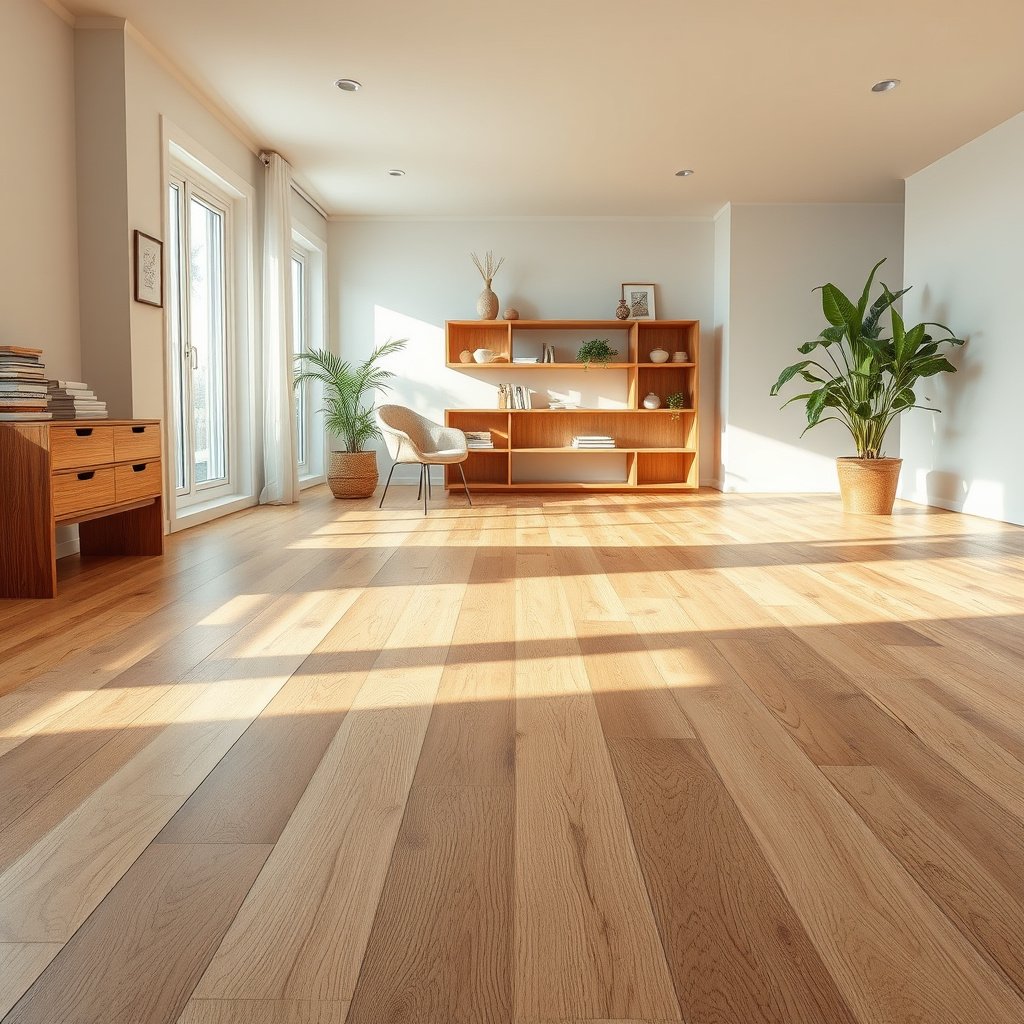
The most effective way to prevent scratches is to stop abrasive dirt from reaching the finish in the first place. In practice, that means matting + gentle vacuuming so sand and grit don’t get ground into the coating every time you roll or walk.
Quartz is rated 7 on the Mohs hardness scale, so grit made from silica-rich minerals can abrade wood finishes with repeated contact. Friedrich Mohs (1812)
Talc is rated 1 on the Mohs hardness scale, so the “same” dust behaves very differently depending on what it contains. Friedrich Mohs (1812)
Place mats where grit enters (and where wheels roll)
Place a quality entry mat at the main door (and, ideally, a second mat/rug near your workstation) so tracked particles are captured before they touch your engineered wood. A good mat works like a “pre-filter”: it removes what footwear brings in and reduces the chance that grit becomes trapped under chair casters. As of 2026, many home offices are redesigned around compact workstations, which makes it even more important to protect the exact walking/rolling path you use daily.
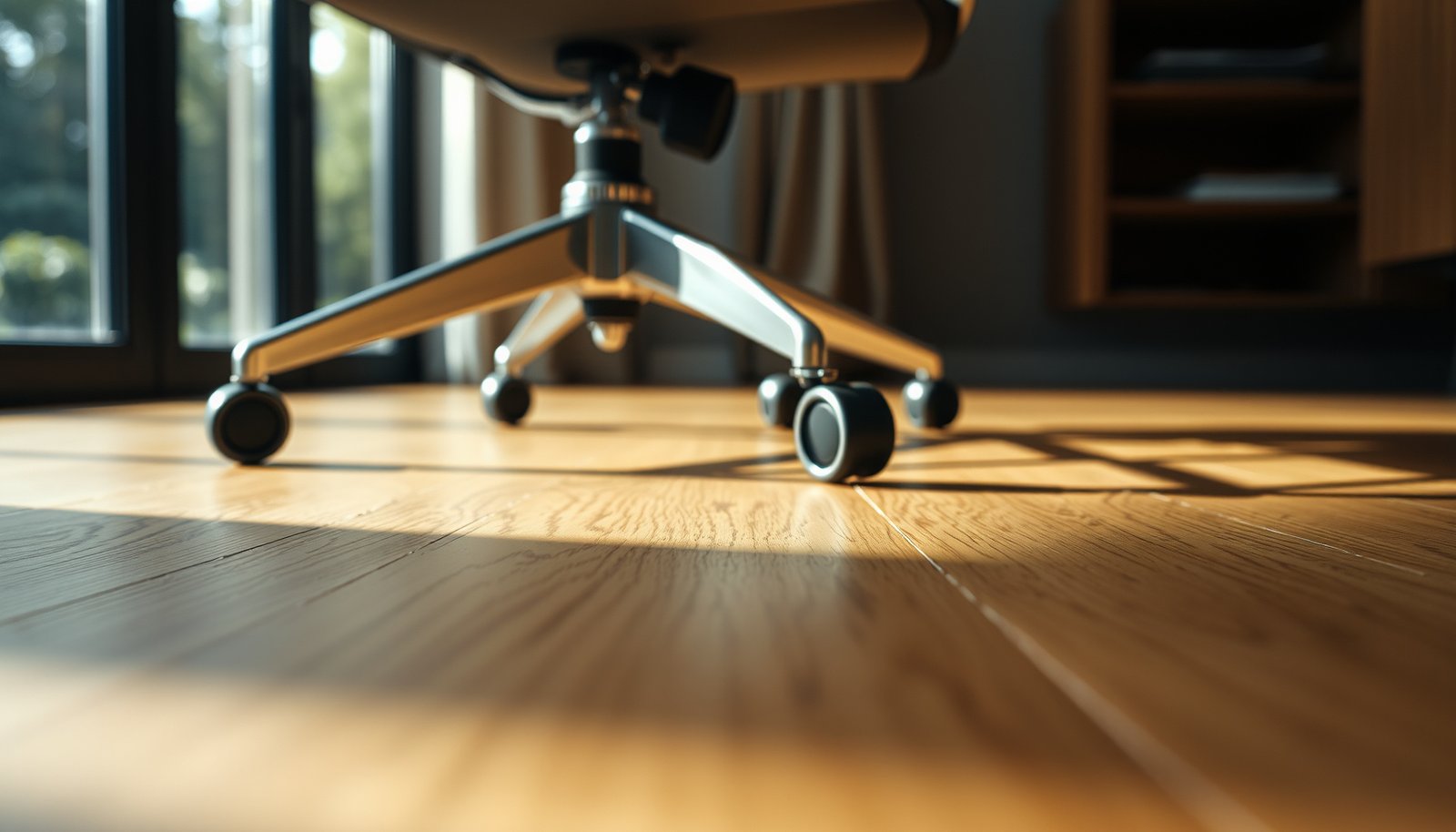
If you use a rolling chair, focus matting on the chair’s travel zone. Even small amounts of grit under caster wheels can create a grinding effect, especially when you pivot or frequently move forward/back across the same area.
Vacuum and sweep in a grit-targeted way
You don’t need aggressive cleaning—just consistent cleaning that removes sand. Vacuuming with a soft brush or using a broom designed for hard surfaces helps reduce the abrasive load on the finish. Aim for “invisible grit control,” not just removing what you can see. In my experience maintaining home-office floors, the biggest improvement usually comes from increasing cleaning frequency slightly (weekly to 2–3 times per week, depending on foot traffic), not from changing cleaners.
Wipe spills quickly—without grinding debris
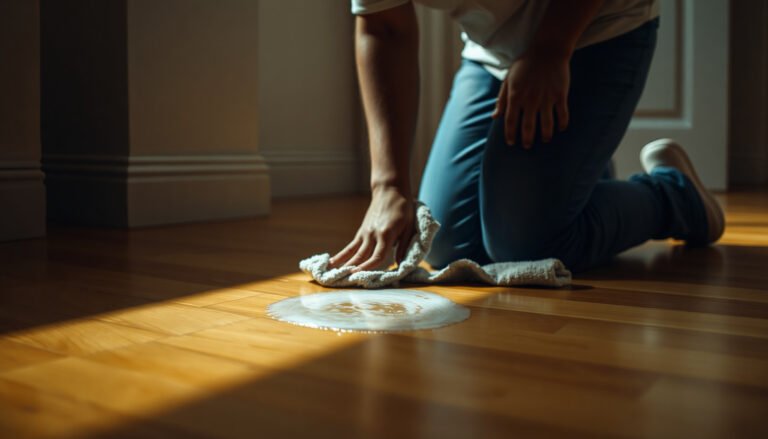
Prompt spill cleanup matters because sticky residues can hold grit. If you wipe slowly or spread debris while cleaning, you’re effectively sanding the finish from the inside out. Use a damp cloth to lift the spill, then remove residual moisture according to your floor’s care guidance.
Why the grit material matters (a quick reality check)
Hard particles scratch because they’re harder than the wood finish and top wear layer. Quartz and corundum (very common sources of “rocky” grit) represent the upper end of many tracked debris types.
Representative Grit Types and Mohs Hardness (Scratch Abrasion Risk)
| # | Grit/Particle Type | Mohs Hardness | Why It Matters | Prevention Priority |
|---|---|---|---|---|
| 1 | Corundum (Al₂O₃) | 9 | Very high abrasion potential | ★★★★★ |
| 2 | Quartz / Silica | 7 | Common in sand and dust tracking | ★★★★☆ |
| 3 | Feldspar | 6 | Often present in soil/dust mixes | ★★★★☆ |
| 4 | Hematite (Iron Oxide) | 5.5 | Can contribute to gritty wear | ★★★☆☆ |
| 5 | Calcite | 3 | Lower hardness, but still abrasive | ★★☆☆☆ |
| 6 | Gypsum | 2 | Less abrasive than sand, still affects | ★☆☆☆☆ |
| 7 | Talc | 1 | Very soft particle; minimal abrasion | ☆☆☆☆☆ |
Protect your chair, desk, and rolling equipment
The fastest, highest-surface-area improvement comes from protecting the floor under chair wheels and wherever furniture drags or rolls. If the floor sees constant micro-contact from casters, even a “perfect” cleaning routine won’t fully prevent wear.
Hard particles with Mohs hardness near 7 (like quartz) can abrade surfaces repeatedly when trapped under rolling equipment. Friedrich Mohs (1812)
Protectors are most effective when they’re designed for hard floors and stay flat, because shifting edges create friction points that accelerate scuffing.
Use manufacturer-recommended chair pads or caster protectors
Start with pads that match the chair’s contact type. Many office chairs use casters, and casters can concentrate force along small rolling points. Look for chair pads or floor protectors that are explicitly for hard floors (not just general “chair mats”). As of 2026, most reputable protector manufacturers include guidance on hard-surface compatibility, and you should follow the label or care instructions for your floor type.
Prefer appropriate protective films/mats (and keep them clean)
If you use a mat, make sure it won’t trap grit underneath. Felt-only pads are sometimes a problem because they can hold particles against the finish instead of preventing abrasive transfer. A smooth, clear protector (where allowed by your floor’s care guide) often performs better because it reduces friction during rolling.
In day-to-day office setups, mat cleanliness matters too: a dirty chair mat can become the new “grit source,” grinding particles against the wood as the caster moves.
Check for worn caster parts
Misaligned or worn wheel/caster parts can drag and create scuff lines. Inspect casters regularly and replace wheels if they’re uneven, cracked, or don’t roll smoothly.
Chair mats vs. area rugs: what to choose
If you’re deciding between a chair mat and an area rug, use this quick trade-off view.
| Option | Pros | Cons to watch |
|---|---|---|
| Hard-floor chair mat | Designed to reduce caster abrasion and concentrate wear away from the finish | Can trap grit if it buckles or if it’s installed over a dirty base |
| Area rug under desk | Adds friction control for foot traffic and can prevent direct scuff contact | May shift, bunch, or shed grit; backing can change friction dramatically |
Choose the right floor cleaning habits (and avoid abrasive tools)
The safest cleaning approach is careful, finish-aware cleaning that removes grit without wearing down the topcoat. For many engineered wood floors, damp—but not wet—cleaning is the preferred direction, but you should always match your product’s care instructions.
Abrasive tools can physically remove coating material, which turns future micro-scuffs into visible scratches across engineered wood top layers.
Cleaning pads that become contaminated with grit behave like sandpaper, so “tool cleanliness” is part of scratch prevention.
Follow finish-specific moisture guidance
Engineered wood finishes vary (lacquered, oiled, UV-cured, etc.). That’s why “damp” versus “wet” matters: excess moisture can affect seams/edges over time depending on construction and installation. If your care guide says to use a damp mop or lightly sprayed cleaner, follow that standard exactly—don’t improvise with more water “to make it easier.”
Avoid abrasive cleaners and harsh scrub pads
Skip steel wool, abrasive scrub pads, and aggressive chemistry that can dull or scratch the topcoat. Even if a cleaner doesn’t “look” abrasive, some formulas can leave residues that make future abrasion more visible.
Keep microfibers genuinely clean
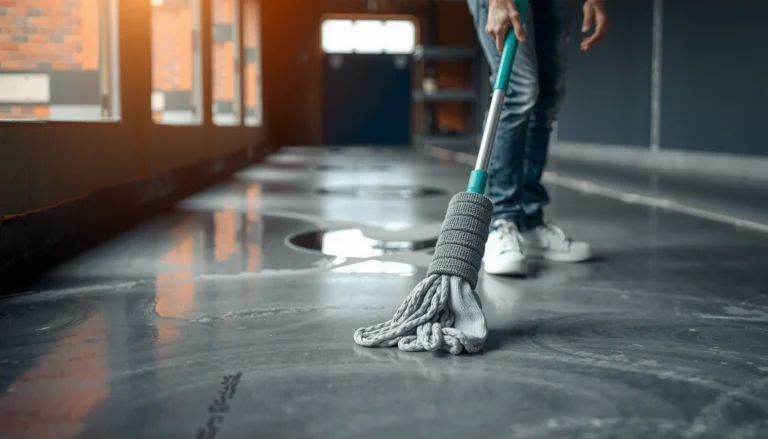
A worn-out or gritty mop head is a scratch risk because you’re redistributing particles across the same contact zone. Rinse microfiber pads frequently, and replace them when they hold fine grit that won’t wash out.
Manage foot traffic: shoes, pets, and tracked debris
The most noticeable reduction in scuffs usually comes from controlling what gets dragged onto the floor and where. When you reduce tracked sand and claw scuffing, engineered wood stays visually smoother longer—especially around the workstation loop.
Sand-like particles can contain quartz-like components (Mohs hardness 7), and repeated tracking increases the chance of abrasion on high-use paths. Friedrich Mohs (1812)
Talc-like soft dust is less abrasion-prone (Mohs hardness 1), which is why “dust that looks the same” can still cause different scratch outcomes. Friedrich Mohs (1812)
Keep “inside shoes” consistent
Shoes are an entry-channel for grit. A simple inside-shoe policy (or socks/slippers) can cut the amount of abrasive material reaching your desk. Make it consistent: scratches often come from the habit break—one day of wearing outdoor shoes into the office can be enough to seed the problem.
Pets: trim nails and protect claw contact zones
Pet claws can scuff the finish, and nail scratches tend to worsen when mixed with grit. Trim nails regularly and consider a pet mat near frequent spots. The goal is to minimize claw-on-finish contact and reduce the particle transfer that turns small scuffs into deeper wear.
Watch how rugs behave over time
Area rugs can help, but only if they stay flat. Refresh or rotate them so backing doesn’t shift and become a rolling/friction point. Also keep rug edges from curling—curling creates localized abrasion as wheels or shoes repeatedly cross the same boundary.Furniture and maintenance practices that prevent accidental damage
The key idea is to eliminate dragging and reduce surface stress where the floor takes repeated load. You prevent the “accidental” scratches by changing how you move items and how your space is conditioned.
Furniture dragging introduces sliding friction that can overcome finish durability, especially in narrow, frequently used office lanes.
Using clean, properly sized pads reduces concentrated contact forces that lead to visible scuffs and wear-through patterns.
Lift heavy items during rearranging
When you rearrange, lift heavy pieces rather than sliding them. Even short moves can create a concentrated abrasion path that shows up later as a faint scratch line in the same lighting angles.
Use felt pads correctly (and replace them)
Felt pads help for stationary furniture, but they wear down. Replace them when they thin out, and remove any debris that works its way between the pad and floor.
Maintain humidity to minimize surface stress
Engineered wood still responds to indoor moisture conditions. Maintaining stable humidity (as advised by the manufacturer) helps reduce dimensional movement that can make scuffs more noticeable and can stress edges and joints. This is especially relevant in 2026 as many offices add HVAC zoning and space heaters, which can swing humidity faster than in the past.
Use a controls mindset: “stop the grit, then reduce friction”
If you want a framework to remember the whole process, think in layers (similar to the NIOSH hierarchy of controls):
1) Eliminate/Block grit (entry mats, workstation mats),
2) Engineering controls (chair protectors, floor pads),
3) Administrative controls (inside shoes, cleaning cadence),
4) Surface protection (replace worn pads, maintain casters).
This layered approach works because engineered wood scratches are rarely caused by one action—they’re caused by repeated, small contacts.
What can go wrong (common mistakes and limits)
The advice above reduces scratches, but it doesn’t make engineered wood invulnerable. You can still get scuffs when protection shifts, cleaning leaves grit behind, or damage has already reached the finish layer.
Over-wetting can create finish and edge stress over time, depending on the engineered wood’s installation and finish system.
Assuming “engineered wood is scratch-proof” can lead to overly abrasive cleaning practices, which can permanently dull protective top layers.
Wrong chair mat/rug choice
Some coverings trap grit or shift. That’s not “protection”—it increases abrasion. If your floor warranty or care guide is strict, follow it rather than guessing based on general hard-floor compatibility.
Over-wetting during cleaning
Too much moisture can affect seams/edges over time depending on the product and installation method. Always stay within the “damp, controlled cleaning” approach described by your floor manufacturer.
Skipping manufacturer care instructions
“Safe” tools depend on the finish system. The coating is the scratch barrier, and the cleaner is the maintenance partner. If you skip guidance, you may weaken the barrier without realizing it.
Prevention won’t reverse deep damage
If you already have gouges through the finish, prevention steps won’t repair those marks. In that case, consult your floor manufacturer’s repair/refinishing guidance.
Verdict / practical tip (and who should skip certain steps)
Overall, the highest-impact approach is preventing grit from entering and protecting the floor under the chair/workstation. This is the best route for most home offices because it stops scratches before they start—especially around rolling traffic patterns.
Downsides/when to be careful:
– If you’re sensitive to how rugs/mats look or feel, test a few options on a small area first ().
– If your floor warranty is strict about specific products or cleaning methods, don’t deviate—skip anything not explicitly approved for your finish.
– If you suspect deep damage (e.g., gouges through the finish), prevention steps won’t “fix” it—consult the floor manufacturer’s repair/refinishing guidance instead.
In 2026, the most practical “do this first” sequence is: (1) double-mat the entry and desk path, (2) install a truly hard-floor chair protector that stays flat, and (3) tighten cleaning cadence to remove grit before it accumulates. This aligns with the way scratches actually form: repeated micro-abrasion from tracked particles.
The most effective scratch prevention strategy targets abrasion sources (tracked grit and rolling friction) before wear becomes visible.
When you protect only one zone (like the chair) but ignore the entry path, grit can still migrate and cause scuffing elsewhere in the office.
Quick checklist (save this)
– [ ] Put a proper entry mat in the office path
– [ ] Use chair protectors/floor pads designed for hard floors
– [ ] Choose a workstation mat that won’t trap grit
– [ ] Vacuum/sweep with gentle tools regularly
– [ ] Clean with manufacturer-approved methods (avoid abrasives)
– [ ] Lift furniture; replace worn felt pads and check casters/wheels
– [ ] Trim pet nails and control tracked debris
Sources
Preventing scratches on engineered wood in a home office is less about “fixing” damage and more about controlling the repeat drivers—abrasive grit and friction points under chairs, desks, and high-traffic paths. Start by blocking tracked dirt, then protect the contact zones, and finally clean in a finish-safe way; that combination is what delivers the most durable, low-effort scratch reduction over time.
Frequently Asked Questions
What protective mats and rugs should I use to prevent scratches on engineered wood floors in my home office?
Use a felt-underlayment office chair mat or area rug specifically designed for hard floors, ideally with a non-slip backing that won’t scratch. Look for products labeled for “hardwood/laminate/engineered wood” and consider felt pads (not rubber-only) to reduce friction and prevent grit from grinding into the finish. For rolling chairs, a clear polycarbonate chair mat is also effective, as long as it’s sized to cover the chair’s full movement area.
How do I stop desk chairs and rolling casters from scratching engineered wood floors?
Replace hard plastic casters with soft rubber or polyurethane casters, which glide with less abrasion. If you keep the existing casters, add chair pads or a chair mat to create a durable barrier between the wheels and the engineered wood surface. Also clean small debris from the floor frequently, because particles under the wheels act like sandpaper.
How can I prevent scratches from dust, grit, and debris in a high-traffic home office?
Sweep or vacuum with a floor-suitable attachment regularly—especially under the desk and around the chair path—so grit doesn’t scratch the top veneer. Use a microfiber mop designed for engineered wood and avoid aggressive scrubbing that can wear down the protective finish over time. Consider placing a doormat at entry points to reduce tracked-in dirt, and promptly wipe up sand or spill residues before they cause abrasion or finish damage.
Which felt pads or furniture protectors work best for preventing scuffs on engineered wood floors?
Choose furniture felt pads that are thick enough to reduce pressure points and have a smooth surface that won’t shed particles. For office furniture legs and stationary items, use felt protectors with strong adhesive or optional removable mounting so they stay in place and don’t shift and scrape. Replace pads when they thin out or collect grit, because worn pads can increase friction and lead to scratches.
Why is regular cleaning and finish maintenance important for preventing scratches on engineered wood?
Engineered wood floors are protected by a finish layer, but that top wear can happen faster in an office due to chair movement and frequent foot traffic. Keeping the surface clean helps maintain the finish’s integrity and reduces the likelihood of abrasive particles causing visible scratches. Follow the manufacturer’s care instructions—avoid harsh cleaners and steam—so your engineered wood floor remains protected and more scratch-resistant over time.
📅 Last Updated: October 19, 2026 | Topic: How to prevent scratches on engineered wood floors in a home office? | Content verified for accuracy and freshness.
References
- Engineered wood
- Wood flooring
- Office chair
- Tribology
- Scratch
- D4060 Standard Test Method for Abrasion Resistance of Organic Coatings by the Taber Abraser
- D3363 Standard Test Method for Film Hardness by Pencil Test
- https://scholar.google.com/scholar?q=prevent+scratches+engineered+wood+floor+home+office+chair+casters Google Scholar
- https://scholar.google.com/scholar?q=hardwood+floor+scratch+prevention+felt+pads+maintenance Google Scholar
- https://scholar.google.com/scholar?q=wood+floor+finish+scratch+resistance+abrasion+taber+test Google Scholar