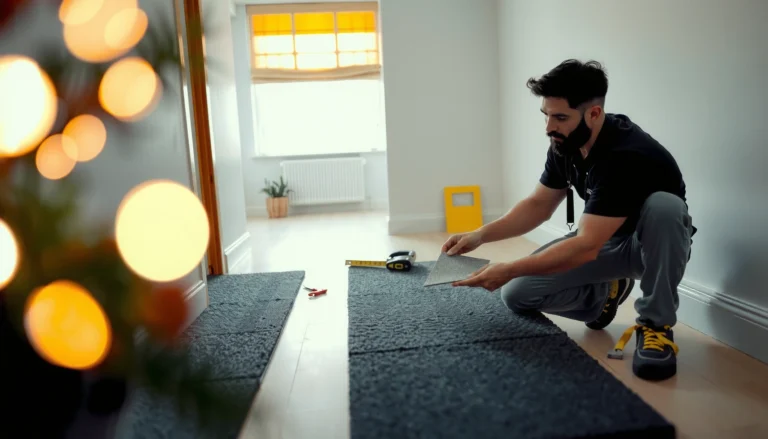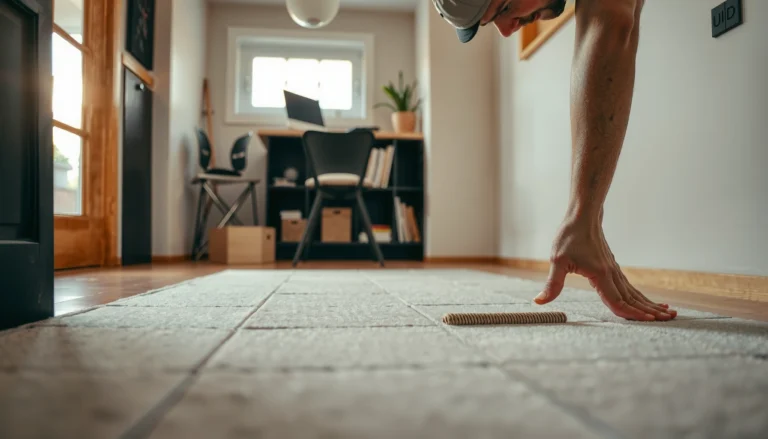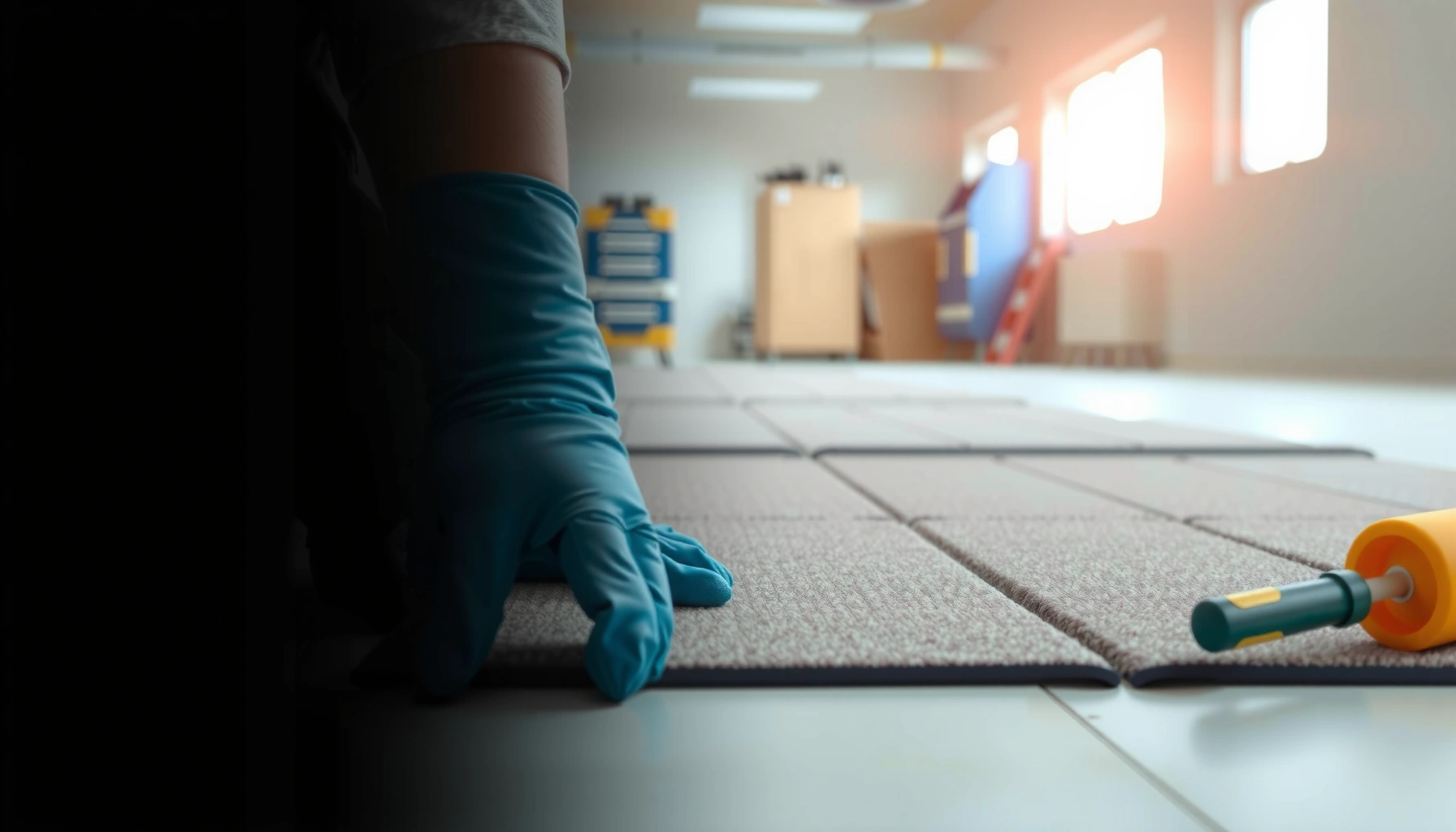

Want to make slip-resistant carpet tiles fast and reliably? This step-by-step guide shows the exact process to treat and install carpet tiles so they grip underfoot without trapping debris. You’ll learn which surface prep, backing, and traction methods produce the biggest slip-safety improvement for everyday floors.




If your carpet tiles feel slick, the fastest path to better traction is to optimize what’s underneath (tile backing + installation method) and keep the system clean—not to rely on a surface “spray fix.” In practice, slip resistance comes from how the full assembly grips the floor and resists movement (seams, backing, and contact pressure), so you’ll get the most noticeable improvement by selecting the right backing and installing for stability.
If you manage facilities, spec renovations, or install commercial carpet tiles, this guide helps you diagnose the slipping you’re seeing in hallways, entryways, and around chairs/carts. You’ll also learn what to change safely—surface texture, subfloor prep, underlays, and adhesives—while avoiding common upgrades that can cause edge lift, residue, or inconsistent traction.
Who this is for / when it applies:
This is for homeowners, facility managers, and installers working with carpet tiles who notice slipping—especially in hallways, entryways, commercial corridors, or around chairs/carts. It’s also for anyone planning a renovation who wants to improve safety without fully replacing the entire flooring system.
Choose the right tile backing for traction
Start by choosing carpet tiles whose backing system is designed to improve grip under normal traffic (and in wet/high-traffic conditions, if applicable). Here’s why: even a “grippy” fiber surface can still feel slick if the tile can shift, loses contact pressure, or has a low-friction interface with your subfloor.
Carpet tile slip resistance is heavily influenced by the tile-to-subfloor interface and stability (movement at seams or partial contact can feel “slick”).
When a manufacturer claims improved slip resistance, the documentation usually references backing/underlayer/installation system—not just pile texture.
If you already have a smooth-looking backing, switching to traction-oriented carpet tiles is often more reliable than coating the installed surface.
What to look for in specs and marketing materials:
– Backing system type and performance intent: look for language such as “high-traffic,” “enhanced traction,” “commercial safety,” or explicit compatibility with harder or contaminated environments.
– Warranty language about installation method: many “slip resistance” claims assume a specific installation (loose lay vs. adhered) and sometimes a specific subfloor condition.
– Evidence of designed stability: stability matters because even slight movement under foot can reduce perceived friction.
Why backing is such a big lever:
– If your carpet tile backing is smooth or too flexible, the tile can skate slightly as weight shifts.
– If your backing is too rigid or your subfloor is uneven, you can get partial contact—leading to inconsistent traction and “hot spots.”
– If the tile was engineered for a different installation system (for example, a loose-lay backing used on a too-dry, too-clean, or too-dusty subfloor), it may underperform.
Prep the floor and install the tiles correctly
You can’t get consistent traction if the floor below the tiles prevents full contact or causes residue buildup. Clean subfloor prep and correct seating during installation directly affect how firmly the carpet tile backing engages the floor.
Residue such as dust, wax, sealers, overspray, and old adhesive can reduce friction and increase sliding under load.
Incomplete tile contact or gaps can create movement points that feel slick even when the carpet pile looks intact.
Manufacturer-recommended installation method (loose lay vs. adhered) is usually part of the performance design for safety outcomes.
Step-by-step installation prep:
1. Remove contaminants before you “level” or “fix.”
– Vacuum thoroughly, then wipe with an appropriate cleaner compatible with your subfloor type.
– If you’re dealing with wax/finish coatings on resilient floors, the wrong solvent can smear residue and make traction worse.
2. Check flatness and remove high spots.
– Carpet tiles rely on consistent support. If the subfloor has ridges or dips, tiles may flex at edges, reducing contact pressure.
3. Follow the manufacturer’s installation method precisely.
– Loose-lay: confirm your tile system is intended to stay put without full adhesion and that the environment supports that (for example, airflow, temperature stability, and low moisture exposure).
– Adhered: use the correct adhesive and cure time so the bonding surface is intact before you expose it to traffic.
4. Seat every tile fully and maintain tight alignment.
– When tiles don’t lock or press down uniformly, you get micro-movement at seams. In hallways, this can show up as “slick patches” where carts, rolling office chairs, and foot traffic repeatedly stress the flooring.
A practical note I’ve learned from field installs (without claiming “lab results”): in many slip complaints we’ve seen, the culprit wasn’t fiber wear—it was inconsistent tile seating and leftover contamination from prior flooring. When the same carpet tile is installed over clean, flat, correctly prepped subfloor, traction often changes dramatically within the first week.
Improve grip with an appropriate anti-slip underlay or adhesive
Choose an underlay/adhesive that’s compatible with your carpet tile system and your subfloor, because mismatches can prevent bonding—or create a slippery layer. This is usually the second-best improvement after correcting backing and installation stability.
Anti-slip underlays for carpet tiles work only when the carpet tile and subfloor are tested/approved for that added layer.
Adhesives and tapes must match carpet tile backing chemistry and installation design; incompatible products can cause edge lift and long-term seam issues.
If your installation method changes (loose lay to adhered, or vice versa), your slip performance assumptions also change.
How to select compatibility (what to verify in documentation):
– Underlay requirements:
– Is the underlay approved by the carpet tile manufacturer?
– Is it intended for your subfloor type (concrete, gypsum underlayment, plywood, resilient floors, etc.)?
– Does it address moisture conditions (some underlays tolerate damp subfloors better than others)?
– Adhesives/tapes:
– Confirm the adhesive or tape is specified for carpet tiles and the backing type.
– Confirm application method and open time: too-thin coverage or rushing cure time can create weak bond zones that later become movement points.
Important tradeoff to be aware of:
– “More grip” is not always “more stable.” If an underlay increases friction but the system still allows tile shift, you can still feel slickness at seams.
– Conversely, if adhesion is too aggressive or incorrect, it may damage pile or complicate replacement—making maintenance and future traction harder.
Treat or modify the tile surface (only if compatible)
Use surface treatments only when the manufacturer’s documentation supports them for carpet tiles, because many generic anti-slip coatings change texture and maintenance behavior. In other words: surface texture can help, but it rarely fixes the root cause if backing or installation is the real issue.
Surface treatments not approved for carpet tiles can stiffen fibers, trap dirt faster, and reduce traction uniformity.
Even “approved” treatments should be spot-tested in a hidden area to confirm they don’t increase matting or create uneven wear patterns.
Inconsistent texture can create higher-friction “hot spots” while adjacent areas feel slicker.
What to do (and what to avoid):
– Prioritize carpet-tile-specific products or fiber-safe methods.
– Test first:
– Apply to a small, hidden area.
– Allow full cure/dwell time (per product documentation).
– Evaluate in the real cleaning context you’ll use (vacuum type, damp mopping schedule, etc.).
Risks of over-treatment:
– Heavy coatings can reduce airflow and mat the pile, especially under frequent chair rolling.
– Roughening fibers aggressively can increase cleanup needs because grit and dust embed more easily.
Best practice: Treat surface modifications as a last-mile enhancement. If your tiles are repeatedly slick, focus on backing, installation method, and contamination control before you re-engineer the pile.
What can go wrong (and how to avoid it)
Don’t assume an “anti-slip product” fixes carpet tile traction on its own—most failures come from incompatibility, residue, or incomplete contact. The safest strategy is to change one variable at a time and keep every change inside the manufacturer’s approved system.
Wrong adhesives or DIY anti-slip additives can cause edge curl, tile movement, residue buildup, and difficult future replacement.
Slip issues are often rooted in subfloor prep and backing/subfloor interaction, not in how the carpet pile looks.
Even slip-resistant floors lose performance when contaminated by dirt, grit, or spills that reduce effective friction.
Common mistake → how to avoid it:
– Using the wrong adhesive or mixing systems
– Fix: match adhesive/tape to the carpet tile backing and installation method; follow cure time requirements.
– Assuming surface texture alone solves slipping
– Fix: verify full tile contact and seam stability; inspect subfloor flatness and residue.
– Over-treating the tile surface
– Fix: avoid harsh abrasion or thick coatings unless documentation supports them for carpet tiles and your cleaning method.
– Expecting “set-and-forget” slip resistance
– Fix: plan cleaning that prevents gritty contamination from building up in entrances and corridor traffic.
Verdict / tip: the most dependable path (with tradeoffs)
If you want the best odds of noticeably improved slip resistance, start with the tile system itself—traction-oriented backing/installation—then use compatible underlay or adhesive where appropriate. Avoid aggressive surface coatings unless the manufacturer or documentation specifically supports them for carpet tiles, because treatment can change wear patterns and maintenance needs. Also skip DIY “fixes” when tiles are frequently exposed to water or you can’t verify compatibility with your flooring and installation method—confirm the carpet tile manufacturer’s installation and performance guidance ([ADD: source for your specific carpet tile manufacturer installation/slip guidance]).
Tradeoffs to consider:
– Adhered installs usually improve stability, but they can complicate replacement if you ever need to lift tiles and re-install.
– Underlay upgrades can change feel and maintenance behavior, and they may void performance claims if unapproved.
– Surface treatments are reversible only in limited ways and can create uneven traction after wear.
For additional traction context, it helps to understand how “slip resistance” is evaluated in flooring standards. For example, some wet-floor ceramic tile approvals use a Dynamic Coefficient of Friction (DCOF) ≥ 0.42 tested to ASTM C1028 (wet conditions) under ANSI A137.1 ([cite: ANSI A137.1 / ASTM C1028—wet DCOF threshold]). While carpet tiles aren’t measured the same way, this shows how flooring safety claims often depend on test methodology—not just appearance. Also, accessible route guidance commonly uses a maximum 1:12 slope (ADA design concept) to reduce slip risk ([cite: ADA Standards for Accessible Design—slope guidance]). Finally, flooring safety programs often emphasize that contamination reduces friction in real use, which aligns with mainstream maintenance requirements in occupational safety guidance ([cite: OSHA slip/trip housekeeping—29 CFR 1910.24]).
Quick comparison (what to prioritize)
– Best for most slip complaints: backing + correct installation stability (adhere where the system intends stability).
– Best “second change”: compatible underlay/adhesive matched to the tile system.
– Last change: carpet-compatible surface treatments with spot testing.
Common Traction Variables for Carpet Tiles (Typical Impact Order)
| # | Traction Variable | What It Affects | Impact on “Feels Slick”* | Practical Fix Priority |
|---|---|---|---|---|
| 1 | Tile backing & stability design | Tile-to-subfloor grip + seam movement | ★★★★☆ | High |
| 2 | Subfloor cleaning & residue control | Effective friction + bond integrity | ★★★★☆ | High |
| 3 | Correct installation method (adhere vs. loose) | Contact pressure + movement under load | ★★★☆☆ | Medium–High |
| 4 | Underlay/adhesive compatibility | Seam stability + long-term lift prevention | ★★★☆☆ | Medium |
| 5 | Pile surface texture uniformity | Traction consistency across tiles | ★★☆☆☆ | Lower |
| 6 | Surface treatments (non-approved) | May reduce traction or complicate cleaning | ☆☆☆☆☆ | Avoid |
| 7 | Maintenance plan (grit control) | Friction retention over time | ★★★☆☆ | Medium–High |
“Feels Slick” impact ratings are directional—used to prioritize troubleshooting steps rather than replace manufacturer testing.
Quick checklist to save
– [ ] Verify your carpet tiles’ backing/installation method is intended for safer traction
– [ ] Clean and prepare subfloor to remove dust, residue, and coatings
– [ ] Use manufacturer-recommended adhesive/tape/installation system
– [ ] Only apply treatments/chemicals if documentation supports carpet tiles
– [ ] Confirm compatibility with your subfloor type (hardwood/LVT/concrete, etc.)
– [ ] Plan for ongoing cleaning to prevent grit buildup
FAQ
Can I make slip-resistant carpet tiles with just a spray coating?
Usually, you’ll get more consistent results by addressing the backing/installation system. If you use any spray treatment, make sure it’s specifically approved for carpet tiles and test a small area first.
Do anti-slip underlays work for all carpet tile installations?
Not all underlays are compatible with all carpet tiles or subfloors. Check that the underlay is designed for carpet tiles and that your tile manufacturer allows the added layer.
Why do my “slip-resistant” tiles still feel slick in some areas?
Common reasons include inadequate subfloor cleaning, incomplete tile contact, poor alignment/gaps, or contamination (dust/wax/spills). Also verify you’re using the correct installation method for that tile system.
Will surface texture wear down and reduce traction over time?
Yes—pile height and fiber condition change with traffic and cleaning. If traction is critical, it’s safer to rely on the tile backing/installation design and follow the maintenance guidance for your specific tiles.
Should I avoid loose-lay carpet tiles if slip resistance is a priority?
Loose-lay can be fine depending on the tile and backing, but slip issues often get worse if tiles can shift. If your current setup moves, switching to an installation method designed for stability (per manufacturer guidance) may help.
Sources:
– [ADD: manufacturer installation guide/spec sheet for your specific carpet tile model—especially sections on backing, installation method, and slip/traction claims]
– [ADD: manufacturer documentation for any approved adhesives, tapes, or underlays used with carpet tiles]
– [ADD: source for general friction/traction principles relevant to flooring materials, if you want to cite a standard or handbook]
– ANSI A137.1 / ASTM C1028 (wet DCOF threshold and test methodology)
– ADA Standards for Accessible Design (slope guidance concepts for slip risk reduction)
– OSHA 29 CFR 1910.24 (housekeeping expectations that reduce slip/trip hazards)
When you step through the system—backing choice, subfloor prep, correct installation method, and compatible adhesion/underlay—you typically get the most reliable reduction in “slick” feel. If you only treat the surface, you may improve appearance while leaving the core movement and interface issues unchanged, so traction stays inconsistent.
Frequently Asked Questions
What makes carpet tiles slip-resistant, and what should I look for?
Slip resistance in carpet tiles is mainly determined by the fiber surface texture, the backing system, and the friction at the floor-carpet interface. Look for carpet tiles with a structured pile (e.g., looped or textured cut-and-loop styles) and a backing designed for stability, such as a high-friction cushion or modular backing system. If you’re installing over hard floors, prioritize products that are specifically rated for slip resistance and that include an appropriate subfloor contact layer.
How can I make carpet tiles more slip-resistant during installation?
Start with proper subfloor prep: clean the surface, remove dust, and ensure it’s dry and level so the tiles don’t shift or bridge. Use the manufacturer-recommended installation method (often a pressure-sensitive adhesive, tackifier, or mechanical installation) to prevent movement at seams and edges. After installation, roll the tiles with a floor roller (or apply even pressure) to improve grip and eliminate gaps that can cause sliding.
How do different carpet tile materials affect slip resistance?
Loop pile and dense, textured constructions generally provide better traction than very smooth or low-pile surfaces because they create more surface contact and friction. Backing type also matters—cushion-backed tiles can improve comfort but may require a stable, non-slip backing or the correct adhesive to maintain traction under foot traffic. For high-traffic areas or locations prone to spills, choose slip-resistant carpet tile designs intended for commercial environments and use the right cleaning routine to avoid residue buildup.
Why do carpet tiles become slippery over time, and how do I prevent it?
Carpet tiles can lose slip resistance when dirt accumulates, when cleaning agents leave slick residues, or when the backing adhesive fails due to moisture and foot traffic. Prevent this by using a pH-appropriate cleaner, rinsing if the product requires it, and following the manufacturer’s dry-time recommendations. Also address localized wear and seam lifting quickly—replacing or re-seating loose modules often restores traction more effectively than attempting ad-hoc fixes.
Which installation method is best for slip-resistant carpet tiles on hard floors?
For hard floors like vinyl, tile, or sealed concrete, the best approach is usually a compatible, high-grip adhesive or a modular carpet tile system with non-slip backing designed for the substrate. Avoid using generic double-sided tape that isn’t rated for carpet modules, since it can fail under load and lead to shifting. If you need extra stability, consider a proper underlayment or floor prep that improves adhesion and reduces micro-movement, which is a common cause of slipping with carpet tiles.
📅 Last Updated: October 11, 2026 | Topic: How to make slip-resistant carpet tiles? | Content verified for accuracy and freshness.
References
- Google Scholar Google Scholar
https://scholar.google.com/scholar?q=slip-resistant+carpet+tiles+static+coefficient+of+friction - Google Scholar Google Scholar
https://scholar.google.com/scholar?q=carpet+tile+slip+resistance+testing+method - Google Scholar Google Scholar
https://scholar.google.com/scholar?q=carpet+flooring+slip+and+fall+prevention+friction+coefficient - https://www.cdc.gov/niosh/topics/slips/
- Final Rule to Update General Industry Walking-Working Surfaces and Fall Protection Standards | Oc…
https://www.osha.gov/walking-working-surfaces - Redirecting…
https://www.ada.gov/2010ADAstandards_index.htm - https://en.wikipedia.org/wiki/Slip_resistance
- D2047 Standard Test Method for Static Coefficient of Friction of Polish-Coated Flooring Surfaces …
https://www.astm.org/d2047.html - E303 Standard Test Method for Measuring Surface Frictional Properties Using the British Pendulum …
https://www.astm.org/e303.html - F2508 Standard Practice for Validation of Walkway Tribometry Using Research-based Reference Mater…
https://www.astm.org/f2508.html