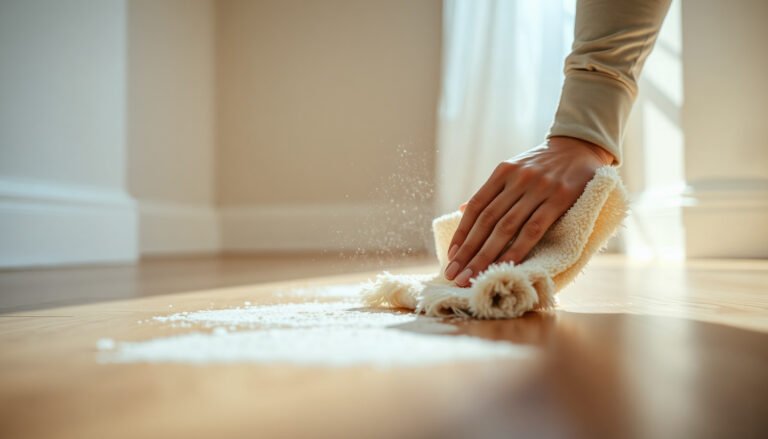
Polish wide-plank wood floors the right way and you’ll get a deep, even shine without streaks, haze, or raised grain. This step-by-step guide shows the exact sanding and buffing sequence, how to choose and apply the right polish, and how to finish for a long-lasting result. If you want wide-plank floors that look freshly refinished with minimal risk, this is the fastest path.




Polish wide-plank wood floors by cleaning thoroughly, fixing any surface damage, then sanding (if needed) and applying a compatible finish-polish system—rather than “just buffing.” The goal is consistent sheen across every plank, using gentle machine settings so you don’t round edges between boards and create uneven gloss.
Polished wide-plank wood floors are especially sensitive to preparation because long plank edges amplify uneven pressure, leftover residue, and coating incompatibility. This guide walks you through the correct order of operations and the decision points you’ll need for the coating you already have (polyurethane/varnish vs oil/wax vs other finish systems).
Prep: Clean, inspect, and protect edges

Do a careful clean and inspection first, because the wrong residue level or chemical can haze the finish even before you touch a buffer. For wide-plank wood floors, prep also prevents grime from getting burnished into the grain and helps you spot damage that polishing can’t fix.
Wide-plank wood floors polish best when the surface is free of film-forming cleaner residue, since many polishes are formulated to bond over a clean, mechanically receptive surface.
If the finish is scratched through or worn unevenly between planks, polishing alone cannot rebuild coating thickness—sanding or refinishing is required to level the surface.
Protecting trim, baseboards, and vents before machine work reduces the risk of splatter and edge damage on wide-plank wood floors.
Here’s the practical workflow for wide-plank wood floors:
– Sweep and vacuum thoroughly first, then use a wood-floor-safe cleaner compatible with your finish. Avoid acidic products, strong degreasers, or anything that can strip protective layers or leave a surfactant film.
– Inspect under good lighting (side-angle flashlight works well). Check for:
– Lifting edges or loose boards (polishing can worsen movement)
– Deep scratches or gouges (often won’t respond to polish)
– Gapping boards that show through at seams
– Sticky residue from old polishes, waxes, or “clean-and-polish” products
– Protect edges: tape baseboards and mask vents. On wide-plank wood floors, seams and plank edges are where machine contact can create uneven gloss if you later overwork a boundary.
Safety note while prepping wide-plank wood floors
If you anticipate sanding for wide-plank wood floors, treat dust as a serious exposure risk. According to IARC, wood dust is carcinogenic to humans (Group 1) (2012) —IARC Monographs Volume 100E. Even when you’re only polishing, protect eyes and lungs, and follow your product SDS (Safety Data Sheet) guidance.
Choose the right polish approach for your floor type

Pick your polish approach by identifying the existing finish, because polyurethane/varnish, penetrating oil, and waxed surfaces require different chemistry and different pad aggressiveness. For wide-plank wood floors, compatibility mistakes are a common cause of haze and streaking.
Polish systems are not one-size-fits-all: products designed for sealed polyurethane often perform poorly on oil/wax surfaces and can smear or cloud the film on wide-plank wood floors.
When wide-plank wood floors have dulled but the coating remains intact, a maintenance polish/buffing routine can restore uniform appearance without thinning the wood.
When scratches catch your fingernail or you see wear-through, you need sanding or refinishing; polishing cannot rebuild missing coating.
Step 1: Identify your finish on wide-plank wood floors
Use what you can confirm: installer paperwork, product labels, or visible behavior. In general:
– Sealed with polyurethane/varnish: surface has a harder film; you can often clean and then mechanically refine sheen.
– Penetrating oil / wax/oiled finishes: polish may be more like reconditioning than film building; incompatible solvents can disturb the surface.
– Unknown or mixed coatings: treat cautiously. Wide-plank wood floors may have areas that respond differently.
Step 2: Decide whether you can polish—or must sand
For wide-plank wood floors:
– You may start with polishing if the problem is mainly dullness/uneven sheen and the finish is intact.
– You must sand first if there are worn-through patches, roughness between boards, scratches that penetrate the coating, or the surface is noticeably uneven.
Maintenance vs. refinishing (comparison you can use)
When choosing a path for wide-plank wood floors, use this practical comparison:
| Approach | Best for wide-plank wood floors that are… | Main risk |
|---|---|---|
| Maintenance cleaning + gentle polish | Mostly dull with intact seal and no significant wear-through | Haze/streaking if residue or incompatible product remains |
| Sanding + compatible finish system | Scratches that penetrate, roughness, or uneven wear you can feel | Over-sanding can thin the existing finish and change tone |
If you’re unsure, test in a small hidden area on wide-plank wood floors first, then wait for full cure/dry time before judging final appearance.
Sand (only if needed): level the surface first

Sand wide-plank wood floors only when the existing finish is rough, damaged, or uneven—then polish can produce a more consistent, smoother sheen. If you skip leveling and the surface is already “telegraphing” defects, polish will simply spread them.
Sanding wide-plank wood floors is the correct path when scratches or wear have penetrated the coating, because it removes uneven finish rather than masking it.
Consistent sanding direction and even passes help reduce swirl marks that are especially noticeable on wide, long planks.
What to sand for on wide-plank wood floors
Sand (or mechanically abrade) when:
– scratches are deep enough to catch
– there’s roughness between planks
– the sheen is patchy due to worn-through coating
– you find sticky residue that won’t come off with proper cleaning
How to sand correctly (process logic)
– Start with the lowest abrasiveness needed for wide-plank wood floors. If the finish is only dulled, you may not need sanding at all.
– Sand progressively: avoid jumping straight to finer/finishing steps if the surface is already badly rough.
– Keep pressure even. Wide-plank wood floors show “dishing” and swirl patterns quickly if you concentrate force.
– Vacuum thoroughly between grit stages. Any remaining dust can become abrasive paste during polishing.
Common Sanding Grit Progression for Wide-Plank Wood Floors (Sealed Finishes)
| # | Abrasive grit (P/typical) | Primary use | Surface refinement level | Best when you want… |
|---|---|---|---|---|
| 1 | 60 | Aggressive leveling | Coarse | ★ |
| 2 | 80 | Remove defects/finish wear | Medium-coarse | ★★ |
| 3 | 100 | Finish flattening | Medium | ★★★ |
| 4 | 120 | Refinement pass | Medium-fine | ★★★★ |
| 5 | 150 | Remove micro-scratches | Fine | ★★★★☆ |
| 6 | 180 | Final pre-polish leveling | Very fine | ★★★★★ |
| 7 | 220 | Smooth sheen refinement | Ultra fine | ★★★★★ |
Note: This grit progression is a common planning framework for wide-plank wood floors with sealed finishes; always follow your sanding system and coating manufacturer instructions for your exact product and board thickness.
Polish and buff: use compatible products and the right pads

Polish wide-plank wood floors by applying a compatible polish system in thin, controlled passes, then buffing gently enough to avoid edge rounding. If you’re polishing for sheen, the pad choice and pressure matter as much as the polish itself.
On wide-plank wood floors, excessive pressure can create uneven gloss by rounding plank edges and increasing “highlight” differences between boards.
Using the manufacturer-recommended pad type helps prevent streaking and haze that can occur when the pad/polish system is mismatched.
Methodical overlap and consistent speed reduce swirl patterns caused by uneven pad loading across wide-plank wood floors.
Product and pad compatibility on wide-plank wood floors
– Match the polish to your finish system:
– For sealed polyurethane/varnish floors, use maintenance polish designed for sealed systems.
– For oil/wax floors, use conditioners/polishes intended for that chemistry (often more like reconditioning than coating).
– Use the correct pad aggressiveness:
– Softer pads for refining sheen
– More aggressive pads only when a system explicitly calls for them
– Don’t flood: apply thin, even coverage. On wide-plank wood floors, pooled polish near seams can dry into a visible line.
Machine settings and technique (gentle by design)
Because wide-plank wood floors telegraph inconsistency quickly:
– Keep settings gentle and stable. Avoid “learning by sanding” during polishing—adjust technique before you increase pressure.
– Maintain consistent overlap and change pads when they load with residue.
– Keep the work area small enough that polish doesn’t start drying before you buff it out.
Quick “seam strategy”
Wide-plank wood floors have boundaries that can be visually highlighted:
– Work slightly back from edges until your pad control is consistent.
– Don’t linger on one seam; lingering increases burnish and causes uneven gloss “hot spots.”
What can go wrong (and how to avoid it)
The most common failures with polished wide-plank wood floors come from compatibility issues, incomplete cleaning, and aggressive machine pressure. These problems show up as haze, streaking, and uneven gloss between planks.
Cloudy or hazy appearance after polishing is frequently linked to leftover film from previous products or to using a polish that isn’t compatible with the existing finish.
Uneven gloss across wide-plank wood floors often comes from pressure changes, pad contamination, or skipping leveling when the surface is rough between boards.
Edge rounding is a predictable outcome of over-buffing, which can thin finish along plank borders and make the floor’s sheen look “striped.”
Here’s how to troubleshoot proactively for wide-plank wood floors:
– Cloudy or hazy finish
– Cause: product mismatch or residue film interacting with polish
– Prevention: deep clean; ensure fully dry surface; test a hidden area first
– Uneven gloss between wide planks
– Cause: pressing harder on edges, inconsistent pad pressure, or uneven prep
– Prevention: lighten pressure; keep overlap consistent; sand/level when needed
– Finish thinning or edge rounding
– Cause: too much buff time or overly aggressive settings
– Prevention: polish in controlled passes; stop and inspect frequently
Also, remember that noise and dust exposure matter during floor work. According to OSHA’s noise standards, the 8-hour time-weighted average action level is commonly set at 85 dBA (2002) —OSHA 29 CFR 1910.95. Use hearing protection and appropriate respiratory protection per the SDS when sanding or creating dust.
Verdict / tip: aim for “consistent sheen,” not maximum shine
For most homeowners maintaining polished wide-plank wood floors, the best route is careful cleaning plus a gentle, compatible polish routine—sanding only when the coating is worn or damaged. That approach restores a uniform look without unnecessarily thinning the wood or disturbing the existing finish system.
If the seal on wide-plank wood floors is still intact, the safest path is cleaning followed by compatible maintenance polish rather than aggressive abrasion.
Polishing cannot correct roughness caused by worn finish layers; if you feel damage, you generally need sanding or a professional refinishing plan.
Avoid DIY polishing on wide-plank wood floors with lifted boards, unknown multi-coat systems, or widespread wear-through because “patch fixing” often leads to visible sheen lines.
A straight recommendation:
– Do this DIY step-by-step if wide-plank wood floors are mostly intact and the issue is dullness/light scratches with an even surface you can’t feel deeply.
– Skip DIY polishing (and plan sanding/refinish or a pro assessment) if:
– boards are cupped/crowning or visibly moving
– scratches are deep enough to catch
– the finish type is unknown and previously applied products are layered
– there are lifted edges that need repair
If you want, share your wide-plank wood floor finish type (poly vs oil/wax) and what products you already own, and we can narrow down the likely pad category and whether sanding is actually necessary.
Quick checklist (scan and save)
– [ ] Identify finish type (wax/oil vs sealed/polyurethane/varnish)
– [ ] Deep clean and fully dry; remove residue from old products
– [ ] Inspect for scratches, gaps, lifting edges, or uneven wear
– [ ] Sand only if damage/roughness is present
– [ ] Use compatible polish + correct pads; apply thin, even coats
– [ ] Buff methodically; avoid over-buffing seams and edges
Sources
– IARC Monographs Volume 100E (2012) — Carcinogenicity classification and discussion of wood dust.
– OSHA 29 CFR 1910.95 — Noise exposure requirements, including commonly cited action level/PEL structure.
– National Wood Flooring Association (NWFA) maintenance/installation guidance (wood flooring acclimation and surface preparation) — General industry guidance for stable conditions and surface preparation for wood flooring.
If you tell us your wide-plank wood floor finish type (sealed/poly vs oil/wax) and the products you already have, we can tailor the pad choice and whether sanding is actually necessary for your exact situation.
Polished wide-plank wood floors come down to one principle: preparation and compatibility first, then gentle refinement. Clean thoroughly, fix what polishing can’t repair, and use a compatible polish/pad system with controlled pressure so you get that smooth, even sheen—without rounding plank edges or clouding the finish.
Frequently Asked Questions
What’s the best way to polish wide-plank wood floors without damaging the finish?
Start by cleaning thoroughly and removing grit with a soft broom, vacuum (with a hardwood-safe brush), and a damp microfiber mop. Use a floor-safe polish designed for your existing finish (polyurethane, prefinished urethane, or wax) and apply it with a microfiber applicator in thin, even coats. Avoid over-saturating the wood and never use harsh abrasives or ammonia-based cleaners, which can dull or haze the surface.
How do I prep wide-plank wood floors before polishing?
Begin with inspection for scratches, high spots, and water stains; fix these before polishing so the shine doesn’t highlight flaws. Deep-clean using a manufacturer-recommended wood floor cleaner, then let the floor fully dry (wide-plank floors can hold moisture in seams). If the surface is dull from residue, consider a gentle floor buffer with a soft pad to remove grime, then follow with the appropriate polish for a uniform sheen.
How can I remove haze or scratches before polishing wide-plank wood floors?
For haze caused by cleaner buildup, use a residue-removing hardwood floor cleaner and buff lightly with a soft pad before applying polish. For fine surface scratches, try a wood floor scratch remover or polish with filling properties, applied in small sections and buffed evenly. If scratches are deep enough to catch a fingernail or expose bare wood, you may need refinishing or sanding rather than polishing alone to restore the finish.
Why does polishing make some wide-plank floors look streaky or cloudy?
Streaking and cloudiness usually come from applying too much product, using the wrong pad, or polishing on a floor that isn’t fully clean and dry. Residue from previous waxes or cleaners can also trap polish and create a hazy film, especially on textured or matte finishes. Use thin coats, work in small sections, keep the pad clean, and ensure you’re using a polish compatible with your floor’s existing protective coating.
Which polish or equipment is safest for wide-plank wood floors?
Choose a polish specifically labeled for hardwood floors and compatible with your finish type; for polyurethane-finished floors, use a urethane-safe polish or spray buff product. For equipment, use a floor buffer or polisher with microfiber or foam pads designed for wood to avoid burning or uneven gloss, and keep speeds moderate. Always follow the product label for dwell time and dry time, and test in an inconspicuous area first to confirm the result on wide-plank boards.
📅 Last Updated: October 15, 2026 | Topic: How to polish wide-plank wood floors? | Content verified for accuracy and freshness.
References
- Floor sanding
- Wood finishing
- Wood flooring
- wood floor finishing – Search Results – PubMed
- hardwood floor polishing buffing – Search Results – PubMed
- Silica and Worker Health | Silica | CDC
- Lead Renovation, Repair and Painting Program | US EPA
- https://scholar.google.com/scholar?q=how+to+polish+wide-plank+wood+floors Google Scholar
- https://scholar.google.com/scholar?q=hardwood+floor+buffing+polishing+techniques Google Scholar
- https://scholar.google.com/scholar?q=wood+floor+finish+maintenance+wax+polyurethane Google Scholar