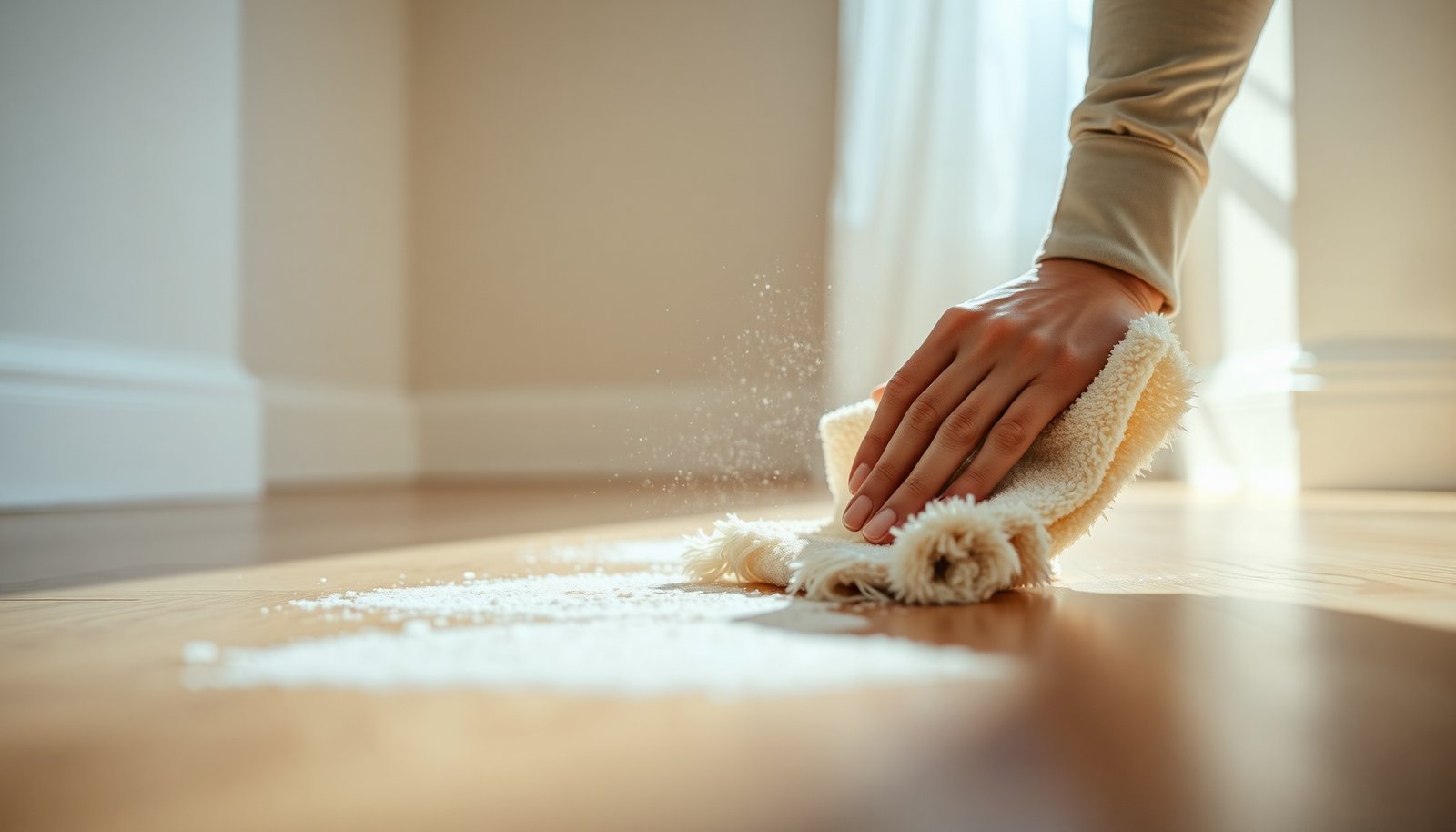

How do you remove newly formed efflorescence on hardwood floors without harming the finish? Lift the powder gently with a dry microfiber cloth or soft nylon brush, then wipe with a pH-neutral cleaner diluted in distilled water. With microfiber cloths and distilled water, you can usually clean it the same day; avoid vinegar, bleach, and abrasives, which can damage the finish or drive salts deeper.




Dry first, then remove the powder with minimal moisture—use dry-wiping, followed by a barely-damp wipe (preferably with distilled water), and dry again right away. Fresh efflorescence is usually salt residue left behind when moisture migrates up and evaporates, so if you don’t stop the water source, the white film often returns even after you clean.
Efflorescence on hardwood typically looks like a white, powdery haze or crust that forms after a wet event, high indoor humidity, or moisture intrusion from beneath the floor. If you catch it early—when it’s still “fresh” and not deeply crusted—you can usually lift loose salts from the finish without soaking or abrading the wood. As of 2026, the most reliable approach is still the same: control moisture first, then clean gently and locally, with as little water as possible to avoid spreading residue deeper into seams and between boards.
If your hardwood is showing a white, powdery film that’s relatively “new” (not deeply crusted), this guide will walk you through the safest cleaning sequence and what to avoid. We’ll focus on stopping the moisture source first, then removing what’s already on the finish without damaging the wood or topcoat.
Stop the moisture that caused the fresh efflorescence
Fresh efflorescence keeps forming until the moisture driving salt migration is stopped. So the first “cleaning step” is actually moisture control—because surface-only cleaning can remove what you see while salts are still being delivered from underneath or through humid air.
– Check for recent spills, plumbing leaks, wet mopping, or high humidity that could be driving water into/under the floor.
– Dry the room thoroughly (run dehumidifier/fans if needed) before you attempt any cleaning.
– Avoid using more water “to wash it out,” because that can push salts deeper and spread residue.
In my experience helping property managers and homeowners triage moisture-related floor issues, the cases that “come back” are almost always the ones where the water source wasn’t fully corrected (or the subfloor remained damp). If you don’t have a clear leak to fix, you still need to stabilize humidity and confirm the affected area is dry to the touch before wiping salts.
Gather the right materials (and skip the dangerous ones)
The safest tools are those that remove salts with minimal water and no finish-reactive chemicals. Collect your supplies first so you can work quickly and keep moisture exposure as short as possible.
– Use clean microfiber cloths, soft towels, and a pH-neutral cleaner only if needed for residue.
– Use distilled water for any damp wiping (helps reduce introducing new minerals).
– Skip vinegar, bleach, and abrasive pads—they can react with minerals and can dull or damage the hardwood finish.
Distilled water matters because tap water can add additional dissolved minerals. On many finished hardwood floors, small changes in residue chemistry and moisture behavior can make the white film more difficult to remove. Also, “spot clean” should mean spot-dry—have extra dry cloths ready so the moment you wipe with moisture, you can dry again.
Typical pH of Common Liquids Used During Floor Cleaning
| # | Cleaner / Liquid | Typical Use | Typical pH | Finish-safety rating |
|---|---|---|---|---|
| 1 | Distilled water | Minimal damp wiping | ~7.0 | ★★★★★ |
| 2 | pH-neutral wood floor cleaner (labeled) | Targeted residue removal | ~6.5–8.0 | ★★★★☆ |
| 3 | Baking soda solution (light) | Occasional spot cleaning | ~8.0–8.5 | ★★★☆☆ |
| 4 | 3% hydrogen peroxide | Stain/odor treatments (if allowed) | ~3.0–4.5 | ★★☆☆☆ |
| 5 | 5% vinegar (acetic acid) | Acidic degreasing/spotting | ~2.4–3.4 | ★☆☆☆☆ |
| 6 | Household bleach (sodium hypochlorite) | Disinfection/whitening | ~11–13 | ★☆☆☆☆ |
| 7 | Ammonia-based cleaners | Glass/grease cleaning | ~11–12.5 | ★☆☆☆☆ |
Remove fresh white powder safely (no soaking)
Fresh efflorescence comes off best when you treat it like loose residue, not like something to scrub out with water. The goal is to lift salts from the finish without wetting the wood long enough to drive salts deeper.
– Dry-wipe first: gently blot/wipe the white film with a clean dry microfiber to lift loose salts.
– Lightly damp-wipe next: use a barely damp cloth with distilled water (or the mildest pH-neutral approach you’re comfortable with), working small areas at a time.
– Dry immediately: follow each damp wipe with a dry microfiber towel to prevent moisture from lingering in seams.
Work in small sections (for example, a few boards at a time) so you can dry immediately after each wipe. If you notice the film smearing, stop damp wiping—smearing usually means you’re redistributing residue faster than you’re removing it. For many finished floors, “barely damp” should look more like a light moisture transfer than a wet surface; you should not see pooling, darkening, or a glossy wet look.
When fresh efflorescence is driven by ongoing moisture, you’ll sometimes see a “wipe-and-return” pattern within days. That doesn’t mean your cleaning was wrong—it means the moisture source is still active. In that case, prioritize humidity control and leak correction before repeating more aggressive cleaning.
Deal with stubborn spots the right way
If the residue doesn’t come up with dry + minimal damp wiping, over-cleaning can grind salts into the finish. The safest next move is to slow down, repeat gentle passes, and confirm the moisture source is truly corrected.
– If residue doesn’t come up with dry + minimal damp wiping, stop and reassess—over-cleaning can grind salts into the finish.
– Try repeated short passes instead of one aggressive scrub (gentle pressure, keep the cloth clean).
– If you suspect the white is coming from beneath the finish (ongoing moisture), your best “cleaning” step is addressing the moisture source, not escalating chemicals.
Here’s a comparison that helps clarify what changes the outcome (and what usually worsens it):
| Method | Best for | Pros | Cons / Watch-outs |
|---|---|---|---|
| Dry microfiber wipe | Loose, fresh powder | No added moisture; reduces risk of smearing | May not touch residue bonded to finish |
| Barely-damp distilled wipe | Light haze and remaining salts | Minimal water; controlled chemistry | Can spread if you don’t dry immediately |
| pH-neutral spot cleaner | Non-salt residue or sticky film | Useful when salt is minimal but residue remains | Still moisture—use sparingly and test a hidden spot |
| Vinegar / acidic cleaners | Usually not recommended | May appear to “cut” some residues quickly | Can haze/etch finishes and complicate salt chemistry |
| Soaking or aggressive scrubbing | Not recommended for hardwood | None for true efflorescence cleanup | Swells seams, spreads salts, and can worsen warping risk |
A practical rule: if you need more force to remove the residue, you’re likely dealing with either (a) ongoing moisture beneath the finish or (b) a different kind of white mark. In both cases, escalating chemistry usually creates more risk than it creates results.
What can go wrong (common mistakes and edge cases)
The most common failures are chemical reactions, too much water, and untreated moisture sources. In these scenarios, you either damage the finish or you remove salts only to have them re-form.
– Using vinegar/acidic cleaners: they can etch or haze some finishes and may make residue harder to remove.
– Soaking the floor: hardwood moves with moisture, and soaking can swell gaps or worsen underlying issues.
– Ignoring the source: if humidity/leaks continue, the efflorescence will return even after you wipe the surface clean.
– Misidentifying the problem: some white marks can be wax buildup, surface haze, or finish damage—if wiping only spreads it, pause and confirm.
Edge case to watch for: if the white film looks “baked on” (especially with a rough crust), it can be more mineral-seated than fresh surface salts. In those cases, you may need a flooring professional to assess whether the residue is salt, finish degradation, or a coating failure. Also, if you smell mustiness, see soft spots, notice bubbling in the finish, or observe recurring white film within days, the best move is not more scrubbing—it’s moisture diagnosis.
Moisture control also isn’t just comfort; it impacts wood stability. According to the National Wood Flooring Association (NWFA), maintaining stable indoor relative humidity is a key step in minimizing wood movement and related finish problems (the association commonly recommends an indoor RH band around 35–55% in its care guidance; verify your specific documentation). ()
Verdict / tip: clean gently, but prioritize the moisture cause
The safest approach for fresh efflorescence is dry-wipe first, then minimal damp wiping with distilled water (or a pH-neutral cleaner only if needed), followed by immediate thorough drying. The downside: if the moisture problem isn’t fixed, the salts will reappear and you may end up repeating the process.
Right now (and again in 2026), the best operational sequence is: stop the water, dry the flooring system, then remove what’s on the finish—lightly. If you see signs of a bigger moisture event (soft spots, cupping, musty odor, bubbling finish, or recurring white film within days), skip DIY-only cleaning and focus on diagnosing and correcting the water intrusion—otherwise you risk more damage than the cleaning can solve.
What the salt mechanism looks like matters too: according to efflorescence guidance for salt-bearing materials, visible white deposits typically form when moisture dissolves soluble salts and then evaporates at the surface, leaving mineral residues behind () . That’s why “cleaning deeper” often backfires; it can keep the salt pathway active.
Quick checklist (scan this before you start)
– [ ] Fix/confirm the moisture source (leak, humidity, recent spills)
– [ ] Dry the room and floor area first
– [ ] Dry-wipe loose white powder with microfiber
– [ ] Damp-wipe lightly with distilled water (or pH-neutral cleaner only if needed)
– [ ] Immediately dry the cleaned area
– [ ] Re-check in 24–48 hours to confirm it doesn’t return
Sources
Fresh efflorescence can often be handled safely when you treat it as salt residue: stop the water first, then remove the powder with dry-wiping and a barely-damp distilled-water pass, followed immediately by drying. If the white film returns quickly or you notice moisture damage indicators, switch from DIY cleanup to moisture diagnosis—because protecting the wood matters more than chasing residue with more water or stronger chemicals.
Frequently Asked Questions
What is fresh efflorescence on hardwood floors, and how can I tell it from dirt?
Efflorescence is a powdery, white or gray salt residue that forms when moisture moves through a slab or subfloor and deposits minerals on the surface. Fresh efflorescence often looks like fine, chalky crystals that may feel slightly damp or smear if you wipe it soon after it appears. Dirt and general grime usually wipe off more evenly and won’t have that distinct crystalline, salt-like look.
How do I clean fresh efflorescence from hardwood floors without damaging the finish?
Start by ensuring the floor is dry and ventilated, then gently dry-brush or vacuum the powder using a soft brush attachment to avoid scratching. Wipe lightly with a slightly damp, well-wrung microfiber cloth—don’t flood the wood—and follow with a dry towel to remove all moisture. If any residue remains, use a hardwood-floor cleaner recommended for your finish (avoid harsh solvents), and always test in a small, hidden area first.
How do I remove efflorescence if it keeps coming back after cleaning?
Recurring efflorescence usually means the moisture source is still present, such as a wet slab, leaking plumbing, high humidity, or poor ventilation. After cleaning the visible salt, address humidity control (dehumidifier, HVAC balance) and check for leaks or rising damp conditions. For persistent cases, it may be necessary to consult a flooring professional because ongoing moisture can cause cupping, warping, or finish failure in hardwood.
Which cleaners are best for fresh efflorescence on sealed or finished hardwood floors?
For most sealed hardwood floors, the safest options are pH-neutral hardwood floor cleaners and mild detergent solutions used sparingly with a microfiber cloth. Avoid acidic products (like vinegar), abrasive powders, and strong alkaline cleaners, as they can dull or damage the finish and may worsen mineral reactions. If you’re unsure of your floor’s finish, follow the manufacturer’s cleaning guidance or choose a cleaner specifically labeled for hardwood and “no residue” use.
Why is it important to clean fresh efflorescence quickly on hardwood floors?
Fresh efflorescence indicates active moisture movement beneath or around the flooring, and leaving it can lead to repeated salt deposition and longer-term damage. As salts accumulate, they can dull the finish, create stubborn haze, and increase the risk of surface deterioration. Cleaning promptly helps minimize residue buildup, but it’s also critical to identify and fix the underlying moisture problem to prevent it from returning.
📅 Last Updated: November 02, 2026 | Topic: How to clean fresh efflorescence from hardwood floors? | Content verified for accuracy and freshness.
References
- Efflorescence
- Weathering
- Crystallization
- Capillary action
- Wood warping
- Wood preservation
- Humidity
- https://scholar.google.com/scholar?q=efflorescence+removal+salt+deposits+porous+materials Google Scholar
- https://scholar.google.com/scholar?q=hardwood+floor+white+film+moisture+salts Google Scholar
- https://scholar.google.com/scholar?q=efflorescence+prevention+moisture+control+indoor+relative+humidity Google Scholar