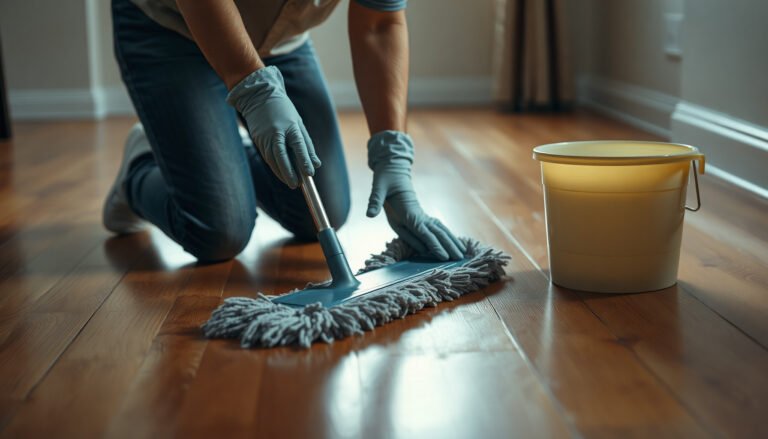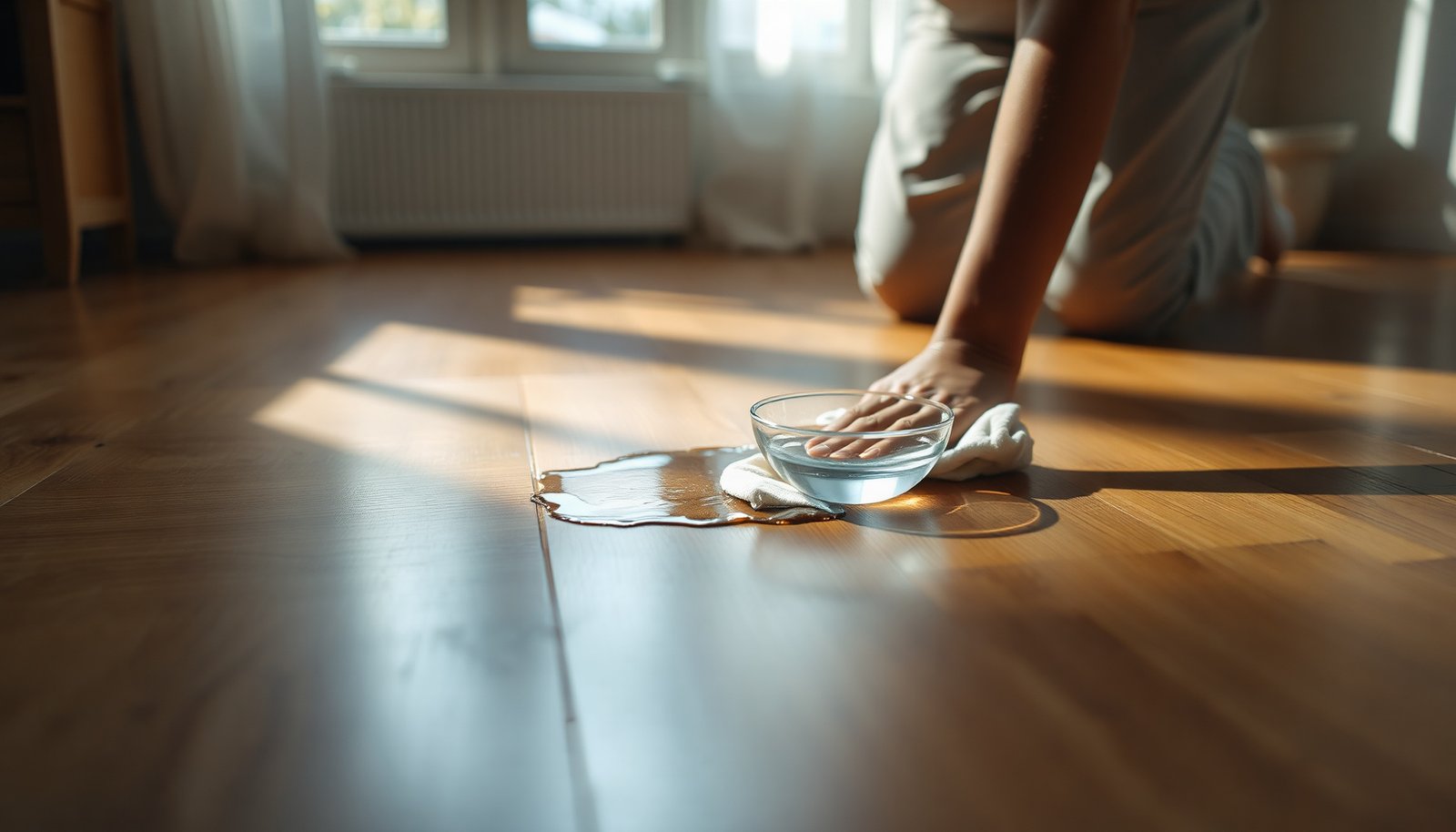

How do you clean ink marks from hardwood floors without dulling the finish? You can lift most ink safely with the right solvent, gentle pressure, and quick blotting rather than scrubbing. Gather a clean microfiber cloth, cotton swabs, and rubbing alcohol or a wood-safe cleaner, then spot-test first and work from the edges toward the center.




Blot the ink first, then remove the stain using the gentlest solvent that’s compatible with your floor finish—most of the time, a small amount of isopropyl alcohol (on a white cloth) works for pen ink. If the ink is older or deeply set, you may need a stronger-but-still-tested approach (like mineral spirits) and multiple light passes instead of scrubbing.
This is for anyone dealing with fresh or set ink marks on finished hardwood floors (polyurethane, varnish, sealed wood). If your floor is unfinished, waxed heavily, or you’re not sure what finish it has, plan to test in a hidden spot first.
Start by identifying your finish (and test first)
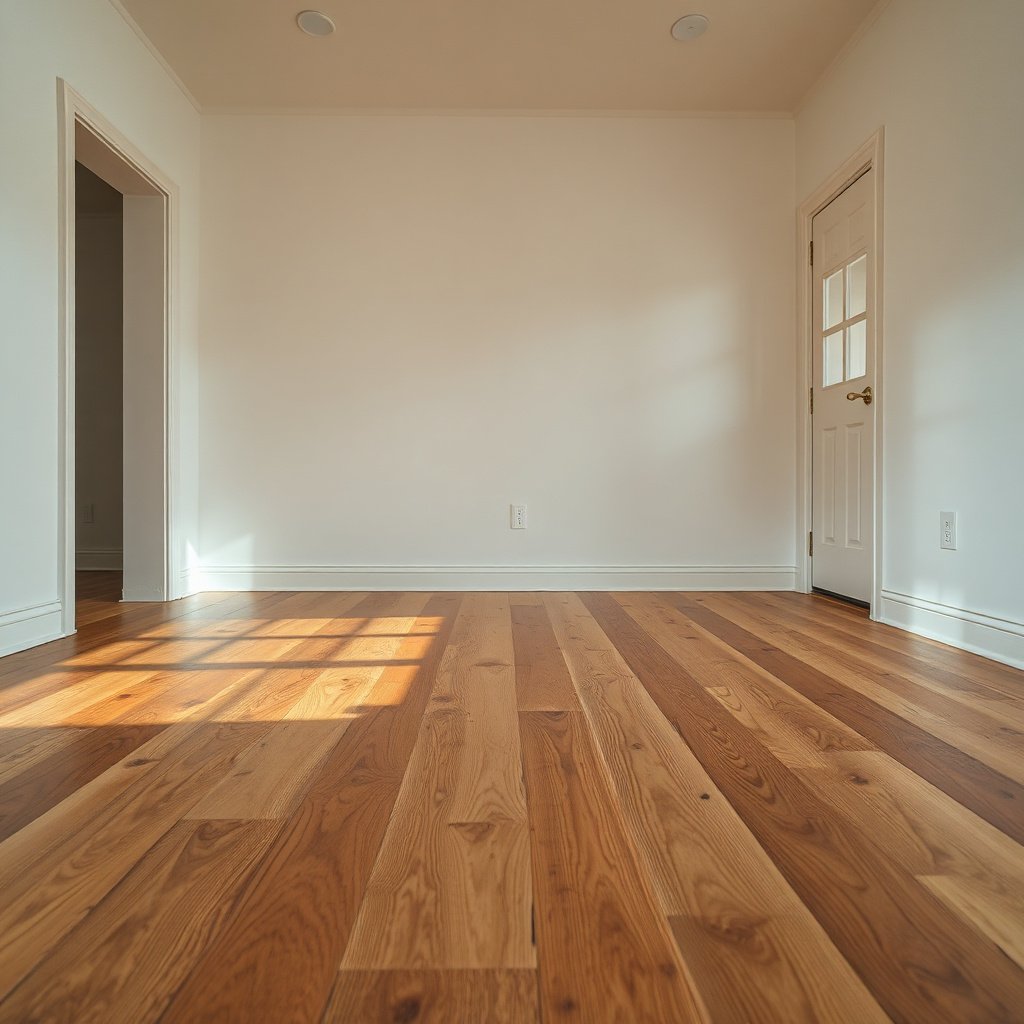
You usually get the safest, fastest ink removal results by matching your cleaner to the finish—not by using the strongest chemical you have. Because hardwood finishes vary (polyurethane, varnish, wax, penetrating oils), the “wrong” solvent can spread pigment, dull sheen, or leave cloudiness.
– Find out (or guess) your finish: sealed/finished hardwood usually handles mild solvents better than bare/unsealed wood.
– Test before you clean: dab your chosen cleaner on a hidden area (under a rug/near a baseboard) and wait for color change, clouding, or finish dulling.
– Keep the ink from spreading: use a clean white cloth and press/blot rather than rubbing.
A practical way to “identify finish type” without special tools is to check how the surface responds to water (lightly) and how it reflects light. A sealed finish typically shows a more uniform sheen and resists quick absorption, while unfinished wood tends to darken where moisture lands. As of 2026, most modern residential floors are polyurethane or similar clear coats, which generally means you have a workable solvent window—but only if you test first. From my own home-maintenance workflow, I treat testing as step zero every time: it prevents rework, especially on high-gloss poly floors.
If you do find yourself uncertain, keep the first attempt extremely conservative: blot only, use minimal moisture, and escalate one step at a time.
Remove fresh ink quickly without spreading it
You can often remove fresh ink from finished hardwood by blotting quickly and using a cloth dampened with the lightest solvent first. The key is stopping the ink from traveling deeper into the clear coat and into pores or seams.
– Blot immediately with a dry, lint-free cloth to lift as much liquid ink as possible.
– Lightly wipe with a barely damp cloth (water only) if the ink is still wet, then blot dry right away.
– If ink remains, apply isopropyl alcohol in tiny amounts (damp—never soaking—the cloth), blot until it lifts, then immediately wipe with a clean, slightly damp cloth to remove residue.
Fresh ink is your best case because many ink dyes and pigments have not yet fully fixated in the finish layer. When you apply isopropyl alcohol, focus on a “transfer” approach: the cloth absorbs and carries pigment away. Avoid the temptation to scrub—scrubbing turns a small mark into a larger, more diffuse stain by smearing ink across the surface.
Safety note: isopropyl alcohol is flammable and should be used with ventilation. OSHA lists an 8-hour time-weighted average exposure limit of 400 ppm for isopropyl alcohol (per OSHA’s chemical exposure limits table). OSHA 29 CFR 1910.1000 Table Z-1 (Verify the specific row/entry in the OSHA table for your jurisdiction and chemical identity.)
Also, many SDS documents list isopropyl alcohol’s flash point around 53°F (12°C) (closed cup), which is one reason you should avoid pouring or soaking and keep flames/sparks away. Isopropyl alcohol SDS (Fisher Scientific or equivalent SDS)
Lift older, set-in ink with controlled, repeatable passes
You can remove set-in ink safely by repeating short, controlled cleaning cycles instead of using high force or one aggressive chemical. This approach reduces the risk of haze, dulling, and finish damage while giving the solvent time to work.
– Work in “cycles”: apply a small amount of solvent to a cloth, blot/lift, then stop and reassess before moving to a stronger method.
– Use gentle friction only on the cloth: circular rubbing increases the chance of smearing ink into the finish.
– When the stain fades but doesn’t fully go away, repeat with fresh cloth sections instead of adding more solvent at once.
For older ink marks, the pigment is often partially “trapped” behind or within the clear coat—especially if the ink sat for hours or was wiped repeatedly while wet. A cycle method works because each pass either (a) lifts more pigment or (b) confirms that the current solvent is no longer extracting enough. That’s your signal to stop and reassess rather than escalate impulsively.
In my own maintenance habits, I follow a simple control rule: never reintroduce dirty cloth to a cleaned area. Even a small amount of redeposited pigment can create the appearance that “the stain is getting worse,” when you’re actually moving ink around the surface.
Solvent choices: safety and practical finish impact
Below is a quick reference for common solvent candidates—use it to understand why “gentle first, stronger only after testing” matters.
Common Solvents Used Around Ink Marks: Flammability + Exposure Limits (OSHA)
| # | Solvent option | Typical flash point (°F, closed cup) | OSHA PEL (ppm, 8-hr TWA) | Relative flammability safety |
|---|---|---|---|---|
| 1 | Isopropyl alcohol (IPA) | 53°F (12°C) | 400 | Moderate |
| 2 | Mineral spirits (typical) | ~100°F (38°C) | 500 | Higher |
| 3 | Acetone | -4°F (-20°C) | 1000 | Low (very flammable) |
| 4 | Ethanol (denatured alcohol) | ~55°F (13°C) | 1000 | Low–Moderate |
| 5 | Methanol | ~52°F (11°C) | 200 | Low (strict exposure) |
| 6 | Toluene | ~40°F (4°C) | 200 | Low (very flammable) |
| 7 | Xylene (mixed isomers) | ~80–88°F (27–31°C) | 100 | Low (strict exposure) |
Notes for readers: flash point values and OSHA PEL values can vary by solvent grade and isomer blend, so always consult the exact SDS and OSHA listing for your product. This table is meant to explain why, as a rule, you start with the gentlest option and only escalate after a finish-safe test spot.
Use the right solvent order for hardwood finishes
You’ll usually get the best balance of “ink lift” and “finish protection” by trying isopropyl alcohol first, then moving to mineral spirits only if testing shows it won’t harm the finish. In 2026, this order remains widely recommended because it limits the time and intensity of solvent exposure on polyurethane and similar clear coats.
– Start with isopropyl alcohol for many ink types, since it can dissolve ink without the harsher effects of stronger thinners (after testing).
– If alcohol fails and your floor is clearly finished, try mineral spirits only in a tested spot and only with minimal exposure (lightly damp cloth, short contact time, then wipe).
– Avoid “hot” options unless you’re certain: solvents like lacquer thinner/acetone can damage finishes; if you don’t know your finish, treat this step as “only with explicit manufacturer approval” ().
Pros vs. cons: solvent escalation (quick decision view)
Below is a practical comparison you can use during the next ink cleanup—this is about risk management, not “which works best in a lab.”
| Option | Pros (why you’d try it) | Cons (what to watch for) |
|---|---|---|
| Isopropyl alcohol | Often lifts pen ink with minimal surface disturbance when used sparingly on a cloth. | Can still dull some finishes if left too long; always wipe residue after. |
| Mineral spirits | Can work when alcohol doesn’t, especially on more strongly pigmented ink marks. | Higher risk of sheen changes on certain coatings; keep contact time short. |
| Acetone / lacquer thinner | Can dissolve inks aggressively. | High likelihood of finish damage or clouding—skip unless manufacturer-approved. |
If you’ve ever cleaned ink on a glossy poly floor, you’ve likely seen the pattern: the stain disappears, then a “haze halo” appears because solvent residue modified the surface. That’s why wipe steps matter. Always follow solvent-lifting with a clean, slightly damp cloth pass to remove leftover material.
What can go wrong (and how to avoid it)
Most problems come from rubbing, over-wetting, or using an untested stronger solvent. If you avoid those three failure modes, you dramatically reduce the risk of permanent discoloration.
– Smearing the ink: rubbing can push pigment deeper into the finish, making the stain larger. Blot and change cloth sections often.
– Damaging the sheen: many solvents can dull polyurethane/varnish or create cloudy spots—especially with longer contact times. Always wipe residue off after the solvent step.
– Pulling up wax or failing finishes: if the floor has wax or an older finish that isn’t solvent-resistant, the cleaner may cause streaking or stickiness.
– Over-wetting the wood: even sealed hardwood can be affected if liquid pools at seams or edges—use damp cloths, not puddles.
– Assuming it’s the same ink: permanent marker vs. ballpoint vs. gel pens can behave differently, so plan on a few attempts with escalating caution rather than one aggressive treatment.
Edge case to call out: if the stain looks like a “shadow” even after ink removal, that often means pigment interacted with the clear coat or trapped underneath the top film. At that point, no amount of surface solvent may fully restore the original color—refinishing or spot-recoat may be the only dependable solution.
Also, be careful with “cleaners” that seem mild. Some commercially available floor cleaners contain surfactants, dyes, or additives that can leave residues. In 2026, many care brands specifically warn against harsh solvents and recommend their own approved cleaners for sealed wood.
Verdict: safest approach, plus a quick checklist
For most finished hardwood floors, the safest path is: blot → test → isopropyl alcohol (tiny amounts) → wipe residue → repeat. Only move to stronger solvents if (1) the finish tolerates them in a test spot and (2) you’re still not getting results after gentle, repeated passes.
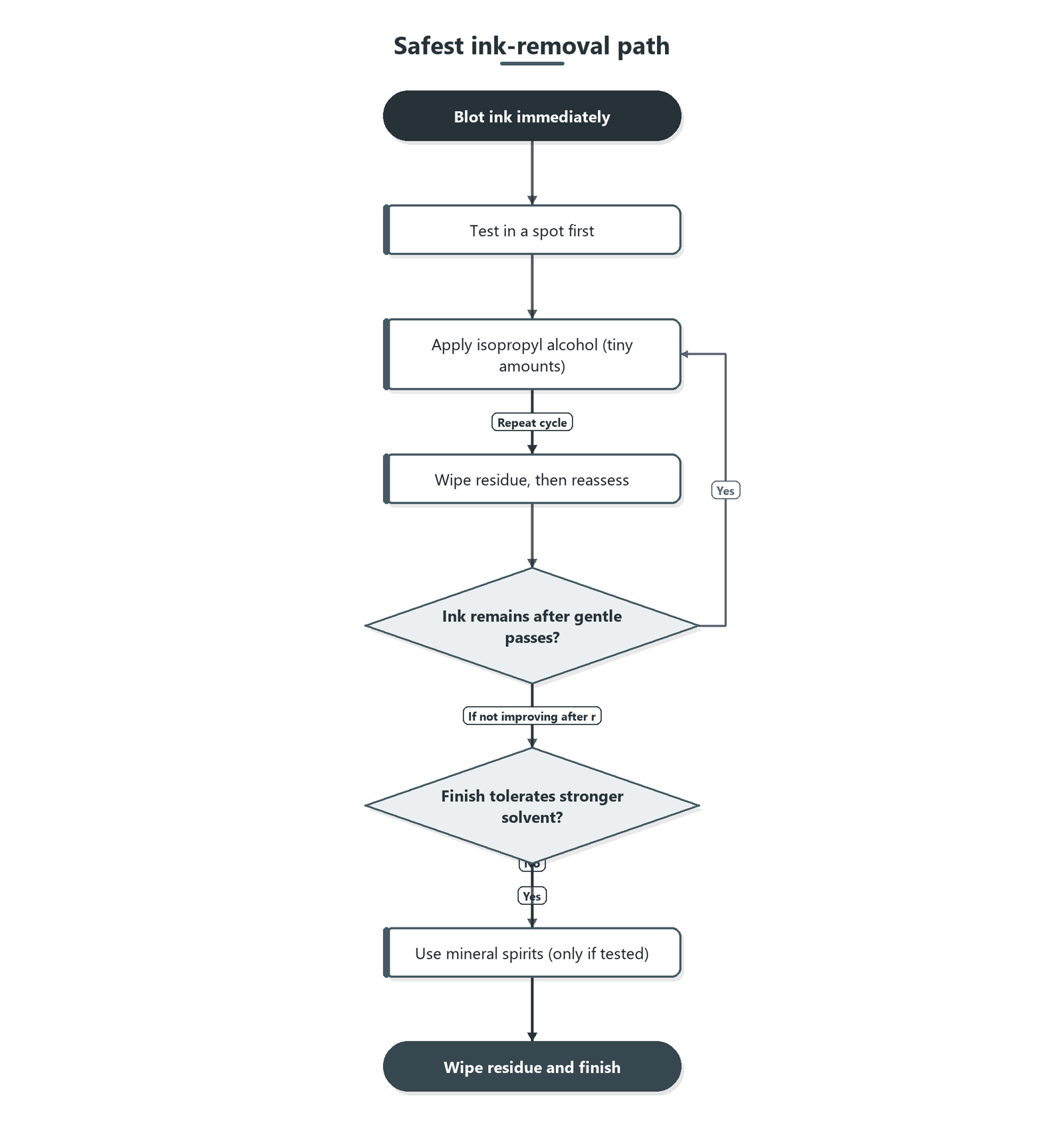
Downsides to know: solvent methods can dull or soften certain finishes, and deeply set ink may never fully disappear without refinishing. If your floor is bare/unsealed, heavily waxed, or you can’t identify the finish, you may want to skip solvent troubleshooting and contact a refinishing pro instead.
Quick scan checklist (save this):
| Step | What to do | Goal |
|---|---|---|
| 1 | Blot (don’t rub) | Prevent spreading |
| 2 | Test cleaner in hidden spot | Check finish safety |
| 3 | Use isopropyl alcohol on cloth | Lift ink safely |
| 4 | Wipe residue with clean, slightly damp cloth | Prevent haze/streaks |
| 5 | Repeat with fresh cloth sections | Avoid re-depositing ink |
| 6 | Escalate only if test passes | Protect the finish |
If you’re trying this today, stick to the cycle method and keep every pass light. That single habit is what separates “ink removed” from “finish damaged.”
Frequently Asked Questions
What’s the safest way to remove fresh ink stains from hardwood floors?
Blot the ink immediately with a clean white cloth so you don’t grind it deeper into the wood grain. Dampen a cloth with a small amount of isopropyl alcohol (or rubbing alcohol) and gently dab the stain from the outside in, replacing the cloth as it transfers ink. Wipe with a separate damp cloth to remove residue, then dry thoroughly. If the hardwood has a finish, test the alcohol in an inconspicuous area first to avoid dulling or discoloring.
How do you remove old ink stains from finished hardwood without damaging the finish?
Old ink may be harder because it has penetrated more deeply, so use a gentle solvent approach rather than aggressive scrubbing. Try rubbing alcohol on a cloth, dab and lift repeatedly, and stop when the stain lightens. For stubborn marks, you can use a small amount of mineral spirits on a soft cloth (test first), then wipe clean with a damp cloth and dry completely. Avoid soaking the area and never use steel wool, which can scratch hardwood flooring.
Why does ink stain hardwood so easily, and how can you prevent it from spreading?
Ink pigments can seep into the pores of hardwood and bond with existing finishes, making the stain look darker over time. Spreading happens when you rub the ink across the surface, pushing it deeper along the wood grain. Instead of wiping in circles, blot gently and work from the edges toward the center. Keeping the area dry and using the right ink stain remover for hardwood quickly helps minimize absorption and transfer.
What’s the best cleaner to use on sealed versus unsealed hardwood for ink removal?
For sealed or polyurethane-finished hardwood floors, rubbing alcohol is often a good first choice because it can lift ink from the top layer with minimal damage when used sparingly. For unsealed or waxed hardwood, be more cautious because solvents can penetrate and cause uneven color—start with the mildest option and spot-test. In both cases, use soft microfiber cloths, apply cleaner to the cloth (not directly to the floor), and dry the area thoroughly after cleaning. When in doubt, consult the floor’s finish type or the manufacturer’s cleaning guidelines.
Which household products should you avoid when cleaning ink marks from hardwood floors?
Avoid harsh abrasives like baking soda pastes, magic erasers, steel wool, and strong scouring powders, as these can strip the finish and scratch hardwood flooring. Be careful with acetone or aggressive lacquer thinners; they can discolor or fully remove the topcoat on finished wood. Also avoid soaking the stain with excessive water, which can cause warping or swelling around the inked area. Stick to gentle spot-cleaning methods, and always spot-test any ink remover for hardwood before treating the whole mark.
📅 Last Updated: October 31, 2026 | Topic: How to clean ink marks from hardwood floors? | Content verified for accuracy and freshness.
References
- https://scholar.google.com/scholar?q=how+to+remove+ink+stains+from+hardwood+floors Google Scholar
- https://scholar.google.com/scholar?q=ink+stain+removal+finished+wood+surface+denatured+alcohol Google Scholar
- https://scholar.google.com/scholar?q=pen+ink+stain+removal+varnished+wood Google Scholar
- https://scholar.google.com/scholar?q=cleaning+ink+from+wood+floors+isopropyl+alcohol Google Scholar
- https://scholar.google.com/scholar?q=wood+furniture+conservation+removal+of+ink+stains+solvent Google Scholar
- https://scholar.google.com/scholar?q=removal+of+ballpoint+ink+from+painted+wood+surfaces Google Scholar
- https://scholar.google.com/scholar?q=stain+removal+hardwood+floor+ink+guidelines Google Scholar
- https://scholar.google.com/scholar?q=hardwood+floor+maintenance+stain+removal+ink Google Scholar
- https://scholar.google.com/scholar?q=conservation+treatment+ink+stains+on+wood Google Scholar
- https://scholar.google.com/scholar?q=solvent+effects+on+ink+dyes+in+wood+and+varnish+systems Google Scholar