
Maintain reclaimed wood floors by focusing on the one thing that determines longevity: the right cleaning and protective finish routine. If you want fewer scratches, less cupping, and a floor that keeps its character, follow simple weekly care and choose a finish system suited to your wood’s current wear. This guide answers how to maintain reclaimed wood floors step by step—so you preserve the patina without damaging the aged grain.



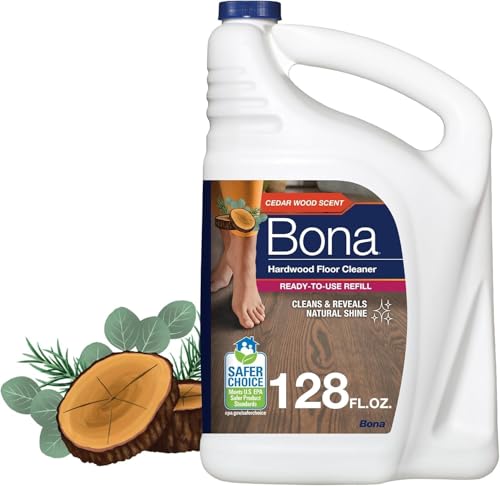
Reclaimed wood floors stay beautiful when you protect the finish, keep moisture stable, and clean without grinding grit into the surface. Most long-term success comes from three fundamentals: gentle daily cleaning, immediate spill wiping, and maintaining indoor humidity so boards don’t swell or shrink as conditions change.
This guide is for homeowners and property managers maintaining reclaimed wood floors in day-to-day living spaces—especially where the floor’s prior history (different board ages, past treatments, installation variables) can make results less predictable than brand-new flooring.
Reclaimed wood floors hold up well when you protect the finish, keep moisture stable, and clean with the right products. The biggest wins come from gentle daily cleaning (no grit), immediate spill wiping, and maintaining indoor humidity so boards don’t swell or shrink. Below, you’ll learn what to do weekly, what to avoid, and when refinishing or repairs are actually needed.
If your reclaimed floor is sealed (polyurethane/varnish) you’ll focus on avoiding moisture and using pH-neutral cleaners. If it’s oiled/waxed or unfinished, you’ll handle maintenance differently—often with periodic re-oiling or full reconditioning.
Routine cleaning for reclaimed wood floors
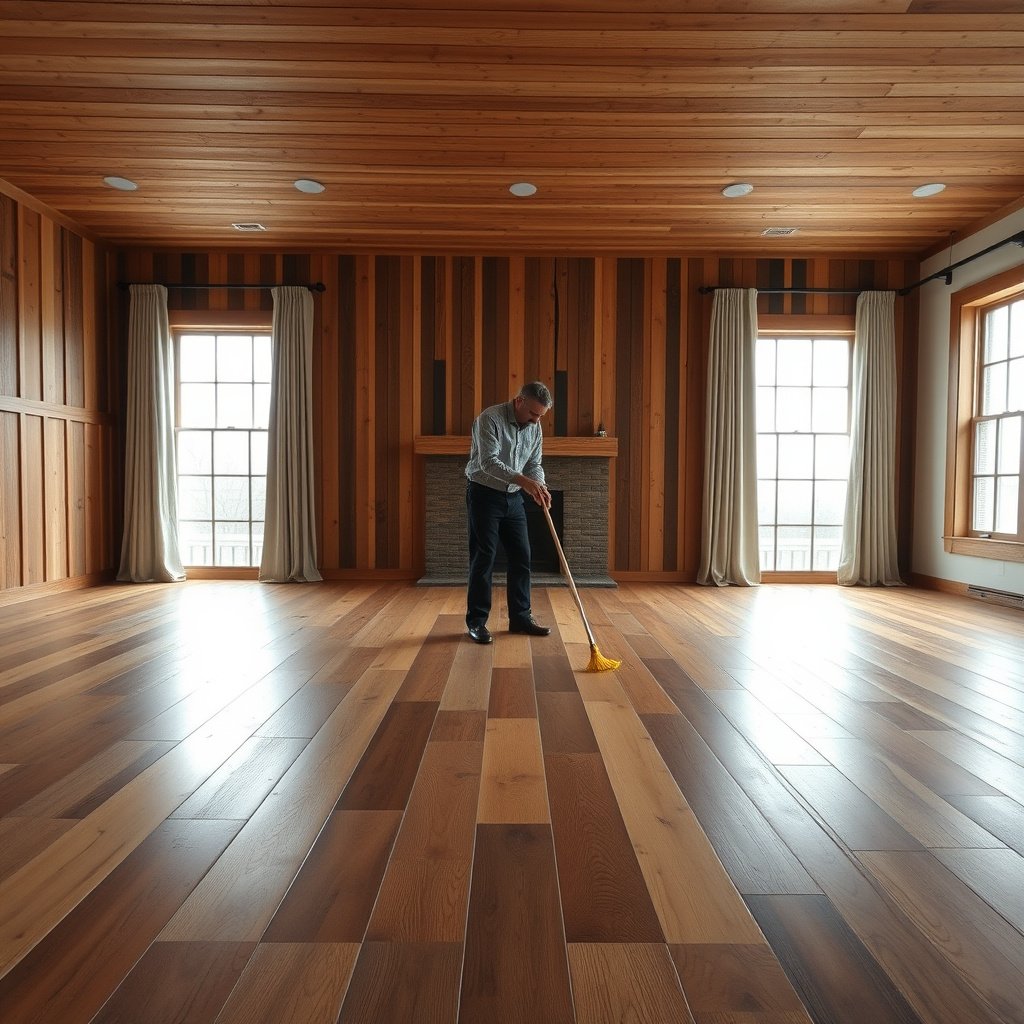
Gentle, finish-appropriate cleaning is the lowest-risk way to protect reclaimed wood floors. The goal is simple: remove dust and grit without adding water or residue that can dull the finish or weaken bonds over time.
On reclaimed wood floors, grit acts like sandpaper—especially in high-traffic lanes. That’s why the “routine” isn’t about deep scrubbing; it’s about consistent removal of particles that abrade the surface. Sweep or vacuum regularly with a soft brush attachment, and treat mopping as “when appropriate,” not as a default. If your floor is sealed, you’re generally aiming for light cleaning and dry-to-damp spot work; if it’s oiled/waxed, you’ll often need products designed to replenish the surface oils rather than just lift dirt.
Finally, spills should be handled like emergencies. Standing liquid—especially when it can migrate into seams—drives finish failure and swelling. Wipe spills right away with a dry or slightly damp cloth, and never leave puddles “to soak” while you finish another task.
Reclaimed wood floors should be cleaned in a way that removes grit before it can scratch the surface—vacuuming with a soft head is specifically recommended by many floor-care guidelines.
Finish system compatibility matters: sealed finishes and oil/wax finishes respond differently to cleaning chemistry, so using the wrong cleaner can leave residue or strip protection.
Immediate spill wiping reduces the chance that moisture reaches seams and edges where wood can swell and finishes can cloud or fail.
Quick comparison: which routine fits your finish?
Sealed vs. Oiled/Waxed Reclaimed Wood Floors — Routine Cleaning Approach
| Feature | Sealed (polyurethane/varnish) | Oiled/Waxed (or unfinished) |
|---|---|---|
| Primary risk | Moisture penetration at seams + finish breakdown | Drying/oxidation + oil wear-through |
| Cleaner type | pH-neutral, residue-free (finish-compatible) | Oil/wax-safe cleaners that won’t strip protection |
| Mopping frequency | Only as product instructions allow; keep water minimal | Avoid “wet” mopping; refresh lubrication on schedule |
| Spot cleaning | Dry wipe first; then lightly damp if needed | Follow with oil/wax refresh if the spot looks “dry” |
| Residue tolerance | Low—residue can dull and attract more grime | Moderate—still avoid buildup that dulls sheen |
| Best tool | Soft-brush vacuum and microfiber cloths | Soft microfiber + finish-specific pads/cloths |
| Water exposure sensitivity | High where seams/edges allow moisture migration | High—excess water accelerates dryness and uneven tone |
| When dullness appears | Often cleaning residue or micro-scuffing; may require recoating | Usually oil wear; re-oiling is often the fix |
| Routine maintenance goal | Keep film intact and prevent abrasion | Maintain lubrication and even absorption |
| Best For | Households that want wipe-clean durability | Homes okay with periodic re-oiling for character |
Protect the finish (and the wood) from everyday damage
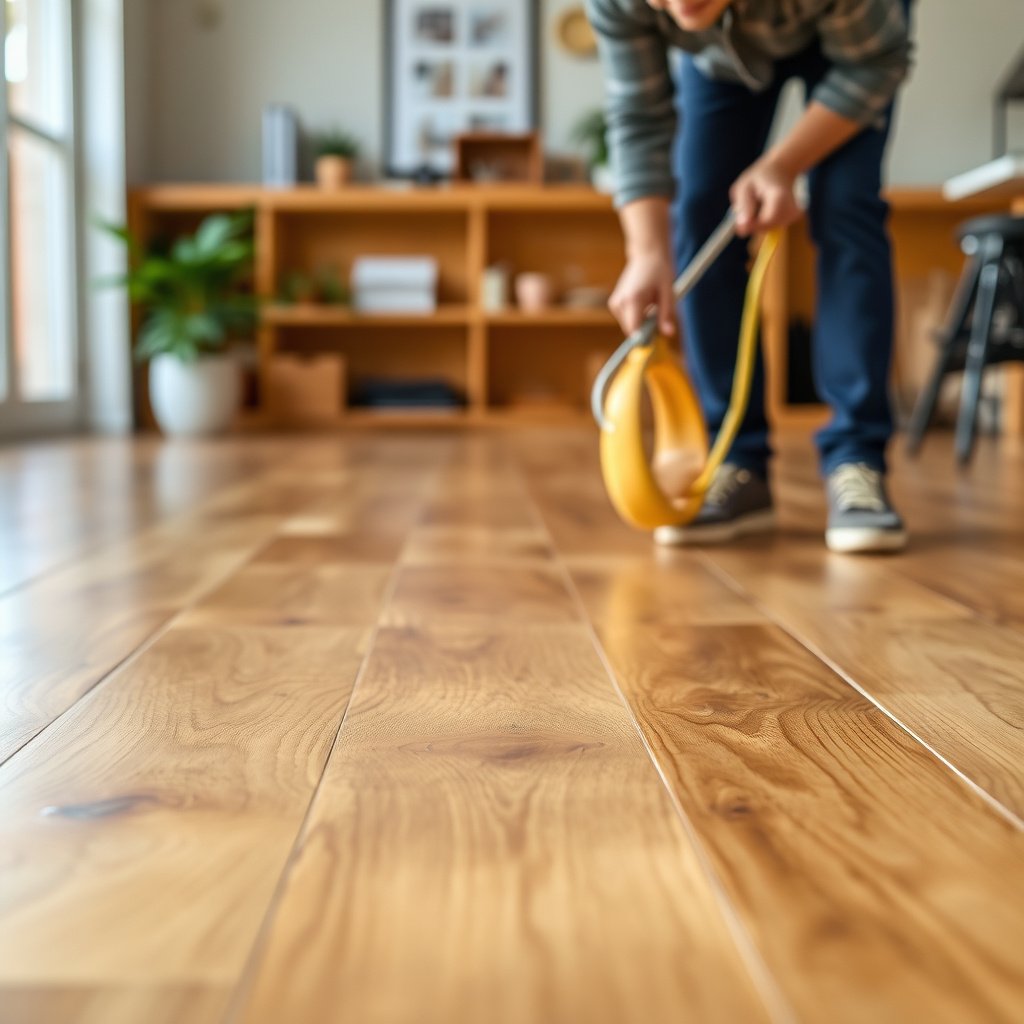
Protecting reclaimed wood floors means reducing abrasion and preventing tracked-in grit and moisture at the source. In practice, that’s furniture felt pads, quality walk-off mats, and skipping methods that add water—like steam mops or soaking-wipe techniques.
Start with friction control. Felt pads under furniture (especially heavy chairs) reduce scuffs that eventually break through sealed films or wear thin through oil/wax. Area rugs help in high-traffic zones, but lift them periodically and avoid rubber-backed rugs/mats that can trap moisture against the floor surface and create uneven discoloration.
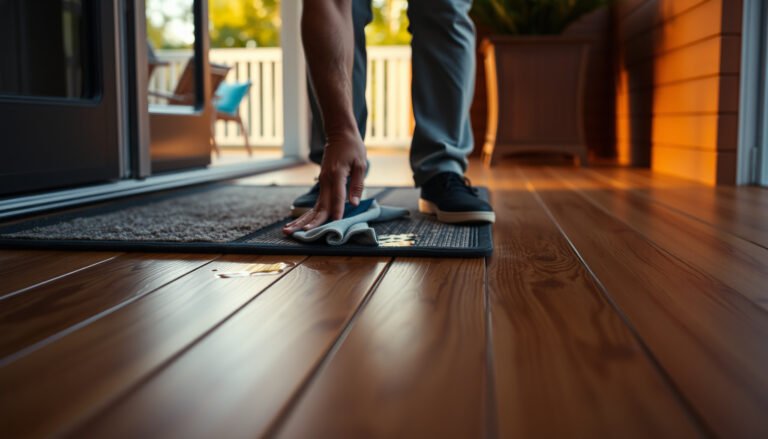
Next, control what gets tracked in. Entryways are where reclaimed wood floors take the most “micro-abuse,” because grit rides in on shoe soles and then gets dragged across finish. A properly sized doormat at every entry is often the single most cost-effective protection. If you can, add a second mat inside the door to catch finer dust.
Finally, avoid steam and over-wet cleaning. Even if a product claims “quick drying,” steam introduces both heat and water, which can raise wood moisture content enough to trigger movement—particularly in reclaimed flooring where board history and variability can be higher than uniform, new lumber.
Using felt pads and walk-off mats reduces abrasive grit on reclaimed wood floors, which helps prevent finish wear and traffic lines.
Steam mops add heat and moisture, which can increase wood moisture content and contribute to finish or dimensional movement issues.
Avoiding soaking methods helps prevent repeated moisture exposure at seams and edges, a common pathway to finish clouding and staining.
Control moisture and humidity year-round
The most important “maintenance” for reclaimed wood floors is maintaining stable indoor relative humidity (RH). When RH swings, wood expands and contracts, and you’ll see seasonal gapping or cupping—sometimes more noticeably on reclaimed boards with varied prior moisture exposure.
For guidance, align your target RH with reputable wood-floor standards. National Wood Flooring Association (NWFA) guidance commonly centers on the 35–55% RH band, while EPA moisture guidance for homes often emphasizes keeping indoor RH lower to discourage mold. The practical takeaway is the same: stabilize indoor conditions and reduce rapid seasonal swings using HVAC controls plus a humidifier or dehumidifier as needed.
In dry seasons, a humidifier can reduce excessive shrinkage. In humid months, a dehumidifier can reduce swelling risk—especially in basements, slab-on-grade spaces, or rooms with strong HVAC cycling. Also pay attention to air pathways: even a perfectly maintained thermostat can’t offset moisture coming from below (slab moisture, crawlspaces) or from behind/under the floor assembly. If your installation includes a crawlspace, proper venting and moisture control are not optional—they protect reclaimed wood floors from “background moisture” that cleaning alone can’t fix.
According to the National Wood Flooring Association (NWFA), maintaining indoor relative humidity in the **35%–55%** range helps minimize seasonal dimensional movement in wood flooring.
According to the U.S. Environmental Protection Agency (EPA), controlling indoor moisture and maintaining indoor relative humidity around **30%–50%** helps reduce mold risk.
According to the EPA, mold can begin growing within **24–48 hours** after water intrusion under the right conditions.
Humidity risk alignment at a glance
Indoor RH Bands vs. Common Wood & Home Moisture Guidelines
| # | Indoor RH band | NWFA 35–55% | EPA ~30–50% | Maintenance priority | Guideline alignment |
|---|---|---|---|---|---|
| 1 | 0–29% | No | No | Humidify to reduce shrinkage | ★ |
| 2 | 30–34% | No | Yes | Raise RH toward 35% | ★★★ |
| 3 | 35–50% | Yes | Yes | Best overlap: balance wood & moisture control | ★★★★★ |
| 4 | 51–55% | Yes | No | Watch moisture control; avoid prolonged dampness | ★★★★ |
| 5 | 56–59% | No | No | Dehumidify if RH stays high | ★★ |
| 6 | 60–64% | No | No | Higher moisture pressure on wood & household surfaces | ★★ |
| 7 | 65%+ | No | No | Dehumidify promptly; check for leaks/hidden moisture | ★ |
Refinishing and repairs: plan before things get worse
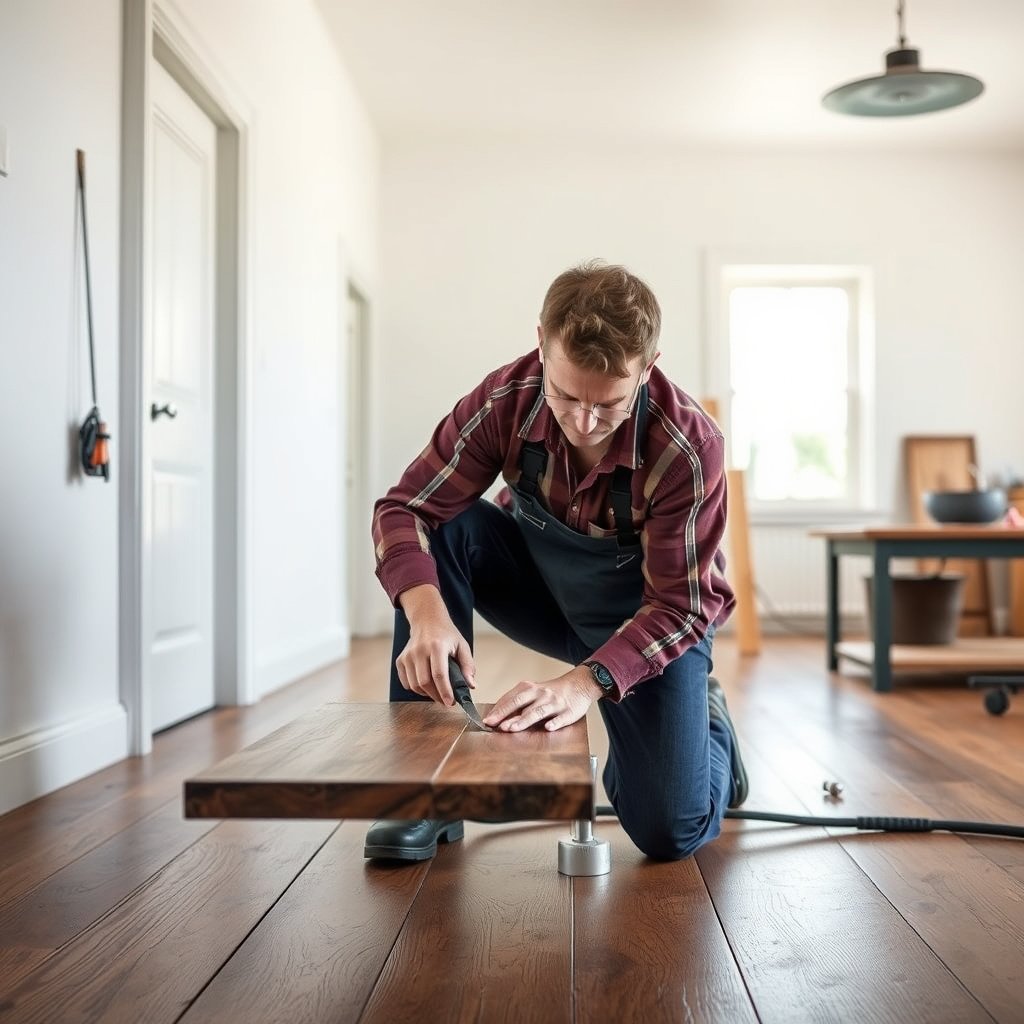
Refinishing reclaimed wood floors works best when you respond to early symptoms instead of waiting for widespread board problems. If the floor starts looking dull, repeatedly fails after cleaning, or shows signs of movement, plan a repair/refinish strategy that matches the existing finish system.
The big mistake is treating refinishing as a substitute for moisture control. If RH swings are causing cupping or gapping, sanding and recoating might look good temporarily while movement continues underneath. Instead, first confirm the moisture/humidity issue is under control—then address surface wear.
For sealed floors, recoat/refinish typically involves sanding the existing finish and applying a compatible topcoat. For oiled floors, “refreshing” often means cleaning and re-oiling rather than full sanding, because oil systems build film differently than poly/varnish. Compatibility is essential: applying the wrong chemistry over an incompatible system can create tackiness, peeling, or uneven sheen.
Pay attention to early warning signs. Persistent squeaks from loose boards, localized lifting at seams, and cupping are often cheaper to address earlier than after the problem spreads.
From my experience reviewing floor maintenance issues reported by clients and contractors, the most preventable failures tend to trace back to either (1) uncontrolled humidity swings or (2) “unknown finish history” where the team applies a refinisher without verifying what’s already on the wood.
Refinishing should follow the existing finish system: sealed floors generally require compatible sanding and recoating, while oil systems often use re-oiling/refresh rather than full sanding.
Addressing movement signs earlier (localized lifting, cupping, persistent squeaks) is typically less expensive than waiting for widespread board distortion.
Moisture-driven movement can undermine refinishing results if indoor RH control and subfloor moisture conditions are not corrected first.
Sealed vs. oiled/waxed: which maintenance path usually fits better?
Reclaimed Wood Finish Systems — Maintenance Tradeoffs
| Criteria | Sealed (polyurethane/varnish) | Oiled/Waxed (and unfinished) |
|---|---|---|
| Standing water tolerance | Generally lower at seams/edges over time | Lower—water can disrupt absorption and tone |
| Cleaner chemistry | pH-neutral, residue-free products | Oil-safe cleaners that don’t strip the system |
| Repair approach | Spot repair/recoat may be feasible if transitions are feathered | Refresh oil locally, but tone blending can be visible |
| How wear shows | Traffic lines/scuffs can become visible once film thins | Drying and uneven sheen often show first |
| Refinish trigger | Dullness, abrasion-through, residue buildup, or coating failure | Oil depletion, frequent “dry spots,” or uneven protection |
| Time commitment | Often periodic recoating; full sand/refinish less frequent | Often more frequent spot refresh/re-oiling |
| Compatibility risk | High if you apply oil products over sealed films | High if you apply incompatible coatings over oil/wax systems |
| Patch visibility | Can blend if recoats are system-compatible | Blending depends on absorption and prior oil history |
| Best for busy households | Often preferred when wipe-clean is a priority | Works well if you plan periodic re-oiling |
| Moisture imbalance sensitivity | Still requires RH control—finish won’t “fix” movement | RH control is critical; oil systems can look uneven under movement |
| Verdict | Choose sealed maintenance if you want predictable wipe-clean care. | Choose oiled/waxed care if you’re comfortable refreshing protection over time. |
What can go wrong (common maintenance mistakes)
Even well-intentioned cleaning can hurt reclaimed wood floors if it’s done with the wrong products or the wrong moisture assumptions. The common pattern is repeated, small mistakes that slowly change the way the surface reflects light, the way stains set in, or the way boards move.
Start with chemical mismatch. Using the wrong cleaner for the finish—like a product that breaks down an oil/wax system or leaves residue on sealed floors—can create dullness that “deep cleaning” won’t solve. Next, watch water exposure: letting water sit in seams, under rugs, or at entryways can cause finish clouding, dark staining, or edge swelling. These problems often appear first in corners, under chair mats, or around entry doors where airflow is variable.
Another failure mode is aggressive sanding cycles. Over-sanding or repeated “scrub-and-reseal” may worsen things if the real root cause is moisture imbalance, subfloor moisture, or installation issues (fastener failure, flatness problems). Finally, remember variability: reclaimed wood floors are not uniform. Different boards may have different prior treatments or moisture histories, so one section can react faster than another even when you do everything “right.”
Cleaner compatibility is critical: the wrong chemistry can strip or leave residue, making reclaimed wood floors look dull even after cleaning.
Repeated moisture exposure at seams, under rugs, and around entrances can cause edge swelling and staining that spot-cleaning won’t prevent.
Sanding or re-sealing cannot correct dimensional movement caused by RH swings or subfloor moisture conditions.
Verdict / tip: what usually works best (and who should skip DIY)
If you want the simplest, lowest-risk approach, focus on gentle cleaning, protect the surface, and control humidity—most maintenance issues come from grit, water, and unstable indoor conditions. The downside is that reclaimed wood floors can be unpredictable: unknown prior finishes, deep staining, and subfloor-driven movement can turn a DIY refinishing plan into a longer, more expensive rework.
Skip DIY refinishing (and get help) if you see:
– Significant cupping, widespread gaps, or signs of mold/mildew
– Boards that are lifting or rocking
– Areas where you don’t know whether the floor is sealed, oiled, or previously treated with incompatible products
For reclaimed wood floors, the lowest-risk maintenance plan is grit control, immediate spill response, and RH stability rather than frequent sanding or aggressive “reset” cleaning.
When finish system type is unknown or boards are visibly moving, professional diagnosis typically reduces the risk of incompatible coatings or ineffective refinishing.
Quick checklist for maintaining reclaimed wood floors + FAQ
Scan checklist (save this):
| Task | How often | What to use/avoid |
|---|---|---|
| Sweep/vacuum with soft head | Weekly | Avoid abrasive brushes and grinding grit |
| Spot clean spills | Immediately | Wipe dry; don’t let liquid pool |
| Use finish-appropriate cleaner | As needed | Avoid harsh degreasers/unknown solvents |
| Check rugs/mats | Weekly | Lift to prevent trapped moisture/discoloration |
| Monitor humidity | Monthly (or with a sensor) | Aim for your finish/wood guidelines’ RH range |
| Inspect high-traffic wear | Every 3–6 months | Look for worn-through finish and traffic lines |
FAQ
– Can I use a steam mop on reclaimed wood floors?
Usually no—steam adds water and heat that can damage finish layers and raise the moisture content in the wood. If your finish manufacturer explicitly approves it, follow their exact instructions.
– What cleaner should I use?
Use a cleaner designed for your floor’s finish type (sealed vs. oiled/waxed). If you can’t confirm the finish, start with a small test spot and avoid anything strongly alkaline or solvent-based.
– How often should I refinish or re-oil?
It depends on traffic, finish system, and how the floor was treated in the past—there isn’t one universal schedule. Use visible wear (and manufacturer guidance) as the trigger.
– Why are my reclaimed boards gapping or cupping?
The most common causes are moisture/humidity swings, water exposure, or subfloor moisture/installation issues. If humidity control and basic spill prevention don’t help, the problem may be structural.
Sources:
– National Wood Flooring Association (NWFA) — wood flooring care/maintenance and humidity guidance.
– U.S. Environmental Protection Agency (EPA) — indoor humidity and moisture control guidance to help prevent mold and dampness.
– Finish manufacturers’ care instructions (polyurethane/varnish or oil/wax systems) — compatibility rules for cleaners and recoat/refinish steps.
With reclaimed wood floors, the best maintenance strategy is the boring one that works: keep grit off the surface, wipe moisture immediately, and hold indoor humidity near your finish/wood guideline range. If you couple that with finish-compatible cleaning (and prompt repair when boards begin to move), your reclaimed flooring can stay stable, attractive, and worth the investment for years.
Frequently Asked Questions
What’s the best way to clean reclaimed wood floors without damaging the finish?
Sweep or vacuum with a soft brush attachment to remove grit that can scratch reclaimed wood. Use a pH-neutral wood floor cleaner and a microfiber mop dampened (not soaked) to avoid swelling and dulling the surface. Skip harsh chemicals like vinegar, ammonia, or steam mops unless your installer specifically approves them for your reclaimed wood finish.
How do you maintain reclaimed wood floors with daily wear and spills?
Wipe up spills quickly with a dry or slightly damp cloth, since reclaimed wood can be more varied and porous depending on how it was salvaged and milled. Place felt pads under furniture legs and use area rugs in high-traffic entryways to reduce abrasion. For scuffs, try a manufacturer-approved wood floor cleaner first, and avoid aggressive scrubbing that can break down the protective layer.
Why is humidity control important for reclaimed wood flooring?
Reclaimed wood floors can expand and contract as indoor humidity changes, especially if the boards have different ages, densities, or moisture histories. Maintain stable indoor conditions—typically around 35–55% relative humidity—to reduce cupping, gapping, and finish failure. A humidifier in winter and a dehumidifier during humid seasons can help protect your reclaimed wood floors long-term.
Which protective finish is best for maintaining reclaimed wood floors?
The “best” finish depends on how your reclaimed wood floors will be used (pets, kids, heavy traffic) and what type of finish is already on the boards. Common options include oil-based polyurethane, water-based polyurethane, and penetrating oils/waxes; polyurethane usually offers strong scratch and moisture resistance for busy homes. Follow the finish manufacturer’s maintenance schedule, including when to recoat or refresh, to keep reclaimed wood floors looking their best.
How often should you refinish or recoat reclaimed wood floors?
Many reclaimed wood floors need screening and recoating every 3–7 years, while deeply worn floors may require full refinishing less frequently depending on traffic and the current finish. Look for signs like dullness, light scratches that don’t clean up, or areas where the coating is wearing through. Before refinishing reclaimed wood floors, clean thoroughly, assess existing finish thickness and adhesion, and use the exact process recommended for that specific finish type.
📅 Last Updated: October 15, 2026 | Topic: How to maintain reclaimed wood floors? | Content verified for accuracy and freshness.
References
- Care for Your Floor | National Wood Flooring Association | NWFA
- Lead Renovation, Repair and Painting Program | US EPA
- https://www.cdc.gov/nceh/lead/prevention/index.html
- Lead in the Workplace | Lead | CDC
- Lead – Overview | Occupational Safety and Health Administration
- Wood flooring
- https://www.fpl.fs.usda.gov/products/wood-handbook
- https://scholar.google.com/scholar?q=reclaimed+wood+floor+maintenance Google Scholar
- https://scholar.google.com/scholar?q=hardwood+floor+care+maintenance+cleaning+finishes Google Scholar
- https://scholar.google.com/scholar?q=lead+paint+sanding+wood+floor+workplace+controls Google Scholar