Make hardwood floors in a hallway safer by focusing on three high-impact upgrades: stop slips with the right anti-slip rug pads or coatings, reduce trip hazards by tightening loose boards and filling gaps, and improve lighting and visibility along the traffic path. Follow these practical steps to create a hallway surface that’s more stable, less slick, and easier to navigate for everyone.




Hardwood floors in a hallway get unsafe mainly because of slips, trips, and worn spots—so start by improving traction and fixing hazards at the edges and transitions. Then keep the finish maintained and your cleaning routine dry and manufacturer-approved so the surface doesn’t get slick. This guide walks you through practical changes that usually make the biggest difference, from runner placement to small repairs.
If your hallway sees a lot of foot traffic (kids, pets, bags/shoes, frequent rug movement), these steps are especially relevant. The advice below assumes you want safer walking without gutting the floor—just smarter prevention.
Assess what’s making your hallway slippery or trip-prone
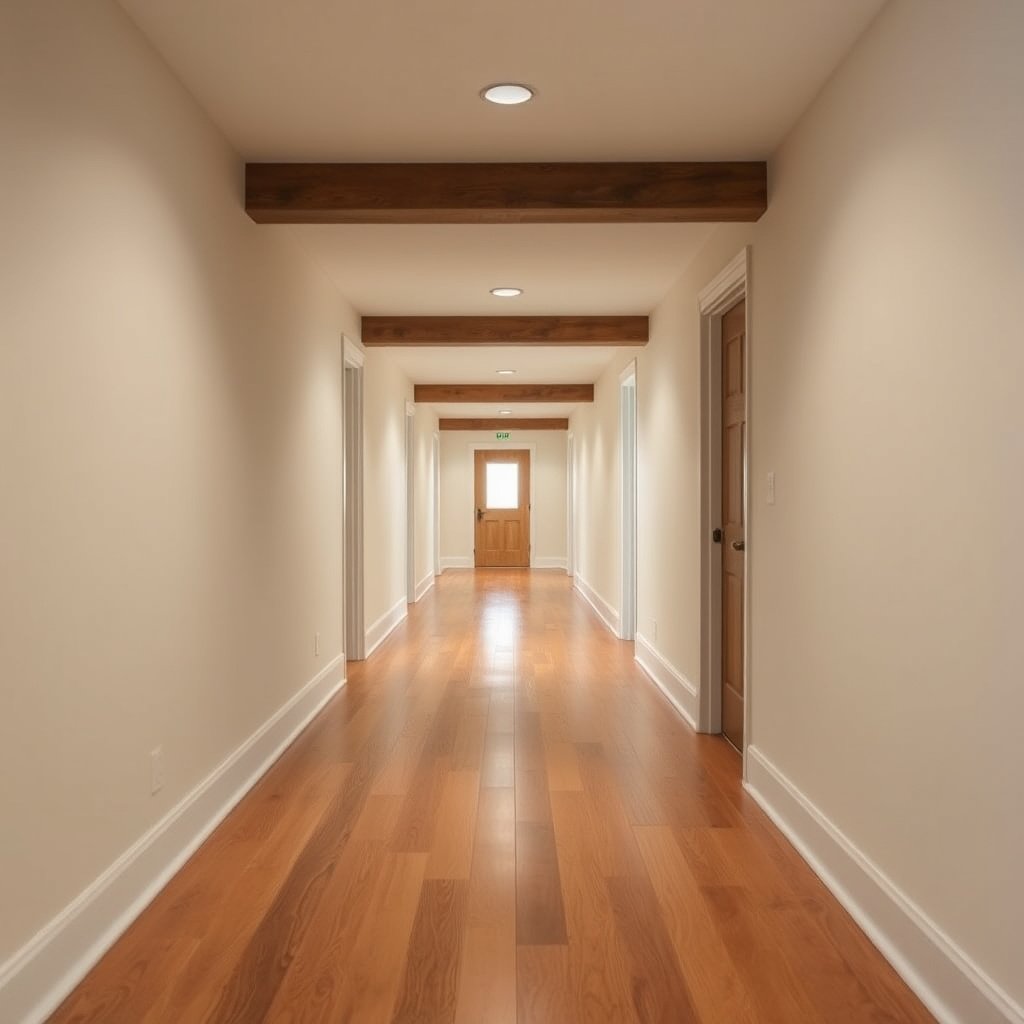
You don’t fix a hallway hardwood floor’s safety problem until you identify whether it’s mainly slipping (low traction) or tripping (a height/edge issue). A short, careful walkthrough in normal shoes usually reveals the exact “repeat locations” that need attention first.
“Slips and trips are commonly caused by small changes in surface friction and minor unevenness at edges or transitions.”
“Walkways must be kept free of hazards that could cause employees to slip, trip, or fall.”
“Hardwood flooring can be affected by moisture and environmental changes, which can contribute to gapping and edge irregularities over time.”
Spot the repeat “skatey” zones (slip risk)
Walk the hallway in everyday shoes and note where your steps feel less predictable—especially near the entry, stairs, doorways, and under where a runner is often installed. When people describe hardwood as “skatey,” it’s often one of these: finish build-up, residue from cleaning products, or wear that has smoothed out the protective top layer.
From my experience helping homeowners troubleshoot hallway issues, the “worst” spots are rarely random. They usually line up with the main walking lane, the runner edges, or where pets track in moisture.
Identify trip triggers (catch points)
Next, focus on “catch points”—places where feet snag or roll: runner ends that curl, raised thresholds between hardwood and tile/carpet, loose baseboards creating small gaps, and even hairline edges where planks meet.
For transitions, even a small step-up can matter when someone is carrying items or when kids run through. The goal is to remove anything a sock, shoe sole, or bag can momentarily catch.
Quick evidence you can collect
If you want to be systematic, take a phone photo of the hallway from eye level at each suspected hazard (runner ends, thresholds, dull/worn patches). Mark them with painter’s tape, then fix the top 2–3 locations first and re-test.
Where measurements help (optional)
If you’re already equipped with tools, a hygrometer and a flashlight angled along the floor can help confirm the “why.” Moisture-driven irregularities show up as visible edge shadows under side lighting.
Improve traction without damaging the hardwood
You improve safety fastest by increasing traction in the main walking lane—usually with a properly chosen hallway runner—without changing your hardwood’s finish compatibility. The most common mistake is using rug pads or cleaners that leave residue or dull the protective topcoat, which can make an already-slick hallway worse.
“Slip resistance is strongly influenced by surface condition; residue and finish build-up can reduce traction.”
“ASTM test methods define how to measure friction/traction characteristics of surfaces, which is relevant when evaluating slip risk.”
“Many hardwood cleaning failures happen when cleaners are not compatible with the specific finish type.”
Use a runner the right way (runner placement + backing)
A hallway runner is one of the highest-impact changes because it adds grip exactly where people step most. Choose a runner (or layered non-slip mats) with a non-slip backing designed for flooring.
Practical checks:
– Cover the main walking lane: Don’t place the runner only under “nice-to-walk” areas if people actually traverse the edges.
– Secure the ends: Curling or lifted ends create a trip hazard, even if the center is slip-resistant.
– Avoid sticky residue: Some rug/backing materials leave a tacky film on hardwood finishes. If you notice haze or tackiness after removing a rug pad, stop using it.
Fix “polished-looking” slickness by changing the cleaning method
If your hallway looks polished or shiny because of repeated cleaner use, traction can drop even though the floor looks “clean.” Switch to a hardwood-safe cleaner approved for your finish type, and avoid wet mopping that leaves a film.
Finish matters (polyurethane vs. oil/penetrating finishes behave differently), so compatibility is not optional. If you’re unsure, test the cleaner in a hidden spot first and observe for 24–48 hours.
When worn spots need more than cleaner
If one main lane is worn smooth, no cleaner will fully restore consistent traction. In those cases, the best safety move is often touch-up, re-coating, or refinishing—but only after identifying the cause (abrasive grit, finish wear pattern, or cleaning residue).
Runner vs. mat options (comparison)
Here’s a quick comparison of traction add-ons that are commonly used on hallway hardwood:
| Option | Best for | Common downside on hardwood | Safety payoff |
|---|---|---|---|
| Hallway runner with non-slip backing | High-traffic walking lane | Curling ends create trip risk if not secured | High |
| Rug pads designed for finished wood | Keeping rugs from shifting | Wrong materials can leave residue or haze | Medium-High |
| “Grip tape” strips under runner edges | Securing small sections | Not all tapes are residue-free | Medium (use carefully) |
| Dedicated anti-slip mats (thin profile) | Short-term traffic control | Can trap grit at edges | Medium |
| No add-on (clean-only approach) | Light traffic + intact finish | Won’t correct worn/transition hazards | Low |
Eliminate trip hazards at edges, seams, and transitions
You make hardwood hallways safer by removing catch points at the exact places feet first contact—runner ends, thresholds, and trim gaps. Even tiny height differences can turn a normal walk into a trip, especially in busy hallways.
“Transition strips are intended to reduce abrupt height changes between different floor surfaces.”
“Loose edges and lifted flooring components can increase the likelihood of tripping.”
“Proper rug placement includes preventing curling and maintaining secure edges to avoid tripping.”
Secure and trim runners so they don’t curl
Runner ends that curl are a classic trip mechanism. Fix them by:
– choosing the right length (so the end doesn’t end up where people step repeatedly),
– trimming where appropriate (if the runner is designed to be trimmed), and
– ensuring the backing lays flat without wrinkles.
If a runner shifts repeatedly, it’s safer to replace the backing or runner than to “work around” a constant movement issue.
Fix raised transitions at thresholds
Raised transitions between hardwood and tile/carpet (or between rooms) are often the difference between “fine” and “unsafe.” Use a thin transition strip that’s installed properly and fastened as specified.
Good transitions do three things:
– reduce the “catch” angle for shoe soles,
– handle daily traffic repeatedly, and
– keep edges from lifting over time.
Address loose baseboards and trim gaps
Loose baseboards aren’t just cosmetic. If there are small gaps or snag points, socks and shoes can catch. Re-secure trim, fill small gaps where appropriate, and remove anything protruding.
After repairs: re-walk the exact lane
Once you fix one transition or runner end, walk the hallway again in the same places you previously identified as “skatey” or “catchy.” The safest hallway floor work is validated by repeated, normal-footstep testing.
Choose safer cleaning and protect the finish
You keep hallway hardwood floors safer by cleaning in a way that doesn’t leave residue or damage the finish—especially around runner edges and seams. The goal is consistent traction, not just visual cleanliness.
“Cleaning practices must match the flooring’s finish type (e.g., oil vs. polyurethane) to avoid haze, residue, or loss of performance.”
“Wet cleaning can increase the risk of slip hazards when moisture remains on floors and at seams.”
“Entry matting reduces tracked-in grit, which can abrade finishes and change traction.”
Follow finish care instructions (this is where many hallways fail)
Oil-finished, waxed, and polyurethane-finished hardwood require different approaches. When you use a product intended for a different finish, you can cause:
– film build-up (reduces friction),
– sticky residue (creates patchy traction),
– dulling or streaking (making people re-clean more often, compounding residue).
When in doubt, test a cleaner in a hidden area first.
Use protective pads + a real entry mat
Hardwood hallway safety improves when grit doesn’t grind into the finish. Use:
– a sturdy entry mat at the door (so shoes shed moisture and particles before reaching hardwood),
– felt or foam pads under furniture,
– and quick removal of debris before it gets dragged down the hallway.
Spill response: wipe fast and dry fully
For any spill (water, juice, pet accidents), don’t just “wipe once and move on.” Wipe promptly, then dry fully so moisture doesn’t sit in seams and edges.
A hallway can become slick exactly where you’d expect—near trim, at transitions, and around runner edges where water can hide.
Manage moisture and everyday wear (the “silent” safety issue)
You reduce future slip and trip risk by controlling moisture and by maintaining the protective finish before wear turns into a slick surface. Most hallway safety problems don’t start as dramatic damage—they start as slow environmental change and finish breakdown.
“Wood flooring performance is linked to indoor humidity and temperature stability.”
“Avoid steam cleaning unless the manufacturer explicitly permits it for the specific finish.”
“When protective coatings wear through, it becomes harder to maintain consistent slip-resistant behavior.”
Keep humidity stable (use a hygrometer if you’re not sure)
Humidity swings can cause wood to expand and contract, which may create small gaps or uneven edges over time—perfect ingredients for tripping. If you don’t know your hallway’s conditions, measure them.
A practical target many hardwood-care guidelines use is a controlled indoor relative humidity range (confirm the exact range for your flooring). If you see seasonal spikes, consider a humidifier/dehumidifier strategy aligned with the manufacturer’s recommendations.
Avoid steam cleaning unless your finish allows it
Steam can over-wet some finishes and can migrate moisture into joints and edges. Unless your specific product documentation explicitly supports steam, choose an approved cleaner and dry method instead.
Touch up or re-apply protection when needed
A hallway finish that’s thinning in the main lane can become difficult to keep consistently slip-resistant. That’s when scheduled maintenance—touch-ups or re-coating—often beats repeated “deep cleaning” attempts.
What can go wrong (and what to avoid)
You can unintentionally make hallway hardwood floors less safe by trying quick fixes that address one symptom but ignore the root cause. Common mistakes include residue-building cleaners, incorrect rug backing, and failing to correct raised edges.
“Floor polish and shine products can increase surface film build-up, which may reduce traction in walking areas.”
“Incompatible rug backings can leave residue or damage finishes, creating both traction and appearance problems.”
“If the physical hazard is a transition step or a curled runner edge, changing cleaning products won’t remove the trip mechanism.”
Overusing “shine” or floor polishes
Polishes can create a smooth film that looks great but reduces grip—especially in hallways where people walk quickly and change direction.
Using the wrong rug backing
If you see sticky buildup, haze, or unusual slickness after rug use, stop and switch the backing. The safest hallway runner is the one that stays flat and leaves no residue.
Trying to “level” hazards with temporary adhesives
Some quick fixes can create new bumps or edges. If a threshold is raised, use the correct transition hardware or solution designed for flooring transitions.
Ignoring the single true culprit
If raised transitions or runner edges remain, improving cleaner type won’t fix tripping. Likewise, if traction is lost due to worn finish, simply adding a new cleaner won’t restore consistent grip.
Verdict / tip (what I’d do first)
Start with the simplest, highest-impact safety moves: a properly sized runner with secure non-slip backing, correct rug placement (no curling ends), and addressing any raised transitions or damaged spots along the main walking path. Then tighten up cleaning (dry, manufacturer-approved, no excessive film-building products). If your hallway has widespread wear in the main lane or repeated slip complaints despite good runner placement, plan for finish repair/refinishing rather than relying on temporary shortcuts.
Downsides and when to skip: If you suspect structural issues (e.g., major subfloor movement, persistent high transitions that can’t be corrected with standard strips, or extensive finish failure), a DIY-only approach can waste time and money. In those cases, consider professional inspection—especially if you’re dealing with repeated lifting, gapping, or finish failure beyond normal wear.
Quantitative touchpoints for hallway slip/trip prevention (hardwood-relevant)
| # | Measurement / evidence point | Value | Used for | Action strength |
|---|---|---|---|---|
| 1 | Indoor relative humidity target range for wood flooring | 35–55% | Reduces gapping/edge irregularities | ★★★★★ |
| 2 | Indoor temperature target for wood flooring | 60–80°F | Limits expansion/contraction cycles | ★★★★★ |
| 3 | Falls among older adults (annual frequency) | 1 in 4 | Why slip/trip prevention matters | ★★★★☆ |
| 4 | Older adults treated for fall injuries in ER | ~3 million / year | Health impact of preventable hazards | ★★★★☆ |
| 5 | Slip-resistance test method category | ASTM E303 (2020) | Measures friction coefficient | ★★★★☆ |
| 6 | Humid climate stabilization concept (tooling) | Hygrometer check | Confirms environmental control | ★★★☆☆ |
| 7 | Avoid steam cleaning when finish doesn’t allow it | Manufacturer-specific | Prevents moisture-driven edge issues | ★★☆☆☆ |
> Note: The exact humidity/temperature targets and cleaning compatibility should be confirmed against your specific hardwood brand/specification. Use the data above to guide what to look up, then follow your flooring/finish documentation.
Quick scan checklist (save this)
| Area to check | What to do | Safety payoff |
|---|---|---|
| Main walking path | Clean with hardwood-safe routine; avoid wet film | Less slip risk |
| Runner/mat | Use floor-safe non-slip backing; secure ends; size correctly | Fewer trips |
| Transitions/thresholds | Install/repair thin, tight transition strips | No foot catching |
| Wear spots | Re-coat/touch up or refinish if slickness comes from wear | More consistent grip |
| Dirt + moisture | Use entry mat; wipe spills fast; manage humidity | Prevents unevenness |
Sources
Hardwood floors in a hallway become noticeably safer when you address the two biggest mechanisms—insufficient traction and catch points at edges. Start with a runner and verified transitions, then lock in safer cleaning and moisture control so the finish stays consistent. If the “slick lane” is caused by finish wear, plan finish repair/refinishing rather than repeating residue-building or temporary fixes.
Frequently Asked Questions
What are the safest ways to prevent slipping on hardwood floors in a hallway?
Use area rugs with non-slip backing or rug pads to reduce foot traffic slip risks, especially in high-traffic sections. Clean hardwood with a hardwood-safe cleaner and avoid leaving any residue that can make floors slick. If you notice gloss buildup, use a gentle cleaner and ensure the floor is completely dry before walking on it.
How can I reduce trip hazards in my hallway with hardwood floors?
Keep cords, mats, and runners secured with non-slip tape or grippers so they don’t curl or lift at edges. If you have gaps or uneven boards, address them promptly because raised edges and loose boards increase trip risk. Consider installing threshold strips or transition strips between flooring types to create a smooth, safer pathway.
Why do gaps, scratches, and uneven planks make hallway hardwood floors less safe?
Gaps and uneven hardwood planks can catch shoes and create stumbling points, particularly when people are moving quickly through a hallway. Deep scratches may also collect debris and become harder to clean thoroughly, which can worsen traction. Regular inspection and timely repairs help maintain a level walking surface and consistent grip.
Which anti-slip products work best for hardwood floors without damaging the finish?
Look for products specifically labeled safe for sealed hardwood floors, such as water-based anti-slip coatings or topical treatments designed for wood finishes. Avoid abrasive powders or harsh chemicals that can dull or strip the protective coating. If you’re unsure, test the product in a hidden area first and follow the manufacturer’s curing and drying times for safest results.
What’s the best way to improve safety lighting and visibility on hardwood hallways?
Clear the hallway of visual clutter so shadows don’t hide transitions, edges, or rug seams. Use brighter, even lighting—like diffused LED fixtures—to improve traction awareness on polished hardwood floor surfaces. If you have runners, choose low-profile options and ensure edges are clearly visible so people can step safely every time.
📅 Last Updated: October 16, 2026 | Topic: How to make hardwood floors safer in a hallway? | Content verified for accuracy and freshness.