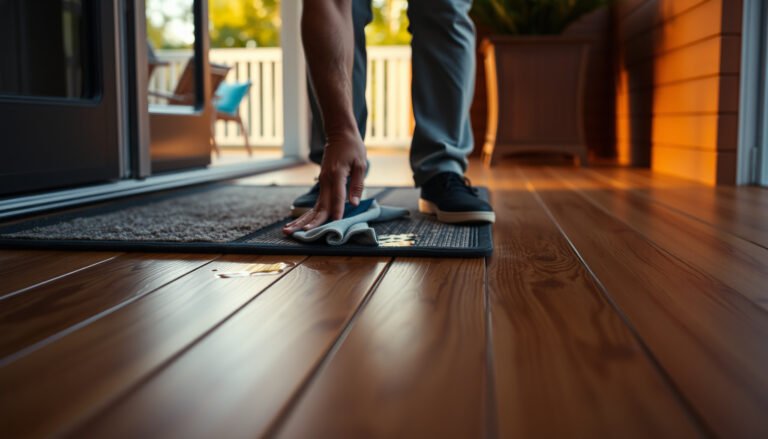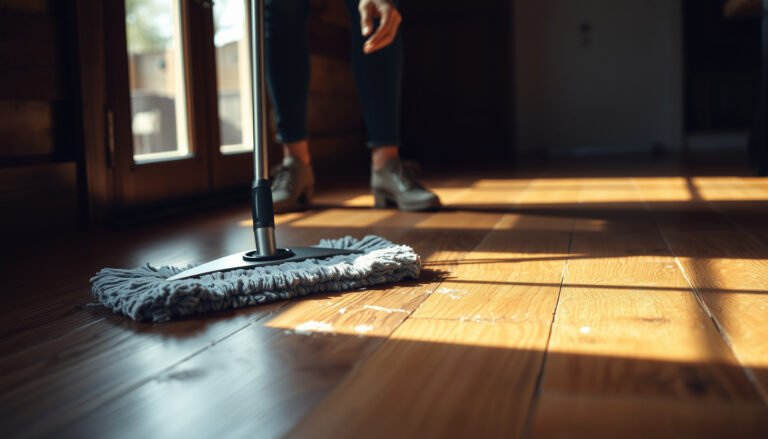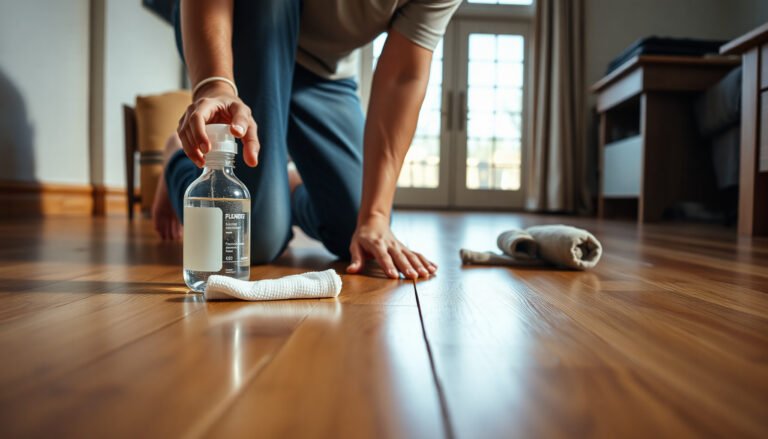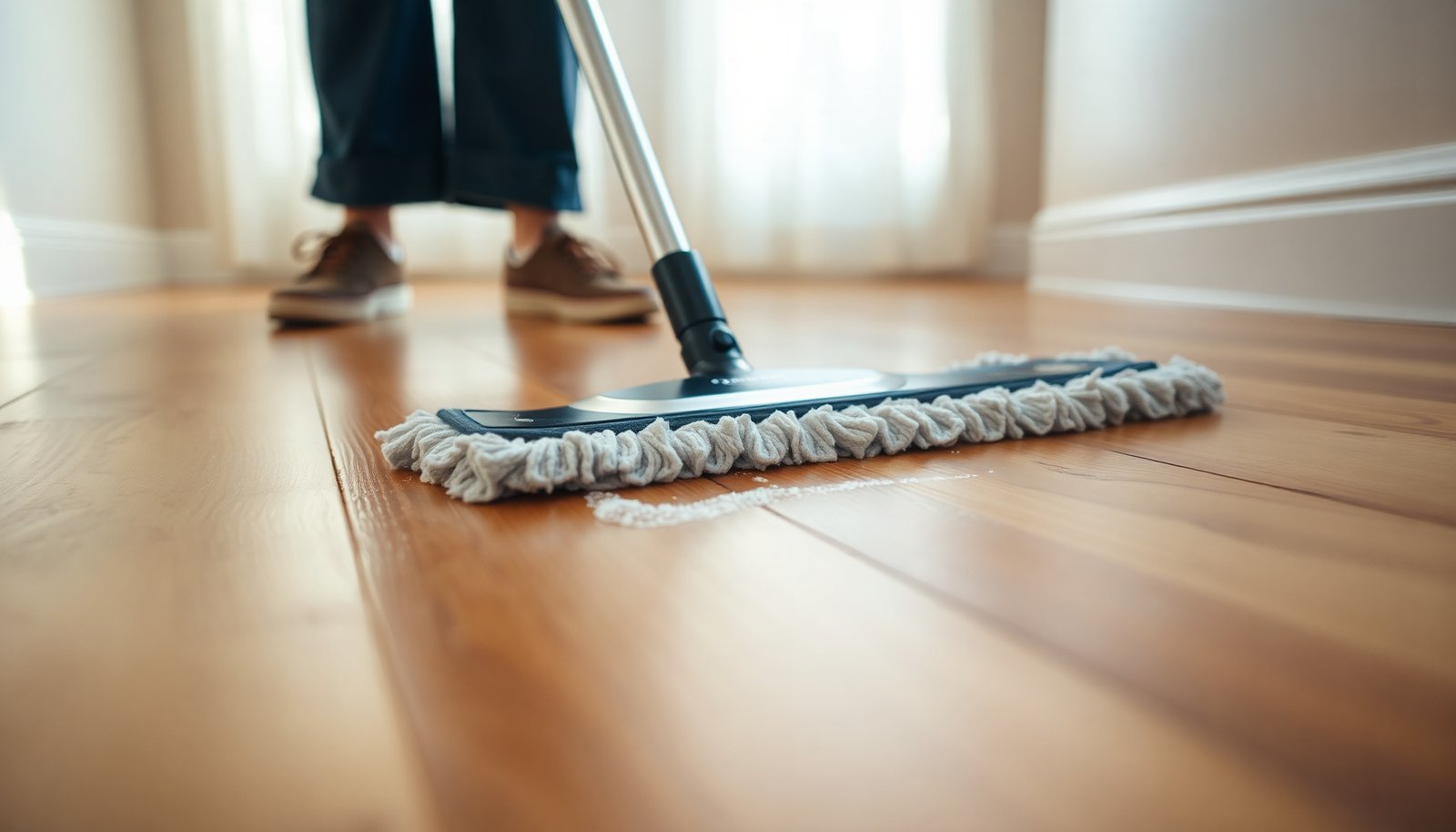

You notice a tacky patch on your hardwood floor where a spill, tape, or an adhesive left a stubborn film. With the right cleaner and a gentle method, you can deep clean the surface without damaging the finish, restoring a smooth, walkable feel. Plan about an hour to do it carefully, and you’ll only need a soft microfiber pad, warm water, a pH-neutral wood-safe cleaner, and a plastic scraper.




If your hardwood feels sticky, the fastest fix is to remove the buildup gently first (warm water + pH-neutral cleaner), then do a thorough rinse-and-dry so no residue is left behind. For tougher spots, you’ll likely need a finish-safe spot treatment (not harsh abrasives or steam) after testing in an out-of-sight area. This guide walks you through what to use, how to apply it, and how to avoid damaging the finish.
This is for homeowners dealing with tacky patches from spilled drinks, cleaner residue, wax buildup, or sticky adhesive—especially on sealed hardwood (polyurethane/laminate-style top coats). If your floor is unfinished/oiled, or you’re unsure what finish you have, treat the “spot treatment” steps as extra-careful and test first.
Prep: Identify the residue and protect the finish
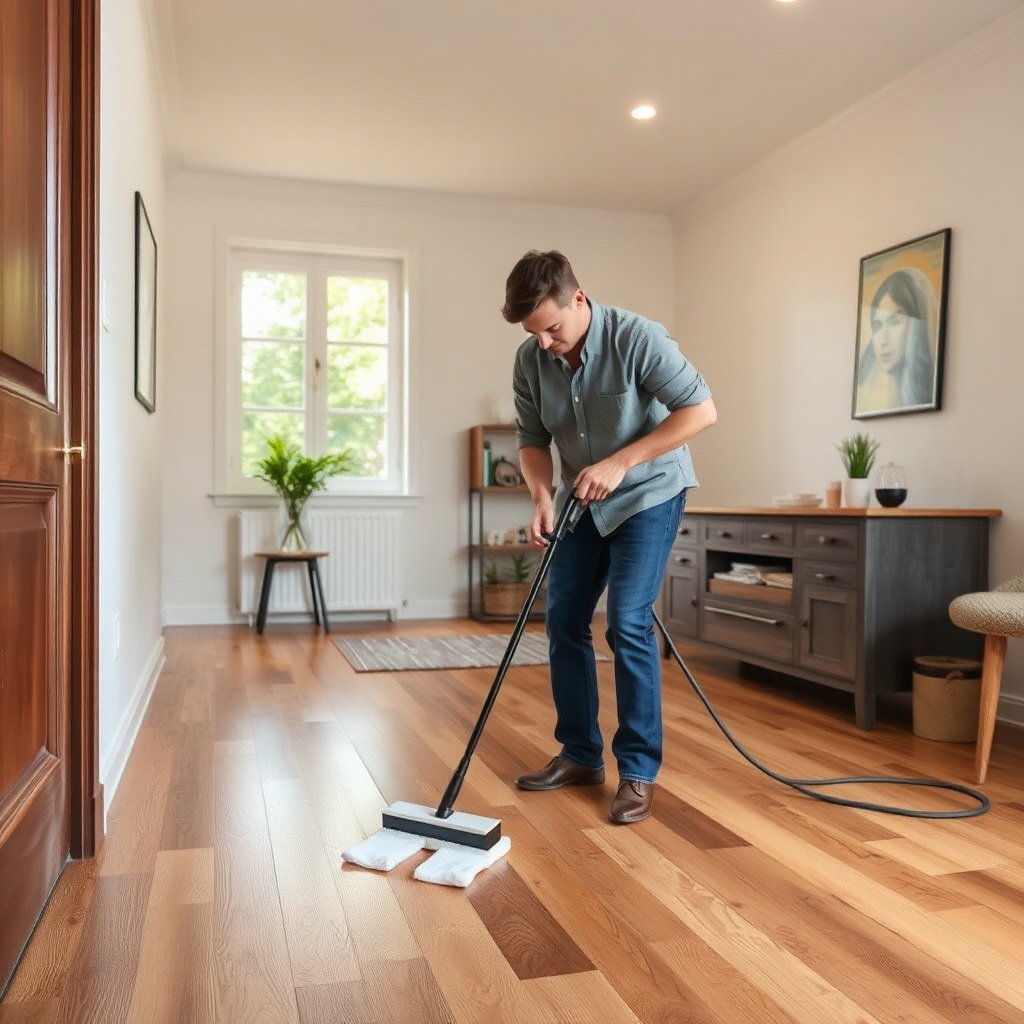
Start by identifying what’s actually causing the stickiness, because the safest method depends on whether it’s soap/wax film or an adhesive. Then you protect your sealed hardwood finish by removing grit dry first and testing any cleaner in a hidden area.
The practical workflow is simple—hardwood floors usually get sticky for one of a few reasons, and the location tells you a lot:
– Check where it’s sticky (high-traffic zones vs. one spill spot) to guess whether it’s soap/wax buildup or adhesive.
– Start with a dry sweep/vacuum with a soft brush so you’re not grinding grit into the finish.
– Plan a “test spot” in a hidden area before using any chemical or stronger solvent.
Before you wet anything, grab two basics that make deep-cleaning hardwood floors safer: a microfiber mop/cloth and a clean, damp microfiber for “rinse-wiping.” That rinse step matters because sticky floors often aren’t dirty—they’re coated with leftover cleaner film.
Also confirm whether your hardwood floor is truly sealed. Most modern sealed hardwoods tolerate pH-neutral cleaners, but steam and high-pH degreasers can dull or soften finishes. If you can feel tackiness uniformly across a walking path, think “buildup layer.” If it’s centered on a spill, think “local residue.”
Sticky Hardwood Residue Types: First Actions & Finish Risk (Sealed Floors)
| # | Residue type | Where it shows up | Start with | Finish-safe risk* | Recommended first passes |
|---|---|---|---|---|---|
| 1 | Cleaner/soap film | Areas you mop most | pH-neutral wash + rinse-wipe | ★★★★☆ | 1–2 cycles |
| 2 | Wax/polish buildup | Traffic lanes; smears with wiping | pH-neutral wash + thorough dry | ★★★☆☆ | 2 cycles |
| 3 | Sweet drink spill (syrupy) | One spot or small patch | Warm water + pH-neutral wash | ★★★★☆ | 1–2 cycles |
| 4 | Sticker/label residue | Sharp-edged patch | Soften + lift with plastic edge | ★★★☆☆ | 1–2 passes |
| 5 | Tape adhesive | Narrow strip or corners | Plastic scraper + rinse-wipe | ★★★☆☆ | 1–2 passes |
| 6 | Resin or varnish drips | Localized blobs | Finish-safe spot remover (localized) | ★★☆☆☆ | As needed, 1 spot |
| 7 | Edge-case: unknown residue | Mixed patch | pH-neutral cycle + rinse-dry test | ★★☆☆☆ | Start conservative |
Finish-safe risk is an action-risk guide based on whether the method is primarily water-based (lower risk) or requires a localized, finish-safe solvent/spot treatment (higher risk). Always follow your floor manufacturer’s product instructions for sealed hardwood.
Deep-clean method: lift residue without soaking
The goal is to dissolve and lift the sticky film while controlling moisture so your sealed hardwood finish isn’t softened or your seams aren’t stressed. Do a light, pH-neutral wash, immediately “rinse” by wiping with a clean damp cloth, and dry right away.
Use a method built around controlled dampness:
– Use a microfiber mop/cloth and a pH-neutral hardwood cleaner (follow the label dilution exactly), applying the solution sparingly.
– Work in small sections, then wipe with a damp clean cloth/mop to “rinse” the film off (sticky floors often come from leftover cleaner).
– Dry immediately with clean, dry microfiber towels or a dry mop to prevent moisture from sitting in seams.
Why this approach works: pH-neutral cleaning reduces the chance of damaging topcoats. If you remember that pH is a logarithmic scale (0–14 at standard conditions), even “mild” cleaners can be quite different from neutral (pH 7). According to IUPAC, pH is defined as the negative base-10 logarithm of hydrogen ion activity, and the conventional pH scale runs from acidic to basic across 0–14 under typical water conditions. IUPAC Gold Book (pH definition) In plain terms, “near neutral” is much safer for coatings than strongly acidic or alkaline formulations.
Also, avoid thinking of hardwood cleaning as “washing like tile.” Wood is hygroscopic (it reacts to moisture). When moisture drives wood above its fiber saturation point—commonly around ~30% moisture content—dimensional changes can become difficult to predict. U.S. Forest Products Laboratory / wood moisture science references (fiber saturation concept) That’s why sealed floors still require controlled moisture, not wet mopping.
A technique that prevents repeat stickiness (a problem we see a lot in real homes): after your first wash pass, your second pass should not be more detergent. Instead, your second pass is a rinse-wipe with plain water on a clean microfiber. If the cloth still looks “slightly soapy,” keep rinsing until it stops.
How to remove stubborn sticky spots safely
The fastest escalation path is: wash-and-rinse once or twice, then treat only the stubborn areas using finish-safe options you’ve tested first. That avoids turning one sticky spot into broad dull patches on your sealed hardwood.
Work in tiers:
– For tackiness from product buildup: repeat the wash-and-rinse cycle once or twice before escalating to anything stronger.
– For sticky remnants (tape/glue/label goo): try a gentle release approach first (e.g., soften carefully, then lift with a plastic scraper); avoid metal scrapers that can gouge.
– If you must use a stronger remover: choose a finish-safe option recommended for hardwood, apply to the cloth (not directly to the floor), and keep it localized—then wipe and rinse-dry.
When you soften adhesive, do it with restraint. Steam is risky on hardwood because it combines high moisture with heat. Steam mops typically deliver steam around the boiling point of water—about 100°C (212°F) at standard atmospheric pressure—meaning you’re applying both heat and water vapor. NIST (thermodynamic properties; boiling point of water) Many hardwood manufacturers explicitly restrict steam or require very specific settings and dwell controls, because added heat and moisture can affect finish adhesion and penetrate at seams.
Instead of steam, favor:
– Plastic scraper edges (light pressure) for lifted residue
– Warm water for gentle softening
– Finish-safe spot removers applied to cloth, then removed completely
From my experience walking through floor issues, the biggest “mystery sticky” cases are actually incomplete rinsing after DIY cleaner use. That’s why the wash-and-rinse cycle is step one—even for some adhesive-adjacent residues that were first contaminated by cleaning products.
Finish-safe approach vs. high-aggression cleaners (quick comparison)
- pH-neutral wash + rinse-wipe (recommended starting point)
- Pros: Lowest finish risk; works well for soap film and many sticky spills when rinsed well. Cons: May take 1–2 cycles for wax/polish buildup.
- Localized finish-safe spot treatment (after testing)
- Pros: Targets stubborn glue/wax without stripping the whole floor. Cons: Higher chance of sheen change if you over-apply or skip rinse-dry.
- Steam / harsh degreasers / abrasive pads (avoid)
- Pros: Can “feel” effective quickly. Cons: Can haze, soften coatings, or permanently damage sheen; also increases the chance the floor stays sticky due to finish disruption or residue.
What can go wrong (and how to avoid it)
The most common failure is leaving behind a film—either cleaner residue or loosened wax—so the floor feels tacky again right after “cleaning.” The second most common failure is over-wetting, which can stress seams even on sealed floors.
Watch for these risks:
– Too much water: soaking can cause swelling/cupping at joints; keep liquids controlled and dry right away.
– Wrong chemicals: strong degreasers, high-alkaline/acid cleaners, and steam can haze or strip certain finishes. Stick to pH-neutral and manufacturer-approved products.
– Scratches and dulling: scrub pads, abrasive sponges, and aggressive scraping can permanently damage the sheen.
– Residue left behind: if you don’t rinse-wipe and dry, the “cleaner” can become the new sticky layer.
If you’re cleaning in 2026, remember that many “hard floor” multipurpose products are designed for sealed surfaces like tile/vinyl—not specifically hardwood. Even when a product claims “safe for floors,” it may not be pH-neutral for your specific topcoat chemistry. In other words, label compliance matters: follow the dilution on the bottle exactly and never “make it stronger” to accelerate results.
For adhesive residue, avoid the temptation to crank up force. Scratching isn’t just cosmetic—micro-scratches can make future cleaning harder by increasing how residue anchors to the surface.
Verdict / practical tip before you start
Start with the least aggressive route: pH-neutral cleaner + damp rinse-wipe + fast drying. Escalate only on the exact sticky areas, with a finish-safe spot treatment and a tested approach—because the downside of going too hard is visible dull patches, finish softening, or long-term stickiness from trapped residue.
If your hardwood is unfinished, waxed (without a modern sealed topcoat), or very old/fragile, or if the residue is extensive and you can’t figure out the finish type, consider a professional or the floor manufacturer’s guidance before using anything stronger.
Quick checklist (scan this while you clean)
| Step | What to do | Why it matters |
|---|---|---|
| 1 | Dry sweep/vacuum first | Removes grit so you don’t smear buildup |
| 2 | Use pH-neutral hardwood cleaner (label dilution) | Cleans without attacking the finish |
| 3 | Apply lightly, work in sections | Prevents over-wetting |
| 4 | Wipe/rinse with clean damp microfiber | Removes leftover film that turns sticky |
| 5 | Dry immediately | Stops moisture from penetrating seams |
| 6 | Spot-treat only stubborn areas after test | Targets residue without broad finish damage |
Frequently Asked Questions
What’s the best way to remove sticky residue from hardwood floors without damaging the finish?
Start by identifying the residue type—sugar- or syrup-based spills, adhesive, or everyday grime—because the cleaning approach differs. Use the gentlest method first: dampen a microfiber cloth with warm water, then add a small amount of pH-neutral hardwood floor cleaner if needed. Avoid soaking the floor and never let liquid sit; dry immediately with a clean towel to protect the wood and finish.
How do I deep clean hardwood floors to get sticky residue off after a spill or sticky mop?
Deep clean by working in sections and using controlled moisture: wipe with a microfiber mop lightly dampened with warm water, then repeat with a pH-neutral cleaner. If the residue persists, use a plastic scraper or a soft scrub pad on the sticky spots only, applying minimal pressure. Rinse with a lightly damp cloth (or clean mop head) to remove any cleaner residue, then buff dry to restore shine.
How can I safely dissolve sticky residue on hardwood floors using vinegar or soap solutions?
For many sticky residues, a diluted vinegar solution can help, but only use it cautiously because some finishes may be sensitive. Mix a small amount of white vinegar with water (typically a light dilution), dampen a cloth—not the floor—and gently wipe the affected area. Finish by wiping again with clean water to remove any vinegar film, then dry thoroughly; if the residue remains, switch to a purpose-made pH-neutral hardwood floor cleaner.
Why does sticky residue stay on hardwood floors even after regular mopping, and how do I prevent it?
Sticky residue often comes from residue left behind by improper cleaners, over-spraying, or drying mop solutions that leave a film. It can also be from sugary spills that harden and attract dirt. To prevent recurring buildup, use a pH-neutral hardwood floor cleaner, change mop pads frequently, and avoid excess water—dry and buff the surface after cleaning when appropriate.
Which tools and products work best for deep cleaning sticky spots on hardwood floors?
The most effective setup is a microfiber mop or microfiber cloth, a pH-neutral hardwood floor cleaner, and a plastic scraper for spot treatment. For stubborn buildup, a non-scratch scrub pad can help, but use it only on the sticky area and keep the pressure light to protect the finish. If you suspect adhesive residue (tape, stickers, etc.), choose an adhesive-safe remover labeled for finished hardwood, test in a hidden spot first, and always finish with a clean-water wipe and dry buff.
📅 Last Updated: November 02, 2026 | Topic: How to deep clean hardwood floors to remove sticky residue? | Content verified for accuracy and freshness.
References
- Wood flooring
- https://extension.psu.edu/how-to-clean-hardwood-floors
- 404 Error
- https://www.bruce.com/support/care-and-cleaning/hardwood.html
- https://www.epa.gov/coronavirus/cleaning-and-disinfecting-your-facility
- https://www.cdc.gov/coronavirus/2019-ncov/community/disinfecting-building-facility.html
- https://scholar.google.com/scholar?q=deep+cleaning+hardwood+floors+sticky+residue Google Scholar
- https://scholar.google.com/scholar?q=remove+adhesive+residue+from+wood+flooring Google Scholar
- https://scholar.google.com/scholar?q=hardwood+floor+cleaning+methods+avoid+damage+water+residue Google Scholar