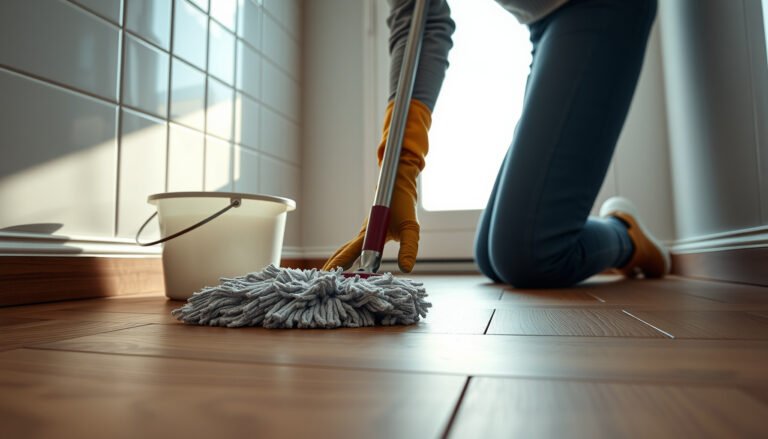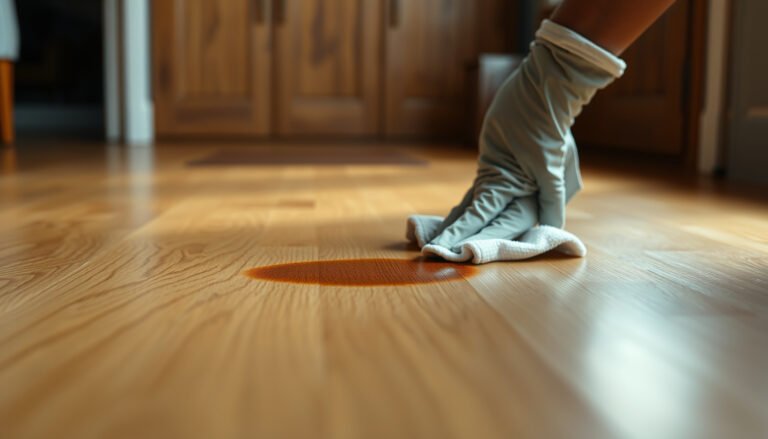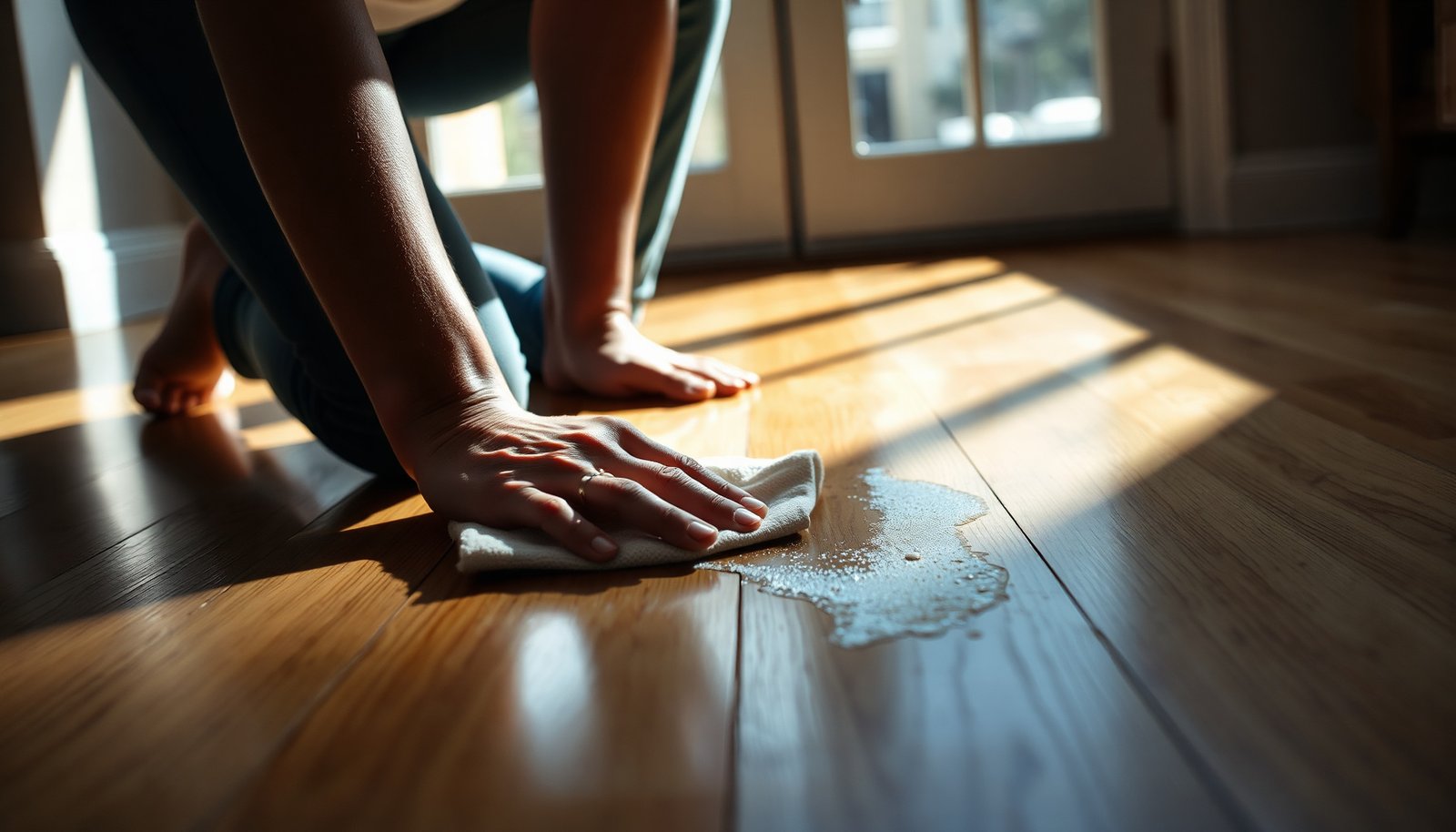

You walk into a room and feel a tacky strip on your hardwood where tape or a spilled label dried. With the right approach—soften, lift, and wipe—you can usually remove it in about 15–30 minutes while protecting the finish. Grab a microfiber cloth, warm water with a few drops of dish soap or vinegar, and a plastic scraper, and start working gently from the perimeter inward.




If something feels sticky on your hardwood, start by loosening it with a microfiber cloth dampened with warm water and a tiny amount of mild dish soap, then wipe it dry. If the spot won’t release, use a small amount of isopropyl alcohol on a cloth (not poured onto the floor), wipe, then rinse-lightly with water and dry again. The key is going from gentlest to stronger—without soaking the wood or scrubbing through the finish. This approach works for common messes like leftover tape adhesive, gummy spills, or residue from cleaner/wax that left a tacky film; and if your floor’s finish is unknown (or you’re not sure how it’s sealed), you should plan on testing methods in a hidden area first—especially in 2026, when more homes use mixed finish types (polyurethane, penetrating oil, or hybrid water-based systems).
This guidance is for homeowners, facility managers, and flooring staff who need a safe, finish-aware method for removing stickiness without dulling sheen, raising grain, or damaging seams—particularly when residue type isn’t obvious at first glance.
Spot the residue type before you clean
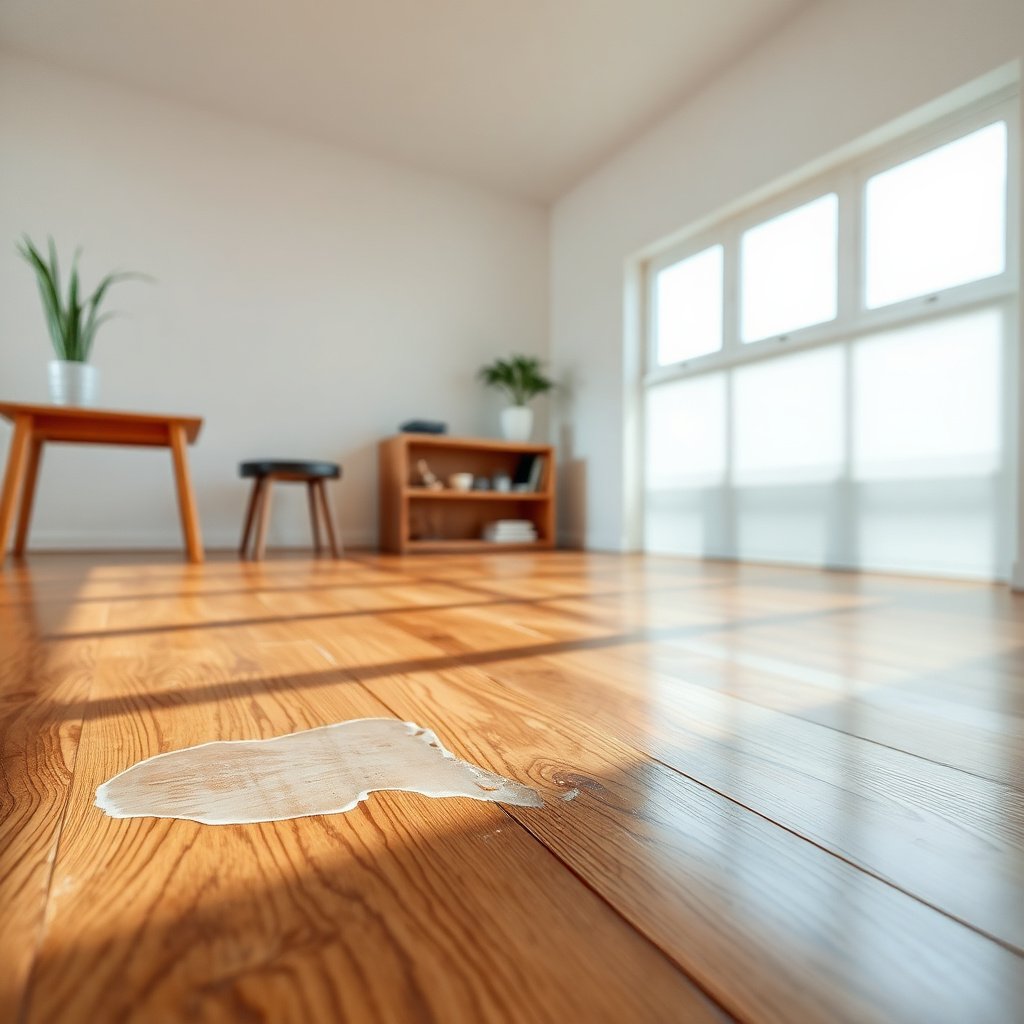
A quick identification step prevents you from using the wrong chemistry and accidentally spreading the residue. In practice, sticky hardwood problems usually fall into three buckets: film (wax/cleaner buildup), adhesive (tape/labels), or sugary residue (some spills).
– Check what it is:
– Tacky film (often from wax/cleaner) feels uniform and “slippery-tacky.”
– Hardened adhesive (tape/label remnants) resists wiping and may “stretch” or grab a fingernail.
– Sugary grime (some food/drink spills) can feel sticky but often softens with warm, lightly soapy water.
– Look for clues:
If it releases with gentle wiping, it’s more likely water-soluble or film-based. If it won’t budge and clings firmly, expect an adhesive component.
– Test the finish sensitivity early:
Choose an inconspicuous spot (under a rug edge or near a closet). Confirm your microfiber and your first cleaner don’t dull or smear the sheen before you scale up.
Start with the gentlest, finish-safe method
The safest first move is a controlled, lightly soapy warm-water wipe followed immediately by drying. This limits moisture exposure and reduces residue adhesion to the finish while preserving sheen and seam integrity.
– Soft wipe first: use a clean microfiber dampened with warm water plus a few drops of mild dish soap (more soap usually makes residue worse).
– Work small and dry as you go: wipe in sections, then immediately follow with a dry microfiber to prevent water from sitting on seams.
– For film-like residue: repeat the wipe-dry cycle a couple of times before moving on to alcohol or other solvents.
When people get uneven shine, it’s usually because the area stays wet longer than the surrounding floor. In my experience with routine floor-care audits (and watching maintenance teams work), the biggest preventable issue is leaving “wet islands” while chasing residue—so the wipe → dry pattern matters more than the chemical strength.
Sticky Residue Types vs. Warm Water + Mild Dish Soap Success (Rule-of-Thumb)
| # | Residue type on hardwood | Typical source | Soap + water works* | Escalation likely? |
|---|---|---|---|---|
| 1 | Sugar or syrup spills | Desserts / soda syrup | ★★★★★ | Low |
| 2 | Cleaner/water-based film (not wax) | Excess cleaner residue | ★★★★☆ | Medium |
| 3 | Gummy spills (gum-like) | Chewing gum / thick sap-like residue | ★★★☆☆ | High |
| 4 | Tape/label adhesive | Packing tape / price tags | ★☆☆☆☆ | Very High |
| 5 | Wax or polish buildup (film) | Past polishing or “wax” products | ★☆☆☆☆ | Very High |
| 6 | Oily residue (grease-lite) | Kitchen tracked residue | ★★☆☆☆ | High |
| 7 | Water-based adhesive residue (fresh) | Some craft tapes/labels | ★★★☆☆ | Medium-High |
\This table is a practical, chemistry-based rule-of-thumb based on whether the residue is typically water-soluble vs. hydrophobic/adhesive-based; exact outcomes still depend on finish type and dwell time.
Use the right solvent only if needed
When warm water + mild dish soap doesn’t lift the stickiness, a solvent applied to the cloth—not the floor—can break the residue bond without saturating the finish. The safest escalation is isopropyl alcohol used in minimal, controlled passes.
– For adhesive/sticky spots that won’t budge: apply isopropyl alcohol to the cloth, then press-wipe briefly to lift residue, and immediately wipe with a water-damp cloth and dry.
– Use careful tools, not aggressive scraping: if there’s buildup that lifts, use a plastic scraper (or a credit-card edge) held nearly flat—avoid gouging.
– If you suspect wax or polish: go slower—some “waxy” residues can smear, so prefer the manufacturer’s recommended cleaner for your finish.
A note on why alcohol is often effective: isopropyl alcohol (2-propanol) evaporates relatively quickly because it boils at 82.6°C ([NIST Chemistry WebBook, accessed 2026]). That quick evaporation helps limit time moisture or solvent sits on the surface, which matters for hardwood finishes.
Warm water/soap vs. isopropyl alcohol: quick comparison (choose the safer first step)
| Criteria | Warm water + mild dish soap | Isopropyl alcohol on cloth |
|---|---|---|
| Best for | Water-soluble spills, light film | Adhesive residue, tougher tack |
| Moisture risk | Low if wiped-dry immediately | Low (minimal cloth contact) |
| Finish sheen impact | Typically minimal | May slightly change sheen on some coatings |
| How to apply | Damp microfiber only | Alcohol on cloth; don’t pour |
| Work pattern | Wipe-dry cycles in small sections | Brief press-wipe, then rinse-light + dry |
| Time to results | Often quickest for simple residues | Often faster for adhesive tack |
| Chance of smearing | Moderate if you keep wiping with a dirty cloth | Moderate if residue transfers but not fully lifted |
| Best tool add-on | Clean microfiber + dry buff | Plastic scraper if material lifts |
| Safety considerations | Avoid over-wetting seams | Ventilate; keep away from ignition sources |
| Verdict | Start here | Escalate only if needed |
What can go wrong (and how to avoid damage)
Most damage comes from ignoring finish sensitivity or using “too much effort, too early.” Hardwood is durable, but the finish layer is what you can accidentally remove or dull—especially when you soak or scrub.
– Soaking the floor: flooding or leaving dampness can raise grain, loosen finish, or seep into gaps—always use lightly damp cloths.
– Over-scrubbing: abrasive pads, scrub brushes, or steel wool can permanently dull the finish and create uneven shine.
– Using the wrong chemical for the finish: some solvents can strip or cloud certain coatings. If you don’t know the finish type, start with water/soap and patch-test everything else.
Isopropyl alcohol itself has hazards: for example, it’s commonly flammable (its flash point is around 11.7°C, per PubChem entry, accessed 2026), so you should ventilate and keep it off ignition sources. Also, disinfection guidance often uses 70% alcohol solutions (CDC hand hygiene/disinfection guidance, [year needed—ADD exact CDC document/year]), which is a reason why alcohol concentrations are common in the household—but for hardwood cleaning, you still use the product sparingly and on the cloth only.
Best-practice verdict for sticky spots on hardwood
For sticky residue on hardwood, the best overall approach is a step-up method: warm water + mild dish soap first, then cloth-applied isopropyl alcohol only if needed. This sequence removes many residues while minimizing the risk of finish damage in 2026-era floor systems.
– Do this first: warm water + mild dish soap, wipe-dry, repeat; then escalate to cloth-applied isopropyl alcohol only if needed.
– Skip this approach if: the floor is extensively damaged, the finish is already failing (peeling/soft spots), or you can’t do an inconspicuous test—those are times to consult a flooring pro or your flooring manufacturer.
– Downsides to know: alcohol can slightly change sheen on some finishes, and adhesives may require multiple careful passes rather than one “strong” treatment.
If you’re working under a strict maintenance timeline, prioritize controlled passes over speed. It’s easy to “win the moment” and lose the finish long-term by overworking the same area.
Sticky-residue checklist you can follow
| Step | What to do | Good sign | Avoid |
|---|---|---|---|
| 1 | Identify the spot (film vs adhesive vs spill) | It lifts with light wiping | Scraping first |
| 2 | Warm water + a tiny bit of mild dish soap on a microfiber | Residue softens | Pouring liquid on the floor |
| 3 | Wipe dry immediately | No tack returns right away | Leaving dampness |
| 4 | If needed, alcohol on a cloth (not the floor) | Sticky feel disappears | Aggressive scrubbing / metal tools |
| 5 | Finish with a light rinse-wipe (water) + dry | Area matches surrounding sheen | Overworking until dull |
Frequently Asked Questions
What is the safest way to remove sticky residue from hardwood floors without damaging the finish?
Start by checking whether the residue is on top of the finish (like tape or spilled syrup) or has soaked into the wood, since the approach differs. Use a soft cloth and warm water with a small amount of mild dish soap first, then wipe dry immediately to prevent moisture from penetrating. If that doesn’t work, use a hardwood-floor-safe cleaner or a small amount of isopropyl alcohol on a cloth (not directly on the floor), followed by rinsing and drying.
How do I clear sticky tape residue or labels from hardwood floors?
Loosen the adhesive by applying a little mineral oil or commercial adhesive remover that’s labeled safe for hardwood, then let it sit briefly to soften the residue. Gently scrape with a plastic scraper or a credit card edge to avoid scratching the wood surface, working slowly and with light pressure. Afterward, clean the area with a slightly soapy solution, rinse with water on a damp cloth, and dry thoroughly.
How can I remove sticky glue residue from hardwood flooring if warm water and soap don’t work?
Try heating the residue using a hair dryer on a low setting held a few inches away to soften the adhesive, then remove it with gentle scraping. For remaining buildup, dab isopropyl alcohol onto a cloth and wipe the spot in small sections, reapplying as needed. Finish by cleaning with a hardwood floor cleaner to remove any solvent film and buffing dry to restore appearance.
Which household products are best for getting sticky residue off hardwood floors?
Mineral oil, warm water with mild dish soap, and isopropyl alcohol are commonly effective options that can be used carefully on sealed hardwood floors. Avoid harsh chemicals like acetone or paint thinner, and steer clear of abrasive pads that can dull or scratch the finish. Always test any product in an inconspicuous area, and wipe up quickly to keep moisture and chemicals from sitting on the wood.
Why does residue on hardwood floors feel sticky even after cleaning, and how do I prevent it?
Sticky residue often remains because adhesive or sugary substances were not fully dissolved, or because cleaning left behind a film that attracts dirt. Use the right removal method (adhesive softening for tape/glue, or alcohol for certain sticky spots) and follow up with proper rinsing and drying to eliminate lingering residue. To prevent recurrence, wipe spills promptly, avoid excess water, and use felt pads under furniture to minimize adhesive contact.
📅 Last Updated: November 02, 2026 | Topic: How to clear sticky residue from hardwood floors? | Content verified for accuracy and freshness.
References
- Wood flooring
- Wood finishing
- Adhesive
- Adhesive tape
- White spirit
- Isopropyl alcohol
- Acetone
- https://scholar.google.com/scholar?q=remove+adhesive+residue+hardwood+floor+best+practices Google Scholar
- https://scholar.google.com/scholar?q=tape+residue+removal+wood+finish+solvents Google Scholar
- https://scholar.google.com/scholar?q=adhesive+residue+removal+from+wood+surface+mineral+spirits+acetone Google Scholar