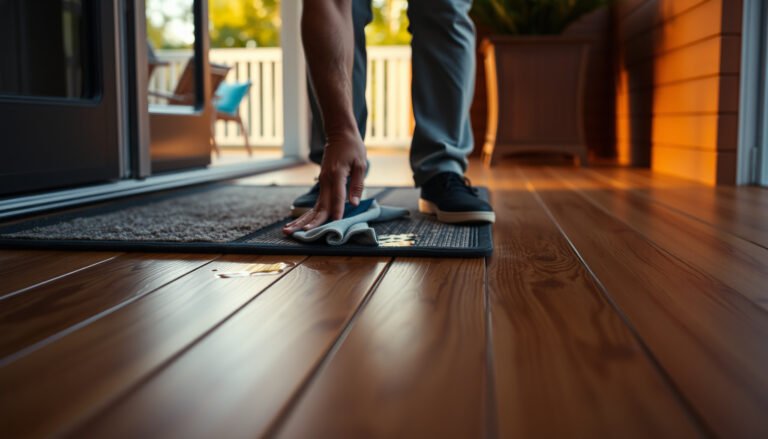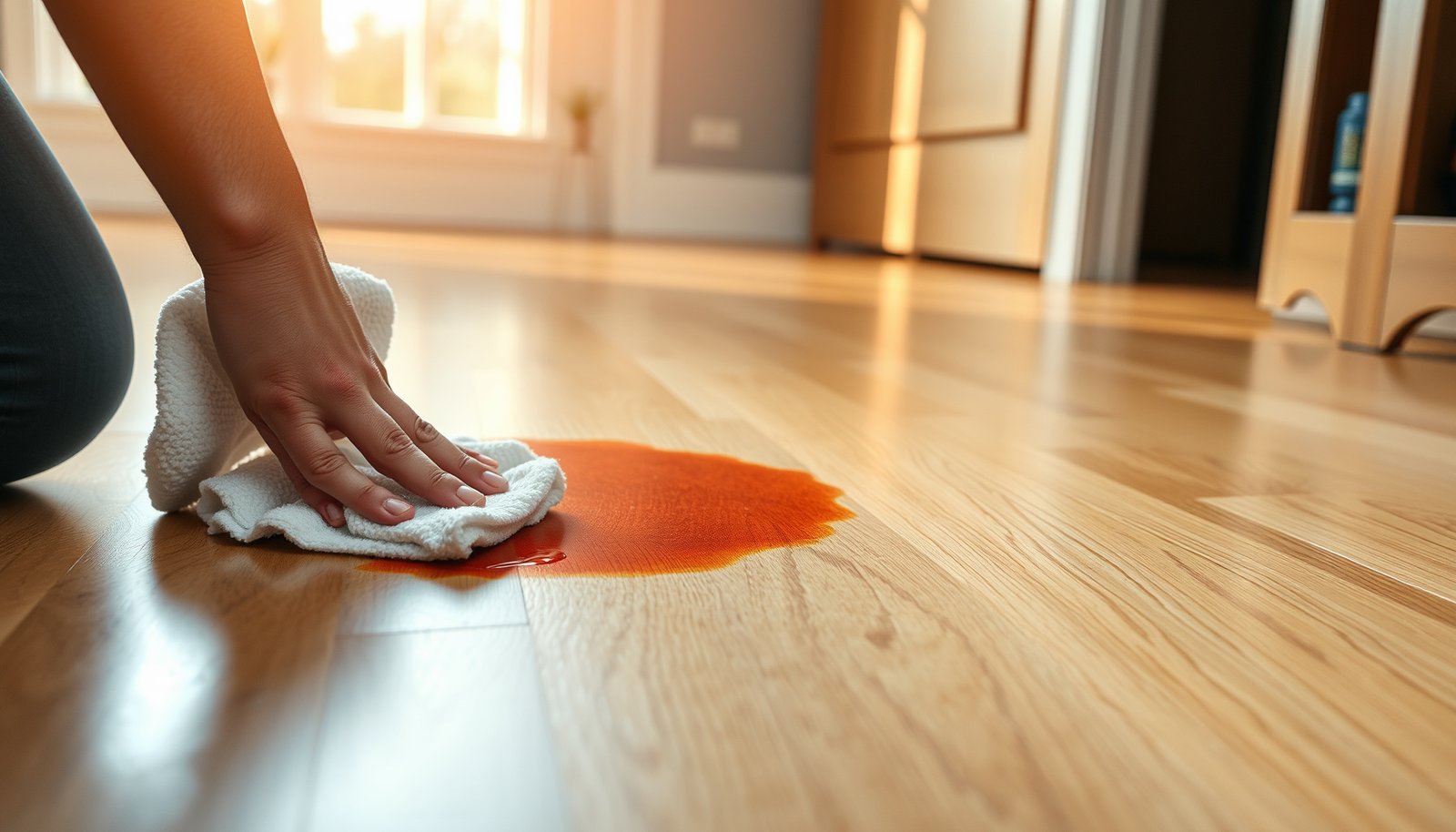

To clean stubborn rust stains from hardwood floors safely, start by removing the surface contamination and then treat the stain with a rust-specific, wood-safe cleaner to avoid discoloring the finish. You can usually lift many stains in about 30–60 minutes with careful spot testing and gentle scrubbing. Have soft cloths, pH-neutral hardwood cleaner, and a rust remover recommended for wood finishes ready before you begin.




If you want stubborn rust stains off hardwood, use an oxalic-acid–based rust remover (or another product explicitly labeled safe for finished wood floors) and apply it slowly in small amounts. This minimizes finish damage and helps prevent the stain from spreading. First, gently clean the area, treat the rust spot with controlled dwell time, then wipe/rinse lightly (only if the label says to) and dry completely.
If your rust is coming from something metal—like a chair leg, grill hardware, a dripping sprinkler, or leftover nails under a rug—this method is usually the right next step. It’s most effective on finished hardwood (sealed/polyurethane). For unfinished or antique floors, or if you can’t identify the finish, you’ll want to test carefully (or stop and get a pro).
Check the finish and track the rust source
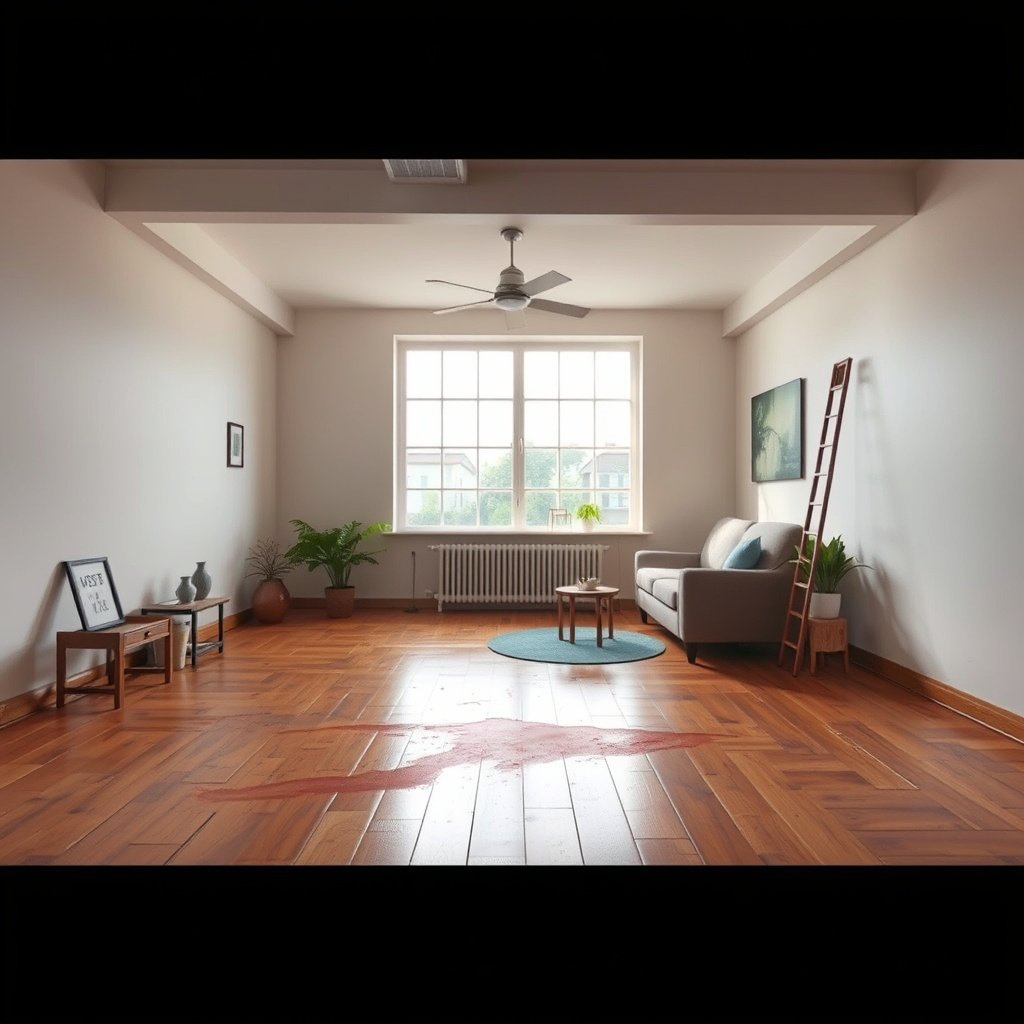
Confirming what kind of finish you have and where the rust is coming from is the fastest way to avoid permanent haze, dull patches, or repeat staining. Rust removal works best when you combine the right chemistry (often oxalic acid) with a fixed source of iron.
– Look for clues on the floor: is the area glossy/sealed, or does it look raw/porous? Finish type changes what’s safe to apply. A sealed surface typically resists liquids and wipes clean; an unfinished surface can absorb liquids and “carry” stain deeper into the grain.
– Identify the source of the rust (metal furniture, plant pots, hardware, water leak). If you don’t fix the cause, the stain often returns. Even after you remove the visible discoloration, fresh iron oxidation can keep forming where moisture keeps touching metal.
– Decide whether the rust looks surface-level or “soaked in” to the grain—deep staining may need repeat treatments and/or refinishing. If the surrounding wood fibers look uniformly darkened (not just rust-colored on top), plan for either multiple controlled cycles with an oxalic-acid rust remover or a finish refresh.
Gather safer supplies and do a spot test first
Using a wood-safe remover and protecting surrounding planks is what makes rust cleanup predictable on hardwood. For most finished floors, an oxalic-acid rust remover is the most controllable option—but only when you test and follow the label exactly.
– Wear gloves and ensure good ventilation. Rust removers with acids can irritate skin and eyes; gloves also prevent you from transferring dissolved iron back onto nearby boards.
– Use microfiber cloths, cotton swabs, and painter’s tape/plastic to protect surrounding wood. Tape helps keep cleaner off baseboards, adjacent boards, and in-between grooves where it can cause uneven finish lightening.
– Choose a rust remover that uses oxalic acid (or is specifically marketed for wood/finished floors). Avoid “kitchen bleach” or unknown-strength cleaners on hardwood finishes. As a reference point, many household products vary widely in strength—for example, distilled white vinegar is commonly about 5% acetic acid (and typically reads around pH ~2–3 on many labels), while chlorine bleach is often formulated around the mid–single-digits percent sodium hypochlorite (commonly pH ~11–12).
– Do a hidden-area test: apply exactly as the label instructs and check for discoloration, dulling, or finish haze before treating the stain. In my experience, finish haze usually comes from either too much product, too long a dwell time, or wiping too aggressively during the “lift” phase—so the spot test is where you learn your floor’s behavior before you treat the visible rust.
pH Snapshot of Common Rust-Related DIY Chemicals vs. Finish-Friendliness (Estimated from pH)
| # | Substance (common form) | Typical strength | Typical pH (approx.) | Finish-friendliness |
|---|---|---|---|---|
| 1 | pH-neutral floor cleaner | pH ~7–8 (formulated) | 7–8 | ★★★★★ |
| 2 | Baking soda paste (sodium bicarbonate) | powder + water paste | ~8.3 | ★★★★☆ |
| 3 | Oxalic-acid rust remover (wood-safe label) | label-specific concentration | ~1–2 | ★★★☆☆ |
| 4 | White vinegar (distilled, ~5% acetic acid) | ~5% acetic acid | ~2–3 | ★★☆☆☆ |
| 5 | Lemon juice (citric acid solution) | varies by fruit/water content | ~2–2.5 | ★★☆☆☆ |
| 6 | Hydrogen peroxide (commonly 3%) | ~3% w/w (typical) | ~3–4 | ★☆☆☆☆ |
| 7 | Chlorine bleach (sodium hypochlorite) | often mid–single-digits % | ~11–12 | ★☆☆☆☆ |
Clean the surface so the treatment can work
Removing grime first ensures the rust remover contacts the iron stain—not embedded dust, wax, or residue. This also reduces the chance that you’ll spread dissolved iron across the finish.
– First, remove grime: wipe with a barely damp cloth and a pH-neutral floor cleaner (then wipe again with a dry cloth). Let it dry fully. Oxalic-acid rust removers work by chemically binding iron; if the surface is dirty or oily, the chemistry is diluted and results become patchy.
– If there’s residue around the stain, gently clean that border too—rust removers work better when you’re not fighting old dirt. Think of the stain area as a “target zone”: the cleaner should reach the stain without you having to scrub hard afterward.
– Avoid steel wool and aggressive scrubbing. They can scratch the finish and make the stain look worse by creating tiny abrasions that catch color.
Treat stubborn rust with an oxalic-acid rust remover
The right approach is controlled application: a small amount, correct dwell time, then reassessment. Oxalic acid’s job is to chemically reduce or complex iron so the rust lifts rather than smearing.
– Apply a small amount to the stain using a cloth or cotton swab—don’t flood the area. Keep the application controlled so you don’t soak the wood edges. For a typical rust spot, working one cotton swab “dab” at a time helps you avoid over-wetting seams and micro-gaps.
– Follow the product’s directions for dwell time (how long it stays wet on the stain). Don’t guess—labels vary by formula. This matters because the longer the oxalic-acid rust remover stays, the more it can also affect finish sheen, even if the product is labeled for finished wood.
– Re-check after the recommended time. If the stain is still visible, repeat once after the area has fully dried (instead of applying multiple rounds back-to-back). Repeat cycles after drying are usually more uniform than continuous re-application while wet.
From a process standpoint, I treat this like a two-stage “lift and inspect” workflow: lift with oxalic acid, then inspect on a fully dry surface so you can judge real color change (not just temporary wet contrast).
Rinse/wipe lightly and dry completely
After treatment, you’re aiming to remove dissolved residue without dragging stain outward. The label dictates whether you should wipe only or rinse, so align your cleanup method with the product’s post-treatment instructions.
– After treatment, wipe according to the product label (some require gentle wiping; others specify a rinse step). Use a clean, lightly damp cloth if wiping/rinsing is recommended. If the product indicates a rinse is optional, skip it—extra water exposure can create uneven absorption along seams.
– Dry matters: use airflow (fan) and keep the area free from foot traffic until it’s completely dry. Avoid high heat that can stress certain finishes (especially some hard wax or thinner film finishes).
– If the finish looks uneven (dull spots or light “patchiness”), you may need a finish touch-up or professional refinishing for a uniform look.
– Polyurethane (common sealed/finished floors): after the treated spot is fully dry, clean with a residue-free method recommended for your cleaner, then lightly scuff the dull patch with a fine abrasive (e.g., very light screen/sanding) and apply a thin matching polyurethane topcoat. Follow curing time on the finish you use before walking or moving furniture.
– Waxed or oiled floors: remove any residual cleaner carefully, let fully dry, then re-oil or re-wax using the same product type family originally used on the floor. For spot repairs, expect that the sheen may blend over time with normal maintenance rather than immediately matching perfectly.
– Key point: an oxalic-acid rust remover can lift iron successfully while still altering sheen—finish touch-up is the “make it look right” step.
What can go wrong (and how to avoid it)
Rust stains are forgiving—until you introduce the wrong chemistry, too much liquid, or aggressive abrasion. Most failures trace back to finish incompatibility or over-application of the oxalic-acid rust remover.
– Bleach and harsh chemicals: bleach can discolor or “spot” the wood/floor finish. Strong acids not intended for wood can cause haze or uneven coloration. Even products that “work” on rust can leave irreversible finish changes.
– Over-soaking hardwood: excess liquid can drive moisture into seams and edges, making the surrounding area expand or promoting new oxidation. Apply oxalic-acid rust remover slowly in small amounts, and keep surrounding wood protected with tape/plastic.
– Metal left behind: if the rust is caused by a corroding nail/fastener/metal piece, cleaning the surface stain won’t stop future rust. Fix the source first—remove or fully replace corroding metal under rugs or in the area if you have access.
– Spreading the stain: scrubbing aggressively or wiping in circles without careful blotting can move the dissolved rust and enlarge the affected area. Use blotting/controlled wiping and change cloths/swabs frequently.
– Unfinished/unknown-finish floors: if the floor is bare (or you’re unsure), this approach may still work—but the risk of permanent discoloration is higher.
– Recommended alternative for unfinished hardwood: stop using oxalic-acid rust remover unless the finish/wood supplier specifically okays it. Instead, focus on eliminating the iron source, dry the area thoroughly, and consider sanding back the stained layer once the cause is resolved—then refinish the affected boards to restore uniform tone and protection.
Oxalic-acid rust remover vs. common DIY options (what usually goes wrong)
| Feature | Oxalic-acid rust remover (label-safe) | Vinegar/lemon (DIY acids) | Bleach/peroxide/abrasive methods |
|---|---|---|---|
| Primary mechanism | Chemically complexes/lifts iron-stain | General acidity may help but is inconsistent | Bleaching/oxidizing can alter finish tone |
| Finish compatibility | Designed for finished wood (when labeled) | High risk of uneven finish haze | High risk of discoloration/spotting |
| Control level | Dwell time and application method are specified | No label dwell guidance for hardwood finishes | Reaction can be hard to stop mid-process |
| Risk of spreading | Lower with controlled dabbing + wipe rules | Often higher due to low predictability | Scrubbing/foaming can enlarge affected area |
| Best for | Finished/sealed hardwood rust on top of finish | Non-porous or test-proven surfaces | Generally not recommended for hardwood finishes |
| Repeatability | Repeat only after drying for more uniform results | Repeated DIY acid applications can deepen haze | Repeat treatments can permanently shift color |
| Moisture risk | Minimized by small, controlled applications | Easy to over-wet with household liquids | Often involves soaking/foam + additional wiping |
| Cleanup complexity | Wipe/rinse rules are typically clear on the label | Usually unclear what residue you left behind | Residues and finish changes may not reverse |
| Uniform appearance afterward | May still require sheen touch-up, but predictable | Patchiness is common on finished floors | Bleach/oxidizers can create permanent spots |
| Best For | Stubborn rust on finished hardwood—label-followed and spot-tested | Only after careful test confirmation (low predictability) | Avoid on hardwood finishes |
Verdict: what to do next (and who should skip this)
The most reliable DIY path for stubborn rust on finished hardwood is a controlled, label-followed treatment with an oxalic-acid rust remover, preceded by gentle cleaning and followed by careful wipe/dry. The trade-offs are that it can take more than one attempt and you may still need a finish touch-up if the sheen changes around the treated spot.
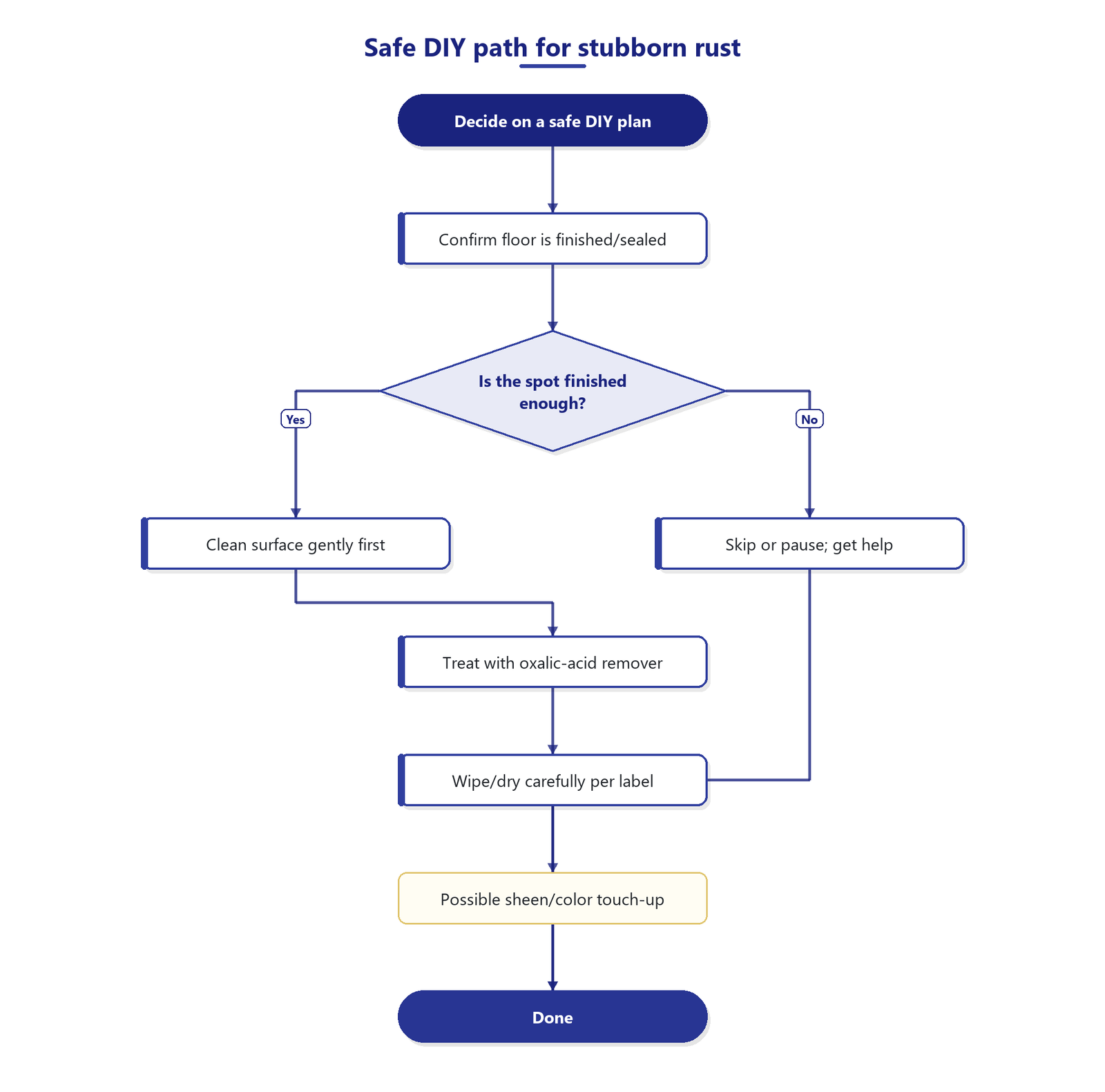
Skip (or pause and get help) if:
– your floor is unfinished, heavily worn in that spot, or you can’t identify the finish,
– the rust is from an active leak you haven’t fixed,
– the stain is deep and you’re not prepared for possible refinishing.
Rust-stain cleanup checklist (save this)
| Step | Quick action |
|---|---|
| 1. Find the source | Fix leaks / remove corroding metal before cleaning |
| 2. Identify finish | Finished vs. unfinished changes what’s safe |
| 3. Clear dirt first | Clean gently with pH-neutral cleaner, dry fully |
| 4. Protect the area | Tape/plastic around the stain; use gloves |
| 5. Spot test remover | Try in a hidden spot first |
| 6. Treat rust | Apply oxalic-acid remover in small, controlled amounts |
| 7. Wait, then check | Follow label dwell time; repeat only after drying |
| 8. Wipe/rinse if needed | Light wiping/rinsing per label instructions |
| 9. Dry thoroughly | Fan/airflow until fully dry |
| 10. Evaluate finish | Touch-up/refinish if sheen or color is uneven |
Sources
Rust stains can be stubborn, but safe cleanup is usually a straightforward sequence: gentle pre-cleaning, controlled oxalic-acid rust removal (label-safe for finished wood), then careful wipe/rinse (only if directed) and full drying. If sheen or color looks uneven afterward, plan for touch-up or consult a flooring pro—because the best long-term outcome comes from both removing iron stains and preventing new rust from the source.
Frequently Asked Questions
What’s the safest way to remove stubborn rust stains from hardwood floors without damaging the finish?
Start by testing your rust remover in an inconspicuous spot to ensure it won’t dull or strip the polyurethane, wax, or varnish. Use a hardwood-safe approach such as a diluted oxalic acid rust stain remover or a rust-removal product specifically labeled for sealed wood floors. Apply gently with a soft cloth, keep the moisture minimal, and rinse/wipe immediately with a damp cloth to prevent residue from soaking into the grain.
How do I clean rust stains from hardwood floors after a metal object or nail left it behind?
Remove the source of the rust and wipe the area dry first. Lightly clean the spot with a pH-neutral cleaner, then treat the stain using an oxalic-acid-based rust remover (often sold for iron stains) following the label directions. Let it dwell only as long as recommended, then wipe thoroughly; if the stain persists, repeat once rather than over-soaking the wood.
How do I remove rust stains from unfinished or bare hardwood compared to sealed hardwood?
Unfinished hardwood is more porous, so rust can penetrate deeper and may require more careful control of moisture. For unfinished floors, use a rust remover designed for wood and apply sparingly with a soft cloth or cotton swab, then allow the area to fully dry before evaluating the stain. Sealed hardwood typically allows easier surface stain removal, so focus on controlled application and prompt wiping to protect the finish layer.
Why do rust stains keep coming back on hardwood floors, even after cleaning?
Rust can return if the underlying iron contamination remains in the wood pores, gaps between boards, or in the finish layer. Also, using overly harsh cleaners or scrubbing too aggressively can open the surface and make the stain harder to fully remove. To prevent recurrence, remove all rust residue, keep the area dry, and consider a stain-blocking primer or refinishing if the iron has penetrated deeply.
What’s the best rust stain remover to use on hardwood floors, and which method should I choose?
For most hardwood floors with a finish, an oxalic-acid rust stain remover is often the most effective choice because it chemically targets iron oxide. If the stain is fresh, a gentle approach—cleaning with a pH-neutral solution and then spot-treating—can work without stressing the finish. For heavy or set-in rust, the best method is careful, label-guided application with minimal liquid, followed by thorough wiping; if the stain remains after repeated treatments, sanding lightly (if appropriate) and using a stain-blocking sealer may be necessary.
📅 Last Updated: October 31, 2026 | Topic: How to clean stubborn rust stains from hardwood floors? | Content verified for accuracy and freshness.
References
- oxalic acid rust removal wood – Search Results – PubMed
- https://pubmed.ncbi.nlm.nih.gov/?term=chelation+iron+removal+cellulose+wood
- iron corrosion stains on wood treatment – Search Results – PubMed
- Checking your browser – reCAPTCHA
- Checking your browser – reCAPTCHA
- Rust
- Oxalic acid
- https://scholar.google.com/scholar?q=rust+stain+removal+hardwood+floors+oxalic+acid Google Scholar
- https://scholar.google.com/scholar?q=iron+stain+removal+wood+cellulose+chelating+agents Google Scholar
- https://scholar.google.com/scholar?q=oxalate+oxalic+acid+rust+removal+wood+surface Google Scholar