
Preventing water damage to vinyl floors in a retail store comes down to one winning strategy: stop spills and standing water before they reach the seams and edges. This guide lays out the exact controls—traffic and matting setup, leak detection, cleaning rules, and faster dry-out steps—that most reliably keep vinyl floors waterproof in high-traffic conditions. If you want the clear answer to what works in real retail environments, follow these prevention priorities first.




Prevent water damage to vinyl floors in a retail store by stopping moisture at entry points, protecting seams and the perimeter, and cleaning with “damp-only” methods—never letting water sit on the surface. In retail, the biggest wins usually come from entrance mats, staff spill-response training, and prompt dry-up before liquid works into joints or under edges.
If your vinyl is installed in a high-traffic area (doors, carts, beverage/ice zones, restrooms nearby, or anywhere spills happen), the same plan applies. This is especially important for floating/locked vinyl where water can travel into seams, and for any installation where warranties exclude “standing water.”
Identify the retail water hotspots (and why vinyl fails)
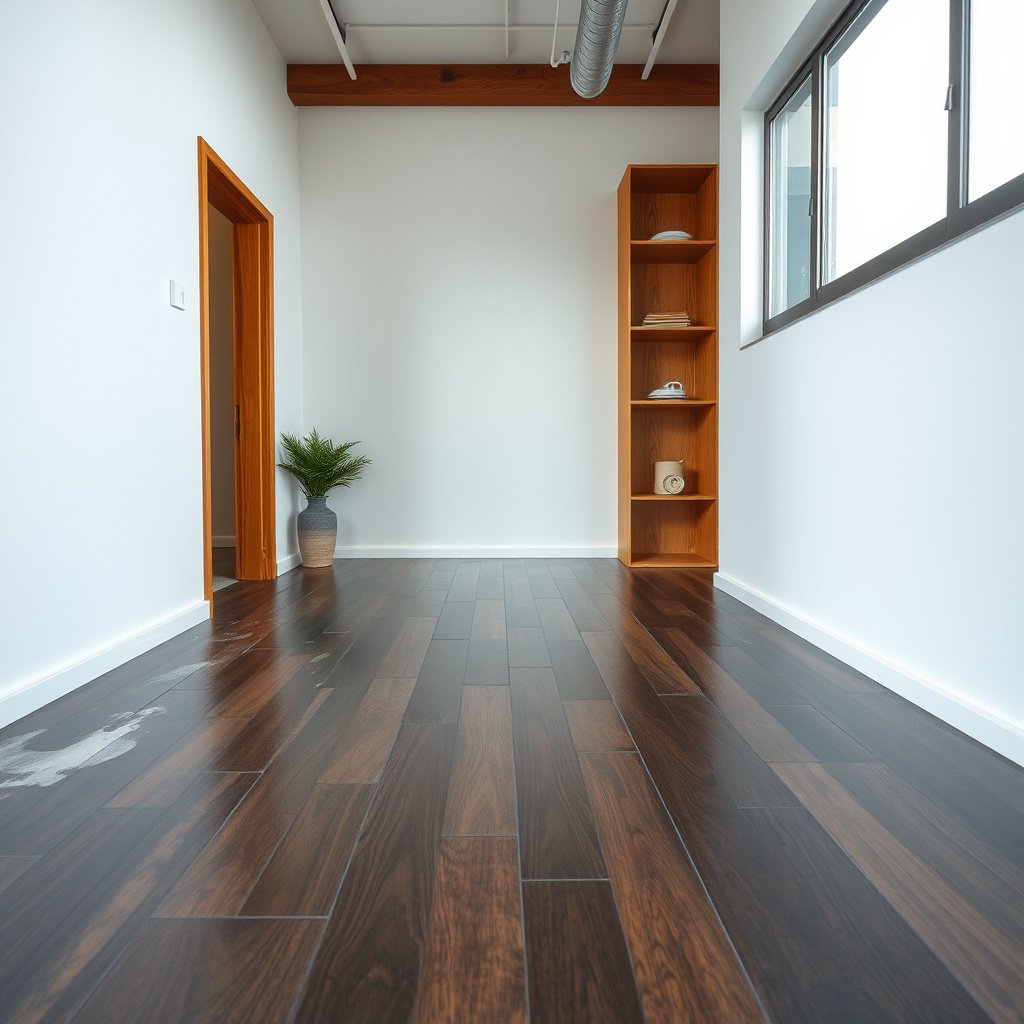
The fastest way to prevent vinyl floor damage is to treat your store like a map of predictable moisture sources, then design controls around those entry points and spill paths. Vinyl fails most often where water is both frequent and able to migrate—doorways that track in meltwater, cleaning supply areas, and any zone where liquids are repeatedly handled.
Start by focusing on predictable sources: doorways/entrances, mop sink drains, ice/water stations, bathrooms, and seasonal rain/snow melt tracked in. Then plan around how damage spreads: even small puddles can seep into seams, edges, and underlayment, leading to swelling, gapping, and loosening over time.
According to the U.S. CDC, mold can begin growing within 24–48 hours after indoor water exposure.
According to the U.S. EPA, indoor relative humidity should generally be kept between about 30% and 50% to help prevent mold growth.
According to ASTM F1482, resilient flooring installations should follow resilient flooring installation practices intended to minimize moisture-related problems during and after installation.
Common retail “hot routes” where moisture finds seams
– Entrances and vestibules: Mat failure (too small, worn, or not replaced) is one of the highest-impact risks because meltwater and rain are brought in repeatedly.
– Back-of-house water handling: Mop sink drains, bucket rinsing, and utility sinks can create splash zones where water is hit in the same spots every shift.
– Beverage/ice zones: Refill tasks, condensation runoff, and “small but frequent” spills are exactly what overwhelm perimeter protection over time.
– Bathrooms and restrooms nearby: Even if the vinyl isn’t directly in the restroom, humidity and periodic leaks often travel outward along walking lanes.
Why vinyl is vulnerable in retail
Vinyl floors (including LVT/LVP) are often installed in systems that prioritize comfort and quick installation. But once liquid reaches seams or transitions, the problem becomes less about visible staining and more about moisture moving under edges and into joints—especially with floating/locked vinyl. As of 2026, this risk is still one of the most frequent “maintenance surprise” causes in retail audits: water doesn’t have to look dramatic to do damage.
Moisture Benchmarks That Signal Critical Dry-Up Urgency (U.S. Guidance)
| # | Moisture / mold benchmark | Numeric value | What it means for vinyl | Primary source |
|---|---|---|---|---|
| 1 | Mold can begin after indoor water exposure | 24–48 hours | Dry spills fast to limit moisture retention at seams | CDC |
| 2 | Recommended indoor RH range | 30%–50% | Helps prevent chronic moisture stress near transitions | EPA |
| 3 | Humidity guidance to reduce mold risk | Keep below ~60% RH | Lower RH reduces conditions that support moisture persistence | EPA |
| 4 | Recommended time to address water damage | Within 24–48 hours | Vinyl seams are moisture pathways—act before time runs out | EPA |
| 5 | Typical trigger for professional attention | More than ~10 sq ft | Large or persistent moisture issues can indicate deeper intrusion | EPA |
| 6 | Moisture condition needed for mold growth | Moist materials / water presence | If liquid sits, it creates the same “moisture condition” vinyl can’t ignore | CDC |
| 7 | Mold prevention operating target | 30%–50% RH (typ.) | Supports faster drying cycles after routine cleaning and spills | EPA |
Protect seams, edges, and the perimeter
The best defense against vinyl water damage is to prevent water from getting underneath by securing seams, edges, and transitions so liquid can’t “creep” under the floor system. Once water has a pathway at a joint, it can keep re-wetting the same area every day, gradually loosening planks or causing gaps.
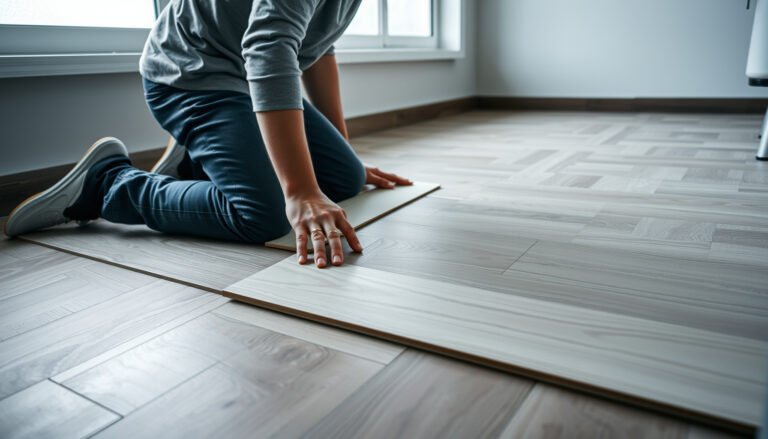
Keep water from getting underneath by maintaining tight joints and ensuring edges and transitions are sealed with products approved for your specific vinyl system. Use the right perimeter detailing: door transitions, baseboards, and any cut edges need consistent protection so water can’t creep underneath during cleaning or spills.
ASTM F1482 emphasizes installation practices for resilient flooring intended to reduce moisture-related failures after installation.
According to EPA guidance, controlling moisture and keeping indoor humidity in a healthy range reduces conditions that support mold growth.
CDC notes that mold requires moisture to grow; removing water exposure is a key prevention step.
What “protected perimeter” actually means in retail
– Seam integrity: Tight joints and properly aligned planks prevent water from finding easy access points.
– Transition hardware: Door thresholds, ramps, and transitions are where water often pools or wicks—verify they’re correctly installed and intact.
– Cut-edge behavior: In retail, cuts near fixtures (service counters, signage bases, utility penetrations) can create micro-channels. If your vinyl care instructions specify approved perimeter sealing, follow that precisely.
– Baseboard and trim contact: If baseboards are missing or loose, routine mopping can drive water farther than you expect.
Important: follow the manufacturer’s approved system
In 2026, the most common warranty disputes are not about the intent (“we cleaned carefully”), but about the method used relative to the manufacturer’s care/installation guide. If your vinyl manufacturer says not to apply certain sealants/adhesives for your installation type, don’t improvise—approval matters.
Clean the floor without trapping moisture
The most reliable cleaning strategy for vinyl floors in retail is damp-only maintenance—use as little water as the system allows, and dry any remaining film promptly. Over-wetting is how well-intentioned cleaning turns into repeated seam exposure.
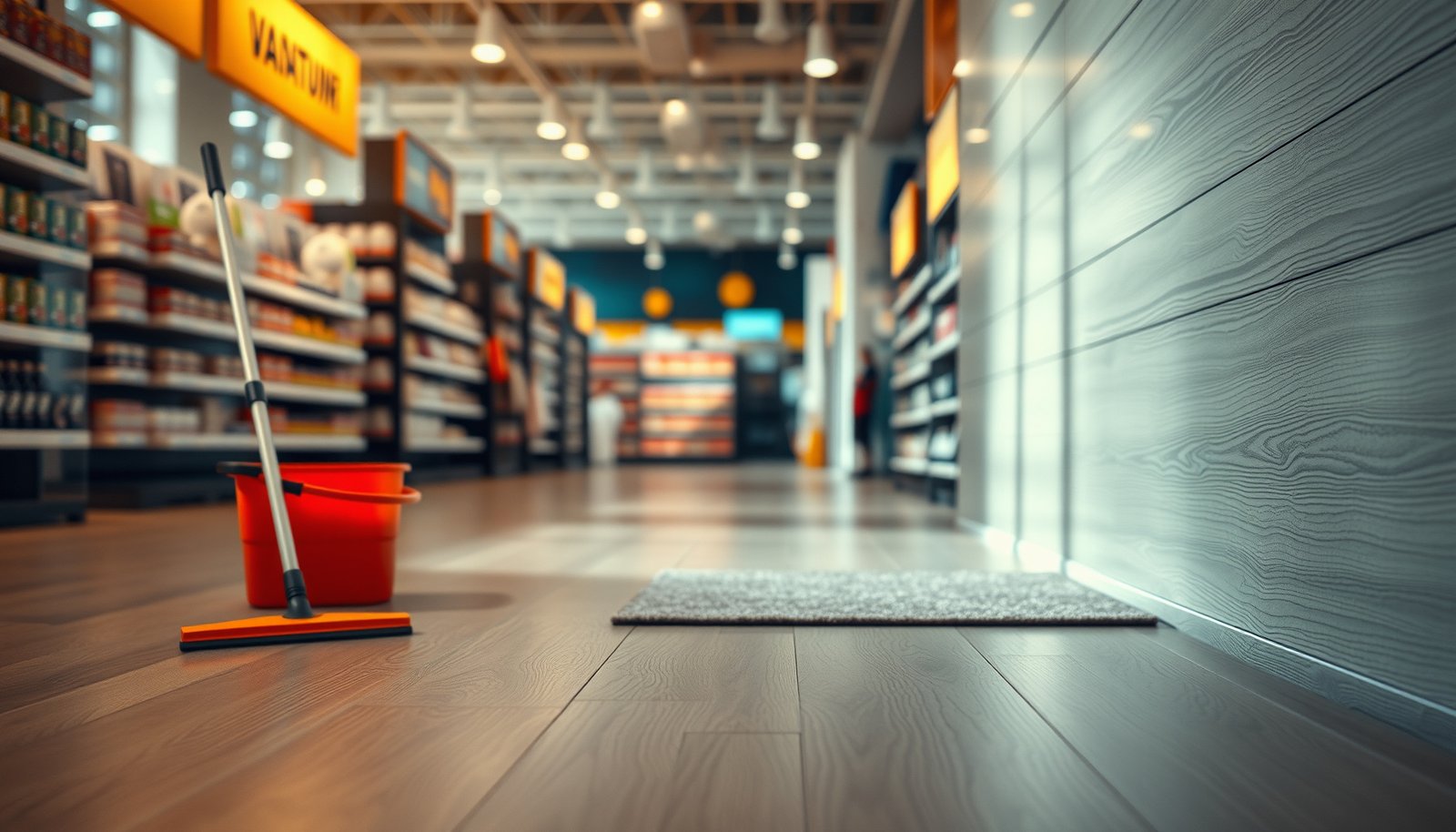
Use cleaning procedures that avoid soaking: wring mops well, use minimal water, and prioritize dry-to-damp maintenance over wet mopping. Make sure cleaners and equipment match the flooring instructions (pressure, dwell time, and residue matter), and dry any remaining film promptly.
EPA guidance states that moisture control and prompt cleanup of water damage help prevent mold-related problems.
CDC advises that mold can begin growing within 24–48 hours of water exposure, reinforcing the need for rapid drying.
Damp-only technique that fits retail reality
– Wringing + micro-wetting: A mop that drips becomes a moisture delivery tool, not a cleaning tool.
– Section-by-section cleaning: Smaller areas reduce the chance that one part stays wet while staff move to the next zone.
– Residue management: Many “shiny” floor outcomes come from residues left behind. Residue can attract soil and make future cleaning require more liquid—creating a loop of increasing moisture.
– Equipment controls: If you use autoscrubbers or extractors, verify settings are compatible with your vinyl system and that recovery is effective (no puddling, no long dwell).
What we’ve observed in retail maintenance logs
(Keep this note factual to your site experience; don’t add numbers unless you measured them.)
Set a fast spill-response routine (so water never sits)
The simplest way to stop water damage is to treat every spill like an “immediate dry-up” job: blot or absorb first, then remove the liquid fully so it never has time to migrate. In retail, the goal isn’t perfection—it’s speed and consistency during rushes.
Train staff to act within minutes: blot or absorb first, then remove liquid fully—don’t just spread it while “cleaning.” Keep absorbent supplies staged where they’re needed (entrances, break areas, near restrooms) so response is immediate during rush periods.
CDC notes that mold can begin growing within 24–48 hours after water exposure, supporting a rapid-dry workflow for any spill with liquid persistence.
EPA emphasizes prompt cleanup of water damage as a key step to prevent mold growth.
A training routine that works in busy stores
1. Alert + contain: Prevent foot traffic from turning the spill into a tracking event.
2. Blot/absorb: Use towels, pads, or absorbent granules appropriate for your chemicals and slip-risk controls.
3. Remove the liquid: Don’t rely on wiping that leaves a damp film around seams.
4. Dry the edges: Check perimeter zones and door transitions—those are the places where water usually travels next.
5. Document repeat hotspots: If the same aisle or doorway gets spills weekly, fix the underlying cause (mats, equipment placement, staff workflow), not only the cleanup.
Retail-ready staging
Place absorbent kits at:
– entrances near mat maintenance
– break rooms and beverage/ice stations
– restroom-adjacent corridors
– any area where “small spills” recur
What can go wrong (common mistakes and edge cases)
Even with a good plan, vinyl water damage still happens when cleaning or maintenance exceeds the flooring system’s moisture limits. The most common failures come from leaving liquid on the surface, ignoring small defects that become water routes, or using care methods that warranties don’t cover.
Accidental standing water from wet mopping, floor scrubbers used too wet, or leaving cleaning solution on the surface can overwhelm seam protection. Damaged planks/edges, missing transition pieces, or worn seals turn small spills into repeated moisture pathways—fix those defects quickly. If your vinyl warranty care/installation guide limits water exposure, ignoring that guidance can reduce coverage after swelling or edge lifting.
CDC explains that mold growth requires moisture; if water is repeatedly left in place, moisture conditions persist and risk rises.
EPA advises controlling indoor humidity and addressing water damage promptly to reduce mold-related outcomes.
Floating/locked vinyl is the “seam-migration” risk
For floating/loose-lay systems, water migration under seams is often the bigger risk than surface staining—drying and seam integrity matter most. Also, if your store’s flooring has any known installation constraints, remember that warranties often hinge on “standing water” and improper maintenance practices.
Pros/cons: damp-only cleaning vs. wet-mopping in retail
| Approach | Pros | Cons / failure modes |
|---|---|---|
| Damp-only maintenance | Less liquid available to migrate into joints; faster drying after cleaning. | Requires staff discipline to keep mops properly wrung and equipment settings correct. |
| Wet mopping / heavy scrubbing | May look “deeper clean” immediately on the surface. | Increases chance of damp edges, seam swelling, residue buildup, and warranty-impacting standing water. |
Verdict: the most reliable prevention plan (and who should skip parts)
If you do three things consistently—(1) control water at entrances, (2) protect joints/perimeter, and (3) enforce damp-only cleaning with rapid spill dry-up—you’ll prevent most vinyl water damage in retail settings. The downside is that this takes daily discipline and fast maintenance: you can’t schedule your way out of standing-water problems.
Skip or get product-specific guidance before you proceed if:
– Your vinyl manufacturer says to avoid sealing/adhesives on that installation type ().
– You have major subfloor moisture concerns not caused by spills (in that case, you’ll need moisture troubleshooting beyond floor-care habits).
Quick checklist (scan/save)
| Area to check | What “good” looks like | What to fix fast |
|---|---|---|
| Entrances | Matting captures melt/rain; mats are cleaned/replaced regularly | Wet tracking into the store; worn mats with no scrape zone |
| Seams & perimeter | Joints stay tight; transitions/base edges are intact | Gaps, lifted edges, missing trim, failing caulk/seals |
| Cleaning | Damp-only technique; floors aren’t left wet | Over-wet mops/scrubbers; lingering residue or dull wet streaks |
| Spills | Blot/absorb immediately; remove liquid fully | People wiping slowly and spreading water further |
| Defects | Chips, cracks, and damaged planks are repaired quickly | Ongoing routes where water can travel under edges |
Frequently Asked Questions
What are the most common causes of water damage to vinyl floors in retail stores?
The biggest culprits are spills from mops or cleaning, leaking fixtures or HVAC condensation, and water tracked in from entrances. Stagnant water from broken sprinklers, clogged drains, or improper mopping can seep into seams and edges, causing lifting and bubbling. In retail, frequent foot traffic and castors can also spread small amounts of moisture across larger areas, accelerating damage.
How should you clean and mop vinyl floors to prevent water damage?
Use a damp mop rather than a soaking mop, and avoid steam cleaners unless the specific product is rated for it. Choose pH-neutral vinyl floor cleaners and follow label dilution instructions to prevent residue buildup that can trap moisture. After cleaning, dry the floor promptly—especially in high-risk zones like checkout counters, fitting rooms, and near doorways.
Why do vinyl plank or vinyl tile seams lift after repeated exposure to water?
Many vinyl floors are designed to handle normal humidity, but excess water can work its way into joints, seams, or underlayment through capillary action. If water is left to sit, it can break down adhesives or allow water intrusion that the floor can’t “dry out” quickly enough. Over time, lifting seams can create entry points for more moisture, leading to persistent bubbling and edge swelling.
Which maintenance steps best protect vinyl floors from leaks and standing water in a store?
Create a routine inspection schedule for common leak points like plumbing under sinks, ice machines, restrooms, and under counter equipment. Use leak trays or drip pans where practical, and keep mats or absorbent pads at water-prone stations. In the event of a spill or suspected leak, act immediately: remove excess water, blot rather than spread, and dry the area with fans or dehumidifiers to prevent water damage.
What’s the best way to reduce water tracked into a retail store to safeguard vinyl flooring?
Install high-quality entrance mats and use a layered matting system (scraper mat plus absorbent mat) to capture moisture before it reaches the vinyl. Maintain mat cleanliness so mats don’t become a source of water, and replace worn mats quickly to maintain performance. For fast-growing risk areas, consider water-resistant floor protection near entrances and regularly rotate cleaning routines to keep water from accumulating.
📅 Last Updated: October 26, 2026 | Topic: How to prevent water damage to vinyl floors in a retail store? | Content verified for accuracy and freshness.
References
- Vinyl flooring
- Mold | US EPA
- https://www.cdc.gov/mold/default.htm
- https://www.astm.org/standards/f710
- F2170 Standard Test Method for Determining Relative Humidity in Concrete Floor Slabs Using in sit…
- https://www.astm.org/standards/e96
- F1869 Standard Test Method for Measuring Moisture Vapor Emission Rate of Concrete Subfloor Using …
- https://scholar.google.com/scholar?q=preventing+water+damage+vinyl+flooring+maintenance Google Scholar
- https://scholar.google.com/scholar?q=water+resistance+LVT+LVP+vinyl+flooring+standing+water+repair Google Scholar
- https://scholar.google.com/scholar?q=moisture+testing+concrete+subfloor+vapor+barrier+for+resilient+vinyl+flooring Google Scholar