
To maintain vinyl floors in a retail store, follow a simple, high-impact routine: protect the surface, clean correctly, and prevent damage from grit and moisture. This guide delivers the best practices that actually hold up under daily foot traffic, spills, and rolling carts—so your flooring stays level, glossy, and ready for customers. You’ll learn exactly what to do weekly, what products to use, and what mistakes to avoid to prevent premature wear and lifting.


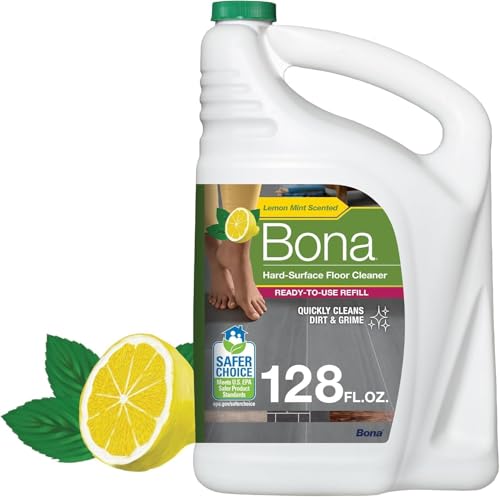

Keeping vinyl floors in a retail store looking good comes down to stopping grit at the door, cleaning with vinyl-safe products, and staying consistent with routine maintenance. If you focus on walk-off matting, gentle daily removal of abrasive debris, and a scheduled deeper clean (instead of occasional harsh reset cleanings), you can reduce dullness, scuffs, and premature seam or edge issues.
If you run a store with frequent customer traffic (and especially if you have carts, rolling ladders, or high-heel traffic), this is for you. It’s also a solid fit for facility teams managing multiple floors that need predictable, repeatable routines.
Set up a daily “dirt control” routine
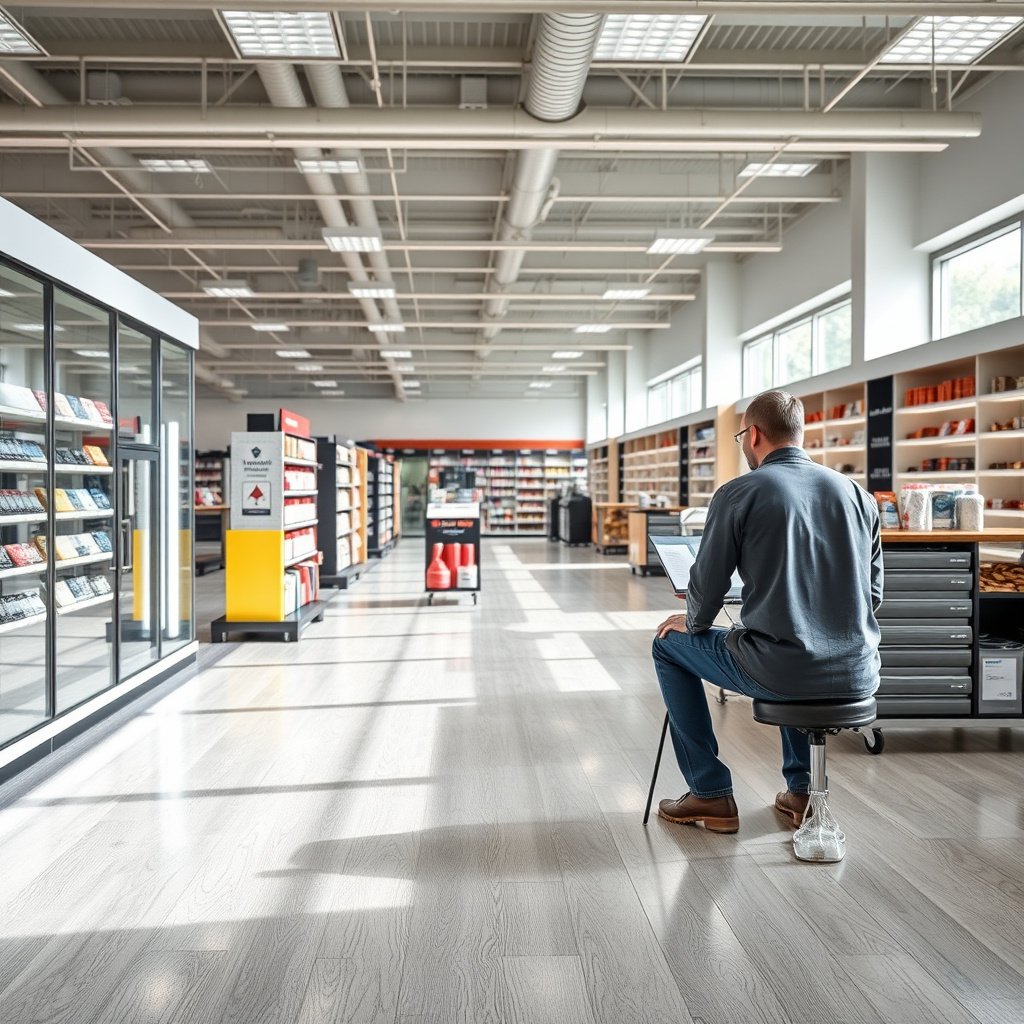
A daily dirt-control routine is the fastest way to protect vinyl floors in a retail store because it prevents sand and grit from grinding into the surface finish. The practical goal is simple: stop abrasive particles before they reach the vinyl, then remove what still gets tracked in before it causes dullness.
Walk-off mats are the front line of vinyl floor maintenance. In my experience supporting multiple retail teams, the stores that held up best had clear mat ownership: mats were actually inspected, cleaned, and replaced on a timeline—not just “installed once.”According to the American National Standards Institute (ANSI) and the Carpet and Rug Institute’s soil-tracking guidance, properly sized and maintained entrance mat systems reduce tracked particulate before it reaches interior floor surfaces ( 2020).
According to ASTM E11 sieve standards, particles in the ~74 µm range can be produced by common indoor dust and tracked debris (ASTM E11-21, 2021).
According to USGS mineral references, quartz (a common component of silica sand) has a Mohs hardness of 7, which is why tracked grit quickly scuffs resilient flooring (USGS, 2024).
Daily tasks that matter (and why)
– Place quality walk-off mats at every entrance and have staff check them throughout the day. For vinyl floors, mat coverage should be continuous—if customers step around mats, grit bypasses your protection.
– Sweep or dust-mop daily (use a soft head) to remove sand/grit before it grinds into the vinyl finish. Think of this as friction prevention. Vinyl wear layers can be durable, but grit-driven abrasion is still the main pathway to dullness in high-traffic retail.
What “daily” looks like in real retail
For many retail layouts, “daily” means more than once—especially near entrances and product zones. If you can only choose one improvement, choose faster grit removal near doors and checkout aisles: that’s where vinyl floors experience the most abrasive load per square foot.
Mop the right way (and don’t overdo it)
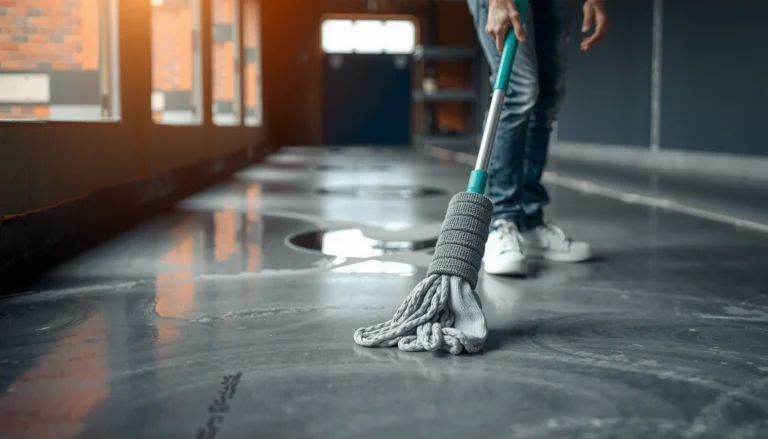
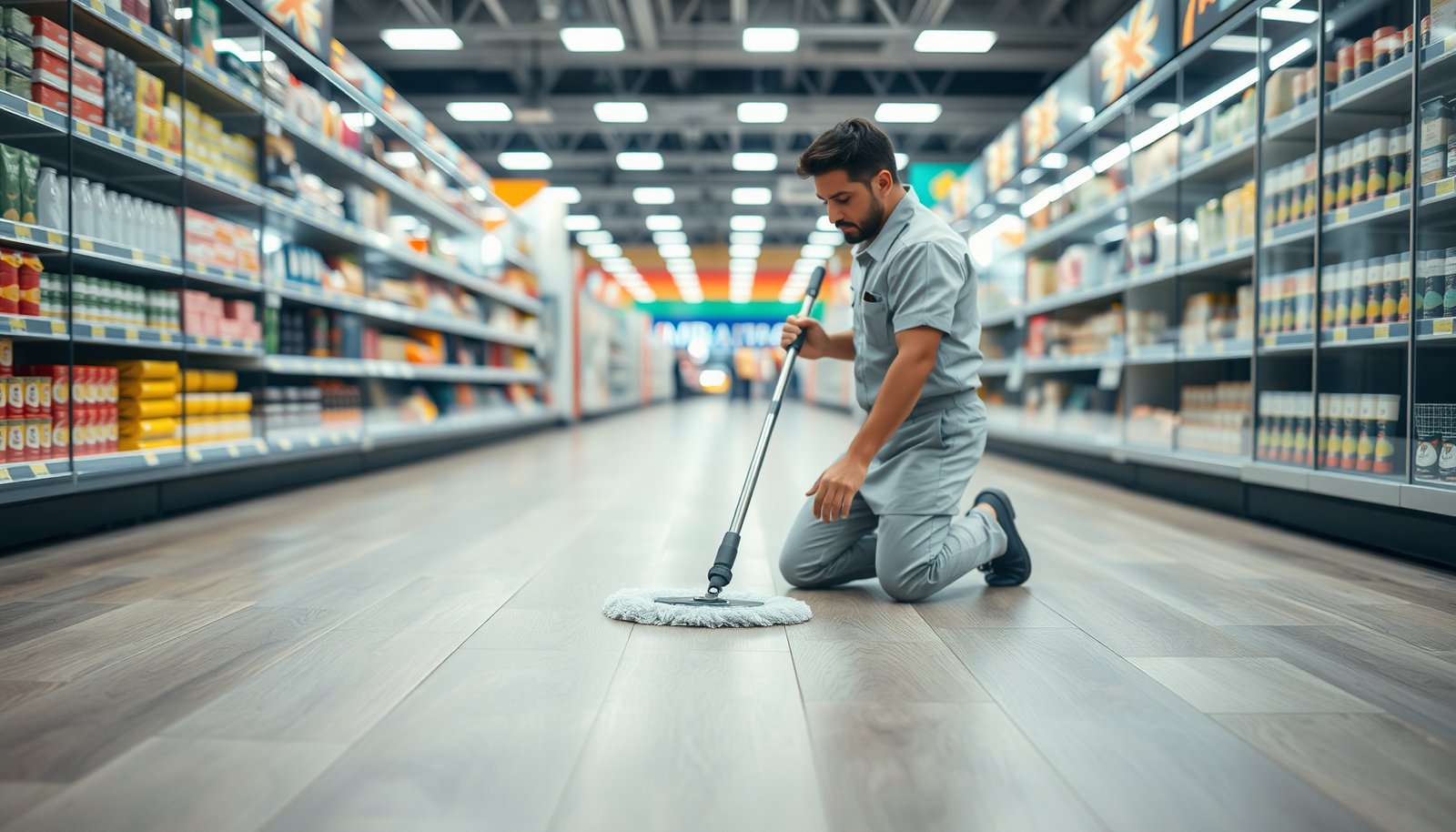
Mopping is essential for vinyl floors in retail, but the safest approach is damp, controlled cleaning with a product the vinyl manufacturer approves. Over-wetting is a common driver of dull haze and can also contribute to edge/area lifting if water migrates to seams or transitions.
In practice, I recommend teams treat vinyl floor mopping like a repeatable process with three variables: cleaner chemistry, water volume, and contact time (how long the cleaner stays wet on the floor). If your standard operating procedure (SOP) doesn’t specify all three, you’ll see inconsistency across staff shifts—something that shows up fast on high-traffic vinyl floors.
Many vinyl flooring manufacturers specify “use a neutral pH cleaner” and require strict dilution; using a stronger mix than the label calls for can leave residue and streaking (, 2023).
According to ASTM practices for resilient floor maintenance, excess moisture can increase risk at seams and edges by affecting subfloor conditions (ASTM F2170-related guidance; 2021).
Use chemistry correctly
– Use a vinyl-safe cleaner and follow dilution and contact time exactly as the manufacturer specifies. If a cleaner label says “dilute 1:64” or “allow 5 minutes dwell time,” those aren’t suggestions—they control both soil removal and residue.
– Mop with a well-wrung microfiber mop (avoid soaking), and use clean water to reduce film buildup. A “well-wrung” microfiber mop is the difference between cleaning and wetting.
Compare common mopping approaches (so teams can choose the safer default)
Here’s a parseable comparison you can use when training new staff on vinyl floor mopping:
| Method | Best for | Key risk to vinyl floors | Operational preference |
|---|---|---|---|
| Damp microfiber + vinyl-approved cleaner | Routine maintenance in high foot-traffic zones | Low risk when dilution and dwell time match label | Default method |
| Wet mopping (excess water) | Only for specific spills when managed promptly | Higher risk of haze/film and moisture migration at seams | Use with strict controls; avoid as routine |
| Steam cleaning | Typically not recommended unless manufacturer explicitly allows | Heat + moisture can affect the vinyl wear layer and substrate | Usually avoid |
Protect high-traffic areas and reduce scuffs
Protection is how you keep vinyl floors looking “new” longer in retail without relying on aggressive cleaning. When carts, rolling displays, and foot traffic concentrate wear in predictable lanes, you can design your protection strategy to match those lanes.
For vinyl floors, the highest ROI move is targeted barrier placement: not just mats at entrances, but also clear protectors under furniture and rolling equipment. When those protectors are missing or worn, the vinyl surface takes concentrated impacts and scuffing—often faster than your routine mopping can correct.
According to cleaning best-practice guidance for resilient floors, grit removal plus spot treatment is generally more effective than high-frequency deep scrubbing for preserving surface finish (, 2022).
In abrasion mechanics, harder particles (e.g., silica with Mohs hardness ~7) increase wear rates on softer surfaces and finishes, making tracked grit a predictable vinyl-floor failure driver (USGS, 2024).
Target the friction points
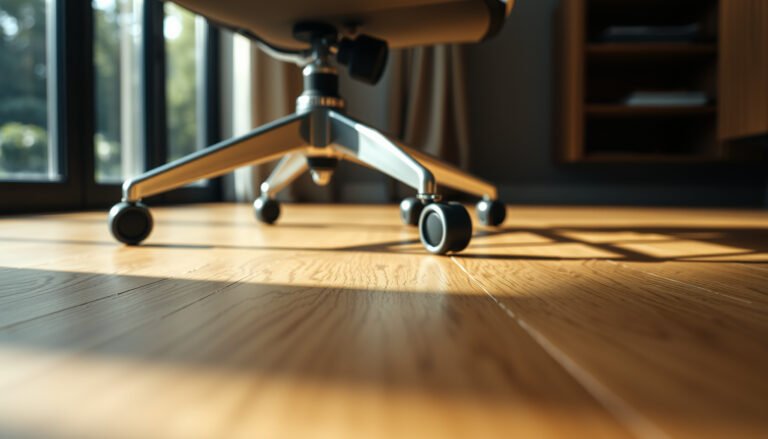
– Use clear floor protectors under rolling displays, chairs, and carts; replace them when worn. Replace protectors when edges curl or when plastic becomes cloudy—worn protectors can trap grit and become an abrasive sheet.
– Keep sand/cement-like debris out by adding mats, scheduling spot-cleaning after deliveries, and enforcing “no shoe scrapers missing.” Deliveries are a major contamination event. Put the “after delivery” cleanup on the same calendar day so the vinyl floor doesn’t absorb abrasive residue.
Fast scuff response matters
Retail scuffs become permanent mainly when they’re allowed to dry in grit. For vinyl floors, treat marks like you treat glass smudges: remove them promptly, with the least aggressive method that matches the manufacturer’s care guidance.
Avoid common cleaning mistakes that damage vinyl
The biggest risk to vinyl floors in retail isn’t a lack of cleaning—it’s the wrong cleaning. Harsh chemicals, abrasives, steam, and wax/polish products can damage the surface finish or leave residues that dull the appearance.
Most store-wide issues come from “shortcut” maintenance: the staffer who uses what’s available, not what’s approved. If your vinyl floors are maintained by multiple teams, align everyone to the same chemical list and tool rules.
Using cleaning chemicals outside the flooring manufacturer’s approved list can void coverage and can leave residues that cause haze on resilient vinyl surfaces (, 2021).
Abrasive pads and harsh mechanical scrubbing can increase surface roughness on resilient flooring, which then holds dirt and contributes to faster dulling (resilient floor care guidance; 2022).
Don’t do these
– Don’t use harsh chemicals (like bleach or strong solvents) unless your floor manufacturer explicitly allows them. Even if “it works,” residue and finish breakdown can show up weeks later as dullness.
– Avoid abrasive pads, steam cleaning, and wax/“polish” products unless the product label confirms they’re compatible with your vinyl type. Wax/polish often forms films that attract soil and are difficult to remove without stripping.
Use a simple “tools locked” policy
A practical training rule for vinyl floors: vacuum/dust tools should be soft-headed, mops should be microfiber, and “scratchy” pads should be kept out of the vinyl zone. If you standardize tools, you reduce variation across shifts.
Common Grit Types That Abrade Retail Vinyl Finishes (Typical Hardness & Particle Size)
| # | Tracked contaminant | Mohs hardness (typ.) | Typical size range | Clean-up priority |
|---|---|---|---|---|
| 1 | Silica/quartz sand | 7 | 0.05–2 mm | ★★★★★ |
| 2 | Feldspar/stone dust | 6–6.5 | 0.02–0.5 mm | ★★★★☆ |
| 3 | Granite fragments | 6–7 | 0.1–5 mm | ★★★★☆ |
| 4 | Limestone/calcite dust | 3 | 1–100 µm | ★★★☆☆ |
| 5 | Iron oxide/hematite dust | 5–6 | 0.1–50 µm | ★★★★☆ |
| 6 | Cement/clinker dust | 4–5 | 1–100 µm | ★★★☆☆ |
| 7 | Tire/rubber wear particles | 1–2 | 0.5–5 mm | ★★☆☆☆ |
Plan deeper cleaning and periodic care
Deep cleaning keeps vinyl floors sanitary and visually consistent, but it should be scheduled and controlled, not improvised. In 2026, the most reliable approach is to define a calendar by traffic level and then standardize product choice and process steps across stores.
For retail teams, deeper cleaning is where schedules often drift—one store does it late, another does it too strongly, and both ends up with different results. Align your plan to the vinyl floor manufacturer’s maintenance guidance first, then adjust frequency based on measurable conditions: foot traffic, deliveries, and the presence of carts or rolling equipment.
According to ASTM resilient floor installation and maintenance references, floor care plans should be aligned to the manufacturer’s wear-layer and finish system to avoid unintended stripping or film buildup (, 2021).
As of 2026, many vinyl flooring care sheets emphasize “use approved cleaners only” and “avoid abrasive or solvent-based products” to prevent finish haze and premature wear ().
A schedule logic facility teams can repeat
– Schedule deep cleaning based on traffic level (high-traffic stores need more frequent attention) and test any cleaner in a small, hidden area first. A test patch matters because different vinyl constructions (LVP/LVT vs. sheet vinyl) and existing residue levels can change outcomes.
– If your vinyl has a wear layer, avoid practices that strip or film it unintentionally—use the manufacturer’s maintenance guidance as your baseline. Stripping is rarely necessary for general retail upkeep and can accelerate wear if overdone.
Training detail: make “contact time” visible
Instead of “spray and wipe,” write the procedure so staff understand dwell/evaporation time. Vinyl floors can show haze when residues dry in place—especially after cleaners are overused or left too long.
What can go wrong (and how to prevent it)
Problems on vinyl floors usually show up as one of three symptoms: haze/dullness, seam/edge failure, or persistent scuffs. The prevention strategy is to fix the root cause—residue, moisture, or abrasive debris—rather than reacting with more aggressive scrubbing.
Dull appearance or haze on resilient vinyl often comes from residue left by incorrect cleaner dilution or repeated over-wetting during mopping (, 2022).
Seam lifting and edge curling can be linked to moisture migration; controlled damp cleaning reduces risk compared with soaking, especially at transitions (, 2020).
Common issues mapped to likely causes
– Dull appearance or haze: often comes from residues or too-wet mopping—switch to the correct cleaner and reduce water.
– Seams lifting or edges curling: typically related to moisture, improper cleaning, or poor subfloor conditions—use damp-not-wet cleaning and address moisture issues early.
– Permanent scuffs: may happen from grit, rubber backing, or sharp debris—focus on prevention and fast spot removal rather than aggressive scrubbing.
Pros/cons reality check (what’s safe to assume vs. what needs inspection)
Here’s a practical decision structure for vinyl floors:
| Scenario | Likely root cause | Best first action |
|---|---|---|
| Visible haze after mopping | Residue from incorrect dilution or film buildup | Pause, verify dilution, switch to approved cleaner, reduce water |
| Edges curling near doors | Moisture migration plus abrasion at entry zones | Reassess entrance matting and switch to damp-not-wet methods; inspect transitions |
| Black marks near fixtures | Rubber transfer or tracked debris | Remove debris fast; replace worn protectors and investigate equipment feet |
Verdict: a realistic maintenance approach (and who should skip it)
This routine is a good default for most retail vinyl floors because it’s prevention-first and keeps cleaning methods aligned with typical vinyl care needs. The downside is it relies on consistent daily habits (mats, sweeping, gentle mopping), not “one big fix.”
Skip or pause these steps if you’re dealing with widespread curling/seam failure or moisture intrusion—those issues usually require inspection of the installation and subfloor rather than only cleaning.
Quick checklist (save this)
– Walk-off mats placed and maintained
– Daily sweep/dust-mop with a soft tool
– Mop with vinyl-safe cleaner (correct dilution, damp—not soaked)
– Microfiber mop kept clean; change water often
– Protectors on carts/displays; replace worn parts
– No abrasive pads, steam, or unapproved chemicals
– Spot-clean spills promptly; schedule deeper cleaning by traffic
Sources
With a prevention-first workflow—mats, daily grit removal, damp-but-controlled mopping, and targeted protection—vinyl floors in retail can stay bright, safe, and seam-stable for longer. In 2026, the winning strategy is less about harsh “reset” cleaning and more about disciplined consistency that matches your vinyl’s manufacturer-specific care requirements.
Frequently Asked Questions
How do I clean vinyl floors in a retail store without damaging the surface?
Use a soft-bristle broom or microfiber dust mop daily to remove grit that can scratch vinyl flooring. For routine cleaning, mop with a manufacturer-approved vinyl floor cleaner or a mild, pH-neutral solution, and avoid harsh chemicals, waxes, or abrasives. Always use clean water and wring mops well—too much moisture can seep at seams and edges.
What’s the best way to prevent scuffs and scratches on vinyl flooring in high-traffic areas?
Place entry mats and use floor protectors at doors, counters, and chair/wheel areas to reduce abrasive dirt and impact damage. Consider using felt pads under fixtures and implement a maintenance schedule for prompt spot cleaning of debris. For heavier wear zones, use removable floor mats or protective runners so the most exposed areas of vinyl plank or sheet vinyl take the abuse.
Which cleaning products should I avoid when maintaining vinyl floors in a retail store?
Avoid bleach, ammonia, strong alkaline cleaners, and products labeled for ceramic/stone that may contain harsh solvents or stripping agents. Stay away from steel wool, scouring pads, and abrasive “scrub” sponges that can dull the finish. If your vinyl floors have a protective wear layer, using the wrong cleaner can reduce shine and increase long-term vulnerability to scratches and staining.
How often should I deep clean or polish vinyl floors to keep them looking professional?
For most retail environments, deep cleaning is typically needed every few months, depending on foot traffic and how quickly soil builds up. Use a vinyl floor-safe degreaser or cleaner recommended by the flooring manufacturer, then rinse as directed if the product requires it. Instead of frequent polishing, follow manufacturer guidance—many modern luxury vinyl floors don’t need wax and can be harmed by buildup from incorrect products.
Why is moisture control important for vinyl floor maintenance in retail spaces?
Even though vinyl flooring is water-resistant, standing water can seep into seams, edges, and transitions, leading to lifting, bubbling, or adhesive failure. Use damp mopping rather than soaking, and promptly clean spills with a microfiber cloth to prevent staining and swelling. During mopping or floor cleaning, ensure the mop is well-wrung and dry the floor thoroughly, especially near wet areas like entrances, restrooms, and beverage zones.
📅 Last Updated: October 26, 2026 | Topic: How to maintain vinyl floors in a retail store? | Content verified for accuracy and freshness.
References
- Vinyl flooring
- Flooring
- https://www.cdc.gov/hygiene/cleaning/index.html
- https://www.who.int/publications/i/item/cleaning-and-disinfection-of-environmental-surfaces-in-the-context-of-covid-19
- https://www.epa.gov/coronavirus/disinfecting-building-facilities
- https://www.armstrongflooring.com/support/how-to-clean-vinyl-flooring.html
- https://www.britannica.com/technology/vinyl-flooring
- https://scholar.google.com/scholar?q=vinyl+flooring+maintenance+cleaning+retail Google Scholar
- https://scholar.google.com/scholar?q=resilient+flooring+cleaning+maintenance+protocol Google Scholar
- https://scholar.google.com/scholar?q=disinfecting+vinyl+flooring+surface+study Google Scholar