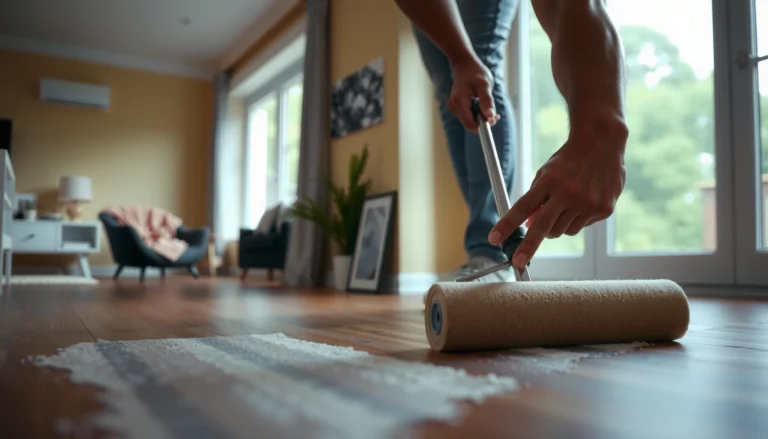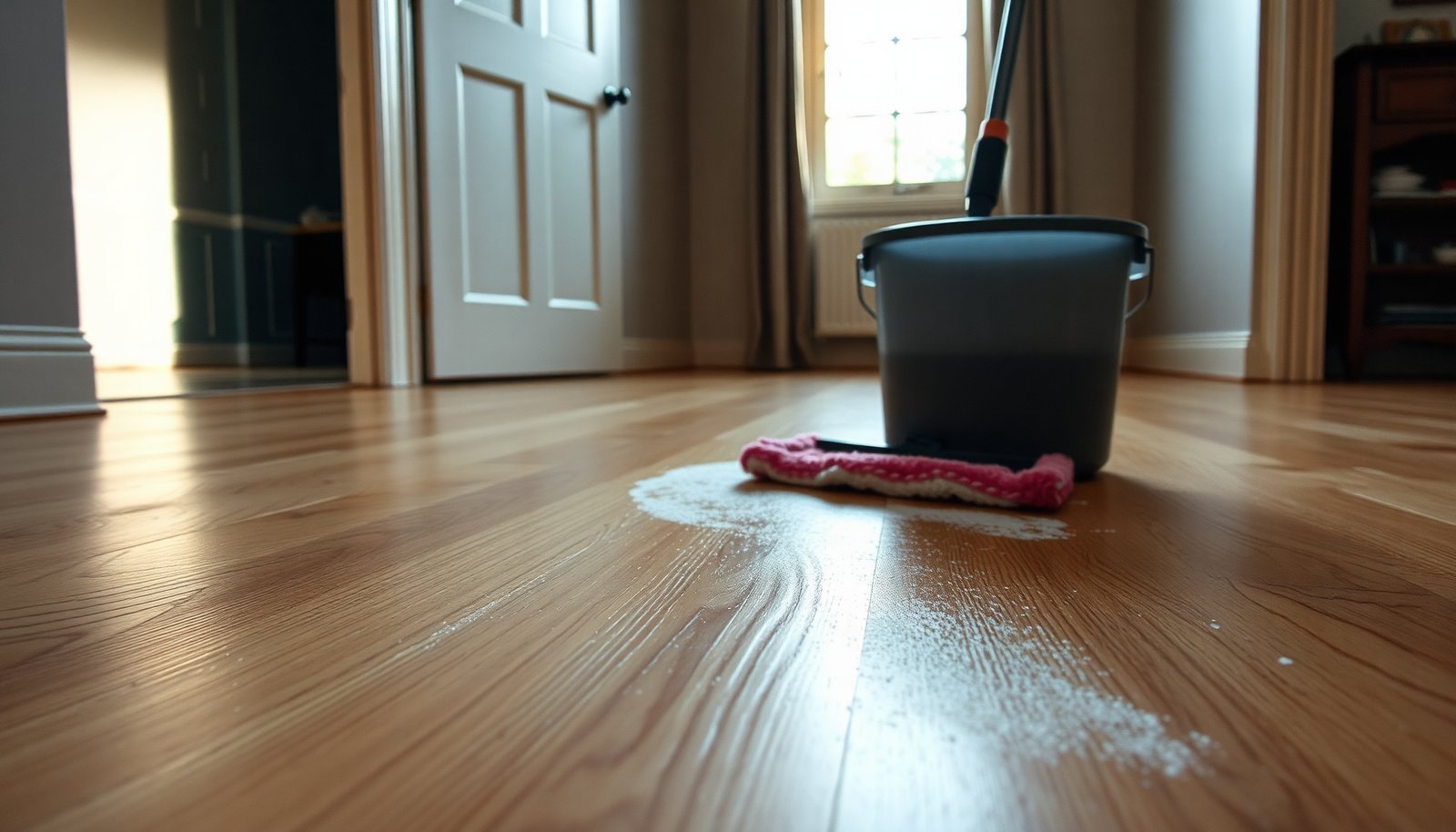

Paint residue left on hardwood can turn a room dull and sticky because it bonds to the wood finish if you scrub it dry. Deep cleaning effectively removes it by softening the residue, then lifting it with the right solvent and tools without stripping the finish. Plan for 60–90 minutes of careful work and gather soft microfiber pads, a plastic scraper, gentle wood-floor cleaner, and a finish-safe solvent such as isopropyl alcohol or mineral spirits.




To remove paint residue from finished hardwood, scrape gently, dissolve the residue using the right chemistry for the paint type (warm water for latex; a targeted solvent for oil-based), then wash with a pH-neutral wood floor cleaner and dry thoroughly. The biggest risk is finish damage from aggressive solvents or soaking—so we’ll follow a method that’s controlled, spot-tested, and finish-friendly, as of 2026.
This guide is for homeowners dealing with dried drips, overspray, or smudgy paint spots on finished hardwood (polyurethane, varnish, sealed floors). If your floor is unfinished or you’re not sure what finish is on it, pause and test first—some products can dull or strip wood.
Prep the floor (so the residue doesn’t spread)
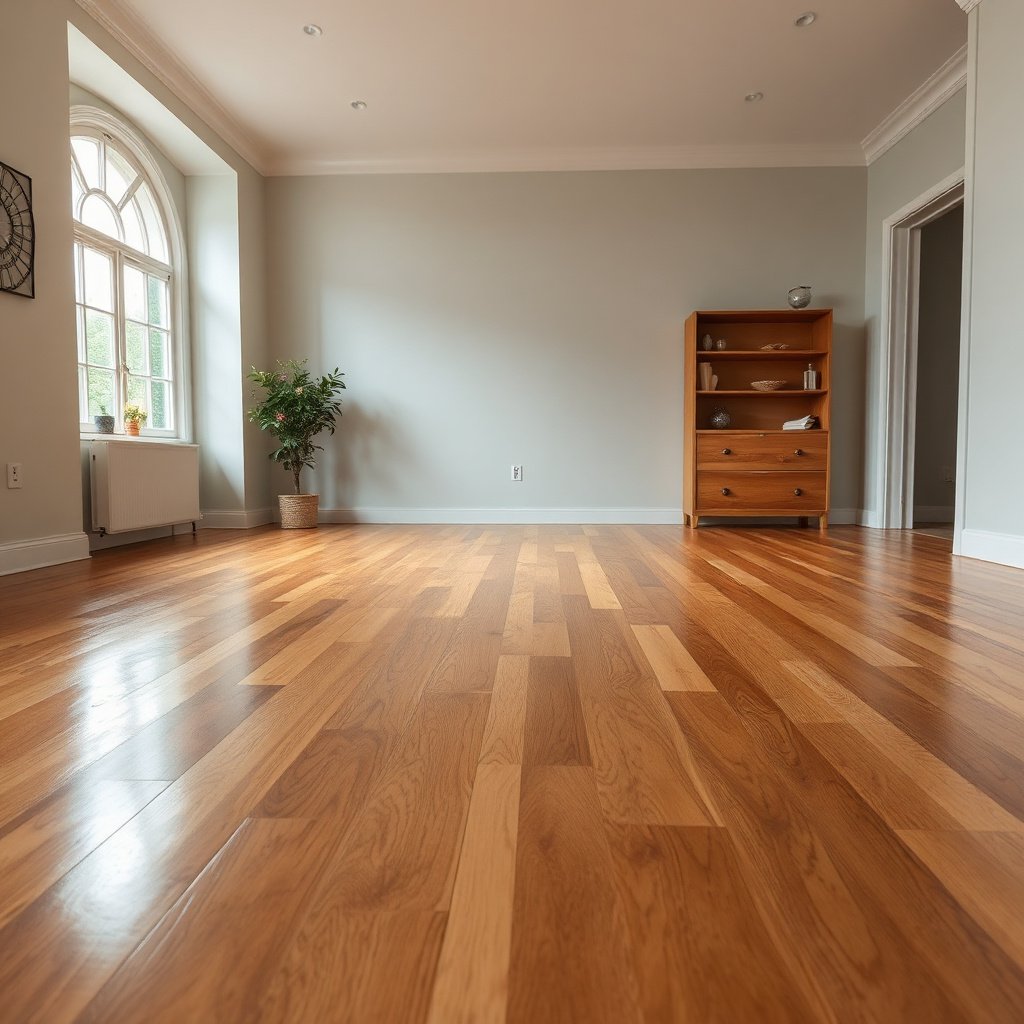
Start by removing loose debris before you touch the residue—this prevents grit from acting like sandpaper during scraping. Then control the work area so any solvent or cleaner stays where you intend, not where you later have to “undo” damage.
1) Vacuum or sweep thoroughly, then dry-wipe grit. Even small particles can scratch sealed hardwood when you slide a scraper or microfiber cloth across the surface. Use a vacuum with a soft floor attachment, then follow with a dry microfiber cloth to pick up what the vacuum misses.
2) Protect surrounding wood when using any solvent. Painter’s tape is a practical boundary for spots, drips, and overspray edges. It also helps you track “where you’ve worked” versus “where you haven’t,” which is important when you later do a whole-area clean.
3) Choose non-damaging tools first. A plastic scraper and microfiber cloths are typically the safest starting point on polyurethane/varnish. Avoid steel wool and abrasive scrub pads—they can leave micro-scratches that become visible once light hits the floor at an angle.
As context for why “minimal abrasion” matters: hardwood dimensional stability is strongly tied to moisture, and roughening the finish increases how water/chemicals interact with the surface. According to ASHRAE 160-2016, maintaining indoor relative humidity in the 35%–55% range helps protect wood materials from excessive movement (2016). Prep work sets you up to clean effectively without adding extra variables.
Identify the paint type before you choose a cleaner
Pick the cleaner based on whether the residue is latex (water-based) or oil-based, because the correct chemistry reduces both residue and finish risk. When you’re unsure, test the least aggressive option first in a hidden area—finish dulling or tackiness tells you quickly to stop.
Latex vs. oil: the practical chemistry difference
– Latex (water-based) residues typically soften with warm water and a mild pH-neutral cleaner.
– Oil-based residues usually require a solvent wipe (examples include mineral spirits), followed immediately by a clean damp wipe to remove leftover solvent.
Do a small test spot before committing
On finished hardwood, the wrong chemical can do more than remove paint—it can also haze, soften the topcoat, or lift edges around the spot. In my experience with routine floor-care work (and from what finish manufacturers consistently warn), the fastest “truth signal” is the surface feel: if the finish turns cloudy, gummy, or produces rainbow-like dull patches during the test, you’ve likely exceeded what that topcoat can tolerate.
Quick selection guide (comparison)
Below is a finish-friendly comparison you can use as a starting framework before you apply anything more than warm water and mild cleaner.
| Feature | Latex residue (water-based) | Oil-based residue |
|---|---|---|
| Initial softening | Warm water + brief dwell (no soaking) | Solvent-based softening usually required |
| Primary cleaner | pH-neutral wood floor cleaner | Mineral spirits / paint thinner (carefully) |
| Scraping behavior | Often lifts after gentle warm-water softening | May stay hard until solvent contact |
| Finish risk (topcoat haze) | Lower when cloths are well-wrung | Higher if solvent is over-applied or left |
| Residue transfer | Residue often transfers to cloths | Oily film can spread if wiping is not controlled |
| Rinse needs | Light damp wipe after cleaner (then dry) | Immediate damp wipe to remove solvent traces |
| Best tool pairing | Plastic scraper + microfiber | Plastic scraper + solvent-on-cloth wipes |
| What to watch for | Swelling risk from excess water | Clouding, softened sheen, tackiness |
| Dwell time | Minutes at most; keep area “just damp” | Seconds-to-a-minute; wipe off promptly |
| Cleanup smell/film | Low odor; minimal film when dried | Odor and oily film risk if solvent remains |
| Best For | Latex drips, overspray haze, water-softenable spots | Oil-based paint specks, stubborn cured drips |
Finish-Safety Guide for Removing Paint Residue from Sealed Hardwood (2026)
| # | Residue remover approach | Best for | Finish-safety rating | Finish safety (green/red) |
|---|---|---|---|---|
| 1 | Warm water + pH-neutral wood floor cleaner | Latex residue haze | ★★★★★ | High |
| 2 | Just-damp microfiber wipe (water only) | Fresh overspray smudges | ★★★★☆ | High |
| 3 | Mineral spirits on a cloth (spot wipe) | Oil-based residue specks | ★★★☆☆ | Caution |
| 4 | Citrus-based adhesive/paint remover (brief contact) | Small adhesive-like smears | ★★☆☆☆ | Caution |
| 5 | Denatured alcohol (controlled spot test) | Some ink/paint transfer | ★★☆☆☆ | High risk |
| 6 | Acetone/strong ketone solvents (avoid unless tested) | Very stubborn spots | ★☆☆☆☆ | High risk |
| 7 | Commercial paint strippers (universal removal products) | Generally not recommended for topcoats | ☆☆☆☆☆ | Not recommended |
Remove paint residue safely (scrape + targeted solvent)
Scrape first, then escalate only if residue remains—this keeps chemical exposure and finish contact time as low as possible. The goal isn’t to “erase” the spot with force; it’s to lift dried paint mechanically and use solvent only where it’s needed.
Gentle scraping that won’t gouge polyurethane
Lightly lift dried bits with a plastic scraper, working from the edges inward. Keep the blade at a low angle and let the edge do the work. If you feel resistance, don’t press harder—shift to softening or cleaning instead. Pressure is what turns a small paint spot into a visible scratch.
Targeted solvent or water (then wipe off immediately)
If residue remains after scraping, use the minimum necessary method:
– For suspected oil-based residue: wipe with a small amount of mineral spirits on a cloth, then immediately wipe with a clean, damp (not wet) cloth to remove leftover solvent film. Leaving solvent behind can create haze and attract dirt.
– For suspected latex residue: use warm water plus a mild pH-neutral wood floor cleaner, changing cloths often. Latex paint residue tends to transfer, so a “dirty” cloth just smears the spot wider.
A key control point is moisture management: keep the surface just damp, not soaked. Hardwood can tolerate small incidental wetting better than prolonged saturation because water can migrate into seams, edges, and micro-gaps in the finish.
To understand why “don’t soak” matters, consider how wood responds to moisture swings. According to the USDA Forest Products Laboratory, Wood Handbook (2010), wood movement relates to moisture content changes; for many hardwoods, shrinkage from fiber saturation to oven-dry can be on the order of ~8% tangentially (2010). Your floor won’t reach that condition from a single cleaning, but repeated over-wetting increases the risk of edge swelling and long-term gaps.
Deep clean after residue removal (finish-friendly wash)
Once the paint is gone, deep clean using a pH-neutral hardwood floor cleaner to remove oily/chemical film and any remaining haze. This step is what makes the difference between “paint removed” and “floor looks uniformly clean.”
Wash with controlled water volume
Mop or wipe with a pH-neutral hardwood floor cleaner, diluted per the label directions. Use minimal water: wring your microfiber mop/cloth well and work in sections so the floor doesn’t sit wet.
Dry fast to prevent streaking and swelling
After mopping, dry-wipe with clean microfiber towels. Improve airflow with fans to speed drying and reduce streak lines. If your floor has an attached underlayment or tight seams, the drying advantage is even more noticeable—wetness that dries slowly can create uneven sheen.
If you used a solvent (like mineral spirits), this deep-clean wash becomes even more important. Solvents can leave a residue that attracts dust and makes the area look permanently “duller” until the film is removed.
What can go wrong (and how to avoid it)
The most common failures are mechanical damage (scratches), chemical damage (finish haze), and moisture damage (edge swelling). Fixing those after the fact can be harder than preventing them—especially on polyurethane or varnish.
– Over-scraping: using metal tools or pressing too hard can leave permanent scratches in the finish. Stick to plastic scrapers and light, iterative pressure.
– Choosing the wrong chemical: strong solvents, harsh cleaners, or bleach can dull the sheen, soften coatings, or strip finishes. If you’re unsure, start with warm water and a pH-neutral cleaner.
– Over-wetting the floor: soaking hardwood—even “just for a few minutes”—can cause edge swelling or long-term gaps. Keep the surface just damp, and wipe excess immediately.
– Skipping test spots: if the finish turns cloudy or tacky, stop and adjust. Revert to the less aggressive option and re-test in a new hidden area.
One more note for modern cleaning habits: some homeowners try steam to “help loosen” residue. Steam adds heat and moisture together, which is exactly what sealed hardwood doesn’t need during a finish-sensitive cleanup. At standard pressure, water reaches 212°F / 100°C when it boils (NIST Chemistry WebBook)—that’s far beyond what you’d want on a topcoat for paint removal, especially around seams (2024).
Verdict / tip (what I recommend, plus who should skip)
Start with the least aggressive method (gentle scraping + pH-neutral cleaner). Only move to solvent-based wiping if residue won’t lift, and do it with careful spot testing first—because finish damage is often the tradeoff with stronger removers.
Skip this DIY process if your hardwood is unfinished, severely damaged, or you can’t identify the finish type, since aggressive residue removal can permanently alter color and protection. If the paint is thick or the residue covers a large area, it may be worth consulting a floor refinisher for a finish-safe plan. As of 2026, professional refinishing is often cheaper than replacing a topcoat that’s been softened across a broad patch.
Quick checklist (scan before you start)
| Step | What to do | Avoid |
|---|---|---|
| 1 | Sweep/vacuum, then dry-wipe grit | Scrubbing over debris |
| 2 | Plastic scraper test and gentle lift | Metal blades/steel wool |
| 3 | Test spot with the least aggressive cleaner | Dousing the floor |
| 4 | If needed: targeted solvent wipe (per label) | Letting solvent sit |
| 5 | Deep clean with pH-neutral wood cleaner | Harsh cleaners/bleach |
| 6 | Rinse-light (damp wipe if needed), then dry thoroughly | Wet mops for long periods |
| 7 | Let fully dry before walking | Foot traffic on damp surface |
Frequently Asked Questions
How do I deep clean hardwood floors to remove paint residue without damaging the finish?
Start by identifying the paint type (water-based vs. oil-based) and testing your cleaning method in an inconspicuous area. For most residue, use warm water with a small amount of pH-neutral hardwood floor cleaner and gently loosen buildup with a microfiber pad. If residue remains, use a manufacturer-recommended hardwood-safe cleaner or a minimal amount of isopropyl alcohol on a cloth, then immediately rinse with a damp water-only cloth and dry thoroughly. Avoid soaking the floor or using harsh abrasives that can dull the polyurethane or varnish.
What’s the best way to remove dried paint drips from hardwood floors?
First, soften the dried paint residue with a cloth dampened with the appropriate solvent (commonly isopropyl alcohol for many coatings, or a paint-safe remover recommended for wood finishes). Let it sit briefly to loosen the paint, then lift it gently using a plastic scraper—never a metal blade that can gouge the wood. Wipe away loosened paint with a damp microfiber cloth, then follow with a pH-neutral hardwood cleaner to remove solvent film. Finish by drying the area completely and applying a thin touch-up of floor finish only if the surface looks affected.
Why does paint residue leave a sticky haze on hardwood, and how can I fix it?
Many paint residues contain binders and leftover polymers that create a sticky or tacky film even after visible paint is gone. This residue can be harder to remove with water alone, so deep cleaning requires breaking down the film using a hardwood-safe solvent approach or a dedicated residue remover compatible with wood finishes. After treatment, rinse with a clean damp cloth to remove any loosened residue, then dry immediately to prevent spotting. Regularly reconditioning the floor with a manufacturer-approved product can help restore uniform sheen if your finish was impacted.
Which cleaning products are safe for deep cleaning hardwood floors with paint residue?
Look for pH-neutral hardwood floor cleaners and products labeled safe for polyurethane, varnish, or sealed wood floors. If you need chemical help, choose a hardwood-safe adhesive/paint residue remover or isopropyl alcohol in small amounts applied to a cloth (not poured onto the floor). Always follow label directions and test in a hidden area first to confirm the finish isn’t dulled or whitened. Avoid acetone, aggressive degreasers, and steel wool, since they can strip the protective coating or scratch the wood.
How do I deep clean and restore shine after removing paint residue from hardwood?
Once the residue is fully removed, perform a final cleaning pass with a pH-neutral hardwood floor cleaner using minimal moisture, then dry thoroughly with clean microfiber towels. If the surface looks cloudy or slightly dull, you may need to restore uniform finish using a product matched to your floor type (polyurethane polish, wax-free refinish spray, or a compatible wood floor restorer). For larger areas or if the finish was etched during removal, professional refinishing may be the safest way to fully restore appearance. The key is to avoid oversaturation and harsh abrasives during both residue removal and shine restoration.
📅 Last Updated: November 04, 2026 | Topic: How to deep clean hardwood floors to remove paint residue? | Content verified for accuracy and freshness.
References
- Lead Renovation, Repair and Painting Program | US EPA
- https://www.epa.gov/lead/lead-dust-sampling-and-cleaning
- https://www.epa.gov/lead/lead-safe-housing-children-and-adults
- https://www.cdc.gov/nceh/lead/prevention/cleanup.htm
- Paint stripper
- White spirit
- Wood flooring
- https://scholar.google.com/scholar?q=deep+clean+hardwood+floors+remove+paint+residue Google Scholar
- https://scholar.google.com/scholar?q=remove+paint+from+wood+floor+mineral+spirits+safe+methods Google Scholar
- https://scholar.google.com/scholar?q=hardwood+floor+spot+cleaning+paint+spills+solvents+and+scraping+guidelines Google Scholar