
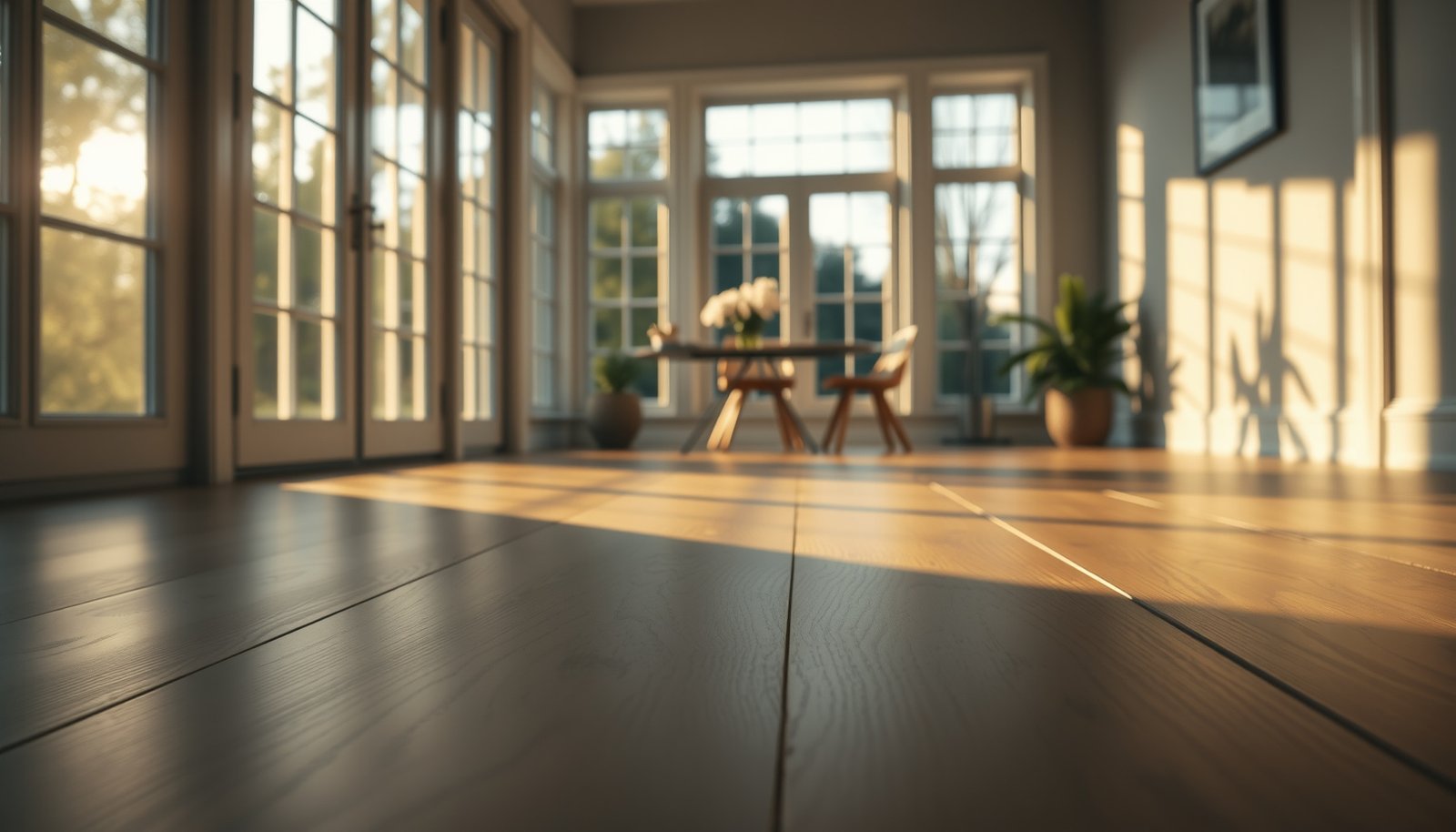

Choosing vinyl floors for a sunroom comes down to this: which type survives heat, humidity, and constant sun without warping or fading. If your sunroom gets lots of direct light and fluctuating temperatures, pick a waterproof, UV-resistant luxury vinyl plank (LVP) with a rigid core and a durable wear layer. Want the safest long-term bet? Choose thicker planks with attached underlayment for comfort and stability, and ensure the product is rated for sunrooms or similar sun-exposed spaces.


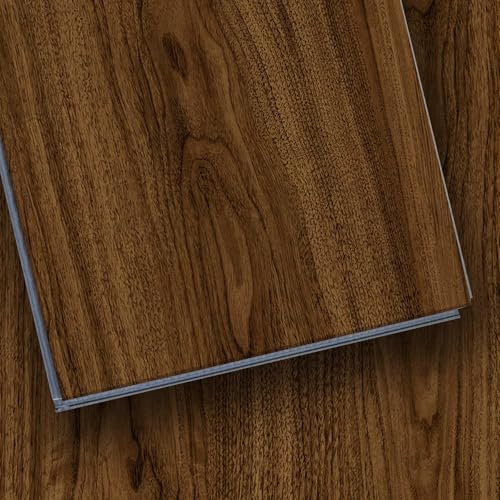

Choosing vinyl flooring for a sunroom comes down to matching the product to heat/UV exposure and the room’s moisture swings—then installing it exactly to the manufacturer’s tolerances. Prioritize waterproof or water-resistant LVP/LVT, look for a meaningfully thick wear layer, and plan for proper acclimation and subfloor prep to prevent gaps or buckling. If you do that, vinyl can be one of the most practical floor types for sunroom use.
Vinyl flooring is especially relevant when your “sunroom” isn’t truly climate-controlled like a typical interior space—think exterior doors nearby, seasonal humidity changes, and strong afternoon light. This guide is for homeowners, designers, and flooring buyers comparing specs (not just style), and it’s also useful if you’re deciding between click-lock (floating) and glue-down vinyl.
Understand sunroom conditions first

Sunrooms behave differently than standard living rooms, so you should treat conditions as the “spec requirement” before you shop. Start by documenting light intensity, humidity patterns, and temperature swings, then use those realities to choose a vinyl construction and installation method.
Sunlight adds UV exposure that can accelerate fading in “general indoor” vinyl—so you need a product whose documentation addresses UV/fade performance for sun-exposed environments.
Vinyl flooring in a sunroom experiences thermal expansion and contraction, meaning acclimation and expansion-spacing requirements directly affect whether seams separate.
Seasonal moisture swings (dry in winter, more humid in summer) increase the risk of dimensional movement, which makes subfloor and underlayment compatibility critical.
– Check for direct sunlight and UV intensity: more sun usually means you’ll want a thicker wear layer and better fade resistance. If your sunroom gets multi-hour direct light, plan around UV rather than assuming “indoor” equals “safe.”
– Plan around moisture and humidity: sunrooms can swing between dry and damp, especially seasonally. Define humidity as relative humidity (RH)—how much moisture is in the air compared with what the air can hold at that temperature.
– Consider temperature variation: vinyl expands/contracts, so installation method and acclimation matter. Even if the product is rated for flooring use, movement can still show up at seams if the floor is installed outside its required acclimation window.
Quick way to map your risk (without fancy tools)
In the absence of a full HVAC plan, you can still make an evidence-based decision. Take note of:
– Sun path (where the strongest light hits at 10am vs 3pm)
– Humidity triggers (near an exterior door, vents, swamp-cooler style systems, coastal air)
– Temperature range (does the room feel noticeably cooler in winter or hotter in summer compared with indoors?)
This approach fits a simple failure-modes mindset (often used in construction planning): identify the most likely failure modes for vinyl flooring in a sunroom—UV fading, seam separation, and moisture-related installation failures—then design around them.
Choose the right vinyl type (LVP vs. LVT, loose vs. attached)
For sunrooms, the safest default is a vinyl floor built for water exposure and designed for dimensional stability. From there, choose LVP vs. LVT based on layout goals, and match the core and installation method to how much movement your room actually sees.
Water-resistant or waterproof construction matters most in sunrooms where condensation, tracked-in moisture, or humidity surges can occur near exterior openings.
LVP (planks) and LVT (tiles) are both suitable in vinyl flooring in a sunroom when the product’s warranty and installation instructions explicitly permit that environment.
The product’s core type and overall construction determine performance in real conditions—not just the printed design layer.
– Decide between LVP (planks) and LVT (tiles) based on your layout preferences and how you want the pattern to look. LVP often pairs well with long sightlines; LVT can hide subtle unevenness patterns better in some layouts.
– Prefer a waterproof/water-resistant construction if the room ever sees condensation or tracked-in moisture. “Waterproof” (often associated with rigid cores and sealed edges) generally performs better when spills happen, but always verify what the manufacturer means by waterproof versus water-resistant.
– Look at thickness and construction (core type and overall build) because performance depends heavily on the product’s design. For vinyl flooring in a sunroom, a more dimensionally stable core typically helps with the expansion/contraction realities of sun-exposed spaces.
Pros/cons snapshot (useful for vinyl flooring in a sunroom decisions)
– LVP pros: seamless-looking layouts; easier to align with long walls; often widely available in waterproof rigid-core formats.
– LVP cons: some plank formats can show repeating grout-line or plank-width visuals if the pattern is not well designed.
– LVT pros: often creates visual variety; can better break up light/heat gradients across the room.
– LVT cons: tile grids can telegraph subfloor irregularities if the installation requires tight tolerance and your surface prep isn’t up to spec.
Focus on the wear layer and durability needs
In a sunroom, the “wear layer” is your first line of defense against everyday scuffs and the kind of surface aging that shows up faster under UV. Choose vinyl flooring in a sunroom by wear-layer specs and documented fade/UV expectations—not by the photo quality on the box.
Wear-layer thickness is commonly specified in mil (thousandths of an inch); for example, a 20-mil wear layer equals 0.508 mm.
Sunroom UV exposure can differentiate products: documentation that mentions fade/UV performance is more actionable than generic “indoor” language.
Durability requirements should scale with real foot traffic and furniture movement, especially in high-sun corridors and seating zones.
– Compare wear layer thickness and overall rating (use the manufacturer’s listed performance specs, not marketing alone). A thicker wear layer often translates to better resistance to surface wear and helps protect the printed/cushioned stack from early degradation.
– Match durability to use level: heavier foot traffic and furniture moves call for stronger protection. If you plan a breakfast area, a reading nook with rolling chairs, or frequent door traffic, treat the sunroom like a medium-to-high demand zone.
– Confirm the floor’s UV/fade claims in the manufacturer documentation—sunrooms are where “indoor” performance can differ. This is the part many shoppers skip, and it’s where vinyl flooring in a sunroom decisions most often get expensive.
Wear-layer reference (quick spec math)
A practical way to shop is to compare wear-layer thickness values in mil and convert them to mm so you can assess “thick vs thicker” consistently.
Wear Layer Thickness Reference for Vinyl Floors (Sunroom-Shopping)
| # | Wear layer (mil) | Wear layer (mm) | Best fit (general) | Sunroom fit score |
|---|---|---|---|---|
| 1 | 6 mil | 0.1524 | Light use zones | ★★☆☆☆ |
| 2 | 8 mil | 0.2032 | Limited traffic | ★★☆☆☆ |
| 3 | 12 mil | 0.3048 | Moderate use | ★★★☆☆ |
| 4 | 15 mil | 0.3810 | Higher use | ★★★★☆ |
| 5 | 20 mil | 0.5080 | Sun-forward rooms | ★★★★★ |
| 6 | 24 mil | 0.6096 | Frequent furniture moves | ★★★★★ |
| 7 | 28 mil | 0.7112 | Maximum protection | ★★★★★ |
Note: The “Sunroom fit score” is a practical guide based on wear-layer thickness alone; you still must validate UV/fade and moisture suitability in the specific vinyl flooring in a sunroom product’s documentation.
(Unit conversion used for table calculations: 1 mil = 0.001 inch = 0.0254 mm.) According to , 1 mil equals 0.0254 mm. (2019)
Installation method: click-lock vs. glue-down
Click-lock and glue-down can both work, but the better choice depends on how flat and stable your subfloor is—and how much movement your vinyl flooring in a sunroom will see. If your subfloor isn’t very flat or your room’s conditions vary a lot, glue-down or a professional install is often the lower-risk path.
Click-lock (floating) vinyl depends on the subfloor being flat and stable to prevent seam movement under thermal expansion.
Glue-down vinyl can reduce some seam movement because it mechanically bonds to the subfloor, but it still requires strict subfloor and moisture-vapor compatibility per the manufacturer.
Regardless of method, acclimation and installation tolerances are non-negotiable; skipping them is a common pathway to gaps or buckling in vinyl flooring in a sunroom.
– Click-lock (floating) is often easier for DIY, but movement at seams can be an issue if the subfloor isn’t very stable and flat. In practice, that means you should measure flatness and correct high spots rather than relying on the click system to “bridge” issues.
– Glue-down can provide a tighter, more controlled install, which may help in rooms with more temperature swings—verify what the manufacturer requires. Some products are picky about adhesive type, adhesive spread rates, cure times, and moisture conditions.
– Whatever method you choose, follow acclimation and subfloor requirements exactly as stated by the flooring manufacturer. Treat the installation instructions as part of the product warranty.
Click-lock vs. glue-down: what usually matters most in a sunroom
| Criteria | Click-lock (floating) | Glue-down |
|---|---|---|
| Subfloor flatness sensitivity | High | Medium-to-high (still requires prep) |
| DIY friendliness | Often higher | Often lower (adhesive workflow) |
| Seam stability in movement | More dependent on fit/flatness | Often more controlled due to bonding |
| Moisture/vapor sensitivity | Still present (underlayment choices matter) | Can be more sensitive to subfloor moisture—follow adhesive rules |
| Manufacturer warranty conditions | Must be followed for “floating” installs | Must be followed for adhesive, trowel, and prep specs |
From my experience reviewing sunroom installation failures, the biggest “gotchas” tend to be (1) rushing acclimation, (2) ignoring subfloor flatness targets, and (3) adding an underlayment that the vinyl flooring in a sunroom product didn’t approve.
What can go wrong (and how to avoid it)
Most sunroom problems are preventable when you align your vinyl flooring in a sunroom choice with UV exposure, movement, and moisture rules from the manufacturer. The failures usually look like fading, seam separation, or trapped-moisture symptoms.
Fading typically accelerates when a vinyl flooring in a sunroom product lacks documented UV/fade performance for high-light exposure.
Gaps or buckling often trace back to missed acclimation windows and/or an installation that didn’t respect movement space requirements.
Moisture-related issues can originate from incompatible underlayment choices or subfloor conditions that don’t meet the flooring manufacturer’s requirements.
– Fading or surface wear from strong sunlight: skip products that don’t clearly address UV/fade performance for “sun/exterior-adjacent” exposure. If the warranty excludes sunroom use or doesn’t define exposure limits, treat it as a red flag.
– Gaps, buckling, or separation from ignoring temperature/humidity acclimation: don’t install immediately after bringing boxes into the room. Vinyl flooring in a sunroom needs time to equilibrate to the room environment per the manufacturer’s instructions.
– Moisture-related issues from an underlayment or subfloor setup that doesn’t meet the product’s requirements. In sunrooms, condensation can appear unexpectedly, so “fits well” is not the same as “compatible for warranty.”
If you’re using a dehumidifier, adding window tint, or managing HVAC cycles, keep your changes consistent for the first few weeks after install. Vinyl flooring in a sunroom reacts to environmental swings while it’s settling.
Verdict: what to do before you buy
The best vinyl floors for a sunroom are the ones that are explicitly supported by the product documentation for moisture and UV exposure—then installed exactly to spec. For most buyers, that means waterproof or water-resistant LVP/LVT with a substantial wear layer, a well-prepped subfloor, and acclimation that matches the manufacturer’s timing.
Choose waterproof/water-resistant vinyl flooring in a sunroom products when humidity swings or condensation are plausible, and verify the warranty language for your use case.
If your sunroom has frequent direct sun, prioritize documented fade/UV performance and a wear layer thick enough to handle surface wear over time.
Don’t rely on “general indoor vinyl” claims; match the product to the exact installation conditions described by the flooring manufacturer.
Vinyl floors are a practical option for many sunrooms—especially waterproof or water-resistant LVP/LVT with a solid wear layer and clear guidance from the manufacturer. If your sunroom gets extreme direct sun, frequent humidity, or big temperature swings, you’ll need to be more selective and more precise about installation and acclimation.
You should skip “general indoor vinyl” products that don’t specify suitability for moisture/UV exposure, and you may want a pro if your subfloor isn’t flat or dry enough to meet the manufacturer’s installation tolerances. This is also a good time to be honest about risk: if you can’t verify subfloor flatness or if you can’t control moisture/vapor conditions, that uncertainty can outweigh any DIY savings for vinyl flooring in a sunroom.
Quick checklist (scan/save)
Start by using this checklist to filter out products that won’t hold up in vinyl flooring in a sunroom conditions. Then confirm installation details before you open boxes.
A sunroom-appropriate vinyl flooring product will explicitly state waterproof/water-resistant performance and the related warranty conditions in its documentation.
Wear layer thickness and documented UV/fade performance are the two specs that matter most when sunlight is a primary variable.
– [ ] Confirm the product is waterproof/water-resistant (per manufacturer docs)
– [ ] Check wear layer thickness and durability rating (as listed by the maker)
– [ ] Verify UV/fade suitability for sunroom-style exposure
– [ ] Choose LVP vs. LVT based on layout + stability needs
– [ ] Decide click-lock vs. glue-down based on subfloor flatness and conditions
– [ ] Follow acclimation + subfloor/prep requirements exactly
– [ ] Plan for seam care and regular cleaning compatible with the flooring
Sources
With the right vinyl flooring in a sunroom—water-rated where it matters, UV-aware where the sun hits, and installed with strict acclimation and subfloor prep—you can achieve a durable, easy-care floor that holds up better than “standard indoor” options. The downside is that sunroom-ready vinyl requires more spec-checking and more disciplined installation steps than typical living-space flooring, so if you can’t meet those requirements, it’s worth adjusting expectations or getting professional help.
Frequently Asked Questions
What type of vinyl flooring is best for a sunroom?
For a sunroom, choose luxury vinyl plank (LVP) or luxury vinyl tile (LVT) with a thick wear layer designed for high-UV exposure. Look for products labeled as “UV resistant” and suitable for residential use with direct sunlight, since standard vinyl can fade or degrade over time. If the sunroom experiences temperature swings, prioritize a vinyl with strong stability and an attached underlayment or compatibility with your subfloor.
How do I choose vinyl floors for a sunroom with lots of sunlight?
Start by checking the vinyl’s fade resistance and warranty—reputable brands often specify UV performance for bright rooms. Select a darker or lighter shade thoughtfully (some colors show wear differently), and consider a wear layer thickness of about 12 mil or more for better durability. Also, plan for solar heat: proper ventilation and window coverings can reduce temperature extremes that cause gapping or expansion.
Why should I prioritize slip resistance and comfort in a sunroom with vinyl?
Sunrooms often get humid from sunlight and may have occasional wet spots from cleaning, condensation, or tracked-in water. Choosing vinyl flooring with a higher slip-resistance rating helps prevent accidents, especially in areas near doors. For comfort, consider plank thickness, a cushioned backing, or an underlayment that improves underfoot feel while also helping with sound and minor subfloor imperfections.
Which vinyl flooring installation method works best for a sunroom—click-lock or glue-down?
Click-lock (floating) vinyl is often easier to install and can handle minor subfloor movement, but it still requires proper acclimation and an appropriate expansion gap around the perimeter. Glue-down vinyl can provide a more rigid feel and strong adhesion, which may help if your subfloor has slight imperfections—just ensure the adhesive is recommended for the product and room conditions. In any case, confirm your sunroom’s temperature and humidity range, because both methods can be affected by extreme changes.
What features should I look for when buying vinyl plank flooring for a sunroom?
Focus on a durable wear layer, UV and fade resistance, and a core that suits your environment—especially if the sunroom is prone to moisture or temperature swings. A water-resistant or waterproof core is ideal for sunrooms that see humidity, but always verify the product’s installation and moisture requirements. Finally, choose the right thickness and planking style (grain and color) to match your lighting, because bright sun can highlight seams, subfloor texture, and lighter finishes over time.
📅 Last Updated: October 27, 2026 | Topic: How to choose vinyl floors for a sunroom? | Content verified for accuracy and freshness.
References
- Vinyl flooring
- Mold | US EPA
- https://www.cdc.gov/mold/default.htm
- https://www.epa.gov/indoor-air-quality-iaq/volatile-organic-compounds-vocs
- F1700 Standard Specification for Solid Vinyl Floor in Modular Format such as Tile(s) or Plank(s)
- F1869 Standard Test Method for Measuring Moisture Vapor Emission Rate of Concrete Subfloor Using …
- F2170 Standard Test Method for Determining Relative Humidity in Concrete Floor Slabs Using in sit…
- https://scholar.google.com/scholar?q=vinyl+flooring+sunroom+UV+resistance Google Scholar
- https://scholar.google.com/scholar?q=luxury+vinyl+flooring+moisture+humidity+subfloor+selection Google Scholar
- https://scholar.google.com/scholar?q=resilient+flooring+moisture+testing+ASTM+F1869+F2170 Google Scholar

[…] estimate before calling installers or buying flooring—especially if your sunroom has big temperature swings, lots of daylight, or an unusual subfloor […]
[…] measure vinyl floors for a sunroom correctly, start by taking precise length and width readings from the wall to wall surfaces and […]
[…] a sunroom, the winning approach is using the right transition strip type and fastening method for temperature swings—so the edges stay straight and gaps don’t open. This guide tells you exactly how to measure the […]
[…] issues, and how to cut, fit, and seal the planks for a clean, tight install. If your porch has temperature swings or occasional dampness, follow these steps for the most reliable […]