


How do you clear tar residue from hardwood floors without damaging the finish? Soften the spot with a tar remover (or a small amount of mineral spirits) on a soft cloth, then lift the softened tar gently with a plastic scraper and wipe clean using a pH-neutral wood cleaner. For most small areas, expect about 15–30 minutes with careful, light pressure.



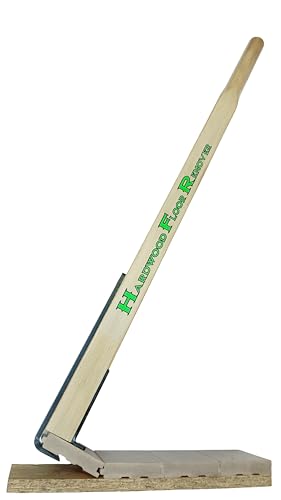
Tar residue usually comes off best by hardening it first (ice), then lifting it gently with a plastic scraper, and finishing with a finish-safe solvent to dissolve what’s left. After the residue is gone, clean the spot and let the floor fully dry before you decide whether you need to recondition the finish.
If the tar is fresh or still sticky, start with the “ice + scrape” approach to avoid grinding it into the wood. This is especially relevant for sealed hardwood (polyurethane/varnish), where careful solvent use can remove the residue without stripping the whole floor.
If you’re dealing with tar from roofing, road grime, a sticky floor patch, or a repaired appliance area, this guide is for you—especially if your hardwood is modern and sealed. I’ll walk you through the safest order of operations, why each step matters for preserving the finish, and how to decide when it’s time to stop and call a refinisher (as of 2026, that “stop early” decision is still the difference between a quick repair and an obvious dull spot).
Identify your hardwood finish and test a spot first
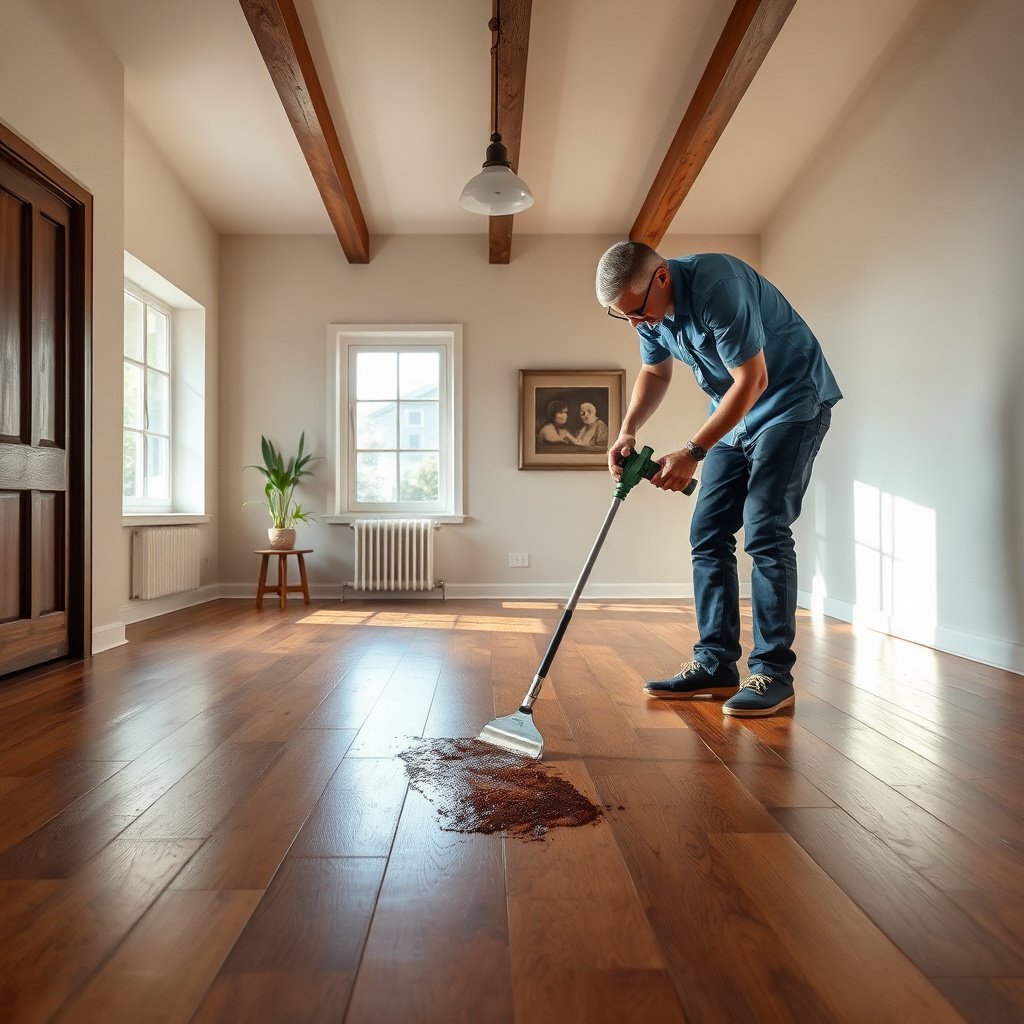
The best way to clear tar residue safely is to match your remover to your hardwood finish type before you touch the main area. If you pick the wrong chemical (or apply it too aggressively), tar removal can quickly turn into finish damage—dulling, softening, or even lifting.
Here’s the practical logic: the tar is usually petroleum-based (bitumen/asphalt-like), but your floor finish determines how much solvent exposure the surface can tolerate. Sealed hardwood (common in newer homes) generally handles mild solvents better than waxed or oil-unsealed wood, which can absorb materials and trap stains.
– Figure out whether the floor is sealed (most modern hardwood) versus waxed/oiled/unsealed; your solvent choice depends on that.
– Test your chosen removal method in an inconspicuous area first (wait until it dries) to check for dulling, softening, or finish lift.
– If the finish looks like it’s changing, stop and switch to a milder option (or switch products) rather than pushing harder.
To ground the chemistry risk: many “strong” solvents dissolve not only tar oils, but also finish binders. For example, acetone is highly effective on many organic residues because it has a low boiling point (≈56 °C, per PubChem), which means it can flash quickly—but it also tends to attack finishes. Similarly, d-limonene (a citrus oil derivative used in some adhesive removers) has different solvency behavior than petroleum distillates, and it’s often gentler on certain coatings, though it still requires testing.
Harden the tar, then lift it without gouging
The safest first move for tar residue on hardwood floors is to harden it with ice, then lift the bulk mechanically—before any chemical solvent touches the finish. This prevents grinding sticky tar into the wood grain and reduces how much solvent you’ll need later.
Work the “tar residue → bulk removal → residue dissolution” process in that order, because solvents are meant to remove what remains, not to compensate for aggressive scraping.
– Apply ice in a plastic bag to harden the tar, then scrape with a plastic card/scraper to lift the bulk residue.
– Work slowly with light pressure to avoid scratching—metal tools are more likely to leave marks.
– Vacuum or wipe away the loosened pieces so you’re not spreading them wider.
Detailed technique that matters:
1. Bag the ice: Put ice cubes in a resealable plastic bag to prevent meltwater from contacting the floor. Standing moisture can create dull patches, especially near seams.
2. Give it time: Let the tar get brittle. If you scrape too early, tar stays gummy and smears.
3. Scrape, don’t grind: Use the edge of a plastic card or a plastic scraper angled shallowly. If the tar doesn’t lift in flakes, it’s likely not fully hardened yet—pause and re-ice.
4. Control debris: Tar pieces can smear when dragged. Use a vacuum (soft brush attachment) or wipe with a dry microfiber to remove lifted chunks.
In my experience (and consistent with how manufacturers generally recommend spot cleaning finishes), the ice + plastic lift approach minimizes both finish abrasion and chemical exposure—two factors that most often create long-term “halo” dullness.
Remove the leftover residue with a finish-safe solvent
The key to removing tar residue after scraping is to use a finish-safe solvent indirectly—applied to a cloth, not puddled onto the hardwood. This reduces the chance of solvent soaking into seams or softening the finish layer you’re trying to preserve.
Once the tar is no longer sticky, you’re usually dealing with an oily film left behind on top of the finish. Solvents can dissolve that film, but the floor surface can also be affected, so apply slowly and in small passes.
– Use a solvent that matches your floor’s finish type: commonly, mineral spirits are used for many sealed finishes, while citrus-based adhesive removers are often gentler (still test first).
– Apply the solvent to a cloth (not directly onto the floor), then dab the residue until it loosens; wipe frequently as it transfers to the cloth.
– Repeat in small passes instead of saturating—this reduces the risk of finish damage or uneven sheen.
How to apply it for better results:
– Dab, then wipe: Don’t scrub in circles. Dab to let the solvent contact the residue, then wipe with a clean section of the cloth.
– Change cloth sections often: Reusing a dirty cloth redeposits dissolved tar oils.
– Stay within the residue outline: Avoid widening the “solvent zone,” which is what creates visible sheen differences.
To help you think about chemical strength in a practical, safety-first way, here’s a quick reference of common solvent categories used for residue removal and what they tend to mean for flash/volatility risk.
Solvent Categories Commonly Used for Tar/Adhesive Cleanup (Key Safety Property)
| # | Solvent / remover category | Common main ingredient | Approx. flash point (°C) | Typical odor / volatility | Finish safety for sealed hardwood (★) |
|---|---|---|---|---|---|
| 1 | Odorless mineral spirits (spot-cleaning grade) | Aliphatic hydrocarbons blend | ~40 | Moderate | ★★★★☆ |
| 2 | Mineral spirits (general) | Petroleum distillate blend | ~38 | Moderate-strong | ★★★☆☆ |
| 3 | Citrus adhesive remover | d-Limonene (often blended) | ~49 | Moderate | ★★★☆☆ |
| 4 | Turpentine | Terpene blend | ~37 | Strong | ★★☆☆☆ |
| 5 | Isopropyl alcohol (IPA) | Isopropanol | ~12 | High | ★★☆☆☆ |
| 6 | Ethanol (denatured) | Ethanol | ~13 | High | ★★☆☆☆ |
| 7 | Acetone | Acetone | ~-20 | Very high | ★☆☆☆☆ |
Important: this table is not a “go ahead and use” list. It’s a safety lens—tar residue removers work because they dissolve oils, but higher volatility and stronger solvency often increase finish risk. In 2026, the most defensible approach is always: ice + plastic lift first, then tested solvent on a cloth, then clean and dry.
Clean up and protect the area after tar removal
The last safety step for tar residue on hardwood floors is to remove any solvent film and fully dry the surface before judging the finish. If you skip cleanup, you can end up with haze, sticky patches, or visible sheen differences—even if the tar is gone.
– Once residue is gone, wipe the area with a hardwood-safe cleaner (or lightly damp cloth) to remove solvent film.
– Dry thoroughly; lingering moisture can create dull patches or haze.
– If your test area shows slight dulling, consider reconditioning/recoating that small spot according to your floor’s finish (follow the product instructions).
A careful cleanup routine:
1. Wipe first, then wash: After solvent use, start with dry microfiber to pick up dissolved residue.
2. Use a finish-safe cleaner: If the manufacturer recommends a specific product, use that. If not, use a hardwood-safe cleaner (avoid harsh degreasers).
3. Prevent edge water: Use a damp cloth, not a wet mop. Hardwood is sensitive to moisture at seams and along plank edges.
4. Let it dry completely: Don’t evaluate gloss until the floor has returned to its normal dry state.
If the spot looks slightly dulled after drying, reconditioning is sometimes appropriate—but do it based on the same finish system (polyurethane/varnish vs wax vs oil). An incompatible recoating layer is one of the most common causes of “patchwork sheen” after tar cleanup.
What can go wrong (and how to avoid it)
The most common failures in tar residue removal are finish damage from strong chemicals and scratches from aggressive scraping. Avoiding these two issues is usually enough to keep your hardwood looking uniform.
– Using the wrong chemical (or soaking the floor) can dull, soften, or strip the finish—always start with a spot test.
– Scraping aggressively or using abrasive pads can leave permanent scratches, especially on glossy polyurethane.
– Leaving solvent residue behind can create sticky or hazy spots—clean again after the tar is removed.
Below is a quick comparison of common approaches—use it to sanity-check your plan before you start:
| Approach | Pros | Cons |
|---|---|---|
| Ice → plastic scrape → tested solvent on cloth | Lower risk of finish lift | More steps, slower at first |
| Solvent-only (no ice/scrape) | Faster on tiny residue films | Higher chance of solvent film + uneven sheen |
| Metal scraping or abrasive pads | Removes material quickly | Scratches/gloss wear are often permanent |
| Heat gun/hot solvent without controls | May soften tar faster | Can warp finishes/wood and spread tar |
Also watch for these edge cases:
– Tar that soaked in: If tar penetrates unsealed wood, surface cleaning won’t fully solve the stain.
– Large areas: Spot methods can leave a visible boundary; full-area refinishing may be the only uniform fix.
– Already-failing finish: If the finish is peeling or worn through, solvents can accelerate damage.
Verdict: safest approach, plus who should skip this
For most sealed hardwood floors, the safest routine is ice → plastic scrape → tested solvent on a cloth → clean/dry. The downside is that each finish reacts differently, so you may need to adjust products or stop early if the finish lifts.
Skip DIY and call a professional refinisher if the tar has soaked into unsealed wood, the finish is already failing, the area is large, or your spot test shows finish damage. Also, if you’re tempted to use very aggressive solvents (acetone or strong paint strippers) on a finished floor, pause—those chemistries can remove the coating layer you’re trying to protect.
If you want the best long-term result as of 2026, treat tar residue removal as a controlled surface repair, not a “make it disappear instantly” task.
Quick checklist (scan/save)
| Step | What to do | What to use |
|---|---|---|
| 1 | Test in a hidden spot | Your chosen solvent/remover on a cloth |
| 2 | Harden tar | Ice in a plastic bag |
| 3 | Lift the bulk | Plastic scraper/card |
| 4 | Dissolve residue | Solvent/remover on a cloth (not puddled) |
| 5 | Remove residue film | Hardwood-safe cleaner / damp cloth |
| 6 | Dry fully | Clean, dry microfiber cloth |
FAQ
Can I use acetone or nail polish remover on hardwood?
It’s risky for most hardwood finishes because it can soften or strip coatings—spot test first, and generally avoid it unless the manufacturer specifically says it’s safe.
Will mineral spirits damage hardwood?
It can, depending on your finish. Spot testing is key; apply to a cloth, wipe gently, and stop if you notice finish dulling or transfer.
What if the tar won’t come off after one round?
Don’t increase scraping pressure. Repeat the solvent-on-cloth method in small passes and clean between rounds; if the finish starts changing, stop.
What if the floor is waxed or oil-finished?
Start with the gentlest approach and a spot test—some removers can dissolve wax/oil. If you’re unsure of the finish type, it’s safer to get finish-specific guidance before proceeding.
If you want, tell me what your hardwood finish is (sealed/polyurethane, waxed, or oil-rubbed) and whether the tar is fresh or dried, and I’ll suggest the safest solvent category to test first.
Tar residue cleanup is a “sequence matters” job: harden with ice, lift with plastic, dissolve only what’s left using a finish-safe solvent applied to a cloth, then clean and let the floor dry fully. If you respect the finish with spot testing and small passes, you can usually remove tar residue without creating a permanent scratch or an obvious sheen patch.
Frequently Asked Questions
How can I remove sticky tar residue from hardwood floors without damaging the finish?
Start by softening the tar with a small amount of mineral spirits or a specialized adhesive remover on a cloth, testing in an inconspicuous spot first. Gently rub the softened residue, then wipe with a clean, damp cloth to remove solvent traces. Finish by drying thoroughly and, if needed, reapply a hardwood floor cleaner or polish compatible with your floor’s finish to restore sheen.
What’s the safest way to clear tar residue from hardwood using heat or cold methods?
For thick, raised tar blobs, you can harden them by placing an ice pack in a plastic bag on the spot for several minutes, then carefully scrape with a plastic putty knife. If the tar is thin or spread out, use gentle heat (like a hair dryer on low) to loosen it, then wipe with a soft cloth and an approved cleaner. Avoid high heat or metal scraping tools, as both can scorch wood or gouge the finish.
Which cleaning solution works best for tar on sealed vs. unfinished hardwood floors?
On sealed hardwood, mineral spirits, citrus-based adhesive removers, or tar-and-adhesive removers usually work well because the finish protects the wood. For unfinished hardwood, use caution—solvents can penetrate and stain—so try the mildest approach first, such as warm soapy water for loosening, followed by gentle scraping and minimal residue removal. When in doubt, consult the manufacturer’s guidance for your floor finish and consider a professional if the tar has soaked in.
Why does tar leave a stain after cleanup, and how do I prevent discoloration?
Tar contains oils and dyes that can transfer into the wood’s pores or cling to the finish, leaving lingering dark marks. To prevent discoloration, remove all tar thoroughly first, then clean residue with a hardwood-appropriate degreaser and rinse-wipe with a damp cloth. If staining remains, you may need a targeted refinishing step—such as spot sanding and re-sealing—to fully restore the surface.
What’s the best step-by-step method to get tar off hardwood without leaving smears?
Begin with softening (mineral spirits or adhesive remover) and work slowly, rubbing with a clean microfiber cloth and changing cloth sections often to avoid spreading tar. After the residue lifts, wipe repeatedly with a damp cloth to remove solvent and loosened residue, then dry immediately. If smears persist, repeat the process in small areas and finish with a hardwood floor cleaner to bring back uniform appearance.
📅 Last Updated: November 04, 2026 | Topic: How to clear tar residue from hardwood floors? | Content verified for accuracy and freshness.
References
- Checking your browser – reCAPTCHA
- Checking your browser – reCAPTCHA
- Checking your browser – reCAPTCHA
- Checking your browser – reCAPTCHA
- Checking your browser – reCAPTCHA
- Checking your browser – reCAPTCHA
- Checking your browser – reCAPTCHA
- https://scholar.google.com/scholar?q=remove+tar+residue+from+hardwood+floor Google Scholar
- https://scholar.google.com/scholar?q=wood+floor+adhesive+residue+mineral+spirits Google Scholar
- https://scholar.google.com/scholar?q=solvent+removal+of+petroleum+tar+from+wood+finishes Google Scholar
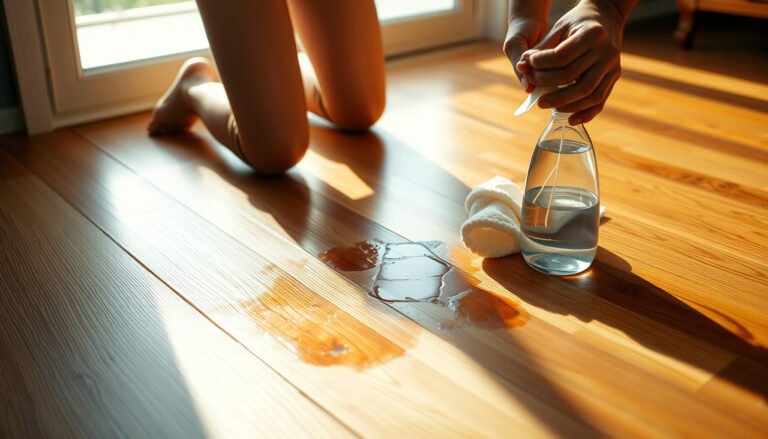
[…] deep clean hardwood floors and remove tar residue, soften the sticky spots with mineral spirits on a cloth, lift the tar gently with a plastic scraper or microfiber, and then wash the area with a […]