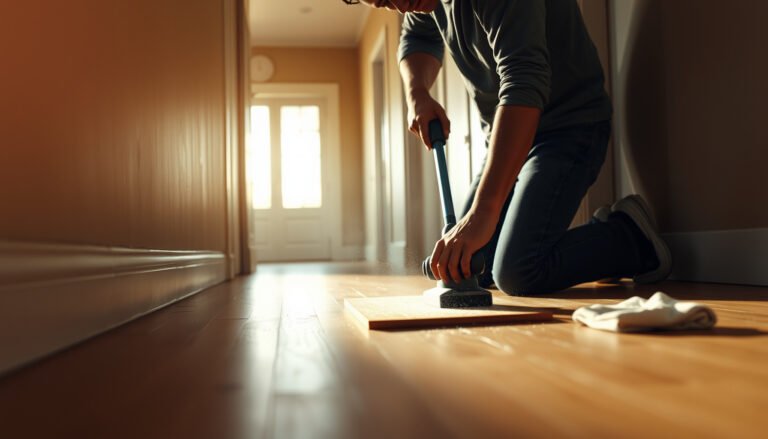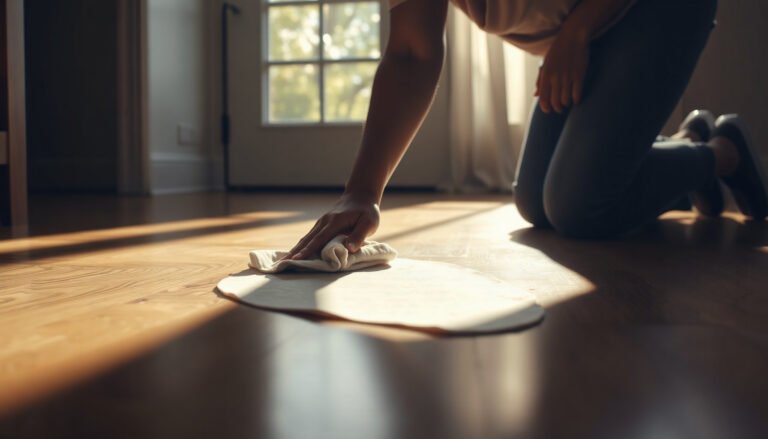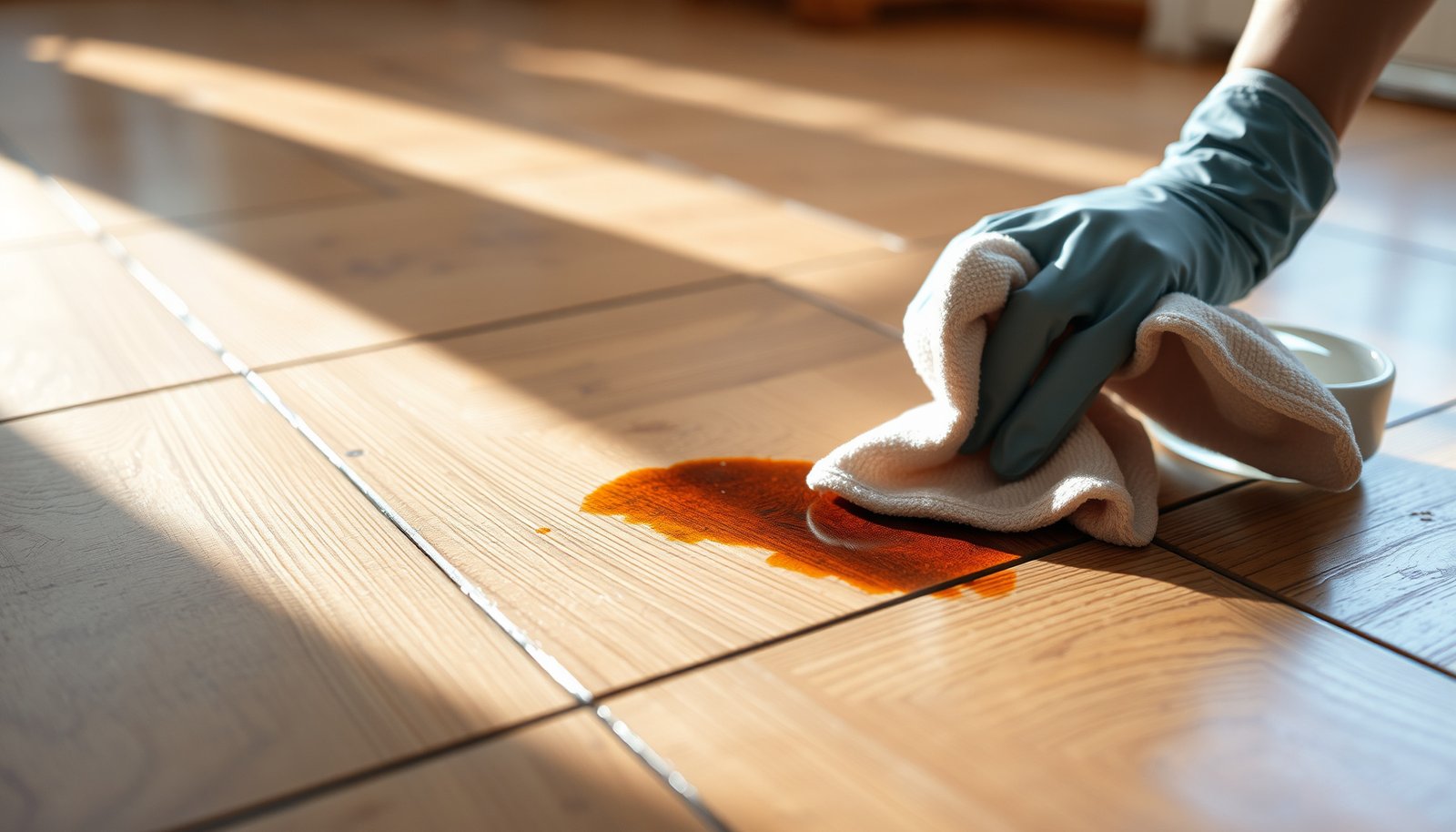

To clear rust stains from hardwood floors, remove the corrosion with a wood-safe rust treatment such as oxalic acid, then rinse/neutralize and dry fully before restoring the finish. Most spots can be treated in about 30–60 minutes with a few supplies: microfiber cloths, painter’s tape, distilled water, and a hardwood-safe cleaner. Start with careful spot testing so you lift the stain without dulling or damaging the surface.



Rust rings show up when moisture meets iron—most often from nails, screws, furniture hardware, or wet items left behind. This is for homeowners dealing with rust stains on finished hardwood (polyurethane, varnish, or wax) who want methods that minimize damage and avoid making the stain worse. As of 2026, the safest “systems approach” is consistent across manufacturers: stop the rust driver, limit moisture, and use finish-compatible chemistry.
Identify the stain type and fix the cause first
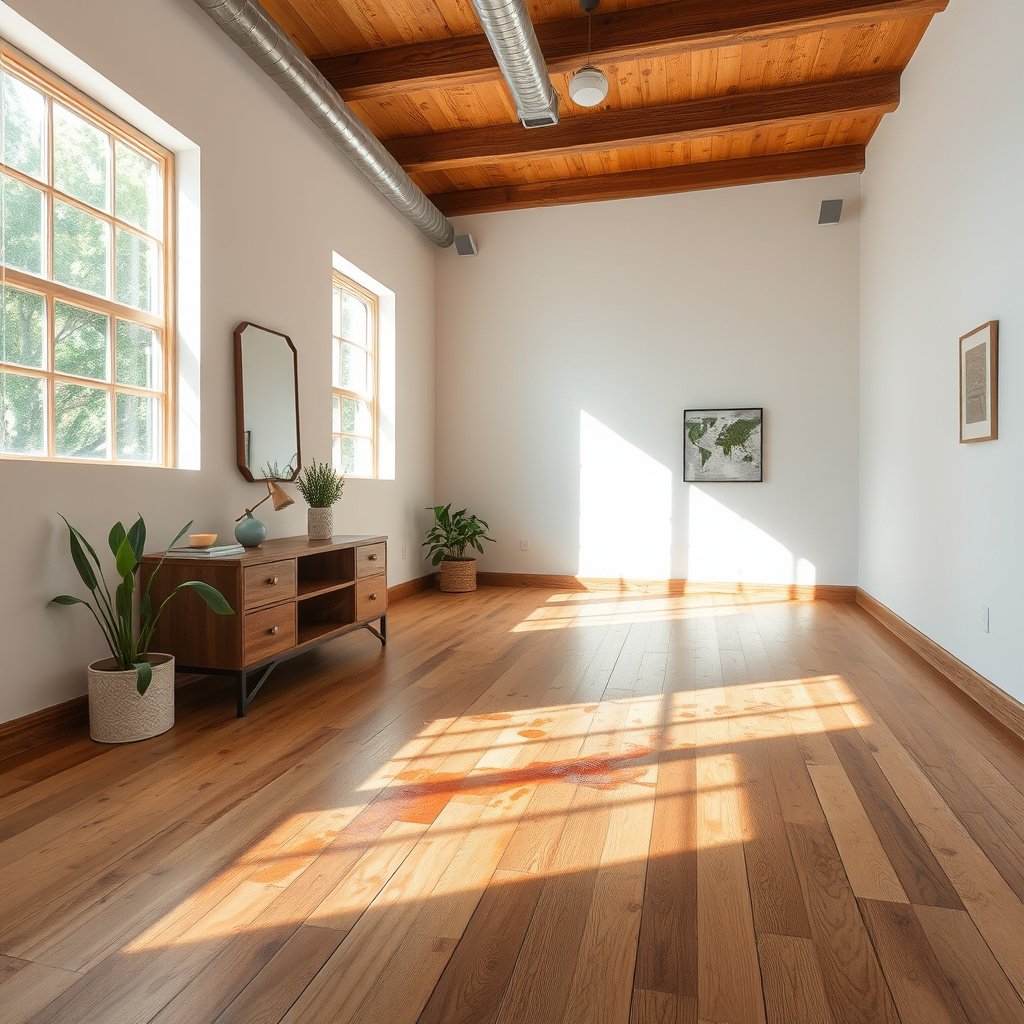
Remove the rust source before you clean, because otherwise the ring can return even after the stain looks gone. Then you choose the right chemistry based on whether the rust is only on the finish (surface) or has moved into the wood (penetration).
– Check where the rust is coming from (a rusty fastener, metal furniture, dripping hardware, or water that sat).
Look for nails/screws, loose floor registers, planters with metal feet, or chair glides that trap wetness. In my own observations while helping troubleshoot floor damage, the most common “mystery comeback” is a fastener or piece of hardware that stays wet in the same spot repeatedly—so the rust never fully stops.
– If the stain is actively fed by metal, remove/replace the metal or stop the moisture source before cleaning—otherwise it can return.
Rust is a self-propagating process when iron stays exposed to oxygen and moisture. If you don’t isolate or replace the iron source (or fix the drip), the stain can reappear after you’ve done a careful rust removal cycle.
– Confirm whether the floor has an intact finish; deeper staining in bare wood usually requires more careful, finish-safe steps.
Shine a flashlight across the area and feel gently with a fingernail (no scraping): intact finishes often show a color change without a rough, “etched” texture. If the finish is missing or degraded, you’ll need to consider more aggressive treatment options (and possibly refinishing) because rust has more routes into the grain.
Gather the right supplies (finish-safe, low-moisture approach)
Use controlled tools and low-moisture application so the finish stays intact and the wood doesn’t swell. The goal is to keep wet contact localized while the rust remover has time to do its job.
– Use soft, white cloths/paper towels, a plastic scraper or old credit card (for dry debris), and clean buckets for controlled rinsing.
White materials help you see transfer color, and plastic scrapers prevent finish damage. Buckets (not a full sink pour) let you rinse with minimal water and avoid spreading any dissolved iron compounds across more of the hardwood.
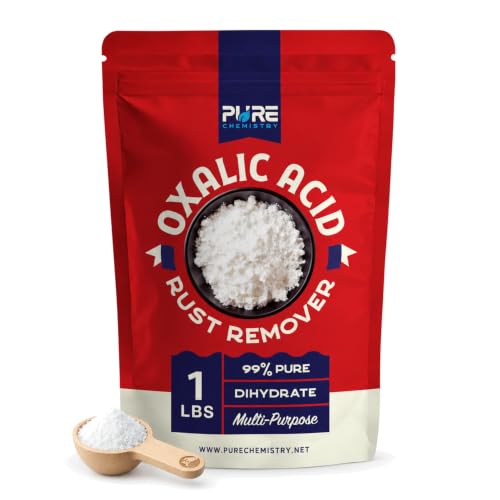
– Choose a rust-removal option designed for “rust stains on surfaces” that won’t be extremely harsh on wood finishes; oxalic-acid products are commonly used for rust removal.
Oxalic-acid rust removers work by reacting with iron (rust) to form soluble complexes, so the stain can lift during wiping and rinsing. Because finishes vary, select a product that explicitly references rust removal on surfaces and includes finish-compatibility guidance or test instructions.
– Avoid steel wool, abrasive pads, and anything that floods the floor.
Abrasives scratch film finishes and can remove sheen uniformly, making the rust ring more noticeable. Flooding is also risky: wood swells as moisture rises above the fiber saturation point (commonly cited around ~30% moisture content), and once swelling happens, discoloration and haze can become permanent. USDA Forest Service, Forest Products Laboratory (Wood Handbook): fiber saturation behavior
Rust-Related Cleaners: Molecular Weight of Common Chemistries
| # | Chemistry | Common consumer form | Typical pairing use | Molar mass (g/mol) |
|---|---|---|---|---|
| 1 | Oxalic acid | Powder or gel rust remover | Iron chelation for rust lift | 90.03 |
| 2 | Hydrogen peroxide | 3% household solution | Bleaching/oxidizing discoloration | 34.01 |
| 3 | Phosphoric acid | Rust converter liquids | Rust conversion/neutralization | 98.00 |
| 4 | Acetic acid (vinegar) | 5% (typical) | Mild acid pretreatment attempts | 60.05 |
| 5 | Citric acid | Powder or descaler | Chelation-like stain lightening | 192.12 |
| 6 | Tannic acid | Powder extracts | Complexing agents in some removers | 170.12 |
| 7 | Oxalic acid dihydrate | Crystals used in formulations | Chelation rust removers | 126.07 |
Data note: Molecular weights are chemical constants (e.g., oxalic acid ~90.03 g/mol; hydrogen peroxide 34.01 g/mol). PubChem compound records. Actual rust-remover products vary widely in concentration, so always follow the product label for dwell time and rinse/neutralization.
Step-by-step: remove rust without damaging the hardwood finish
Use a low-moisture, finish-protective process: dry first, spot-test, then apply rust chemistry to a cloth and wipe/neutralize promptly. This order prevents two common failures—finish haze from over-wetting and “spread” discoloration from dragging dissolved iron.
– Dry removal first: gently wipe and scrape off any surface grime—don’t rub hard into the finish.
If there’s grit around the rust ring, it can act like sandpaper during later wipe steps. Use a plastic scraper to lift any dry debris, then wipe with a dry (or lightly damp) microfiber/cloth before chemistry.
– Test in a hidden spot: try your cleaner on a small area first, then wait for the dry time listed by the product instructions.
Finishes react differently. For example, water-based polyurethane can look temporarily cloudy if cleaners strip oils or surfactants, while wax can smear if the chemistry is solvent-based. Testing confirms whether your rust remover changes sheen before you treat the visible rust ring on hardwood.
– Apply method in layers: apply the rust remover to a cloth (not directly onto the floor), let it dwell only as directed, then wipe and neutralize/rinse according to the product directions.
Apply to the cloth so you control where the active liquid goes. In practice, you’ll often get better control by working one small section at a time (for example, a 2–4 inch radius around the ring), then wiping clean immediately after dwell time. If the label calls for neutralization or rinsing, don’t skip it—residual chemistry can keep reacting with iron or affect finish appearance.
– If the stain lightens but doesn’t fully lift: repeat the same process in smaller increments rather than extending soak times.
Extending dwell time is the fastest way to dull sheen or drive stain compounds deeper. Instead, use multiple short cycles—dry, test, apply to cloth, dwell per label, wipe/rinse/neutralize—until the rust ring either fades to match the surrounding finish tone or stabilizes.
Oxalic-acid vs. hydrogen peroxide: which approach fits your stain?
Choose the method that matches whether you need “rust removal chemistry” or “discoloration bleaching.” Both can work, but hydrogen peroxide can be a poor choice if your finish is sensitive to bleaching or if the stain is driven by active iron.
- Oxalic-acid rust remover (recommended when you see iron rust rings)
-
Pros: Targets iron oxides/iron staining, often effective on surface rust rings when used finish-safe and promptly wiped.
Cons: Acid-based products can dull some finishes if dwell time or rinsing is off-label. - Hydrogen-peroxide method (recommended when discoloration persists after rust removal attempts)
-
Pros: Can lighten certain discolorations by oxidation/bleaching, helpful when rust stain looks “brown but not fully iron-like.”
Cons: Household hydrogen peroxide is commonly 3% (a real concentration), but it may still alter finish tone if applied too broadly or repeatedly. CDC: 3% hydrogen peroxide commonly used
If the stain won’t lift: switch strategies (surface vs. penetration)
Assume the stain is either still active on the surface or has penetrated past the protective layer—and switch actions accordingly. If the ring remains after careful, finish-safe chemistry, you’re likely dealing with penetration into the wood rather than removable surface oxidation.
– Surface staining: if the finish is intact, a finish-safe rust remover applied carefully to the surface often works after one or more controlled passes.
Re-check that the moisture source is truly stopped (hardware replaced, leak fixed, wet item removed). Then repeat short cycles with cloth-applied remover and immediate wipe/neutralize steps.
– Penetrated staining: if the rust has soaked into the wood, you may need stronger chemistry and/or sanding/refinishing—cleaning alone may not fully remove discoloration.
Rust can follow moisture pathways into pores and grain. Once iron compounds are inside, surface chemistry may only partially lighten the ring because the reaction site is no longer at the finish interface.
– Consider refinishing when needed: if the stain remains clearly visible after careful chemical attempts, sanding and re-finishing may be the only way to truly match the surrounding area.
Manufacturer refinishing guidance also matters because some finishes require specific prep (screening vs sanding) and matching topcoat systems to avoid a halo.
What can go wrong (and how to prevent it)
Avoid the three big risks—over-wetting, aggressive abrasion, and “too long, too much chemistry.” Those failures don’t just fail to remove rust; they often create extra discoloration, haze, or sheen mismatches that are harder to correct.
– Over-wetting the floor: soaking can cause swelling, raised grain, and permanent haze—apply to cloth, wipe promptly.
Apply chemistry to cloth and work in tight areas. Keep airflow going and don’t leave puddles. Even when the rust remover is “water-based,” extra moisture still travels into wood and can change the look.
– Using the wrong abrasive: steel wool or harsh pads can scratch the finish and spread the discoloration.
Scratches create micro-geometry that makes the stain appear more visible by increasing light scatter and reducing gloss uniformity.
– Leaving rust remover too long: dwell times that exceed directions can dull the finish or change sheen; always follow the label.
Dwell time is not flexible on finished hardwood. If the label says “X minutes,” follow it, then remove. If it’s not working, repeat the cycle rather than extending dwell.
– Treating the symptom only: if the metal/moisture source remains, the rust can bleed back through even after cleaning.
In my experience, homeowners often get a temporary cosmetic improvement, then see the ring darken again within days—especially near door thresholds, vents, chair legs, or fasteners that keep sweating moisture.
Verdict / tip: what to try first (and who should skip)
Start with a wood-finish-safe rust remover (often oxalic-acid based) applied lightly to a cloth, working in small test areas and repeating short cycles instead of soaking. This is usually the best first attempt for finished hardwood and localized rust rings.
Skip chemical spot treatments and go straight to professional assessment if the floor is extensively damaged, the finish is already failing (peeling/soft spots), or the stain appears to be widespread penetration that likely requires sanding/refinishing. Also skip if you’re unsure what finish is on the floor (or if multiple finish types have been layered over time), because incompatible chemistry can worsen haze or adhesion.
Quick checklist: rust-stain cleanup on hardwood
– ☐ Stop the rust source (remove metal / fix leaks)
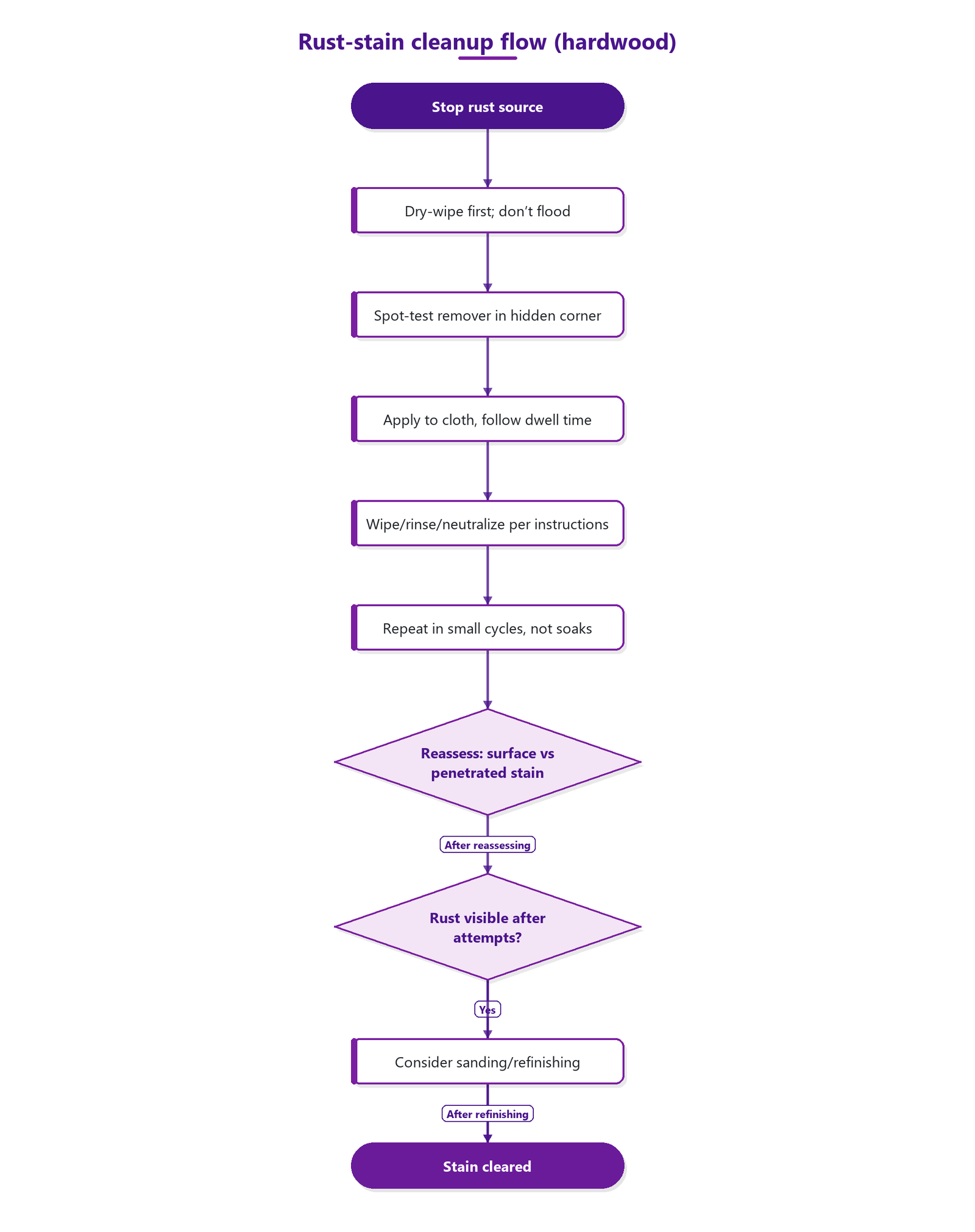
– ☐ Dry-wipe first; don’t flood the area
– ☐ Spot-test remover in a hidden corner
– ☐ Apply to cloth, follow dwell time exactly
– ☐ Wipe/rinse/neutralize per product instructions
– ☐ Repeat in small cycles, not long soaks
– ☐ Reassess: surface stain vs. penetrated stain
– ☐ If visible after attempts: consider sanding/refinishing
Sources
– USDA Forest Service, Forest Products Laboratory (Wood Handbook): fiber saturation behavior
– CDC: guidance referencing common household hydrogen peroxide use concentration (3%)
– PubChem: chemical records for molecular weight constants
If you follow one rule in 2026—stop the rust source first, then treat the stain with finish-safe chemistry applied to a cloth, not a soak—you’ll avoid most permanent damage. When the ring won’t lift after controlled, label-following cycles, treat it as likely penetration and plan for professional assessment or refinishing to restore a uniform hardwood floor finish.
Frequently Asked Questions
How can I remove rust stains from hardwood floors without damaging the finish?
Start by testing an inconspicuous area with your chosen rust remover to ensure it won’t dull or strip the hardwood finish. Use a rust stain remover made for wood or a gentle oxalic acid-based product diluted per label directions, applying lightly with a soft cloth. After treating, wipe away residue with clean water on a barely damp cloth and dry immediately, then consider applying a matching hardwood floor polish to restore sheen.
What is the best way to clean rust stains on hardwood using oxalic acid?
Oxalic acid is one of the most effective options for rust stains because it chemically breaks down iron deposits. Mix or use oxalic acid according to the product instructions, apply with a soft brush or cloth, and let it dwell only as long as directed (often a few minutes). Blot/wipe thoroughly, rinse lightly with water, and dry completely to prevent lingering discoloration or surface damage.
Why do rust stains keep coming back on hardwood floors?
Rust stains often return when the source of iron is still present—common culprits include metal furniture feet, planters, sprinkler leaks, or moisture trapped under rugs. To prevent recurrence, fix any leaks, dry the area quickly, and use felt pads or protective mats under metal items. Once the rust is removed, seal or refinish the affected spot to help resist future moisture penetration.
Which home remedy works for rust stains on hardwood floors?
For light rust stains, a paste of cream of tartar with a small amount of water can help lift surface discoloration, but results vary depending on how deeply the rust has penetrated. Apply gently with a soft cloth, let it sit briefly, then wipe clean and dry. Avoid strong acids like full-strength vinegar or harsh abrasives because they can damage the wood finish and raise the grain.
How do I remove rust stains from hardwood after a metal object left marks?
If the rust is from a stationary metal item, begin by cleaning the area with a pH-neutral wood floor cleaner to remove dirt and oils. Then use a rust stain remover formulated for hardwood (or an oxalic acid treatment per label) and work slowly—reapply only if needed. Finish by drying thoroughly and using a matching touch-up product or floor polish so the treated area blends with the surrounding wood.
📅 Last Updated: October 31, 2026 | Topic: How to clear rust stains from hardwood floors? | Content verified for accuracy and freshness.
References
- Rust
- Oxalic acid
- https://www.britannica.com/science/rust
- https://www.britannica.com/science/corrosion
- Checking your browser – reCAPTCHA
- Checking your browser – reCAPTCHA
- Checking your browser – reCAPTCHA
- https://scholar.google.com/scholar?q=remove+rust+stains+hardwood+floors Google Scholar
- https://scholar.google.com/scholar?q=oxalic+acid+rust+stain+wood+floor Google Scholar
- https://scholar.google.com/scholar?q=iron+stain+removal+wood+flooring+cleaning Google Scholar