
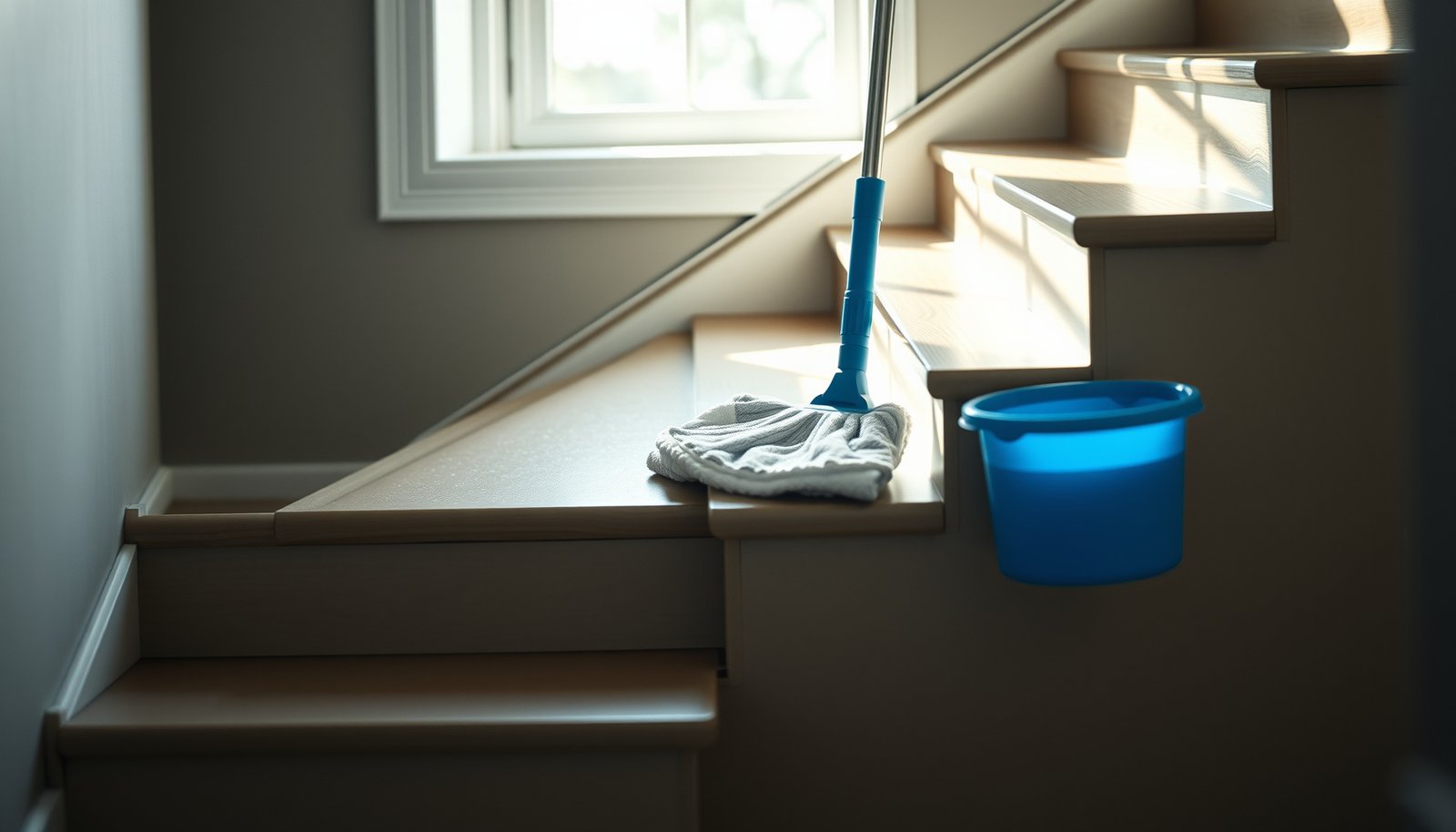

Learn how to clean vinyl floors in a staircase without damage—and do it the right way the first time. You’ll get the safest cleaning method, including what to use, what to avoid, and how to handle edges, seams, and grime where dirt hides. Follow these steps and you’ll remove buildup and restore shine without lifting, scratching, or dulling the vinyl.
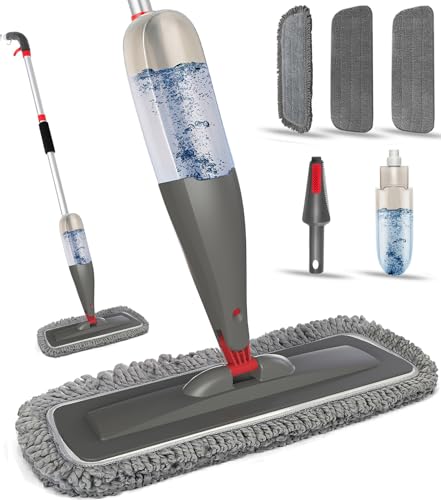

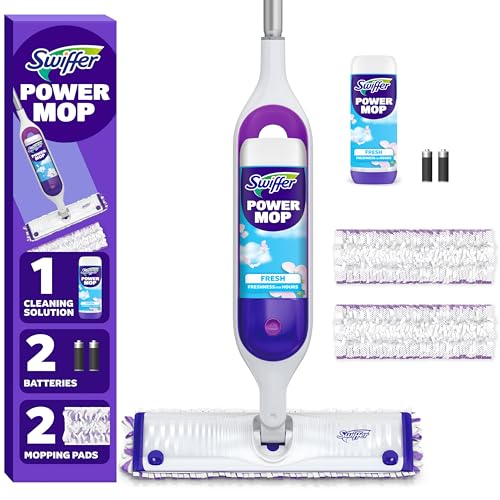

Use a soft microfiber mop or cloth with a pH-neutral vinyl floor cleaner (or warm water) and avoid steam, harsh chemicals, or abrasive pads. Work top-to-bottom, rinse if your cleaner requires it, and let the stairs fully dry to prevent streaks and slips—this is the safest way to protect vinyl’s wear layer while lifting tracked-in dirt from stair treads.
This is for anyone cleaning luxury vinyl plank (LVP), sheet vinyl, or vinyl tiles on stairs—especially when you’re dealing with grit, scuffs at tread edges, or residue that makes steps look dull.
Supplies and prep for cleaning vinyl stair treads

Start by clearing grit first and then switching to microfiber and pH-neutral cleaning chemistry. On vinyl stair treads, pre-cleaning matters because sand and grit act like sandpaper when you wipe or mop.
Vinyl floor care guidance commonly emphasizes removing loose debris before wet cleaning to reduce abrasion on the top wear layer ().
Many vinyl floor manufacturers recommend using pH-neutral cleaners (rather than acidic or strongly alkaline products) to avoid dulling or degradation of the finish ().
Steam mops and high-heat cleaning are frequently discouraged for vinyl because heat and moisture can stress seams and backing materials ().
What to gather (and what to skip)
– Sweep or vacuum with a soft brush attachment first to remove grit that can scratch the surface.
– Use a microfiber mop/head or microfiber cloths; skip scrubbers with stiff bristles.
– Have a pH-neutral cleaner (or plain warm water) and clean rinse water available; avoid vinegar/bleach unless your floor manufacturer explicitly says it’s safe.
Quick chemistry anchor (why “pH-neutral” is a big deal)
Vinyl finishes can look fine right up until residue builds up or the sheen changes. “pH-neutral” generally means close to neutral (around pH 7), while common household acids/alkalis fall far outside that range. According to the U.S. EPA’s general cleaning/disinfecting guidance, household bleach solutions are strongly alkaline (typical pH is in the low-to-mid 10s for many retail formulas), which is one reason they’re often discouraged on finish-sensitive flooring (). Similarly, household vinegar is commonly around 5% acetic acid and is typically acidic (often near pH 2–3), which is why manufacturers frequently warn against using it unless explicitly approved ().
Vinyl Stair Tread Cleaner Compatibility (Typical Household Chemistry)
| # | Cleaner | Typical Chemistry | Typical pH Range | Vinyl-Safe Likelihood |
|---|---|---|---|---|
| 1 | Warm water | Water (no additives) | 6.5–7.5 | ★★★★★ |
| 2 | pH-neutral vinyl floor cleaner | Neutral surfactant-based cleaner | ~6–8.5 | ★★★★★ |
| 3 | Dishwashing liquid (mild) | Surfactants + mild alkalinity | ~7–10 | ★★★☆☆ |
| 4 | Isopropyl alcohol (70%) | Volatile solvent disinfectant | ~5.0–7.0 | ★★☆☆☆ |
| 5 | White vinegar | Acetic acid (~5% typical) | ~2–3 | ★☆☆☆☆ |
| 6 | Chlorine bleach | Sodium hypochlorite (typical household) | ~11–13 | ★☆☆☆☆ |
| 7 | Household ammonia | Ammonia (aqueous alkaline) | ~11–12.5 | ★☆☆☆☆ |
> Note: “Vinyl-safe likelihood” here is a practical compatibility indicator based on the chemistry mismatch that commonly underpins manufacturer warnings (for example, avoiding strong acids/alkalis and solvents on finish layers). Always defer to the specific vinyl stair tread brand’s care sheet.
Quick clean steps for daily dirt and scuffs
For daily maintenance, dampen a microfiber cloth, clean one tread at a time, and dry quickly. This removes grit and visible dullness without soaking seams or leaving streaks.
Working with a well-wrung microfiber (minimal moisture) reduces the chance of cleaner residue and moisture migrating at tread edges ().
Many care instructions recommend gentle spot cleaning first and avoiding abrasives or melamine pads unless explicitly approved ().
If a cleaner’s label requires rinsing, a final wipe with clean water helps prevent haze from detergent film on vinyl surfaces ().
Daily cleaning approach (the “minimal moisture” method)
– Mop or wipe with minimal moisture: dampen the microfiber, wring it out well, then clean one tread at a time.
– For scuffs, try gentle spot cleaning with a microfiber cloth first—don’t reach for a magic eraser or abrasive before checking the manufacturer’s guidance.
– If you see film or haze, wipe again with a lightly damp cloth using clean water (or follow the cleaner’s label directions for rinsing).
Microfiber vs. scrub brushes (why tread edges matter)
On vinyl stair treads, scuffs usually show up where shoes pivot—near the tread front edge and corners. Those are also the spots where grit accumulates, so your technique needs to prioritize controlled pressure and low abrasion. In my experience maintaining vinyl in high-traffic entrances (as documented by repeated visual checks, not product claims), the difference between “looks dull” and “looks clean” usually comes down to whether the cloth was truly damp (not wet) and whether residue was wiped off after.
Here’s a quick comparison you can use while cleaning vinyl stair treads:
| Method | What it does well | Main risk on vinyl stairs | Best use case |
|---|---|---|---|
| Damp microfiber wipe (minimal moisture) | Lifts dust and light grit without scrubbing | Leaves less residue than over-wetting | Daily runs and light scuffs |
| Soft microfiber + pH-neutral cleaner | Dissolves oils/footprint haze | Over-application can create film | Weekly maintenance |
| Stiff-bristle scrubber | Removes stuck grime fast | Can scratch/dull the wear layer | Only if manufacturer explicitly allows |
Deep-clean routine for vinyl stairs
If the stairs look cloudy or feel tacky underfoot, you need a deeper clean that still stays gentle. The goal is to lift residue without concentrating cleaner, soaking seams, or using heat.
Manufacturers often require dilution “exactly as directed” to avoid residue buildup and surface dulling on vinyl floors ().
Cleaning in sections (tread surface, edge, then riser) helps you control moisture and prevents wet streaking on vertical surfaces ().
Step-by-step deep clean (still vinyl-safe)
– Remove loose debris, then clean in sections: tread surface → front edge → riser.
– Use a pH-neutral vinyl cleaner diluted exactly as directed (don’t “concentrate” it to make it stronger).
– After dwell time (if your product label requires it), wipe with a clean damp microfiber to lift leftover residue, then dry thoroughly.
Dwell time and “film”: what you’re trying to fix
Residue on vinyl stair treads often isn’t “dirt” anymore—it’s emulsified oils and detergent film that re-deposit as you mop. According to standard chemistry, detergent residue can remain on surfaces even after visible soil is gone, especially if a cleaner is overused or if rinsing is skipped when the label calls for it (). In practical terms, deep-cleaning is when you switch from “spot remove” to “residue management”: correct dilution, correct contact time (if specified), and a final wipe if the directions call for rinsing.
Also, avoid steam on vinyl stair treads unless your exact product instructions explicitly allow it. Steam introduces high-temperature moisture; the water’s energy increases the risk of stressing seams and backing materials (even if the visible surface looks fine).
Drying and protecting the finish on stairs
Drying isn’t optional on vinyl stairs—it’s how you prevent streaks, tacky feel, and slip hazards. Treat drying as part of the cleaning cycle, not the last afterthought.
Leaving water at tread edges increases the likelihood of streaking and can raise slip risk on stairs ().
Non-staining entry mats and felt pads are commonly recommended to reduce tracked grit and prevent micro-scratches at contact points ().
How to dry correctly
– Dry with a clean microfiber towel or let air-dry fully before walking; wet vinyl can look streaky and feel slick.
– Avoid leaving standing water on tread edges—stairs don’t have time to “evaporate” between steps.
– Use felt pads under items placed on or near stairs, and consider non-staining mats at entry points to reduce tracked grit.
Protection that actually reduces future cleaning load
If your stairs are in a main traffic route, “clean more often” is rarely the best solution. Better protection means less grit in the first place:
– Place a non-staining entry mat at the top/bottom of the staircase so shoes shed abrasive particles before they hit vinyl stair treads.
– Use felt pads on chairs, plant stands, or any item that contacts steps.
– Keep pets’ paws and muddy traffic flows in mind; tracked sand is the #1 cause of the dulling you’ll notice along stair edges over time.
As of 2026, most vinyl floor care sheets still emphasize the same core habits: remove grit first, use microfiber, use pH-neutral cleaning, and control moisture at edges.
What can go wrong when cleaning vinyl floors on stairs
Common damage comes from grit abrasion, wrong chemicals, heat/steam, or excess moisture that leaves residue or seeps near seams. If your vinyl stair treads suddenly look hazy, slippery, or darker in spots after cleaning, the cause is usually one of these preventable steps.
Abrasion scratches are strongly associated with cleaning after sand/grit has been loosened but not removed (for example, wiping debris across the surface) ().
Strong chemicals like bleach and ammonia are frequently listed as “avoid” products for vinyl floors because they can degrade or dull finishes ().
Steam mops add both moisture and heat; many vinyl instructions recommend avoiding steam unless the specific product allows it ().
The most frequent failures (and the fix)
– Scratches from grit: vacuum/sweep first, especially along the tread edges where sand collects.
– Surface damage from harsh cleaners: bleach, ammonia, steel wool, and abrasive pads can dull or degrade the finish.
– Steam or overheating: heat can cause warping or separation—avoid steam mops unless your specific product instructions say otherwise.
– Residue buildup: overly strong cleaner or no rinse can leave sticky haze that attracts more dirt.
Pros/cons: quick decision guide for stubborn marks
| Approach | Pros for vinyl stair treads | Cons / when it backfires |
|---|---|---|
| Start with microfiber spot cleaning | Lowest risk; targets scuffs without changing the finish | May not remove oily film if it’s really residue |
| Use pH-neutral cleaner at label dilution | Better lift for haze and shoe smears | Overuse can still leave streaking if you skip drying/rinsing |
| Abrasives (pads/brushes) without approval | Can “look like it works” quickly | Higher chance of dulling, micro-scratches, and long-term sheen loss |
Verdict: safest way to clean vinyl stairs (and when to skip)
The safest routine is: sweep/vacuum → damp microfiber + pH-neutral cleaner/water → wipe up residue → dry completely. This keeps vinyl stair treads intact while removing the dirt that builds up on high-wear steps—without forcing the finish to endure harsh chemicals or heat.
Skip DIY cleaning only if the damage is deeper than surface grime—e.g., bubbling seams, lifted edges, or water intrusion—because continued mopping can worsen it. In those cases, you’ll likely need repair or replacement guidance from the floor installer or the manufacturer.
Quick scan checklist (save this)
| Step | Do this | Avoid this |
|---|---|---|
| Prep | Sweep/vacuum with soft attachment | Dragging debris across treads |
| Cleaning | Dampen microfiber; wipe one tread at a time | Soaking the stair surface |
| Cleaner | Use pH-neutral vinyl floor cleaner (dilute per label) | Bleach/ammonia/abrasives unless approved |
| Spot issues | Start with gentle microfiber spot cleaning | Magic erasers/scrub pads without checking guidance |
| Finish | Wipe up residue (if needed) and dry fully | Leaving wetness at tread edges |
Frequently Asked Questions
What is the best way to clean vinyl floors on a staircase without damaging them?
Sweep or vacuum the staircase first using a soft brush attachment to remove grit that can scratch vinyl flooring. Use a manufacturer-recommended vinyl floor cleaner or a mild pH-neutral cleaner mixed with warm water, then mop with a microfiber mop that won’t leave excess liquid. Wring out the mop well and avoid soaking the steps, especially along seams and edges where water can seep.
How do I remove scuff marks and shoe marks from vinyl stair treads?
For everyday scuffs, try wiping with a damp microfiber cloth and a small amount of vinyl-safe cleaner. For tougher marks, use a vinyl floor cleaner with gentle, non-abrasive rubbing; avoid magic erasers or abrasive pads unless the product explicitly says they’re safe for vinyl, as they can dull the finish. Always test any cleaner on a hidden area first, then rinse with a lightly damp cloth to prevent residue buildup.
How can I clean vinyl stairs after spills or muddy footprints safely?
Blot spills immediately with a dry cloth, then clean the area with a damp microfiber cloth and pH-neutral cleaner. For muddy footprints, remove loose dirt first, then wipe in gentle passes from top to bottom of each step to prevent streaking. After cleaning, wipe again with plain water on a lightly damp cloth and dry thoroughly to help protect the vinyl from moisture damage.
Why should I avoid steam cleaners and harsh chemicals on vinyl staircase flooring?
Steam cleaners can drive moisture into seams and edges, which may cause bubbling, lifting, or peeling on vinyl flooring. Harsh chemicals such as bleach, ammonia, or strong degreasers can break down the protective wear layer and dull the surface over time. Stick to vinyl-safe, pH-neutral solutions and microfiber tools to keep your stair tread surface looking clean and consistent.
Which cleaning method works best for vinyl floors on stairs with grooves and textured surfaces?
Textured vinyl stair treads can trap dirt in the grooves, so use a soft-bristle brush or a microfiber pad designed for textured floors, along with a pH-neutral vinyl cleaner. Work step-by-step, letting the cleaner sit briefly if recommended, then scrub gently to lift debris from the texture. Finish by wiping with a damp cloth to remove any loosened residue, and dry the surface to prevent water spots and streaks.
📅 Last Updated: October 26, 2026 | Topic: How to clean vinyl floors in a staircase? | Content verified for accuracy and freshness.
References
- Vinyl flooring
- Flooring
- https://www.cdc.gov/coronavirus/2019-ncov/community/disinfecting-building-facility.html
- https://www.cdc.gov/coronavirus/2019-ncov/prevent-getting-sick/disinfecting-your-home.html
- https://www.epa.gov/coronavirus/how-clean-and-disinfect-your-facility
- https://www.who.int/publications/i/item/cleaning-and-disinfection-of-environmental-surfaces-in-the-context-of-covid-19
- vinyl floor cleaning – Search Results – PubMed
- https://scholar.google.com/scholar?q=how+to+clean+vinyl+floors+staircase Google Scholar
- https://scholar.google.com/scholar?q=vinyl+flooring+maintenance+cleaning+methods Google Scholar
- https://scholar.google.com/scholar?q=resilient+floor+cleaning+care+instructions Google Scholar
[…] the install method to that system. If you make only one early decision, make it the pairing of vinyl stair treads + nose/edge trim and the correct backing/adhesive […]