
Laminate floors in a kitchen stay clean when you use a dry or barely damp microfiber method—sweep/vacuum first, mop with a pH-neutral laminate cleaner used very sparingly, and dry immediately. This routine prevents haze, seam swelling/warping, and the sticky film that tends to build up near sinks, dish areas, and the stove.
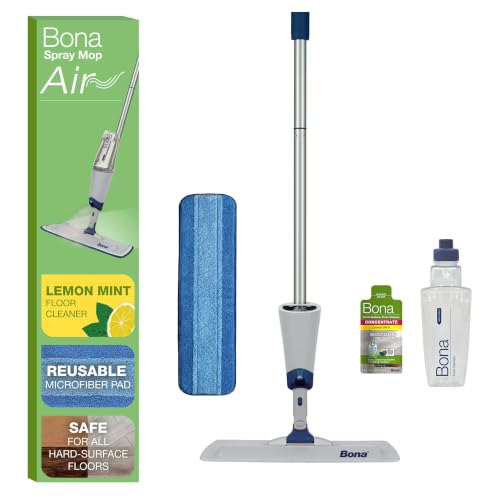



If your laminate floor is handling daily foot traffic, grease splatters, and occasional spills, this guide gives you a practical workflow for quick cleanups, weekly maintenance, and targeted spot treatment—without the moisture mistakes that damage laminate.
Gather the right tools (and skip the water-heavy stuff)

You don’t need heavy-duty equipment to clean a laminate floor—just the right materials that control moisture and protect the surface. The fastest path to a streak-free kitchen laminate finish is microfiber + minimal cleaner + no soaking, because laminate is vulnerable when liquid migrates into seams.
A laminate floor is a wood-based product, so excess moisture can penetrate the core and affect joints and edges.
Using a pH-neutral cleaner is recommended by many laminate-care guidelines because harsh chemistry can dull or degrade protective coatings.
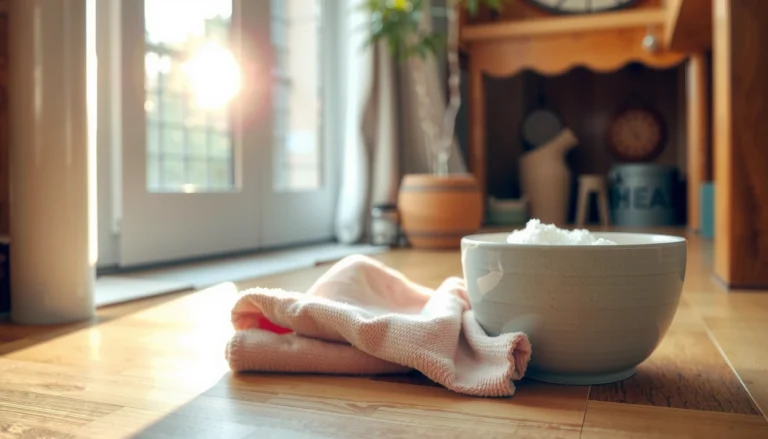
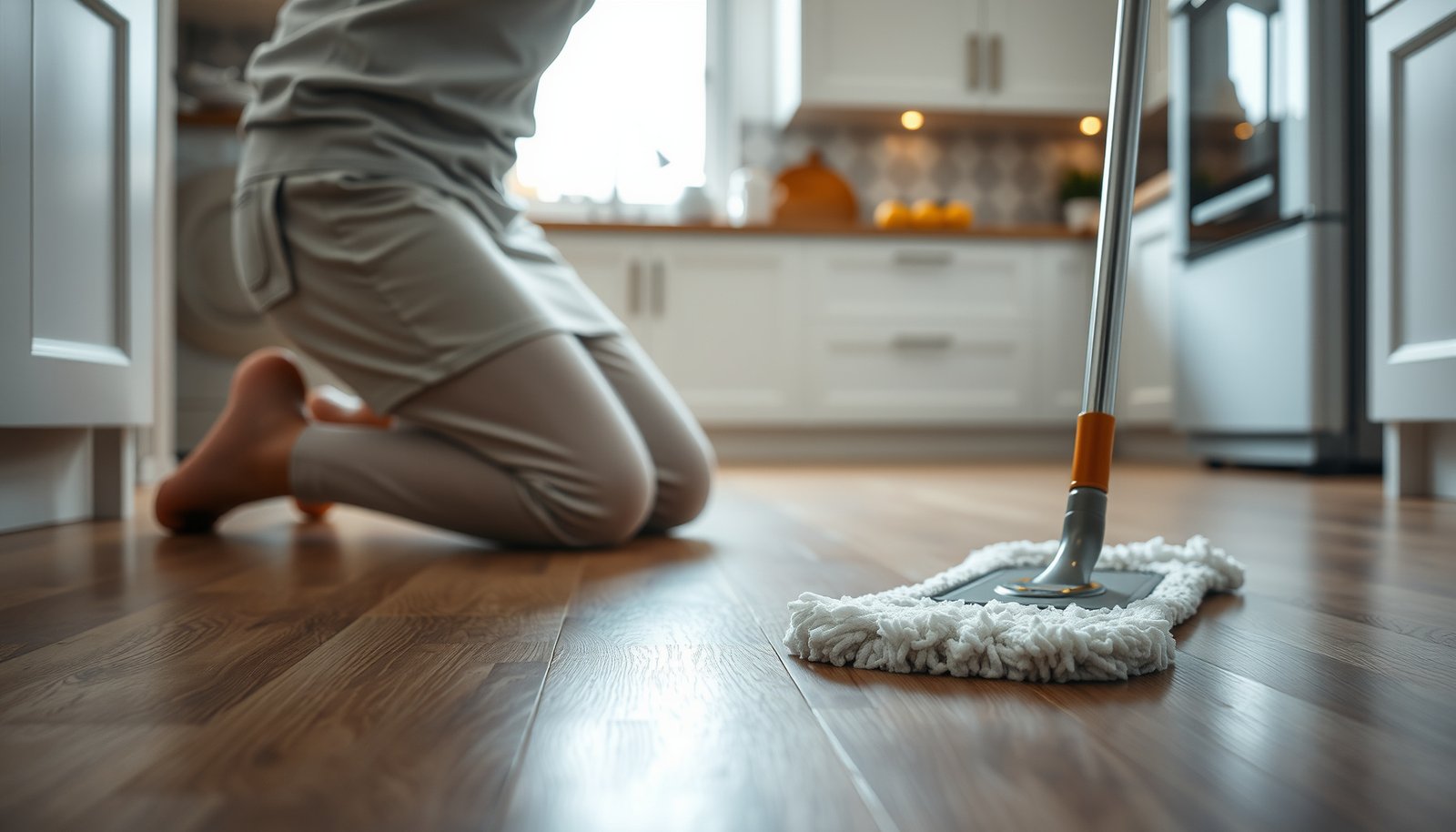
– Use a microfiber mop/pads (or microfiber cloths). Microfiber traps and lifts grease and dust more effectively than regular string mops, while using less liquid than you might think—important for laminate floors in kitchens.
– Vacuum with a soft brush attachment (or sweep first). Grit that gets pushed across laminate can create dullness and micro-scratches in the wear layer.
– Avoid steam mops and soaking. Steam adds heat and moisture at the same time; both increase the risk of swelling at seams and edges, especially where laminate meets cabinetry or appliances.
What “pH-neutral” really means for laminate floors
If you’re scanning a cleaner label, “pH-neutral” typically means close to the neutral point of pH 7—a range many floor-cleaning standards use to avoid acidic/alkaline extremes. According to ISO 10523:2008, pH values are defined around neutrality at pH 7.0 (2008).
Also, cleaning chemistry matters because laminate floors rely on a protective surface layer; the wrong cleaner can reduce gloss and leave residue that collects kitchen grease.
Pros/cons: microfiber damp mopping vs. steam vs. “lots of soap”
| Method | Pros for laminate floors | Cons / risk |
|---|---|---|
| Microfiber + barely damp laminate cleaner | Removes grease film without puddling; faster drying. | Requires immediate drying to avoid streaks. |
| Steam mop | Can loosen grime on some floor types. | Increases moisture penetration risk at seams and edges. |
| Soapy water / heavy detergent mops | Feels “strong” during cleaning. | Often leaves film—kitchen grease re-sticks faster. |
Quick daily/near-daily cleaning for kitchen mess
For a laminate floor in a kitchen, the best “daily” routine is dry-first removal of grit plus targeted wipe-and-dry for spots. This prevents crumbs and cooking residue from turning into a dull, tacky surface film.
Crumbs and sand are the most common cause of dullness on laminate floors because grit abrades the wear layer.
Applying cleaner to a microfiber cloth (instead of pouring onto laminate) reduces the chance of liquid pooling at seams.
– Dry-first: sweep or vacuum to remove crumbs, grit, and sand. This is the single step that most consistently protects a kitchen laminate floor from dullness.
– Spot clean small marks: wipe with a barely damp microfiber cloth, then immediately follow with a dry towel or dry microfiber pad.
– For sticky spots (drips): use a laminate-appropriate cleaner on the cloth—not directly on the floor. This control matters because laminate floors can develop haze when cleaner residue mixes with kitchen oils.
A simple “grease zone” routine (stove, toaster, sink)
Kitchen laminate floors usually collect sticky buildup in repeat locations—think stove front, toaster/coffee corner, and the sink/dish area. For those zones, do a quick wipe after messes rather than waiting for weekly deep cleaning; it’s dramatically easier to remove grease film when it’s fresh.
Weekly deep clean (the “damp mop” method)
For most laminate floors in kitchens, weekly cleaning works best when it’s a controlled damp mop—minimal cleaner, small sections, and drying right after. The goal isn’t to “wet the floor,” it’s to lift residue so it doesn’t become permanent haze.
Deep cleaning should still avoid puddling; laminate care guidance typically emphasizes minimal moisture to protect seams and edges.
If your laminate cleaner leaves streaks, buffing with a clean dry microfiber cloth is the fastest fix.
– Pre-clean: remove dust with vacuum/sweep again so your mop doesn’t smear grit across the laminate wear layer.
– Mop lightly: apply a recommended laminate cleaner per label directions. Use minimal solution and work in sections so the floor doesn’t remain damp.
– Finish by drying: buff with a dry microfiber cloth if your cleaner leaves any residue or streaks. In 2026, this “dry-buff” step still matters because kitchen cooking residue can amplify residue visibility.
How much cleaner is “too much”?
If the label doesn’t specify an exact dilution, don’t “guestimate heavy.” Excess cleaner is a common reason laminate floors look cloudy even after mopping—because detergent/wetting agents can leave a film that attracts oils and dust. (For any specific dilution, follow your cleaner label and your laminate manufacturer’s care instructions.)
How to handle spills, spots, and greasy residue
For laminate floors in kitchens, the rule is act fast: blot, damp-wipe, then dry. Grease and sticky residue respond best to pH-neutral laminate-safe cleaning applied to a cloth—not flooding the planks.
Blotting (not rubbing) prevents liquids from spreading and reduces the chance they wick toward seams.
Grease on laminate often requires a detergent-style cleaner formulated for laminate; harsh solvents can damage the finish.
– Act fast: blot (don’t rub) liquids, then wipe with a barely damp microfiber cloth and dry thoroughly.
– Grease/film: use a pH-neutral cleaner intended for laminate. Repeat gently if needed rather than switching to stronger chemicals that can dull the protective layer.
– Sticky residue (labels, tape, cooked-on spots):
– Gently lift with a laminate-safe method.
– Avoid metal scrapers that can chip the surface or leave permanent marks.
A note on “kitchen chemistry”
Many households reach for stronger cleaners during grease emergencies, but laminate floors in a kitchen usually perform best with chemistry that matches the care plan: mild, controlled, and residue-aware. If you’re unsure, follow the manufacturer’s “cleaning agents to avoid” list (commonly includes abrasives, solvents, and bleach-type chemicals).
Cleaner Types and Typical Suitability for Laminate Floors (Kitchen Use)
| # | Cleaner type (common household category) | Typical chemistry | Best for | Laminate-safety score |
|---|---|---|---|---|
| 1 | Laminate floor cleaner (manufacturer-approved) | pH-neutral / wear-layer-safe formula | Weekly damp mopping + streak control | ★★★★★ |
| 2 | Diluted neutral dish soap (very light mix) | Mild surfactant detergent | Occasional spot wipe for grease | ★★★★☆ |
| 3 | Water-only microfiber wipe (minimal moisture) | No added cleaner; relies on mechanical lift | Fresh dust + light footprints | ★★★☆☆ |
| 4 | Vinegar-based cleaners | Acidic solution (often ~pH 2–4) | Soap scum on some surfaces (not laminate) | ★☆☆☆☆ |
| 5 | Ammonia-based glass/grease sprays | Basic solution (often ~pH 11–12) | Glass (not laminate floors) | ★☆☆☆☆ |
| 6 | Bleach-type disinfectants | Oxidizing/disinfecting chemistry (often alkaline) | Disinfection on non-porous surfaces | ★☆☆☆☆ |
| 7 | Steam mops / hot steam cleaning | High heat + moisture | Some hard floors (check laminate care) | ★☆☆☆☆ |
Drying, protection, and preventing future buildup
For laminate floors in a kitchen, protection is mostly about moisture management and fast drying. If you keep liquids from lingering and prevent grit tracking, you dramatically reduce the sticky film that cooking oils build up.
Laminate care routines emphasize avoiding puddles, especially near sinks and appliance edges where moisture can wick.
Skipping waxes and polishes helps prevent a buildup layer that attracts grease and makes laminate look dull.
– Keep water controlled: damp-mop only—don’t let puddles sit, especially near sinks, dishwashers, and fridge edges.
– Use mats: place mats at entrances and near high-splash zones to cut down dirt and moisture tracking onto the laminate floor.
– Skip waxes/polishes: they can leave a film that dulls laminate over time and makes kitchen grease removal harder.
The hidden reason kitchen laminate gets sticky
Kitchen grease isn’t just dirt—it’s often oil + food particles + residues from cleaners. When those residues remain on a laminate floor surface, they act like “sticky glue” for dust. In 2026, the best prevention is the same core routine: microfiber lift, pH-neutral cleaner sparingly, and drying right away.
What can go wrong (common laminate kitchen mistakes)
For many damaged laminate floors, the problem isn’t cleaning—it’s cleaning technique. The most common kitchen mistakes are steam/over-wetting, abrasive tools, and residue-heavy cleaners that leave haze and sticky film.
Steam cleaning or overly wet mopping can increase the likelihood of swelling at laminate joints.
Abrasive pads and harsh cleaners can permanently dull the wear layer on laminate floors.
– Steam cleaning or overly wet mopping can cause swelling at joints and “mushrooming” near edges—especially if liquid sits long enough to migrate.
– Abrasive pads, harsh cleaners, or ammonia/bleach-type products can damage the wear layer and create permanent dull spots on laminate floors.
– Cleaning with only water can leave residue around cooking areas if the grime isn’t properly lifted, leading to a cloudy look and a sticky feel over time.
Limits of this advice (important)
This guidance matches broadly accepted laminate-care principles, but laminate floors vary by manufacturer and construction. If your flooring brand provides a different product list or moisture limit, follow those instructions first—manufacturer care sheets override general best practices.
Verdict: the best approach—and who should skip this
For most kitchens, the safest and most effective routine is: vacuum/sweep first, use a pH-neutral laminate cleaner sparingly, and dry immediately. The downside is that greasy buildup may take a couple of gentle passes—but it’s still safer than saturating a laminate floor and risking seam damage.
Skip this routine (or use extra caution) if your laminate manufacturer specifically requires different products/procedures, if your floor is already lifting at seams, or if you suspect water damage—then you’ll want to address the underlying moisture issue first. In 2026, fast drying and minimal moisture remain the two biggest differentiators between “clean laminate” and “laminate that looks cloudy or feels tacky.”
Quick scan checklist:
| Task | Do | Avoid |
|---|---|---|
| Before cleaning | Vacuum/sweep | Scrubbing grit into the finish |
| Mopping | Use microfiber + minimal cleaner | Soaking or puddling water |
| Spills | Blot → damp wipe → dry | Leaving liquid to sit |
| Grease/film | Use laminate-safe, pH-neutral cleaner | Harsh chemicals/abrasives |
| Finishing | Dry-buff if streaky | Wax/polish buildup |
Sources
If you want cleaner laminate floors with fewer streaks, the workflow is straightforward: remove grit first, keep moisture minimal, use a pH-neutral laminate cleaner sparingly, and dry right away—especially in kitchen “grease zones” around the stove and sink.
Frequently Asked Questions
What is the safest way to clean laminate floors in a kitchen?
Use a dry or lightly damp microfiber mop and avoid soaking the laminate. Sweep or vacuum with a soft brush attachment to remove grit that can scratch the surface. When needed, use a laminate floor cleaner or a manufacturer-recommended cleaner diluted as directed, then wipe up any excess moisture with a dry cloth.
How do you remove sticky spills and grease from laminate kitchen floors?
Start by wiping up residue with a slightly damp microfiber cloth, then follow with a laminate-safe cleaner formulated for floors. For greasy spots, apply the cleaner to the cloth (not directly to the floor) and gently work in circular motions, then wipe dry. Avoid harsh degreasers, ammonia, or vinegar, since they can dull or damage the laminate finish.
Why can’t you steam clean laminate floors, especially in a kitchen?
Laminate is sensitive to excess heat and moisture, which can seep into seams and cause swelling or separation. Steam mops may push water into joints, particularly where kitchen spills and splashes occur. Instead, use a damp mop with minimal water and dry the area promptly to protect the floor’s top layer.
What’s the best routine for everyday laminate floor cleaning in a busy kitchen?
Sweep or vacuum daily to remove crumbs, sand, and dust that wear down the wear layer over time. Use a microfiber mop with a laminate floor cleaner about once or twice a week, depending on foot traffic, and always wring the mop well. Place mats at entryways and under kitchen chairs to reduce scratches and minimize the amount of debris you need to clean.
Which cleaning products are safe for laminate floors and which should you avoid?
Choose products labeled safe for laminate flooring, such as pH-neutral cleaners designed for sealed floors. Avoid steam cleaners, wax-based products, abrasive scrubbers, and chemicals like bleach, ammonia, and strong vinegar solutions that can damage the finish. If you’re unsure, check your laminate manufacturer’s care instructions or test any cleaner in a small, hidden area first.
📅 Last Updated: October 20, 2026 | Topic: How to clean laminate floors in a kitchen? | Content verified for accuracy and freshness.
References
- https://en.wikipedia.org/wiki/Laminate_flooring
- https://www.cdc.gov/coronavirus/2019-ncov/community/disinfecting-building-facility.html
- https://www.who.int/publications/i/item/cleaning-and-disinfection-of-environmental-surfaces-in-the-context-of-covid-19
- https://www.epa.gov/coronavirus/cleaning-and-disinfecting-your-facility
- MohawkFlooring
- https://scholar.google.com/scholar?q=how+to+clean+laminate+floors+kitchen Google Scholar
- https://scholar.google.com/scholar?q=laminate+flooring+cleaning+methods+mopping+microfiber Google Scholar
- https://scholar.google.com/scholar?q=disinfecting+hard+floor+surfaces+laminate+flooring+guidelines Google Scholar