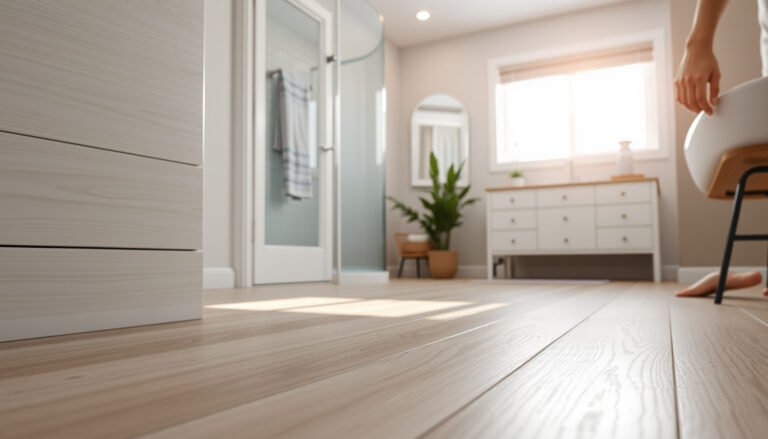

Choosing laminate floors for a dining room comes down to one decision: pick the right durability rating and wear layer for heavy traffic and frequent spills. If you want the best long-term performance, prioritize a thicker core, a high AC rating, and water-resistant construction over trendy looks alone. This guide tells you exactly what to look for so your floors handle everyday dining without warping, scratching, or fading.




Choose laminate flooring for a dining room by matching the wear (AC) rating to heavy chair traffic, selecting a construction with protected edges/cores for everyday spills, and installing it exactly per the manufacturer’s underlayment and expansion-gap instructions. Do those three things and you’ll avoid the two most common laminate failures in dining spaces—premature wear along chair routes and seam problems from lingering moisture.
If your dining room sees frequent gatherings, chairs being slid in and out, and the occasional drink spill, laminate can be a practical, attractive “floating floor” option. The key is that laminate isn’t one single product type; performance depends on the surface layer, core, edge sealing, and how closely your subfloor and installation match the approved system.
Pick the right laminate durability (wear) level
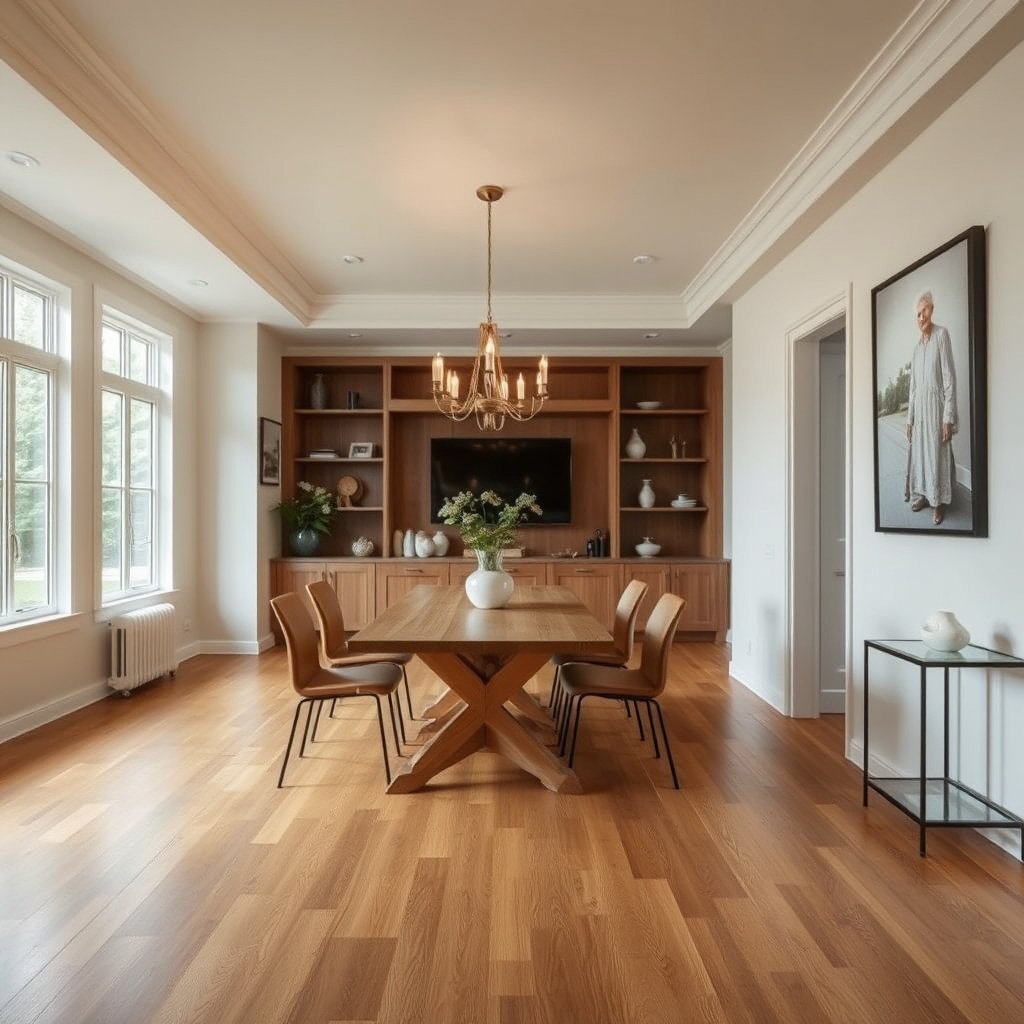
The right wear rating for laminate in a dining room is typically an AC3 or AC4 level, because these classes are built for the abrasion patterns created by foot traffic plus repetitive chair movement. Focus on what the manufacturer says the product is intended for, then confirm the warranty aligns with your household’s real use.
Laminate wear classes are determined under standardized testing and are commonly labeled with AC numbers (e.g., AC3, AC4, AC5) in product documentation. (EN 13329)
Dining rooms concentrate wear in walk paths and around chair routes, so “pretty but thin” wear layers tend to fail earlier than spec’d laminate systems.
When you compare laminate floors, think beyond the label on the box. The “look layer” is not the performance layer—laminate durability comes from the top decorative wear sheet and how well it resists abrasion, scuffs, and surface wear.
What to prioritize in the wear specification
– Choose an AC rating that fits “heavy everyday.” Dining rooms usually experience continuous daily traffic plus impacts from moving chairs. In most standard spec sheets, that pushes you toward AC3 or AC4 rather than “light home” categories.
– Confirm warranty intent, not just warranty length. Two laminate products can have the same AC number but different warranty terms tied to cleaning methods (for example, restrictions on steam, soaking, or harsh chemicals).
– Check the rest of the EN 13329 performance categories. EN 13329 doesn’t only test wear; it also includes other axes such as impact/indentation and surface resistance categories that can affect how the floor holds up to dining-room abuse (dropped utensils, grit under chair feet). (EN 13329)
Practical wear guidance for dining-room reality
– Chair perimeter wear is different from hallway wear. If you have a fixed table shape (e.g., a rectangular table with consistent seating), wear concentrates in a “ring” around the table rather than evenly across the room.
– Rug pads matter—even with laminate. A dining-room rug that traps grit can turn into sandpaper at seams and edges. If you use rugs, choose a pad designed for hard floors and keep grit out from under them.
Laminate Spec Categories to Prioritize for Dining Rooms
| # | Spec category | What you look for in docs | Why it matters at the table | Dining-room priority |
|---|---|---|---|---|
| 1 | Wear / abrasion (AC) | AC1–AC5 | Chair slides + grit wear the surface quickly in traffic zones | ★★★★★ |
| 2 | Impact/indentation (IC) | IC1–IC3 (commonly listed) | Dropped cutlery and localized dents show up faster in seating areas | ★★★★☆ |
| 3 | Surface staining/chemicals (SC) | SC classes | Coffee/wine/food spills test the surface film and edge protection | ★★★★☆ |
| 4 | Moisture exposure limits | “Spill handling” statements | Dining rooms have short, accidental spills—not full-room floods | ★★★★☆ |
| 5 | Edge sealing / locking protection | Sealed edges or protected groove system | Short spills still reach seams unless the system is protected | ★★★★★ |
| 6 | Slip/coefficient guidance | Ramp/traction notes (if listed) | Wet shoes are occasional in dining entrances—especially near doors | ★★★☆☆ |
| 7 | Acoustic / comfort underfoot | Underlayment class or specs | Dining-room comfort affects how you perceive wear and scuffing | ★★★☆☆ |
According to EN 13329, laminate wear is classified using AC1–AC5 (5 abrasion tiers). According to EN 13329, other performance categories include impact/indentation classes (commonly IC1–IC3) and surface staining classes (often SC1–SC5), which helps you interpret the floor’s overall durability for real-world dining use (EN 13329). (EN 13329:2016)
Handle dining-room spills and chair traffic
Choose laminate flooring for dining spills by prioritizing edge/core protection and “quick-response” moisture behavior—laminate can handle accidental drips better than standing water, but it still needs prompt drying. For chair traffic, reduce gouging and scuffing at the source with pads and by keeping grit out.
Laminate is generally designed for everyday spills when you wipe promptly, but it is not designed for prolonged wetting that can reach the core through seams. (Manufacturer installation/warranty instructions)
Chair damage typically starts as micro-scuffs and dents, not as dramatic failures—protectors prevent that “slow degradation” effect that wear ratings can’t fully stop.
What to look for in spill resistance
– Edge protection and sealed locking systems. Short spills are where laminate lives or dies in a dining room. Look for documentation that describes sealed edges, protected grooves, or recommended seam-care (some brands specify approved measures).
– Core quality and moisture behavior. Laminates vary in core construction, which affects swelling resistance. Even when a brand claims “water resistant,” warranties often assume spills are cleaned up within a defined timeframe (and never left to pool).
– Moisture barrier requirements for your subfloor. Many laminate systems specify when you need a vapor/moisture barrier (often depending on slab type). Skipping it can increase risk of seam issues.
Plan for chair legs like they’re a wear tool
Dining chairs concentrate force into small contact areas—casters, metal legs, and hard plastic can create visible damage quickly.
– Use felt pads or approved glides. The goal is to prevent concentrated scraping that can wear the surface layer and open the visual “path” you see along seating.
– Avoid “temporary” protection that peels. Loose adhesive pads trap grit underneath, which turns into abrasion.
– If you have wheeled chairs, check compatibility. Many flooring warranties have specific rules around rolling casters, especially on laminates.
Match style, plank size, and room layout
Pick a finish and plank format that hides the dining-room traffic pattern, because chair movement reveals scuffs faster than people expect. Then choose plank size and edge profile to visually manage how often the seating area gets re-centered.
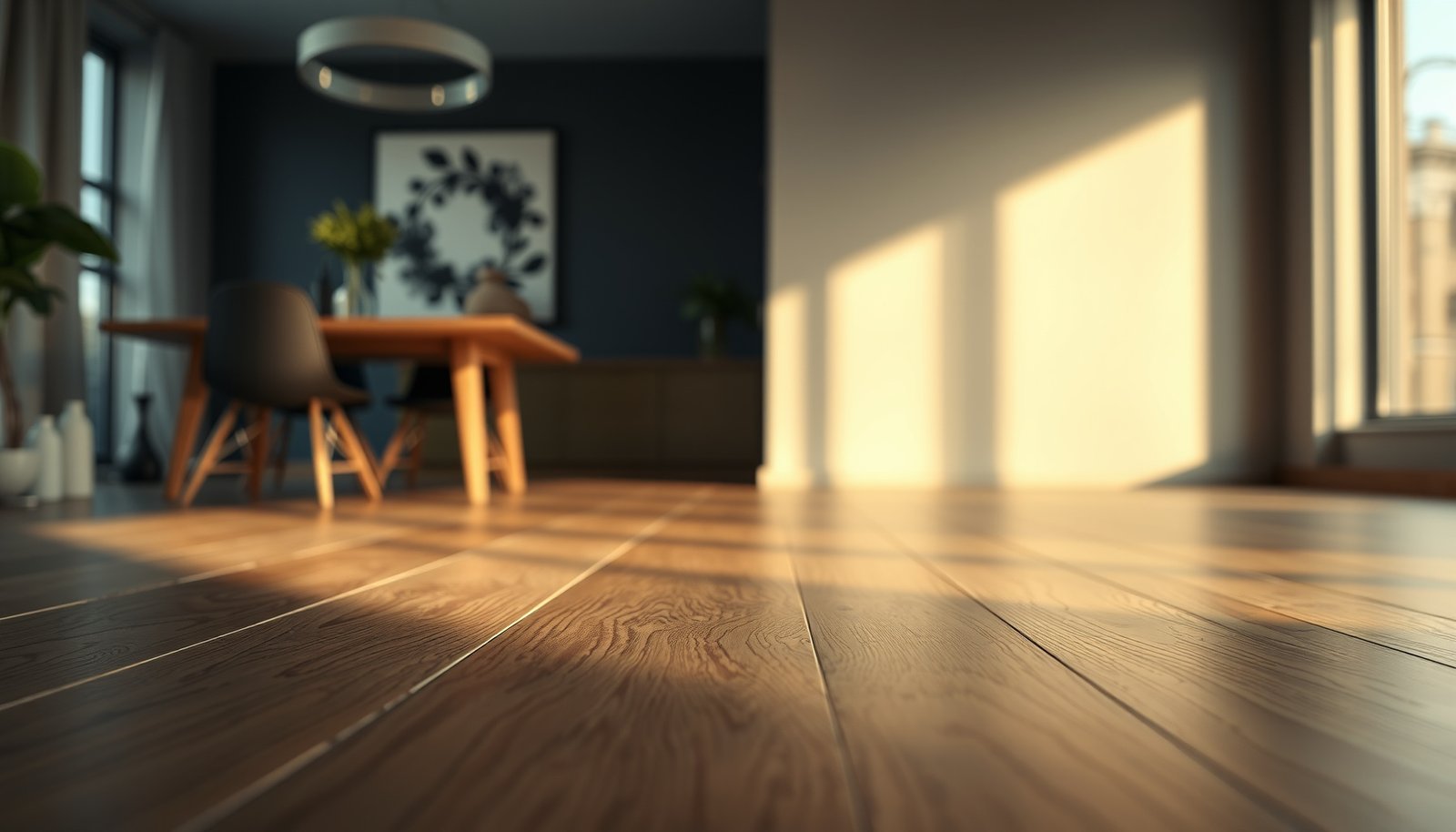
Textured or low-gloss laminate finishes often camouflage everyday scuffs better than highly reflective surfaces in dining spaces with frequent chair movement.
Plank dimensions influence visual stretch—longer planks can make rooms feel wider, while narrower planks create more frequent seam lines that can telegraph chair scuffs if the finish is too glossy.
Finish: where “best-looking” is not always “best-wearing”
– Gloss level matters. If your dining room has overhead lighting that catches reflections, a glossy top layer can make micro-scratches obvious.
– Texture hides wear. A lightly embossed surface tends to disguise fine abrasions and chair marks better than a smooth, uniform finish.
Plank size and edge profile
– Longer planks can reduce the visual frequency of seams, which may help if you’re cautious about where chairs sit.
– Shorter/narrower planks can look more traditional or detailed, but they can also make traffic routes more visible due to more seam lines.
– Bevel/edge profile (if offered) should match your expectations: flat looks emphasize uniformity; beveled edges can soften how wear reads along the perimeter.
Layout strategy for dining rooms
– Align planks with the longest room direction to reduce visual “breaks” when you look from the doorway.
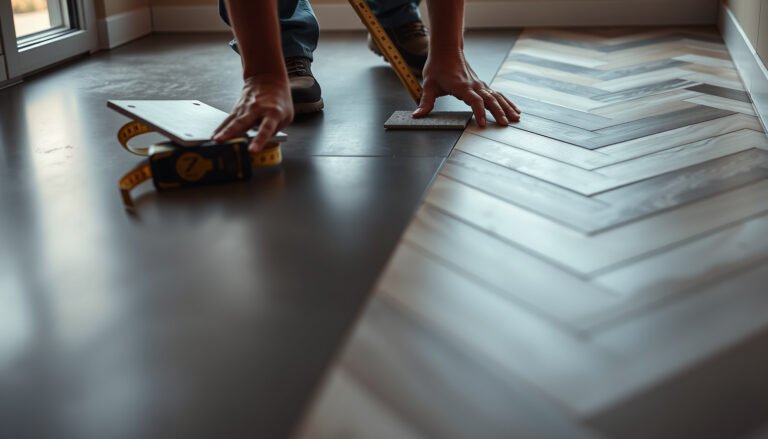
– Plan transitions early if your dining room connects to a hallway or kitchen—floating floors need consistent expansion behavior at thresholds.
Underlayment and installation details that affect performance
The fastest path to a better laminate floor is correct underlayment, correct subfloor flatness, and correct floating installation—these determine whether locks stay intact and whether seams stay tight. If you treat underlayment as an afterthought, even a high AC rating won’t protect you from gap formation.
A laminate floor performs as a system: the manufacturer’s specified underlayment and moisture barrier requirements directly affect locking performance and warranty validity. (Manufacturer installation instructions)
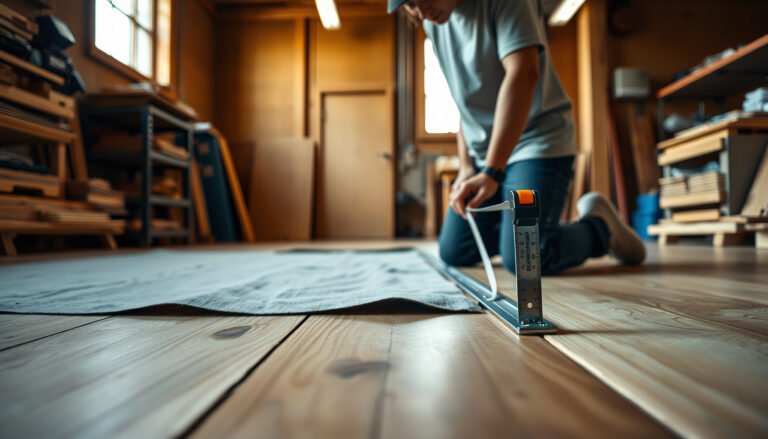
Before installing laminate, flatness measurement matters because many floating systems tolerate only a limited amount of subfloor variation as stated in their instructions. (Manufacturer installation instructions)
Underlayment: follow the brand’s approved system
– Use the exact underlayment the brand specifies. Manufacturers select underlayments to work with the locking mechanism’s tolerances and the board’s flex behavior.
– Install any required moisture barrier correctly. Overlap/seam tape and wall upturns (if instructed) affect vapor control.
Subfloor flatness: the non-negotiable step
– Measure flatness before you open boxes. Most laminate instructions provide a flatness tolerance (for example, per 2 meters / 6 feet). Don’t guess—use a straightedge/level method described in the installer guide.
– Fix high spots and address low areas before installing. If you skip this, locks can bear stress at seam lines and separate over time.
Expansion gaps and transitions
– Plan expansion gaps at walls and around fixed structures. Dining rooms often have adjoining spaces—kitchen thresholds, hall transitions, and doorways where movement needs room.
– Acclimation matters. Laminates require acclimation to indoor conditions per manufacturer instructions to reduce post-install movement.
What can go wrong (and how to avoid it)
The most common laminate failures in dining rooms happen when moisture sits long enough to reach the core through seams or when the installation system can’t flex properly. Avoid these issues by treating spills, underlayment, and subfloor preparation as part of the same durability plan.
Laminate is often “spill-friendly,” not “flood-proof,” meaning standing water can still lead to seam swelling and visible separation. (Manufacturer warranty/cleaning guidance)
Separation at seams is usually an installation-system problem—subfloor flatness, missing/incorrect underlayment, or skipped expansion gaps—rather than an isolated board defect.
Common failure modes (and what to do instead)
Pros/cons comparison (installation discipline):
| Option | Pros (what it protects) | Cons (what it risks) | Best for |
|---|---|---|---|
| Follow manufacturer underlayment + flatness tolerance | Locks stay tight; seams resist early gapping | More prep time and measurement | Most dining-room projects |
| “Works in other rooms” assumption | Faster install | Warranty denial risk; premature seam failure | Only if your manufacturer explicitly allows substitutions |
| Tighten expansion gaps “so it looks clean” | Cleaner look right away | Buckling/crowding after seasonal movement | No one—floating floors need movement room |
Specific pitfalls in dining-room use
– Swollen seams from standing water. A quick wipe is different from leaving a drink or condensation to soak. Always follow the manufacturer’s cleaning approach (no soaking).
– Failed locks and edge gaps. This is often caused by:
– subfloor not within tolerance,
– wrong underlayment thickness/type,
– insufficient expansion gap at walls/transitions.
– Scratches and dents from chair legs and grit.
– Hardened grit under rugs is a major culprit.
– Use chair protectors and keep the floor clean of abrasive debris.
– Warranty surprises from cleaning methods. Many warranties restrict steam cleaning and abrasive detergents. The “but it feels clean” approach can damage the top wear layer and void coverage.
Verdict: what to choose (and who should skip laminate)
Laminate is a strong fit for most dining rooms when you select an appropriate wear (AC) level, a construction with protected edges/cores for accidental spills, and install it using the brand’s underlayment, moisture barrier, and expansion-gap requirements. If you expect frequent standing water events—like elevated leak risk—or you want a surface meant for constant wet messes, you may be better served by a different flooring category that’s explicitly waterproof.
Pros vs. cons for dining rooms:
– Choose laminate if: you prioritize scratch-resistant daily wear, want a warm/comfortable underfoot feel, and can clean spills promptly.
– Skip laminate if: you anticipate repeated standing water, heavy flooding risk, or you’re unwilling to maintain conditions (like immediate drying and correct cleaning products).
Frequently Asked Questions
What laminate floor thickness is best for a dining room?
For most dining rooms, choose laminate flooring that’s at least 8mm thick for better dent resistance and stability under chairs and daily foot traffic. If the room is on a second level or you want extra sound reduction, 10–12mm options can feel more solid and help minimize movement. Always verify the product’s wear layer rating as well, because thickness alone doesn’t determine scratch resistance.
How do I choose the right laminate finish for dining room floors?
Select a finish that matches your lifestyle—if you have kids, pets, or frequent entertaining, a low- to medium-gloss finish usually hides scuffs and water spots better than high-gloss. Look for textures like embossed-in-register (EIR) that mimic wood grain and reduce the look of scratches. If your dining room has lots of natural light, consider a finish with better stain resistance and lower glare for a more consistent appearance.
Why does the wear layer matter when choosing laminate floors for dining rooms?
The wear layer is the protective top coating that guards against scratches from chair legs, dropped utensils, and everyday debris. In a dining room, aim for a higher AC rating (typically AC3 or AC4) to ensure the floor handles normal to heavier household traffic. A thicker or more durable wear layer can also make laminate flooring look newer longer, which is key in high-use areas where furniture is moved often.
Which laminate wood-look should I pick for a dining room design?
Choose laminate planks based on your dining room color palette and undertones—warm oak tones pair well with beige and honey decor, while cooler gray-brown laminates complement modern spaces. For a larger dining room, longer and wider planks can create a more expansive look, while narrower planks can suit traditional or cottage styles. If you want the “real wood” feel, prioritize products with realistic grain patterns, knots, and variation so the laminate flooring doesn’t look too uniform.
What’s the best way to install laminate flooring in a dining room for less noise and fewer gaps?
Use a recommended underlayment for sound control and moisture management, especially if your dining room is over concrete or has any humidity concerns. Make sure the subfloor is flat and clean, because uneven surfaces can lead to joint gaps and increased wear over time. Leave the required expansion gap around walls and columns, and consider a locking system rated for durability to keep your laminate floors secure when furniture is moved.
📅 Last Updated: October 20, 2026 | Topic: How to choose laminate floors for a dining room? | Content verified for accuracy and freshness.
References
- Laminate flooring
- https://www.epa.gov/formaldehyde/tsca-title-vi-formaldehyde-emission-standards-composite-wood-products
- https://ww2.arb.ca.gov/rulemaking/indoor-air-quality-regulation-formaldehyde-emissions-composite-wood-products
- https://www.epa.gov/indoor-air-quality-iaq/volatile-organic-compounds-vocs
- https://www.epa.gov/mold
- laminate flooring formaldehyde emissions – Search Results – PubMed
- laminate flooring volatile organic compounds – Search Results – PubMed
- https://scholar.google.com/scholar?q=choosing+laminate+flooring+for+dining+room Google Scholar
- https://scholar.google.com/scholar?q=laminate+flooring+AC+rating+abrasion+wear+layer+research Google Scholar
- https://scholar.google.com/scholar?q=laminate+flooring+formaldehyde+voc+emissions+indoor+air Google Scholar