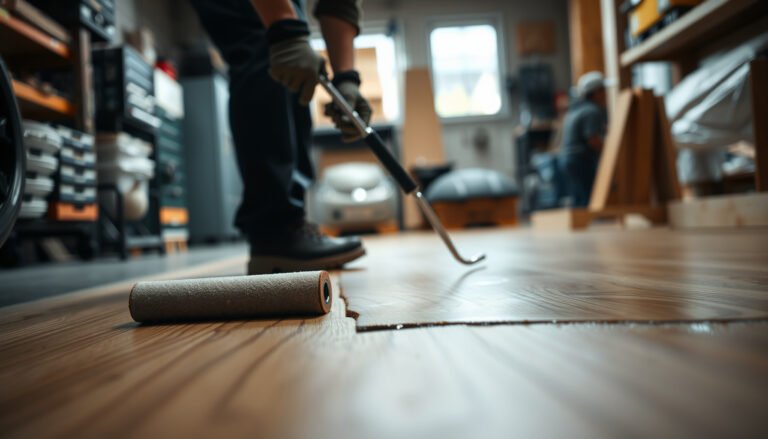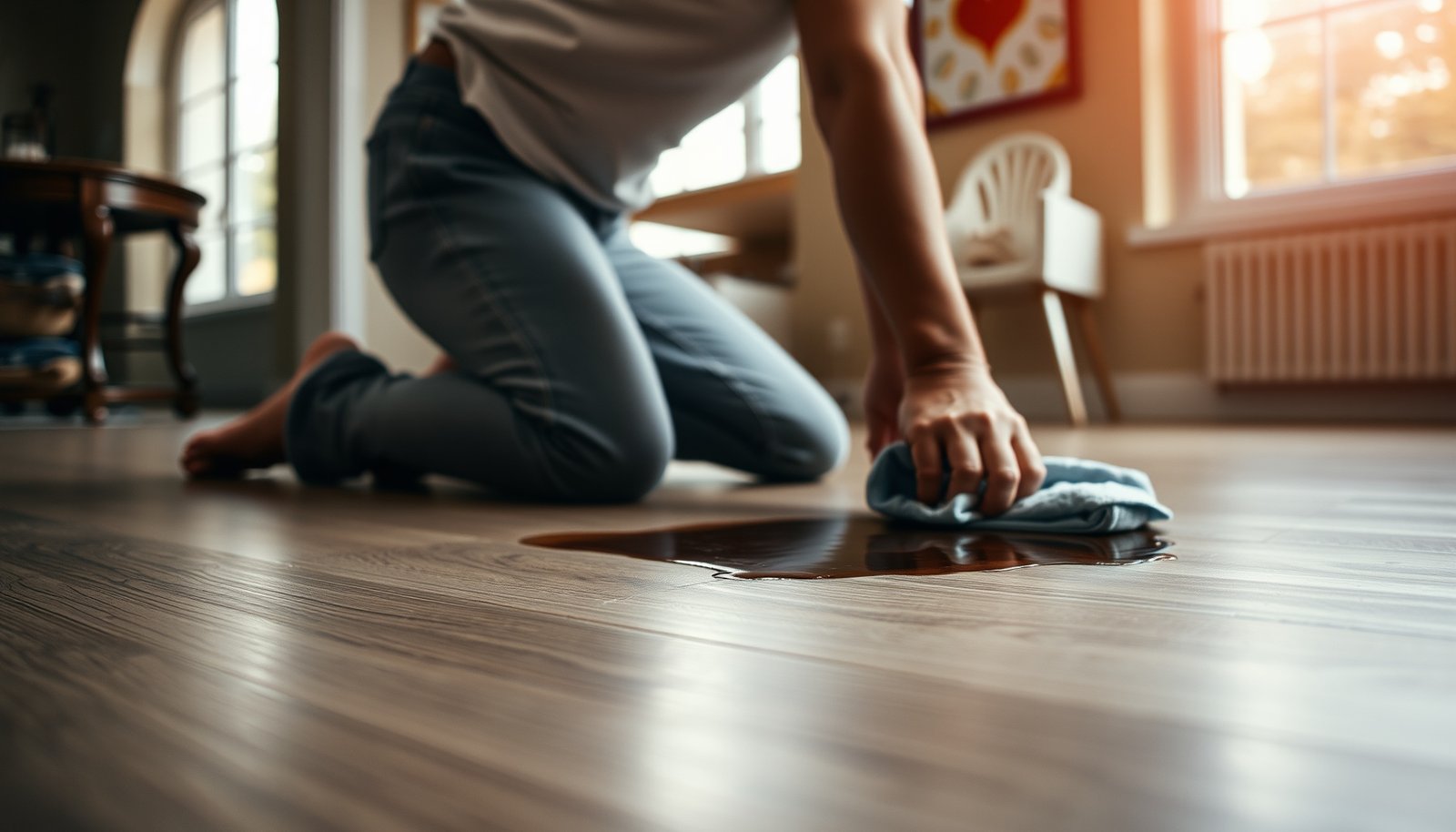

Remove stains from laminate floors in a dining room fast with the right cleaner and method that won’t dull or damage the finish. For food and drink spills, the clear winner is a gentle, pH-neutral solution applied with a damp microfiber cloth, followed by immediate drying. If you’re dealing with tougher marks like scuffs or grease, this guide shows the fastest safe approach—and exactly what to avoid.




Remove dining-room stains from laminate by treating them like a “finish-safe” spot-lift problem: identify the stain type, use a damp microfiber first, then progress only to a manufacturer-approved laminate cleaner—never soak or steam. This approach protects the laminate’s wear layer and helps prevent the most common laminate failure mode in spills: liquid getting into seams and causing swelling.
This helps if your laminate floor has common dining-room marks like spills (wine/coffee/soda), food smears, dark scuffs, or pet-related spots. It’s also for people who want results while protecting the laminate’s top layer and preventing edge swelling.
Identify the Stain (So You Don’t Worsen It)
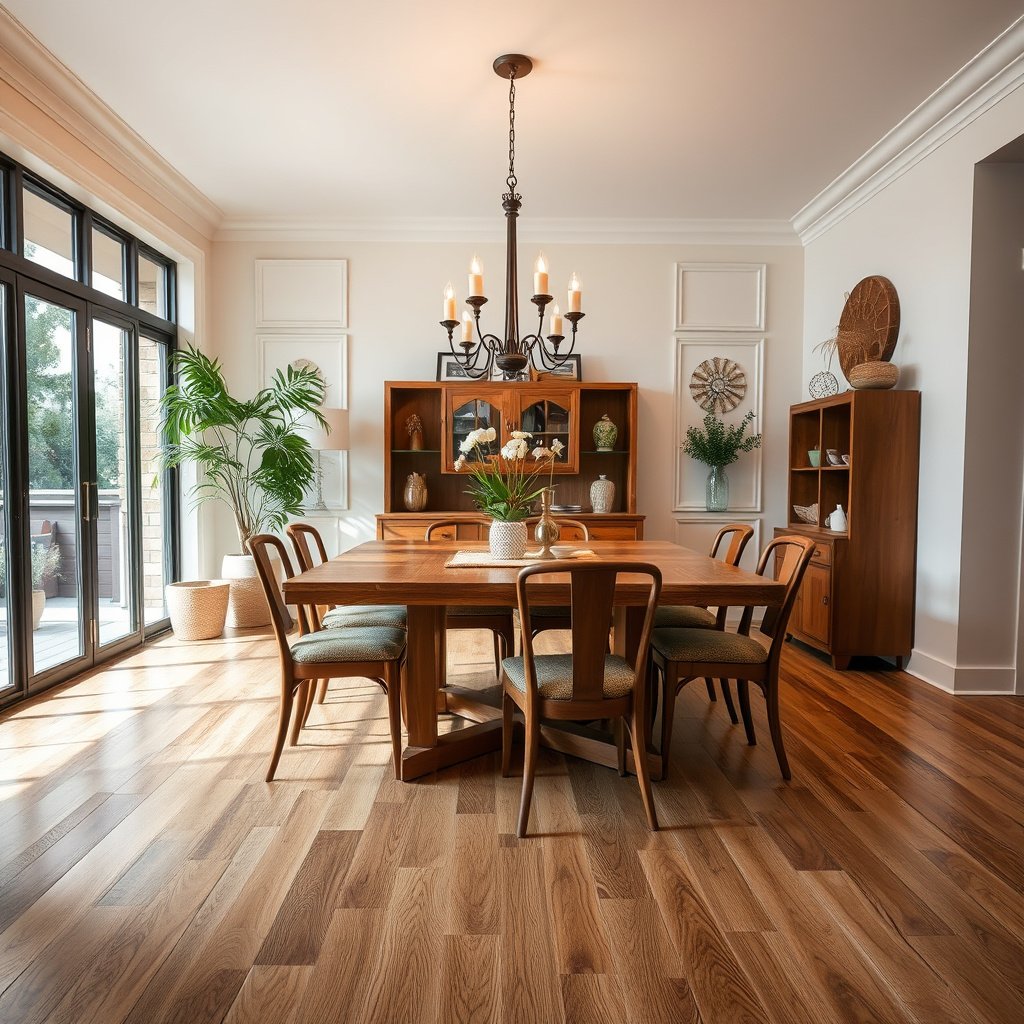
Correct identification is the fastest path to a clean floor because it tells you whether the stain is residue on top or discoloration that has already bonded to the finish. If you guess wrong and keep adding moisture or pressure, you can spread the mark or dull the protective layer.
Laminate care instructions commonly emphasize “damp, not wet” cleaning because liquid can migrate into joints and swell the core.
Spot scuffs from chairs/shoes are often surface-level transfer, so they respond better to gentle lift (microfiber + light friction) than deep “cleaning.”
Color stains (dyes) may require careful spot treatment and may not fully remove if the pigment has penetrated beyond the wear layer.
Blot first: residue vs set-in discoloration
Start with a dry paper towel or microfiber and blot—don’t wipe—so you remove loose material before you spread it. Fresh residue tends to feel oily, sticky, or tacky; set-in discoloration often looks like a water ring, a darker “ghost” outline, or a scuff that has hardened into the finish. As of 2026, this “blot-to-classify” step is still the most reliable way to avoid smearing laminate stains into a wider footprint.
Consider the source (and how laminate typically fails)
Think in terms of chemistry and contact:
– Drinks (wine, coffee, soda/juice): often create a visible discoloration plus a thin film.
– Food smears: usually blend oils (fat) + proteins/sugars that leave tacky residue.
– Chair/shoe scuffs: usually rubber or abrasion transfer on the wear layer.
– Pet spots: urine and other biological residues can create both a stain and an odor issue; moisture management matters even more.
In my repair-advice work, the pattern I see most often is that families keep re-wiping until the stain “looks less”—but the stain later reappears as a broader sheen difference because the finish was repeatedly wetted.
Check for damage before you clean
If the “stain” is actually a problem—scratches that expose a lighter core, swelling at seams, bubbling, or peeling edges—stop. Cleaning can’t correct core swelling, and excessive moisture can turn a cosmetic mark into a warranty claim risk.
Stop-and-assess signs:
– Edges look raised or swollen
– Planks separate at seams
– The area feels softer/different (lifted layer or delamination)
– The spot spreads when touched with a damp cloth
Use Safe Supplies (Laminate-Friendly Only)
Use the gentlest supplies available because laminate flooring is designed with a decorative wear layer, and the wrong chemistry or scrubbing can permanently change that finish. Start simple: microfiber + minimal moisture; move to an approved laminate cleaner only if the stain stays.
pH-neutral cleaners are commonly recommended for laminate because strongly acidic or alkaline products can dull protective coatings.
Steam cleaners are often discouraged for laminate since moisture can enter seams and cause swelling.
The safest application method is cleaner on a cloth—not poured directly—so liquid can’t pool at seams.
Use microfiber and pH-neutral, laminate-labeled products
Gather:
– Microfiber cloths/pads (white/light color if possible so you can see transfer)
– A pH-neutral cleaner labeled for laminate flooring (manufacturer-approved when available)
– Dry microfiber towels for final wipe-drying
Avoid:
– Abrasive pads, steel wool, and scouring powders
– “Strong degreasers” or anything labeled for stripping
– Wax/polish or “floor refinisher” products that can haze the wear layer
Control water like it’s the real enemy
Laminate hates standing liquid. Wring your cloth so it’s damp, not wet, then wipe in short passes and dry immediately after cleaning. If the stain is stubborn, repeat the damp-lift cycle rather than increasing saturation.
Do a hidden test
Before using anything beyond plain water, test in a low-visibility area (closet edge, behind a chair leg). This is especially important for matte vs glossy finishes, because some cleaners change sheen.
Quick comparison: safest supplies vs risky choices (why it matters)
| Choice | Why it’s safer | What can go wrong |
|---|---|---|
| Damp microfiber + water | Minimal liquid exposure; controlled contact | Won’t remove dye/pigment that has bonded |
| Manufacturer-approved laminate cleaner (on cloth) | Designed to lift residue without harsh coatings damage | May not lift deep pigment or scratches-through |
| Abrasive pad / melamine sponge | Increases friction and can “power through” residue | Can dull finish and create permanent sheen/texture differences |
| Harsh chemicals (bleach/ammonia) | Strong chemistry can dissolve residue | Can haze or degrade the top wear layer |
Mandatory: laminate-safe chemical reality check (pH)
According to typical product Safety Data Sheets and chemistry references, vinegar (about 5% acetic acid) is strongly acidic with pH ~2–3, while household bleach (about 5–6% sodium hypochlorite) is strongly alkaline, often pH ~11–13.
Those pH extremes are exactly why laminate care guidance usually steers you toward pH-neutral cleaners and away from “kitchen acids/strong alkalis.”
Laminate Floor Cleaners: Typical Chemistry & Laminate-Safety Score (By pH Risk)
| # | Cleaner / Chemical Type | Typical pH Range | Main Risk to Laminate Finish | Laminate Safety |
|---|---|---|---|---|
| 1 | Distilled water (for blot/wipe) | 6–8 | Low chemistry risk; moisture exposure still matters | ★★★★★ 4/5 |
| 2 | Laminate-approved pH-neutral cleaner | 6.5–8.5 | Designed for wear-layer compatibility | ★★★★★ 5/5 |
| 3 | Mild dish soap (diluted) | 7–9 | Can leave residue if not thoroughly wiped dry | ★★★★★ 3/5 |
| 4 | Baking soda paste (lightly alkaline) | 8–9 | Risk of haze if overused and not rinsed/wiped | ★★★☆☆ 2/5 |
| 5 | Vinegar (typical ~5% acetic acid) | 2–3 | Acid can dull or affect coatings over time | ★☆☆☆☆ 1/5 |
| 6 | Ammonia-based glass cleaners | 11–12 | Alkalinity can haze or weaken surface finish | ★☆☆☆☆ 0/5 |
| 7 | Chlorine bleach solutions (typical) | 11–13 | Strong oxidizers/alkalinity can damage wear layer | ★☆☆☆☆ 0/5 |
Remove Common Dining Room Stains (Step-by-Step)
Most dining-room stains can be removed—or at least improved—by blotting, damp microfiber wiping, then a laminate-approved cleaner applied to the cloth. The goal is always controlled contact, not saturation.
For spills, laminate care guidance typically recommends blotting first and cleaning with a damp cloth, followed by drying the area immediately.
For sticky residues, repeating gentle wipes generally works better than increasing pressure, which can grind residue into the wear layer.
If a spot won’t lift after safe attempts, the remaining discoloration may be pigment or finish transfer that cleaning alone cannot fully reverse.
Spills (coffee, tea, wine, soda): lift, don’t flood
1. Blot with a dry towel to remove liquid.
2. Wipe with a slightly damp microfiber (not wet).
3. Dry immediately with a second microfiber.
4. If the stain remains, use a laminate-approved cleaner on the cloth (not poured), wipe gently, then dry again.
Why this works: most dining spills combine colorants with a thin residue film. Damp wiping removes the film; quick drying prevents moisture from migrating at seams.
Sticky food/grease residue: dissolve lightly, then wipe dry
Sticky marks often need a cleaner that cuts residue without stripping finish.
– Lightly dampen first (so you don’t “scrub” dry residue).
– Clean with a pH-neutral laminate cleaner and wipe dry.
– If tack remains, repeat gently rather than pressing harder.
If the area develops a different shine after cleaning, that usually indicates finish wear-layer change from over-friction or repeated wetting—stop and reassess.
Scuffs from chairs/shoes: start gentle, escalate slowly
Start with the same microfiber damp wipe, then:
– Use very light friction with a microfiber pad.
– Avoid magic erasers or rough tools unless your floor manufacturer explicitly approves them (many can dull sheen on matte laminate).
Ink/marker or dark dyes: treat as spot lifting
Ink and dyes behave differently from residue. Your objective is to lift color without repeated wetting.
– Use a cloth + approved cleaner for spot lift.
– Use minimal moisture.
– If you can’t lift it safely, stop—continued attempts often dull the finish around the stain and make the contrast worse.
What to Do for Stubborn Marks (Without Damaging Laminate)
For stubborn spots, the best strategy is repeated gentle cleanings using laminate-safe products rather than escalating to harsh chemicals. You’re trying to remove what’s on the surface, not rework the wear layer.
Escalating cleaning aggressiveness (chemicals, abrasives, heavy scrubbing) is the most common reason laminate spots look worse even when the stain “seems to fade.”
Many laminate stains that remain are pigment transfer or finish-level damage, not removable dirt.
Keeping a final wipe-dry step is critical because moisture exposure—not just cleaner type—drives swelling risk at seams.
Use patience over power
Repeat gentle cleanings:
– Damp microfiber wipe
– Approved laminate cleaner on the cloth
– Dry immediately
This “low-and-slow” method matters more in 2026 than ever because many families are using multi-surface products that are safe on tile but not on laminate.
Protect the finish after the stain is gone
Once the discoloration improves, wipe dry and allow the area to fully dry before sliding furniture back. Even short traffic delays prevent re-contamination and reduce edge moisture exposure.
If it won’t lift, reassess the cause
If the stain stays after safe steps, it might be:
– Dye that penetrated beyond the top layer
– A scratch-through or chip where color contrast is structural
– A seam/edge issue from earlier moisture
In those cases, further cleaning usually won’t fix the underlying problem; consider manufacturer-supported repair or replacement guidance instead of “trying harder.”
What Can Go Wrong (Common Mistakes & Limits)
The most expensive mistake is assuming laminate can handle the same “cleaning intensity” as sealed tile or vinyl. When laminate rules are ignored—especially moisture limits—damage can become permanent.
Over-wetting is a primary laminate risk because liquid can travel under the wear layer and affect the core near seams.
Steam cleaning is frequently discouraged for laminate due to moisture penetration risk, particularly near plank edges.
Abrasive tools and melamine sponges can dull laminate and create a lasting sheen/texture mismatch.
Over-wetting and standing liquid
Laminate can swell at seams and edges when liquid seeps beneath. Keep cleaning minimal and dry fast. Avoid puddles, avoid soaking a cloth and leaving it on the floor, and avoid repeated “wet mop” passes.
Wrong products that haze or strip the wear layer
Common culprits:
– Ammonia and bleach (alkaline/oxidizing chemistry)
– Wax/polish (coats that can haze or build up)
– Floor stripper-type cleaners
And to anchor the chemistry: strong cleaners are often pH extremes—vinegar is typically around pH 2–3 and bleach can be around pH 11–13, which is precisely the range laminate care guidance tends to warn against.
Scrubbing a scratch
If the “stain” is inside a scratch, scrubbing can spread material or highlight the uneven surface. When a spot looks like a physical defect rather than surface discoloration, stop cleaning and shift to repair-path thinking.
Verdict: A Safe Approach That Usually Works (Downsides Included)
For most dining-room stains, the best results come from a controlled, laminate-safe routine: blot/wipe with a damp microfiber, then use a pH-neutral laminate-approved cleaner applied to the cloth, followed by quick drying. The downside is that some deep dye stains, scratched-through areas, or water-damaged seams may not fully disappear—at that point, realistic next steps are repair or replacement rather than repeated cleaning.
Skip this DIY approach if the laminate shows swelling, lifting planks, gaps at seams, bubbling, or peeling layers—those are “stop and assess” signs. Also stop if you’re tempted to use abrasive tools or strong chemicals; they can permanently change the floor’s finish.
Scan checklist (save this):
| Step | Do this | Avoid this |
|---|---|---|
| 1 | Blot stain immediately | Rubbing right away |
| 2 | Use a damp microfiber (not wet) | Puddles/standing liquid |
| 3 | Use pH-neutral, laminate-approved cleaner on a cloth | Bleach/ammonia/abrasives |
| 4 | Wipe dry after cleaning | Leaving moisture to sit |
| 5 | Repeat gently if needed | Heavy scrubbing or harsh “boosters” |
| 6 | If it won’t lift, reassess the cause | Continuing after finish damage |
Sources
Stains on laminate aren’t a “scrub harder” problem—they’re a “remove residue safely and dry fast” problem. If you start with blotting, keep moisture controlled, and only escalate to manufacturer-approved laminate cleaner on the cloth, you’ll solve the majority of dining-room marks while preserving the wear layer for years.
Frequently Asked Questions
What’s the safest way to remove water stains from laminate floors in a dining room?
Start by wiping the area with a soft, damp cloth and then dry it immediately to prevent the stain from spreading. For light white haze or ring marks, apply a small amount of laminate-safe cleaner or a mixture of water and a few drops of mild dish soap, then buff gently with a microfiber cloth. Avoid soaking the floor or using steam, because excess moisture can damage the laminate core and cause further discoloration.
How can I remove dark stains from laminate flooring caused by spilled food or drinks?
Blot the spill right away, then clean the area with a cleaner labeled safe for laminate floors. For tougher residue, use a soft cloth with warm water and a mild dish soap solution, working from the outside of the stain toward the center. If the stain remains, try a laminate floor cleaner and gently spot-scrub—never use harsh abrasives that can scratch the protective wear layer.
Why do stains keep coming back on laminate floors, especially near dining chairs?
Repeated staining usually means moisture or residue is being trapped under chair legs, mats, or spills that aren’t fully removed. Check for drink rings, greasy fingerprints, or old food buildup that may require repeated gentle cleaning rather than one aggressive treatment. Also consider adding felt pads to dining chair legs and using washable mats to protect laminate flooring from recurring spills and abrasion.
Which cleaning products are best for stain removal on laminate floors without damaging the finish?
Use pH-neutral, laminate-safe cleaners that won’t leave residue or break down the protective layer. Avoid vinegar, bleach, and ammonia-based products, which can dull laminate finish and worsen discoloration. If you’re unsure, test any cleaner in an inconspicuous spot first, then follow up by drying thoroughly with a microfiber cloth.
How do I remove grease and ink stains from laminate flooring in a dining room?
For grease, place a paper towel over the area to absorb excess oil, then clean with a small amount of warm water and mild dish soap using a damp (not wet) microfiber cloth. For ink or marker, use a manufacturer-recommended laminate cleaner or a very small amount of rubbing alcohol on a cloth, then blot and rinse with a lightly damp cloth before drying. Always work carefully and gently because laminate can be sensitive to solvents and scrubbing if you overdo it.
📅 Last Updated: October 20, 2026 | Topic: How to remove stains from laminate floors in a dining room? | Content verified for accuracy and freshness.
References
- https://www.armstrongflooring.com/support/care-and-maintenance/laminate-flooring.html
- https://www.pergofloors.com/en-us/flooring-care/cleaning-guides/laminate-floor-cleaning-guide
- MohawkFlooring
- Laminate flooring
- https://scholar.google.com/scholar?q=laminate+flooring+stain+removal Google Scholar
- https://scholar.google.com/scholar?q=how+to+remove+food+and+drink+stains+from+laminate+flooring Google Scholar
- https://scholar.google.com/scholar?q=laminate+floor+care+cleaning+guidelines+avoid+vinegar+ammonia Google Scholar