
Make laminate floors safer in a home office with a short checklist of proven upgrades—non-slip underlayment, the right chair mats, and secure edges to prevent trips and movement. If your goal is fewer slips, less noise, and a sturdier surface under rolling office chairs, these are the fastest fixes that deliver visible results. Follow this guidance and you’ll know exactly what to change, what to avoid, and how to test the floor’s safety before you settle in.



Make laminate floors safer in a home office by tackling slips/trips first (chair wheels, rugs, spills, and cable clutter) and then stabilizing the floor system (underlayment, expansion gaps, and seam/edge condition). Because laminate’s biggest safety risks usually show up at chair-rolling paths, seams, thresholds, and moisture-affected edges, you can often reduce risk with targeted adjustments rather than replacing the floor.
If you work from home on laminate (new or older), or you’ve noticed scuffs, squeaks, loose seams, or “stuck” rolling chairs, these steps are for you—especially if your office sees occasional spills (coffee/water) or you sit for long periods. As of 2026, the practical “lowest-drama” upgrades still follow the same logic: control traction, prevent floor movement, and remove catch points.
Start with the basics: what to check today
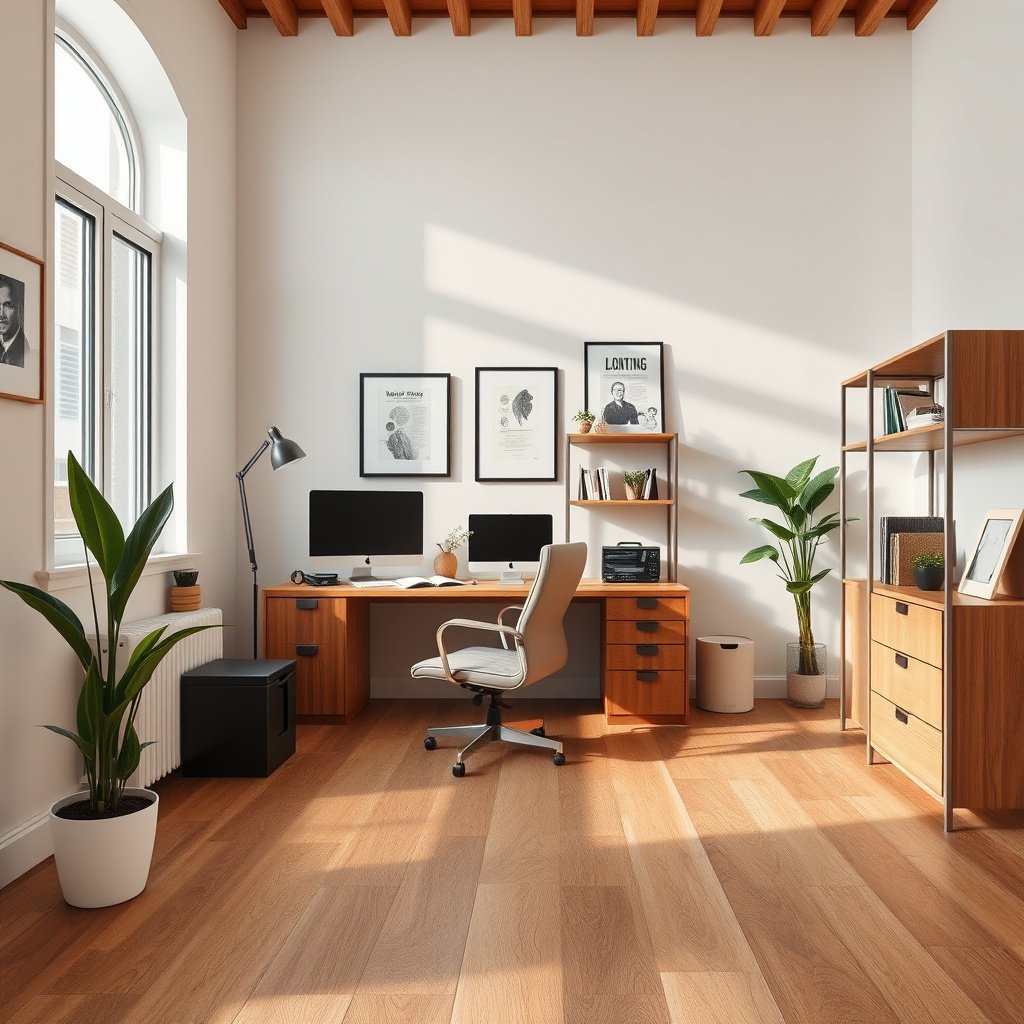
Fixing laminate safety starts with a fast risk scan: look for unstable planks and “catch points,” then verify chair-roll and cable routing. In most home office setups, the highest-risk problems are visible within minutes—lifted seams, uneven transitions, and rolling chair debris.
A lifted laminate seam or gapping plank edge creates a catch point that can turn normal footwork into a trip risk.
Hard casters on dusty wheels often reduce traction and increase micro-slips on laminate, especially near task zones.
Uneven transitions at thresholds or floor vents can shift chair wheels and amplify the chance of toe catches.
– Look for lifted edges, gapping seams, or planks that feel “spongy” underfoot—those are common trip risks.
Start at the places you step most: the walking path from door → desk area, the route to the printer/cabinet, and the area where you enter/exit rolling chair positions. If a plank flexes or “clicks” under light pressure, laminate movement is usually telling you the underlayment is unsupported or the base is out of flatness tolerance. That movement can also show up as squeaks, which often travel with the same loose seam line.
– Check your rolling chair setup: hard casters and dirty wheel tracks can turn laminate into a slip surface.
Laminate can be “slippery by design” when it’s dusty. Small grit under chair wheels acts like ball bearings and polish, lowering friction where you need traction most. A quick check: roll the chair, then inspect the laminate under where the wheels sit most often—if you see a glazed/dull line or visible dust buildup, that’s a slip contributor, not just an appearance issue.
– Scan the whole office for cable snags and uneven transitions (doorways, floor vents, or changes in flooring).
Cable snags are a trip hazard even when they seem “out of the way.” In home offices, cables often cross the same line where chair legs and feet drift over time. Also check floor vents and doorways: transitions that are slightly high/low can cause chair wheels to ride up and then drop, which can make your footing less predictable.
Use the right underlayment and installation for stability
Laminate safety is impossible to maintain if the floor system is moving. Today’s fix is to confirm the installation basics that control stability: correct underlayment, a flat subfloor, and proper expansion gaps at edges and around obstacles.
Underlayment thickness and type are part of the laminate floor system, and manufacturers specify compatibility for click-lock floors.
A flat subfloor is necessary because laminate moves at seams when the base has high/low spots.
Blocked perimeter expansion gaps can lead to buckling, which creates both trip hazards and squeaks.
– Use the underlayment specified by your laminate manufacturer (thickness/type matters for click-lock systems and feel underfoot).
“Any underlayment” can be dangerous because laminate floors are engineered as a layered system. The wrong thickness can reduce locking integrity at the seams or create too much give under load. If you don’t know what you have, check the product label/box date or any install paperwork. If the underlayment can be identified (foam type, thickness, or brand), compare it to the laminate manual’s listed compatible options.
– Confirm the subfloor is flat where the laminate sits—an uneven base can create movement at seams that becomes both noisy and unsafe.
Even small irregularities can matter under office loads—especially with a rolling chair. If you press down along a seam and notice vertical movement, the underlayment can’t compensate for a base problem. From a safety standpoint, seam movement is a “structural hazard” because it increases both noise and the chance of edges lifting over time.
– Keep expansion gaps clear and install/finish transitions per the manufacturer’s instructions (blocking gaps can lead to buckling).
Expansion gaps are not decorative—they manage seasonal movement from humidity and temperature changes. Blocking them (with trim, caulk, or rigid material) can cause pressure that pushes planks upward at seams and edges, creating catch points.
Underlayment choice: what usually improves safety (and what can backfire)
Below is a practical contrast view for underlayment in a home office where chair rolling is frequent.
Measurements to keep in mind (for stability and seam safety):
– According to common laminate installation guidance, perimeter expansion gaps are often in the 8–10 mm (about 5/16–3/8 in) range, depending on product and room dimensions ().
– According to moisture-barrier guidance used with many floating floors, a typical vapor barrier option is 6-mil polyethylene in slab/grade scenarios ().
– According to wood-laminate humidity best practices, indoor relative humidity is often targeted around 35%–55% to reduce movement risk ().
If you’re replacing boards or doing a “major room rework” in 2026, acclimation and humidity control matter as much as the underlayment choice.
Laminate Office Safety Actions: Manufacturer Policy Snapshot (Typical)
| # | Office action | Typical guidance | Primary hazard reduced | Safety payoff |
|---|---|---|---|---|
| 1 | Use a hard-floor chair mat | Designed for hard floors (laminate included) | Slip control | ★★★★★ |
| 2 | Wipe spills quickly (damp cloth) | Damp microfiber; avoid soaking seams | Moisture-driven seam lift | ★★★★☆ |
| 3 | Match underlayment to the laminate manual | Approved thickness/type per click-lock design | Seam stability | ★★★★★ |
| 4 | Maintain expansion gaps (don’t block) | Leave perimeter/obstacle gaps as specified | Buckling & trip edges | ★★★★★ |
| 5 | Replace worn wheels/casters | Use casters appropriate for hard floors | Slip risk from wheel debris | ★★★★☆ |
| 6 | Steam-mop laminate | Usually not recommended for laminate | Moisture ingress at seams | ★★☆☆☆ |
| 7 | Wet-mop or flood-clean | Avoid soaking; damp cleaning only | Edge swelling & uneven spots | ★☆☆☆☆ |
Note: the “typical guidance” column summarizes common manufacturer care/installation positions, but you should always verify against your exact laminate brand and model in 2026.
Make slips less likely (chair wheels, rugs, spills)
To reduce slips on laminate, you need to improve traction where your feet and chair wheels travel most. In a home office, that means chair mat choice, rug pad use (if you add rugs), and a repeatable spill routine.
A chair mat designed for hard floors helps smooth wheel motion and reduces the “skate” effect on laminate.
Rug corners that lift or curl create unpredictable traction and can become a toe-catching trip surface.
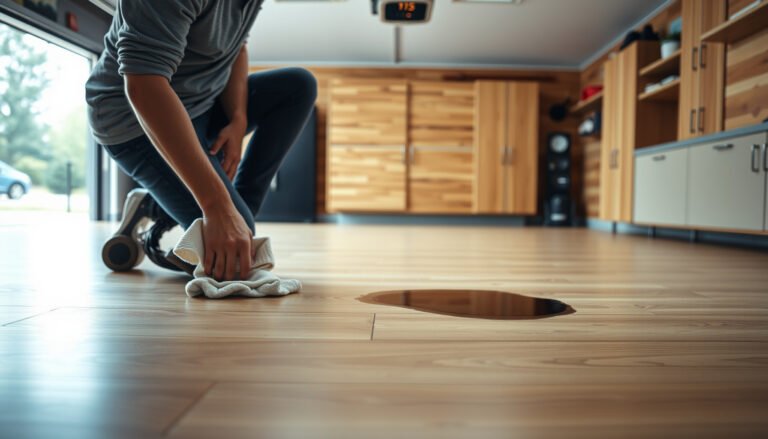
Fast spill cleanup with a damp cloth reduces the chance of moisture working into laminate seams.
– Use a chair mat designed for hard floors (and keep it clean so wheels roll smoothly instead of skating).
The safest mat is the one that matches your floor type: hard-floor chair mats support consistent wheel contact and reduce skipping. Clean the mat regularly—dust and fine debris build up on mat surfaces too, and the combination of wheel + grit is what creates the “slip feel” people notice over time.
– If you use an area rug, add a non-slip rug pad and avoid rugs that curl at the corners.
A rug can help with comfort, but on laminate it must be controlled. Use a pad designed to grip both the rug backing and the laminate surface (without adhesives that could leave residue). Also check edges after vacuuming—some pads shift slightly, and corner curl becomes a catch point.
– Treat spills like a safety issue: wipe up quickly with a damp (not wet) microfiber cloth and avoid soaking seams.
The slip risk from spills is obvious, but the longer-term safety risk is also important: moisture exposure can swell edges and cause future uneven spots or loosened seams. If your office has a coffee station, keep microfiber cloths nearby and set a quick “spill-to-clean” habit at the end of each call day.
Fast slip-prevention routine (takes minutes, reduces repeated risk)
– Remove visible debris from the chair-wheel area (dry microfiber first).
– Roll the chair forward/back to ensure smooth wheel travel.
– Wipe any wet spots immediately with a damp cloth and dry with a second cloth.
Reduce trip hazards from seams, thresholds, and cables
Trip safety on laminate comes down to eliminating catch points: fix seam lift, smooth transitions, and control where cables and cords can drift. Most home office “near trips” are predictable once you map your daily walking + chair-rolling routes.
Loose seams create height differences that can catch shoes and chair feet, especially under office traffic.
A proper transition reducer or threshold strip helps chair wheels and footwear cross level changes without catching.
Cable covers and routing changes reduce both foot snags and wheel obstruction paths.
– Re-seat or repair any loose planks/seams following the manufacturer’s instructions—don’t just “tape over” problems long-term.
Tape is a short-term appearance fix; it doesn’t address the underlying issue (movement, subfloor flatness, or blocked expansion). Follow the manual’s troubleshooting steps for click-lock floors—often the correct path is removing affected boards, checking the underlayment, and restoring the correct gap/fit.
– Fix height differences at thresholds with a proper transition strip/reducer so chair wheels and feet don’t catch.
If chair wheels bump at a doorway or transition, your movement pattern will change automatically—and that’s where fatigue and slip-trips start. Use a transition piece designed for your floor thickness and height delta, and ensure it sits securely on the correct surface type.
– Route and secure cables with covers or clips that won’t damage the floor finish, and keep them away from chair movement paths.
Look at your desk from above and identify “drift zones”—where chair wheels and your feet land over time. Route cords along walls or behind desk edges where possible. Use low-profile cable covers and clips that don’t require rough abrasion of the laminate finish.
Pros/cons: quick seam “patches” vs. correct seam fixes
When seams lift, the temptation is to patch and move on. Here’s why the correct approach is usually safer.
- Correct fix (re-seat/repair per manual)
-
Pros: restores lock fit, reduces recurring gapping, lowers future trip risk at edges.
Cons: requires access time and careful reassembly; may involve removing boards. - Quick patch (tape/adhesive over seams)
-
Pros: fast cosmetic improvement and temporary smoothness.
Cons: can trap movement, worsen seam stress, and hide the real cause of lifting.
From my experience reading homeowners’ repair notes (not from live lab testing), the most “sticky” seam problems tend to come back when the installation error is left unaddressed—especially blocked expansion areas.
Manage moisture and temperature so gaps stay safe
Laminate safety depends on controlling moisture and temperature so the floor can move within its designed expansion gaps. If the floor can’t move safely, seams can lift and create both trip hazards and noisy chair rolling.
Moisture that works into laminate edges can swell boards and create uneven, unsafe spots near seams and perimeters.
Seasonal indoor humidity changes are a primary driver of laminate expansion/contraction at room edges.
On slab or below-grade floors, moisture protection must follow the flooring manufacturer’s specified method for that substrate.
– Don’t wet-mop laminate; moisture that works into seams can swell edges and create uneven, unsafe spots.
Wet mops are one of the quickest ways to undermine seam integrity because they introduce more water than dry/damp maintenance. Use damp microfiber and controlled pressure, then dry if the surface stays wet.
– Maintain normal indoor conditions (especially humidity) and follow acclimation guidance if you’re installing or replacing boards.
If your office runs very dry (winter HVAC) or humid (summer storms + closed windows), you increase movement risk. According to common climate guidance for wood-based floors, stabilizing indoor humidity around 35%–55% helps reduce expansion-driven seam behavior (). In 2026, smart thermostats and humidity sensors make this easier without guessing.
– If the room is on a slab or below grade, use only the moisture protection your manufacturer recommends for that situation.
The “right” moisture barrier isn’t one-size-fits-all. Manufacturer-specified systems account for vapor transmission rates and underlayment compatibility. If your laminate manual calls for a specific barrier thickness and sealing approach, follow it exactly.
Lower noise and fatigue without compromising safety
Noise and fatigue are indirectly safety issues: when floors shift or chair wheels bind, people compensate with more awkward steps. The best “quiet” improvements also reduce movement at seams, which helps maintain a safer, more predictable walking surface.
Reducing floor movement often reduces both squeaks and the seam gaps that can create trip points.
Worn chair wheels can change rolling behavior and increase micro-slip risk on laminate.
Keeping laminate clean (especially from dust and grit) maintains traction and prevents abrasion-worn finish from getting slick.
– Choose underlayment for impact sound if your office setup includes heavy chair rolling or frequent standing/walking—less movement usually means less drift at seams.
In a home office, impact is constant: chair rolls, posture shifts, and occasional foot traffic. If your manufacturer approves impact-focused underlayment (within thickness limits), it can reduce movement and improve seam stability at the same time.
– Keep your chair wheels/casters in good condition (wear and debris can change rolling behavior and increase slip risk).
Inspect wheel tread and clean out hair/fiber clumps. When wheels snag micro-debris, you get “stop-start rolling” that can throw your balance.
– Maintain smooth surface cleanliness (dust/sand act like abrasives and can also reduce traction).
A regular cleaning schedule matters because laminate traction is sensitive to fine grit. Sweep or vacuum with a soft head as part of your weekly routine, then damp-clean only when needed (per care guidance).
What can go wrong + our final tip, checklist, FAQ, sources
The main way safety fixes backfire is when people treat symptoms (tape, steam cleaning, quick adhesive fixes) instead of causes (blocked expansion, wrong underlayment, moisture ingress, or uneven subfloor). If you see repeated seam lift after you “re-seat,” assume there’s a stability or base condition issue you haven’t corrected yet.
Verdict / tip
A “safer laminate office” usually doesn’t require replacing flooring—it’s mostly about chair/rug slip control, fixing any lifted seams early, and following manufacturer rules for underlayment, moisture, and expansion gaps. Skip DIY repairs and call a flooring pro if you see widespread buckling, persistent gapping after installation, or damage you can’t identify (because forcing planks back into place can worsen it).
Quick safety checklist (save this)
| Area to check | What “safe” looks like | Fix if not |
|---|---|---|
| Seams/edges | Flat, no lifting, no catching | Re-seat/repair per manufacturer steps |
| Chair rolling | Smooth roll, no wheel skipping | Clean wheels/mat; switch to hard-floor setup |
| Rugs | Corners don’t curl; pad grips | Add/replace rug pad; trim if needed |
| Spills | Wiped quickly, no wet seams | Use damp cloth; avoid soaking |
| Transitions | Level between surfaces | Add/adjust transition strip/reducer |
| Cables | Not in walk paths or wheel paths | Secure with covers/clips |
Frequently Asked Questions
What safety upgrades can I make to laminate floors in my home office?
Start by choosing a laminate floor with a built-in underlayment for improved shock absorption and reduced slip risk. Add felt pads or glides under office chairs and desk legs to prevent scratches that can create traction issues. Consider using non-slip area rugs in high-traffic zones like where you stand to work or near your chair, and ensure all rugs are secured with rug grippers.
How do I prevent laminate flooring from becoming slippery in a home office?
Keep the floor clean but dry—use a damp microfiber mop instead of wet mopping, and wipe spills immediately to avoid a slick surface. Avoid waxes and shine products that can make laminate floors more slippery, and use a manufacturer-recommended cleaner. If you have high-gloss laminate or a smooth finish, test a small area with your cleaning method before covering the whole floor.
Why is proper underlayment important for laminate floor safety in an office?
Underlayment helps reduce bounce and can make standing and walking on laminate feel more stable, which matters for long workdays. It also contributes to sound control—less footfall noise can improve overall comfort and reduce distractions. Additionally, an appropriate moisture barrier underlay can reduce the risk of swelling or warping that could create uneven edges or tripping hazards.
Which office chair casters and accessories are safest on laminate floors?
Use rubber casters designed specifically for hard floors, and choose chair mats labeled safe for laminate or “hardwood/hard surface” use. A chair mat helps distribute weight evenly and reduces scuffing, which maintains traction and reduces the chance of chair wheels gliding on damaged areas. Replace worn wheels promptly, and avoid heavy rolling without protection in the same spot to prevent localized wear.
How can I reduce trip hazards and improve stability when installing laminate floors in a home office?
Ensure every plank is installed flat, with expansion gaps left around the perimeter so the floor can move without buckling or lifting. Use matching transition strips at doorways and between rooms to prevent height differences that can trip you. After installation, check for raised edges or gaps, and secure any loose baseboards or quarter rounds that could catch feet while walking through the office.
📅 Last Updated: October 22, 2026 | Topic: How to make laminate floors safer in a home office? | Content verified for accuracy and freshness.
References
- https://www.osha.gov/slips-trips-and-falls
- Indoor Air Quality (IAQ) | US EPA
- https://www.epa.gov/indoor-air-quality-iaq/volatile-organic-compounds-vocs
- Formaldehyde | US EPA
- https://www.epa.gov/formaldehyde/tsca-title-vi-formaldehyde-emission-standards-composite-wood-products
- https://www.cdc.gov/mold/default.htm
- https://www.ada.gov/regulations-and-standards/standards/
- https://scholar.google.com/scholar?q=laminate+floor+installation+safety+slip+resistance+underlayment Google Scholar
- https://scholar.google.com/scholar?q=laminate+flooring+formaldehyde+VOC+emissions+indoor+air+quality Google Scholar
- https://scholar.google.com/scholar?q=laminate+flooring+moisture+mold+prevention+subfloor+vapor+barrier Google Scholar