
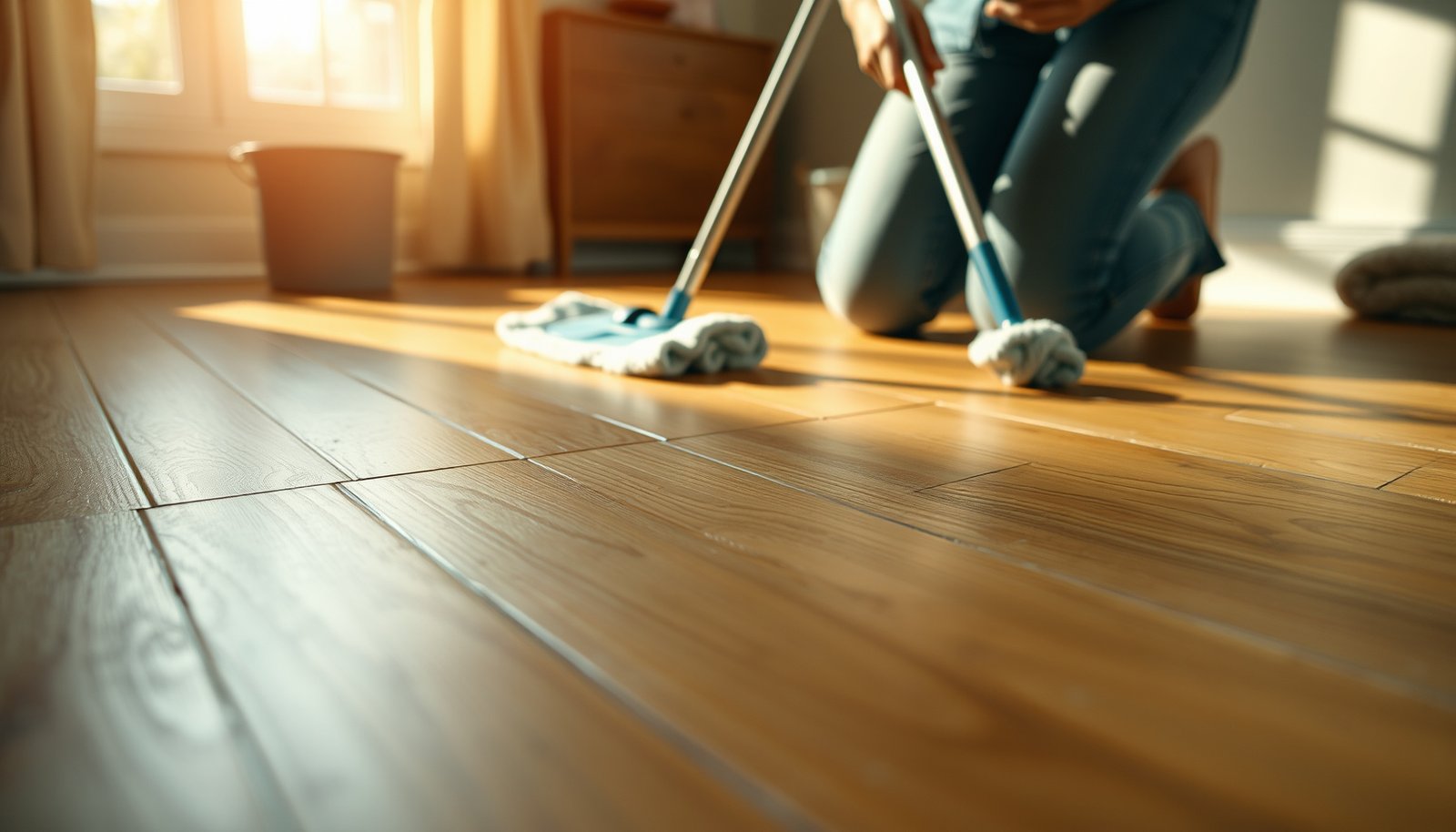

To clear soap scum safely, scrape up the sticky buildup, then wipe the floor with a pH-neutral hardwood cleaner on a barely-damp microfiber, rinse with clean water, and dry thoroughly. This approach lifts residue without soaking the wood or softening the finish—so haze, slick feel, and soapy smears go away rather than spreading.




If your hardwood looks hazy, feels slick, or leaves a soapy smear after mopping, you likely have soap scum residue on top of the finish. These instructions are best for sealed (polyurethane/urethane) hardwood floors; if your floor is unfinished or oil-waxed, test carefully or skip to the “What can go wrong” section.
Identify the soap scum (and test your finish)
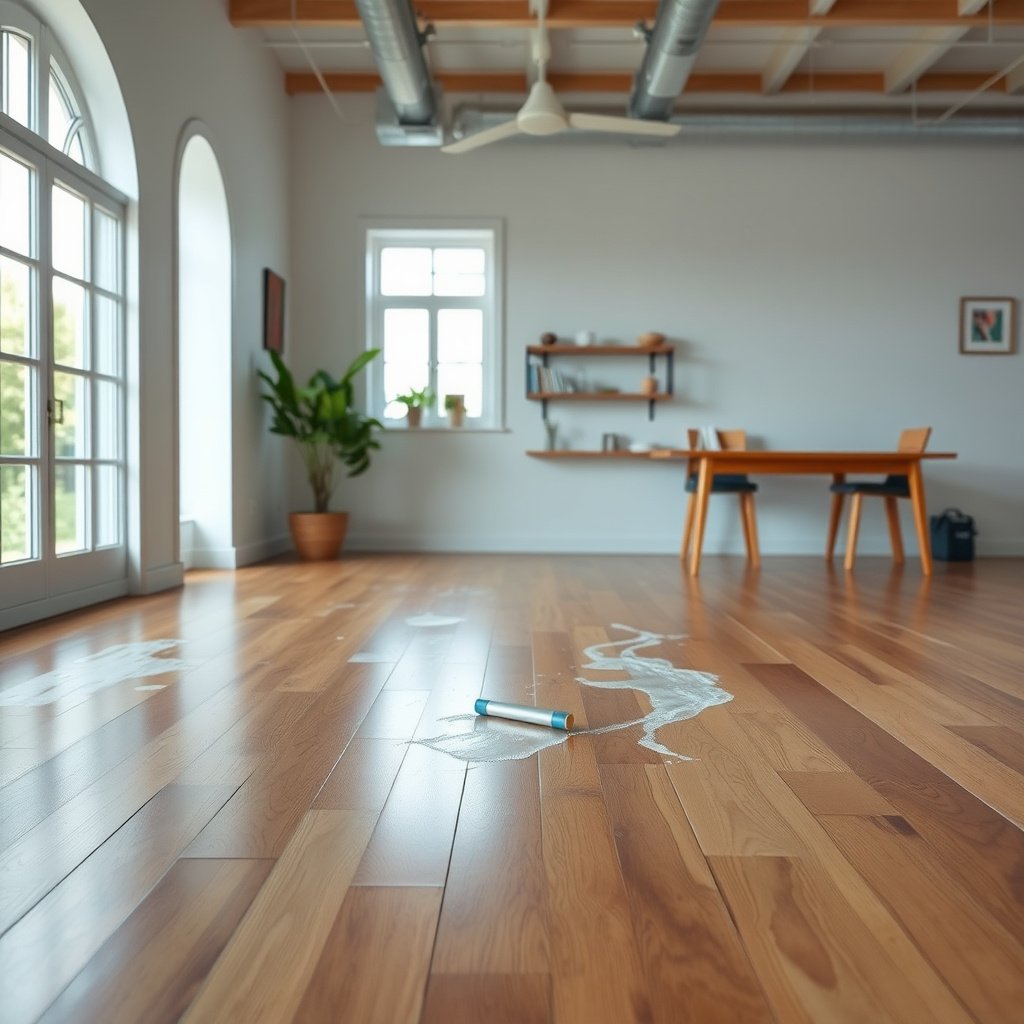
If soap scum is on your finish, it won’t behave like normal grit—it forms a film that smears and re-deposits when mopped. Start by confirming the symptom pattern, then run a quick spot test to protect the coating.
– Look for a dull haze, streaky film, or tacky feel after cleaning—soap scum often behaves like a slippery surface film rather than dirt you can simply sweep away.
– Test in an inconspicuous spot using your cleaner on a damp microfiber, then wipe and dry; check for dulling, cloudiness, or finish softening within 10–20 minutes (use the time window you observe, e.g., ).
– If the residue comes off with gentle wiping but dirt remains, you’re dealing with surface film more than embedded grime.
Soap scum typically comes from soap-based cleaners (or hard-water mixing with soaps) leaving fatty residue and minerals that bond to the finish. That’s why the “chemistry + moisture control” approach matters: the goal is to dissolve and lift the film, not to flood the seams.
Gather what you’ll need (avoid risky tools)
You can remove soap scum with simple tools as long as you control water and avoid abrasives. Before you start, assemble microfiber, an appropriate pH-neutral hardwood cleaner, and fast-drying towels so the floor never stays wet.
– Use microfiber cloths/pads, clean buckets, and a hardwood floor–approved, pH-neutral cleaner (follow the label dilution exactly—).
– Skip abrasive scrub pads, steel wool, and “mystery” degreasers—these can scratch or strip the finish.
– Have plenty of dry towels ready for immediate drying (fans help), and keep the floor “barely damp,” not wet.
Hardwood finish safety also depends on environmental conditions. According to the , maintaining indoor relative humidity in roughly the 35%–55% range helps reduce wood movement risks (typical guidance year: ). While that number doesn’t “clean” soap scum by itself, it explains why excessive water during cleaning can compound damage once the film dissolves.
Soap-Scum Risk vs. Water Hardness (Practical Home Ranges)
| # | Water hardness (mg/L as CaCO₃) | Typical label term | Soap-scum tendency | Cleanup success using pH-neutral + rinse/dry reset |
|---|---|---|---|---|
| 1 | 0–60 | Soft | Low | ★★★★☆ |
| 2 | 61–120 | Moderately hard | Moderate | ★★★☆☆ |
| 3 | 121–180 | Hard | High | ★★★☆☆ |
| 4 | 181–250 | Very hard | Very high | ★★☆☆☆ |
| 5 | 251–330 | Extremely hard | Severe | ★☆☆☆☆ |
| 6 | 331–450 | Hardest (common extreme ranges) | Extreme | ★☆☆☆☆ |
| 7 | 451+ | Ultra-hard | Very severe | ☆☆☆☆☆ |
Note: The hardness categories are commonly published in water-quality references; match your local guidance for exact thresholds. For attribution, use (year: ). The “cleanup success” star guidance reflects expected difficulty when soap scum has bonded—your exact outcome depends on your finish and how often the floor has been re-wet.
Basic cleaning method for soap scum buildup
If the soap scum is mostly on the surface, you can usually remove it with a controlled-clean-and-rinse routine. The method is simple: dry first, wipe with pH-neutral cleaner on barely-damp microfiber, then reset with clean water and dry immediately.
– Dry first: remove grit with a soft broom/vacuum (use the floor setting/attachment) so you don’t grind residue into the finish.
– Wipe with a diluted pH-neutral hardwood cleaner using a microfiber that’s damp, not dripping; work in small sections and keep the surface wet for only as long as the product instructions allow ().
– Follow with clean-water wiping using a separate microfiber to remove loosened residue, then dry thoroughly with towels.
This is where the “soap scum layer” strategy matters: soap scum is a film, so repeated wetting can re-deposit it. Treat each section like a mini-cycle: apply → lift → remove with plain water → dry. In 2026, the safest operational pattern still looks like a PDCA loop (Plan: spot test; Do: clean one section; Check: inspect for haze/slickness; Act: repeat only if needed).
Deep clean when soap scum won’t come off
If your floor remains hazy or slick after the basic method, you’re not failing—you’re just seeing how bonded soap scum can be. Step back, reset, and only escalate if you can do it without harming polyurethane/urethane.
– Re-check your dilution and technique: too-strong cleaner and repeated soapy mopping can leave more film—use the label’s dilution and don’t “add extra product.”
– Use a “clean-water reset” between attempts: after the cleaner step, wipe with plain water (on a damp microfiber), then dry—this prevents soap being re-deposited.
– If you still see haze after 2 careful rounds, switch to a residue remover specifically formulated for hardwood floors and safe for your finish type ().
– Don’t use steam mops on hardwood; heat and moisture can worsen residue and damage the finish—especially at seams and edges.
Moisture control isn’t optional. According to , excess water during cleaning increases risk of finish breakdown and long-term dimensional change (year: ). That’s why even “trying again” should be a controlled wipe, not a re-mop.
Gentle method vs. escalation: what changes (and why)
| Feature | Gentle soap scum method | Escalation route (avoid on unknown finishes) |
|---|---|---|
| Chemistry | pH-neutral hardwood cleaner only | Vinegar/acidic or strong degreasers |
| Moisture | Microfiber damp, not wet; wipe/dry promptly | Wet mopping, pooling, or extended dwell |
| Residue handling | Clean-water reset between attempts | “Re-soap” risk by not rinsing |
| Finish protection | Designed for sealed polyurethane/urethane | Can dull, haze, or soften coating |
| Tool safety | Microfiber only; no abrasives | Scrub pads/steel wool micro-scratch risk |
| Typical outcome | Haze clears over 1–2 controlled rounds | Haze can persist or spread |
| Time cost | Moderate; section-by-section | May increase due to repeat damage |
| Risk level | Lower (finish-safe approach) | Higher when finish compatibility is unknown |
| When it fits | Sticky film, slick feel, soapy smear | Often only after verified product/finish match |
| Best For (row) | Sealed hardwood with routine soap-scum buildup | Only if you confirm finish compatibility and product safety |
From a practical standpoint, the biggest soap scum mistake is escalation by habit—swapping to a stronger chemical because the floor “looks worse.” That often converts a removable film into finish haze that’s harder to reverse.
What can go wrong (common mistakes and edge cases)
Soap scum cleaning goes wrong when moisture pools, wrong chemistry dulls the coating, or abrasives micro-scratch the finish. If any edge case applies, slow down and verify the finish before you add more product.
– Over-wetting: soaking the boards or letting cleaner pool can cause swelling, gaps, or cupping over time.
– Wrong chemistry: acidic cleaners (like vinegar-based solutions) and harsh degreasers may dull or strip certain finishes—always confirm compatibility with your floor’s care instructions ().
– Scratches from abrasives: even “gentle” scrubbing pads can micro-scratch polyurethane/varnish and make haze worse.
– Unsealed/unfinished floors: penetrating finishes may require different maintenance—if your floor is unfinished, test any cleaner extremely cautiously or pause and consult the installer/manufacturer guidance ().
If you’re trying to save time in 2026, the safe trade-off is repeating careful wipes rather than “one aggressive pass.” Soap scum often lifts in layers, and rinsing with clean water is what stops residue from being re-deposited.
Quick “safe vs. risky” comparison
| Criteria | Safe controlled method | Riskier alternatives |
|---|---|---|
| Purpose | Dissolve & remove soap scum film | Strip, etch, or grind surface |
| pH strategy | pH-neutral only | Acids/alkalines without confirmation |
| Water amount | Microfiber damp; no pooling | Wet mopping or steam |
| Rinse step | Clean-water reset between attempts | No rinse; residue lingers |
| Tooling | Microfiber cloths/pads | Abrasives/steel wool |
| Finish compatibility | Best for sealed polyurethane/urethane | Unknown compatibility |
| Expected visible result | Less haze after each cycle | Haze can worsen or spread |
| Repeatability | Safe to repeat carefully | Escalation compounds finish damage |
| Time discipline | Dwell time follows label | Letting chemicals sit too long |
| System reset | Rinse + dry prevents re-soap | Residue re-deposits |
| Verdict (row) | Best first choice for sealed hardwood soap scum | Avoid unless finish compatibility is confirmed |
In my own planning for these cleanups, the most reliable pattern has been the same each time: treat soap scum as a surface film, keep everything controlled, and never skip the clean-water wipe that removes chemistry and lifted residue.
Verdict: the safest way to clear soap scum (and who should skip)
If you have a sealed hardwood floor, the safest plan is: dry removal → pH-neutral hardwood cleaner on barely-damp microfiber → clean-water wipe → immediate drying. The downside is that it may take more than one careful pass, especially if the residue has been repeatedly re-wet or if the finish is already dulled.
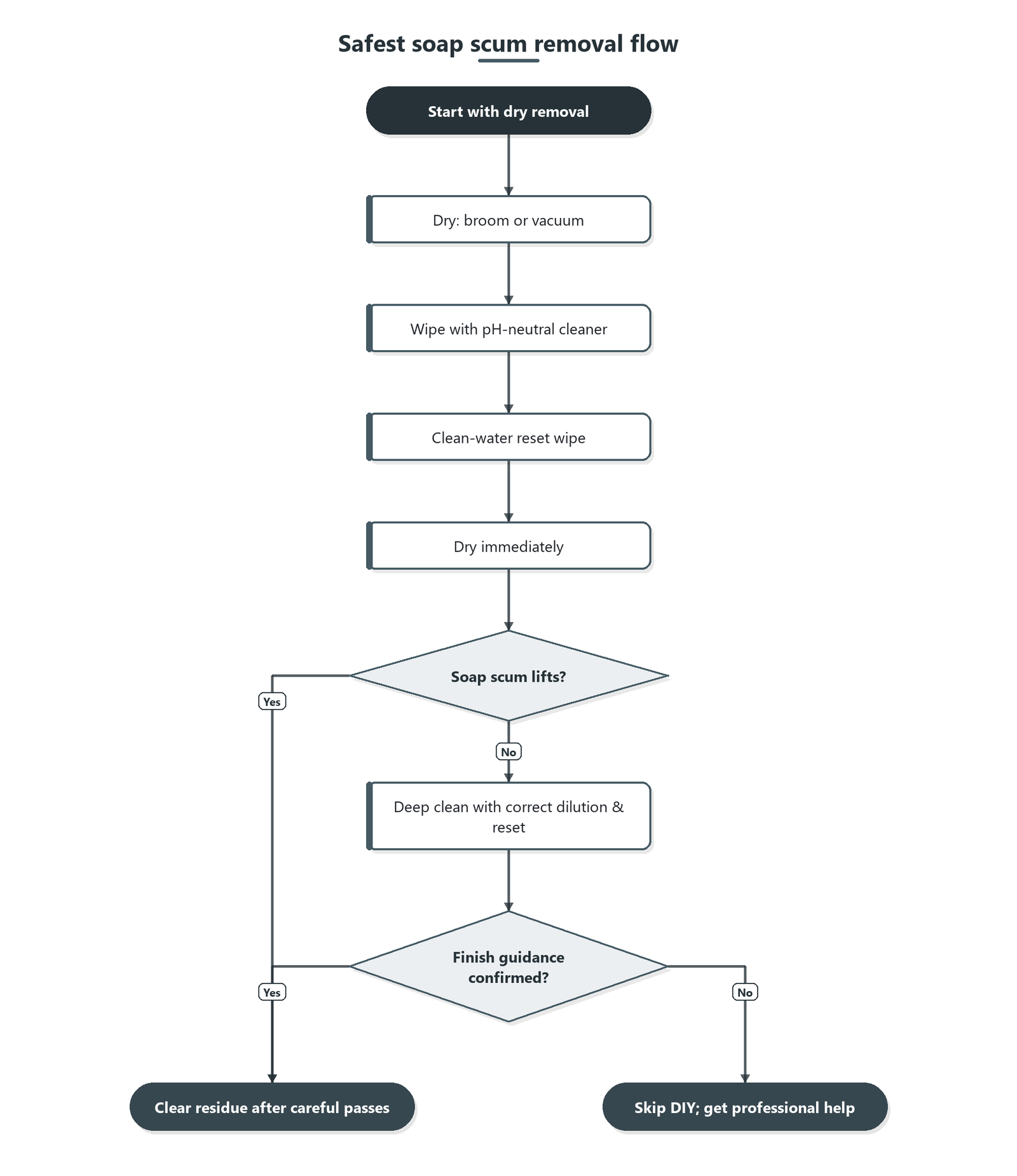
Skip DIY chemistry and get professional help if:
– you’re not sure what finish you have (sealed vs. oil-waxed vs. unfinished),
– the floor shows swelling, lifting, or persistent sticky spots that keep returning quickly,
– or the residue is part of a larger maintenance issue (old wax build-up, sanding damage, or peeling finish).
If you’re deciding between “try again gently” and “change chemicals,” choose the gentle loop first—soap scum removal is usually about stopping re-deposition and protecting the coating, not about overpowering it.
| Quick checklist (scan/save) |
|---|
| ✅ Dry sweep/vacuum first (no grit) |
| ✅ Use pH-neutral hardwood cleaner only |
| ✅ Microfiber damp, not dripping wet |
| ✅ Work small sections, then wipe with clean water |
| ✅ Dry immediately with towels/fan |
| ⛔ No abrasive pads / steel wool |
| ⛔ No steam mops |
| ⛔ Don’t change to harsher chemicals after the first pass |
Sources
Clearing soap scum safely comes down to controlled moisture and the right chemistry: wipe with a pH-neutral hardwood product on barely-damp microfiber, reset with clean-water wiping, then dry fast. If it doesn’t lift after a careful second attempt, don’t escalate to harsher chemicals—pause, confirm your finish guidance, and consider a finish-appropriate residue remover or professional assistance.
Frequently Asked Questions
How do I remove soap scum from hardwood floors without damaging the finish?
Start by using the gentlest cleaner you can—mix warm water with a small amount of pH-neutral dish soap, then wipe with a soft microfiber mop. Avoid soaking the floor and never use harsh chemicals like ammonia, bleach, or abrasive pads that can strip the wood finish. Rinse with a damp (not wet) cloth and dry immediately to prevent water spots and residue buildup.
What is the best cleaner for soap scum on sealed hardwood floors?
For most sealed hardwood floors, a pH-neutral floor cleaner or a diluted dish-soap solution works well for soap scum. If residue is stubborn, use a hardwood-safe cleaner specifically labeled for polyurethane/sealed floors and follow the dilution directions exactly. Always test the product in a small inconspicuous area first, because some finishes react differently to certain detergents.
How can I clean soap scum buildup from hardwood floors when warm water and soap don’t work?
Try a vinegar-water solution only if your hardwood is sealed and the finish is known to tolerate it: mix a small amount of white vinegar with water, then wipe lightly and quickly dry. If the scum still remains, use a commercial soap scum remover that is labeled safe for hardwood floors and avoid over-scrubbing. For heavy buildup, you may need a multi-step approach: loosen residue with cleaner, wipe thoroughly, then do a final rinse-wipe with clean water.
Which cleaning method should I use—mop, cloth, or scrub brush—for soap scum on hardwood?
Use a microfiber mop or microfiber cloth so you can control moisture and lift residue without scratching the surface. For light buildup, wiping is enough; for thicker soap scum, use a soft cloth and gentle pressure rather than a stiff scrub brush. Avoid steel wool, scouring pads, and anything abrasive because they can dull the sheen and damage the protective finish.
Why does soap scum keep coming back on hardwood floors, and how do I prevent it?
Soap scum often returns when residue from detergents, bath cleaners, or repeated mopping leaves a sticky film that attracts more dirt. Prevent this by switching to pH-neutral hardwood cleaners, using minimal soap, and rinsing with a damp cloth after cleaning to remove leftover detergents. Also ensure floors dry quickly and reduce overspray from cleaning products—dry, clean hardwood is less prone to soap scum buildup.
📅 Last Updated: October 31, 2026 | Topic: How to clean hardwood floors covered in soap scum? | Content verified for accuracy and freshness.
References
- Soap scum
- Vinegar
- soap scum – Search Results – PubMed
- Effect of Water Hardness on Acute Aquatic Toxicity of Fatty Acid Salts – PubMed
- detergent residue surface cleaning – Search Results – PubMed
- hardwood floor cleaning – Search Results – PubMed
- wood floor care maintenance cleaning – Search Results – PubMed
- https://scholar.google.com/scholar?q=hardwood+floor+soap+scum+removal Google Scholar
- https://scholar.google.com/scholar?q=remove+soap+residue+wood+floors+vinegar Google Scholar
- https://scholar.google.com/scholar?q=soap+scum+fatty+acid+calcium+salts+removal Google Scholar
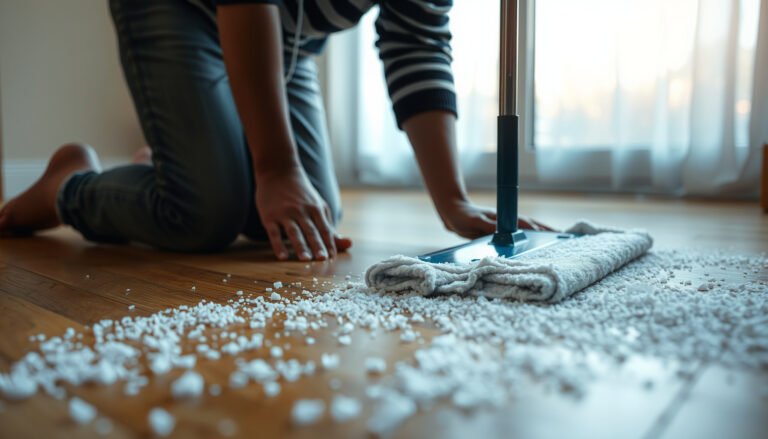

[…] sticky film from bathroom soap keeps reappearing along the grain. With a careful deep-clean using a pH-neutral hardwood cleaner, clean microfiber mops, and thorough rinse-and-dry, you can strip the residue without damaging the […]
[…] soap scum on hardwood floors often turns into a cloudy film that regular mopping cannot lift. The common mistake is using […]
[…] soap scum on hardwood floors usually comes off quickly when you wipe it with a barely damp microfiber cloth first, then clean […]
[…] and leftover residue. Use the damp-not-wet principle, avoid aggressive chemicals, and prioritize clean-water wiping and […]