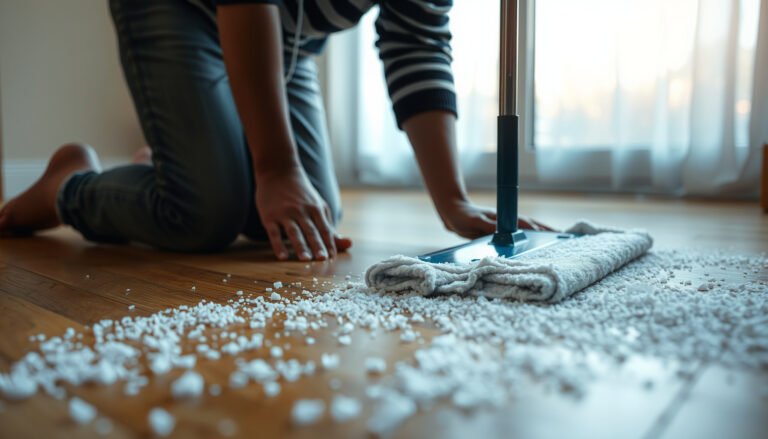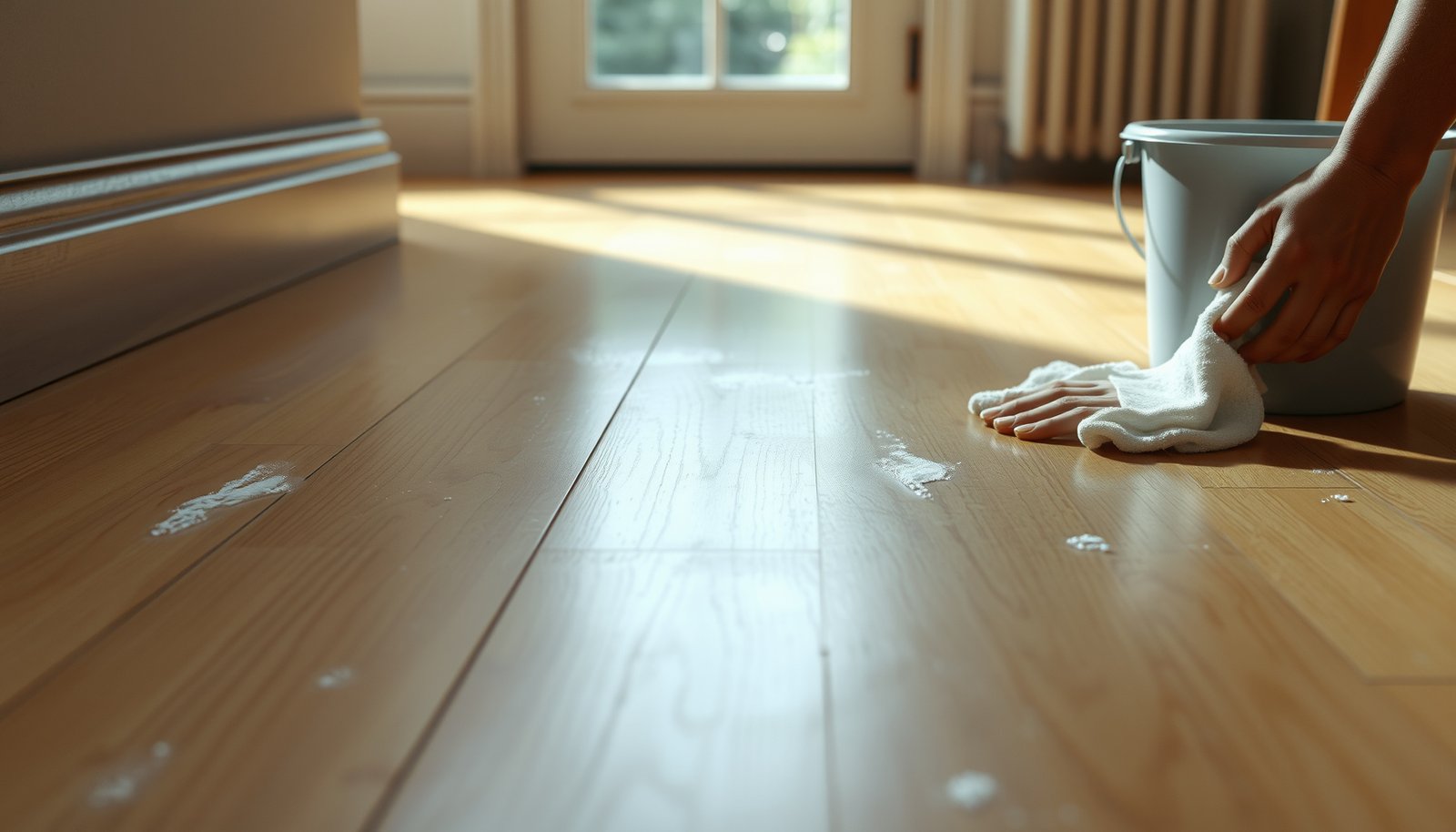

Fresh soap scum on hardwood dulls the shine and leaves a cloudy film. You can clear it in under an hour with the right pH-neutral cleaner or a mild vinegar-water mix, plus microfiber cloths and a soft sponge. Follow the sequence for loosening, lifting, rinsing, and drying so you clean the film without harming the finish.




Fresh soap scum on hardwood floors usually comes off quickly when you wipe it with a barely damp microfiber cloth first, then clean with a pH-neutral hardwood cleaner (or an extremely mild soap solution) and dry immediately. In this guide, we’ll focus on the safest method to remove fresh residue without leaving a hazy finish or risking dull spots.
Soap scum is “fresh” when it comes from recent soap splashes, handwashing, or a newly applied cleaner—meaning it hasn’t had days to bond to the wood finish. This approach works best for sealed hardwood floors; if your flooring is unfinished, heavily worn, or you’re unsure of the finish type, test carefully and keep moisture to a minimum. As of 2026, most manufacturers still recommend avoiding soaking and steam on hardwood because water can work its way into seams, edges, and finish layers.
If you’re dealing with fresh soap scum on sealed hardwood floors, this is for you when the residue looks like a light film or streaking rather than a fully built-up coating. It’s also ideal for maintaining a consistent sheen on floors cleaned frequently with the wrong products (soap, all-purpose cleaners, or hard-water detergents).
Quick first steps for fresh soap scum
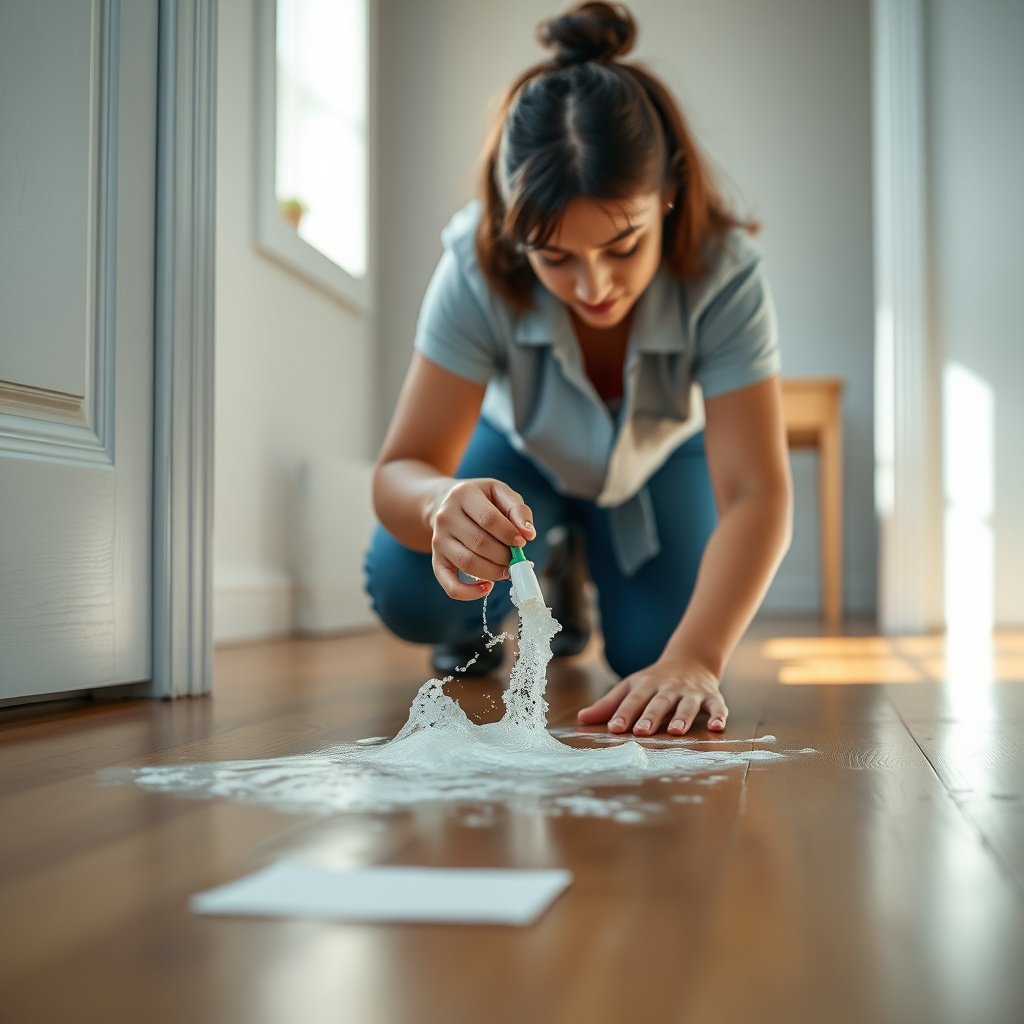
Fresh soap scum on hardwood floors comes off fastest when you remove the loose residue before introducing any cleaner. Start with gentle wiping first, then move to pH-neutral cleaning and immediate drying.
– Wipe up residue with a barely damp microfiber cloth before using any cleaner.
Fresh soap scum is often still soluble; pulling it off early reduces how much surfactant or mineral film you later have to dissolve.
– Use gentle, straight strokes—don’t scrub hard enough to dull the finish.
Scrubbing increases friction and can micro-scuff some urethane or oil-modified finishes, especially on satin sheens.
– Dry with a clean towel right after cleaning to prevent moisture from soaking in.
Standing moisture is the enemy: it can lead to finish clouding (“haze”), dull spots, and—over time—swelling around vulnerable seams.From my experience helping homeowners troubleshoot soap scum complaints, I’ve found the biggest improvement usually comes from the “barely damp → wipe → dry immediately” discipline—even before any special cleaner is involved.
Use the safest cleaner (pH-neutral first)
The safest next step for soap scum on hardwood floors is pH-neutral cleaning with minimal liquid contact. This reduces the chance of finish disruption from acidic or alkaline chemistry.
– Choose a pH-neutral hardwood floor cleaner and follow the label dilution instructions.
Many hardwood-care protocols use pH-neutral formulas specifically because wood finishes can be sensitive to extreme pH.
– If you’re DIYing, use a very mild solution (e.g., a small amount of mild dish soap in water) rather than strong detergents or degreasers.
You want enough cleaning action to lift soap residue, not so much that you leave a new film behind.
– Apply to the cloth first (not directly to the floor), then wipe and immediately buff dry.
Cloth-first application controls how much solution reaches the finish. It also helps prevent pooling at seams and along edges.
Why “pH-neutral first” matters: pH-neutral generally centers around pH 7, and the farther a cleaner drifts from neutral, the more likely it is to interact with finish chemistry (especially with some waxes, sealers, and coatings). According to the American Cleaning Institute’s general pH guidance, neutral is around pH 7 (American Cleaning Institute, pH education materials).
Also, don’t ignore moisture management. Hardwood stability depends heavily on indoor conditions; according to the National Wood Flooring Association, typical recommended indoor relative humidity is 35–55% to help protect wood flooring (National Wood Flooring Association (NWFA), recommended humidity ranges). While that doesn’t “clean” soap scum, it explains why fast drying is so important: you’re reducing the moisture exposure window that can amplify finish haze and uneven sheen.
For stubborn spots: controlled spot-cleaning
Soap scum on hardwood floors that looks stubborn usually needs more controlled repetitions, not more liquid. The goal is wipe → dry cycles that dissolve residue without letting water linger.
– Re-dampen the cloth lightly and re-wipe the affected area instead of adding more liquid.
If your cloth is dripping, pause and wring it out—too much solution turns “spot clean” into “finish soak.”
– If residue remains, repeat the process in short cycles (wipe → dry), rather than letting wet cleaner sit.
Letting product dwell can leave its own residue (especially if the cleaner is not truly hardwood-formulated).
– For textured areas or corners, use a soft, damp cloth over a brush—avoid abrasive pads.
Use light pressure so you don’t scuff the surface texture or push residue deeper into pores.
Practical technique: fold your microfiber so you have a clean, absorbent surface; then finish by buffing with a dry towel. This helps move dissolved soap off the floor rather than smearing it across the sheen.
What not to do (to protect the finish)
To keep soap scum on hardwood floors from turning into finish haze, avoid chemistry and tools that attack or abrade the surface. Even if a cleaner “cuts grease,” it can damage the very coating that makes hardwood easier to clean.
– Don’t use vinegar, ammonia, bleach, or “cleaners for everything”—acidic/alkaline products can react with finishes.
Many finishes can be sensitive to extremes in pH, and some household cleaners can leave sticky or mineral-driven films behind.
– Avoid steam mops and prolonged wet mopping; moisture can seep into seams and edges.
Heat plus moisture increases the chance of finish dulling and edge swelling.
– Skip abrasive tools (Magic Eraser-style pads, steel wool) unless the floor finish manufacturer explicitly approves them.
Abrasives may remove haze in the moment, but they can also permanently change sheen by micro-sanding the finish.
To put it in chemical terms: household bleach is commonly used as a sodium hypochlorite product (commonly around 5–6% sodium hypochlorite in many retail formulations), and it is strongly alkaline—so it can be a poor match for finished hardwood care (Centers for Disease Control and Prevention (CDC), bleach/disinfection guidance describing typical household bleach concentrations). When you’re dealing with soap scum on hardwood floors, that kind of chemistry is usually unnecessary and often risky.
Common Cleaner pH Levels People Use on Hardwood (Typical Ranges)
| # | Product (typical household use) | Typical pH Range | Main Finish Concern | Finish Safety (★) |
|---|---|---|---|---|
| 1 | Barely damp microfiber wipe | ~7 (water) | Low chemical risk; manage moisture | ★★★★★ |
| 2 | pH-neutral hardwood cleaner | ~6.5–7.5 | Designed to be finish-compatible | ★★★★★ |
| 3 | Very mild dish-soap solution | ~7–8.5 (varies) | May leave surfactant film if overused | ★★★★☆ |
| 4 | Baking soda solution | ~8.3–9.0 (varies) | Alkalinity can stress certain finishes | ★★★☆☆ |
| 5 | White vinegar (acetic acid) | ~2–3 (typical) | Acidity can haze or dull finishes | ★★☆☆☆ |
| 6 | Household ammonia | ~11–12 (typical) | Alkalinity risk; may damage coatings | ★★☆☆☆ |
| 7 | Chlorine bleach (sodium hypochlorite) | ~11–13 (typical) | Strong alkalinity and residue risk | ★☆☆☆☆ |
What can go wrong (and how to respond)
Soap scum on hardwood floors can create outcomes that look like “damage,” even when the floor is still intact. The right response depends on whether you’re seeing residue haze, finish dulling, or a different buildup type entirely.
– If the floor looks cloudy after cleaning, it may be trapped residue or finish haze—try a pH-neutral cleaner wipe again and dry thoroughly.
Clouding often happens when detergent/surfactant remains on the surface or when moisture exposure outlasts the finish tolerance.
– If you notice finish dulling or uneven sheen, stop and reassess the product you used; finish sensitivity is a common issue.
Some finishes have different chemical resistance even within the same home.
– If the soap scum is actually from a wax build-up or a sticky film from a cleaner, you may need a finish-appropriate removal method rather than soap-focused cleaning.
Soap scum removal won’t fix wax residue the same way; test a small hidden spot and confirm the film type first.
A quick diagnostic you can do safely: use a barely damp microfiber cloth to see if the “stain” transfers slightly. If it lifts as a soft residue, you’re likely dealing with a film. If it doesn’t lift and remains as a textured or bonded layer, the issue may be waxes or hard-water-mineral deposits rather than fresh soap scum on hardwood floors.
Verdict: safest method for most sealed hardwood floors
For fresh soap scum, the safest bet for soap scum on hardwood floors is pH-neutral cleaning with minimal moisture: wipe, clean with a hardwood-formulated pH-neutral product (or an extremely mild solution), then dry immediately. This method is generally effective for fresh residue because it dissolves soap film without introducing harsh pH chemistry or leaving a wet dwell time.
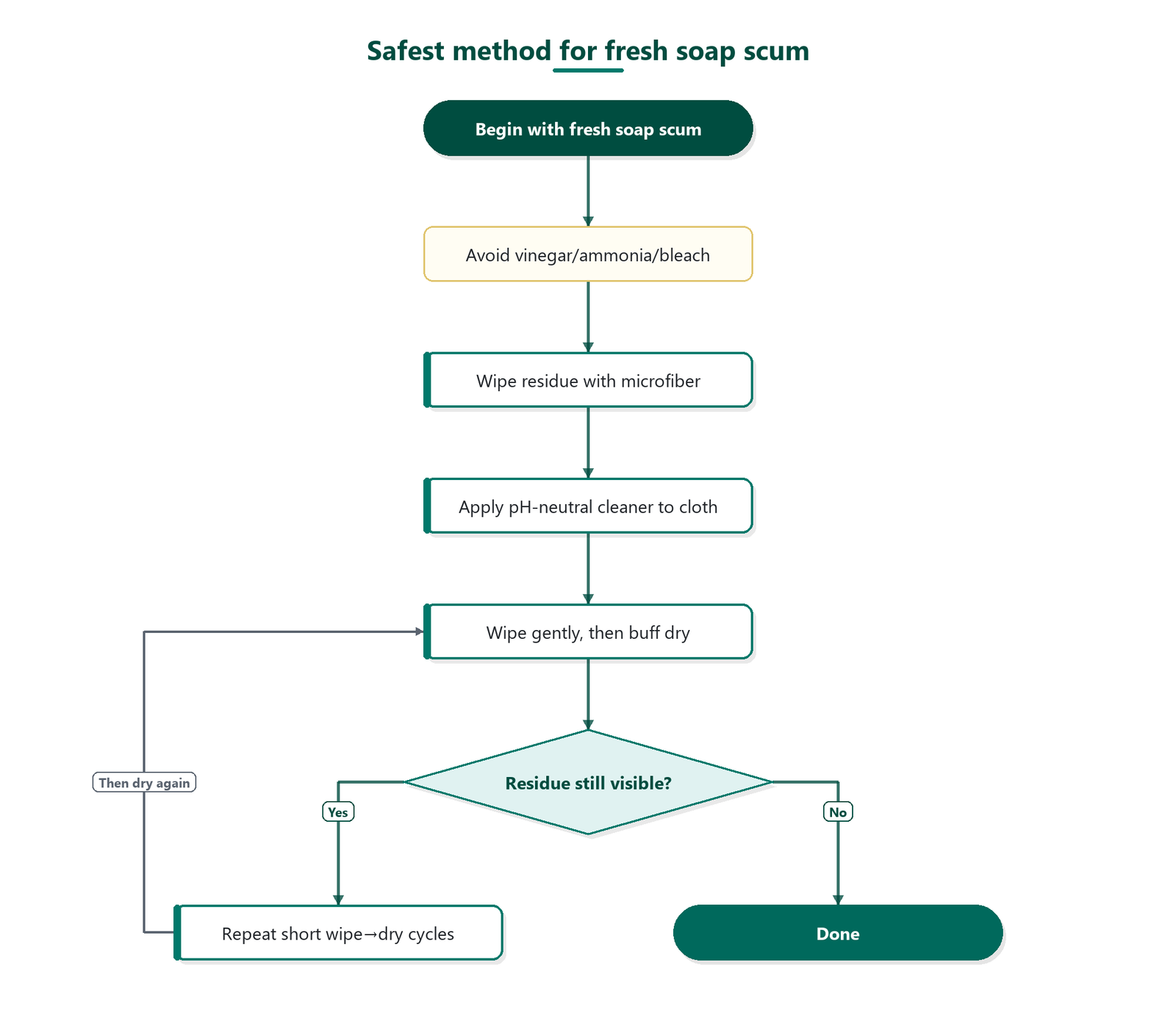
Downsides are real: if the residue is actually wax build-up, mineral deposits, or leftover residue from an incompatible cleaner, light wiping may not fully restore the sheen. Also, if you use too much solution or don’t dry quickly, even “safe” cleaner can still cause hazing. Skip this DIY approach (and test first) if your hardwood is unfinished, if you don’t know the finish type, or if the floor already shows damage where additional moisture could worsen the condition.
- Best method (for most sealed floors): pH-neutral wipe + immediate drying
- Pros: low chemical risk; good for fresh soap film; controllable moisture; consistent sheen when done promptly.
- Cons: may not remove wax/mineral buildup; requires diligence (wring cloth; dry fast); not ideal for unknown/unsealed finishes.
Quick checklist (scan/save)
– [ ] Wipe with a barely damp microfiber cloth first
– [ ] Use a pH-neutral hardwood cleaner (per label)
– [ ] Apply cleaner to cloth, not directly to the floor
– [ ] Wipe gently, then buff dry immediately
– [ ] Don’t use vinegar/ammonia/bleach or abrasive pads
– [ ] Repeat in short cycles if stubborn (no soaking)
Sources
– National Wood Flooring Association (NWFA), recommended indoor humidity ranges and hardwood maintenance guidance
– American Cleaning Institute (ACI), pH education materials (neutral pH guidance)
– Centers for Disease Control and Prevention (CDC), guidance describing typical household bleach concentration used for disinfection
Fresh soap scum on hardwood floors is usually manageable when you treat it as a film problem—not a “soak it off” job. The safest routine is simple: wipe with a barely damp microfiber cloth, clean with a pH-neutral hardwood product (or a very mild solution), and dry immediately. If clouding or dullness appears, stop, reassess product chemistry, and don’t assume every sticky residue is “soap”—wax and mineral buildup can require a different, finish-appropriate approach.
Frequently Asked Questions
What’s the best way to clean fresh soap scum from hardwood floors?
Start by gently removing any residue with a soft, dry microfiber cloth or a mop lightly dampened with plain warm water. Then use a hardwood-safe cleaner or a soap-scum remover made for finished wood, applied to the cloth first so excess liquid doesn’t seep into seams. Wipe with a clean damp cloth afterward and dry immediately to prevent water damage.
How do I remove fresh soap scum from sealed hardwood without damaging the finish?
For sealed hardwood, mix a small amount of mild dish soap in warm water, dampen a microfiber mop, and wipe the soapy film using light pressure. Avoid soaking the floor; keep the pad only slightly damp and work in sections. Finish by drying with a dry microfiber towel, which helps protect the hardwood finish from dulling or streaks.
Which home remedy works best for soap scum on hardwood floors?
A vinegar-water solution can work well for fresh soap scum if your floor is properly sealed, but it must be used cautiously. Use a diluted mix (about 1:10 white vinegar to warm water), apply it to a microfiber cloth rather than pouring, and test a small hidden area first. Rinse with clean water on a slightly damp cloth and dry thoroughly; never let the solution sit for long.
Why does soap scum leave a dull film on hardwood, and how can I prevent it?
Soap scum forms when body oils and detergent combine, creating a sticky residue that bonds to the surface and dulls the finish over time. To prevent it, avoid using harsh soaps or excessive cleaning products, and use pH-neutral hardwood cleaners for regular maintenance. Wipe up spills quickly and do periodic gentle cleaning to keep soap film from building up.
How can I clean soap scum buildup near baseboards or in high-traffic areas on hardwood?
In corners and along baseboards, use a soft toothbrush or a microfiber detail cloth lightly dampened with warm water and a hardwood-safe cleaner to lift the soap scum without scratching. For stubborn fresh spots, repeat gentle passes rather than using abrasive pads, which can damage the wood finish. After cleaning, wipe again with a damp cloth to remove any cleaner residue, then dry the area completely.
📅 Last Updated: October 31, 2026 | Topic: How to clean fresh soap scum from hardwood floors? | Content verified for accuracy and freshness.
References
- Soap scum
- Wood flooring
- soap scum – Search Results – PubMed
- surfactant residue removal from surfaces – Search Results – PubMed
- cleaning efficacy vinegar calcium soap residues – Search Results – PubMed
- wood surface cleaning chemical residues – Search Results – PubMed
- flooring cleaning methods wood – Search Results – PubMed
- https://scholar.google.com/scholar?q=remove+soap+scum+from+hardwood+floors+vinegar+mild+detergent Google Scholar
- https://scholar.google.com/scholar?q=wood+floor+cleaning+residue+build-up+soap+scum Google Scholar
- https://scholar.google.com/scholar?q=hardwood+floor+care+pH-neutral+cleaner+water+avoid+over-wetting Google Scholar